
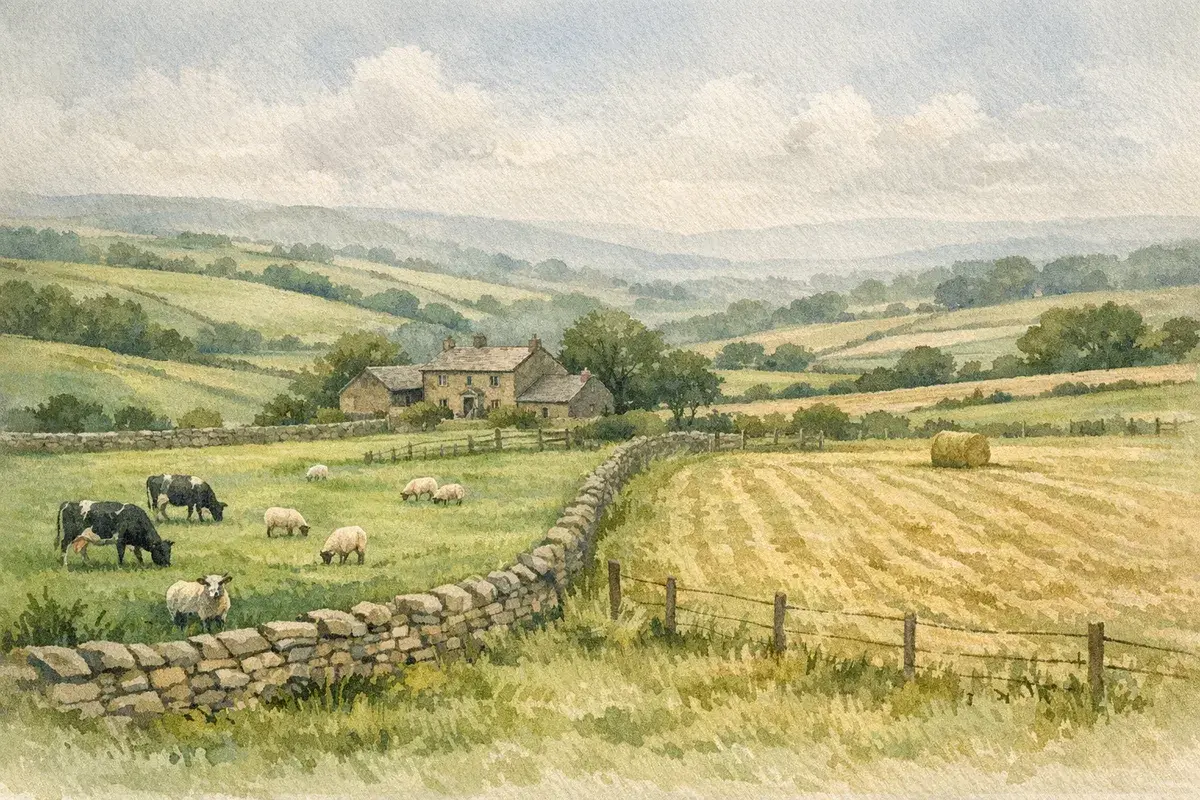
You can look at two fields that are both "in grass" and still be dealing with two very different beasts.
One might be long‑established permanent pasture with deep root mass, historic boundaries, and constraints you can't simply plough through. The other could be a short‑term ley designed to spike output for three years before it goes back into an arable or forage rotation. On paper, they can both look like "grassland". In practice, the difference affects what you can do, what it's worth, what schemes it fits, and what trouble you could land yourself in if you cultivate without checking.
This guide unpacks permanent pasture vs temporary grass in a strictly UK context, definitions, common misunderstandings, agronomy trade‑offs, and the due diligence that matters when you're buying, renting, or changing a field's use.
What Counts As Permanent Pasture And Temporary Grass In The UK
The UK uses "permanent pasture/permanent grassland" and "temporary grass" in slightly different ways depending on context, farm records, scheme rules, tenancy discussions, and what you'd call the field in a sales pack. The safest approach is to be clear on the underlying idea: how long the land has been in grass and whether it's part of a planned rotation.
Permanent Pasture: The Core Definition And Typical Features
In UK scheme and record-keeping terms, permanent pasture (often used interchangeably with permanent grassland) is land used to grow grasses or other herbaceous forage that hasn't been included in the crop rotation for a long period. Historically, the common rule of thumb has been five years or more in grass (without being reseeded as part of an arable rotation), but the practical markers often matter as much as the calendar.
Typical features you'll recognise on established permanent pasture:
- Older, more diverse sward: not always "botanically rich" in the conservation sense, but usually more mixed than a freshly sown ley.
- Lower input expectation: it can still be fertilised and managed, but it's often run with more emphasis on grazing management than frequent cultivations.
- More settled soil structure: good permanent pasture can build excellent soil aggregation and infiltration, until it gets poached or compacted.
- Constraints and sensitivity: long-term grass may overlap with habitat value, historic features, or designation issues (more on that later).
And here's the bit that catches people out: permanent pasture is not "never improved". It can be improved. But how you improve it (and what permissions/consents you need) is where the risk sits.
Temporary Grass: Rotational Leys, Reseeds, And Mixed Swards
Temporary grass is essentially a ley in a planned rotation, you sow it, you use it (grazing, silage, haylage), and you expect to change it out again.
In the UK, temporary grass commonly shows up as:
- Italian ryegrass or hybrid ryegrass leys for silage intensity.
- Perennial ryegrass‑based grazing leys (often 3–5 years), sometimes with white clover.
- Herbal leys / mixed species swards (ryegrass + clovers + plantain/chicory and others) where the aim is resilience and soil function as well as output.
- Short-term "break" leys after maize or cereals to reset weeds, repair structure, and build organic matter.
If you're weighing whether to refresh an older field, it's worth reading AgLand's practical breakdown of reseeding permanent pasture because "reseeding" can mean anything from stitching-in to a full cultivation, and those aren't equivalent in cost, risk, or compliance.
Where "Grassland" Causes Confusion In Practice
Most confusion comes from three places:
- A field has been in grass for ages, but you (or the previous occupier) have reseeded it. Reseeding doesn't automatically make it "temporary" in spirit: it might still be permanent pasture that's been improved.
- A "temporary" ley quietly becomes long-term grass because plans change. You intended three years: it's now year eight. That's when record-keeping and scheme classifications start to matter.
- Sales/rental descriptions use loose language ("good permanent pasture", "productive grass ley", "long-established grass") without pinning down cropping history.
If you're buying or renting, treat "in grass" as a starting point, not an answer. You want cropping history, reseed dates, and any constraints that would make cultivation difficult or costly.
Why The Distinction Matters: Payments, Compliance, And Land Value
The permanent pasture vs temporary grass decision isn't just about tonnes of dry matter. It's also about what you can claim, what you mustn't do, and how your land looks to someone assessing risk, an inspector, a buyer, a lender, or a landlord.
Scheme Implications: BPS Legacy, SFI Options, And Cross-Compliance Concepts
Although BPS in England is being phased out (and the other UK nations have their own transition paths), the legacy concepts still influence how land is recorded and managed, especially where rules around permanent grassland have historically been stricter.
In broad terms:
- Permanent pasture/permanent grassland tends to carry more "don't mess this up" sensitivity, because long-term grass is often associated with soil carbon, biodiversity, and water protection outcomes.
- Temporary leys often align naturally with rotational options, you can fit them into a wider cropping system and adapt quickly.
Under England's SFI and other environmental options across the UK, what matters is less the label and more the actions and outcomes: soil cover, reduced erosion, buffer strips, nutrient planning, and habitat delivery. But the label can still influence what you think you're "allowed" to do, and what you'll need to evidence if you change it.
If you're already managing grazing and covers seriously, you'll get more value from a structured approach to pasture land management than from arguing about labels. That's where you turn grass into a measurable asset, covers, utilisation, and resilience.
Environmental And Carbon Considerations: Soils, Peat, And Long-Term Swards
From an environmental standpoint, long-term grass can be a big deal because:
- Root systems and reduced cultivation generally support higher soil carbon storage than frequently cultivated ground.
- Permanent cover reduces erosion risk, especially on slopes and heavier soils.
- Soil biology often thrives under consistent pasture, given the steady carbon inputs and less disturbance.
But it's not a free pass. Permanent pasture can be environmentally valuable or environmentally risky depending on management. Overgrazing, poaching, and nutrient loading near watercourses can do real damage.
Peaty soils deserve a special mention: if your "grass field" sits on peat or peaty topsoils (common in parts of the South West, Pennines, Wales, Northern Ireland, and upland fringes), cultivation can rapidly oxidise carbon, increase run-off risk, and trigger extra constraints. You don't want to discover that after you've booked the contractor.
Valuation And Marketability: What Buyers, Lenders, And Agents Look For
When land changes hands, permanent pasture vs temporary grass affects value in quieter ways than people expect.
Buyers and lenders often look for:
- Reliability of output: A proven grazing block with water and access can be more valuable than an "improvable" field with unknown issues.
- Flexibility: Some purchasers want the option to rotate, temporary grass fits that story. Others actively want permanent pasture for grazing, stewardship, or sporting/horses.
- Constraints: Designations, rights of way, tenancy terms, and environmental obligations can reduce flexibility and hence affect bidding appetite.
Agents across the rural market often say the same thing in different words: certainty sells. If you can evidence what it is (and what it isn't), you reduce perceived risk, and that can support price and speed of sale.
Agronomy And Productivity Differences That Drive The Choice
Agronomy is where the debate becomes very real, very fast, because you're choosing between systems that behave differently in yield curve, feed quality, resilience, and cost.
Yield, Quality, And Seasonality For Grazing And Silage
Temporary grass leys (especially ryegrass-heavy mixes) are often designed to do one thing brilliantly: produce a lot of high-quality forage.
- For silage, a modern ley can give you strong ME and protein (particularly with clover or appropriate fertiliser strategy), plus predictable cuts.
- For rotational grazing, fresh leys can respond quickly in spring and after rainfall, helping you carry stock when older pasture slows.
Permanent pasture can be very productive too, but its strengths are different:
- Resilience and persistence: once it's well-managed, it can keep delivering without the disruption and cost of frequent reseeds.
- Long grazing season potential: on the right soils, established swards can carry animals well into shoulders, if you protect residuals and avoid hammering it.
Where people get disappointed is expecting permanent pasture to perform like a brand-new ley without fixing the fundamentals (soil pH, P/K status, compaction, drainage, grazing discipline). If you want a checklist-style route to uplift, start with these pasture improvement techniques and you'll avoid the usual "we reseeded and it still didn't fly" trap.
Reseeding Cycles, Species Mix, And Input Requirements
Temporary grass is a commitment to a cycle:
- Establishment cost: seed, sprays (where used), cultivation or direct-drill, rolling, and usually some nutrient input.
- Lost grazing days: you often lose a chunk of grazing while the ley establishes.
- Management intensity: to realise the benefit, you need grazing discipline and/or cutting plans.
Permanent pasture is less about cycles and more about incremental optimisation:
- Correct pH and nutrients.
- Targeted overseeding or stitching-in when needed.
- Improving utilisation through grazing management.
And species mix matters. A herbal or clover-rich ley may reduce bought-in N demand and cope better with dry spells than ryegrass-only swards. But you'll need to manage it differently (grazing height, rest periods, and sometimes a different weed strategy).
Soil Structure, Drainage, And Compaction Risk Over Time
Soil is often the hidden decider.
Permanent pasture can build excellent structure, but it's vulnerable to:
- Surface compaction and poaching in wet winters.
- Capping and poor infiltration on heavier soils if stocking pressure is wrong.
- Localised damage around troughs, gateways, and high-traffic routes.
Temporary systems can help you reset problems, if you do it carefully. Cultivation might relieve compaction in the short term, but it can also:
- Break down aggregates.
- Bring up stones.
- Create a smear layer if worked wet.
If your farm has a history of wet feet and late turnout, you'll often get more payback from fixing the cause than from repeatedly reseeding the symptom. AgLand's guides on managing wet pasture land and pasture land drainage are worth treating as pre-reseed reading, because drainage and traffic management can be the difference between a ley that lasts 18 months and one that lasts five years.
Environmental And Legal Constraints You Must Check Before Ploughing Or Reseeding
Before you plough, power-harrow, or even go hard with a full reseed, stop and check constraints. In the UK, the legal and environmental layer can be more decisive than the agronomy.
Protected Sites And Designations: SSSI, SAC/SPA, AONB, And Local Wildlife Sites
If your grassland sits within or near a designation, your freedom to cultivate may be limited.
Key designations to check include:
- SSSI (Site of Special Scientific Interest) – in many cases, operations like ploughing, reseeding, drainage works, or fertiliser changes can require consent from Natural England.
- SAC/SPA/Ramsar – internationally important habitats and species: restrictions can be tighter and enforcement risk higher.
- AONB / National Park – not automatically a ban on cultivation, but it can affect what's acceptable, especially where landscape character is a planning consideration.
- Local Wildlife Sites – not the same legal status as SSSI, but still a red flag for stewardship, planning interactions, and reputational risk.
If a field has old ridge-and-furrow, species-rich grassland, or known ground-nesting bird areas, treat it as sensitive until proven otherwise.
Hedgerows, Watercourses, And Buffer Requirements
Grassland change often involves machinery close to boundaries. That's where problems start:
- Hedgerows: removal and significant alteration can be regulated under the Hedgerows Regulations 1997. Even aggressive "tidying" can get you into bother if you take out more than you think.
- Ditches and watercourses: cultivating right up to an edge increases run-off and sediment risk. Practical buffer management protects you and your neighbours downstream.
- Nutrient and slurry planning: if you're increasing stocking or switching from extensive grazing to higher-output silage, check storage, spreading windows, and field risk mapping.
On wet sites, people sometimes jump straight to new drains or ditching. If that's on your mind, keep the project grounded: understand outfalls, rights to discharge, and whether you're affecting a neighbour's land or a designated habitat.
Tenancies, Easements, And Rights Of Way That Can Limit Cultivation
Legal constraints aren't just environmental.
- Agricultural tenancies (including FBTs under the Agricultural Tenancies Act 1995 and older AHA agreements) may restrict cultivation, reseeding, drainage, or even the type of enterprise permitted.
- Easements/wayleaves (utilities, private rights) can limit what machinery you can use and where.
- Public rights of way running through pasture can affect grazing setups, fencing options, and safe stock management.
If you're not the freeholder, or you're buying with an occupier in place, get clarity before you assume you can "just reseed it this spring".
How To Decide Which Grass System Fits Your Farm Or Land Purchase
Choosing between permanent pasture and temporary grass isn't ideological. It's a matching exercise: stock needs, soil capability, risk tolerance, and how long you expect to control the land.
Stock System Fit: Beef, Dairy, Sheep, Horses, And Mixed Farms
Different systems pull you in different directions:
- Dairy often benefits from temporary leys (or frequently renewed paddocks) because the value of extra quality is immediate and measurable.
- Beef and sheep can do very well on permanent pasture, especially where you're building a low-cost, forage-led system and the land has constraints that make cultivation risky.
- Horses/equestrian: permanent pasture is common, but it's also easy to damage through year-round turnout. If you're buying with equestrian use in mind, you'll want robust ground, sensible stocking density, and sacrifice areas.
- Mixed farms can use temporary grass strategically, e.g., a three-year ley to reset blackgrass pressure, improve soil structure, then return to cereals.
If you're shifting land use, say, moving an arable block into a grass-based system, read up on converting arable to pasture so you cost it properly (and avoid the classic mistake of underestimating lime, compaction repair, and establishment timing).
Rotational Flexibility Vs Long-Term Stability: A Practical Trade-Off
Here's the trade-off in plain terms:
- Temporary grass gives you flexibility: you can change species, reset weeds, and chase performance. But you also accept more soil disturbance and more "moving parts".
- Permanent pasture gives you stability: fewer big resets, often lower annual establishment costs, and, done right, excellent resilience.
A useful question is: what's your five-year plan for this field? If you can't answer that confidently (or you're buying land without certainty on future tenancy/occupation), avoid decisions that only pay back on a long horizon.
Budgeting The True Costs: Establishment, Lost Grazing Days, And Reseed Risk
People usually price reseeding as "seed + contractor". That's not the full bill.
Consider:
- Lost grazing/cutting days during establishment.
- Weed control (especially docks, thistles, rush, and perennial weeds).
- Lime and nutrient corrections, often the real limiter.
- Weather risk: a dry spring, a wet autumn, or a late harvest can wreck timing.
- Traffic and compaction management: gateways, water points, and tracks might need investment to protect your new sward.
A quick reality check: if the field is routinely waterlogged, a reseed can be an expensive way to grow rushes in straighter lines. Fix the underlying constraint first, then spend money on seed.
Temporary Grass To Permanent Pasture (And Vice Versa): What Changes In Reality
On many UK farms, grassland doesn't stay neatly in one category. Fields drift over time, sometimes by design, sometimes because life happened.
Indicators You Are Effectively Managing Permanent Pasture
Permanent pasture performs when you manage it like an asset, not a leftover.
Good signs include:
- You know your soil pH and indices (and you're correcting them proactively).
- You have a grazing plan that protects residuals and avoids chronic poaching.
- You're improving utilisation, often through smarter subdivision and recovery periods.
- You're controlling rush and weeds with a mix of drainage, grazing pressure, and targeted interventions.
If you're pushing performance, rotational systems can still sit on "permanent" land. The point is management intensity, not the label. Many farmers get a step-change by implementing pasture rotation grazing principles even on fields that haven't seen a plough for decades.
When A "Temporary" Ley Starts Behaving Like Permanent Grassland
This happens more than people admit.
Common triggers:
- You intended to return to arable, but commodity prices, labour, or kit availability changed.
- A wet cycle made cultivations unattractive.
- The ley simply kept performing, and reseeding felt like creating a problem where there wasn't one.
Over time, the sward can become more mixed, clover may fade without management, and weed burden can rise if grazing/cutting isn't tight. At that point, you're managing something that looks and behaves much more like permanent pasture.
Record-Keeping That Protects You In Inspections And During A Sale
If you take one practical thing from this guide, make it this: write it down while you still remember it.
Keep a simple field record of:
- Reseed dates and method (direct-drill, full cultivation, stitching-in).
- Seed mix (and why you chose it).
- Major operations (drainage work, subsoiling, liming).
- Fertiliser and manure applications.
- Cropping history if it has been in rotation.
This protects you in three scenarios:
- Scheme checks/queries (where evidence beats explanation).
- Tenancy discussions (what you improved, when, and how).
- Sales due diligence (buyers pay more readily when the story is evidenced).
It also makes agronomy decisions easier next time, because you'll know what actually worked on that field, not what you think you did.
Buying Or Renting Grassland: Due Diligence Checks That Prevent Expensive Surprises
When you're taking on grassland, purchase or tenancy, the permanent pasture vs temporary grass question becomes a risk filter. You're trying to avoid the nasty surprises that only show up after completion: blocked outfalls, unusable access, a designation you didn't price in, or a "simple reseed" that turns into a compliance headache.
What To Ask The Seller Or Landlord About Cropping History And Reseeds
Start with direct questions. Don't apologise for it, serious sellers expect it.
Ask:
- When was it last ploughed or cultivated?
- When was it last reseeded, and by what method?
- Has it been in any agri-environment or stewardship options?
- Any known restrictions (SSSI consents, covenant wording, tenancy clauses)?
- What's the typical use: grazing only, silage cuts, aftermath grazing?
If the answers are vague, treat that as information in itself.
Maps, Soil Tests, And Field Inspections: Evidence You Can Verify
Do your own checks where possible:
- Walk the field after rain as well as in dry weather if you can. Wet patches tell the truth.
- Review soil type and risk: heavy clay behaves differently from free-draining loams.
- Consider a basic soil test (pH, P, K, Mg). If you're paying a premium for "productive grass", you want evidence.
- Look for compaction indicators: standing water, rush, shallow rooting, hoof pan.
And don't ignore the obvious: gateways, track condition, and where you'd place troughs and handling systems. On paper, a 10-acre field is a 10-acre field. In reality, one might have five usable acres in a wet winter.
Access, Water, Boundaries, And Infrastructure That Affect Usability
Grassland value is often "infrastructure value in disguise". You'll feel it immediately in labour and stock performance.
Check:
- Legal access and whether it's shared.
- Water supply: mains, spring, trough condition, winter reliability.
- Fencing and boundaries: who maintains what, and where the true boundary lies.
- Handling and loading: even a simple pen location can save hours.
- Drainage and outfalls: if there's a history of land drains, ask where they run and where they discharge.
If you're searching for grazing blocks, mowing ground, or mixed-use pasture, AgLand lets you register the details that actually matter (location, land type, and practical features) and hear the moment something fitting is advertised, without the noise you get on generalist portals.
Conclusion
Permanent pasture vs temporary grass isn't a "right answer" debate. It's a decision about control (how long you'll hold the land), capability (soil, drainage, access), and intent (grazing resilience vs rotational performance).
If you're managing land you already have, the smartest next step is usually to clarify the constraint you're actually fighting, pH, compaction, wetness, utilisation, before you reach for the plough or the seed bag. And if you're buying or renting, push for cropping history and check designations early. Certainty is cheaper than surprises.
Disclaimer: AgLand.co.uk is a UK agricultural land and rural property matching service, where buyers register what they are looking for and owners advertise directly to the buyers who match, and a rural resource hub. Nothing in this text is intended as legal, financial, tax, or investment advice. You should carry out your own due diligence and seek independent advice from suitably qualified professionals (for example, a land agent, agricultural surveyor, solicitor, accountant/tax adviser, agronomist, or planning/environmental consultant) before making decisions or taking action.