
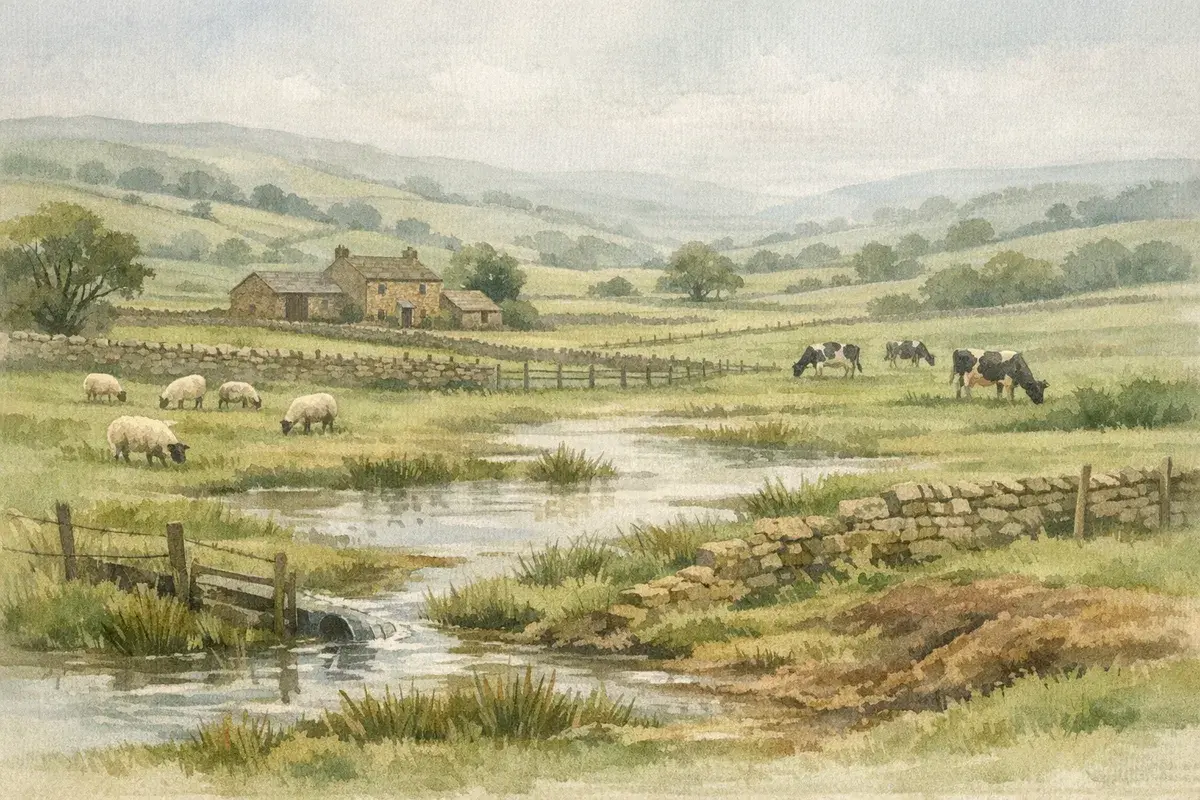
If your pasture "holds water", you don't just lose grazing days, you lose options. Stock hang back from the wettest corners, gateways turn into soup, and every hoofprint becomes a little crater that seems to last until May. The frustrating bit is that wet pasture land isn't one problem. It's usually three or four stacked together: soil that can't infiltrate, a blocked outfall, a high water table, and grazing pressure at exactly the wrong time.
This guide cuts through the noise with a practical UK approach: diagnose what's actually happening on your fields, fix soil structure before you spend heavily on drains, choose drainage options that suit your soil, and tighten grazing and infrastructure so you're not undoing the good work every winter. You'll come away with a seasonal plan you can carry out, plus a clear idea of when it's time to bring in a drainage contractor, land agent, or adviser.
Diagnosing Why Your Pasture Stays Wet
Wet fields can look identical from the gate and behave completely differently under the surface. Before you hire a digger or book mole draining, spend a little time getting the "why" right. The best fixes are specific.
Map Wet Areas And Identify Water Pathways
Start simple: walk the field after a decent rain (not during a flood event) and map where water sits first and longest. A phone photo with a pin drop is enough. You're looking for patterns:
- Lines of wetness that run downhill often suggest compacted tramlines, an old drain line that's failed, or a natural seep.
- Patches at the same contour can indicate a perched water table above a compacted layer.
- One corner that never dries might be a spring or a blocked outfall.
If you've got access to a quad/drone image, even better, but boots-on-the-ground matters because you can see surface flow. Pay attention to where water wants to go: along a hedge bottom, into a ditch, through a gateway rut. Those are your water pathways.
A quick win here is to compare today's wet patches with your memory of summer stress. Places that pond in winter often bake hard in a dry spell, same issue, different season.
Check Soil Type, Structure, And Compaction
In the UK, soil type dictates what "good drainage" even means. A free-draining sandy loam can usually be fixed with structure and grazing management. Heavy clay behaves differently: it might never drain fast, but it can still carry stock if you protect its structure.
Do a spade test in a wet area and a better area nearby:
- If you see smearing, platey layers, or a dense "pan" around 7–20 cm, you've likely got compaction.
- If the surface is fine but water sits, you may have an impermeable layer below (common after years of grazing in the same conditions).
- If roots are shallow and sideways, that's a red flag.
Also check worm activity and crumb structure. A soil that breaks into rounded crumbs with visible pores will infiltrate: a soil that breaks into slabs tends to shed water.
Compaction isn't only caused by tractors. Repeated poaching in a few high-traffic areas, gateways, troughs, corners, can effectively "seal" a field.
Rule Out Blocked Outfalls, Springs, And High Water Tables
Before you assume you need new drains, rule out the boring-but-common failures:
- Outfalls: find where field drains discharge into a ditch or watercourse. If you can't find an outfall, that's telling in itself. Clear vegetation, check for collapse, and watch after rain to see if it's running.
- Ditches and grips: if the receiving ditch is silted up, even perfect in-field drains can't empty.
- Springs and seepage lines: these often show as iron staining, lush rush growth, or water emerging on a slope break.
- High water table: in some valley bottoms and clay flats, you're fighting groundwater, not rainfall. In those cases, you manage expectations and focus on traffic, sward resilience, and surface water control.
If you want a single principle to carry forward: don't spend money underground until you've proved water can leave the field once it gets there.
Soil Structure First: Fixing Compaction And Improving Infiltration
A lot of wet pasture land is "wet" because the soil can't accept water quickly enough. Drainage helps, but structure is the engine room. Get this right and you often need less drainage than you think.
If you're building a broader approach, it's worth anchoring your decisions in a proper pasture land management framework, wet ground management is rarely just one intervention.
Timing And Technique For Aeration, Sward Lifting, And Subsoiling
The biggest mistake with mechanical loosening is doing it when the soil is too wet. You end up smearing and making a pan worse.
Practical UK rules of thumb:
- Aeration (tines/spikes): best when the soil is moist but not plastic. If you can roll soil into a sausage easily, it's too wet.
- Sward lifting: useful on compacted grazing ground where you want to lift without full inversion. Again, timing matters, aim for conditions where cracks form behind the legs rather than smears.
- Subsoiling: more relevant where machinery has created a deeper compaction layer (often around old tramlines or after maize/wholecrop). It can be effective, but only if you've got the horsepower, correct depth, and the soil will shatter.
And don't ignore the basics: controlling traffic (even livestock traffic) often prevents compaction from coming straight back.
Organic Matter, Liming, And Targeted Nutrient Strategy
Wet soils benefit disproportionately from improved biology and aggregation.
- Organic matter improves porosity and helps soil "hold together" under stock. This can come from well-managed grass covers, clover content, and careful FYM use where appropriate.
- pH: a surprising number of wet pastures are running acidic. If pH is low, you're handicapping biology and grass utilisation. Soil test, then lime to target pH suitable for grassland (your adviser will tailor to soil type and system).
- Nutrients: potassium and phosphate indices matter for root strength and recovery, but blanket applications on wet ground can be wasteful or risky. Use soil analysis and apply when conditions reduce runoff risk.
A small but real-world point: if your wettest fields are also your least productive, you can fall into a loop of "they're not worth spending on." But modest pH correction and targeted nutrition often pay back quickly because they improve resilience as well as yield.
Reseeding Choices For Wet Ground And Poaching Tolerance
Reseeding wet ground is less about chasing a flashy mix and more about matching species to stress.
On persistently wet pasture land, prioritise:
- Perennial ryegrass varieties with good ground cover and proven persistence in UK trials
- Timothy for heavier, cooler ground and silage/hay resilience
- White clover where grazing management and soil conditions allow (great for nitrogen fixation, but it dislikes waterlogging)
If the field is permanent pasture with environmental constraints, you may not be able (or want) to fully reseed. There are still options, overseeding, improving grazing, correcting pH, and drainage maintenance.
If you're weighing a full renovation, read up on the practical and regulatory angles of reseeding permanent pasture so you don't create problems while trying to solve one.
Drainage Options That Actually Work (And When They Don’t)
Drainage is where money can disappear fast, especially if you pick a method that doesn't suit your soil or your outfalls. Think of drainage as a hierarchy: start with keeping routes clear, then manage surface water, then decide whether in-field systems are justified.
If you want a deeper primer on the nuts and bolts, AgLand's guide to pasture land drainage goes into the UK-specific options and decision points.
Ditches, Grips, And Outfall Maintenance
Unsexy, but often the best ROI.
- Ditch clearance: if a ditch has silted up, the field's "exit pipe" is blocked. Clearance can restore function to old drains.
- Grips (shallow surface channels): these can help move standing surface water towards ditches in heavy land. They're not fashionable, but on some clays they're the difference between access and no access.
- Outfalls: keep them visible and protected. A collapsed outfall can back up an entire run of pipes.
Do check your responsibilities and permissions before working on watercourses: more on that in the compliance section.
Mole Draining, Pipe Drains, And When To Use Each
Mole draining works best on cohesive clays where the mole channel holds. It's relatively cost-effective, but it isn't permanent and it's sensitive to timing:
- Too wet and the channel collapses.
- Too dry and it won't form properly.
- If there's no effective outfall or collector drain, it's basically money in the ground.
Pipe drains are the longer-term option, especially if you've got a known wetness issue and you can design properly to outfalls. They're more expensive, more disruptive, and need professional design in many cases, but they can transform a field.
A practical way to decide is to ask: are you trying to improve infiltration and surface removal (often mole + grips), or do you need true groundwater control (often pipes, plus outfall works)?
Managing Runoff With Buffer Strips, Swales, And Wet Features
Not all water should be "drained away" as quickly as possible, particularly if it's carrying soil or nutrients.
- Buffer strips along ditches slow runoff and trap sediment.
- Swales or shallow interception channels can divert clean upslope water away from vulnerable areas.
- Wet features (scrapes, small wetlands) can be part of a whole-farm water plan, offering biodiversity gains and, in some cases, helping with natural flood management.
The win here is twofold: you reduce the amount of water hitting the problem zones, and you reduce the pollution risk that can come with winter runoff.
Grazing Management To Reduce Poaching And Maintain Performance
You can have decent drains and still destroy a field with one poor decision in a wet week. Grazing management is the control lever you pull every day.
A strong starting point is building a simple grazing land management plan that sets out your triggers for moving stock, resting covers, and using sacrifice areas.
Stocking Rate, Rotation Length, And Wet-Weather Plans
Wet pasture land needs a "winter rulebook". The moment you're making decisions on the fly, you tend to overgraze the driest bits and churn the wettest bits.
Key moves:
- Lower stocking pressure when soils are at field capacity (when they can't accept more water). That might mean selling earlier, housing earlier, or moving classes of stock.
- Longer rests in a rotation can help sward recovery, but only if you're not letting covers get too strong and then damaging them badly when you return.
- Flexible paddock sizes: smaller allocations can reduce wandering and trampling, use fencing to control where feet go.
If you're trying to match animals to what the field can actually carry, it helps to understand how stocking density on pasture land affects utilisation, recovery, and poaching risk in UK conditions.
On-Off Grazing, Back Fencing, And Sacrifice Areas
When conditions are borderline, on-off grazing can be a lifesaver. You let stock graze for a few hours (enough to hit intake targets) and then pull them off to a yard, track, or stand-off area.
Back fencing is another underused tool: it stops stock walking back over grazed ground, which is often where the damage happens.
And yes, sacrifice areas sound grim, but they're sometimes the most sustainable choice. Better to sacrifice one robust, accessible padock/field corner (and then repair it) than to lose the structure of three fields.
A human reality check: the best wet-weather systems are the ones you'll actually operate when you're busy. Keep it simple enough that it gets done.
Gateways, Tracks, And Water Trough Placement
Poaching often starts where animals congregate.
- Gateways: widen them, move them, or add a second gateway to spread pressure.
- Troughs: avoid placing them on the wettest line in the field or in a hollow. A small move can prevent a winter-long mud bath.
- Tracks: a good track reduces the "random walking" that churns swards.
If you only fix three spots on a wet farm, fix the ones where every animal passes every day.
Infrastructure And Access: Making Wet Fields Usable
Infrastructure is the difference between "we had to keep them in" and "we could keep grazing". It's also where you can spend smartly and see immediate behavioural change in stock and machinery.
Hardcore, Geotextiles, And Low-Impact Track Design
A properly built track doesn't have to be a motorway. The aim is to create a stable base that keeps feet and tyres out of the soil.
Common UK principles:
- Geotextile membrane to separate soil and stone (stops hardcore disappearing into the mud).
- Well-graded stone that locks together.
- Camber and drainage so water sheds off the track rather than running along it.
If you're in a high rainfall area, even a short "spine" track from the yard to the driest grazing can change your winter options.
Gateway Relocation, Stand-Off Pads, And Handling Areas
If a gateway sits on a natural water pathway, you'll fight it forever. Relocation can be cheaper than constant repair.
Stand-off pads (woodchip, hardcore, purpose-built surfaces) can take pressure off fields in wet spells. Handling areas should be designed so you're not forcing stock to queue and churn the same patch repeatedly, especially around crushes and loading points.
Fencing For Flexibility And Protecting Vulnerable Spots
Flexible fencing is a wet land superpower:
- Use temporary fencing to exclude wet corners in winter.
- Create narrow access lanes to reduce random tracking.
- Protect seepage lines and ditch edges to reduce bank erosion.
Good fencing isn't glamorous, but it lets you execute your plan rather than merely intend it.
Environmental And Compliance Considerations In The UK
Managing wet pasture land in the UK always sits alongside environmental responsibility. The risk isn't just lost production, it's runoff, sediment, and nutrient losses that can trigger regulatory scrutiny.
Cross-Compliance Style Risks, NVZ Rules, And Slurry And FYM Timing
While the policy landscape has shifted post-BPS, the underlying expectations haven't: protect soils, protect water, keep records, apply nutrients responsibly.
If you're in a Nitrate Vulnerable Zone (NVZ), you'll have specific rules around fertiliser and organic manure applications, closed periods, and storage capacity. Even outside NVZs, poor timing on wet ground is a fast route to runoff.
Practical risk reducers:
- Avoid spreading slurry/FYM when soils are saturated, frozen, or heavy rain is forecast.
- Keep applications away from watercourses and high-risk runoff routes.
- Use buffers and leave headlands where needed.
If you're unsure, speak to your nutrient management adviser, this is one area where "winging it" can get expensive.
Watercourse Works, Consents, And Working Near Drains
Cleaning a ditch is one thing: altering a watercourse, installing structures, or working close to main rivers is another. Depending on what you're doing and where you are in the UK, you may need permissions from the relevant authorities (for example, environment regulators and, in some cases, Internal Drainage Boards where they operate).
Also remember that land drainage systems can cross boundaries. If you're renting, buying, or planning works near a boundary ditch, clarify responsibilities early.
Biodiversity Gains: Wet Grassland, Waders, And Natural Flood Management
Not all wet areas are failures. Some of the most valuable habitats in the UK are wet grasslands, supporting invertebrates, waders, and wintering birds.
In practice, you can often do both:
- Intensify and improve the "workhorse" grazing areas.
- Manage persistently wet corners as wet features, buffers, or habitat.
If you're considering environmental schemes, it's worth aligning your wet land strategy with what's fundable and what fits your farm's long-term direction.
A Seasonal Action Plan For Wet Pasture
Wet pasture management is won (or lost) seasonally. You're either preventing damage or repairing it, ideally more of the former.
Autumn And Winter: Protecting Swards And Preventing Damage
Autumn is when you bank resilience.
- Walk fields early and decide which paddocks are "winter-capable" and which should be rested.
- Set triggers: rainfall totals, soil feel, or forecast-based decisions that tell you when to pull stock off.
- Sort infrastructure now: gateways, trough moves, short track repairs.
- Use sacrifice areas and on-off grazing to protect the majority.
If you're running rotations, shorten occupation time. The less wandering, the less poaching.
Spring: Soil Checks, Repair, And Early Growth Management
Spring is your repair window.
- Re-do spade tests: has winter created a pan?
- Harrow and roll only when conditions suit, rolling wet ground can do harm.
- Overseed thin areas where appropriate and correct pH/nutrients based on tests.
If you're planning bigger changes, spring is also a good time to review your wider improvement options, AgLand's overview of pasture improvement techniques can help you prioritise what will pay back on your farm.
Summer: Drainage Maintenance And Reseed Windows
Summer is when access is easiest and soils can be worked without smearing, assuming you catch the right moisture.
- Clear ditches and check outfalls while you can see them.
- Consider mole draining (on suitable clay) when conditions are right.
- Plan reseeds/renovations around moisture, not calendar dates.
Also: take photos and notes in summer. The dry season often reveals where compaction is limiting root depth, those are frequently the same places that pond in winter.
When To Bring In Professional Help And How To Scope The Job
Some wet field issues are DIY. Some are "call someone before you make it worse." The trick is knowing which is which.
What A Good Farm Drainage Survey Should Include
A proper drainage survey (by an experienced drainage contractor, land agent, or specialist) should typically cover:
- Field topography and water pathways
- Soil type and depth assessments
- Existing drainage layout (if known) and likely condition
- Outfall locations and capacity of receiving ditches
- A proposed design that matches soil (mole vs pipes vs surface measures)
- A plan for reinstatement and managing compaction after works
If someone is recommending a solution without asking about outfalls, soil type, and where the water goes, pause.
Cost Drivers, Grants And Schemes, And Return On Investment
Costs vary hugely by access, stone availability, outfall work, and the type of system installed.
Typical cost drivers include:
- Distance to suitable outfall and extent of ditch work
- Density and depth of pipe drains
- Need for collector drains or new outfalls
- Track length and specification (membrane, stone depth, drainage)
- Reinstatement: levelling, reseeding, and short-term production loss
In terms of return, don't just look at "extra grass". Look at:
- fewer housed days
- fewer lameness issues from persistent mud
- better utilisation of existing forage
- reduced contractor disruption because you can access fields
On funding: scheme availability changes, and eligibility depends on location and farm context. Your land agent or adviser can help you identify what's realistic.
Common Mistakes That Lead To Repeat Waterlogging
You see the same errors crop up across UK farms:
- Installing drainage without fixing the outfall/ditch (the system can't empty).
- Doing soil loosening at the wrong moisture (creates smear, not fissures).
- Ignoring gateways and troughs (damage reappears immediately).
- Overstocking during wet weeks because "it'll dry next week". It rarely does.
- No maintenance plan, ditches silt, outfalls block, tracks deform, and the field slowly reverts.
A well-scoped job includes how you'll protect the investment with grazing rules and access improvements.
Conclusion
Managing wet pasture land is really about stacking small, reliable advantages: letting water move where it should, building soil structure that can breathe, and keeping hooves and tyres off vulnerable ground when it matters. You don't need perfection, you need a system that keeps grass growing, keeps stock performing, and stops winter damage becoming your "normal".
If you take one pragmatic step this week, make it the spade test plus a wet-area map. It's amazing how often that clarifies whether you're dealing with compaction, a blocked outfall, a spring line, or a field that simply needs a different winter strategy.
Disclaimer: AgLand.co.uk is a UK agricultural land and rural property matching service, where buyers register what they are looking for and owners advertise directly to the buyers who match, and a rural resource hub. Nothing in this text is intended as legal, financial, tax, or investment advice. You should carry out your own due diligence and seek guidance from appropriately qualified professionals (for example, chartered surveyors, land agents, drainage contractors, agronomists, accountants, and solicitors) before making decisions or undertaking works.