
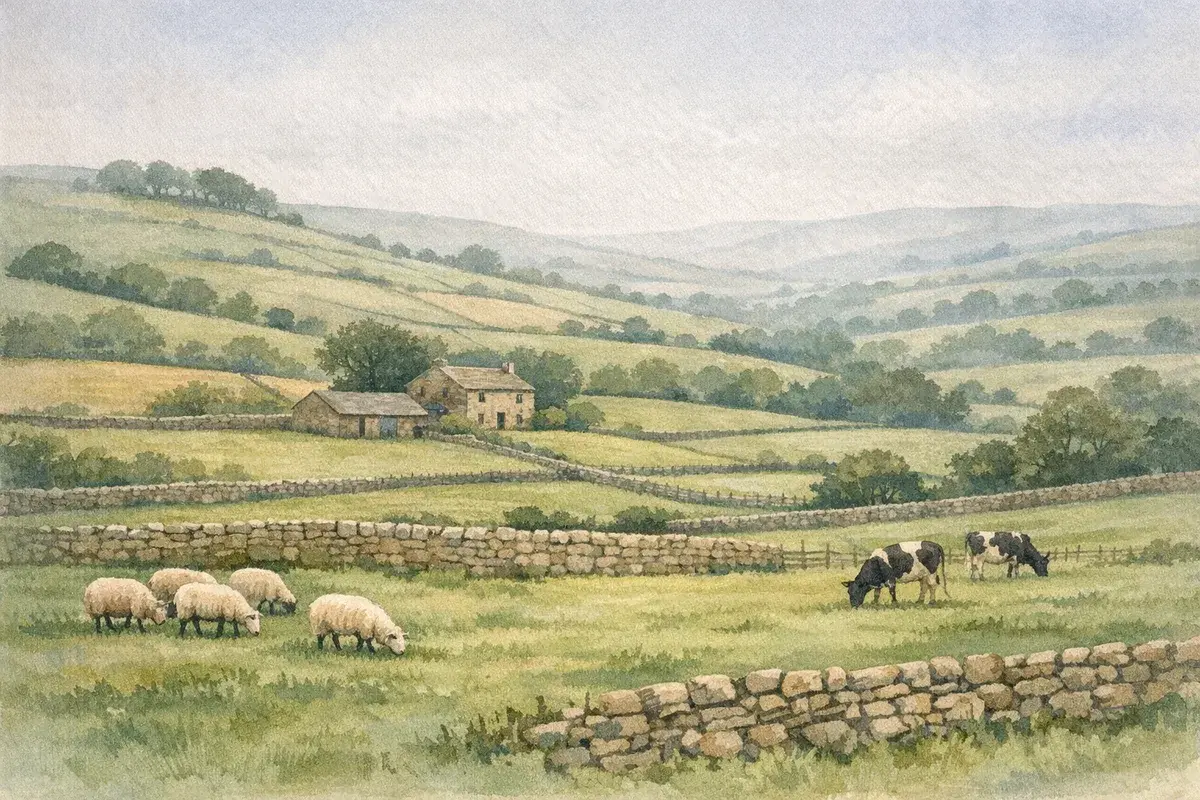
Most grazing blocks don't fail because the grass "won't grow". They fail because decisions get made in a rush, turnout dates drift, covers aren't measured, wet corners get hammered, and by midsummer you're either short of feed or staring at rank pasture you can't get back under control.
A grazing land management plan is your antidote. It's not a glossy binder that lives in a pickup door pocket. It's a working template that turns your land's potential (soil, rainfall, access, infrastructure) into repeatable decisions: when to move, how hard to graze, where to protect, what to fix, and what success actually looks like in pounds, kilos, and healthier animals.
This guide is UK-only, practical, and built for real-world constraints, tenancies, public rights of way, watercourses, schemes, and the small matter of British weather doing whatever it likes.
What A Grazing Land Management Plan Covers (And Why It Pays Off)
A grazing land management plan is essentially a decision-making system for your grass. It links four things that often get managed separately:
- The resource (your fields, soils, water, access, sward types)
- The demand (your stock numbers, liveweight targets, milk yield, finishing dates)
- The rules (movement triggers, residuals, rest periods, wet weather actions)
- The evidence (records that prove what happened and why)
Done well, it pays off in boring but beautiful ways: steadier growth, fewer emergency decisions, less bought-in feed, fewer lame animals, and fewer avoidable compliance headaches.
If you want a broader companion read, AgLand's pasture management guidance for UK farms complements this plan approach nicely, think benchmarks, practical levers, and what to prioritise first.
Key Outcomes: Utilisation, Animal Performance, Soil Resilience, And Compliance
A good plan targets outcomes you can actually measure:
- Better utilisation: more of what you grow ends up in the animal, not trampled or gone to seed. Even a modest improvement in utilisation can shift the whole margin.
- Animal performance: consistent intakes support fertility, milk from forage, daily liveweight gain, and fewer metabolic "wobbles" caused by feast-and-famine grazing.
- Soil resilience: fewer poached gateways, stronger root systems, better infiltration, and a pasture that comes back after a battering.
- Compliance and assurance: clearer evidence for scheme options, cross-compliance-style expectations (even though the regime has changed), assurance audits, and tenancy discussions.
The point isn't perfection. It's reducing the number of times you're forced into expensive choices because the grazing platform is unpredictable.
Who Should Own The Plan: Owner-Occupiers, Tenants, Graziers, And Agents
Ownership matters, because grazing decisions are daily decisions.
- Owner-occupiers: you've got the long horizon. Your plan should explicitly include soil improvements, reseeding cycles, and infrastructure investment.
- Tenants: you need a plan that's defensible and practical within your term, clear about what you can change, what needs landlord consent, and how costs/benefits stack up.
- Contract graziers / keep arrangements: the plan is your contract's "how". Spell out stocking limits, moves, water responsibilities, wet weather actions, and who pays for fencing repairs.
- Agents (and estate teams): if you're managing grazing lets or multi-occupancy situations, a simple plan reduces disputes. We've seen good agents insist on basic grazing logs and condition photos, because it protects everyone.
If more than one party is involved, treat the plan as a shared reference. Ambiguity is where relationships and swards go to die.
Start With A Baseline: Map The Farm, Measure The Grass, Know The Constraints
Before you tweak rotation lengths or debate herbal leys, get brutally clear on what you've got. Baselines stop you "improving" the wrong thing.
Field Inventory: Area, Soil Type, Sward, Slope, And Water Access
Start with a field-by-field inventory. A simple spreadsheet is fine. Include:
- Field name/number and area (ha/acres) (use mapped areas, not what you think it is)
- Soil type and drainage (light land, clay cap, peat, free-draining, compacted patches)
- Sward condition (ryegrass-heavy, bent/fescue, weed burden, bare patches, moss)
- Slope/aspect (north-facing fields behave differently in spring)
- Water access (mains, spring, trough locations, flow reliability)
- Access routes (lanes, gateways, pinch points)
If you're buying, taking on a new block, or reassessing land capability, it's worth understanding the ALC context. The UK land grading system guide is a helpful way to frame expectations, because grazing performance is tightly linked to soil, climate and workability.
Constraints And Designations: Rights Of Way, SSSIs, AONBs, And Watercourses
UK grazing plans live in the real world of constraints. Capture them early so you don't design a system you can't operate.
- Public rights of way: footpaths through paddocks are manageable, but plan for signage, dog pressure, and safe temporary fencing.
- Watercourses, ditches, ponds: note crossing points and areas prone to bank erosion. Your plan should set rules for buffer strips and livestock access.
- SSSIs and protected habitats: grazing can be positive management, but stocking rates, timing, and supplementary feeding may be restricted. Get site-specific advice.
- AONBs/National Parks: usually more about development/infrastructure sensitivity than grazing itself, but it can affect tracks, fencing, and water installations.
If you're still in "due diligence" mode on a potential purchase/let, AgLand's overview on agricultural land considerations in England can help you spot the common tripwires before you commit.
Current Performance Snapshot: Stocking, Average Covers, And Problem Paddocks
Now take a snapshot of what's happening today:
- Stocking details: classes of stock, numbers, average liveweight, turnout/housing dates.
- Current grazing method: set-stocked? rough rotation? strip grazing?
- Average covers: even if you don't plate meter yet, start estimating (high/medium/low) field by field.
- Problem paddocks: poached gateways, rushy wet spots, chronic underperformance, thistles/docks, water access issues.
This is also where you decide how you'll handle land that simply isn't "productive grazing" in the conventional sense. For example, if you're working with poorer ground, AgLand's piece on practical uses for Grade 5 land can help you align expectations (and strategy) rather than fighting the site.
Set Clear Grazing Objectives And Match Them To Stock Demand
A grazing land management plan without clear objectives becomes a string of well-intentioned activities: a bit of fencing here, a reseed there, and no real sense of whether it's paying.
Define Success: Liveweight Gain, Milk From Forage, Or Cost Per Kg Produced
Pick two or three primary objectives that matter to your business. Examples:
- Beef finishing: target daily liveweight gain and a finishing window that reduces concentrate dependence.
- Dairy: increase milk from forage, reduce purchased feed per litre, or stabilise yield through summer.
- Sheep: improve lamb growth rates and reduce worm burden through cleaner grazing.
- Letting/grazing licences: maintain sward condition and soil structure while meeting scheme obligations.
Then write down the "non-negotiables":
- Minimum residuals (to protect regrowth)
- No grazing on waterlogged soils beyond a defined trigger
- No supplementary feeding on sensitive areas (if that's a risk)
Objectives should be measurable. "Better grass" is a hope. "Increase grazing days by 20 days" is a plan.
Build A Simple Feed Budget: Demand Curves, Growth Curves, And Deficits
You don't need a fancy model. You need something that tells you when you'll be short.
- Estimate demand (kg DM/day) by stock class. If you don't have exact figures, start with sensible industry assumptions and refine as you go.
- Estimate supply from grass growth. Growth is seasonal: spring flush, summer dip (often), autumn recovery (sometimes). Your farm's pattern matters.
- Plot pinch points: late spring if you're understocked (surplus going stemmy), midsummer if you're overstocked (covers crash), and early autumn if regrowth stalls.
Your plan should include decision rules for each pinch point:
- Surplus? Take paddocks out for silage/hay, top selectively, or bring in additional grazing demand.
- Deficit? Extend rotation, reduce demand (sell/house/creep), introduce buffer feed, or use a sacrifice area.
If you're trying to set the right stocking level (or justify one to a landlord), this is the moment to go deeper. AgLand's guide on how to think about stocking density on pasture is useful for grounding that conversation in practical, UK-relevant logic.
Choose A Grazing System That Fits Your Land, Labour, And Livestock
The "best" system is the one you can run on a grim Tuesday in February when the tyre tracks say you shouldn't be out there at all.
Continuous, Rotational, And Cell Grazing: When Each Works Best In The UK
Here's a pragmatic UK view:
- Continuous grazing (set stocking)
- Works when: labour is tight, fields are awkward, or you're on extensive rough grazing.
- Watch-outs: selective grazing, poorer utilisation, weeds, and patchy sward quality.
- Rotational grazing
- Works when: you can subdivide and move stock regularly (every 1–4 days is common).
- Strengths: better control of residuals, cleaner regrowth, and easier feed budgeting.
- It's often the best "step-up" system for most UK grazing platforms.
- Cell / mob-style grazing
- Works when: you've got disciplined moves, reliable water, and a clear aim (e.g., trampling litter to build soil cover).
- Watch-outs: poor outcomes if moves slip, or if wet weather turns short-duration high pressure into poaching.
If you're leaning toward rotation and want a nuts-and-bolts approach, AgLand's explainer on setting up pasture rotation grazing goes deeper into the mechanics.
Paddock Layout: Access, Lanes, Gateways, Troughs, And Back-Fencing
Design beats enthusiasm. In a grazing land management plan, layout is where a lot of profit is either saved or leaked.
Prioritise:
- A simple "spine" lane that keeps stock movement off soft ground.
- Gateways you can protect (stone, matting, moving gateways, or dual access points).
- Water in the right place: ideally so you're not dragging pipes across five fences twice a week.
- Back-fencing where it protects regrowth or prevents stock camping on fresh regrowth.
A useful trick: draw the farm as if you're trying to minimise steps and maximum mud. If a paddock requires three gates, a long pipe, and a prayer, it won't get used properly.
Residuals, Rest Periods, And Rotation Length: The Numbers That Matter
You don't need to obsess over perfect numbers, but you do need consistent rules.
- Residual (what you leave behind): leaving enough leaf helps regrowth. Grazing too tight repeatedly is a common reason pastures "stall" mid-season.
- Rest period: in fast spring growth, rest might be 18–25 days: in summer, it could be 25–40+ depending on moisture and temperature. The right answer is "as long as it takes to reach your target pre-grazing cover".
- Rotation length: set it based on growth rate and demand, then adjust weekly.
Write your rules down in plain English. Example:
- "If average farm cover drops below X, we extend the rotation by Y days and buffer feed."
- "If covers exceed X, we take paddocks out and cut."
That's a plan you can run, without guessing.
Soil Fertility, Reseeding, And Sward Improvement Within The Plan
In UK grazing, soil fertility and sward composition are the quiet drivers of everything: growth rate, protein, resilience in drought, and how quickly a pasture recovers after grazing.
Soil Testing, pH, P And K: Setting A Fertility Strategy
If you only do one "admin" task this year, make it regular soil testing.
- pH: getting pH right is often the best value intervention on grassland. Lime can unlock existing nutrients and boost clover performance.
- Phosphate (P) and Potash (K): critical for root development and persistence, especially where you remove silage or graze hard.
- Sampling approach: sample by management blocks, avoid unusual patches, and keep records so you can track trends over time.
Build fertility targets that match field use:
- Silage fields: higher offtake, more K demand.
- Grazing paddocks: focus on stability and clover support.
Repair Or Replace: Overseeding, Reseeding, And Species Choice For Purpose
Not every field needs a full reseed. Your plan should include decision criteria such as:
- If ryegrass content is low and weeds dominate, reseeding may be justified.
- If the base is good but thin, overseeding after grazing/harrowing can lift performance.
Species choice should follow purpose and risk:
- Perennial ryegrass + white clover: a reliable backbone for productive grazing.
- Herbal leys (e.g., chicory, plantain, legumes): useful for drought tolerance and animal performance, but they need the right management (and realistic expectations).
- Later heading varieties can help keep quality in a rotational system.
Nutrient Planning And Timing: Slurry, FYM, Nitrogen, And Closed Periods
A grazing land management plan should show when and why nutrients are applied, not just totals.
- Slurry/FYM: target cooler conditions to reduce losses, apply to the right fields for the right reasons (building K on silage ground, for example).
- Nitrogen: be clear on your aim (early spring kick, post-grazing recovery, silage yield). Over-application can reduce clover contribution and increase costs.
- Closed periods and rules: these can vary by location and NVZ requirements (and regulations can change). Make sure your plan is aligned with current rules and any scheme obligations.
If you're renting land or sharing ground, nutrient plans also reduce arguments later. Nothing strains a relationship like one party applying nutrients and the other claiming the benefit.
Animal Health, Welfare, And Biosecurity In A Grazing Context
Good grazing is animal health management in disguise. The cleanest grass in the world won't help if parasite pressure is high, water is poor, or stress is constant.
Parasite Control With Grazing: Rotation, Mixed Grazing, And Faecal Egg Counts
In UK systems, parasites are a profit leak that often gets treated with habit rather than evidence.
Build parasite control into the plan:
- Rotation with adequate rest can reduce larval challenge on pasture.
- Mixed grazing (where appropriate) may interrupt parasite lifecycles.
- Faecal egg counts (FECs) help you treat what needs treating, rather than blanket dosing.
Work with your vet to build a sustainable approach, resistance is real, and "just dose and hope" is a fast route to fewer options.
Water Quality, Heat Stress, And Shelter: Practical Welfare Infrastructure
Water is the most underestimated piece of grazing infrastructure.
- Ensure troughs deliver enough flow for peak demand (hot days, high intakes, lactating animals).
- Keep troughs clean. Algae and biofilm reduce intake, quietly, but significantly.
- Plan shade and shelter. Heat stress events aren't just a continental issue anymore: UK summers can bite, especially on heavy animals.
If you're planning new fencing or lanes, integrate water at the same time. Retrofitting later always costs more.
Movement And Records: Preventing Disease Spread Between Groups And Holdings
If animals move between holdings (grazing lets, keep, contract grazing), tighten up biosecurity:
- Quarantine where feasible.
- Maintain clear records of movements, treatments, and group mixing.
- Avoid sharing water sources between unknown groups.
It's unglamorous admin, but it protects your business, and your neighbours'.
Protecting Soil And Water: Poaching, Runoff, And Weather-Proofing The System
British grassland management is basically weather management with livestock attached.
Your plan should assume that you will get prolonged wet spells, and you may get a dry summer. If you only plan for an "average" year, you're planning to be surprised.
Wet Weather Plans: Sacrifice Areas, On-Off Grazing, And Stand-Off Options
Wet weather is where a lot of long-term damage happens in a short time.
Build a wet weather protocol:
- Trigger points: what conditions force a change? (e.g., standing water, hoof marks beyond a defined depth, gateways breaking up)
- Sacrifice area(s): choose locations that minimise runoff risk and are easiest to repair.
- On-off grazing: useful for dairy and youngstock, let them graze for a controlled period, then stand off on a better surface.
- Stand-off options: loafing pads, woodchip areas, or housing, whatever fits your system and permissions.
For field-specific tactics, AgLand's guide to managing wet pasture land is worth a read, particularly if you've got heavy soils, springs, or chronic poaching points.
Buffer Strips, Gateways, And Tracks: Reducing Sediment And Nutrient Loss
Protecting water isn't just about compliance, it's about keeping your soil where it belongs.
Focus on:
- Buffer strips alongside watercourses and at the bottom of slopes, in line with the rules to prevent water pollution.
- Gateway management: move gateways, harden surfaces, or design alternative access.
- Tracks and laneways: crowned surfaces and drainage where needed: avoid routing tracks so they become a channel in heavy rain.
If you're in a sensitive catchment, you'll often find local priorities around phosphate and sediment. Your plan should show you've identified risk areas and put practical controls in place.
Drought And Heat Plans: Building Cover, Extending Rotations, And Forage Reserves
Dry spells hit different farms differently. Light land can burn off quickly: heavy land can hold on, until it doesn't.
Your drought plan can be simple:
- Maintain leaf area: don't graze too tight going into a dry period.
- Extend rotations early when growth slows (before covers crash).
- Have buffer forage options: deferred grazing fields, standing hay, or conserved forage.
- Use shade/shelter and water planning to reduce heat stress.
The goal is to avoid the panic spiral: graze too hard → regrowth stops → you graze harder → the platform collapses.
Delivering Biodiversity And Scheme Outcomes Without Losing Productivity
Biodiversity and productivity aren't enemies. But they do require clarity: what's the primary purpose of each parcel, and what outcomes are you being paid (or expected) to deliver?
Integrating Herbal Leys, Legumes, And Habitat Features Into Rotations
If you're adding habitat features or diverse leys, bake them into the grazing plan rather than treating them as "that field we leave alone".
Practical integrations:
- Legumes to reduce bagged N reliance and lift protein.
- Herbal leys where drought tolerance or rooting depth is valuable.
- Hedgerow and margin management that supports pollinators without creating weed seed factories.
The trick is matching grazing pressure to persistence. Many diverse mixes fail because they're either grazed like ryegrass (too hard/too frequent) or not grazed at all (they get rank and disappear).
Grazing For Ground-Nesting Birds And Wildflower Swards: Timing And Pressure
Timing is everything.
- On wildflower or species-rich swards, heavy spring grazing can be disastrous: too little grazing can be just as bad if coarse grasses dominate.
- For ground-nesting birds, you may need reduced pressure or altered timings, often with very specific local guidance.
If you're operating under scheme prescriptions, keep those rules alongside your grazing plan and translate them into plain actions: "no topping before X", "no supplementary feeding in Y", "stock removed by Z".
Evidence And Reporting: Photos, Grazing Logs, And Simple Monitoring
You don't need a PhD monitoring framework. You need defensible, consistent evidence.
- Dated photos from fixed points (gateways, sensitive corners, sward condition)
- Grazing logs: stock class, entry/exit dates, estimated cover, residual
- Notes on actions: fertiliser applications, topping, weed control, repairs
This is also useful commercially. If you ever sell, let, or renegotiate terms, clear records strengthen your position because you can prove stewardship and performance.
Implementation, Monitoring, And Review: Turn The Plan Into A Working Routine
The best grazing land management plan is the one you actually follow when the phone's ringing and the weather's turning.
Daily/Weekly Checks: Covers, Residuals, And Decision Rules
Keep your routine tight:
- Walk or measure: weekly is a solid starting point for most grazing platforms.
- Check residuals: are you leaving what you intended, or are you creeping tighter because you're nervous about supply?
- Update the plan: a one-page grazing sheet (or app) that shows current paddocks, next moves, and "if/then" rules.
Example decision rules that work:
- If average cover rises above your target, remove one paddock for conservation.
- If it drops below your lower trigger, extend rotation and introduce buffer feed.
Write them in your own language. If it reads like a textbook, it won't get used.
Seasonal Reviews: Reseed Lists, Infrastructure Upgrades, And Cost Tracking
Do four seasonal reviews: early spring, early summer, late summer, and pre-winter.
At each review, update:
- Reseed/overseed list: prioritise fields that limit the whole system.
- Infrastructure jobs: leaks, trough positions, gateways, lane repairs, subdivision needs.
- Costs vs outcomes: fertiliser spend, reseed costs, bought-in feed, vet/medicine trends, performance metrics.
This is where the plan earns its keep: it turns "we should really sort that field" into a scheduled job with a reason.
Working With Professionals: Agents, Grazing Consultants, Vet, And Soil Advisors
You'll make faster progress when you bring the right specialists in at the right moment.
- Land agents: useful for grazing lets, negotiations, rent reviews, and aligning expectations between parties. Good agents tend to encourage clearer grazing clauses because it reduces mid-season disputes.
- Grazing consultants: can help set targets, tighten measurement, and design paddock systems that fit your labour.
- Vets: essential for parasite strategy and welfare planning.
- Soil advisors/agronomists: valuable for fertility strategy and reseeding decisions.
If you're also acquiring or letting new parcels, the same discipline applies: map it, classify it, understand constraints, then design a grazing system you can actually operate.
One last practical note: keep your plan accessible. A printed map on the wall, a shared folder, and a one-page "rules" sheet often beats a 40-page document nobody opens.
Conclusion
A grazing land management plan isn't about chasing a perfect system, it's about making your grazing predictable, resilient, and easier to run. When you've mapped the resource, matched demand to growth, set clear movement rules, and built in wet/dry contingencies, you stop reacting and start managing.
If you're refining an existing platform or assessing new ground, treat the plan as your operating manual. Keep it simple enough to use weekly, but specific enough that another competent person could follow it and make the same calls.
Disclaimer: AgLand.co.uk is a UK agricultural land and rural property matching service, where buyers register what they are looking for and owners advertise directly to the buyers who match, and a rural resource hub. Nothing in this text is intended as legal, financial, or investment advice. You should do your own due diligence and seek guidance from suitably qualified professionals (for example, a land agent, surveyor, vet, agronomist, soil advisor, accountant, or solicitor) before making decisions.