
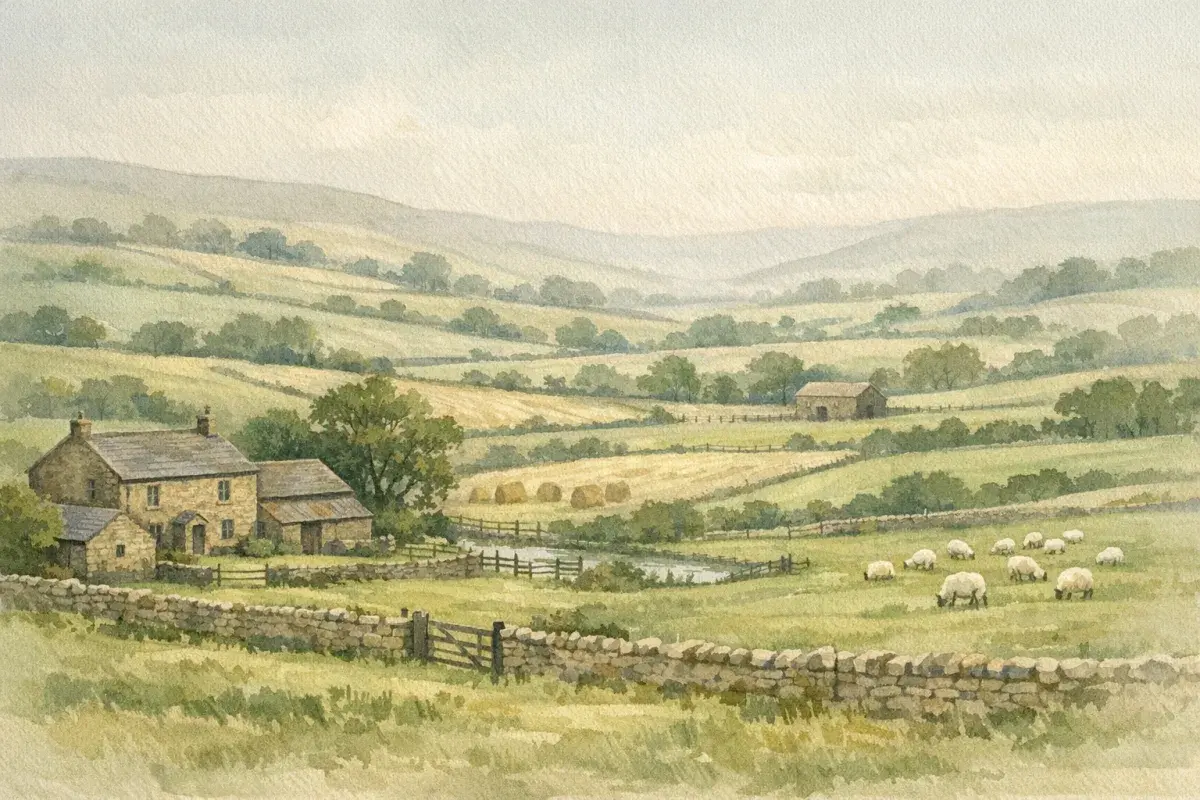
Agricultural land in England looks deceptively simple from the lane: hedges, gates, a few fields rolling away. But the moment you try to buy, sell, let, or even change how you use that land, you hit the real complexity, planning rules, tenancy law, access rights, tax reliefs, environmental constraints, and the not‑so‑small matter of what the land can genuinely produce.
If you're approaching a purchase (or a sale) with serious money and long-term intentions, "a nice block of land" isn't a strategy. You need to know what counts as agricultural land, what drives value, what can trip you up in due diligence, and when specialist advice will save you far more than it costs.
This guide is written for UK buyers and landowners dealing specifically with agricultural land in England. It's practical, a bit market‑savvy, and built around the questions we see come up again and again, from first‑time smallholders to established farmers expanding a unit.
What Counts As Agricultural Land In England (And Why It Matters)
In England, "agricultural land" isn't just a vibe, it's a legal and practical classification that affects planning, tenancy options, lending, tax reliefs, and what you can do day‑to‑day without falling into a change‑of‑use headache.
At a high level, agricultural land is land used for agriculture: growing crops, horticulture, grazing, meadow land, and land used for livestock breeding/keeping. But the details matter. The same field can shift in and out of "agricultural" in the eyes of planning or HMRC depending on what you do with it.
One of the first things you should get clear on is the land's capability and constraints. Soil, climate, drainage and slope are real-world limiters, but so is formal grading. If you're comparing blocks, checking the Agricultural Land Classification (ALC) can help you sanity-check whether you're paying "prime arable money" for land that behaves like marginal grass. AgLand's explainer on how land quality is graded in practice is a useful starting point.
Agricultural Use, Ancillary Uses, And Material Change Of Use
Agricultural use typically covers:
- Arable and cropping (including temporary grass in rotation)
- Permanent pasture and grazing
- Horticulture (market gardens, nurseries)
- Livestock keeping where it's genuinely part of farming activity
But the edge cases are where people come unstuck:
- Equestrian: keeping horses for leisure is usually treated as non-agricultural in planning terms (even though it may look similar to grazing cattle). If you're buying "horse paddocks", treat planning and existing lawful use as a due-diligence priority.
- Storage, haulage, contractors' yards: using a field or barn as a general storage yard can be a material change of use.
- Tourism and events: glamping, weddings, festivals, these can trigger planning, licensing, and enforcement risk quickly.
In practice, the question is often: is the use reasonably necessary for agriculture, or has it become something else? If it's "something else", you may need planning permission, and your tax position can shift too.
Tenure Basics: Owner-Occupied, Farm Business Tenancy, And Grazing Licences
How land is occupied is as important as what it is.
- Owner-occupied land gives you control, but you also carry all management and compliance burdens.
- Farm Business Tenancies (FBTs) (generally under the Agricultural Tenancies Act 1995) are the modern standard for letting agricultural land in England. They're flexible on term length and can be tailored around rent review, repair obligations, cropping clauses, and environmental schemes.
- Grazing licences are often used for short-term grazing, but they're frequently misunderstood. If the arrangement looks and behaves like a tenancy (exclusive possession, term certainty), you may have created more rights than you intended.
If you're buying land that's let, ask early: what's the agreement, what are the break clauses, and what's the practical relationship on the ground? The paperwork and the reality need to match.
How The English Agricultural Land Market Works
The English market can feel illogical until you remember one thing: agricultural land is valued on multiple layers at once, productive capacity, amenity appeal, development angle, and tax/security motivations.
You'll see that most clearly when two parcels of "similar looking" grass come to market and one sells for a punchy premium because it has road frontage, water, future hope value, or simply sits in the right postcode.
Land Values: What Really Moves The Price
Price is driven by a bundle of factors, not just acres:
- Location and competition: areas with high farm density and tight supply often see strong bidding.
- Block size and shape: a well-shaped block adjoining existing land can be worth more to a neighbour than to anyone else.
- Access: a decent gateway and all-weather access can be the difference between "workable" and "a misery in winter".
- Soil and drainage: productive, resilient land commands a premium, especially where weather volatility is biting.
- Uplift potential: buildings, yards, renewable potential, diversification prospects, or longer-term development hope.
- Tenure: vacant possession is typically valued differently from land subject to an FBT.
If you want a grounded sense of where the market is sitting, start with current benchmarks, then adjust for the parcel's specifics. AgLand maintains a running guide to agricultural land prices across the UK which is helpful for context before you start tweaking for quality, access and locality.
Supply, Demand, And How Off-Market Deals Happen
A lot of the best land in England never gets a big public marketing campaign.
Off-market (or "quiet") deals often happen because:
- A family is testing appetite without triggering gossip locally.
- A neighbour-to-neighbour sale is the cleanest route.
- A landowner is open to a sale but only at the right number and terms.
- A buyer has a clear requirement and the agent knows who might meet it.
If you're serious, act like it:
- Have funding realistically lined up.
- Be clear on what you'll accept (and what you won't).
- Show you can transact, good advisors, prompt responses, and sensible timescales.
And don't assume "off-market" means "discount". Often it means less noise, more certainty.
Buying Agricultural Land In England: Due Diligence That Protects You
Good due diligence isn't box-ticking, it's how you avoid buying a problem you can't fix at any sensible cost.
Yes, the solicitor will cover title. But you need a joined-up view: legal rights, physical condition, scheme obligations, and whether the land can be managed the way you intend.
If you want the full process end-to-end, including how to structure your search, offers and completion steps, AgLand's guide on how to buy agricultural land the right way pairs well with what follows here.
Title, Boundaries, Easements, And Rights Of Way
In England, some of the costliest rural disputes are the most mundane: who owns the hedge, where the boundary actually runs, and who can cross the yard.
Your checklist should include:
- Title plan vs reality: Land Registry plans show general boundaries rather than exact ones. Walk the boundaries and compare them to the title.
- Access rights: Do you have a legal right of way from the highway? Is it wide enough for modern kit? Who maintains it?
- Easements and wayleaves: overhead lines, water pipes, fibre routes, these can restrict building and sometimes cultivation.
- Public rights of way: footpaths and bridleways change how you manage biosecurity, livestock movements and privacy.
- Sporting, mineral or timber rights: what is included in the sale, and what is reserved?
If the land is unregistered or partly unregistered, factor extra time and cost. If you're unsure what "good" looks like, it's worth reading up on agricultural land registration and what can go wrong before you commit to a timetable.
Soils, Water, Drainage, And Environmental Constraints
Agricultural land in England is increasingly judged on resilience:
- Soils: texture, organic matter, compaction risk, stoniness, these affect yields and working days.
- Drainage: tired clay drains and blocked outfalls can turn "decent land" into a chronic delay.
- Water: private supplies, boreholes, abstraction licensing implications, and stock water reliability.
- Flood risk: not just big headline floods, regular winter saturation can hammer carrying capacity.
Environmental constraints also matter more than they used to because they can sit quietly in the background until you try to do something, replace a culvert, put up a building, or reconfigure a yard.
You're not trying to find reasons to walk away. You're trying to price the reality: what will it cost to run this land properly over the next 10–20 years?
Subsidies, Schemes, And Contracts: What Transfers (And What Does Not)
The subsidy landscape has shifted. In England, you'll come across a mix of:
- Delinked payments (where applicable) linked to historic claims
- Environmental schemes and stewardship-style agreements
- Private agreements (grazing lets, cropping licences, contract farming)
The key due diligence point is simple: not everything "comes with the land". Some entitlements and agreements attach to the claimant or business: others bind the land for a fixed term with management prescriptions.
Ask:
- Are there any current agreements affecting management (mowing dates, stocking limits, input restrictions)?
- Are there capital items (fencing, water, hedging) with ongoing maintenance obligations?
- Are there penalties or clawback risks on early exit?
A good rural surveyor and a solicitor who regularly handles agricultural land in England are worth their weight here, because this is where surprises become expensive.
Planning, Permitted Development, And Change-Of-Use Risks
Planning is where optimism goes to die, or to get properly structured.
In England, agricultural land gives you certain opportunities, but it also comes with enforcement risk if you drift into non-agricultural use, overbuild, or rely on "everyone does it" as your compliance strategy.
If planning is central to your purchase (new shed, new access, conversion hopes), don't wait until after you've exchanged. Start with a clear view of the rules and constraints. AgLand's deeper guide to planning permission on agricultural land is a useful reference point alongside professional advice.
Permitted Development Rights For Agricultural Buildings (What You Can And Cannot Do)
Permitted development (PD) rights can be valuable, but they're not a blank cheque.
Typically, PD routes in England depend on factors such as:
- The size of the agricultural unit (for example, thresholds around 5 hectares matter in some PD categories)
- Whether the building is reasonably necessary for agriculture
- Siting, design, and proximity limits
- Prior notification/prior approval steps where required
The fastest way to get this wrong is to plan a building that's "for farming" in theory, but in reality is aimed at storage for a non-agricultural business, a workshop, or something that looks like a future dwelling.
If you're weighing PD options, what's realistic, what needs prior approval, and where people commonly get tripped up, see AgLand's explainer on what you can build without full planning permission (and then confirm the specifics for your site with a planning consultant).
Agricultural Ties, Enforcement, And Lawful Use Evidence
Agricultural ties (occupancy conditions) can be a make-or-break issue if there's a dwelling involved.
If you're buying a farmhouse with a tie, you need to understand:
- Who can lawfully occupy (typically someone employed in agriculture or forestry, depending on wording)
- What evidence the council expects
- The implications for mortgageability and resale
On enforcement: councils can and do act where uses drift, unauthorised residential caravans, commercial storage, or intensification that changes the character of the use.
If you're relying on an existing use being lawful (for example, long-standing storage or equestrian), you may need evidence, documents, photos, invoices, and dates. "The seller says it's fine" is not evidence.
Designations And Constraints: AONB, SSSI, Flood Zones, And Heritage
Designations don't necessarily stop development, but they change the bar you have to clear.
Common constraints you'll see in England include:
- National Landscapes (formerly AONB)
- SSSIs and other protected habitats
- Flood Zones and surface water risk
- Listed buildings and conservation areas
- Scheduled monuments and archaeological sensitivity
The practical takeaway: if you're buying with a plan (new building, change of use, diversification), check constraints early and budget time for a more careful application process.
And if your plan depends on "keeping it quiet", stop. That approach tends to end with enforcement letters, planning consultants on speed dial, and a very awkward conversation with your lender.
Tax And Structuring: Getting Specialist Advice Early
Tax shouldn't be an afterthought you hand to an accountant once you've shaken hands.
In rural transactions, tax and structure are often intertwined with how the land is used, who occupies it, and what you intend to do next. Get the advice early enough that you still have choices.
Inheritance Tax And APR: Eligibility, Pitfalls, And Record-Keeping
Agricultural Property Relief (APR) can be valuable, but eligibility is fact-specific and tied to both the type of property and how it's occupied and used.
In broad terms, the risks tend to show up when:
- Land is bought primarily for amenity with only light agricultural activity
- Buildings are used for non-agricultural purposes
- Occupation/tenure arrangements don't match the intended relief
- Records are thin ("we've always done it this way") and hard to evidence
If APR (and wider estate planning) matters to you, treat record-keeping as part of the investment: cropping records, grazing lets, invoices, photos of use, and clear agreements.
Capital Gains Tax, Rollover Relief, And Badges Of Trade Risk
CGT questions crop up quickly when you're selling land, restructuring a farm, or changing use.
What you need to watch:
- Whether your disposal is treated as a straightforward capital gain, or whether HMRC could view activity as trading (the "badges of trade" risk)
- Whether rollover relief might apply if you're reinvesting in qualifying business assets
- How development discussions, option agreements, or overage can affect both value and tax analysis
If you're trying to get your head around the common misconception that "agricultural land is automatically CGT-free", AgLand's article on whether agricultural land is exempt from CGT is a sensible primer before you sit down with your tax advisor.
VAT, Stamp Duty Land Tax, And How Options To Tax Can Bite
VAT and SDLT are two areas where small misunderstandings can create large, irreversible bills.
Points to treat carefully:
- VAT status of land and buildings: some supplies are exempt, some are standard-rated, and elections (like opting to tax) can change outcomes.
- TOGC (transfer of a going concern): sometimes relevant where property is let or part of a business transfer.
- SDLT: rates and treatment depend on what you're buying (bare land, mixed-use elements, residential elements) and the transaction structure.
The practical advice: if there's a farmhouse, holiday let, commercial unit, solar lease, or anything that makes the deal "not just fields", assume complexity and get specialist input before exchange.
Letting, Farming, And Diversifying Land In England
Once you've secured land, the next question is how to make it work, commercially, practically, and in a way that won't paint you into a corner.
In England, you've got a menu of occupation and farming arrangements. The "best" choice depends on your objectives: steady income, operational control, labour availability, risk appetite, and whether you're trying to build (or protect) long-term value.
Choosing The Right Agreement: FBT, Contract Farming, Share Farming, Or Licence
Here's the straight-talking version:
- FBT: often best where you want rental income and limited day-to-day involvement. The detail in the clauses matters, repairs, dilapidations, soil management, rotations, and scheme participation.
- Contract farming: you typically keep more control and can benefit from performance, but you carry more risk and responsibility.
- Share farming: can align incentives where both parties contribute assets/inputs, but it needs careful drafting and good record-keeping.
- Licence: useful for short-term, tightly defined arrangements (like seasonal grazing), but it must be structured properly or it can drift into tenancy territory.
If you're letting land, you should also think about what you're not seeing: compaction, weeds, boundary creep, and "temporary" items that become permanent.
Stewardship And Natural Capital: Income Opportunities And Long-Term Commitments
Environmental land management in England has made stewardship and habitat work a mainstream part of rural income.
That said, treat it like a long-term contract, not a marketing brochure:
- Check duration and exit terms: some commitments run for years and can be awkward to unwind on sale.
- Understand management prescriptions: they can restrict cropping, mowing, grazing pressure, and inputs.
- Know the interaction with tenancies: who has the right to enter schemes, who receives payments, and who carries obligations?
Natural capital opportunities (like biodiversity and carbon-related projects) can be real, but they're still evolving, and contract terms matter a lot. Get advice that's specific to the scheme and your title.
Farm Infrastructure: Access, Utilities, Storage, And Biosecurity
Infrastructure is where good land becomes usable land.
Consider:
- Internal tracks and gateways: can you move kit without churning headlands or blocking a lane?
- Utilities: water for stock, three-phase electric if you need it, telecoms where management depends on connectivity.
- Storage and handling: grain, hay, machinery, livestock, do you have the right buildings or realistic permission routes?
- Biosecurity: boundaries, neighbour interfaces, footpaths, and how you'll manage disease risk.
A small, well-thought-out yard can add more operational value than an extra acre of awkward corner ground. It's also one of the first things a practical buyer notices when you come to sell.
How To Find Agricultural Land In England (And Act Fast Without Cutting Corners)
When good land comes up in England, the pace can be uncomfortable. You're balancing speed with caution, because if you rush the wrong bits, you can inherit years of problems.
The solution isn't to be slow. It's to be systematic.
Building A Search Brief: Size, Location, Quality, Budget, And Non-Negotiables
Your search brief should be sharp enough that an agent can act on it, and realistic enough that you don't waste six months viewing the wrong stuff.
Include:
- Size and minimum workable block: not just acres, think field layout and how it fits your system.
- Location: radius from your base, haulage realities, labour availability, local markets.
- Quality needs: arable capability vs permanent pasture: drainage tolerance: soil type.
- Access requirements: road type, turning, bridge limits, village pinch points.
- Non-negotiables: vacant possession, water supply, no footpaths through a yard, etc.
Then set a budget with headroom for real costs: fencing, water, drainage fixes, professional fees, and SDLT where relevant.
Working With Land Agents, Surveyors, And Rural Solicitors
The best outcomes usually come from a team that's done this exact job before.
- Land agents help with market intelligence, comparable evidence, negotiation, and access to opportunities.
- Rural chartered surveyors can sanity-check value, map constraints, and spot practical issues quickly.
- Rural solicitors keep the transaction safe, title, rights, contracts, and specialist clauses.
A tip we see pay off: decide who your "go-to" professionals are before you find the perfect block. When you're under time pressure, you don't want to be cold-calling for capacity.
Viewing Checklists, Offers, And Timelines From Heads Of Terms To Completion
A good viewing checklist stops you being swept along by a sunny day and a nice hedge line.
On site, check:
- Access in winter (ask the awkward questions)
- Water (location, reliability, rights)
- Boundaries (condition, responsibility, any encroachments)
- Neighbours and interfaces (footpaths, poultry units, industrial yards, shoot activity)
- Evidence of use (especially if there are non-agricultural elements)
When you offer, aim for clarity:
- Proposed price and what it includes (sporting rights, minerals, fixtures)
- Conditions (subject to finance, subject to planning, subject to vacant possession)
- Timetable and information you need promptly
And don't underestimate momentum. Once heads of terms are agreed, delays often come from missing documents, unclear boundaries, or undisclosed scheme obligations. The buyer who asks the right questions early is usually the buyer who completes.
Finally, use specialist tools to stay ahead. Because AgLand is built specifically for rural property, it's designed to help you spot suitable opportunities quickly and filter out the time-wasters, so you can move fast without cutting corners. Public bodies advertise this way too: Lincolnshire County Council became AgLand's first advertising partner, putting its commercial and development sites at the South Lincolnshire Food Enterprise Zone in front of matched buyers.
Conclusion
Agricultural land in England rewards the prepared buyer, and punishes the casual one. If you get clear on use, tenure, access, constraints, and the true drivers of value, you can move quickly with confidence when the right block appears.
Treat planning and tax as part of the purchase decision, not a clean-up exercise afterwards. Build a small team of rural specialists you trust. And keep your process disciplined: good notes, good maps, and a refusal to rely on assumptions.
Disclaimer: AgLand.co.uk is a UK agricultural land and rural property matching service, where buyers register what they are looking for and owners advertise directly to the buyers who match, and a rural resource hub. Nothing in this text is intended as legal, financial, tax, or investment advice. You should do your own due diligence and take independent advice from suitably qualified professionals (for example, rural solicitors, chartered surveyors, tax advisers, and planning consultants) before making decisions or entering into transactions.