
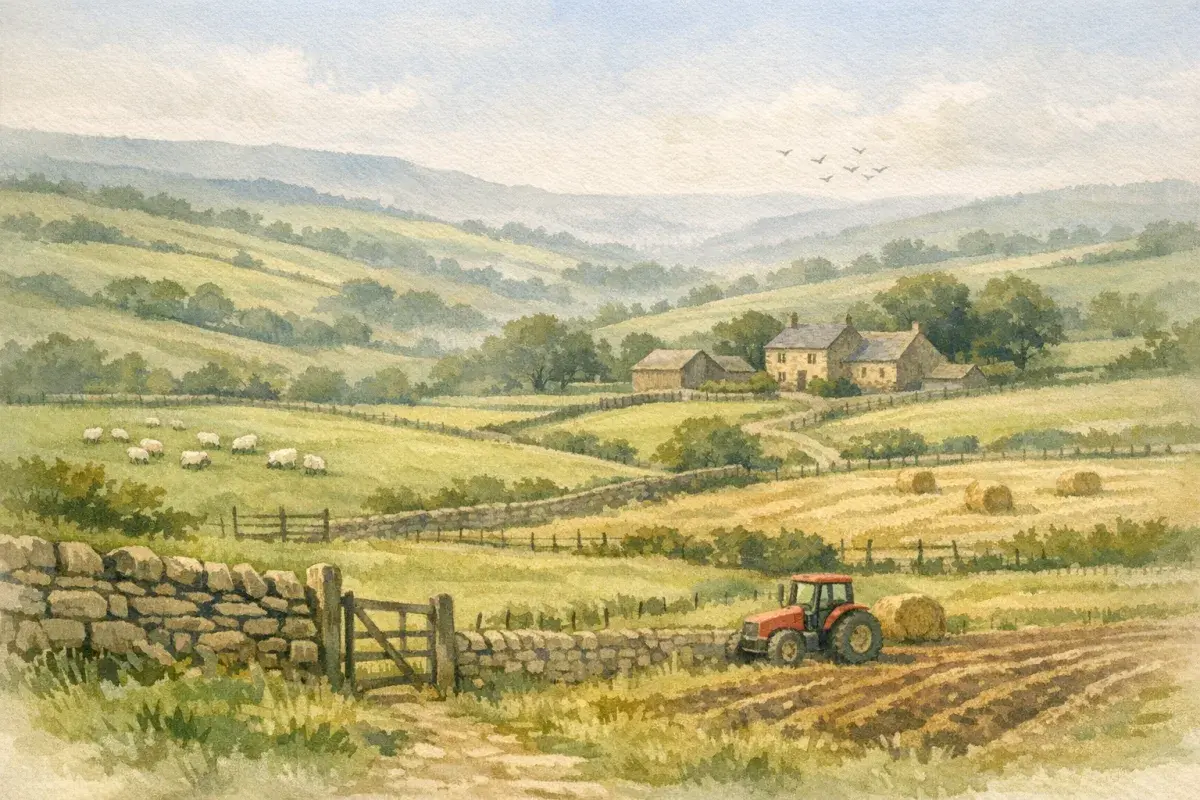
Buying agricultural land isn't like buying a house. The "nice view" matters, sure, but access, rights, designations, water, title oddities, and tax treatment can make or break the deal long after the excitement of the first viewing fades.
If you're serious about learning how to buy agricultural land in the UK, you need a method: define what the land must do for you, pressure-test the numbers, then run disciplined due diligence so you don't inherit someone else's problem (a disputed boundary, a ransom strip, an unworkable access track… you get the idea).
Below is the step-by-step approach we see good buyers follow, farmers expanding blocks, rural businesses securing operational bases, and investors building long-term holdings, along with the common traps that waste time and money.
Clarify Your Buying Strategy And Budget Before You View Anything
Most "bad" land purchases start with a vague goal: "I want some acres." Acres for what, exactly, and under what constraints? If you decide those answers after you've fallen in love with a block, you'll negotiate emotionally and diligence lazily. Neither ends well.
Define Your Use Case: Farming, Amenity, Woodland, Equestrian, Or Natural Capital
Be brutally specific about what you need the land to do in years 1–3 and years 4–10.
- Food production / livestock: You'll care about soil type, field shape, handling facilities, water for stock, hard standings, and the reality of moving machinery onto and across the holding.
- Amenity / lifestyle: Access, privacy, public rights of way, nearby shooting, and neighbour uses (poultry sheds, anaerobic digestion, caravan storage) suddenly matter more than yield potential.
- Woodland: Species mix, access for extraction, long-term management plans, and any felling licence history are key. Also ask whether the seller has made (or intends to make) any woodland creation/management grant claims.
- Equestrian: Many buyers get caught here. "Horses on land" can move you into a different planning/use picture depending on intensity and facilities. If you're thinking ménage, stabling, parking, events, or livery, treat it as its own project from day one.
- Natural capital / environmental markets: Whether you're exploring biodiversity net gain (BNG), nutrient neutrality, carbon, or woodland creation, the contractual side is often harder than the ecological side. You need clarity on duration, obligations, stacking rules, and what future buyers/lenders will think.
A practical trick: write a one-page "land brief" with non-negotiables (minimum gateway width, mains water availability, no footpaths through the yard area, etc.) and nice-to-haves. Take it to viewings. Stick to it.
Choose An Acquisition Route: Outright Purchase, Partnership, Or Farm Business Tenancy
The "best" route is the one that matches your balance sheet, timescales, and how hands-on you want to be.
- Outright purchase: Cleanest control, simplest for long-term planning. But it ties up capital and can force uncomfortable compromises elsewhere (kit, livestock numbers, working capital).
- Partnership / joint venture: Can work well when one party brings land and the other brings labour/cropping expertise. Get the governance, exit routes, and capital contributions documented properly, handshake structures crack under stress.
- Farm Business Tenancy (FBT): If your goal is operational expansion without tying up capital, renting can be the right call. But don't treat it as "temporary and informal": term length, repairs, cropping flexibility, and break clauses decide whether it's workable.
Build A Realistic Budget: Deposit, Finance, Tax, And Ongoing Operating Costs
A land budget isn't just a price-per-acre figure. You need to model the whole transaction and the first year of ownership.
At minimum, allow for:
- Deposit and lender fees (if borrowing)
- Professional fees: solicitor, surveyor/valuer, specialist reports (utilities searches, ecology, drainage), and potentially planning advice
- Tax: SDLT can be material depending on classification and what's included
- Immediate capex: fencing, water troughs, track repairs, gateways, hedge laying, ditching
- Ongoing costs: insurance, maintenance, vermin control, contractor costs, stewardship obligations (if you inherit them)
Two common budget mistakes we see:
- Assuming the land is "ready to run". Many blocks need basic enabling works before they're usable (and those costs rarely show in the glossy details).
- Ignoring time cost. If access is awkward or fields are fragmented, your operational efficiency drops every single season.
If you're buying as a business, build a simple sensitivity: what happens if commodity prices dip, interest rates rise, or you lose a contractor? You don't need a 40-tab spreadsheet, just enough to avoid a purchase that only works in perfect conditions.
Find The Right Land (And Avoid The Usual Search Traps)
The UK land market can be opaque: some of the best blocks trade quietly, while some of the noisiest listings are noisy for a reason. Your job is to create a search process that's wider than the obvious websites, but tighter than "drive around and hope."
Where Agricultural Land Is Actually Sold: Agents, Tenders, Auctions, And Off-Market
In practice, you'll encounter several routes:
- Private treaty via land agents: Common for farms and larger blocks. Expect structured marketing, packs, and a deadline-driven process if there's interest.
- Formal tender: Often used when the seller wants competitive bids with clear conditions and timescales.
- Auction: Can suit smaller parcels, blocks with complications, or estates rationalising assets. You must have legal work done early, auction timelines don't wait.
- Off-market / discreet sales: Very real in rural property. Relationships matter: buyers who are known, funded, and decisive get calls first.
To keep your search grounded (and not reliant on luck), use a specialist platform to monitor what's coming up and how it's being presented. If you want a practical overview of channels and how they differ, this guide on places agricultural land is actually found in the UK is a useful companion.
Shortlisting With Evidence: Soil, Access, Water, Boundaries, And Neighbouring Uses
Once you've found candidate parcels, shortlist with evidence, fast.
Focus on five essentials:
- Access: Is it adopted highway to gate, or a shared/private track? Can an artic or livestock wagon physically get in and turn? What happens in winter?
- Water: Mains? Private supply? Streams? Springs? If it's private, who maintains it and do you have legal rights to it?
- Soils and capability: Light land vs heavy clay isn't a preference, it's a machinery plan, a cropping rotation, and sometimes a drainage bill.
- Boundaries: Hedges and ditches look quaint until you're responsible for them. Boundary condition and clarity affect stock-proofing and neighbour relations.
- Neighbouring uses: Check what's next door and what could appear. Nearby poultry units, waste facilities, or intensive equestrian use can change the feel and function of a block.
A simple "red/amber/green" shortlist sheet after each viewing keeps you honest. If a parcel is amber on access and amber on water, it's usually not a "maybe", it's a future headache.
Do A First-Pass Constraints Check: Designations, Rights Of Way, And Utilities
Before you spend money on deeper due diligence, do a first-pass constraints scan.
- Designations: National Parks, AONBs, SSSIs, Scheduled Monuments, flood zones, each can affect management and development options.
- Public rights of way: A footpath through a field is manageable: a bridleway cutting through a potential yard site can be a deal-altering constraint.
- Utilities and infrastructure: Overhead lines, underground pipes, fibre routes, and substations can restrict building and create access obligations.
This stage is about ruling out obvious mismatches early. If your plan relies on future buildings, and the block sits in a sensitive landscape designation with poor access, treat that as a warning light, not a challenge to "talk the council around."
If you want to see how land is being packaged and described (and what information good agents include), it's worth scanning live listings and details in one place, such as AgLand's rural listings feed.
Viewings And Early Due Diligence: What To Check On The Ground
A viewing isn't a wander with wellies. It's your chance to verify what the particulars imply, and spot what they don't mention.
Take someone practical if you can (your contractor, farm manager, or a trusted neighbour). Two sets of eyes beat one, especially when you're balancing excitement with judgement.
Title And Boundaries Reality Check: Plans, Fences, Ditches, And Occupation
Start with the basics: does the land on the plan match the land on the ground?
- Walk key boundaries, not just the pretty bits. Look for missing fences, tired hedges, or uncertain corners.
- Check for "occupation creep": a neighbour's fence on your side, a garden encroachment, a gate that's clearly been treated as someone else's for years.
- Look for access points in practice: the plan might show a right of way, but the gateway could be unusable or blocked.
A lot of rural disputes are low-grade and long-running. You're not buying just soil, you're buying the potential for a decade of awkward conversations if boundaries are fuzzy.
Services And Practicalities: Water Supply, Drainage, Power, Tracks, And Gateways
Even bare land has "services" questions.
- Water: If there's a trough and it works, great. If water is via a private pipe, ask where it runs and who else relies on it.
- Drainage: Heavy land without workable outfalls can be a slow-motion productivity loss.
- Power: If you might ever need electric fencing, sheds, irrigation, or EV charging for business vehicles, proximity and capacity start to matter.
- Tracks and gateways: Measure them. "Good access" in a brochure can mean "fine for a quad bike."
Don't be shy about taking photos and notes. You'll forget details when you've viewed three blocks in a week and they start to blur.
Condition And Capability: Soils, Cropping History, Weeds, And Environmental Liabilities
On condition, aim to answer three questions:
- What can this land realistically do? A field might look tidy but be compacted, wet, or short of organic matter.
- What will it cost to put right? Dock and thistle pressure, ragwort on neglected pasture, or bracken creep on upland edges all have time and cost implications.
- Is there an environmental liability? Fly-tipping, buried waste, oil drums near a derelict building, or historic dumping areas can become your problem.
If anything feels off, don't "assume it'll be fine." This is where a good rural surveyor or land agent earns their fee, by turning gut feelings into evidence.
Legal Due Diligence That Protects You (Not Just A Paper Exercise)
Legal due diligence is where you stop thinking like a hopeful buyer and start thinking like a cautious owner.
You're looking for anything that changes: (1) what you can do with the land, (2) what it will cost to operate, and (3) what you can sell in the future.
Tenure And Occupation: Vacant Possession, Grazing Licences, And Hidden Rights
"Vacant possession" should mean what you think it means, but check.
- Grazing arrangements: A "casual" grazier might actually have paperwork, or at least a pattern of occupation that's hard to unwind.
- In-hand vs let land: If any part is occupied, you need clarity on status, termination rights, and whether compensation could be payable.
- Third-party rights: Sometimes rights exist for shooting, fishing, or access that aren't obvious on a first read.
Your solicitor should be rural-literate. If they mainly handle suburban conveyancing, push for someone who regularly deals with farms, easements, and complex titles.
Easements, Wayleaves, And Ransom Strips: Access And Infrastructure Risk
This is one of the biggest "how to buy agricultural land" traps in the UK: thinking you have access because you can physically drive in today.
- Easements (rights of way): Confirm they're properly granted, benefit your land, and are wide enough for your intended use.
- Wayleaves and utility easements: Know what infrastructure crosses the land and what rights the operator has to enter, maintain, and restrict your use.
- Ransom strips: A tiny retained strip between your land and the highway can give someone else control over access. It's not common everywhere, but when it appears it's serious.
If access relies on goodwill, treat it as unsecured debt: it works… until it doesn't.
Sporting, Mineral, Timber, And Development Rights: What You Are (And Aren't) Buying
In rural transactions, it's entirely possible to buy the surface and not buy everything you assume comes with it.
Check specifically:
- Sporting rights: Who controls shooting? If you're buying amenity land, this can affect safety, insurance, and your enjoyment.
- Mineral rights: Often retained historically. That doesn't mean diggers arrive tomorrow, but lenders and future buyers care.
- Timber rights: If there's woodland, confirm what's included, what's been sold, and whether any rights are reserved.
- Development rights and restrictions: Development value is often the elephant in the room. Covenants, uplift provisions (overage), and promotion agreements can shift value away from you.
Planning, Permitted Development, And Uplift Clauses: Know The Rules And The Triggers
Planning is where optimism gets expensive. Agricultural land can come with useful flexibility, but permitted development is a privilege, not an automatic right, and it's heavily dependent on facts.
What Agricultural Use Covers (And When You Cross Into Equestrian Or Commercial)
"Agriculture" has a legal meaning. In plain terms, it covers things like arable, livestock, and horticulture, plus activities reasonably connected to those uses.
Where buyers slip up is assuming:
- Horses = agriculture. Grazing horses can be agricultural in limited circumstances, but many equestrian activities (training, schooling, livery, commercial stabling) are treated differently and can trigger planning considerations.
- Storage = harmless. Storing plant and machinery for your farm business is one thing: storing caravans, building materials for third parties, or running a non-agricultural operation is another.
If your plan is anything beyond straightforward farming, talk to a planning consultant early. The right advice up front is cheaper than enforcement, or a refused application after you've bought.
Permitted Development Rights In Practice: Prior Notifications, Limits, And Evidence
Permitted development (PD) for agriculture (often under the GPDO in England, with separate regimes and nuances elsewhere in the UK) can allow certain buildings and works without full planning permission, but usually with prior notification and conditions.
What matters in practice:
- Unit size and thresholds: PD rights often depend on the size of the agricultural unit and the nature of the works.
- Evidence of agricultural need: Councils may look for genuine, functional need, not "it would be nice."
- Siting, design, and highways: Even under PD, access and appearance can be assessed.
Treat PD as a tool, not a guarantee. If a seller hints at "easy sheds," ask what's been built, what notifications exist, and whether any conditions were discharged.
Overage, Clawback, And Restrictive Covenants: How Future Value Can Be Shared Away
Even if you have no plans to develop, you must read uplift clauses as if you might one day.
- Overage/clawback: The seller (or previous seller) may be entitled to a slice of uplift if planning permission is secured within a defined period.
- Trigger events: Sometimes it's planning permission: sometimes it's implementation: sometimes it's even promotion agreement entry.
- Restrictive covenants: These can block buildings, business uses, or even certain types of fencing.
Overage isn't automatically "bad", it can be a fair compromise, but it needs careful drafting. Watch the percentage, duration, deductions allowed (planning costs? infrastructure?), and how "market value" is assessed.
Making An Offer, Negotiating Terms, And Securing Finance
Offers on agricultural land are rarely just about price. They're about certainty, speed, and the conditions attached to the deal.
Price Drivers In The UK Market: Location, Block Size, Quality, And Local Demand
In the UK, the big price drivers tend to be:
- Location and competition: Proximity to strong farming areas, lifestyle demand, and local money (including neighbour buyers) can push values hard.
- Block size and shape: Ring-fenced, workable blocks with good access typically attract a premium.
- Land quality and drainage: Productive, versatile land often holds value better in mixed market conditions.
- Hope value: Even whisper-level development potential can inflate a guide price.
Don't anchor on price-per-acre alone. Two parcels at the same £/acre can deliver totally different operational outcomes.
Heads Of Terms And Timelines: What To Agree Upfront To Prevent Drift
If you want your purchase to complete cleanly, agree heads of terms that remove ambiguity.
Include:
- What's included (gates, water infrastructure, timber, sporting rights)
- Vacant possession date and any conditions around occupation
- Responsibility for keeping land in the same condition between offer and completion
- Target dates for searches, survey, exchange, and completion
- What happens if an issue arises (price adjustment vs remedy vs walk-away)
The best negotiations are calm and specific. Vague promises like "we'll sort the fence" don't survive solicitor correspondence.
Funding Options: Agricultural Mortgages, Bridging, Private Finance, And Cash
Funding is as much about fit as cost.
- Agricultural mortgages: Common for land and farms, often with valuations focused on agricultural use and comparable evidence.
- Bridging: Can help with speed, but you need a credible exit (refinance, sale of another asset, or known cash event).
- Private finance: Sometimes used for niche situations, but terms vary widely, scrutinise covenants and default provisions.
- Cash: Fastest, but still not "simple", you must diligence properly because you can't blame the lender later.
Whatever route you choose, align finance to your timescale. If a tender requires exchange within weeks, you need funding lined up before you bid.
Looking for land like this? Tell AgLand what you're after - type, acreage, budget and area - and we'll alert you the moment a matching property is advertised. Registering is free, and there's no commission on either side. Tell us what you're looking for.
Tax, Reliefs, And Structuring: Get Advice Before You Exchange
Tax is where confident buyers quietly get professional help, because getting it wrong can cost more than you'll ever "save" negotiating.
This section is UK-focused and intentionally practical, but you should take bespoke advice for your own circumstances.
SDLT On Land Transactions: Rates, Mixed Use, And Common Pitfalls
Stamp Duty Land Tax (SDLT) can apply differently depending on what you're buying.
Common pitfalls include:
- Assuming it's always "non-residential": If there's a farmhouse, cottage, or residential element, the calculation can change.
- Mixed-use complexity: Transactions that include both residential and non-residential components can be nuanced.
- Overlooking linked transactions: Purchases that are connected (same seller, same buyer group, interdependent deals) may be treated together.
Your solicitor and accountant should confirm the likely SDLT position early, ideally before your offer is finalised.
Inheritance Tax And Succession: APR, BPR, And The Importance Of Genuine Use
Agricultural Property Relief (APR) and Business Property Relief (BPR) can be critical for long-term owners, but they're not a box-ticking exercise.
What matters in reality:
- Genuine agricultural use and occupation: Reliefs depend on facts, who occupies, what the land is used for, and the nature of any business.
- Let land vs in-hand: Tenure and agreements can affect relief eligibility.
- Time and evidence: Good record-keeping (cropping, grazing, invoices, tenancy documents) can matter years later.
If you're buying land as part of a family succession plan, bring your tax adviser in early. Changing structure after exchange can be difficult or costly.
Capital Gains And Rollover Planning: When Buying Links To A Wider Strategy
If you're buying because you've sold something else (a block, a building site, a business asset), you may be thinking about rollover relief or other CGT planning routes.
The main point: the sequence and timing of transactions can be as important as the land itself. Don't exchange on a purchase and then ask your accountant whether the wider plan works, you want that answer beforehand.
We regularly see buyers save stress simply by having a short, structured pre-exchange call with their accountant and solicitor together. It aligns assumptions and flushes out the "we thought the other adviser was covering that" gap.
Exchange, Completion, And Post-Purchase Actions
Exchange and completion are the finish line, but also the moment you take on real-world risk. The handover is where you prevent small problems becoming expensive ones.
Surveys, Insurance, And Completion Checks: What Must Be Confirmed Before Funds Move
Before funds move, confirm:
- Survey/valuation outcomes: If issues were flagged, ensure they're addressed, priced in, or insured.
- Insurance: Make sure risk passes at the right point (often exchange) and your cover matches the property (public liability, buildings if any, environmental risks if relevant).
- What's actually included: gates, fencing materials, water fittings, handling kit, get it listed where possible.
If you're buying with buildings, don't skip basic safety checks. Old yards can hide asbestos, unsafe electrics, or fragile roofs that are fine until someone falls through.
Registers And Records: Land Registry, Rural Payments, Stewardship, And Mapping
Post-completion admin isn't glamorous, but it's where ownership becomes operational.
- Land Registry: Your solicitor handles registration, but you should keep your own organised file of plans, deeds, and correspondence.
- Mapping: Get clean digital boundary files for your own management, contractors, and any scheme applications.
- Schemes and obligations: If the land is in an agreement (or has restrictions), make sure you know what transfers, what needs consent, and what the deadlines are.
If you're building a longer-term portfolio of rural assets, this is where disciplined record-keeping pays off, especially if you later refinance, restructure, or sell.
Establishing Management Fast: Fencing, Access Agreements, Biosecurity, And Neighbours
The first 90 days of ownership set the tone.
- Secure boundaries and gateways: Not because you distrust everyone, but because clarity prevents accidental trespass and "informal" use becoming established.
- Confirm access arrangements: If you share tracks or have crossing rights, introduce yourself and document practical arrangements.
- Biosecurity: If livestock will move on, consider quarantine protocols, water hygiene, and boundary integrity.
- Meet neighbours early: A quick, friendly introduction can prevent years of tension, and you'll learn local history you won't find in searches.
One understated tip: do a slow drive around the wider area at different times of day. You'll spot school-run traffic pinch points, seasonal flooding, and how busy nearby rights of way really are.
If you're still comparing options or looking for your next parcel, it's useful to keep a shortlist of live listings and revisit details as your criteria sharpen, AgLand's platform makes that straightforward via its agricultural property portal.
Conclusion
If there's one lesson in how to buy agricultural land in the UK, it's this: the "best" land isn't the one that photographs well, it's the one that stands up to scrutiny on access, rights, practical capability, and long-term strategy.
Make your brief specific, do early constraints checks before you spend heavily, and treat legal and tax advice as part of the purchase cost (because it is). When a deal feels rushed or oddly vague, slow it down. Good opportunities come around again: expensive mistakes linger.
Disclaimer: AgLand.co.uk is a UK agricultural land and rural property matching service, where buyers register what they are looking for and owners advertise directly to the buyers who match, and a rural resource hub. Nothing in this text is intended as legal, financial, tax, or investment advice. You should carry out your own due diligence and seek advice from appropriately qualified professionals (for example, solicitors, chartered surveyors, accountants, and planning consultants) before making decisions or entering into any transaction.