
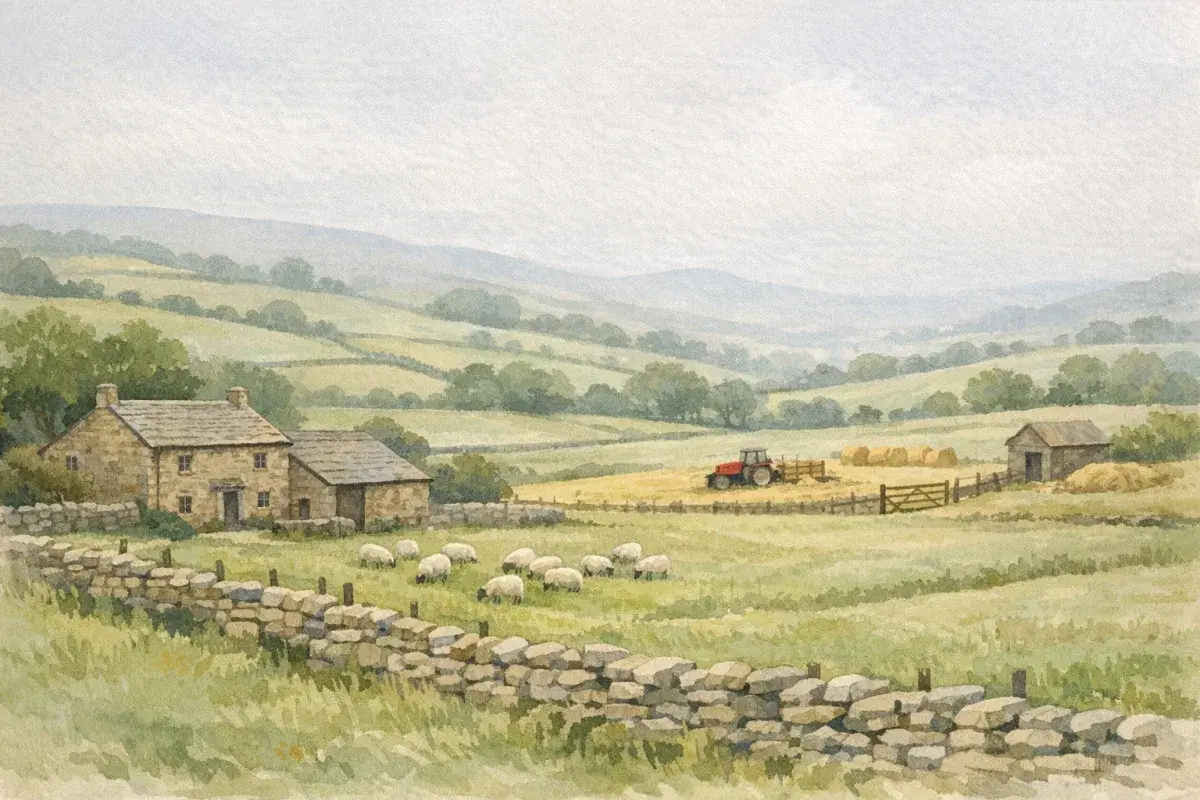
An FBT can be a brilliant tool in the UK rural property world: flexible enough to let land move to the person best placed to farm it, structured enough to support investment, and (usually) clear enough to avoid the long shadow that older tenancy regimes can cast.
But it's also one of those arrangements where small drafting choices create big outcomes. A loosely-described repair obligation, a vague plan for environmental schemes, or a "friendly" side agreement about storage in a shed can change risk, tax position, and day‑to‑day working relationships.
This guide cuts through the practical stuff you actually need to get right, what an FBT is (and isn't), who can hold one, the commercial terms that matter, compliance duties, tax traps, and how to create and end an agreement properly. If you're looking for land to let or rent, AgLand.co.uk is built to help you find UK‑only rural opportunities and connect with specialist agents who handle these deals every day.
What A Farm Business Tenancy Is (And What It Is Not)
A Farm Business Tenancy (FBT) is the standard form of agricultural tenancy in England and Wales created under the Agricultural Tenancies Act 1995. In plain terms, it's a tenancy of agricultural land (and often buildings) granted for the purpose of farming, where the parties can agree most of the commercial terms, and where the tenant generally has less long-term security than under older regimes.
Two points matter more than people realise:
- An FBT is still a tenancy. That means exclusive possession (in most cases), rent, a term, and enforceable obligations.
- An FBT is not a "template you download and sign". The statute gives you a framework, but your wording drives the real-world outcome, especially on repairs, use, diversification, and scheme participation.
FBT Vs Agricultural Holdings Act (AHA) Tenancy
If you're comparing an FBT with an Agricultural Holdings Act 1986 (AHA) tenancy, you're really comparing two different eras of policy.
- AHA tenancies (typically pre‑1 September 1995) often come with strong security of tenure and succession rights. That's why landlords treat them as long-term liabilities (or assets, depending on where you sit) and why valuations can look very different.
- FBTs are designed to be more flexible and market-responsive. They can be short, they can be long, and they can be tailored. But they generally don't carry the same automatic multi-generational security.
In practice, that flexibility is a double-edged sword. It lets you agree terms that fit a modern farming business, cropping rotations, environmental commitments, permission for mobile poultry units, or rights to put in water infrastructure. But it also means the "default" protections you might assume exist simply aren't there unless you write them in.
When A Grazing Licence Or Contract Farming Agreement May Fit Better
Not every arrangement involving land and livestock needs to be an FBT.
A grazing licence may fit better when you're trying to keep things short, seasonal, and tightly controlled, often where the landowner wants to retain occupation/control and avoid accidentally granting a tenancy. Typical examples include:
- aftermath grazing for a defined period
- conservation grazing with strict stocking terms
- a stop-gap arrangement while a longer letting is prepared
A contract farming agreement can suit situations where the landowner wants to retain the farming "trade" and claim certain reliefs, while a contractor provides labour and machinery for a fee and/or profit share.
The catch? Mislabelled arrangements are common. Calling something a "licence" doesn't stop it being treated as a tenancy if, in substance, the occupier has exclusive possession for a term at a rent. If you're aiming for a licence or contract farming model, get a rural solicitor and land agent involved early, because "we'll keep it informal" has a habit of turning into a dispute right when you can least afford it.
Who Can Grant And Who Can Hold An FBT
At a high level, most landowners (including individuals, trustees, and companies) can grant an FBT, and most farming businesses can hold one. The real questions are usually about capacity, authority, and whether the occupation/use will satisfy the statutory tests.
The "Business Of Agriculture" Test And Mixed-Use Land
To qualify as an FBT, the tenancy must be primarily for the business of agriculture. Agriculture is interpreted broadly (and includes things like arable, livestock, horticulture, fruit growing, and some woodland use when ancillary), but it's not a free-for-all.
Where you need to be careful is mixed-use holdings:
- If you're letting land with a significant non-agricultural element (commercial storage, yard lettings to third parties, events use, equestrian livery), you risk drifting away from what the law will accept as an agricultural tenancy.
- Diversification doesn't automatically break an FBT, but you should document what's allowed, what needs consent, and whether any non-agricultural income affects rent reviews, insurance, planning exposure, or tax relief assumptions.
A practical rule: if you can't describe, in one sentence, how the holding will be used for farming as a business, pause and tighten the drafting.
Partnerships, Companies, And Succession Considerations
Modern farming doesn't always sit neatly under "Mr Smith, tenant". You might be operating through:
- a partnership
- a limited company
- a limited liability partnership (LLP)
- multiple family members with changing involvement
That matters because:
- Identity of the tenant affects enforcement. If the agreement is with an individual but the trading entity is a company, you can end up with muddled liability for repairs, environmental breaches, and rent.
- Change of control clauses may be appropriate where a corporate tenant could be sold, or where you want restrictions on assignment.
- Succession is not the same under FBTs as under AHA tenancies. If you're planning for generational continuity, you need to understand what you're relying on (contractual rights vs statutory rights) and how that interacts with your wider estate plan.
If you're a landlord, you'll often want clear restrictions on assignment, subletting, and sharing occupation, plus guarantees (or rent deposits) where appropriate. If you're a tenant, you'll want the agreement to match your real business structure, because lenders, scheme administrators, and insurers will look at the name on the paper, not your intentions.
Key Commercial Terms That Shape Risk And Return
Most FBT disputes aren't about "farming". They're about money, time, and responsibility, and those are set by the commercial terms.
Rent Setting, Reviews, And Evidence From Comparable Lettings
FBT rent is, in effect, a commercial negotiation. The best deals are grounded in evidence and reality, not what someone's neighbour once achieved in a completely different parish.
In practice, rent is influenced by:
- land quality (soil type, drainage, topography)
- acreage blocks and field layout (efficiency matters)
- water availability and supply costs
- included infrastructure (buildings, tracks, handling facilities)
- scheme obligations (stewardship burdens can reduce "farmable" value)
- location and local demand
Rent reviews are where you either protect yourself, or bake in future conflict. Common approaches include:
- fixed uplifts (simple, but can overshoot/undershoot market)
- open market review based on comparable FBT lettings (needs evidence)
- index-linked approaches (less common, but predictable)
If you're a landlord: insist on a clear process, timescales, and how evidence is assessed. If you're a tenant: push for safeguards against unrealistic comparables (e.g., land with significantly better buildings or fewer restrictions).
Term Length, Break Clauses, And Security Of Tenure In Practice
FBTs can be short or long. What matters is whether the term aligns with:
- the cropping cycle and rotations
- planned capital investment (tracks, fencing, drainage, grain storage)
- scheme commitments (multi-year obligations)
- livestock infrastructure payback
A short term with a landlord break clause can look fine on day one, and become unbankable on day 200 when you need finance for reseeding or infrastructure.
Break clauses should be drafted with care:
- Who can break (landlord, tenant, or both)?
- On what notice?
- Is it conditional (no arrears, compliance with covenants, giving up vacant possession)?
Security of tenure under an FBT is fundamentally contractual: you get what you negotiate. So negotiate like it matters.
Repairing Obligations, Fixtures, And End-Of-Term Claims
Repairs are where "I assumed…" goes to die.
Typical repair structures include:
- tenant responsible for day-to-day repairs: landlord for structural
- tenant responsible for most repairs, with a schedule of condition limiting liability
- full repairing terms (often too risky for short terms unless rent reflects it)
A Schedule of Condition is one of the cheapest ways to prevent expensive arguments. Photos, dated notes, clear descriptions, done properly, it stops end-of-term debates about whether a gate was hanging when you arrived or when you left.
On fixtures and improvements, clarify:
- what the tenant can install (fencing, water troughs, polytunnels, tracks)
- whether landlord consent is needed
- whether the tenant must remove items at the end
- whether compensation is payable for beneficial improvements
Also be careful with "just crack on" arrangements. If you install infrastructure without written consent and then fall out, you can end up with no compensation and an obligation to reinstate.
Use, Management, And Compliance: What You Can (And Cannot) Do
An FBT doesn't just allocate land. It allocates control, and control comes with compliance.
Permitted Uses, Cropping, Stocking, And Diversification Controls
Your permitted use clause should do real work. It should answer:
- Can you change land use within agriculture (e.g., arable to grass)?
- Are there stocking limits (and who enforces them)?
- Can you bring in outside stock (and what about TB risk management expectations)?
- Is any diversification allowed, and if so, what needs written consent?
Landlords often need restrictions to protect:
- long-term soil health
- stewardship requirements
- sporting rights and amenity
- neighbour relationships (noise, traffic, biosecurity)
Tenants need enough flexibility to run a viable business. A sensible middle ground is usually:
- freedom within "good husbandry"
- specific consent requirements for defined higher-risk activities (e.g., hardstanding, new tracks, non-agricultural storage, commercial third-party use)
And if buildings are included, spell out whether they're for agricultural use only, what's excluded (hazardous materials, waste, tyres), and who is responsible for compliance with fire and safety requirements.
Environmental Schemes, Public Access, And Stewardship Commitments
Environmental land management has moved from "optional extra" to core strategy on many holdings.
If land is already in a scheme, or the landlord plans to enter one, your FBT must be clear on:
- who is the agreement holder
- who does the work on the ground
- who bears the cost of compliance
- who receives the payments
- what happens if the tenancy ends mid‑agreement
Public access is another potential flashpoint. Where access exists (public rights of way) or is created via scheme options, you'll want practical rules on:
- signage
- gates and stiles
- maintenance responsibilities
- livestock management near access routes
A small drafting point that saves headaches: include a mechanism for agreeing annual scheme prescriptions (who does what, by when), and what evidence is kept. Stewardship audits are much less stressful when your paperwork isn't spread across three vehicles and a kitchen drawer.
Cross-Compliance, NVZs, Hedgerows, And Other Regulatory Duties
Even with changes to farm support over recent years, compliance obligations haven't disappeared, if anything, they've become more joined-up and more evidenced.
Depending on location and operation, duties can include:
- NVZ (Nitrate Vulnerable Zone) rules where applicable (manure storage, spreading limits, record‑keeping)
- hedgerow and boundary protections (timing and permissions for cutting/removal)
- rules around watercourses, pollution prevention, and storage of fuels/chemicals
- waste management obligations (including plastics, bale wrap, and fly-tipping response)
Your FBT should allocate:
- who keeps records
- who pays for compliance infrastructure (e.g., bunded tanks, fencing off ditches)
- who is responsible for remediation if something goes wrong
This isn't about distrust, it's about clarity. Regulators and insurers won't accept "we thought the other party was dealing with that".
Tax, Reliefs, And Structuring: Avoiding Expensive Surprises
Tax is where an FBT can quietly bite, especially when assumptions are made about reliefs that depend on occupation, control, and the nature of the activity.
You should take advice from a UK rural accountant/tax adviser who deals with agricultural property regularly. The same clause can look sensible commercially and still create a tax outcome you didn't intend.
Inheritance Tax: APR, BPR, And Occupation And Control Issues
Inheritance Tax (IHT) reliefs are a big driver of rural estate decisions.
- Agricultural Property Relief (APR) can apply to agricultural property, but it depends on factors including the nature of the property and how it's occupied/used.
- Business Property Relief (BPR) may be relevant in some structures, but it's sensitive to whether activities are considered trading vs investment.
FBTs can interact with these reliefs in ways that surprise people, particularly where:
- the landlord is more "hands-off" than they realise
- the holding has significant non-agricultural use
- buildings are used for non-farming purposes
- there's a mix of in-hand farming, contract farming, and tenanted land across the same estate
The practical point: if IHT relief is part of your long-term plan, don't treat the tenancy as a standalone document. It has to align with how the estate is actually run.
Capital Gains Tax: Rollover, Hold-Over, And Development Value Traps
Capital Gains Tax (CGT) planning often comes into play when land is sold, reorganised, or earmarked for development.
Common pressure points include:
- whether land is "used in a trade" for rollover relief purposes
- whether gifts/restructures might qualify for hold-over relief
- whether "hope value" or development negotiations change the risk profile of clauses like break rights, compensation, or overage (uplift)
Development value traps aren't just about planning permission. They can be about options, promotion agreements, or even informal expectations that "this might go for solar one day". If that's in the background, your FBT needs to handle it explicitly, otherwise you risk disputes about access for surveys, early entry, tenant compensation, and who controls what.
VAT, SDLT/LBTT/LTT, And The Treatment Of Rent And Buildings
VAT on rural property is not a one-size-fits-all topic.
- Rent on bare land is often treated differently from rent that includes certain buildings or services.
- If buildings are involved, VAT elections and the nature of use can matter.
On transaction taxes:
- SDLT applies in England and Northern Ireland.
- LBTT applies in Scotland.
- LTT applies in Wales.
FBTs are leases, and leases can trigger these regimes depending on terms and rent. If you're negotiating a significant letting (especially with buildings, higher rents, or premium payments), factor this in early so you're not renegotiating heads of terms at the solicitor stage.
Because tax treatment is so fact-specific, the best approach is to put your proposed structure in front of a rural tax specialist before you sign, not after.
How To Create, Run, And End An FBT Properly
Good FBTs are boring. Not because the farming is boring, because the paperwork quietly supports the farming instead of creating drama.
Pre-Letting Due Diligence: Title, Rights, Wayleaves, And Boundaries
Before you let (or take) an FBT, do diligence like you mean it.
As a landlord, you should be able to evidence:
- ownership and the extent of the land (and any excluded areas)
- rights granted and reserved (access routes, rights of way, sporting rights)
- wayleaves/easements (power lines, water pipes, telecoms masts)
- third-party rights and occupiers
As a tenant, you should check:
- how you'll actually access every block (in all seasons)
- where the boundaries are on the ground (not just on a plan)
- what services exist (water supply capacity, electricity to buildings)
- whether any areas are effectively unfarmable due to constraints
If you've ever discovered in November that "the water troughs are fed from next door's supply", you'll know why this matters.
Heads Of Terms, Schedules Of Condition, And A Practical Paper Trail
A strong process usually looks like this:
- Heads of Terms agreed early (rent, term, repairs, permitted use, scheme responsibilities, break clauses, assignment/subletting rules).
- Plans that are accurate and match reality.
- Schedule of Condition (with photos) signed by both parties.
- Clear handover notes: meter readings, keys, water stop taps, gate codes, contacts.
Don't underestimate the value of a paper trail. If you agree something verbally, access to a barn, use of a yard corner, permission to store bales, confirm it in writing. It doesn't need to be unfriendly: it just needs to exist.
Notices, Forfeiture, Dispute Resolution, And Dilapidations
Ending an FBT cleanly is mostly about acting early and following the agreement.
Key areas to plan for:
- Notices: diarise service dates and notice periods. Sloppy service is a surprisingly common own goal.
- Forfeiture: if the landlord needs the ability to re-enter for serious breach (e.g., non-payment, insolvency, unauthorised use), ensure the clause is properly drafted and lawful.
- Dispute resolution: consider whether disputes go to arbitration, an expert determination, or the courts. Different disputes suit different routes.
- Dilapidations and end-of-term: agree an inspection timetable. Do an interim inspection well before the end date so there's time to fix issues rather than argue about them.
A useful habit: treat the last year of a multi-year FBT like a managed project, repairs, hedges, reseeds, paperwork, scheme handover. The smoother the exit, the easier it is to agree the next deal (with each other or with someone else).
Common Pitfalls And Dealbreakers We See In FBT Negotiations
Most FBT negotiations don't fail on rent. They fail on the "small" practicalities that turn into daily friction.
Unclear Access, Water, And Services
If you take nothing else from this guide: pin down access and water.
Common issues include:
- access over third-party land without a documented right
- access routes that are fine in summer and impossible in winter
- shared tracks with unclear maintenance responsibility
- water supplies that are private, unmetered, unreliable, or dependent on a neighbour's goodwill
- electricity to buildings that's sub-metered (or not metered at all)
Dealbreakers usually aren't the existence of these issues, they're the refusal to define them contractually.
A pragmatic fix is to include:
- a plan of access routes
- who maintains what (and to what standard)
- minimum water provision (where relevant) and who pays for repairs
- rules on new connections and reinstatement
Overage, Option Agreements, And Development Uplift Clauses
Even if you're "just letting land", development value has a habit of creeping into the conversation, especially near settlement edges, on main road frontage, or where grid connections make energy projects plausible.
If overage or uplift is in the background, clarify:
- whether the tenant must cooperate with surveys (and on what notice)
- whether the tenant is entitled to compensation for disturbance or early termination
- whether the tenant can object to planning applications
- whether any tenant improvements affect compensation or valuation
And be wary of vague promises like "we'll look after you if it sells". That's not a clause. If it matters, put it in the document.
Subletting, Sharing Occupation, And Breach By Informal Arrangements
One of the fastest routes to breach is the informal "mate's rates" arrangement:
- a neighbour parks kit in a shed
- a third party uses a corner of the yard
- someone grazes a few horses "just temporarily"
Landlords worry about loss of control, insurance, and accidental creation of rights. Tenants often just want practical flexibility.
The solution is usually not a blanket ban or a free-for-all. It's a permission framework:
- no assignment or subletting without written consent
- limited, defined sharing arrangements permitted (e.g., machinery storage for a named party)
- clear rules on third-party livestock and non-agricultural use
If you're a tenant, don't assume you can "tidy it up later". If the landlord discovers an unauthorised occupier and relationships sour, it can put your entire tenancy at risk.
Conclusion
A well-structured farm business tenancy is less about legal theory and more about operational truth: who controls the land, who carries the risk, and what you're both actually trying to achieve over the term.
If you're a landlord, the strongest FBTs protect the long-term condition and value of the holding without strangling the tenant's ability to farm profitably. If you're a tenant, the best deals give you enough certainty to invest, time, money, and reputation, without nasty surprises on repairs, schemes, or exit.
Thinking of selling? AgLand shows you how many registered buyers already match your land before you pay anything - no board at the gate, no commission, and your details stay private until a buyer asks to connect. Check your matches.
Disclaimer: AgLand.co.uk is a UK agricultural land and rural property matching service, where buyers register what they are looking for and owners advertise directly to the buyers who match, and a rural resource hub. Nothing in this text is intended as legal, financial, or investment advice. You should carry out your own due diligence and take advice from appropriately qualified professionals (for example, a rural solicitor, chartered surveyor/land agent, and tax adviser) before entering into, varying, or ending a farm business tenancy or any other rural property arrangement.