
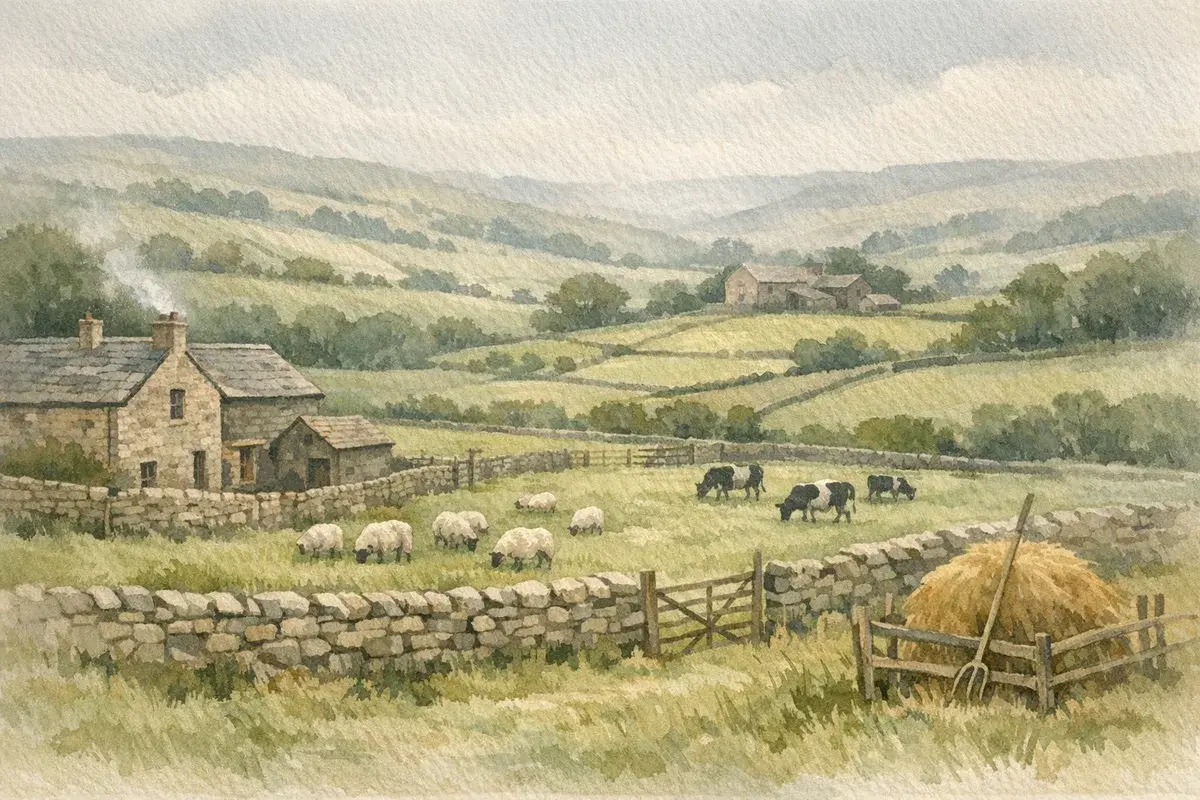
A Scottish farm tenancy can be a brilliant way to unlock land, whether you're a tenant looking for security to invest, or a landlord aiming for dependable income without losing long-term control. But Scottish letting isn't "just an FBT with a different postcode". The framework is its own ecosystem: different tenancy types, different repair rules, different end-of-term tripwires, and a political backdrop that keeps evolving.
If you get the structure right at the start, you'll usually avoid the expensive, slow disputes that crop up later, rent reviews that go nowhere, arguments over fixed equipment, diversification plans stalled by missing consent, or tenancies that quietly roll on when you thought they'd end. This guide focuses on how Scottish farm tenancy works in practice, the main tenancy routes, and the steps you can take to protect your position, whether you're granting the lease or taking it.
How Scottish Farm Tenancies Work In Practice
A Scottish farm tenancy is essentially a contract that gives you (as tenant) the right to occupy and farm a defined holding, in return for rent and compliance with the lease and statutory rules. Sounds simple, until you start mapping what you actually occupy, who maintains what, and what you're allowed to do beyond "farming" in the narrow sense.
A big part of doing this well is accepting one truth early: the paperwork is only half the story. The other half is how the land is used day-to-day (cropping rotations, grazing patterns, buildings, tracks, water supplies) and how that use will be evidenced if anyone later challenges it.
What Counts As A Farm Tenancy Versus A Grazing Licence
This distinction matters because the legal protections, and the difficulty of getting someone off the land, can look very different.
A farm tenancy typically involves:
- Exclusive possession of land (and often buildings) for a period
- A clear intention that you'll farm the holding as your business
- Rent paid for that occupation (cash, sometimes in-kind arrangements)
- Terms that look and behave like a lease, even if they're not perfect on paper
A grazing licence (or seasonal grazing arrangement) tends to be:
- Short-term and tightly limited in purpose (e.g., graze sheep from May to October)
- Non-exclusive in practice (the owner may retain access/control)
- More "permission to use" than "right to occupy"
Where people get burned is when a "licence" behaves like a tenancy, longer than intended, buildings quietly used, boundaries treated as the occupier's, owner stops exercising control. If you're a landlord, that drift can create risk. If you're a tenant, you can end up with unstable rights just when you've put money into the place.
And because Scotland's rural tenancy regime sits within a wider policy and reform context, it's also worth keeping an eye on the direction of travel, especially around tenant rights, land use, and transparency. If you want a plain-English overview of that wider backdrop, our explainer on the Scottish land reform framework is a useful starting point.
Why Written Terms Matter (Even When A Let Started Informally)
Plenty of Scottish arrangements begin with a handshake, a family connection, or a "try it for a year" conversation in a yard. The problem isn't the informality, it's what happens when something changes: a partner retires, a new factor is appointed, grant conditions tighten, or buildings start to fail.
Written terms matter because they fix the things people otherwise argue about later, including:
- The subjects let (exact fields, steading areas, tracks, hardstandings)
- The term (start date, end date, any break options)
- Rent and review mechanics (timing, evidence, dispute route)
- Repair responsibilities and who pays for fixed equipment
- Permissions/consents for diversification, renewables, or non-agricultural use
If you're the tenant, written terms also help you justify investment: lenders, contractors, and sometimes scheme administrators will want to see you have stable occupation and the right to carry out works.
If you're the landlord, written terms help preserve value and reduce the chance of long-running end-of-term claims that were avoidable with a decent schedule of condition and a sensible improvements clause.
The Main Types Of Scottish Farm Tenancy
Scottish agricultural lets don't come in one standard format. The main tenancy types have different levels of security, different durations, and different strategic value depending on what you're trying to achieve.
Choosing the wrong one is rarely catastrophic on day one. It becomes painful on year five, ten, or fifteen, when rent diverges from the market, when succession becomes relevant, or when the estate wants to restructure the holding.
Traditional 1991 Act Tenancies
A tenancy under the Agricultural Holdings (Scotland) Act 1991 (often called a "secure tenancy") is typically the most secure form of Scottish farm tenancy. Many are historic and long-running.
From a tenant's perspective, the security can support serious, long-term investment, drainage, soil improvement, buildings (where permitted), and business planning that isn't constantly under threat of termination.
From a landlord's perspective, the flip side is reduced flexibility. That doesn't mean these tenancies are "bad", just that they're a different asset class. Valuation, estate planning, and development strategy can all look different when land is encumbered by higher-security occupation.
Short Limited Duration Tenancies (SLDTs)
SLDTs were designed as a shorter, more flexible route, useful where you want to let land but keep a tighter grip on future options.
In practice, SLDTs can suit:
- Landlords testing a new tenant relationship
- Letting where there's uncertainty about longer-term plans (infrastructure, restructuring, family succession)
- Tenants who want land access quickly, perhaps as a stepping stone
The practical caution: short terms can discourage tenants from making improvements unless the lease is explicit about what's allowed and what compensation might apply.
Limited Duration Tenancies (LDTs) And Modern Limited Duration Tenancies (MLDTs)
LDTs, introduced by the Agricultural Holdings (Scotland) Act 2003, and later MLDTs aim to balance a workable level of tenant security with a clearer end point than a traditional secure tenancy.
What matters in real life is how the tenancy is drafted:
- Is the end date unambiguous?
- Are the renewal / continuation mechanics clear?
- Do the parties understand what happens if notices aren't served properly?
For tenants, LDT/MLDT structures can be a sweet spot: long enough to invest, but not so "locked in" that landlords refuse to let in the first place.
Repairing Tenancies And Fixed Equipment Responsibilities
Repairs are where good intentions go to die.
Scottish agricultural tenancies often involve a mix of:
- Tenant's responsibilities for day-to-day maintenance and keeping things in good agricultural condition
- Landlord's responsibilities for fixed equipment (depending on the tenancy type and terms)
"Fixed equipment" can include things like buildings, fences, drains, ditches, and sometimes roads or water systems, exact scope depends on the lease and the statutory context. The point isn't memorising a list: it's documenting what exists at the start, what condition it's in, and who pays when it fails.
If you're negotiating a new letting, don't treat repair clauses as boilerplate. They're the difference between a tenancy that runs smoothly and one where every storm becomes an argument about a roof, a culvert, or a collapsed yard wall.
Key Rights And Obligations You Need To Get Right
Once you're in occupation, the tenancy either becomes a stable platform for a farming business, or a low-grade conflict that eats time and money.
Most problems come from the same handful of pressure points: rent, use, compliance, improvements, and transfer rights. If you're serious about avoiding disputes, treat these as operational systems, not legal footnotes.
Rent Reviews, Recording Evidence, And Avoiding Disputes
Rent reviews are rarely "just about rent". They're also about comparables, assumptions, and what each side thinks the holding really includes.
If you're a tenant, protect yourself by:
- Keeping field records and cropping/stocking evidence
- Photographing and logging the condition of buildings and fixed equipment (especially if you're maintaining things the landlord thinks are theirs)
- Tracking productive capacity changes you've funded (lime, reseeding, drainage, water)
If you're a landlord, do the same level of record-keeping, plus:
- Maintain a clear schedule of what you supply and repair
- Keep evidence of comparable rents and the logic used
In Scotland, rent evidence can be patchy in some areas. If you're taking a strategic view, whether to let, buy, or restructure, market context matters. For a current-read on trends and the factors that move values (region, quality, demand, policy), see our overview of Scottish agricultural land pricing.
Use Of The Holding: Cropping, Stocking, Diversification, And Consent
Most tenants assume the default right is to farm normally, crop, stock, rotate, maintain soils. That's broadly true, but the lease wording and statutory overlay determine how far you can go.
The biggest practical flashpoints are:
- Change of enterprise (e.g., arable to intensive livestock, or vice versa)
- Non-agricultural uses (storage lets, equestrian livery, events)
- Renewables and infrastructure (solar, wind, battery storage, telecoms)
- Buildings use and conversion (even small changes can trigger planning and landlord consent)
If you're eyeing diversification, build it into negotiations rather than hoping for a friendly nod later. Consent frameworks, what requires written permission, what share of income applies, who pays for reinstatement, are easier to agree when the tenancy is being signed.
And if you're scoping ideas, it helps to see what's working on other UK farms, with the reality checks around planning and economics. Our guide to practical farm diversification options can help you stress-test what's feasible on a tenanted holding.
Good Husbandry, Environmental Duties, And Cross-Compliance Style Risks
Even though support schemes and compliance regimes evolve, the core risk remains: if the tenancy requires "good husbandry" (and most do, explicitly or implicitly), you need to be able to demonstrate it.
In practice, that means:
- Keeping land in a productive and sustainable condition (soils, weeds, drainage)
- Avoiding activities that cause lasting damage (compaction, erosion, pollution)
- Recording nutrient applications and maintaining safe storage for fuel/chemicals
If you're relying on Scottish support schemes or rural payments, tenancy arrangements can also intersect with eligibility: who is the "active farmer", who controls land management decisions, what evidence proves occupation.
For tenants especially, it's sensible to treat scheme admin as part of your tenancy toolkit. Our overview of Scottish farming grants and support flags the kinds of details you'll want to align, occupation, land use, and documentation, before you bank on any funding.
Improvements, Compensation, And End-Of-Tenancy Claims
Improvements are where tenants can create real value, and where disputes often erupt when someone leaves.
If you're the tenant, you want clarity on:
- What counts as a tenant's improvement (and what's just maintenance)
- Whether you need prior consent
- How compensation is valued at waygo (end of tenancy)
If you're the landlord, you want:
- Control over works that could affect long-term value or future uses
- Assurance that improvements are done properly, safely, and with permissions
- A fair mechanism so you aren't surprised by a large claim later
The practical move: agree an improvements protocol. Even a simple written process, proposal, consent, specification, evidence of cost, photos, completion sign-off, can prevent the "but you said it was fine" arguments.
Assignation, Subletting, Succession, And Who Can Take Over
Transfer rights are a big deal in Scotland.
Depending on the tenancy type and terms, issues can include:
- Whether you can assign (transfer) your interest to someone else
- Whether subletting is prohibited, allowed with consent, or restricted
- What happens on retirement or death, who can succeed and on what conditions
If you're a tenant, you'll want to understand what flexibility you actually have before you build your whole business around a holding.
If you're a landlord, you'll want to manage risk: who ends up in occupation, whether they have the competence and resources to run the holding well, and whether the tenancy could become functionally permanent when you thought it had an exit.
This is exactly where specialist advice pays for itself. A small drafting decision today can determine whether you're negotiating with your chosen counterparty later, or someone you've never met.
Letting A Farm In Scotland: A Step-By-Step Setup
If you're granting or taking a Scottish farm tenancy, you'll get better outcomes by treating setup like a project: defined scope, evidence, professionals, and a paper trail. The aim isn't to over-lawyer everything, it's to stop avoidable ambiguity from becoming a five-figure problem.
Due Diligence On The Holding: Title, Rights, Boundaries, And Access
Before you sign anything, get forensic about what the holding actually includes.
Key checks you'll want:
- Title and ownership: who can legally grant the lease, and are there burdens/servitudes you need to respect?
- Boundaries: match fences/ditches/hedges to mapped boundaries, don't rely on "everyone knows where the march is".
- Access: public roads, private tracks, shared yards, and maintenance responsibility.
- Rights: water supplies, drainage outfalls, shooting rights (if relevant), wayleaves, and utilities.
If you're the tenant, insist on clarity around what you're paying rent for, especially hard standings, storage areas, and building footprints.
Heads Of Terms: Rent Basis, Term, Breaks, Buildings, And Restrictions
A clean set of heads of terms saves time and keeps negotiations sane.
At minimum, you want agreement on:
- Term length and start date (plus any rent-free period or stepped rent)
- Rent payment dates and review timetable
- Break clauses (if any), and what conditions apply
- What buildings are included, what condition they're in, and who insures what
- Restrictions and consents: diversification, environmental works, renewables, third-party agreements
If you're weighing tenancy as part of a bigger business plan, contract farming, in-hand expansion, joint ventures, it can help to understand how tenure choices fit different operating models. We've laid that out in our guide to commercial farming structures in the UK, which can be a useful lens even when you're focused on Scotland.
Mapping, Schedules, And Condition: Avoiding Arguments Later
This is the unglamorous work that prevents the ugly disputes.
Build a pack that includes:
- A clear plan (with fields, yard areas, building outlines, access routes)
- A schedule of condition with dated photos
- An inventory of fixed equipment and its state at entry
- Notes on drainage, water systems, gates, fences, and any known weaknesses
If you're the landlord, this helps you protect the capital value of the holding.
If you're the tenant, it protects you from being blamed for pre-existing defects at the end.
Working With Land Agents, Surveyors, And Specialist Solicitors
Scottish agricultural tenancies sit at the intersection of valuation, land law, practical farming, and increasingly environmental policy.
The most effective setups usually involve:
- A land agent who knows local rent evidence and can steer workable terms
- A surveyor where buildings, fixed equipment, or boundary issues are likely to bite
- A specialist Scottish rural solicitor to ensure notices, repair provisions, improvements, and termination mechanics actually work
You don't need to outsource every decision. But you do want professionals involved at the points where one wrong step locks you into years of friction.
A final practical note: be cautious about copy-pasting tenancy expectations from England and Wales. The concepts can rhyme, but the legal frameworks differ, so use comparisons as prompts for questions, not as templates. If you do need a baseline understanding of how an FBT works south of the border (for context only), our explainer on Farm Business Tenancies will help you spot the differences quicker when speaking to advisers.
Ending, Renewing, Or Restructuring A Scottish Farm Tenancy
Tenancies don't just end because the calendar says so. They end because the right steps are taken, in the right order, at the right time.
If you're a tenant, the risk is losing your position (or compensation) because you missed a procedural requirement.
If you're a landlord, the risk is the tenancy continuing when you expected vacant possession, often because notices were late, invalid, or contradicted by conduct.
Notice Periods, Tacit Relocation, And Common Procedural Traps
In Scotland, tacit relocation can catch out both parties: if a lease reaches its end and neither side serves valid notice (and behaves as if the arrangement continues), the tenancy may roll on.
Common traps include:
- Assuming an email or casual letter "counts" as notice
- Serving notice late, or with the wrong information
- Agreeing terms verbally that undermine a formal notice position
The most sensible approach is boring but effective: diarise dates early, use specialist advice for service requirements, and keep communication disciplined.
Irritancy, Breach, And How Disputes Are Typically Resolved
Where a tenancy is breached, non-payment of rent, prohibited use, deterioration, unauthorised subletting, the lease may allow enforcement action, potentially including irritancy (termination for breach).
In practice, many disputes follow a familiar path:
- Initial warnings and attempts to remedy
- Negotiation (often via agents/solicitors)
- Formal processes where positions harden (and costs climb)
If you want to keep control of outcomes, address issues early and document everything. Being "right" but poorly evidenced is a frustrating place to end up.
Negotiated Surrenders, Resumptions, And Development Opportunities
Not every ending needs to be a fight.
A negotiated surrender can be the cleanest solution where:
- The tenant wants to exit without uncertainty
- The landlord wants possession for restructuring, reletting, or sale
- Both sides want clarity on compensation, dilapidations, and timing
Restructuring can also unlock development opportunities, new buildings, track upgrades, renewables, or partial change of use, provided the tenancy terms, planning constraints, and any statutory requirements are respected.
If you're a tenant, don't assume development upside automatically belongs to you: many leases require consent and may allocate value in specific ways.
If you're a landlord, don't assume you can simply "take back" land without consequences: rights and compensation may apply depending on the tenancy type and facts.
Handled well, restructuring can be a win-win. Handled casually, it becomes an expensive lesson in rural property law.
Tax, VAT, And Estate Planning Considerations For Let Land
Tax is rarely the reason you choose a Scottish farm tenancy structure, but it's often the reason you regret choosing the wrong one.
The challenge is that tax outcomes depend on the detail: the tenancy type, the duration, the landlord's wider activities, the tenant's use, and the family's long-term plan. So treat the points below as decision prompts to take to your adviser, not as a checklist to DIY.
Capital Taxes, Reliefs, And How Tenancies Can Affect Planning
If you're a landlord, letting can affect how your land is viewed for tax purposes, particularly around capital taxes and reliefs that may be relevant to rural estates and family planning.
Key practical considerations include:
- Whether the land is treated as part of a trading position or more investment-like in nature
- How the tenancy's security and duration may influence future saleability and value
- Whether improvements and development arrangements create unexpected tax consequences (for example, if you receive consideration for granting rights)
If you're a tenant, your own investment into the holding (buildings, drainage, soil) can also have tax implications, what's capital, what's revenue, and how you document it.
VAT On Rent And Buildings: When It Bites And When It Helps
VAT in rural property is a classic "small clause, big consequence" topic.
Issues to discuss early include:
- Whether rent is VAT-able (and if so, whether you can recover it)
- Treatment of buildings: repairs, improvements, and any new construction
- How VAT interacts with diversification income (storage, workspace, events)
If you're negotiating heads of terms, VAT assumptions should be explicit. Surprises here tend to be expensive and awkward to unwind.
Inheritance Planning And Family Strategy Around Long-Term Lets
If your land is part of a family strategy, passing the farm on, supporting multiple generations, or balancing income and control, tenancies sit right in the middle of it.
Long-term occupation can be a strength (stability, income, land cared for) but also a constraint (flexibility, future restructuring, development options). The best planning conversations usually cover:
- What the family wants the land to do in 10–30 years
- Whether different parcels should be let on different terms
- How to handle buildings, cottages, and non-agricultural opportunities alongside the core holding
This is one of those areas where "we'll sort it later" tends to backfire. If you're either granting or taking on a long-term tenancy, it's worth aligning the legal form with the reality of your family and business intentions now, while you still have choices.
Conclusion
Scottish farm tenancy works best when you treat it as a long-term operating framework, not a one-off signature. The right tenancy type, a proper paper trail (plans, condition, fixed equipment), and a realistic approach to consent and compliance will usually save you far more than they cost.
If you're a tenant, push for clarity that lets you invest with confidence, especially on repairs, improvements, and what you can do with the holding beyond basic cropping and stocking.
If you're a landlord, aim for terms that protect the asset, reduce ambiguity, and set out a practical process for change, rent reviews, consents, and end-of-term claims.
Disclaimer: AgLand.co.uk is a UK agricultural land and rural property matching service, where buyers register what they are looking for and owners advertise directly to the buyers who match, and a rural resource hub. Nothing in this text is intended as legal, financial, tax, or investment advice. You should carry out your own due diligence and take advice from appropriately qualified professionals (for example, Scottish rural solicitors, chartered surveyors/land agents, and tax advisers) before making decisions.