
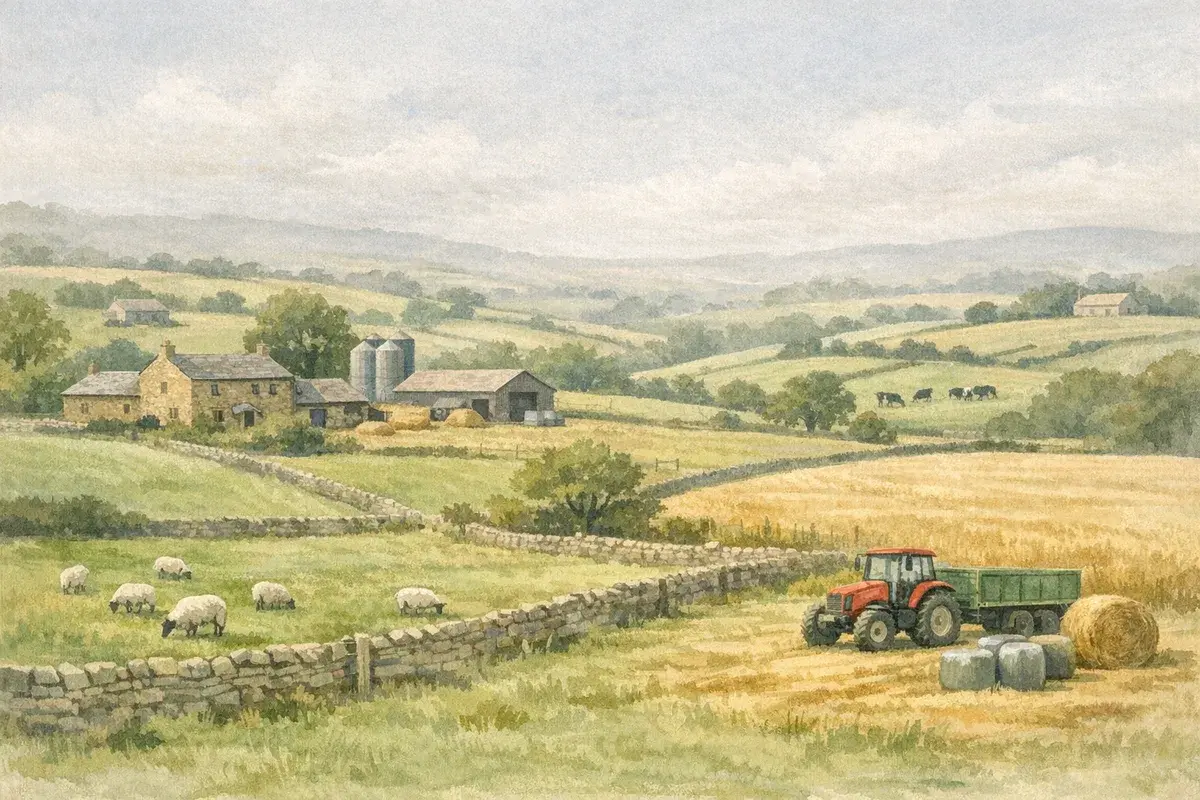
Commercial farming in the UK isn't just "farming, but bigger". It's a business built around repeatable output, compliance, and cashflow, often on tight margins, always under scrutiny (from lenders, regulators, buyers, and increasingly the weather).
If you're looking at commercial farming UK opportunities, whether you're expanding a family unit, taking on a new block, or investing into a rural enterprise, the decisions that matter most are surprisingly consistent: your farming model has to fit the land, the tenure has to fit the model, and the numbers have to work even when prices wobble.
This guide walks you through the practical realities: what "commercial" means on the ground, the main farm models, how to think about land and buildings, the rules that shape what you can do, and the profit drivers that separate resilient businesses from hopeful ones.
What Commercial Farming Means In A UK Context
Commercial farming in the UK is best defined by intent and structure: you're producing agricultural goods (and sometimes services) for sale, at a scale and level of organisation where profitability, compliance, and operational efficiency are central, not optional.
That sounds obvious, but it's useful because it stops you getting distracted by acres alone. You can run a genuinely commercial enterprise on 40 acres of intensive horticulture, and you can run a non-commercial setup on 400 acres if the output is incidental and the business isn't structured or managed as one.
Commercial Vs Subsistence, Lifestyle, And Hobby Farming
In practice, the UK tends to split into a few "real world" categories:
- Commercial farming: output is planned, costed, marketed and documented: you're typically VAT-aware, assurance-scheme aware, and bankable. You'll have accounts that can withstand questions.
- Lifestyle/smallholding: you might sell some produce, but the operation is primarily for personal use, amenity, or a secondary income stream. Compliance still applies, just without the same commercial pressures.
- Hobby farming: animals and crops for enjoyment, learning, or personal consumption. The risk is assuming "small" means "simple": animal health rules, movements, waste controls and planning still bite.
Where people come unstuck is when a lifestyle setup accidentally crosses into commercial territory, employing casual labour, selling regularly, storing fertiliser, building sheds, without the systems to match.
How Farm Size, Output, And Business Structure Typically Show Up In Practice
Commercial farming UK operations usually show a few common signs:
- A clear business vehicle: sole trader, partnership, limited company, sometimes with separate entities for property and trading. The "right" structure depends on risk, succession, borrowing, and tax planning.
- Repeatable output: consistent cropping plans, breeding targets, or contracted supply volumes.
- A compliance spine: movement records, spray records, nutrient plans, H&S documentation, assurance requirements.
- Professional inputs: agronomy advice, accounts support, land agent input, machinery finance, and specialist contractors.
It's also worth saying plainly: "commercial" doesn't guarantee big profits. Some of the most professional businesses operate on modest margins, and win by managing risk, protecting cashflow, and squeezing waste out of the system year after year.
The Main Commercial Farming Models In The UK
Most commercial farms fall into a handful of models. The sensible approach isn't picking what sounds exciting: it's choosing what your land, labour, capital, and local market can actually support.
Arable And Field-Scale Cropping
Arable is often seen as the "classic" commercial model: cereals, oilseeds, pulses, and break crops, with income driven by yield, quality specs, and timing.
What usually drives success:
- Soils and timeliness: the ability to travel and drill/spray/harvest when you need to.
- Rotation discipline: managing blackgrass and disease pressure, protecting yield over the long run.
- Machinery policy: owning the right kit (not the most kit), and using contractors where that reduces capital drag.
- Storage capacity: even basic on-farm storage can shift selling options.
Arable tends to be machinery-heavy and working-capital hungry. It can scale well, but it punishes sloppy cost control.
Livestock Systems: Beef, Sheep, Dairy, And Poultry
Livestock businesses are often a blend of biology and logistics.
- Beef and sheep: frequently land-efficient in the sense that they can utilise grass, hills, and marginal ground. Profit can be thin: performance (growth rates, lambing %, mortality, grazing management) really matters.
- Dairy: capital intensive and management intensive, buildings, parlour/robots, slurry, staff, herd health, milk contract terms. The upside is consistent production if well-run.
- Poultry: often contract-based with significant planning, environmental, and neighbour considerations. Cashflow can be strong, but the rulebook is strict.
Livestock shines when you have grass, water, housing, and stockmanship, plus a plan for labour (including weekends and holidays, because the cows don't care).
Horticulture, Glasshouse, And Higher-Value Crops
Horticulture can look like the fast lane, higher value per acre, but it isn't "easy money". It's typically labour-intensive, infrastructure-heavy, and quality-spec driven.
Commercial realities include:
- Reliable water: abstraction licences, storage reservoirs, mains backup, because one dry spell can wreck a season.
- Labour planning: seasonal workforce, accommodation issues, compliance.
- Market access: packhouses, retailer specs, contract farming, or direct-to-consumer routes.
If you're going down the premium route, you may also explore standards and certification. Where that's relevant, it helps to understand the process and ongoing obligations behind organic certification in the UK before you build a whole business plan around "we'll go organic".
Mixed, Specialist, And Contract Farming Arrangements
A lot of robust UK commercial farms aren't pure-play: they're mixed, or they use contract structures to spread risk.
- Mixed farms (arable + livestock) can recycle nutrients, balance labour across seasons, and diversify income.
- Specialist farms might be seed growers, pedigree livestock, or niche crops, often requiring specific buildings, isolation distances, or buyer relationships.
- Contract farming can allow landowners to retain some exposure to profit while outsourcing operations. But the detail matters: who buys inputs, who carries risk, who claims support payments, and what happens in a bad year.
If you're not sure which model suits you, start from constraints (soil, access, water, neighbours, labour) rather than preferences. Farming is full of people who love a system that their land quietly hates.
Land, Tenure, And Property Strategy For Commercial Farms
Land strategy is where commercial farming plans either become bankable, or stay as wishful spreadsheets.
The "right" land for a commercial farm is rarely just the prettiest block. It's land that fits your system, has workable access, doesn't come with hidden constraints, and can be secured on terms that match your investment horizon.
Buying Vs Renting: Freehold, FBT, AHA, Grazing Licences, And Cropping Agreements
You've got several routes to control land in the UK:
- Freehold purchase: maximum control, long-term security, and often the best fit for capital improvements. But it ties up capital and can reduce flexibility.
- Farm Business Tenancy (FBT): common in England and Wales: terms can be flexible, but you need to negotiate length, break clauses, repairs, and who pays for what. If you're new to this, get familiar with how a farm tenancy typically works before you assume it's a simple rental.
- AHA tenancies: generally older, highly secure arrangements governed by the Agricultural Holdings Act. Great security for tenants, complex for landlords, and often not something you "choose" so much as inherit or step into.
- Grazing licences / seasonal lets: useful for short-term grass, but don't build a long-term stocking policy on something that can disappear next year.
- Cropping agreements / contract farming: can suit both sides, but they're legal documents with real risk allocation, don't copy a template and hope.
A practical rule: match your tenure length to your payback period. If you're investing in drainage, fencing, tracks, yards, or long-term soil building, short agreements are a bad fit.
Location, Soils, Water, Access, And Neighbour Risk: What Actually Moves The Needle
In commercial farming UK decisions, the boring factors make the money.
- Soil type and structure: not just "heavy/light", but how it behaves in wet springs or late harvests, and what that does to timeliness.
- Water: mains availability, natural water supply for livestock, abstraction potential, and the reality of dry summers.
- Access and road frontage: can you move kit safely? Are there weight limits? Can an artic reach the yard without reversing past a primary school?
- Field layout: awkward shapes and tiny gateways cost time every day.
- Neighbour sensitivity: poultry, slurry, late-night harvesting, spray operations, proximity to housing can be the difference between "routine" and "constant complaints".
And then there's the market. If you're buying, the direction of travel matters, which is why it's worth tracking agricultural land values in the UK alongside your farm budgets. Paying the right price doesn't guarantee success, but overpaying can remove your margin before you've drilled a seed.
Buildings, Yard Functionality, And Future-Proofing For Diversification
Commercial farming is often won or lost in the yard.
Look for (or plan for):
- Workflow: grain intake, livestock handling, machinery storage, wash-down, biosecurity points.
- Power and connectivity: three-phase supply, space for solar, basic broadband/mobile signal for modern kit and record-keeping.
- Drainage and dirty water management: keeping clean and dirty systems separate isn't glamourous, but it keeps regulators (and your conscience) happy.
- Expansion space: a yard that can't grow forces expensive, messy compromises.
Diversification is the buzzword, but the best "future-proofing" is often simple: a well-sited building footprint, decent access, and planning awareness before you commit to something you can't later repurpose.
Regulation, Compliance, And Planning: The Rules That Shape Commercial Reality
Rules in UK farming aren't background noise, they shape what you can build, how you manage land, and sometimes whether the business is viable.
The trick is to treat compliance as a design constraint early on, not an afterthought once you've already signed.
Planning Permission, Permitted Development Rights, And Prior Notifications
Planning is where many commercial plans slow down.
Yes, agricultural permitted development rights can help, but they're conditional and fact-specific. The details differ by nation and circumstance, and you'll often be dealing with prior notification rather than full planning permission.
If your commercial farming plan relies on new buildings, tracks, or a change of use, you should read up on what's realistically possible under UK agricultural permitted development rules and then sanity-check it with a planning consultant. "Someone down the road did it" is not a strategy.
Typical commercial pinch points include:
- Siting and design (visual impact, highways access)
- Proximity to neighbours (noise, odour, traffic)
- Ecology constraints and protected habitats
- Whether the proposal is genuinely for agriculture
Environmental And Land Management Duties: Cross-Compliance, NVZ, Water, And Habitat Constraints
Environmental compliance is now part of day-to-day commercial management.
Depending on where you are and what you do, you may be navigating:
- Nutrient management and manure/slurry storage rules
- NVZ requirements (in designated areas)
- Water rules: runoff controls, abstraction, pesticide stewardship
- Habitat and protected species constraints
Support schemes and land management options can be an opportunity, but they also come with admin and audit risk. For a clear orientation on the moving parts, it's worth understanding the landscape of UK agricultural subsidy schemes and how they interact with your cropping and grazing choices.
Labour, Health And Safety, And Assurance Schemes
Commercial farming is a workplace, and regulators treat it that way.
Key areas you can't ignore:
- H&S risk assessments and training: machinery, livestock handling, lone working, grain bins, chemicals.
- Employment compliance: contracts, working time, right to work checks, accommodation standards where relevant.
- Assurance schemes: if you're supplying certain markets, assurance requirements can effectively become "rules", even when they're not law.
The pattern we see is simple: farms that document properly don't just avoid trouble, they run more smoothly. When everyone knows the system, the business becomes less fragile.
Money Matters: Costs, Margins, Grants, And Tax Considerations
If you want commercial farming UK to be more than a romantic idea, you have to get brutally honest about money.
Not just "what's the gross margin?" but: what's the cash profile, what's financed, what breaks first in a bad year, and how quickly can you adjust?
Core Cost Lines And Margin Drivers: Inputs, Machinery, Labour, And Finance
On many farms, the biggest profit swings come from a handful of levers:
- Inputs: seed, fertiliser, sprays, feed, bedding. Your buying policy and timing matter.
- Yield and performance: it sounds obvious, but variance is everything. A 10% yield hit can erase profit: a 10% cost overrun can do the same.
- Machinery and depreciation: the silent killer. New kit can improve timeliness, but it can also lock you into high fixed costs.
- Labour: wages are one part: management time, training, and retention are the bigger story.
- Finance: interest rates, overdraft limits, hire purchase terms, and covenant pressure.
A useful way to think about it is: aim to keep fixed costs survivable in a poor year, then build variable spending that can flex with the season.
Support Schemes And Grants: Where The Opportunities (And Paperwork) Sit
In the UK, support is shifting towards environmental outcomes and productivity improvements, with different options depending on your nation and local priorities.
Two practical truths:
- The application/admin burden is real. Make sure the value is worth your time.
- Your whole farm system has to fit the scheme. Don't chase grants that distort your agronomy or stocking in ways you'll regret.
Grants can be particularly relevant for things like slurry management, water efficiency, precision tech, or habitat creation, depending on what's open at the time.
Tax Touchpoints For Farm Businesses: VAT, Reliefs, And Succession Planning Signals
Tax shouldn't drive every decision, but it absolutely changes the outcome.
Common UK touchpoints include:
- VAT: registration thresholds, flat rate vs standard, partial exemption issues where you diversify.
- Capital investment: how you fund and structure purchases, and what that does to allowances.
- Property and succession: how land is held (personally, partnership, company), and the long-term plan.
If you're buying, selling, or restructuring landholdings, capital gains questions can become central surprisingly quickly. The nuances are fact-specific, so it's worth reading an overview of how capital gains tax can apply to agricultural land and then taking proper advice tailored to your situation.
The best commercial operators don't "do tax tricks". They keep clean records, plan early, and avoid accidental decisions that create avoidable liabilities later.
Routes To Market And Commercial Strategy
Plenty of farms can grow or rear a good product. Commercial advantage often comes from how you sell it, how you store it, and how you protect yourself when things go sideways.
Selling Into Commodity Markets Vs Premium, Contracted, Or Direct Channels
You've basically got a spectrum:
- Commodity selling: simpler, liquid markets, but you're a price taker and exposed to volatility.
- Contracted supply: more predictability and sometimes better terms, but strict specs and penalties.
- Premium brands and niche markets: potentially higher margins, but higher marketing cost and reputational risk.
- Direct-to-consumer: can work brilliantly when location and audience fit, but it's a separate business (customer service, packaging, delivery, compliance).
A smart commercial strategy is often mixed: keep a core that pays the bills, and add higher-margin channels where you genuinely have an edge.
Storage, Logistics, And Infrastructure That Protect Price And Quality
Infrastructure is commercial farming's "quiet superpower".
- Grain storage lets you avoid forced selling at harvest lows and meet tighter specs.
- Livestock handling reduces labour and injury risk while improving performance.
- Cold storage and pack facilities can be the difference between premium and waste in horticulture.
But don't build blindly. Model utilisation: a shed that sits half-empty is an expensive ornament.
Risk Management: Weather, Price Volatility, Disease, And Insurance
Risk in UK farming isn't theoretical.
What a practical risk toolkit often includes:
- Budgets with stress tests (what happens if yield drops 15%, or feed goes up 20%?)
- Diversification of rotations/stocking to avoid all-eggs exposure
- Biosecurity and herd/flock health plans
- Insurance that you've actually read (not just renewed)
- Forward selling/hedging where appropriate, and only when you understand the obligations
The farms that survive tough cycles aren't always the most profitable in good years. They're the ones with enough resilience, cash, kit, people, and flexibility, to absorb a hit without panic decisions.
Technology And Data: Practical Gains In UK Commercial Farming
Technology in commercial farming UK isn't about flashy kit: it's about consistent marginal gains. The best operators adopt what pays back, integrates cleanly, and reduces errors.
Precision Farming, Controlled Traffic, And Variable Rate Application
Precision tools can reduce waste and improve consistency:
- Variable rate fertiliser and lime based on soil analysis and yield mapping
- Targeted spraying and better application records
- Controlled traffic farming (CTF) where field layout and kit sizes suit, protecting soil structure
The payback usually comes from a combination of savings (inputs, fuel) and performance (better establishment, fewer compaction issues), rather than a single "magic" benefit.
Livestock Monitoring, Genetics, And Feed Efficiency
In livestock systems, tech can be a labour multiplier:
- Activity monitors to flag heats or health issues early
- Weighing and performance tracking to tighten finishing decisions
- Genetics and breeding choices backed by data, not hunches
The best use of monitoring is decision discipline: acting on the data consistently, not collecting it for interest.
Record-Keeping, Traceability, And Compliance-Ready Farm Data
Record-keeping is unglamorous, but it's where commercial farms either look professional, or exposed.
Good farm data helps you:
- Prove compliance quickly during inspections
- Support assurance scheme requirements
- Track cost per hectare / per litre / per kg gain
- Make confident decisions on culling, cropping, and investment
A practical benchmark: if a key person was off farm for two weeks, could someone else find the records and keep the system running? If not, your "data" is probably just scattered paperwork.
Finding Land And Building A Commercial Farm Plan
A commercial farm plan is really three plans layered together: a land plan, an operating plan, and a finance plan. If one layer is weak, the whole thing wobbles.
How To Define Your Requirements: Acreage, Buildings, Water, Grid, And Local Constraints
Before you view property or approach agents, write down your non-negotiables.
Examples that actually matter:
- Minimum workable acreage for your model (including rotation or grazing needs)
- Building requirements (grain storage, livestock housing, workshop space)
- Water (livestock supply, irrigation potential, storage)
- Power (three-phase, capacity for future upgrades)
- Access (for artics, livestock wagons, sugar beet haulage, etc.)
- Local constraints: public rights of way, neighbours, designations, historic restrictions
Then decide what you're flexible on. If everything is "must-have", you'll either overpay or never move.
Working With Specialists: Land Agents, Surveyors, Planning Consultants, And Accountants
This is where serious operators behave differently: they don't try to be experts in everything.
People you'll often want around you:
- Specialist land agents who understand agricultural value (not just residential comparables)
- Rural surveyors for condition, boundaries, and practical defects
- Planning consultants where buildings, change of use, or sensitive sites are involved
- Farm accountants/tax advisers who can stress-test the structure and cashflow
We've seen plenty of "good deals" turn expensive because someone skipped one professional conversation at the right moment.
Due Diligence Checklist Before You Offer Or Sign
Here's a grounded checklist to run through before you commit:
- Title and boundaries: match what's on the ground: check access rights and ransom strips.
- Occupational arrangements: who's in possession, and on what terms?
- Planning status: any enforcement history? are existing uses lawful?
- Services: water supply details, drainage, power capacity, wayleaves.
- Environmental constraints: protected habitats, flood risk, NVZ considerations where relevant.
- Infrastructure condition: roofs, concrete yards, slurry systems, grain store compliance.
- Basic operating practicality: can you actually get machinery in and out in winter?
- Numbers: conservative budgets, realistic yields, realistic labour, realistic finance costs.
If you're renting, scrutinise repairing obligations and what improvements you're allowed to make. If you're buying, check what you're not buying too, mineral rights, sporting rights, and third-party agreements can all matter.
And one more human point: if the plan only works when everything goes perfectly, it isn't a plan. It's a gamble.
Conclusion
Commercial farming in the UK rewards clear-eyed decisions: matching the right model to the right land, securing tenure that supports investment, and building a compliance-and-cashflow backbone that holds up under pressure. If you get those fundamentals right, the "extras", tech, diversification, premium markets, stop being distractions and start becoming genuine levers.
When you're ready to move from ideas to action, treat your next step as a process rather than a leap: define requirements, line up specialist advisers, and do diligence with the same care you'd give to a major machinery purchase, because it's usually a much bigger commitment.
Disclaimer: AgLand.co.uk is a UK agricultural land and rural property matching service, where buyers register what they are looking for and owners advertise directly to the buyers who match, and a rural resource hub. Nothing in this text is intended as legal, financial, or investment advice. You should carry out your own due diligence and take independent professional advice (for example from a qualified land agent, surveyor, solicitor, accountant, or planning consultant) before making decisions.