
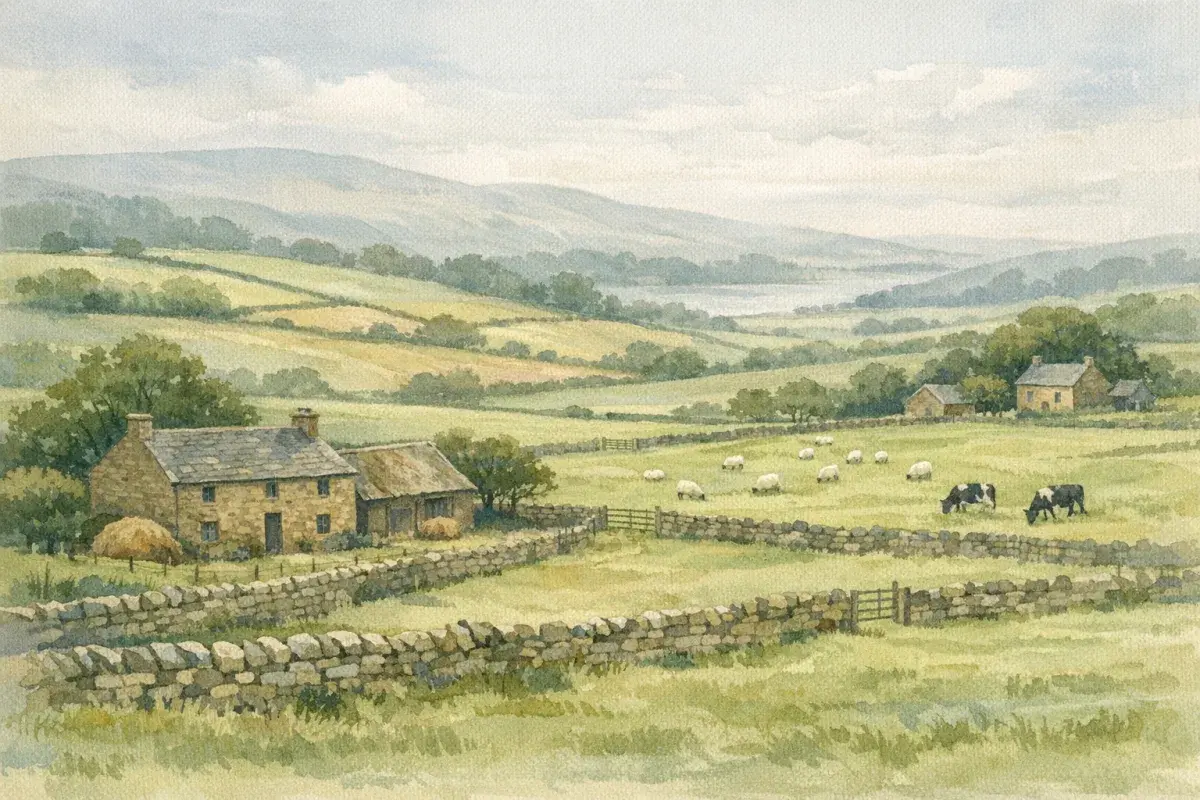
If you're looking at agricultural holdings in Scotland, whether you're buying, inheriting, letting out, or taking on a tenancy, there's a point where the "romance of land" meets paperwork with teeth. Scotland's agricultural holdings law is its own ecosystem: different tenancy types, different rights, and a few traps that can get expensive fast if you assume it works like elsewhere in the UK.
This guide is written for real-world decision-making. You'll get clarity on what counts as a Scottish agricultural holding, the main tenancy regimes you'll run into, and the practical steps to protect your position, whether you're landlord, tenant, buyer, or investor. And because most problems start with fuzzy assumptions, we'll be blunt where it matters.
What Counts As An Agricultural Holding In Scotland?
In Scotland, an "agricultural holding" isn't just "a farm". It's a package: land, buildings, fixed equipment, and, crucially, the legal arrangement that sits over it. The details matter because they determine what rights and obligations attach to the holding, what tenancy regime applies, and how easy (or not) it is to change use, regain possession, or sell.
Land, Buildings, And Fixed Equipment
In practice, a Scottish agricultural holding can include:
- Land used for agriculture (including grass, arable, permanent pasture, rough grazing, depending on context and locality).
- Farm buildings (traditional steadings, sheds, stores, livestock housing).
- Fixed equipment (the stuff that's "part and parcel" of the holding: fixed fences, drains, permanent water systems, fixed troughs, yard surfacing, and similar).
Why you should care: what's classed as fixed equipment and who is responsible for it can feed directly into rent levels, repair liability, end-of-tenancy compensation, and disputes over improvements.
Agricultural Use, Ancillary Uses, And Mixed Enterprises
Most holdings today aren't purely agricultural in the old sense. You may have:
- Agriculture as the primary use, with ancillary activity (small-scale storage, farm shop, holiday accommodation).
- Mixed enterprises (livestock plus contracting, renewables, tourism, equestrian).
- Environmental management that sits alongside farming (peatland restoration, woodland creation, biodiversity projects).
The key question is usually: what's the dominant character of the holding and what does the lease (or title) allow? If diversification income becomes the main engine, you can drift into planning, rating, tax, and lease-compliance consequences.
If you're weighing up land type, constraints, and practical buying rules, it's worth reading AgLand's overview of what drives agricultural land value in Scotland and the due diligence areas buyers miss (linked here for deeper context on the Scottish-specific realities).
How Scotland Differs From England And Wales
Even if you've owned or tenanted farms elsewhere, Scotland is not a "same-but-slightly-different" jurisdiction.
- Tenancy regimes and tenant protections are distinct. Scotland has its own framework and history that shapes security of tenure, rent processes, and what landlords can realistically achieve.
- Crofting can introduce an entirely different layer of law and community practice in crofting counties. If you're exploring croft opportunities specifically, start with how crofting land transactions work and what to watch for.
- Property law and conveyancing (including title conditions, access rights, and servitudes) have a different feel and terminology to England and Wales, meaning your professional team needs Scottish expertise, not just "UK experience".
The practical takeaway: assume nothing transfers neatly. Get the holding classified correctly first, then choose your next steps.
The Main Types Of Agricultural Tenancy In Scotland
Scottish agricultural holdings tenancies can look deceptively similar on the surface, land, rent, term, but the legal consequences are miles apart. Before you agree heads of terms or buy a tenanted holding, you need to know what you're dealing with.
Secure 1991 Act Tenancies (SATA)
Secure tenancies under the Agricultural Holdings (Scotland) Act 1991 (often referred to in the market as "secure 1991 Act tenancies") are the heavyweight category.
From your perspective:
- If you're a tenant, this can mean deep security of tenure and strong rights that can support long-term investment.
- If you're a landlord or buyer, this can severely limit vacant possession options and materially affect value, financing appetite, and strategic flexibility.
SATA holdings are often where disputes arise around rent reviews, improvements, assignation/succession, and end-of-tenancy positions.
Limited Duration Tenancies (LDT)
LDTs were introduced by the Agricultural Holdings (Scotland) Act 2003 to encourage letting while still giving landlords a route back to possession at the end of the term.
Typical features you'll encounter:
- A fixed term (often meaningful enough for the tenant to plan rotations and investment, but with an end date that matters).
- Greater ability for landlords to structure terms and manage risk compared with secure tenancies.
But don't confuse "limited duration" with "simple". Rent review mechanics, improvements, and notices still need careful handling.
Modern Limited Duration Tenancies (MLDT)
MLDTs are the newer flavour, designed to be clearer and more workable.
In practical terms:
- More standardised structure and generally a more modern approach to what gets agreed in writing.
- Often used where both parties want a sensible balance: tenant confidence to invest, landlord clarity about regain.
If you're letting out for the first time, this is frequently the tenancy type professionals will discuss early, but only after they've understood your objectives and risk tolerance.
Short Limited Duration Tenancies (SLDT) And Seasonal Arrangements
SLDTs and genuinely seasonal lets can be useful where:
- You need flexibility for in-hand farming, grazing lets, or rotational ground management.
- You're testing a new enterprise (for example, a small livestock unit, a cut-and-carry forage arrangement, or a temporary diversification use).
But, "short" arrangements are where people get informal, and informality is where disputes are born. If you're relying on handshake terms, you're also relying on memory and goodwill. Neither stands up well when money, weather, or family succession gets involved.
Key Rights And Obligations You Need To Understand
Most costly agricultural holdings problems in Scotland aren't caused by bad intentions. They're caused by misunderstandings: what you think the tenancy allows versus what it actually says, what statute implies, and what notices need to look like to be valid.
Security Of Tenure, Succession, And Assignation
Security of tenure is the headline issue for many holdings, especially secure tenancies. But don't stop at the headline.
You should be asking:
- Can the tenancy be assigned, and if so, under what process and constraints?
- What succession rights exist, and what does the tenant (or tenant's family) need to evidence?
- What landlord consents are required for changes in occupancy, partnership structures, or business setup?
These points affect everything from value and finance to whether a holding can be run as a modern business.
Rent Reviews, Stimulation, And Dispute Resolution Routes
Rent in Scottish agricultural holdings isn't just a "market rent" conversation. Depending on the tenancy type and terms, it can involve statutory processes and a focus on productive capacity and the holding's character.
In the real world:
- Rent review dates and notice windows are often missed.
- "Comparable evidence" can be weak if you don't document the holding properly (condition, fixed equipment, constraints, entitlements).
- Dispute routes exist, but they cost time and money, so you want a paper trail that makes settlement more likely.
A land agent who does this weekly is worth their fee when you're staring at conflicting rental comparables and both sides feel hard done by.
Improvements, Compensation, Fixtures, And Waygo
If you remember one word, make it waygo, the end-of-tenancy stage where the condition of the holding, claims for improvements, and dilapidations-type arguments collide.
To protect yourself (either side):
- Agree what counts as an improvement before you spend money.
- Record consents in writing.
- Keep invoices, specifications, and photos.
- Understand how fixtures are treated, because what you think you "own" might legally belong to the holding.
Tenants can be entitled to compensation for certain improvements: landlords can have claims for leaving things in poor order. Either way, the winner is often the party with better records.
Maintenance, Insurance, And Repairing Responsibilities
Repairing obligations are where "standard farm practice" and legal responsibility diverge.
You need clarity on:
- Who maintains fixed equipment versus tenant's equipment?
- Who insures which buildings (and against what risks)?
- What standard of repair applies, basic functional, tenantable condition, or something more specific?
If you're buying a tenanted holding, repairing liability can be a hidden cost. If you're a landlord letting out, unclear repairing clauses can convert into recurring conflict.
Termination, Irritancy, And Notices: Avoiding Costly Missteps
Ending a Scottish agricultural tenancy, whether at term end, by notice, or due to breach, can be legally technical. And technicality is where people lose.
Common mistakes include:
- Serving a notice late or in the wrong form.
- Assuming a breach automatically allows termination.
- Escalating conflict without following the required process.
If you're contemplating termination or alleging breach, get Scottish specialist advice early. "We'll sort it out later" is how you end up sorting it out in a forum you didn't choose.
Buying A Tenanted Agricultural Holding In Scotland
Buying a tenanted agricultural holding in Scotland can be a smart move, stable income, long-term asset exposure, and sometimes less competition than vacant units. But you have to be honest about what you're buying.
Vacant Possession Vs Tenanted Value: What You Are Really Buying
Vacant possession value and tenanted value can be very different, sometimes dramatically.
Ask yourself:
- Are you buying income (with limited control) or buying future use (which may not be available for a long time)?
- Will your lender accept the tenancy type and terms?
- Is the rent sustainable and properly evidenced, or is it "historical and polite"?
If you're running numbers as an investor, it helps to ground them in a wider framework of UK land investment risks and returns, AgLand's guide to agricultural land as an investment and a due diligence checklist is a useful companion when you're building your acquisition plan.
Overage, Development Potential, And Title Conditions
Scottish holdings can carry development angles, house plots, steading conversions, renewables, biodiversity value. But "potential" isn't the same as "deliverable".
You'll want to scrutinise:
- Title conditions restricting building, use, or subdivision.
- Overage/clawback provisions (especially on off-farm sales, plot releases, or change of use).
- Access and services constraints that make development expensive even if planning is theoretically possible.
And if the holding is tenanted, remember: you may not control occupation, and a tenant's rights can limit what you can carry out and when.
Due Diligence Checklist: Title, Access, Water, And Rights
Your due diligence shouldn't be a generic tick-box. It should reflect Scottish rural reality.
At a minimum, pressure-test:
- Title and boundaries: exact extent, gaps, disputed fences, and any unregistered quirks.
- Access: public road access, private roads, maintenance liability, and whether the access works for modern machinery.
- Water: private supplies, abstractions, boreholes, springs, trough systems, drainage.
- Rights and burdens: servitudes (rights of access, rights of drainage), wayleaves, pipelines, telecoms apparatus.
- Sporting and mineral rights: what's included, what's excluded, and whether third-party rights affect operations.
If your target is in the north, the constraints can be very different (climate, soils, access, rough grazing economics). You may find it helpful to read AgLand's local primer on Highland agricultural land and what makes it behave differently.
Stewardship, Carbon, Peatland, And Natural Capital Agreements
Natural capital has moved from "nice-to-have" to "serious money", but it's also contract-heavy.
Before you bank on carbon/peatland/woodland income, you need to know:
- What obligations run with the land (and for how long).
- Whether the tenancy gives the tenant rights to enter schemes, or restricts the landlord's ability to do so.
- How scheme income and responsibilities are shared (if at all).
A common pitfall: signing an agreement that restricts future farming flexibility or complicates a later sale. Treat these as long-term property contracts, not side projects.
Letting Out A Scottish Agricultural Holding: A Landlord’s Practical Playbook
If you're letting out a holding in Scotland, your best result usually comes from being crystal-clear upfront: what you want the land to be used for, what condition you expect it back in, and what flexibility you'll need over the term.
Choosing The Right Tenancy Type For Your Objectives
Start with your non-negotiables:
- Do you need a clear route back to vacant possession at a known date?
- Are you comfortable granting a tenant confidence to invest (and potentially claim compensation)?
- Is this a long-term family asset where stability matters more than optionality?
There isn't a universally "best" tenancy type. The right answer depends on your intended use, your appetite for management, and whether you're optimising for income, preservation, or future change.
Setting Heads Of Terms: Rent Basis, Term, Breaks, And Use Clauses
Heads of terms is where many future disputes are either prevented, or preloaded.
Focus on:
- Rent basis and review timing (and what evidence will be used).
- Term length that matches the farming system (short terms can push tenants into minimal investment).
- Break clauses that are realistic and enforceable.
- Use clauses that deal with diversification, storage, equestrian use, contracting yards, or renewables, rather than pretending none of that will happen.
If you can describe clearly what you will and won't allow, you'll save yourself years of awkward conversations later.
Records, Inventories, And Condition Schedules That Protect You
Paperwork sounds dull, until it saves you.
You should have:
- A photographic schedule of condition (dated, labelled).
- An inventory of fixed equipment and landlord-provided items.
- Maps showing boundaries, access routes, water points, and sensitive areas.
- A log of consents and agreed works.
This is also good business discipline. If you ever sell, refinance, or hand management to the next generation, your file becomes an asset.
Regulatory And Compliance Checks (Soils, NVZs, Welfare, Biosecurity)
Even as landlord, you can't ignore compliance. Some obligations sit with the occupier: others can land back on the owner, especially where infrastructure, pollution, or permitting is involved.
Build a simple compliance snapshot that covers:
- Soil and nutrient management expectations (especially where runoff risk is obvious).
- Livestock welfare infrastructure (handling systems, water supply reliability).
- Biosecurity basics (shared access, boundary integrity, livestock movement practicalities).
This is less about being heavy-handed, more about preventing avoidable damage and enforcement problems.
Making A Living From A Holding: Grants, Diversification, And Planning Reality
A Scottish agricultural holding has to pay its way. Sometimes that's pure farming margin: often it's a blend of farming, support, and diversification, done carefully enough that it doesn't undermine the core asset.
Scottish Support Schemes And Cross-Compliance Basics
Scottish rural support keeps evolving, and you can't plan a holding's finances on vague assumptions.
Practically, you should:
- Confirm what support and scheme options apply to your land type and location.
- Check eligibility rules and management obligations before you commit to stocking, cropping, or habitat plans.
- Treat inspections and record-keeping as part of the job, not an optional extra.
If you're mapping income lines, AgLand's explainer on farming grants in Scotland and how to approach them without getting caught out is a sensible next read.
Diversification Options: Holiday Lets, Storage, Renewables, And Equestrian
Diversification can be brilliant. It can also turn into a planning headache or a neighbour dispute if it's bolted on.
Options we see working well, when done with eyes open:
- Storage and yards (but be careful about traffic, hours, and what's stored).
- Holiday accommodation in suitable locations (but factor servicing, waste, access, and seasonality).
- Renewables (where grid, wind/solar resource, and community context stack up).
- Equestrian (often steady demand, but it can intensify land use and bring riding/parking issues).
Whatever you choose, check your tenancy terms (if you're a tenant) and your title/planning constraints (if you're an owner). Diversification that breaches a lease or triggers enforcement doesn't feel like diversification for long.
Planning And Permitted Development In Scotland: What's Different
Planning in Scotland is its own system, and agricultural permitted development isn't a free pass.
Key reality checks:
- Permitted development rights can be conditional, and in some cases you'll need prior approval/notification processes.
- Designations and constraints (landscape, habitats, access safety) can limit what you can do even when a rule looks permissive.
- "This building is for agriculture" needs to be true in substance, not just a line on a drawing.
If you're investing significant capital, align your plan with your planning consultant and land agent early. Fixing a planning misstep after the fact is rarely cheap.
Professional Team And Search Strategy For Scottish Holdings
Scottish agricultural holdings are high-stakes assets. The best outcomes tend to come when you build a team early and run your search like a project, rather than chasing whatever pops up first.
Who To Instruct And When: Solicitor, Land Agent, Surveyor, Accountant
If you're buying, selling, taking a tenancy, or letting out, you'll typically want:
- A Scottish rural solicitor (title, missives, tenancy documentation, notices, servitudes).
- A land agent (rents, comparables, tenancy negotiations, waygo strategy, local market truth).
- A surveyor (buildings condition, reinstatement costs, drainage, fixed equipment, access infrastructure).
- An accountant/tax adviser who understands rural structures (partnerships, succession planning, reliefs, and how diversification changes the picture).
The order matters. For example, don't agree commercial heads of terms that undermine your tax or succession plan, get the accountant involved before you lock yourself in.
Valuation, Finance, And Lender Expectations
Lenders tend to be pragmatic, but they're also cautious on:
- Tenancy type and security of tenure (because it affects possession and marketability).
- Condition and insurability of buildings.
- Access and services (especially private water and private roads).
- Income quality (rent robustness, scheme income certainty, diversification legality).
If price is your sticking point, anchor your expectations to real Scottish evidence rather than "what my neighbour got in 2021". AgLand tracks the market in our guide to Scottish agricultural land prices and what's moving them (and it's worth revisiting before you make an offer or set an asking price).
Finding Suitable Holdings: Local Networks, Agents, And Making Yourself Easy To Find
Good holdings don't always sit around waiting to be found. In Scotland, a lot of the market still runs on relationships and timing.
A search strategy that tends to work:
- Define your non-negotiables (location radius, land class, water, access, buildings, tenancy status).
- Get on the right people's radar, local agents, surveyors, and professionals who hear about holdings early.
- Register what you're looking for with a service built around agricultural buyers, so the right holdings come to you.
On AgLand, you register the rural property type, acreage, budget and area you're after, and you're alerted the moment an owner or agricultural agent advertises something that matches, without wading through irrelevant residential noise. It's free for buyers, and there's no commission on either side.
Conclusion
Agricultural holdings in Scotland can be a solid route to farming opportunity, long-term asset ownership, or dependable income, but only if you treat the legal structure as part of the "land", not an afterthought. Tenancy type, notice rules, repairing obligations, scheme commitments, and title restrictions all shape what you can actually do day-to-day.
If you take one pragmatic step from this: slow the process down just enough to classify the holding correctly, get the right Scottish professionals around you, and document everything that could later be argued about. That's how you avoid buying problems, and how you protect value when you're the one granting the tenancy.
Disclaimer: AgLand.co.uk is a UK agricultural land and rural property matching service, where buyers register what they are looking for and owners advertise directly to the buyers who match, and a rural resource hub. Nothing in this text is intended as legal, financial, or investment advice. You should carry out your own due diligence and take advice from appropriately qualified professionals (for example, Scottish solicitors, land agents, surveyors, accountants, and planning advisers) before making decisions about agricultural holdings in Scotland.