
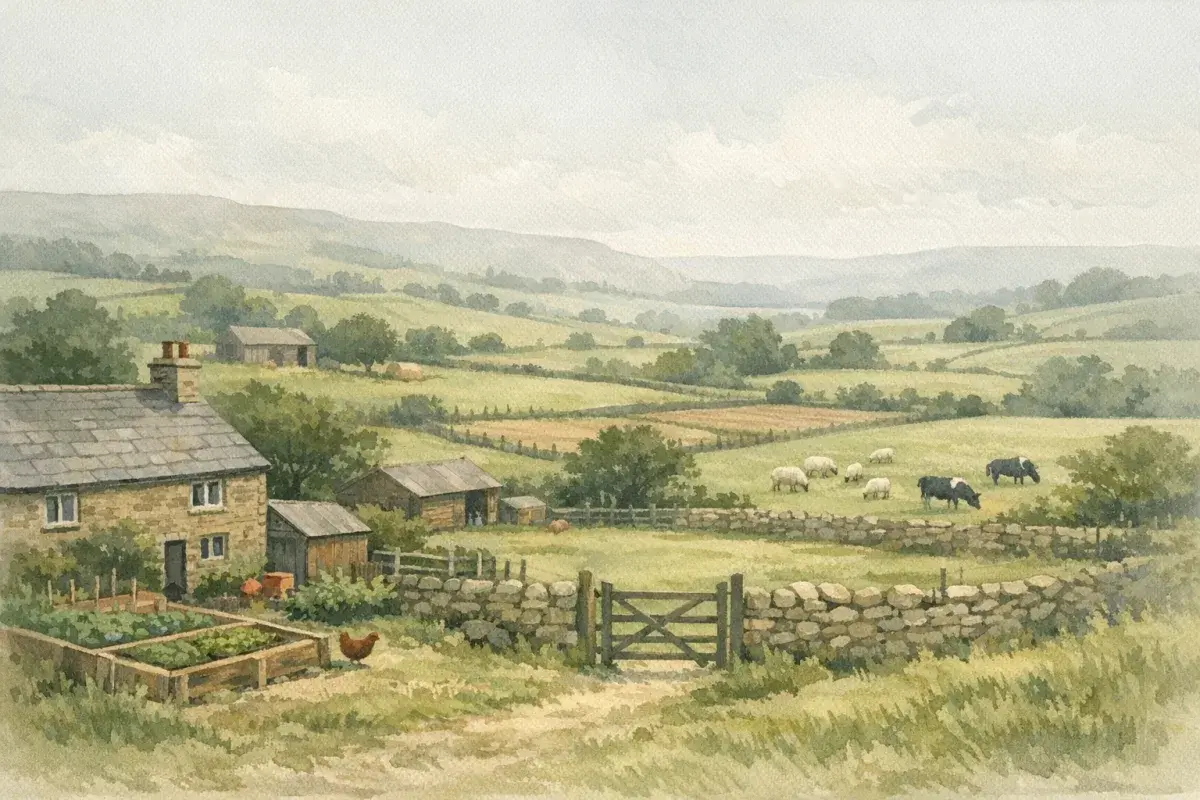
You can start a smallholding for all sorts of reasons: a more self-sufficient life, a sideline that pays for itself, a family enterprise you can grow over time. The romantic bit is easy to picture. The bit that catches people out is everything that sits behind it, land choice, access to water, planning constraints, livestock rules, cashflow gaps, and the reality that you're often doing three jobs at once.
This guide is written for the UK, and it's deliberately practical. You'll get a clear way to define what you're building, how to choose land without buying someone else's problems, what permissions and registrations matter, and how to get to a first sale (or first year of genuine progress) without cutting corners that come back to bite.
Define Your Smallholding Goal And Business Model
If you skip this part, you'll end up buying land that's "nice" rather than land that works. Starting a smallholding goes smoother when you decide, up front, what success actually means, and what you're willing to trade to get it.
Lifestyle Vs Commercial: What Success Looks Like For You
A lifestyle smallholding isn't "less serious". It's just optimised for different outputs: quality of life, food on the table, slower growth, lower risk, fewer compliance headaches.
A commercial smallholding is optimised for margin and throughput. That doesn't mean big, plenty of profitable UK enterprises run on modest acreage, but it does mean:
- consistent production plans (not "when I've got time")
- repeatable routes to market
- proper cost tracking (feed, bedding, packaging, diesel, repairs, everything)
- an honest view of labour (including yours)
A useful exercise: write down three non-negotiables (e.g., "must be within 30 minutes of school", "no public footpath through the yard", "must generate £X/year within 24 months"). Those will stop you falling in love with the wrong place.
Choose Your Enterprise Mix: Livestock, Crops, Horticulture, Woodland, Or Mixed
Your "enterprise mix" is the combination of activities that makes the holding viable.
In the UK, the best-fit mix is usually determined by four realities:
- Land capability (soil type, drainage, slope, exposure)
- Infrastructure (water, fencing, buildings, tracks, handling)
- Your market (local demand, access, competition, willingness to pay)
- Your time (daily stock checks are non-negotiable)
A few grounded examples:
- Horticulture can be high value per acre, but it's labour-hungry and unforgiving on timing. If you work full-time off-farm, it can still work, just design it around a manageable crop plan and reliable sales.
- Sheep look simple until you hit lambing, parasite management, fencing repairs, dog worrying risk, and winter feeding. Great enterprise on the right ground, but not "set-and-forget".
- Poultry for eggs can be excellent locally, but you need a plan for winter production dips, predators, feed price volatility, and customer expectations.
- Woodland can support firewood, biodiversity projects, and amenity value, but income is often slower and more lumpy.
Before you choose, get clear on scale. People use "smallholding" loosely, and that can cause crossed wires with agents, lenders, and planners. If you're not sure what counts and how size affects your options, read our quick explainer on what people typically mean by a smallholding in the UK.
Sense-Check Time, Skills, And Cashflow Reality
Most smallholdings don't fail because the owner didn't care, they fail because the plan assumed unlimited time and linear progress.
Ask yourself, bluntly:
- Time: Can you commit to daily checks, plus seasonal peaks (lambing, kidding, planting, harvesting)? Who covers when you're ill or away?
- Skills: Are you starting from scratch with stock, machinery, or horticulture? What's your learning plan, courses, mentors, shadowing?
- Cashflow: What are you living on in months 1–18? Many enterprises pay late (or seasonally). Bills don't.
A simple rule we see repeated: build a plan that still works when you've had a wet month, a broken fence, and a vehicle repair, because you will.
Find The Right Land And Property (And Avoid Costly Surprises)
The land is the engine. The house (if there is one) is the lifestyle. The mistake is treating them as the same decision.
When you're starting a smallholding, you're not only buying a view, you're buying constraints, rights, responsibilities, and (sometimes) other people's expectations.
Buying Vs Renting: Security, Flexibility, And Typical Trade-Offs
Buying gives you control: long-term improvements, tree planting, infrastructure, and the confidence to build markets. But you carry the risk, planning, repairs, finance costs, and resale.
Renting can be a brilliant way to start smallholding life with less capital tied up. The catch is security. If your agreement is short, it's harder to justify spending on fencing, water systems, polytunnels, or buildings.
If you're early-stage, it's worth reading a dedicated walkthrough on buying a smallholding as a beginner so you know what a sensible first purchase process looks like in practice.
Location Factors: Soil, Water, Access, Neighbours, And Local Markets
In UK smallholding terms, "location" means more than postcode.
- Soil and drainage: Heavy clay can be productive, but it changes your stocking, wintering and access plans. Light soils can be easier to work but may need more irrigation and careful fertility management.
- Water: Mains water is straightforward but can be expensive for livestock or irrigation. Private supplies need testing, maintenance, and contingency.
- Access: Can a livestock lorry, feed delivery, or contractor actually get in? Are there pinch points, weak bridges, or shared tracks?
- Neighbours: Not just niceness, think noise, smells, dogs, shooting, and biosecurity. A yard right on a public footpath can be workable, but you'll manage more risk.
- Local markets: Your best prices often come from repeat local customers. If you're an hour from buyers, your time and fuel become part of the cost base.
Title Checks: Rights Of Way, Easements, Boundaries, And Restrictive Covenants
This is where "cheap" land becomes expensive.
You (and your solicitor) should be alert to:
- Public rights of way crossing fields or yards (practical implications for livestock, dogs, signage, and insurance)
- Easements/wayleaves (pipes, overhead lines, access rights)
- Boundary responsibilities (who maintains what, and where the line actually is)
- Restrictive covenants limiting structures, business use, or even certain livestock
If a boundary is unclear, treat that as a cost and a time delay. Sorting it later is rarely easier.
Services And Infrastructure: Water Supply, Power, Drainage, Tracks, And Buildings
Smallholding infrastructure costs are the silent budget killers.
At viewings, don't just glance at buildings, interrogate the basics:
- Water: where it comes from, capacity, reliability, and whether trough supply is practical across the holding.
- Power: three-phase can matter for some enterprises: off-grid may be fine but must be designed, not improvised.
- Drainage/septic: check condition, compliance, and what upgrades could cost.
- Tracks and hardstanding: winter access isn't optional if you've got stock.
- Buildings: storage, handling, and weather protection are what make a smallholding manageable.
If your dream is a turnkey place where you can live on-site and work the land immediately, you'll look at a different subset of listings, often with a higher price tag but fewer delays. Here's our guide to finding the right smallholding with a house already in place (and what to inspect before you commit).
Planning, Permissions, And Compliance You Must Get Right
Planning is where good intentions meet the real world. In the UK, permitted development is a privilege, not an automatic right, and councils will look for evidence, not enthusiasm.
If you take one thing from this section, make it this: assume you need to prove your case, and document everything.
Agricultural Use, Change Of Use, And What Planning Authorities Look For
"Agricultural use" isn't a vibe: it's a legal planning concept. If you're changing what land or buildings are used for, say, from agriculture to equestrian use, storage, retail, or holiday lets, you may need planning permission or a formal change of use.
Planning authorities tend to look for:
- genuine agricultural need
- scale and intensity (is it still "agricultural", or effectively a different business?)
- highways and access impacts
- amenity impacts (noise, odour, traffic, lighting)
- drainage and pollution risk
If you're unsure what needs permission, don't rely on hearsay from social media or a neighbour's "we did it and it was fine". Start with a proper overview of smallholding planning permission in the UK and then talk to a planning consultant for your specific site.
Permitted Development Rights For Agricultural Buildings: When They Apply And When They Don't
Agricultural permitted development rights can allow certain buildings and works, but they come with conditions and limits, often including prior notification to the local authority.
Common tripwires we see:
- the unit size isn't what you think it is (or you don't have the qualifying area)
- the building is too close to a dwelling (yours or someone else's)
- the intended use drifts into non-agricultural territory (e.g., commercial storage, workshops, retail)
- the site has constraints (designations, access, flood issues)
Treat permitted development like a regulated process: check the rules, map it properly, keep records, and don't build first and hope later.
Residential And Worker Accommodation: Agricultural Ties And Proving Need
Living on-site is often the dream. Planning reality: a new dwelling in the countryside is hard to justify unless you can demonstrate a functional need for a full-time worker to be readily available.
If you're looking at properties with existing agricultural occupancy conditions (often called an "agricultural tie"), don't assume it's a minor footnote. It can affect:
- who can live there
- mortgage options
- resale market
- how you evidence compliance
Get specialist advice early if accommodation is central to your plan.
Environmental Designations And Constraints: AONB, SSSI, Flood Risk, And Nutrient Neutrality
Constraints aren't automatic deal-breakers, but they change your route.
- AONB / National Landscape: higher bar for new development, more sensitivity on visual impact.
- SSSI: significant restrictions: Natural England involvement: management may be tightly controlled.
- Flood risk: affects buildings, access, insurance, and sometimes whether certain uses are acceptable.
- Nutrient neutrality (where applicable): can complicate permissions for new development in certain catchments.
The practical approach: identify constraints before you make an offer, then build a plan that fits them, rather than fighting them later at great expense.
Money, Tax, And Structuring Your Smallholding
Smallholdings are asset-heavy and cashflow-sensitive. You can be "up" on paper while being skint in reality. So you need a simple, disciplined money system from day one.
Start-Up Costs And Ongoing Running Costs: A Realistic Budget Framework
Start-up costs usually arrive in clusters:
- legal fees, surveys, searches
- fencing, gates, troughs, water pipework
- shelters, handling kit, hardstanding
- machinery (or contractor costs if you don't own kit)
- livestock purchases (plus transport, health plan, initial feed)
- compliance basics: signage, safe storage, record systems
Then the ongoing costs that never stop:
- feed and bedding
- vet and medicines
- electricity and water
- diesel, repairs, tyres
- insurance (public liability is non-negotiable)
- waste disposal and muck management
- marketing/packaging if you sell direct
A helpful discipline: keep a "true cost per unit" estimate (per dozen eggs, per lamb sold, per veg box). If you can't estimate it, you can't price confidently.
Funding Options: Savings, Borrowing, Grants, And Joint Ventures
Most people start with a blend: personal capital plus some borrowing, then reinvested trading profits.
If you're borrowing against property, lenders will assess risk differently for rural and agricultural setups, especially if there's tied accommodation or multiple income streams. This overview of the smallholding mortgage landscape in the UK will help you ask the right questions before you commit.
Other options that can work (case-by-case):
- Grants (often specific to environmental outcomes, productivity, or diversification, eligibility varies by nation and scheme)
- Joint ventures (e.g., you provide labour/management, a landowner provides land/infrastructure)
- Leasing equipment instead of buying (useful for cashflow, but check total cost)
Be cautious with optimistic grant assumptions. Build a plan that works without them, then treat support as upside.
Tax Basics: Income, VAT, National Insurance, And Record-Keeping
You don't need to become an accountant, but you do need tidy records.
At a minimum:
- separate bank account for the holding
- keep every invoice/receipt digitally
- track mileage and vehicle use
- log sales by channel (farm gate, markets, wholesale)
- understand whether you're trading as a sole trader, partnership, or limited company (get advice)
VAT can be relevant sooner than people expect, especially if you have diversified income streams. And HMRC cares about whether you're trading with a view to profit. If the holding is consistently loss-making with no credible plan, you may have restrictions on what you can claim.
Reliefs And Longer-Term Planning: APR, BPR, CGT, And When Specialist Advice Pays
Reliefs like Agricultural Property Relief (APR) and Business Property Relief (BPR), plus Capital Gains Tax considerations, can materially affect long-term outcomes for families and investors.
Since 6 April 2026, 100% Agricultural and Business Relief together is capped at £2.5 million per person, with 50% relief on qualifying value above that. The detail matters too: occupancy, use, rental arrangements, diversification activities, and how the business is structured can all change the picture.
If you're buying a smallholding as a multi-decade asset, especially where there's family succession planning, specialist advice is usually money well spent. It's the difference between "we assumed" and "we know".
Set Up The Holding: Registration, Biosecurity, And Core Systems
The early months of starting a smallholding feel like pure graft: fencing that never ends, gates that don't hang right first time, and a to-do list that grows when you tick things off.
The way through is systems. Boring? Yes. Also the reason your holding stays compliant and manageable.
Register The Land And Livestock: CPH, Rural Payments, And Movement Rules
If you keep livestock, you'll need the right registrations and you'll need to follow movement and record-keeping rules. In England, Wales and Scotland, that includes a County Parish Holding (CPH) number and understanding the relevant movement reporting requirements for your species.
Even if you're starting with "just a few" animals, set the admin up properly before they arrive. Retro-fitting compliance while you're firefighting is how mistakes happen.
Animal Health And Welfare: Housing, Handling, And Veterinary Relationships
Good welfare is practical, not just principled. It reduces losses, improves growth rates, and keeps you on the right side of inspection and assurance requirements.
Focus on:
- dry, draught-free housing with ventilation
- safe handling (races, pens, gates, especially for sheep and cattle)
- a relationship with a local vet who understands small-scale setups
- a written health plan you can actually follow
And don't underestimate handling facilities. The first time you need to treat a lame animal in a muddy corner with no kit, you'll wish you'd built the pens earlier.
Biosecurity And Public Liability: Practical Risk Management
Biosecurity is mostly habits:
- quarantine new arrivals
- control visitor access to livestock areas
- manage muck and run-off properly
- keep feed secure from vermin and wildlife
- clean down kit if it moves between holdings
Then there's public risk. If you have rights of way, visitors, customers collecting produce, or DIY livery-like arrangements, you need to take public liability seriously. Put signage, safe routes, and basic risk assessments in place.
Essential Kit And Infrastructure Priorities For Year One
Year one is not the time to buy shiny toys. It's the time to buy what reduces daily stress and prevents expensive mistakes.
A sensible priority order for many smallholdings:
- fencing and gates that actually hold stock
- water distribution you can rely on in winter
- secure storage (feed, medicines, tools)
- handling and loading set-up
- hardstanding and winter access
- basic machinery only when it beats contractor costs
If you're ever torn between "more animals" and "better infrastructure", infrastructure usually wins. It scales. Animals multiply your workload immediately.
Make It Pay: Routes To Market And Pricing With Confidence
This is where smallholdings get real. Plenty of holdings are productive: fewer are profitable. The difference is usually marketing discipline and pricing confidence.
Direct Sales, Farm Gate, Box Schemes, And Local Wholesale
Direct sales can bring the best margins, but they demand consistency.
Typical UK routes include:
- Farm gate sales: simple, but you must manage availability, signage, parking, and food hygiene requirements where relevant.
- Farmers' markets: great for feedback and repeat custom: costs include stall fees, time, and travel.
- Box schemes / subscriptions: predictable demand, but requires robust production planning.
- Local wholesale (shops, cafés, butchers): lower margin per unit but steadier volume, if you can supply reliably.
If you're choosing an enterprise primarily for income, you'll want a shortlist of realistic options that match your land and time. We've pulled together proven smallholding income ideas that work in different UK contexts (and what tends to trip people up).
Diversification Done Properly: Storage, Equestrian, Glamping, And Letting Space
Diversification can stabilise cashflow, but it often increases planning complexity, insurance requirements, and neighbour sensitivity.
Common routes:
- storage lets (with careful attention to planning use class)
- equestrian uses (often not "agricultural" in planning terms)
- small-scale glamping
- workshops or light rural business units
The disciplined way to diversify is to treat it like a separate business line: separate costs, separate compliance checklist, separate marketing plan. If it's only viable by ignoring planning, it isn't viable.
Branding, Labelling, And Food Standards: Getting Compliance Right
A label is a legal document in miniature.
If you're selling food products, you need to understand the relevant UK rules for food hygiene, traceability, allergen information where applicable, weights and measures, and correct descriptions.
Even if you're selling "just eggs" or "just veg", you'll be making claims (free range, organic, local, pasture fed) that need to be truthful and supportable.
Build Repeatable Systems: Production Planning And Simple KPIs
You don't need corporate dashboards. You do need a few numbers you track every month:
- sales by channel
- gross margin on key products
- feed cost per animal (or input cost per crop bed)
- losses/wastage
- hours worked (yes, yours counts)
Then build a production plan backwards from your market commitments. If you're promising 25 veg boxes a week, what beds need planting when? If you're selling lamb boxes, what finishing window are you targeting?
This is the quiet difference between "busy" and "building something".
Build Your Support Team And Use Specialist Tools
Smallholding success isn't lone-wolf stuff. The people you've got around you, professionals and peers, will save you from expensive missteps.
The Professionals To Line Up Early: Land Agent, Solicitor, Surveyor, Accountant, And Planning Consultant
When you're starting a smallholding, you'll often need specialist rural professionals rather than generalists.
- Land agent: to sanity-check value, negotiate, and flag practical issues at viewings.
- Solicitor experienced in rural property: to handle title quirks, rights, covenants, access, overage, and occupancy restrictions.
- Surveyor: especially if you're buying buildings, older houses, or anything with obvious defects.
- Accountant familiar with farming and rural enterprises: to structure properly and keep HMRC-compliant records.
- Planning consultant: if your plan depends on development, change of use, or worker accommodation.
We work with agents and advisors across the UK, and the pattern is consistent: paying for the right expertise early is cheaper than paying to undo a mistake later.
Learn From Local Networks: Smallholder Groups, Markets, And Mentors
Local knowledge beats generic advice.
Find:
- a nearby smallholder who's a couple of years ahead of you
- local markets where you can observe what sells and at what price
- species-specific communities (sheep, goats, pigs, poultry) that can point you to trusted vets, abattoirs, shearers, and feed suppliers
And if you can, volunteer or do a few days shadowing during peak season. Ten hours at lambing teaches you more than ten hours on a forum.
Use Specialist Portals And Alerts To Track The Right Opportunities
Most people waste months looking at the wrong listings, either too residential, too restrictive, or simply not set up for land-based work.
Looking for land like this? Tell AgLand what you're after - type, acreage, budget and area - and we'll alert you the moment a matching property is advertised. Registering is free, and there's no commission on either side. Tell us what you're looking for.
If you're actively hunting, start with a focused view of smallholdings for sale across the UK and set alerts for your non-negotiables. It's far more efficient than scrolling everything and hoping the right plot appears.
Conclusion
Starting a smallholding is one of the most rewarding things you can do with land, but it's also one of the easiest ways to tie yourself in knots if you don't plan with UK realities in mind. Get your goal and enterprise mix clear, choose land for function not fantasy, treat planning and compliance as part of the build (not an afterthought), and put simple money and production systems in place early.
Then do what good rural businesses have always done: surround yourself with the right people, learn fast, and make decisions you'll still be happy with five years from now.
Disclaimer: AgLand.co.uk is a UK agricultural land and rural property matching service, where buyers register what they are looking for and owners advertise directly to the buyers who match, and a rural resource hub. Nothing in this text is intended as legal, financial, or investment advice. You should carry out your own due diligence and seek guidance from appropriately qualified professionals (for example, a solicitor, chartered surveyor, accountant, tax adviser, land agent, or planning consultant) before making decisions.