
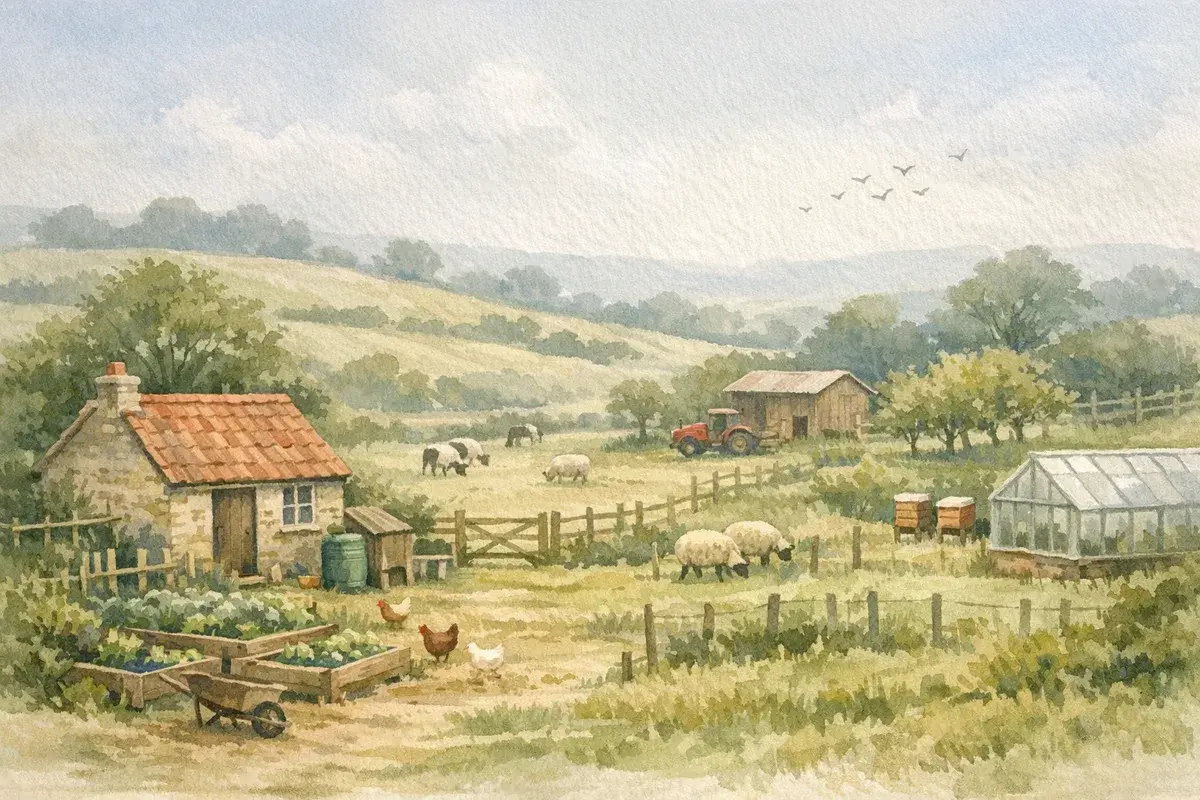
Buying a smallholding is part lifestyle choice, part business decision, and part paperwork marathon. If you're wondering how to buy a smallholding uk, the short answer is this: define your uses, check planning and access, secure finance, then inspect the land and buildings hard before you commit.
The real trick is separating dream from reality. A tidy cottage with a few acres in Devon, Cheshire, or the Scottish Borders may look perfect, but drainage, lawful use, access rights, boundaries, and outbuildings can matter more than the view (often much more).
You'll also want to think like a rural operator, not just a homebuyer. Can the land support your plans for livestock, horticulture, equestrian use, or a hobby enterprise, and will the local authority, lenders, and insurers be comfortable with that use?
What Counts As A Smallholding In The UK
A smallholding is usually a modest rural holding with a house, outbuildings, and land, often from a couple of acres up to a few dozen acres. There's no single legal acreage threshold, which is why two properties called smallholdings can look very different in Cumbria, Cornwall, or North Yorkshire.
That flexibility is useful, but it also means buyers need to pin down what they actually want. Are you after a lifestyle holding with ponies and a veg patch, or a working unit that could turn over cash from livestock, poultry, storage, or direct-to-consumer produce?
Freehold, Leasehold, And Common Land Rights
Most smallholdings are sold freehold, meaning you own the property and land outright. Leasehold rural property is less common, but it appears in some estates, farmsteads, and former institutional holdings, and the lease terms can seriously affect finance and future use.
Be alert to rights over common land, grazing rights, sporting rights, and burdens such as restrictive covenants. In parts of Wales, the Lake District, and upland Scotland, those rights can be highly relevant to stock numbers, access, and even building works.
- Freehold: outright ownership, usually the simplest route.
- Leasehold: time-limited ownership with conditions attached.
- Common rights: grazing or access rights linked to land ownership.
- Restrictive covenant: a binding rule limiting use or development.
Types Of Smallholding You'll See On The Market
You'll find a wide spread of properties in the market, from bare land with no dwelling to established small farms with barns, sheds, and a farmhouse. Some come with agricultural occupancy conditions, sometimes called an AOC, which restrict who can live there to someone engaged in agriculture or forestry.
We'd argue that the AOC matters most when the house is a big part of the value. A cheap purchase price can be offset by tougher resale conditions, so the headline figure doesn't tell the full story.
How To Budget For The True Cost
Prices vary sharply by region, quality, and building stock. As of March/2026, compact smallholdings in parts of the North East or Wales may start below £500,000, while well-located holdings in the South West, Surrey, or Kent can reach well beyond £1.5 million when houses, barns, and acreage are factored in.
That spread is exactly why budgeting needs to be wider than the asking price. You'll need to include stamp duty land tax where applicable, legal fees, surveys, lender fees, insurance, boundary work, fencing, water systems, and likely a reserve fund for immediate repairs.
| Typical Item | What It Covers | Indicative Cost As Of March/2026 | Notes |
|---|---|---|---|
| Legal Fees | Solicitor, searches, title checks | £1,500 to £3,500 | More if title is complex |
| Rural Survey | Buildings, land, drainage, access | £900 to £2,500 | Higher for large or remote holdings |
| Drone Or Specialist Inspection | Roof, barns, hard-to-see defects | £300 to £800 | Useful on older steading property |
| Initial Repairs Reserve | Immediate fixes after completion | £5,000 to £50,000+ | Very property-dependent |
Finance can also be trickier than for a standard house purchase. Some lenders are comfortable with mixed residential and land assets, while others take a stricter line if the holding includes commercial buildings, equestrian use, or significant agricultural income dependence.
Running Costs People Often Miss
Running a smallholding is not the same as owning a country house with a lawn. Think feed, vet bills, muck-away, septic tank servicing, boundary maintenance, fuel, insurance, and the endless little jobs that land throws at you after a wet winter.
Power, water, and drainage deserve special attention. A private water supply, such as a borehole or spring, can be excellent, but it may need treatment, testing, or upgrades before purchase makes sense.
Search Smart In The Right Counties
Location affects more than scenery. It shapes price, planning risk, local demand, weather, and the kind of enterprise the land can support, so a good holding in Shropshire will not behave the same way as one in Devon or Aberdeenshire.
In the South West, demand from lifestyle buyers keeps values firm, especially where there's good access and usable pasture. In parts of Lincolnshire, Herefordshire, and Norfolk, buyers may find better value where land is productive but houses are fewer and further between.
Regional Market Patterns To Watch
County-level variation matters because buyers often overpay for charm and underweight practicality. A holding near a village with good transport links, local contractors, and a robust market town will often command a premium over an isolated plot with awkward access on narrow lanes.
Ask whether the local area supports your intended use. Poultry, market gardening, and roadside produce sales tend to work better in accessible counties with strong local spending, while sheep, turf, or equestrian use may suit different terrain and rainfall patterns.
- Devon and Cornwall: strong lifestyle demand, often higher prices.
- Shropshire and Herefordshire: practical mixed farming appeal, steady value.
- North Yorkshire and Cumbria: larger land parcels, variable upland conditions.
- Norfolk and Lincolnshire: productive land, good for horticulture and mixed use.
- Scottish Borders: more space for the money, but be mindful of access and services.
Access, Services, And Local Rules
Before you fall for a pretty approach road, check whether it's adopted, shared, or private. A beautiful track can become a nightmare if the title is unclear or if neighbours have rights you didn't expect.
Planning policy also varies by local authority, and rural districts can be strict about new dwellings, conversions, and diversification. If your plan depends on converting a barn, adding a holiday let, or running a commercial yard, ask early whether the idea is realistic.
Due Diligence Before You Make An Offer
Due diligence is where many smallholding purchases are won or lost. The legal pack, survey, title documents, and local searches should all be read with the same seriousness you'd give a lambing shed roof in February.
Start with title. Check boundaries, rights of way, access, service media, restrictive covenants, overage clauses, and any tenant or grazing arrangements that might survive completion.
Buildings, Land, And Infrastructure Checks
Older barns and cottages often hide expensive repairs. Roofs, damp, electrics, septic systems, asbestos, and subsidence are all common enough in rural property to deserve proper investigation rather than hopeful guessing.
Land quality matters too. Walk it after heavy rain if possible, because drainage problems show up fast on clay soils in places like Somerset or East Anglia, while poorer upland grazing may be perfectly fine for sheep but useless for cropping.
- Access: legal and practical entry for cars, machinery, and stock.
- Drainage: how water moves across fields and around buildings.
- Water supply: mains, borehole, spring, or shared arrangement.
- Buildings condition: roof, structure, damp, and services.
- Land use history: grazing, cropping, storage, or contamination risk.
Planning Permission And Agricultural Use
If the holding includes agricultural buildings, don't assume you can simply repurpose them. Subtle differences between agricultural use, equestrian use, and general storage can have large planning implications, particularly where development pressure is high.
It's also worth checking whether any prior approvals or certificates of lawful use exist. Those documents can be a lifesaver when you want certainty, and they can stop a buyer inheriting a planning problem they didn't create.
Finance, Offers, And Completion Strategy
Once the numbers and searches stack up, structure your offer around evidence, not emotion. A smallholding with awkward access, a weak roof, or marginal land should be priced differently from a turn-key unit with modern services and flexible buildings.
Lenders often want a clear route to repayment or comfort that the residential element alone supports the loan. That can be easier where the house is substantial and the land is modest, but harder where the value sits mainly in acreage or commercial potential.
| Buying Route | Best For | Potential Weak Point |
|---|---|---|
| Standard Mortgage | House-led holdings with limited land risk | May shrink on commercial or agricultural complexity |
| Specialist Rural Finance | Mixed-use or larger acreage purchases | More detail requested, often slower |
| Cash Purchase | Fast completion and negotiation strength | Ties up capital and may reduce liquidity |
When making an offer, be clear whether it is subject to survey, finance, and contract. That keeps your position sensible if a boundary dispute, drainage issue, or title defect appears late in the process.
Completion timing can also matter in the countryside. If the property includes livestock, tenancy arrangements, or seasonal access issues, a carefully timed handover is often worth more than shaving a small amount off the price.
Conclusion
Knowing how to buy a smallholding uk comes down to doing the practical things well. Define the use, check the title and planning, test the land and buildings properly, and budget for more than the purchase price.
The best smallholding for you is not always the prettiest one. It's the one that matches your aims, stands up to scrutiny, and won't become a drain on time and cash once the keys are yours.
Disclaimer: AgLand.co.uk is a UK agricultural land and rural property matching service, where buyers register what they are looking for and owners advertise directly to the buyers who match, and a rural resource hub. Nothing in this text is intended as legal, financial, or investment advice. You should carry out your own due diligence and seek guidance from appropriately qualified professionals (for example, solicitors, land agents, surveyors, and financial advisors) for your specific circumstances.