
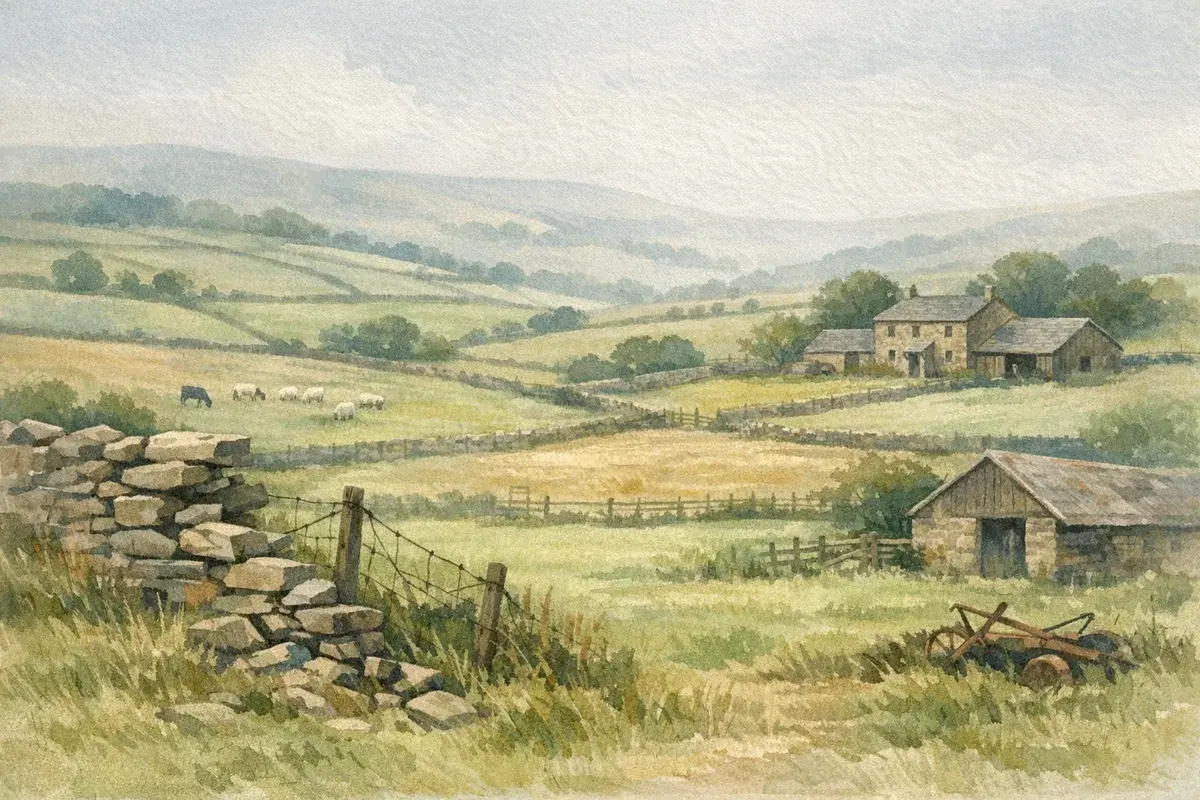
You don't usually "lose" a strip of farmland with a dramatic moment and a handshake. It's quieter than that.
It's the neighbour who's always shut the gate a little further over. The headland that's been cultivated a touch wider "for years". The woodland edge that's gradually become someone else's dumping ground for brash and fencing stakes. Then a sale, a refinance, a stewardship inspection, or a family succession, forces the question you've been avoiding: whose land is it, legally?
Adverse possession on agricultural land is one of those rural realities that can feel unfair until you understand what the law is trying to do: bring long‑running, uncontested occupation into line with the register (or, for older land, the paper title). The trick is that the rules differ depending on whether the land is registered or unregistered, and the evidence that works in a suburban back garden doesn't always translate cleanly to working countryside.
This guide focuses only on the UK, and it's written for landowners, farmers, buyers and rural investors who want a practical route through the legal tests, time periods, and the on‑the‑ground behaviours that tend to make, or break, claims on farmland.
What Adverse Possession Means For Farmland And Rural Boundaries
Adverse possession is a legal route by which someone who has occupied land as if they were the owner for long enough may be able to acquire rights to it (and in some cases be registered as proprietor). In rural settings, it's less about "squatting" and more about drift: boundaries that were never pinned down, informal arrangements that outlast memories, and day‑to‑day farming that looks indistinguishable from ownership.
If you're dealing with a potential claim, start with the boring bits: the title, the plan, and how the boundary is described. Many disputes that feel like "adverse possession" are actually about interpretation of deeds, long use rights, or poor mapping. Our explainer on agricultural land boundary disputes is a useful companion when the real issue is where the line should be, not whether someone has possessed beyond it.
Why It Commonly Arises On Farms
On farms, the incentives to "tidy up" boundaries are practical, not legal. You put the fence where it works with the cattle flow. You straighten a kink to get the sprayer through. You let a neighbour graze a corner because it stops it becoming a thistle nursery. And you rarely want a fight over half an acre.
A few rural patterns come up again and again:
- Historic hedge and ditch lines that don't match modern title plans.
- Old occupation features (banks, stone walls, post‑and‑wire) moved over time.
- Shared access tracks where maintenance and use blur into control.
- Estate break‑ups where retained land, sold lots, and retained rights don't align neatly.
- Unregistered parcels still held on old deeds, especially where families have owned land for generations.
The Core Tests: Factual Possession, Intention, And Possession Without Consent
While the statutory route differs depending on registration (we'll get to that), the core ingredients are broadly consistent.
- Factual possession: you exercised exclusive physical control over the land, like an owner would.
- Intention to possess: you intended to possess the land for your own benefit (not necessarily to own it forever, but to control it).
- Without the paper owner's consent: if you were there under a permission, formal or informal, your claim is usually dead on arrival.
On a farm, "exclusive control" is the battleground. A bit of occasional mowing or topping isn't typically enough. But fencing, locking gates, managing access, and treating the land as part of your holding, year in, year out, can be.
Registered Vs Unregistered Agricultural Land: The Two Legal Routes
Before you waste months gathering evidence, you need to know which legal regime you're in.
- Registered land: the Land Registration Act 2002 (LRA 2002) governs the main route, with a modern "application + notice + objection" structure.
- Unregistered land: the Limitation Act 1980 is still central: after enough time, the original owner's title can be extinguished.
If you're not sure whether the land is registered, the fastest route is to check the title position and any filed plan detail. AgLand's overview on Land Registry agricultural land sets out what to look for and why it matters in rural transactions.
Registered Land After The Land Registration Act 2002 (Most Modern Cases)
For registered land in England and Wales, adverse possession no longer works like the old "wait 12 years, get title" model.
Instead, after 10 years of adverse possession, the occupier can apply to be registered. Land Registry will then notify the registered owner (and other interested parties). In many cases, the owner can object and defeat the application, provided they act in time and are willing to take steps to recover possession.
This is deliberate policy: the register is meant to be a reliable record. So the law gives owners a clear chance to stop being "sleep‑walked" into losing land.
Unregistered Land And The Limitation Act 1980 (Still Relevant In Rural Areas)
Unregistered land is still a real feature of the countryside. You'll see it where:
- parcels were never triggered for first registration,
- boundaries were historically "known" without formal plans,
- family transfers happened privately,
- or the land is awkward, remote, or never sold.
Here, the 12‑year limitation period is crucial. If the true owner doesn't bring an action to recover the land within that time, their right to do so can be barred, and their title can eventually be extinguished.
If you're sitting on old deeds and a plan that looks like it was drawn with a ruler and optimism, it's worth reading up on registering unregistered agricultural land, because registration can be a defensive move as much as a conveyancing one.
Leasehold, Grazing Licences, And Farm Business Tenancies: Where Claims Usually Fail
A lot of "adverse possession" worries turn out to be ordinary occupation under an agreement, sometimes written, often not.
If you occupy land under:
- a Farm Business Tenancy (FBT),
- an Agricultural Holdings Act tenancy,
- a grazing licence,
- or any arrangement that amounts to permission,
…then your occupation is by consent. That typically prevents adverse possession because the possession isn't "adverse".
The grey bit is where permission existed once, then everyone forgot, paperwork vanished, and occupation continued as if it were your own. If you're the landowner, getting the position "papered" now, without inflaming things, is often the smartest play.
Time Periods, Deadlines, And The Importance Of When Possession Started
In rural disputes, the timeline is everything. Not just "how long have you used it?", but when did your use become exclusive, and was it ever clearly permitted?
The 10-Year Rule For Registered Land And The Landowner Objection Window
For registered land (England and Wales), the occupier generally needs 10 years of adverse possession before applying under Schedule 6 to the Land Registration Act 2002.
Then Land Registry serves notice on the registered owner. If you're the owner and you object, you will typically defeat the application, but you usually need to take steps to remove the occupier within a set period after the objection process. It's not enough to write an angry letter and then do nothing.
There are exceptions (including boundary mistake situations) where an application may still succeed even if the owner objects. That's why early advice matters.
The 12-Year Rule For Unregistered Land And Extinguishment Risks
With unregistered land, the traditional 12 years is often the headline. But what makes it risky is the end result: the original owner can be left with no enforceable title, and the occupier can be in a position to register.
If you suspect a parcel is unregistered, don't wait until a sale. The administrative work to regularise title can take time, particularly if plans need reconciling and historic deeds are incomplete.
Interruptions: What Resets The Clock (And What Doesn't)
You can't manage adverse possession properly without knowing what breaks "continuous" possession.
Things that commonly do interrupt or reset the clock include:
- The paper owner retaking possession (physically re‑occupying, securing access, reinstating control).
- The occupier acknowledging the owner's title in writing (or sometimes by clear conduct).
- Granting a licence or tenancy that turns adverse occupation into permitted occupation.
Things that often don't interrupt it (depending on the facts) include:
- occasional visits by the owner,
- a one‑off dispute without follow‑through,
- maintenance that doesn't reassert control,
- or informal chats that never convert into a documented permission.
The hard truth: if you're the owner, a "we'll sort it later" attitude can become a legal problem.
What Counts As ‘Possession' On Agricultural Land In Practice
Courts and Land Registry look for possession that's consistent with the land's nature. Farmland isn't a patio. You don't "possess" a steep bank or a ditch corner in the same way you possess a garden.
So the question becomes: what would an owner of this particular land reasonably do to show control?
Exclusive Control: Fencing, Gates, Access Control, And Excluding Others
On agricultural land, the clearest indicators tend to be physical and practical:
- fencing that encloses the land with your holding,
- gates you control (including who has keys or codes),
- signage or barriers that deter others,
- moving stock in and out as part of your system,
- controlling vehicle access, especially on tracks and field entrances.
But fencing isn't magic. A fence that's obviously just stock‑proofing, while everyone still treats the boundary as "somewhere near the hedge", may be less persuasive than you'd hope.
Typical Farming Acts: Grazing, Cropping, Muck Spreading, And Maintenance
Regular farming activity can support factual possession, if it looks exclusive.
Examples that tend to help:
- rotational grazing where the land is treated as a defined paddock,
- cropping, reseeding, or cultivation up to a consistent line over many seasons,
- ongoing drainage works and ditch maintenance,
- hedge laying, fencing replacement, and repairs carried out as your responsibility,
- keeping others off the land (including the paper owner).
A single act (like muck spreading once) usually won't do it. A consistent pattern over years might.
Grey Areas: Shared Tracks, Headlands, Ditches, Rivers, And Woodland Edges
Rural "in‑between" areas generate the most arguments:
- Shared tracks: using a track isn't the same as possessing it. If both parties use and maintain it, exclusivity is hard to show.
- Headlands: cultivation creep happens. But if the line moves season by season, it's difficult to prove a fixed area possessed for the full period.
- Ditches and banks: ownership can depend on deed wording and presumptions (and the physical features shift).
- Rivers and streams: boundaries can move with natural processes: plus you may have separate riparian responsibilities.
- Woodland margins: dumping, coppicing, or putting up a fence inside a woodland edge can create the appearance of control, but the legal line might be elsewhere.
Also watch out for rights that look like possession but aren't, especially where the true issue is access or use rather than ownership. For example, longstanding use may amount to an easement rather than adverse possession: see agricultural land easements if your situation involves tracks, gateways, or utilities.
Evidence That Wins Or Loses Claims: Building A Rural-Proof Paper Trail
The cases that go wrong in the countryside often fail on one of two things:
- the area is not defined precisely enough, or
- the story of possession is vague ("we've always used it") without hard anchors.
If you're trying to defend, you're looking for evidence of permission, shared use, or owner control. If you're trying to apply, you need to show exclusive possession clearly and consistently.
Maps And Measurement: Title Plans, OS Features, And Professional Surveys
Start with title documentation and mapping. The title plan is usually general boundaries, not a guaranteed centimetre‑accurate line. That's why rural disputes often need a surveyor.
Practical steps that pay off:
- pull the title and plan and check any referenced deed plans,
- compare the plan with on‑the‑ground features (hedges, fences, ditches, banks),
- commission a measured survey if the area is material.
If you're unclear what your deeds actually show (or whether they're good enough), read up on agricultural land title deed issues, because "we've got deeds" and "we've got useful deeds" are not the same thing.
Documents And Data: Photos, Invoices, Livestock Records, And Stewardship Files
Rural evidence is often scattered across farm life. That's not a problem, if you gather it properly.
Useful sources include:
- dated photographs (including aerial imagery where available and lawful to use),
- fencing and materials invoices showing you enclosed and maintained the area,
- contractor records (hedge cutting, ditching, drainage, reseeding),
- livestock movement and grazing logs (showing consistent use),
- stewardship management records if they clearly tie you to the parcel.
One caution: subsidy and stewardship paperwork can cut both ways. If your claim relies on saying "this has been mine", but your own declarations excluded it, that inconsistency may get uncomfortable fast.
Witness Evidence: What Neighbours, Staff, And Contractors Need To Confirm
Witness statements shouldn't be fluffy. "I think it was always theirs" is weak.
What you want witnesses to confirm:
- the physical boundary on the ground and when it was installed or treated as the line,
- who maintained fences/hedges/ditches,
- whether the paper owner ever used the land,
- whether permission was asked for or granted,
- key dates (or at least anchor events: "before the winter of 2013", "after the barn conversion works").
In farming, staff turnover and contractor continuity can actually help, because contractors remember who paid and who instructed them.
How To Apply (Or Defend) Against Adverse Possession With Registered Titles
Registered title cases in England and Wales are procedural: timelines, notices, and the right form of objection matter.
Pre-Action Sense Check: Title Review, Boundary Diagnosis, And Risk Scoping
Before you apply, or before you fire off a solicitor's letter, do a structured check:
- Is the land definitely registered and is the title plan clear?
- Is this actually adverse possession, or a boundary interpretation problem?
- Are there rights of way, easements, or shared use facts undermining exclusivity?
- Is there any evidence of permission at any point?
- Exactly what area is claimed, can you plot it precisely?
If you're the owner and you discover weaknesses in your title (for example, possessory title from an old registration or missing documentation), it may be worth considering whether you can strengthen your position by upgrading title agricultural land, but get advice on timing and strategy.
The Application Process, Notices, And Common Objections
In broad terms, the occupier applies to Land Registry after 10 years. Land Registry notifies the registered owner and certain other parties. If you're the owner, common objections include:
- the occupier was there with consent (even if informal),
- occupation wasn't exclusive (shared grazing, shared track use, dual maintenance),
- the claimed area is uncertain or changes over time,
- the clock hasn't actually run for 10 years.
From an owner's perspective, the most expensive mistakes are procedural: ignoring notices, missing response deadlines, or objecting but then failing to take meaningful steps to recover possession.
When The ‘Reasonable Belief' And Boundary Mistake Exceptions May Apply
Some registered land applications can succeed even if the owner objects, particularly where:
- the land is adjacent,
- the boundary has been mistaken,
- and the occupier reasonably believed the land belonged to them.
This is where rural reality bites. If you bought a holding with a fence in place, farmed up to it for years, maintained it, and no one queried it, your belief can look reasonable. But if you moved the fence yourself "for convenience", that's a different story.
The detail is fact‑sensitive, so treat this as a prompt to get proper advice rather than a DIY checklist.
Practical Defence For Landowners: Stop Claims Before They Start
If you own agricultural land, the best defence is boring consistency. Not paranoia, just routine.
Farm Boundary Hygiene: Inspections, Markers, And Dealing With Encroachments Early
A practical routine (especially on larger farms and estates) looks like this:
- walk/drive boundaries on a schedule (seasonally works well, post‑harvest is ideal),
- photograph key points (gates, corners, track edges) with dates,
- mark boundary features clearly where appropriate,
- investigate "helpful" neighbour works promptly (new fencing, ditching, surfacing).
You don't need to turn every issue into a feud. But you do need to stop long, uncontested exclusivity.
Papering The Position: Licences To Occupy, Grazing Agreements, And Acknowledgements
If someone is using your land, grazing a corner, storing bales, accessing a track, permission is your friend.
Simple documents can transform the legal position:
- a short licence to occupy (time‑limited, revocable, clear area plan),
- a grazing agreement that's explicit it's permission and doesn't create a tenancy,
- a written acknowledgement that the land belongs to you.
Get the drafting right. A poorly worded "licence" can accidentally create stronger rights than you intended.
Dispute Resolution Options: Negotiation, Mediation, Determined Boundary, Or Court
Not every boundary tension needs court. Often the commercial answer is:
- negotiate a boundary agreement,
- use mediation when relationships matter (they usually do in rural communities),
- apply for a determined boundary if precision is critical,
- litigate only when the land value, development angle, or operational impact demands it.
If your land is unregistered or the plan evidence is weak, bringing it into a modern, coherent title picture can also reduce future flare‑ups: the starting point is often proper registration work and coherent mapping.
Tax, Subsidy, And Transaction Impacts When Land Is Lost Or Regularised
Adverse possession isn't only a boundary problem. It can spill into tax planning, subsidies, lending, and saleability.
How Changes In Occupation Affect APR, BPR, CGT, And SDLT Positioning
Tax outcomes depend heavily on your structure and the facts, but a few themes matter in practice:
- Inheritance Tax reliefs (APR/BPR): occupation, use, and the nature of the business matter. If land use shifts, or you lose control of a parcel, it can complicate relief claims, especially where eligibility depends on agricultural use and ownership/occupation patterns.
- Capital Gains Tax (CGT): disposing of land (or being treated as having lost it) can create CGT questions, particularly if the land had development hope value.
- SDLT: if a boundary is regularised through a transfer rather than adverse possession, SDLT may come into play depending on consideration and connected arrangements.
None of these are "one size fits all". If you're dealing with a claim around a transaction or succession plan, speak to a rural accountant or tax adviser early, before you lock in a course of action that creates an avoidable tax bill.
Stewardship And Rural Payments: Who Can Claim And What To Update
If the occupied area sits within a stewardship agreement or forms part of your claimed land area for scheme purposes, changes in occupation can trigger practical issues:
- mapping updates and parcel references,
- inspection risk if on‑the‑ground occupation doesn't match declarations,
- who is responsible for management options and compliance.
Even where the monetary value of the strip seems small, the compliance risk (and the admin burden) can be disproportionately annoying.
Buying, Selling, Or Letting: Due Diligence Checks To Avoid Post-Completion Shocks
If you're buying or taking on land, adverse possession risk is mainly a due diligence discipline problem.
A sensible rural checklist:
- compare the title plan to what's fenced and farmed on the ground,
- ask direct questions about neighbour use, shared tracks, and "informal" arrangements,
- check whether any parcels are unregistered and whether first registration is needed,
- ensure the contract and replies to enquiries deal with boundary features and disputes.
If you're selling, don't assume "it's always been that way" will wash with a buyer's solicitor or a lender's valuer. Tightening documentation and aligning the mapped title with reality tends to pay back in smoother deals.
Conclusion
Adverse possession on agricultural land is rarely about someone pitching a tent in a field. It's about time, habit, and the quiet authority of day‑to‑day control, set against the paperwork of title and registration.
If you take one practical step after reading this, make it this: pick the boundaries you know are "a bit vague", and deal with them while everyone's still on speaking terms. A dated photo log, a short licence, a proper survey, or a tidy registration exercise can be the difference between a manageable conversation now and a painful legal bill later.
Disclaimer: AgLand.co.uk is a UK agricultural land and rural property matching service, where buyers register what they are looking for and owners advertise directly to the buyers who match, and a rural resource hub. Nothing in this text is intended as legal, financial, or investment advice. You should carry out your own due diligence and seek advice from appropriately qualified professionals (such as solicitors, surveyors, accountants, and tax advisers) for your specific circumstances.
What Adverse Possession Means For Farmland And Rural Boundaries
Adverse possession is a legal route by which someone who has occupied land as if they were the owner for long enough may be able to acquire rights to it (and in some cases be registered as proprietor). In rural settings, it's less about "squatting" and more about drift: boundaries that were never pinned down, informal arrangements that outlast memories, and day‑to‑day farming that looks indistinguishable from ownership.
If you're dealing with a potential claim, start with the boring bits: the title, the plan, and how the boundary is described. Many disputes that feel like "adverse possession" are actually about interpretation of deeds, long use rights, or poor mapping. Our explainer on agricultural land boundary disputes is a useful companion when the real issue is where the line should be, not whether someone has possessed beyond it.
Why It Commonly Arises On Farms
On farms, the incentives to "tidy up" boundaries are practical, not legal. You put the fence where it works with the cattle flow. You straighten a kink to get the sprayer through. You let a neighbour graze a corner because it stops it becoming a thistle nursery. And you rarely want a fight over half an acre.
A few rural patterns come up again and again:
- Historic hedge and ditch lines that don't match modern title plans.
- Old occupation features (banks, stone walls, post‑and‑wire) moved over time.
- Shared access tracks where maintenance and use blur into control.
- Estate break‑ups where retained land, sold lots, and retained rights don't align neatly.
- Unregistered parcels still held on old deeds, especially where families have owned land for generations.
The Core Tests: Factual Possession, Intention, And Possession Without Consent
While the statutory route differs depending on registration (we'll get to that), the core ingredients are broadly consistent.
- Factual possession: you exercised exclusive physical control over the land, like an owner would.
- Intention to possess: you intended to possess the land for your own benefit (not necessarily to own it forever, but to control it).
- Without the paper owner's consent: if you were there under a permission, formal or informal, your claim is usually dead on arrival.
On a farm, "exclusive control" is the battleground. A bit of occasional mowing or topping isn't typically enough. But fencing, locking gates, managing access, and treating the land as part of your holding, year in, year out, can be.
Registered Vs Unregistered Agricultural Land: The Two Legal Routes
Before you waste months gathering evidence, you need to know which legal regime you're in.
- Registered land: the Land Registration Act 2002 (LRA 2002) governs the main route, with a modern "application + notice + objection" structure.
- Unregistered land: the Limitation Act 1980 is still central: after enough time, the original owner's title can be extinguished.
If you're not sure whether the land is registered, the fastest route is to check the title position and any filed plan detail. AgLand's overview on Land Registry agricultural land sets out what to look for and why it matters in rural transactions.
Registered Land After The Land Registration Act 2002 (Most Modern Cases)
For registered land in England and Wales, adverse possession no longer works like the old "wait 12 years, get title" model.
Instead, after 10 years of adverse possession, the occupier can apply to be registered. Land Registry will then notify the registered owner (and other interested parties). In many cases, the owner can object and defeat the application, provided they act in time and are willing to take steps to recover possession.
This is deliberate policy: the register is meant to be a reliable record. So the law gives owners a clear chance to stop being "sleep‑walked" into losing land.
Unregistered Land And The Limitation Act 1980 (Still Relevant In Rural Areas)
Unregistered land is still a real feature of the countryside. You'll see it where:
- parcels were never triggered for first registration,
- boundaries were historically "known" without formal plans,
- family transfers happened privately,
- or the land is awkward, remote, or never sold.
Here, the 12‑year limitation period is crucial. If the true owner doesn't bring an action to recover the land within that time, their right to do so can be barred, and their title can eventually be extinguished.
If you're sitting on old deeds and a plan that looks like it was drawn with a ruler and optimism, it's worth reading up on registering unregistered agricultural land, because registration can be a defensive move as much as a conveyancing one.
Leasehold, Grazing Licences, And Farm Business Tenancies: Where Claims Usually Fail
A lot of "adverse possession" worries turn out to be ordinary occupation under an agreement, sometimes written, often not.
If you occupy land under:
- a Farm Business Tenancy (FBT),
- an Agricultural Holdings Act tenancy,
- a grazing licence,
- or any arrangement that amounts to permission,
…then your occupation is by consent. That typically prevents adverse possession because the possession isn't "adverse".
The grey bit is where permission existed once, then everyone forgot, paperwork vanished, and occupation continued as if it were your own. If you're the landowner, getting the position "papered" now, without inflaming things, is often the smartest play.
Time Periods, Deadlines, And The Importance Of When Possession Started
In rural disputes, the timeline is everything. Not just "how long have you used it?", but when did your use become exclusive, and was it ever clearly permitted?
The 10-Year Rule For Registered Land And The Landowner Objection Window
For registered land (England and Wales), the occupier generally needs 10 years of adverse possession before applying.
Then Land Registry serves notice on the registered owner. If you're the owner and you object, you will typically defeat the application, but you usually need to take steps to remove the occupier within a set period after the objection process. It's not enough to write an angry letter and then do nothing.
There are exceptions (including boundary mistake situations) where an application may still succeed even if the owner objects. That's why early advice matters.
The 12-Year Rule For Unregistered Land And Extinguishment Risks
With unregistered land, the traditional 12 years is often the headline. But what makes it risky is the end result: the original owner can be left with no enforceable title, and the occupier can be in a position to register.
If you suspect a parcel is unregistered, don't wait until a sale. The administrative work to regularise title can take time, particularly if plans need reconciling and historic deeds are incomplete.
Interruptions: What Resets The Clock (And What Doesn't)
You can't manage adverse possession properly without knowing what breaks "continuous" possession.
Things that commonly do interrupt or reset the clock include:
- The paper owner retaking possession (physically re‑occupying, securing access, reinstating control).
- The occupier acknowledging the owner's title in writing (or sometimes by clear conduct).
- Granting a licence or tenancy that turns adverse occupation into permitted occupation.
Things that often don't interrupt it (depending on the facts) include:
- occasional visits by the owner,
- a one‑off dispute without follow‑through,
- maintenance that doesn't reassert control,
- or informal chats that never convert into a documented permission.
The hard truth: if you're the owner, a "we'll sort it later" attitude can become a legal problem.
What Counts As ‘Possession’ On Agricultural Land In Practice
Courts and Land Registry look for possession that's consistent with the land's nature. Farmland isn't a patio. You don't "possess" a steep bank or a ditch corner in the same way you possess a garden.
So the question becomes: what would an owner of this particular land reasonably do to show control?
Exclusive Control: Fencing, Gates, Access Control, And Excluding Others
On agricultural land, the clearest indicators tend to be physical and practical:
- fencing that encloses the land with your holding,
- gates you control (including who has keys or codes),
- signage or barriers that deter others,
- moving stock in and out as part of your system,
- controlling vehicle access, especially on tracks and field entrances.
But fencing isn't magic. A fence that's obviously just stock‑proofing, while everyone still treats the boundary as "somewhere near the hedge", may be less persuasive than you'd hope.
Typical Farming Acts: Grazing, Cropping, Muck Spreading, And Maintenance
Regular farming activity can support factual possession, if it looks exclusive.
Examples that tend to help:
- rotational grazing where the land is treated as a defined paddock,
- cropping, reseeding, or cultivation up to a consistent line over many seasons,
- ongoing drainage works and ditch maintenance,
- hedge laying, fencing replacement, and repairs carried out as your responsibility,
- keeping others off the land (including the paper owner).
A single act (like muck spreading once) usually won't do it. A consistent pattern over years might.
Grey Areas: Shared Tracks, Headlands, Ditches, Rivers, And Woodland Edges
Rural "in‑between" areas generate the most arguments:
- Shared tracks: using a track isn't the same as possessing it. If both parties use and maintain it, exclusivity is hard to show.
- Headlands: cultivation creep happens. But if the line moves season by season, it's difficult to prove a fixed area possessed for the full period.
- Ditches and banks: ownership can depend on deed wording and presumptions (and the physical features shift).
- Rivers and streams: boundaries can move with natural processes: plus you may have separate riparian responsibilities.
- Woodland margins: dumping, coppicing, or putting up a fence inside a woodland edge can create the appearance of control, but the legal line might be elsewhere.
Also watch out for rights that look like possession but aren't, especially where the true issue is access or use rather than ownership. For example, longstanding use may amount to an easement rather than adverse possession: see agricultural land easements if your situation involves tracks, gateways, or utilities.
Evidence That Wins Or Loses Claims: Building A Rural-Proof Paper Trail
The cases that go wrong in the countryside often fail on one of two things:
- the area is not defined precisely enough, or
- the story of possession is vague ("we've always used it") without hard anchors.
If you're trying to defend, you're looking for evidence of permission, shared use, or owner control. If you're trying to apply, you need to show exclusive possession clearly and consistently.
Maps And Measurement: Title Plans, OS Features, And Professional Surveys
Start with title documentation and mapping. The title plan is usually general boundaries, not a guaranteed centimetre‑accurate line. That's why rural disputes often need a surveyor.
Practical steps that pay off:
- pull the title and plan and check any referenced deed plans,
- compare the plan with on‑the‑ground features (hedges, fences, ditches, banks),
- commission a measured survey if the area is material.
If you're unclear what your deeds actually show (or whether they're good enough), read up on agricultural land title deed issues, because "we've got deeds" and "we've got useful deeds" are not the same thing.
Documents And Data: Photos, Invoices, Livestock Records, And Stewardship Files
Rural evidence is often scattered across farm life. That's not a problem, if you gather it properly.
Useful sources include:
- dated photographs (including aerial imagery where available and lawful to use),
- fencing and materials invoices showing you enclosed and maintained the area,
- contractor records (hedge cutting, ditching, drainage, reseeding),
- livestock movement and grazing logs (showing consistent use),
- stewardship management records if they clearly tie you to the parcel.
One caution: subsidy and stewardship paperwork can cut both ways. If your claim relies on saying "this has been mine", but your own declarations excluded it, that inconsistency may get uncomfortable fast.
Witness Evidence: What Neighbours, Staff, And Contractors Need To Confirm
Witness statements shouldn't be fluffy. "I think it was always theirs" is weak.
What you want witnesses to confirm:
- the physical boundary on the ground and when it was installed or treated as the line,
- who maintained fences/hedges/ditches,
- whether the paper owner ever used the land,
- whether permission was asked for or granted,
- key dates (or at least anchor events: "before the winter of 2013", "after the barn conversion works").
In farming, staff turnover and contractor continuity can actually help, because contractors remember who paid and who instructed them.
How To Apply (Or Defend) Against Adverse Possession With Registered Titles
Registered title cases in England and Wales are procedural: timelines, notices, and the right form of objection matter.
Pre-Action Sense Check: Title Review, Boundary Diagnosis, And Risk Scoping
Before you apply, or before you fire off a solicitor's letter, do a structured check:
- Is the land definitely registered and is the title plan clear?
- Is this actually adverse possession, or a boundary interpretation problem?
- Are there rights of way, easements, or shared use facts undermining exclusivity?
- Is there any evidence of permission at any point?
- Exactly what area is claimed, can you plot it precisely?
If you're the owner and you discover weaknesses in your title (for example, possessory title from an old registration or missing documentation), it may be worth considering whether you can strengthen your position by upgrading title agricultural land, but get advice on timing and strategy.
The Application Process, Notices, And Common Objections
In broad terms, the occupier applies to Land Registry after 10 years. Land Registry notifies the registered owner and certain other parties. If you're the owner, common objections include:
- the occupier was there with consent (even if informal),
- occupation wasn't exclusive (shared grazing, shared track use, dual maintenance),
- the claimed area is uncertain or changes over time,
- the clock hasn't actually run for 10 years.
From an owner's perspective, the most expensive mistakes are procedural: ignoring notices, missing response deadlines, or objecting but then failing to take meaningful steps to recover possession.
When The ‘Reasonable Belief' And Boundary Mistake Exceptions May Apply
Some registered land applications can succeed even if the owner objects, particularly where:
- the land is adjacent,
- the boundary has been mistaken,
- and the occupier reasonably believed the land belonged to them.
This is where rural reality bites. If you bought a holding with a fence in place, farmed up to it for years, maintained it, and no one queried it, your belief can look reasonable. But if you moved the fence yourself "for convenience", that's a different story.
The detail is fact‑sensitive, so treat this as a prompt to get proper advice rather than a DIY checklist.
Practical Defence For Landowners: Stop Claims Before They Start
If you own agricultural land, the best defence is boring consistency. Not paranoia, just routine.
Farm Boundary Hygiene: Inspections, Markers, And Dealing With Encroachments Early
A practical routine (especially on larger farms and estates) looks like this:
- walk/drive boundaries on a schedule (seasonally works well, post‑harvest is ideal),
- photograph key points (gates, corners, track edges) with dates,
- mark boundary features clearly where appropriate,
- investigate "helpful" neighbour works promptly (new fencing, ditching, surfacing).
You don't need to turn every issue into a feud. But you do need to stop long, uncontested exclusivity.
Papering The Position: Licences To Occupy, Grazing Agreements, And Acknowledgements
If someone is using your land, grazing a corner, storing bales, accessing a track, permission is your friend.
Simple documents can transform the legal position:
- a short licence to occupy (time‑limited, revocable, clear area plan),
- a grazing agreement that's explicit it's permission and doesn't create a tenancy,
- a written acknowledgement that the land belongs to you.
Get the drafting right. A poorly worded "licence" can accidentally create stronger rights than you intended.
Dispute Resolution Options: Negotiation, Mediation, Determined Boundary, Or Court
Not every boundary tension needs court. Often the commercial answer is:
- negotiate a boundary agreement,
- use mediation when relationships matter (they usually do in rural communities),
- apply for a determined boundary if precision is critical,
- litigate only when the land value, development angle, or operational impact demands it.
If your land is unregistered or the plan evidence is weak, bringing it into a modern, coherent title picture can also reduce future flare‑ups: the starting point is often proper registration work and coherent mapping.
Tax, Subsidy, And Transaction Impacts When Land Is Lost Or Regularised
Adverse possession isn't only a boundary problem. It can spill into tax planning, subsidies, lending, and saleability.
How Changes In Occupation Affect APR, BPR, CGT, And SDLT Positioning
Tax outcomes depend heavily on your structure and the facts, but a few themes matter in practice:
- Inheritance Tax reliefs (APR/BPR): occupation, use, and the nature of the business matter. If land use shifts, or you lose control of a parcel, it can complicate relief claims, especially where eligibility depends on agricultural use and ownership/occupation patterns.
- Capital Gains Tax (CGT): disposing of land (or being treated as having lost it) can create CGT questions, particularly if the land had development hope value.
- SDLT: if a boundary is regularised through a transfer rather than adverse possession, SDLT may come into play depending on consideration and connected arrangements.
None of these are "one size fits all". If you're dealing with a claim around a transaction or succession plan, speak to a rural accountant or tax adviser early, before you lock in a course of action that creates an avoidable tax bill.
Stewardship And Rural Payments: Who Can Claim And What To Update
If the occupied area sits within a stewardship agreement or forms part of your claimed land area for scheme purposes, changes in occupation can trigger practical issues:
- mapping updates and parcel references,
- inspection risk if on‑the‑ground occupation doesn't match declarations,
- who is responsible for management options and compliance.
Even where the monetary value of the strip seems small, the compliance risk (and the admin burden) can be disproportionately annoying.
Buying, Selling, Or Letting: Due Diligence Checks To Avoid Post-Completion Shocks
If you're buying or taking on land, adverse possession risk is mainly a due diligence discipline problem.
A sensible rural checklist:
- compare the title plan to what's fenced and farmed on the ground,
- ask direct questions about neighbour use, shared tracks, and "informal" arrangements,
- check whether any parcels are unregistered and whether first registration is needed,
- ensure the contract and replies to enquiries deal with boundary features and disputes.
If you're selling, don't assume "it's always been that way" will wash with a buyer's solicitor or a lender's valuer. Tightening documentation and aligning the mapped title with reality tends to pay back in smoother deals.
Conclusion
Adverse possession on agricultural land is rarely about someone pitching a tent in a field. It's about time, habit, and the quiet authority of day‑to‑day control, set against the paperwork of title and registration.
If you take one practical step after reading this, make it this: pick the boundaries you know are "a bit vague", and deal with them while everyone's still on speaking terms. A dated photo log, a short licence, a proper survey, or a tidy registration exercise can be the difference between a manageable conversation now and a painful legal bill later.
Disclaimer: AgLand.co.uk is a UK agricultural land and rural property matching service, where buyers register what they are looking for and owners advertise directly to the buyers who match, and a rural resource hub. Nothing in this text is intended as legal, financial, or investment advice. You should carry out your own due diligence and seek advice from appropriately qualified professionals (such as solicitors, surveyors, accountants, and tax advisers) for your specific circumstances.