
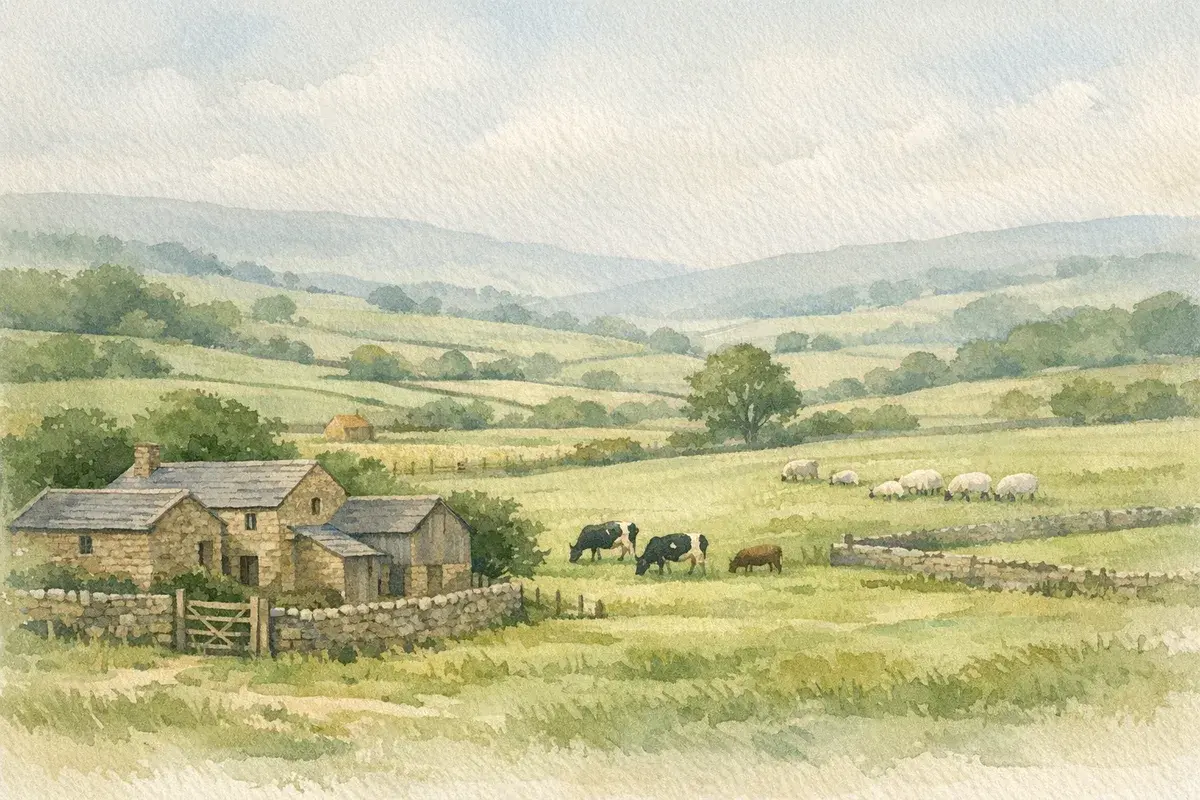
If you're letting land, taking land, or investing in rural property, the Agricultural Tenancies Act 1995 (the legislation behind the modern Farm Business Tenancy, or FBT) is one of those laws you can't afford to "sort of" understand. It shapes who carries risk, who pays for repairs, how flexible the farming can be, and, crucially, how cleanly you can get out again.
The 1995 Act was designed to make agricultural letting more workable in a commercial world. That flexibility is the upside. The catch is that small drafting choices, one sentence in a permitted use clause, a sloppy plan, a missing rent review trigger, can snowball into expensive disputes later. This guide is written for UK landowners and tenants who want the practical realities: what the Act does, when an FBT is (and isn't) the right tool, and how to protect your position from day one through to handback.
What The Agricultural Tenancies Act 1995 Actually Does
The Agricultural Tenancies Act 1995 is the legal framework that governs Farm Business Tenancies in England and Wales. In plain terms, it gives you a structure for letting agricultural land (and often buildings) with more contractual freedom than the older regime, and less automatic long-term security for the tenant.
A quick boundary that matters: Scotland and Northern Ireland have different agricultural holdings legislation and practices. Everything in this text is UK-focused, but the 1995 Act itself is specifically England & Wales.
Why The 1995 Act Replaced The Old Tenancy Regime
Before 1995, many agricultural lets sat under the Agricultural Holdings Act 1986 (AHA). That system offered strong security of tenure and succession rights for tenants. It suited some families and long-term farming arrangements, but it also made many landowners reluctant to let land at all.
The 1995 Act was intended to bring land back into the let sector by offering:
- Flexibility: you can agree term length, rent review mechanics, repairing obligations, and use restrictions with fewer statutory "defaults" overriding your contract.
- Greater certainty for landlords on getting land back at the end of the term, if notices and drafting are done properly.
- Commercial realism: the tenant's security is mainly what you negotiate in the document, not what the law guarantees.
That freedom is helpful, but it also means the paperwork has to earn its keep. If you're starting from scratch, it's worth reading a fuller overview of how these agreements operate in practice, including common pitfalls around drafting and scheme participation: our practical FBT overview for landlords and tenants.
What Counts As A Farm Business Tenancy (And What Does Not)
An arrangement is typically an FBT when:
- the holding is let for a term (fixed or periodic),
- it's used for a farm business (broadly, an agricultural business), and
- the letting is entered into on/after 1 September 1995 and is not carved out into another category.
Where things go wrong is when the label ("It's just a grazing licence") doesn't match the reality. If the occupier has exclusive possession of land for a period and is running an agricultural enterprise, you may have created a tenancy in substance.
Common "not an FBT" scenarios include:
- Genuine grazing licences where you (as landowner) retain real control and the grazier doesn't have exclusive possession.
- Contract farming where the farmer is providing services and the landowner retains the farming risk/reward.
- Short access arrangements that are tightly controlled and clearly drafted.
If you're weighing up whether you need a licence or a tenancy, it's not just semantics: it can affect security, rent, and how you regain possession. A practical comparator is here: how a grazing licence differs from an FBT in real-world control and risk.
Key Parties And Terminology: Landlord, Tenant, Holding, And "Agriculture"
You'll see a few terms come up repeatedly in FBT negotiations:
- Landlord: the person/entity granting the tenancy (could be an individual, trust, estate, company, or partnership).
- Tenant: the person/entity taking on the right to occupy and farm the holding.
- Holding: the land (and sometimes buildings) comprised in the tenancy. The plan matters, badly drawn plans cause more disputes than people like to admit.
- Agriculture: commonly understood as farming, livestock, arable, horticulture and related land-based production. But "agriculture" is not the same as "rural" or "anything countryside-ish".
The practical point: define the holding accurately, define the permitted use precisely, and don't assume a side letter will save you later. If the tenancy is being used to enable diversified income (storage, solar, glamping, equestrian, etc.), you need to decide whether that activity is permitted, prohibited, or allowed only with written consent, and what that consent might cost.
When To Use An FBT (And When Another Agreement Fits Better)
You don't choose an FBT because it's fashionable. You choose it because it matches the commercial reality: who controls the land, who carries the farming risk, and how long everyone wants to be committed.
Typical Use Cases: Whole Farms, Blocks Of Land, Buildings, And Mixed Enterprises
In practice, FBTs are commonly used for:
- Whole-farm lets where the tenant runs the business and pays a market rent.
- Blocks of bare land (often to expand an existing unit, or to give a new entrant a foothold).
- Land plus buildings (grain stores, livestock housing, yards), where repair and insurance clauses become critical.
- Mixed enterprises where the landlord wants agricultural use but is open to controlled diversification.
If you're a landlord, an FBT can be a sensible way to keep the land in agricultural use while preserving longer-term options. If you're a tenant, it can be a route to scale, provided the term length and break clauses line up with your investment (fertility building, fencing, water infrastructure, stewardship commitments).
Alternatives To Consider: Grazing Licences, Contract Farming, And Share Farming
FBTs are not the answer to every land-use arrangement. Alternatives can be better where control, tax position, or operational model points another way.
- Grazing licence: best when you want a simple seasonal arrangement, the landowner retains meaningful control, and you don't want a tenant-like relationship.
- Contract farming: useful when the landowner wants to retain the farming operation (and often the subsidy/scheme position), while paying a contractor to do the work.
- Share farming: a structured collaboration where parties share outputs rather than one paying rent.
The biggest mistake we see? People using the wrong document for the job because it "worked last year". If you need a deeper explainer of the structural differences, including where older-style tenancies still appear, see: agricultural tenancy vs FBT, what you're really signing up to.
Red Flags That Suggest You Need Bespoke Advice
Some scenarios look simple but aren't. You'll usually want specialist legal/tax input when:
- There's residential property involved (cottages, farmhouses, worker accommodation) or anything that touches separate housing legislation.
- The holding has complex rights (sporting rights, minerals, wayleaves, telecoms, access over multiple titles).
- You're planning non-agricultural diversification with material income (commercial storage, renewables, events) and need to manage planning and tax knock-ons.
- You expect the tenant to invest serious capital (tracks, drainage, buildings) and need a robust compensation and consent framework.
- You're trying to keep options open for development value, overage, clawback, and termination triggers need careful drafting.
In other words: if the heads of terms starts to look like a mini-novel, it's not overkill to get bespoke advice. It's cheaper than a dispute at year three when everyone's memory has "changed".
Core Terms Of An FBT: Getting The Deal Right At Heads Of Terms Stage
Most FBT pain is baked in before the ink dries, at heads of terms stage, when everyone's optimistic and keen to get going. This is where you decide the risk split.
Length, Break Clauses, Renewal Expectations, And Security Of Tenure
An FBT can be for almost any term: a year, three years, ten years, longer. The Act doesn't force a minimum. So your question shouldn't be "What's normal?" but "What term supports what the tenant is expected to do?"
Practical matching examples:
- 1–3 years: can work for straightforward arable rotations or grazing where the tenant isn't expected to spend much on infrastructure.
- 5–10 years: more realistic where you want soil improvement, boundary work, water systems, or longer stewardship-style commitments.
Break clauses are where deals become lopsided. If you're a tenant and the landlord can break with short notice, you may be funding improvements you'll never fully benefit from. If you're a landlord and the tenant has a break that's too "easy", you can be left with a half-finished enterprise and a messy handback.
Notice provisions matter too. For any FBT of more than two years, notices to end it at the term date, notices under a break clause, and notices to quit a year-to-year tenancy must all be in writing and given at least 12 months ahead. For a clear run-through of how notice commonly works in practice (and the traps around timing and service), read: farm business tenancy notice periods explained.
Rent Structures And Reviews: Evidence, Triggers, And Timing
Rent on an FBT is usually set by the market and the bargain you strike. But the mechanics of rent review are just as important as the headline number.
Common rent structures include:
- Straight annual rent (simple, predictable).
- Stepped rent (e.g., lower in year one, rising as the tenant invests or as land comes into full productivity).
- Index-linked elements (less common in pure agricultural deals, but sometimes used where there are buildings or diversified components).
For rent reviews, you'll want to agree:
- When reviews happen (every 3 years? 5 years? on specified dates?).
- How they're triggered (automatic, or on notice by either party).
- What evidence is admissible (comparable lettings, productivity, included entitlements, restrictions).
- Who decides if you can't agree (expert determination/arbitration).
If you want a dedicated, UK-focused breakdown of typical triggers, evidence and process, use: how farm business tenancy rent review clauses usually work.
Repairing, Insurance, And Who Pays For What
Repairs are where "fair" quickly becomes "fuzzy". You should be unambiguous about:
- Fixed equipment vs tenant's fixtures: what exists at commencement and who maintains it.
- Internal vs structural responsibility for buildings.
- Fences, hedges, ditches, drains, water supply: what standard is required and who pays.
- Insurance: who insures which buildings, against what risks, and how reinstatement works.
A strong schedule of condition (with dated photos) is not a nice-to-have. It's your best evidence when there's a handback argument about deterioration versus fair wear.
Landlords often underestimate how often repair clauses tie into day-to-day practicalities (like whether a livestock shed roof leak is "tenant upkeep" or "structural"). If you want to benchmark what's commonly expected from the landlord side, here's a useful reference point: typical landlord obligations under an FBT.
Managing The Holding Day-To-Day: Use, Cropping, Livestock, And Good Husbandry
Once the tenancy starts, the legal document becomes an operational tool. The best FBTs read like a practical playbook: clear permissions, clear boundaries, and a clear process for change.
Permitted Use, Diversification, And Non-Agricultural Activities
The permitted use clause does two jobs at once:
- It protects the landlord's asset (soil, infrastructure, future value).
- It gives the tenant enough freedom to run a profitable business.
Common points to pin down:
- Cropping limitations (e.g., no continuous maize, or restrictions on root crops on vulnerable soils).
- Stocking restrictions where land is sensitive.
- Biosecurity obligations (especially relevant if multiple units are operated by the tenant).
- Non-agricultural uses: storage, equestrian, shooting, renewables, visitor uses.
If you're allowing diversification, you'll want to decide in advance:
- Is landlord's written consent required?
- Will rent change (or is there a profit share)?
- Who carries planning/compliance risk?
- What happens to any infrastructure at end of term?
A note for tenants: don't assume a landlord's verbal "yes, that'll be fine" is bankable. If it matters to your cashflow, get it in writing, and consider what happens if the farm changes hands mid-term.
Improvements, Fixed Equipment, And Compensation At End Of Term
A tenant's improvements are often the quiet driver of disputes. If you're paying for reseeding, liming, drainage, tracks, water systems, or building works, you need clarity on:
- Consent: what requires written consent and what doesn't.
- Standards: specs, contractor requirements, and any approvals.
- Ownership: does it become landlord's property immediately?
- Compensation: improvements made with the landlord's written consent carry a statutory right to compensation based on the value they add, so keep the written consents.
The best approach is boring but effective: keep a running "improvements file" with permissions, invoices, photos, maps, and before/after notes. It turns an emotional end-of-term negotiation into a factual one.
Environmental Schemes And Natural Capital: SFI, Countryside Stewardship, And Private Deals
Environmental land management is now part of mainstream farm business planning. Under an FBT, you need to think carefully about how scheme participation fits with:
- term length (can you actually stay long enough to deliver the agreement?),
- management prescriptions (cropping restrictions, stocking rates, habitat creation), and
- payment flows (who receives income and who carries delivery risk).
In England, Sustainable Farming Incentive (SFI) actions and Countryside Stewardship can shape land use as much as any cropping plan. If you're a landlord, you might want flexibility to reposition land into environmental outcomes. If you're a tenant, you'll want confidence you won't be left carrying obligations without the term to match.
Private natural capital arrangements (biodiversity net gain-related habitat work, nutrient mitigation, carbon projects) can be even trickier because they can run for long periods and bind land management tightly. If those are on the table, it's sensible to treat them as a separate negotiation with specialist advice, because they can outlast an FBT and affect land value.
One pragmatic tip: whatever the scheme, agree how you'll handle data and evidence (soil tests, photos, maps, grazing records). It's amazing how often "good husbandry" arguments become "prove it" arguments.
Assignments, Subletting, And Changing The Business Mid-Tenancy
Farm businesses evolve. Partners retire, machinery policy changes, contracting becomes attractive, new enterprises appear. Your FBT needs to say what's allowed, because the default assumption in many agreements is that change is restricted unless expressly permitted.
Can You Assign Or Sublet An FBT, And On What Terms?
Assignment (transferring the tenancy to someone else) and subletting (granting another person rights over part or all of the holding) are usually tightly controlled.
In practical drafting, you'll often see:
- an outright prohibition on assignment/subletting, or
- permission only with landlord's written consent, sometimes with conditions (references, financial standing, competence, proposed use).
If you're a tenant, you should think about this before you sign. If your business plan involves bringing in a new partner, restructuring into a company, or potentially exiting by assigning, you need that pathway drafted in.
If you're a landlord, consent controls protect you from ending up with an occupier you didn't underwrite, financially or operationally.
Parting With Possession, Share Farming, And Contracting Arrangements
Even where assignment is banned, tenants often want to use contractors or collaborative arrangements.
Key distinctions:
- Using contractors (e.g., for spraying/harvesting) is normally fine if the tenant retains management control.
- Share farming can be acceptable but needs care, depending on how it's structured, it can look like parting with possession.
- Letting someone else graze or crop parts of the land can cross the line into subletting.
The practical rule: if someone else is effectively controlling land day-to-day, and you're no longer the real decision-maker, you may be breaching the tenancy.
Succession And Business Restructures: Partnerships, Companies, And New Entrants
Unlike older AHA arrangements, FBTs generally don't come with the same statutory succession expectations. So if you're building a family plan around the holding, you need to read the agreement carefully and negotiate what matters.
If you're moving from:
- sole trader → partnership,
- partnership → limited company,
- one company → another group entity,
…treat it as a consent issue unless the lease clearly says otherwise. Landlords will often want to understand who is guaranteeing obligations, who holds the bank account, and what happens if the new entity fails.
For new entrants, the reality is you may accept a shorter term to get a start. If that's you, your leverage is in being organised: clear budgets, references, a realistic stocking/cropping plan, and evidence you understand compliance. It reassures a landlord that "flexible" won't become "messy".
Ending An FBT Properly: Notices, Dilapidations, And Disputes
Endings are where relationships either stay professional, or go nuclear. The smartest approach is to plan the exit early, even if you fully intend to renew.
Notice To Quit, Surrender, And Forfeiture Basics
There are a few common routes to an FBT ending:
- Expiry of the fixed term. On a term of more than two years this only works if written notice was given at least 12 months before the end date.
- Notice to quit (where the tenancy is periodic or the agreement provides for notice mechanisms).
- Surrender (both parties agree to end early, often documented with conditions and payments).
- Forfeiture (landlord ends the tenancy for breach, if the lease allows and correct procedure is followed).
The detail is everything: service of notices, dates, method, and evidence that notice was properly given. If you're actively planning an exit, landlord or tenant, use a proper checklist and don't leave it to the last month. A deeper practical walk-through is here: how terminating an FBT typically works in England & Wales.
End-Of-Tenancy Condition, Records, And Dilapidations Strategy
Dilapidations is a fancy word for a basic argument: "You're handing it back in worse condition than you should."
To keep it factual (and cheaper), you'll want:
- a schedule of condition from the start,
- a mid-term inspection rhythm (even informal annual walk-round notes help),
- evidence of maintenance and repairs carried out, and
- cropping, nutrient and stewardship records if husbandry is in dispute.
If you're a tenant, don't underestimate the value of doing a "pre-handover" walk with the landlord or agent 6–12 months before exit. It gives you time to fix issues on your terms, rather than paying for emergency work with everyone angry.
If you're a landlord, be specific about what you want remedied. Vague claims lead to entrenched positions: itemised issues with photos and references to clauses lead to deals.
Resolving Disputes: Negotiation, Expert Determination, Arbitration, And Court
Most FBT disputes settle, but the route you choose affects cost and time.
- Negotiation: quickest when both parties have decent records and a realistic sense of outcomes.
- Expert determination: useful for technical disputes (often rent, value, condition issues) where a suitably qualified expert can decide.
- Arbitration: more formal, can be binding, and often used in tenancy disputes depending on the clause and statute.
- Court: typically the last resort, expensive, slow, and stressful.
The practical advice is unglamorous: keep documentation, communicate in writing when decisions matter, and involve the right professional early (solicitor, land agent, surveyor). Disputes usually become "legal problems" only after they've been "relationship problems" for a while.
Tax, Subsidies, And Compliance Issues That Can Make Or Break The Outcome
FBTs live in the real world, where tax reliefs, scheme rules, and compliance obligations can be more financially significant than the rent itself. You don't need to become a tax technician, but you do need to spot where your tenancy terms could accidentally undermine your position.
Inheritance Tax And Capital Gains Tax: Reliefs That Depend On The Facts
For landowners, one of the most sensitive areas is how letting arrangements interact with reliefs and long-term estate planning.
- Inheritance Tax (IHT): Agricultural Property Relief (APR) and Business Property Relief (BPR) can be relevant, but eligibility is fact-specific and depends on occupation, use, and the wider business picture. Since 6 April 2026, combined 100% relief is capped at £2.5 million per person, with 50% relief above that. Let land qualifies for 100% relief only if the tenancy began on or after 1 September 1995 and the land has been owned for at least seven years.
- Capital Gains Tax (CGT): relief availability and timing can change based on how the land is used, whether it's part of a trading business, and what happens on disposal.
The point isn't that an FBT is "bad" or "good" for reliefs in a universal way. It's that tenancy structure, length, and who is doing what can materially change outcomes, so you should model this with a qualified adviser before you lock in terms.
VAT, Stamp Duty Land Tax, And Option To Tax Considerations
Tax admin is where rural deals get quietly expensive if you don't address it early.
- VAT: agricultural rents are often exempt, but VAT can arise where there are opted-to-tax buildings, commercial elements, or diversified uses.
- Stamp Duty Land Tax (SDLT): can apply to leases based on rent and term, with rules that differ by jurisdiction. In England and Northern Ireland, SDLT applies: Wales has LTT: Scotland has LBTT. If your holding spans borders or the deal is complex, don't guess.
- Option to tax: if the landlord has opted to tax certain property (often commercial buildings), that can drive whether VAT is charged on rent.
A practical heads-up: where you've got a mix of bare land, farm buildings, storage income, and perhaps third-party use, the VAT position can become a patchwork. You want that agreed, and documented, before invoices start flying.
Regulatory And Practical Compliance: Rights Of Way, HSE, Water, Waste, And Biosecurity
An FBT doesn't remove your regulatory obligations: it just allocates responsibility between you.
Common compliance areas to think through:
- Public rights of way: who maintains stiles/gates, who deals with obstructions, and how you manage permissive access.
- Health & Safety: duties can sit with whoever controls the premises and the activity. If buildings are included, make sure safety obligations (asbestos, electrical safety, yard traffic management) are correctly allocated.
- Water: abstraction, water quality, private supplies, and pollution prevention. Responsibilities should match who controls the system.
- Waste and chemicals: storage and disposal duties for oils, pesticides, plastics and general farm waste.
- Biosecurity: particularly with livestock and multi-site operators, clear protocols protect both parties.
If you're a landlord, inspections and reporting clauses aren't about being difficult, they're about ensuring the asset isn't quietly drifting into a compliance mess. If you're a tenant, clarity protects you from being blamed for historical issues or landlord-controlled infrastructure failures.
One simple way to keep everyone honest is to agree an annual "compliance and condition" review: a walk-round, a short note of issues, and agreed actions. It's amazing how much conflict that prevents.
Conclusion
The Agricultural Tenancies Act 1995 gives you freedom, but it doesn't give you forgiveness. If you want an FBT to work, treat it less like a template and more like a business plan: clear term, clear use, clear repair split, a rent review mechanism you can actually operate, and an exit route that won't collapse under technicalities.
If you're at the stage of looking for land to let or take on, whether that's a block for grazing, an arable unit to scale into, or a mixed holding with buildings, the quality of the deal often comes down to who you have around the table. We've seen the best outcomes when you combine good drafting with good land agency input and early tax advice, rather than trying to "fix it later".
Disclaimer: AgLand.co.uk is a UK agricultural land and rural property matching service, where buyers register what they are looking for and owners advertise directly to the buyers who match, and a rural resource hub. Nothing in this text is intended as legal, financial, or investment advice. You should carry out your own due diligence and take advice from appropriately qualified professionals (for example, solicitors, accountants/tax advisers, and chartered surveyors/land agents) before entering into, varying, or ending any tenancy or land agreement.