
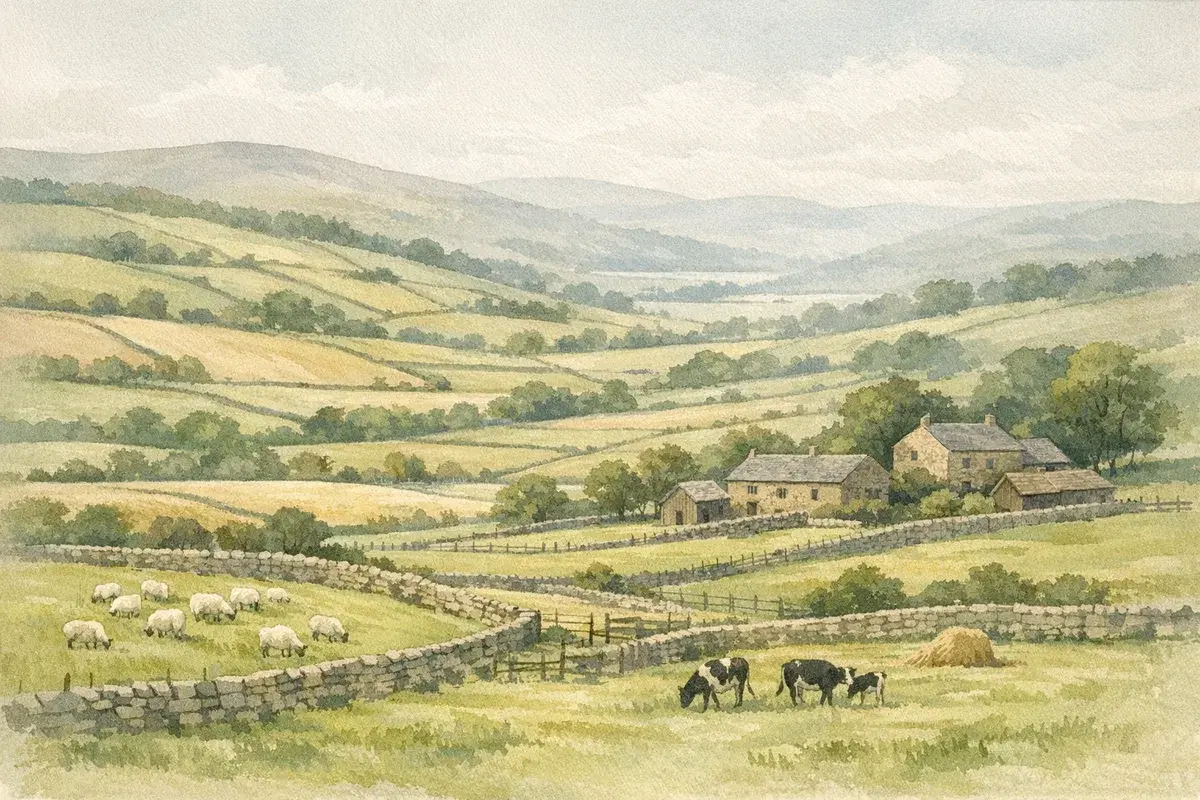
You can look at a Highland hillside and see "space". The locals see wind direction, a bog that'll swallow a quad, a march fence that's been in the same argument for 40 years, and a track that's just good enough, until it isn't.
Highland agricultural land is brilliant, awkward, and often misunderstood by buyers coming from lower, kinder country. Productivity can be highly localised, access and services matter more than you think, and the rules (especially around crofting and designated land) can bite if you assume it's simply "a farm in Scotland, but bigger views".
This guide is written for UK buyers in 2026, farmers expanding, landowners restructuring, investors seeking resilient rural assets, and businesses needing ground for livestock, forestry, or nature-based projects. You'll get a clear definition of what counts as Highland agricultural land, what it's typically used for, what drives price, how planning really works, and a buying checklist that reflects what we actually see derail deals.
What Counts As Highland Agricultural Land In A UK Buying Context
Highland agricultural land isn't a single thing. In practice, you're usually dealing with a mix: small pockets of better in-bye ground, large areas of rough grazing, and significant constraints (climate, slope, peat, designations, access, and sometimes crofting law). The "agricultural" label can also sit alongside woodland, sporting, and environmental land uses in the same title.
If you want a strong baseline before you jump into Highland specifics, it helps to anchor yourself in the wider Scotland picture, tenure, crofting, schemes, and the way value is assessed in a Scottish context. Our longer guide on buying agricultural land in Scotland is a useful companion for that broader framing.
Geography, Climate, And Land Capability In The Highlands
In a UK buying context, "Highland" usually means land in (and around) the Highland Council area, plus parts of Argyll and Bute, Moray, Aberdeenshire, Perthshire, and the island authorities where the terrain and climate behave like the Highlands even if the postcode doesn't say "IV". The commercial reality is similar: shorter growing seasons, lower stocking densities, and higher infrastructure cost per productive acre.
A few practical realities you'll feel immediately when you view land:
- Growing season and exposure: Late springs, early autumns, and wind exposure shape what's feasible. Even "good" ground can be unforgiving if it's high, wet, and open.
- Topography and fragmentation: Blocks can be large on paper but broken by burns, steep faces, peat hag, and forestry.
- Land capability varies sharply over short distances: A sheltered strath bottom might carry improved grass and decent silage, while the adjacent slope is effectively extensive grazing.
In England and Wales you'll often hear people talk in terms of ALC Grade 1–5. In Scotland, you'll more commonly see Land Capability for Agriculture (LCA) classes. Different systems, similar purpose: understanding limitations and likely use. Either way, you want maps to start the conversation, not end it.
Crofting Counties And How Crofts Differ From Farms And Estates
Crofting is where Highland land buying stops being "property with livestock potential" and becomes a specialist legal and cultural system.
Crofts are usually small tenanted units (often with a house and in-bye) with rights and duties around occupancy and use. They can sit alongside common grazings (shared hill ground) and are regulated through the Crofting Commission. Buying a croft, or land affected by crofting, is not the same as buying a conventional farm.
Here's what makes crofting different in a buyer's due diligence:
- Occupancy and use expectations: Crofting law is built around active use and community stability. "Buy and sit on it" is the opposite of the policy intent.
- Consents matter: Decrofting, assignation, subletting, apportionment of common grazings, these can require formal consents and timetables.
- Title and mapping can be messy: Historic descriptions, informal boundaries, and shared rights are common.
If your search includes crofting counties, you'll want to read up on how Scottish agricultural holdings and crofts behave in practice, including who has security, what an assignation looks like, and what lenders and insurers tend to ask. This overview of agricultural holdings in Scotland is a good starting point, and it'll save you from learning the hard way halfway through a transaction.
Common Highland Land Types And What They Mean For Productivity
In the Highlands, "agricultural land" is often shorthand for land that supports livestock systems, forage production, or a mixed package of agriculture, woodland, and sporting. The land type mix is what determines your options, and your ongoing costs.
In-Bye Ground, Rough Grazing, And Hill Parks
Most viable Highland agricultural units depend on some in-bye, the better, lower ground near steadings that can be improved, reseeded, fertilised, fenced properly, and cut for silage or hay. In-bye is where you can tighten systems, winter stock, and run youngstock efficiently.
Then you've got rough grazing and hill parks: large areas carrying sheep or cattle at low densities, often seasonal, sometimes needing shepherding and dog work that doesn't show up in a spreadsheet.
A practical way to think about productivity is:
- In-bye drives controllability (feed, weight gain, finishing, wintering).
- Rough grazing drives scale (headcount potential, but with variability).
Don't ignore simple, expensive-to-fix constraints:
- fencing condition (and who's responsible where)
- access for feed and stock handling
- working pens, fanks, and handling systems
- safe water points on hill ground
Peatland, Wet Ground, And Carbon-Rich Soils
Large parts of the Highlands include peat, deep organic soils, and wet ground. That changes everything: machinery windows, drainage potential, erosion risk, and what "improvement" would even mean.
Peat and carbon-rich soils can also be an opportunity, but only if you treat it as a long-term land management project, not a quick monetisation play. Restoration and careful management may align with grant funding or private schemes, but the rules around peat are increasingly strict, and reputational risk is real if you get it wrong.
If you're coming from arable areas, it can be a shock how often the "best move" is to leave wet ground alone, manage grazing pressure, and focus investment on access, fencing, and the in-bye.
(And for context: a lot of Highland ground effectively behaves like lower-grade land elsewhere in the UK. If you want a practical sense of what Grade 5-style limitations mean, without pretending every acre should be pushed, see our guide to what Grade 5 land is actually good for.)
Woodland, Deer Forest, And Mixed Sporting-Agricultural Units
It's common to find Highland listings where agriculture is only one strand:
- woodland blocks (commercial forestry, native woodland, shelter belts)
- deer forest or stalking rights as a core income driver
- mixed sporting-agricultural units where grazing is part of the management approach
This isn't automatically a red flag. In fact, mixed units can be resilient because income streams aren't all tied to store lamb prices or a single enterprise.
But you do need to understand what you're buying:
- Are sporting rights included, leased, or reserved?
- Is there a deer management plan, and are you inheriting obligations?
- Are there forestry grants tied to restocking, species mix, or public access expectations?
You're aiming for alignment. If your plan is livestock-led, you don't want sporting rights set up in a way that blocks fencing, woodland expansion, or sensible grazing control.
Highland Agricultural Land Prices And What Drives Value
Highland agricultural land prices are driven less by a single "per acre" number and more by what the land can actually do, and how costly it will be to make it do it.
If you want a national yardstick (and what analysts are watching into 2026), it's worth grounding yourself in the wider market context first: our update on UK agricultural land prices and drivers gives the broader picture before you zoom back into Highland-specific factors.
Size, Scale, And Lotting Strategy
In Highland deals, size cuts both ways.
- Bigger blocks can look cheaper per acre, but your capex doesn't scale neatly. One extra mile of track, one more bridge, one more fence line that nobody's touched in a decade, these are chunky costs.
- Smaller lots with good access and usable in-bye can attract fierce competition, especially if they're suitable for local expansion, a house build opportunity (where policy allows), or mixed-use buyers.
Lotting strategy matters because Highland land often appeals to multiple buyer types:
- farmers and crofters (operational value)
- estates and sporting buyers (management and amenity)
- woodland and habitat buyers (long-term land use)
Where a seller splits in-bye from hill, or buildings from ground, the price outcome can swing dramatically, and it can change your ability to run the place as one system.
Subsidy/Grant Potential, Natural Capital, And Contracting Income
By 2026, you're not just pricing grass and lambs. You're pricing option value:
- eligibility and practicality of rural grants (and the admin burden)
- woodland creation potential in the right locations
- peatland restoration feasibility (and constraints)
- contracting income opportunities (e.g., letting grass parks, seasonal grazing, storage, or access agreements)
The key word is "practicality". A map might show scope for woodland or restoration, but your site constraints (roads, neighbours, designations, deer pressure, peat depth, archaeology) decide whether it's deliverable.
Access, Services, Housing, And Buildings Condition
Highland land can be cheap until you price in what it takes to operate it.
Access: Public road frontage and a dependable internal track are value multipliers. If access crosses third-party land, you'll want clarity on the legal right, maintenance obligations, and whether it actually supports modern vehicles.
Services: Private water, septic, and power can be totally workable, but they can also become the surprise line item that blows your renovation budget.
Housing: A sound, mortgageable house (or a realistic refurbishment plan) can shift buyer demand significantly. In remote areas, staff accommodation can be as important as sheds.
Buildings: In the Highlands, condition isn't cosmetic, it's operational. A tired cattle court might be manageable: a roof that's at end of life, or a steading with serious structural movement, is a different proposition.
For a tighter regional view, our tracker on Scottish agricultural land prices is useful when you're sanity-checking asking prices against recent patterns, bearing in mind that the Highlands can be an outlier depending on lot type, access, and mixed-use appeal.
Planning And Regulatory Realities In The Highlands
Planning in the Highlands is not "anti-development", but it is very context-driven. Remote housing policy, landscape sensitivity, access standards, flood risk, peat, and protected habitats can all shape what you can do.
The mistake is thinking you'll sort planning later. In Highland transactions, planning feasibility often determines whether the price makes sense today.
Agricultural Buildings, Tracks, And Permitted Development Limits
Agricultural permitted development can be helpful for buildings and some tracks, but it's not a blank cheque. You still need to contend with prior notification/approval routes, siting and design expectations, and tighter scrutiny where landscapes and habitats are sensitive.
In practical Highland terms, planners (and neighbours) tend to focus on:
- whether a new building is reasonably necessary for agriculture
- visual impact (especially on open hillsides)
- access and drainage arrangements
- cumulative impact when tracks, borrow pits, and multiple structures appear over time
And remember: if your "agricultural building" is really a stepping stone to residential use, you're into higher-risk territory. Get professional advice early, and document genuine agricultural need.
Crofting Commission Consents And Occupancy Expectations
If crofting is involved, you're effectively dealing with a parallel consent layer. This can affect:
- building on a croft
- changes of use
- resumption of croft land for non-crofting purposes
- apportionment from common grazings
Timescales can be longer than standard conveyancing, and outcomes can hinge on local context and the public-interest purpose of crofting legislation.
If your plan requires changing how the land is used, build crofting advice into your budget from day one. It's far cheaper than trying to unwind a bad assumption after missives are agreed.
Designations And Constraints: SSSI, SAC/SPA, AONB/NSA, And Scheduled Monuments
Highland land is frequently affected by environmental and heritage designations:
- SSSI (Sites of Special Scientific Interest)
- SAC/SPA (Special Areas of Conservation / Special Protection Areas)
- NSA (National Scenic Areas) in Scotland (broadly akin to AONB sensitivity elsewhere in the UK)
- scheduled monuments and other heritage constraints
Designations don't mean "you can't do anything." They do mean you must be realistic about what's consentable, how long it takes, and what mitigation is required.
A few on-the-ground examples:
- Drainage, track work, or peat disturbance can trigger consultation and survey requirements.
- Woodland creation might be encouraged in one location but strongly resisted in another (landscape, deep peat, habitats).
- Even routine agricultural changes, burn management, grazing pressure shifts, new fencing, can be scrutinised if habitats are sensitive.
Treat designations as a diligence workstream, not a footnote. Your solicitor will check titles: your agent and specialist advisers should help you check deliverability.
Buying Checklist: What We See Catch Buyers Out Most Often
Highland transactions fail (or go sour) less because the buyer can't raise finance, and more because the buyer discovers, late, that the land doesn't function the way they assumed.
Here's what repeatedly catches people out.
Title, Boundaries, Servitudes, And Third-Party Rights
You want your solicitor to do the formal title work, but you should still pressure-test the practical reality:
- Where are the boundaries on the ground? March fences on the hill can be vague, collapsed, or "agreed" in a way that isn't reflected in title.
- Servitudes (easements) and access rights: If you're relying on a private road, bridge, or ford, you need clarity on rights and maintenance. "We've always used it" isn't the same as a registered right.
- Wayleaves and utilities: Power lines, telecoms, pipelines, understand restrictions and compensation arrangements.
If you're buying for a specific land use (wintering cattle, creating woodland, installing hydro, adding housing), ask your adviser to flag anything in title that might block it.
Common Grazings, Sporting Rights, Minerals, And Timber Reservations
This is where Highland property can get properly technical.
- Common grazings: If your value case depends on hill ground, confirm your rights, your share, and how they're administered.
- Sporting rights: They may be included, leased out, or reserved to a third party. That affects deer management, fencing, woodland expansion, and sometimes even public relations.
- Minerals and timber: Reservations are common. If you assume you're buying stone for tracks or control of timber income, check. And check again.
A good land agent will walk you through this with plain-English examples: "Here's what you can do without asking anyone, here's what needs consent, and here's what you simply won't control." That's the clarity you want.
Water, Drainage, Septic, And Private Supplies
Private services are normal in the Highlands, but they're not "set and forget".
Your diligence should cover:
- private water supply source (spring, borehole, burn intake)
- quality and quantity (seasonal variation matters)
- responsibility and shared arrangements if other houses draw from the same source
- septic tank compliance and discharge location
- field drainage and culverts (especially where tracks cross burns)
If you're budgeting for a new house or serious renovation, treat services like a core line item. In remote areas, getting contractors and materials can take longer and cost more than you're used to.
How To Find The Right Highland Land And Move Quickly When It Appears
The Highlands reward prepared buyers. Good land, meaning usable, accessible, and realistically consentable, doesn't hang around.
Search Strategy: Radius, Altitude, Access, And Land Type Filters
Start with what you must have, not what you hope you can create.
A strong Highland search brief usually includes:
- maximum travel time to the nearest livestock market, abattoir route, or your base farm
- minimum in-bye acreage (or at least "workable improved ground")
- access standard (public road frontage vs private track: winter reliability)
- altitude/exposure limits if you're planning specific stocking or forage outcomes
- presence/absence of buildings and a house (or the realistic potential for them)
If you're comparing parcels, use mapping and classification data sensibly. It's not about chasing the "best grade" (which is rare in the Highlands). It's about understanding limitations and matching them to your plan. Our explainer on using an agricultural land classification map properly will help you avoid classic mistakes, like assuming map colours automatically translate into field-level performance.
Off-Market Leads, Local Agents, And Vendor Priorities
In Highland areas, relationships matter. Sellers often care who the buyer is, not just what they're paying, especially where neighbours, access, common grazings, or reputational issues are involved.
What we've seen work well:
- Get clear with local agents about your non-negotiables (and your realistic budget).
- Demonstrate you understand the land (mention access, services, crofting if relevant, and your intended management approach).
- Be ready to move on viewing and follow-up questions. Delays kill momentum.
AgLand is useful here because it works the other way round: you register the sort of ground you're after, and matching agricultural and rural property comes to you rather than you trawling general portals. Owners and agents can see how many registered buyers match before they advertise, so what reaches you reflects land type, tenure, and operational detail.
Structuring An Offer: Timescales, Conditions, And Finance Readiness
Highland offers that land well tend to be:
- clean (clear price and inclusions)
- time-bound (a sensible deadline for response)
- evidenced (proof of funds, decision makers aligned)
- conditioned intelligently (not a shopping list of vague "subject to" clauses)
Common conditions that do make sense:
- finance (if needed) with a realistic timeframe
- clear title/servitude confirmation on critical access
- planning viability if the value hinges on a specific consent
- crofting consents where applicable
If you're not sure what to condition, and what to accept as a normal Highland risk, talk it through with your solicitor and land agent before you fire the offer across. You're aiming to protect yourself without signalling you're going to be hard work.
Managing The Land After Purchase: Practical Options That Stack Up
Buying is only the beginning. Highland land rewards patient, systems-led management, tightening what's controllable and not wasting money trying to force the uncontrollable.
Lettings, Grazing Licences, And Contract Farming In Highland Conditions
If you're not running the ground yourself immediately, there are workable structures:
- grazing licences for seasonal use (often simpler than formal lettings)
- short-term lets where appropriate
- contract farming / shared machinery arrangements in some local contexts
The right structure depends on your objectives: income stability, keeping land "in agricultural use", or retaining flexibility for future projects. Your adviser will also help you think about tax and tenure implications, this is an area where getting the paperwork right matters.
Regenerative Approaches, Peatland Restoration, And Woodland Creation
A lot of the Highlands is naturally suited to extensive systems with careful grazing management, better water protection, and targeted improvement rather than blanket intervention.
Practical moves that often stack up:
- improving stock handling and fencing so grazing pressure is controlled
- focusing reseeding and inputs on the best in-bye fields only
- blocking grips and managing peatland carefully where restoration is appropriate
- using woodland creation for shelter, habitat, and long-term value (where constraints allow)
The best results usually come from matching the land's capability to the enterprise, rather than importing an intensive model and hoping it'll stick.
Biodiversity, Sporting, And Diversification Without Losing Agricultural Use
Diversification in the Highlands can be a sensible part of the business, but it needs to complement the base land use.
Examples that can work without undermining agriculture:
- habitat management alongside extensive grazing
- sporting income structured so it doesn't block fencing, woodland work, or stock control
- small-scale tourism or storage uses where access and planning policy support it
One caution: "natural capital" narratives can be compelling, but the contracts can be complex and long-term. Treat them like any other major commitment, get specialist advice, understand obligations, and avoid signing away control you'll regret later.
If you're trying to sense-check land capability, especially if the parcel includes a small amount of unusually high-quality ground, our explainer on what Grade 1 land really means in the UK is helpful context for how and why top land commands a premium (even though it's rarely the dominant feature in Highland listings).
Conclusion
Highland agricultural land can be a serious operational asset, a long-term family holding, or a resilient mixed-use investment, but it only behaves well when you buy with your eyes open.
If you take nothing else away, take this: in the Highlands, function beats fantasy. Prioritise access, workable in-bye, clear rights, and consentable plans. Assume services and infrastructure will cost more than you want them to. And where crofting or designations are in the picture, build specialist advice into your timeline before you fall in love with the view.
When you're ready to act, use a process that forces clarity - a tight brief, maps, and a written set of non-negotiables, then back it up with a good local agent, a solicitor who actually handles rural Scottish transactions, and the right technical advisers.
Disclaimer: AgLand.co.uk is a UK agricultural land and rural property matching service, where buyers register what they are looking for and owners advertise directly to the buyers who match, and a rural resource hub. Nothing in this text is intended as legal, financial, tax, or investment advice. You should carry out your own due diligence and seek independent guidance from appropriately qualified professionals (for example, solicitors, surveyors, land agents, planners, and tax advisers) before making decisions or committing to any transaction.