
Introduction
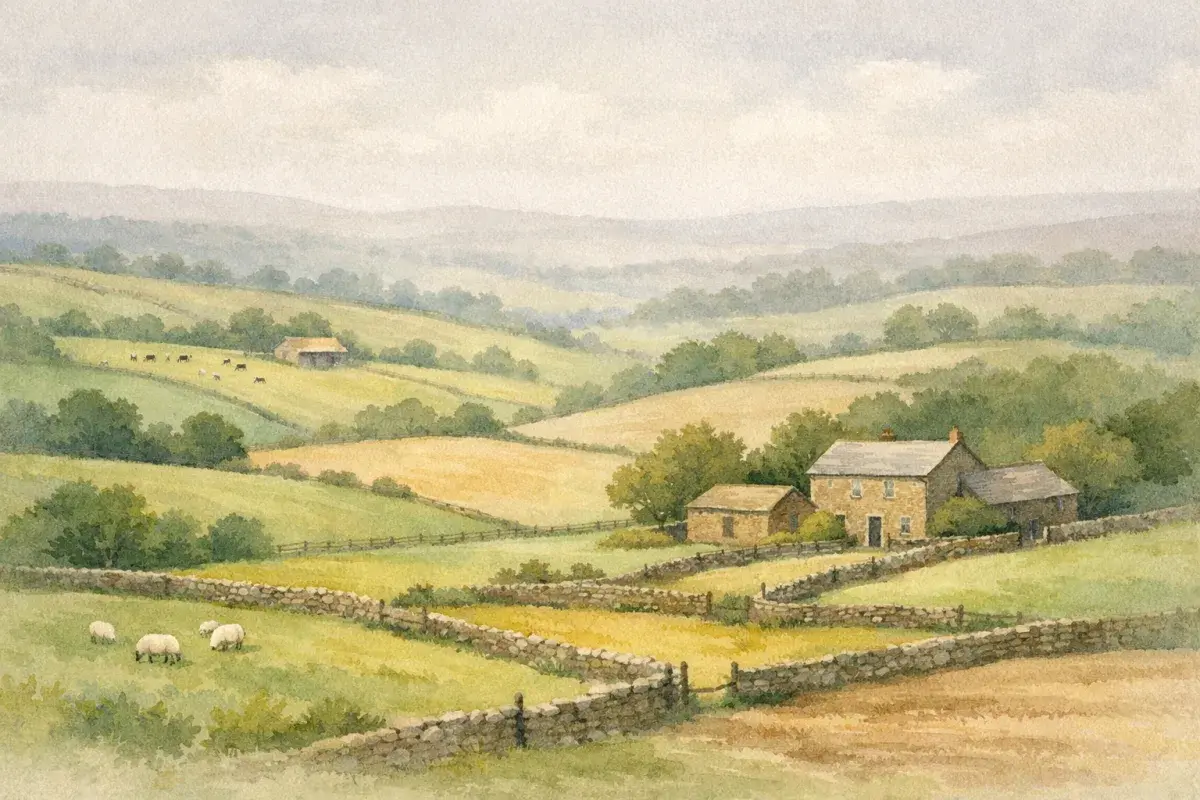
Farmland covers about 17 million hectares, or 69% of the UK's land, according to Defra's Agriculture in the UK statistics. This vast expanse includes everything from prime arable farmland and pastoral grazing fields to mixed-use agricultural estates and smallholdings. However, with only a fraction of this land available for purchase at any given time, knowing where to look and how to proceed is essential.
Recent trends in the farming sector have seen increasing diversity in both buyers and usage patterns. Traditional agricultural purposes now compete with environmental schemes, renewable energy projects, and natural capital investments. This evolution has created a dynamic marketplace where understanding the various channels for finding available land has become more important than ever.
This guide aims to navigate you through the multiple avenues available for finding agricultural land for sale across England, Scotland, Wales, and Northern Ireland. We'll explore everything from specialist online platforms and land agents to auction houses and government resources. Whether you're searching for arable land, pasture, woodland, or a complete farming estate, you'll find practical advice on where to look and how to proceed.
From prime Grade 1 agricultural land in East Anglia to hill farms in the Scottish Highlands, each region presents unique opportunities and considerations. We'll help you understand not only where to find agricultural land for sale, but also how to evaluate their potential and suitability for your specific requirements.
As the agricultural land market continues to evolve, influenced by factors such as environmental legislation, farming subsidies, and changing land use patterns, staying informed about where to find available properties has never been more critical. This guide provides you with the comprehensive knowledge needed to navigate this complex marketplace successfully.
If you're wondering where to find agricultural land for sale, this article is for you. Let's begin exploring the various channels through which you can find your ideal agricultural property, starting with the increasingly important role of specialised online platforms in the land-buying process.
Online Property Platforms: Finding Agricultural Land in the Digital Age
Online platforms are invaluable tools for finding agricultural land for sale. While general property websites might occasionally list farms and agricultural plots, specialised platforms offer distinct advantages for serious buyers seeking farming land, estates, or smallholdings. Indeed, if you're curious about where to find agricultural land for sale because general platforms have let you down, specialists platforms could really help.
Specialised Agricultural Property Platforms
When considering where to find agricultural land for sale, choosing the right platform can significantly impact your success in finding suitable properties. Specialised agricultural property platforms offer a depth of expertise and detailed information that general property websites simply cannot match. These dedicated platforms understand the unique requirements of agricultural buyers, from soil composition and drainage patterns to subsidy schemes and farming rights.
Here are some of the leading specialised platforms in the UK, each offering unique features and benefits for agricultural property searches:
AgLand works the opposite way round to a portal. Instead of publishing listings and waiting for the right buyer to find them, buyers register what they are looking for - type, acreage, budget and area - and owners advertise straight to the ones who already match. If you are buying, that means you are told when something fits rather than checking every week. Nobody pays commission, on either side.
AgLand aims to be different by ensuring:
💚 No searching and hoping - buyers say once what they want, and hear the moment something matches. 💚 No area limitations - 0.001 acres and up, so land access is not restricted to large holdings. 💚 No wasted advertising - a property goes straight to the buyers whose stated criteria it already fits. 💚 No commission on either side. Owners pay one flat fee, agents subscribe by county. 💚 No guessing what interest exists - sellers see how many registered buyers match before they spend anything. 💚 … and more exciting things coming soon!
The superiority of specialised agricultural platforms becomes evident when comparing the depth and quality of information they provide against general property websites. These dedicated platforms have evolved to meet the specific needs of the farming community, offering invaluable insights that can make the difference between a successful land purchase and a costly mistake.
At their core, specialised platforms understand that agricultural land isn't just about location and acreage. They provide comprehensive details about soil composition, drainage patterns, and historical land use – information that's crucial for assessing a property's agricultural potential. For instance, while a general property website might simply list "50 acres of farmland," a specialised platform will detail the land's grade, current cropping regime, and any environmental scheme commitments.
The expertise behind these platforms extends to their understanding of agricultural regulations and requirements. They often include details of any delinked or area payments, environmental scheme agreements, and other subsidy arrangements that could significantly impact a property's value and future potential. This level of detail proves invaluable for buyers who need to make informed decisions about their agricultural investments.
Furthermore, these platforms typically maintain strong relationships with agricultural specialists, including land agents, farming consultants, and rural surveyors. This professional network ensures that listings are accurately presented and that expert advice is readily available. The platforms often feature detailed mapping tools, showing field boundaries, access points, and rights of way – essential information that's rarely found on general property websites.
Perhaps most importantly, specialised platforms understand the seasonal nature of farming and often include information about harvest schedules, grazing rights, and existing agricultural tenancies. This practical knowledge helps buyers align their purchase timing with agricultural calendars and existing farming operations, something that general property websites rarely consider.
For serious agricultural buyers wondering where to find agricultural land for sale, these platforms represent not just a listing service, but a comprehensive resource that combines market intelligence, technical expertise, and practical farming knowledge – making them an indispensable tool in the search for agricultural land.
Other specialised platforms in this space include FarmingUK's farms and land section. The field is thinner than it was: UKLandandFarms closed in July 2026, which leaves fewer places to reach agricultural buyers specifically rather than the general property market.
General Property Portals as a Secondary Resource
Still wondering where to find agricultural land for sale? Specialist platforms should be a top priority, followed by general portals. General property portals like Rightmove, Zoopla, and OnTheMarket do, however, significantly fall short when it comes to agricultural land listings. Their platforms, designed primarily for residential and commercial properties, reveal substantial weaknesses that can frustrate serious agricultural buyers. This is why we recommend them as a secondary resource.
Technical deficiencies include the absence of crucial agricultural data such as soil indices, drainage maps, and field-by-field analysis. Their search filters lack essential parameters like land grade classifications, subsidy eligibility, and environmental scheme participation. Even basic agricultural requirements such as water abstraction licenses and grazing rights are frequently omitted.
Their listing formats also reveal fundamental misunderstandings of agricultural buyers' needs. Property descriptions often omit vital information about:
- Current cropping rotations and yields
- Historical farming practices
- Existing farm payment schemes
- Regulatory and scheme compliance obligations
- Environmental stewardship commitments
- Agricultural tie conditions
- Sporting rights and mineral rights
- Common land grazing arrangements
- Farm building specifications and conditions
- Local agricultural infrastructure
Perhaps most tellingly, these platforms frequently miscategorise agricultural properties, leading to confusion and wasted time for serious buyers. A smallholding might be listed under 'residential properties with land,' while a significant farming estate could be buried within 'commercial property' listings.
Finally, the absence of integration with agricultural specialists further undermines their usefulness. Unlike specialised platforms, they rarely provide direct connections to agricultural land agents, rural surveyors, or farming consultants who can offer essential expertise during the purchase process.
These limitations make general property portals a distinctly secondary resource for agricultural land searches, best used as a supplementary tool rather than a primary search platform in the options list of where to find agricultural land for sale.
Making the Most of Online Platforms
Here are some general tips for making the most of online platforms:
A robust alert system forms the cornerstone of any effective online search strategy. Rather than relying on sporadic website visits, establish detailed search parameters that reflect your specific requirements. These might include:
- Primary criteria: location, acreage, price range, and property type (including specific categorisation for farms, smallholdings, or bare land)
- Agricultural specifications: land grade, soil type, drainage characteristics, and existing infrastructure
- Environmental factors: water sources, environmental scheme participation, and conservation designations
- Operational considerations: current farming systems, building specifications, and access arrangements
The best agricultural property portals have advanced features that can significantly enhance your information gathering and property research. Features that are especially useful include:
- Detailed mapping systems showing field boundaries, access points, and rights of way
- Comprehensive property particulars with soil conditions and drainage information
- Historical land use data and previous farming patterns
- Environmental designation (see Natural England) and planning constraint information
Thorough investigation of any new land acquisition opportunity usually requires consulting multiple sources to build a comprehensive understanding of potential properties. Some platforms - like AgLand - collate much of this information for you, or offer additional services to supplement what information might be publicly or freely available. Resources to consult include:
- Land Registry searches for ownership history and registered charges
- Local planning records for development potential or restrictions
- DEFRA agricultural land classification maps
- Environment Agency data for flood risk and water abstraction licences
- Local authority records for designations and infrastructure plans
Understanding agricultural land market dynamics requires a comprehensive approach to data analysis and trend monitoring. Historical sale prices provide essential context, but must be viewed alongside regional value trends and local agricultural patterns to form a complete picture. Successful buyers pay particular attention to recent comparable sales while considering current market pressures, whether these arise from environmental scheme opportunities, development potential, or shifting agricultural policies. This detailed market intelligence proves invaluable during negotiations and helps ensure investment decisions align with current market realities.
The complexity of agricultural land transactions demands a systematic approach to documentation that goes well beyond basic property specifications. Serious buyers maintain detailed records encompassing location-specific advantages, infrastructure assessments, and careful evaluation of local farming support networks. These records should include practical considerations such as contractor availability, distance to key markets, and processing facilities – factors that can significantly impact a property's operational viability. This comprehensive approach to record-keeping becomes an invaluable tool during negotiations and helps ensure that no crucial details are overlooked during the decision-making process.
While online platforms excel at providing initial research capabilities, they should be viewed as one component of a broader property search strategy that necessarily includes professional expertise. Establishing strong relationships with agricultural land agents, rural surveyors, environmental consultants, and agricultural solicitors proves invaluable throughout the purchase process. These professionals bring deep sector knowledge, often have early access to off-market opportunities, and can provide crucial guidance on complex aspects of land acquisition, from tenure arrangements to subsidy implications. Their expertise, combined with thorough market analysis and systematic record-keeping, significantly increases the likelihood of successful agricultural land acquisition.
Looking for specialist agricultural estate and land agents to assist in your search? Check out AgLand's Agent Directory. These agents are among the best to ask where to find agricultural land for sale.
Professional Land Agents and Estate Agencies
The role of professional land agents and specialist estate agencies remains paramount in agricultural property transactions, offering expertise and insights that extend far beyond simple property listings. Their deep understanding of the agricultural sector, combined with local knowledge and professional networks, makes them invaluable partners in the land acquisition process.
National Agencies
The UK's leading national agencies have established themselves as authorities in agricultural land sales, each bringing unique strengths to the market. Savills, Knight Frank, and Strutt & Parker dominate the high-end agricultural market, while firms like Carter Jonas and Brown & Co maintain strong regional presence with deep local expertise. These firms typically handle larger farms, estates, and premium agricultural land, offering comprehensive service packages that include valuations, negotiations, and post-purchase advisory services.
Regional Specialists
Regional land agents often prove invaluable for their detailed local knowledge and established relationships within farming communities, and as such prove an excellent resource for where to find agricultural land for sale. Their expertise includes:
- In-depth understanding of local soil types and farming conditions
- Established relationships with local farming networks
- Knowledge of regional planning policies and restrictions
- Awareness of local contractor availability and costs
- Understanding of regional market trends and pricing
- Access to off-market opportunities through local connections
Services Offered
- Property sourcing and acquisition services
- Detailed property particulars and analysis
- Valuation and negotiation expertise
- Planning and development advice
- Environmental scheme guidance
- Farm business consultancy
- Post-purchase support and management
Choosing the Right Agent
When partnering with a land or estate agent, you should consider their local expertise first and foremost, which maybe be demonstrated by: years operating in the target area; recent comparable sales; knowledge of local farming practices, and their understanding of regional market conditions.
You should also consider whether they are members of the RICS (Royal Institution of Chartered Surveyors) or CAAV (Central Association of Agricultural Valuers), and, of course, ensure they carry professional indemnity insurance. These are critical considerations if you're wondering where to find agricultural land for sale and are considering going directly to agents.
Fee Structures and Service Levels
Understanding agent fee structures helps manage expectations and budget effectively. Typical fee arrangements and service levels include:
- Percentage of purchase price (usually 1-2.5%)
- Fixed fee agreements for specific services
- Retainer arrangements for ongoing search services
- Additional fees for specialist reports or services
Building Effective Relationships
Success in working with land agents often depends on establishing productive professional relationships. Regular contact, clear communication of requirements, and prompt responses to opportunities help ensure agents prioritise your search. Professional agents appreciate buyers who:
- Provide clear criteria for their land requirements
- Demonstrate serious intent and financial capability
- Respond promptly to suitable opportunities
- Maintain professional courtesy throughout the process
- Value and respect professional expertise
Where to Find Agricultural Land for Sale
Still curious about where to find agricultural land for sale? By now, it should be clear that finding agricultural land in the UK requires a multi-faceted approach that combines digital resources with professional expertise. While online platforms provide accessibility and convenience, the specialised knowledge of land agents offers depth and context that technology alone cannot deliver. The agricultural property market continues to evolve with changing land use patterns, environmental legislation, and farming subsidies, making informed search strategies more important than ever.
By leveraging specialised platforms like AgLand.co.uk to find agricultural land and property opportunities alongside professional relationships with qualified agents, prospective buyers can navigate this complex marketplace more effectively. Whether you're expanding existing operations, diversifying an investment portfolio, or pursuing a lifestyle change through farm ownership, success depends on utilising the right combination of digital abilities and human expertise tailored to your specific agricultural requirements.
Looking for land like this? Tell AgLand what you're after - type, acreage, budget and area - and we'll alert you the moment a matching property is advertised. Registering is free, and there's no commission on either side. Tell us what you're looking for.