
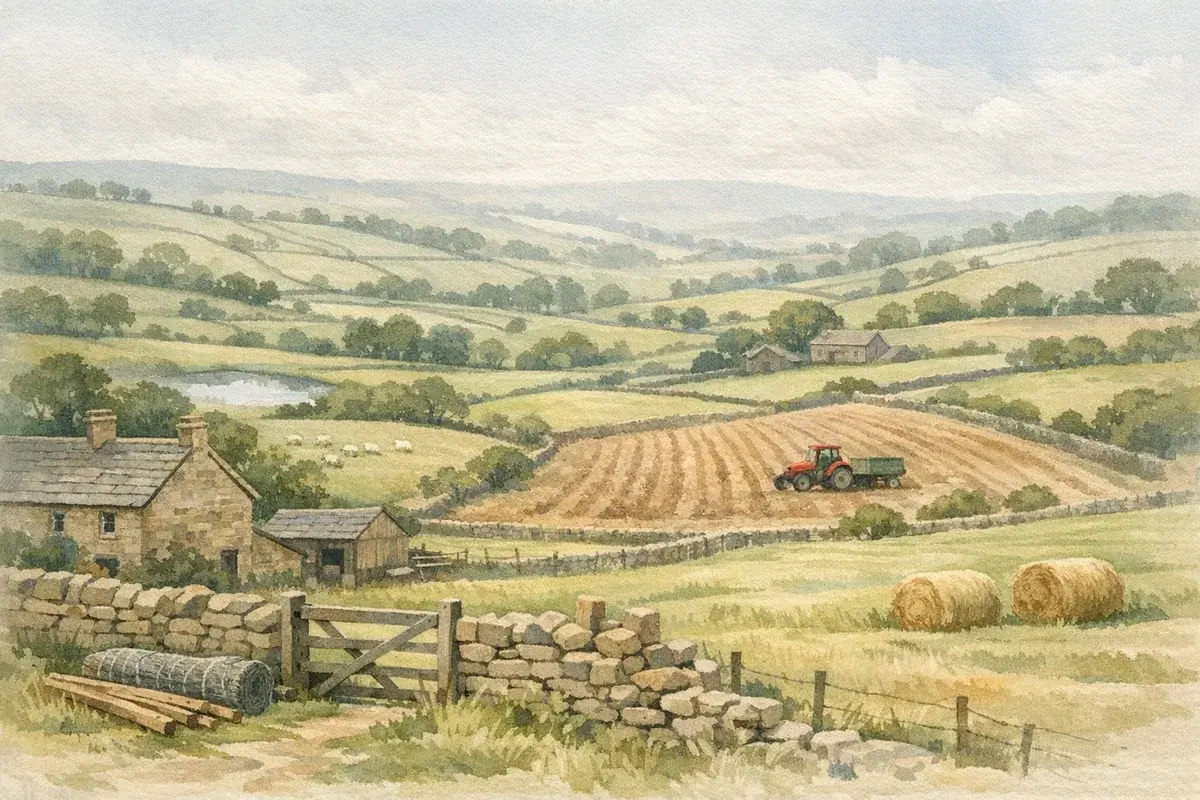
Selling agricultural land in the UK is rarely just "stick it on the market and see what happens." The best outcomes usually come from quiet, methodical preparation: getting your boundaries and access watertight, lining up the paperwork buyers will ask for (and their solicitor will insist on), and making sure you're not accidentally creating new liabilities while trying to make the place look its best.
This checklist is written for you as a landowner, whether you're selling a single grass field, a ring-fenced block, or a farm with buildings and longer-term potential. It's deliberately UK-specific, and it focuses on the things that tend to derail transactions: uncertainty over rights, messy occupation arrangements, environmental designations, unclear services, and unrealistic pricing. Get those right and you don't just reduce risk, you often widen your buyer pool and improve the price tension.
Start With Your Sale Strategy And Target Buyer
Before you touch a fence line or book a contractor, decide what you're actually trying to achieve. The "right" preparation work depends on who your likely buyer is and what they're going to do with the land.
Define The Asset You're Selling (Bare Land, Farm, Woodland, Equestrian, Development Upside)
Different buyers buy with different questions in mind:
- Bare arable or grazing land: they'll scrutinise access, soil type, drainage, field sizes, and Basic Payment history (even though BPS is winding down, past use can still signal how the holding has been managed). They'll also ask about stewardship obligations and any restrictions.
- A farm with buildings: condition, lawful use, services, and compliance become much more central (think: asbestos, electrics, effluent, and whether uses have drifted over time).
- Woodland: buyers tend to focus on access for timber extraction, designations, felling licences, and long-term management.
- Equestrian-leaning land: water supply, safe access, nearby rights of way, and neighbour sensitivity can matter more than the last 0.2t/ha yield.
- Land with development upside: the conversation shifts quickly to planning history, local plan context, constraints, and deal structures like options and overage.
Be honest with yourself about what you're selling today versus what you're implying. Over-promising "potential" without evidence can spook serious buyers or invite renegotiation later.
Choose A Sale Route And Timeline (Private Treaty, Formal Tender, Auction)
Your route to market affects how much preparation you need, and how quickly.
- Private treaty is common for agricultural land because it allows negotiation and flexibility. It suits clean, straightforward holdings and buyers who need time for finance, farm business planning, or internal approvals.
- Formal tender / best and final offers can work well where there's likely to be broad interest (good blocks of land, strategic parcels, or areas with lifestyle demand). You'll want your information pack tight so bidders can price confidently.
- Auction can be effective for smaller lots, land with quirks, or where speed and certainty matter. But you typically need your legal pack ready upfront, and issues become highly visible.
If you want a wider view on the end-to-end process (including typical documents and common tripwires), it's worth reading AgLand's guide on the step-by-step sale process in the UK once you've set your objectives. That way, your prep work lines up with what comes next.
Set A Clean Boundary And Access Plan
Boundary uncertainty is one of those slow-burn problems: it doesn't always stop the first viewing, but it can absolutely stall solicitors, valuations, and lenders.
Confirm Title, Plans, And Boundary Features (Hedges, Fences, Ditches, Walls)
Start with the basics:
- Pull your title plan and any historic conveyances and compare them to what's on the ground.
- Walk every boundary and note where physical features don't match expectation (a hedge that's crept, a fence line that's been "temporary" for 20 years, a ditch that's become the de facto boundary).
- Photograph key corners and features, not because buyers love photos, but because it helps you answer questions consistently.
If your land isn't registered, or if plans are poor quality, you may need to act early. First registration or boundary clarifications take time, and "we'll sort it later" can become "we've lost the buyer." AgLand's practical piece on getting land registration right is a useful sense-check on the documents and common pitfalls.
Rights Of Way, Easements, And Ransom Strips: What Buyers Will Probe
Expect buyers (and their solicitor) to probe access and third-party rights hard:
- Public rights of way across land can be manageable, but they influence privacy, livestock management, and future change of use.
- Private rights of way and easements (for access, drainage, services) need to be clear: who benefits, who maintains, and what vehicles are allowed.
- Ransom strips, those thin slivers that control access, are where negotiations get tense. If there's any ambiguity, resolve it before marketing if you can.
Practical tip: make a simple schedule listing each right, where it runs, who uses it, and where it's evidenced (title, deed, statutory record). Buyers love clarity.
Make Access Work For Modern Kit (Gates, Tracks, Visibility, Weight Limits)
Even great land can feel "awkward" if modern kit can't get in and out safely.
Check:
- Gate widths and swing room for large trailers and contractors.
- Track condition, a short run of failing hardcore can look like a small issue but signals ongoing cost.
- Road visibility and turning if access joins a faster road (buyers will think about safety and insurance).
- Weight limits and bridge constraints on the approach route, especially relevant for heavy harvest traffic.
You don't need to create a showroom. You do need to make sure access isn't a question mark that buyers price in as risk.
Get Your Legal And Compliance House In Order
This is the part sellers often leave too late because it feels "paperwork-y." In reality, it's where you protect your price and your timetable.
Tenancies, Grazing Licences, And Cropping: Vacant Possession Versus Income In Place
Occupation is a value driver, but only if it's well documented.
- Vacant possession often broadens the buyer pool (owner-occupiers, neighbours, some investors). But you must be confident you can actually deliver it.
- Income in place can attract investment buyers, especially where terms are clear and enforceable.
Be very careful with informal arrangements. A handshake grazing agreement that's rolled on for years can raise questions about security of tenure. If you're selling with someone in occupation, you'll want clear paperwork, clear rent/licence payments, and a timeline everyone understands.
If this applies to you, read AgLand's guide on selling land where there's an occupier in place and speak to a rural solicitor early. Getting this wrong can be expensive.
Environmental And Statutory Constraints (SSSI, AONB, NVZ, Stewardship)
Constraints aren't "bad news" by default, many buyers accept them. The issue is uncertainty.
Common UK constraints buyers will ask about include:
- SSSIs (Sites of Special Scientific Interest): Natural England consents and operations requiring consent can restrict management.
- AONBs / National Parks: not a ban on change, but it can influence planning outcomes and permitted development expectations.
- NVZs (Nitrate Vulnerable Zones): impacts nutrient management and storage considerations.
- Stewardship / agri-environment schemes (e.g., Countryside Stewardship): buyers will want to know obligations, payments, durations, and whether agreements can transfer or must be terminated.
Create a simple "constraints summary" that's honest and evidenced. It builds trust and prevents late surprises.
Utilities, Wayleaves, Drainage, And Water Abstraction
Services are where rural transactions often get bogged down.
Get ahead of questions like:
- Are there overhead lines, poles, or buried cables and do you have wayleave/easement documents?
- What's the water supply (mains, borehole, spring) and who maintains it?
- Is there field drainage (mains outfall, ditches, private systems) and do you have maps?
- Do you have a water abstraction licence and is it transferable/what are the conditions?
If you can't evidence something, say so early, then price and negotiate accordingly. Silence until the solicitor's enquiries arrive is how deals slow down.
Present The Land Well Without Creating Liability
Presentation matters, buyers are human. But there's a fine line between sensible preparation and doing something that creates a future claim ("you told us X, but it's actually Y").
Tidy-Up Works That Pay Back (Scrub Control, Repairs, Invasive Weeds)
The highest-return jobs are usually the unglamorous ones:
- Scrub control on boundaries and gateways: it makes the land feel bigger, accessible, and cared for.
- Repair the obvious hazards (collapsed fence into a highway, unsafe bridge, broken gate hanging off hinges).
- Tackle invasive weeds where you can (buyers notice ragwort in grazing, and Japanese knotweed triggers immediate due diligence).
Avoid "cosmetic cover-ups" that hide issues short-term. If a track is failing because drainage is broken, fix the drainage, not just the surface.
Soils, Cropping History, And Productivity Evidence Buyers Trust
When you're preparing agricultural land for sale, evidence beats adjectives every time.
Useful, buyer-trusted information includes:
- Cropping history for the last 5–10 years (rotation, grazing, reseeds).
- Soil analysis (pH, P, K, Mg), ideally recent and field-referenced.
- Drainage notes (when installed, where outfalls are, any known wet patches).
- Yields where you can share them credibly, with context (season, variety, input approach).
A quiet truth: plenty of buyers won't fully believe claimed yields, but they will believe tidy records and consistent management. It signals you're not hiding the ball.
Buildings And Infrastructure: Safety, Condition, And Lawful Use
Buildings can add value, or become the reason a buyer chips you.
Focus on:
- Safety and basic compliance: obvious electrical issues, unstable structures, exposed asbestos-containing materials. If asbestos is present, consider an up-to-date survey and clear management approach.
- Condition and functionality: roofs, doors, concrete, livestock handling.
- Lawful use: if a building has quietly become storage for a non-agricultural business, or there's been mixed use, get advice. Misalignment between "what it is" and "what it's used for" invites risk in enquiries.
Don't renovate for the sake of it. Buyers often prefer a realistic price and honest condition over shiny improvements that don't fit their system.
Value Drivers And Pricing: What Moves The Needle
Price is where preparation pays off. Not by trying to "talk it up" but by removing uncertainty so more buyers can bid with confidence.
Development Potential And Uplift (Overage, Options, Promotion Agreements)
If there's a credible planning angle, edge of settlement, infill context, local plan dynamics, treat it as a separate workstream.
Key points to think through:
- What evidence do you actually have? Past refusals/approvals nearby, pre-app discussions, policy allocations, access feasibility.
- Overage (clawback): if you sell now at agricultural value but want a share of future uplift, overage can work, if it's drafted properly and monitored.
- Options and promotion agreements: these can be powerful where the upside is real but uncertain, because they align incentives between landowner and promoter/developer.
If this is your route, dig deeper on the mechanics in AgLand's guide to selling land where developers may be interested. The detail matters, and you'll want specialist advice before signing anything.
Natural Capital And Alternative Income (Biodiversity Net Gain, Carbon, Woodland)
Natural capital is no longer fringe. But it's also not "free money," and it can interact with tax, tenancy, and future flexibility.
Buyers may ask:
- Is any part of the holding already committed to Biodiversity Net Gain units or habitat agreements?
- Are there carbon projects (woodland creation, peatland) in place or proposed, and what are the permanence obligations?
- Are there management plans or constraints that affect farming operations?
If you're considering creating or selling units before you sell the land, get advice early. You don't want to accidentally reduce buyer appetite by tying the land up in obligations you didn't fully price.
Comparable Evidence And Professional Valuation Inputs
A realistic asking price is built from evidence, not hope.
Bring together:
- Comparable sales (adjusted for size, location, soil, access, and any uplift angle)
- Local demand (neighbour interest can be decisive)
- Lotting strategy (one block vs multiple lots can change the buyer pool and overall result)
For a proper framework, start with AgLand's resource on agricultural land valuation considerations and then speak to a surveyor/agent who regularly sells land like yours, not just "in your county," but in your category (arable blocks, upland grazing, equipped farms, etc.).
Remember: an unrealistic price doesn't just delay sale, it can create a stale listing, which buyers interpret as "problem land" even when it isn't.
Tax And Transaction Structuring To Discuss Early
Tax isn't something you "leave to the accountant at the end." In rural property, your choices during preparation, vacant possession, splitting lots, changing use, signing options, can affect reliefs.
Capital Gains Tax, Rollover Relief, And Hold-Over Relief (Where Relevant)
You'll want tailored advice, but as a prompt list:
- Capital Gains Tax (CGT): the gain depends on base cost, improvements, and sale structure. Timing (tax year) can matter.
- Rollover relief: may be available where you reinvest proceeds into qualifying business assets, but rules are specific and deadlines apply.
- Hold-over relief: can apply in certain gifting or business asset scenarios, but again it's detail-heavy.
If you're selling part of a holding you've owned for a long time, don't assume the "obvious" approach is best. A quick call with a rural accountant or tax adviser early can save you from a nasty surprise later.
VAT, SDLT Signals For Buyers, And When To Opt To Tax
VAT and SDLT don't only affect you, they affect the buyer's cost and hence their bid.
Common issues include:
- Is the land "VAT-able"? Bare land is often exempt, but buildings, commercial uses, or opting to tax can change the position.
- Opting to tax can sometimes help recover VAT on costs, but it can also make the asset less attractive to some buyers.
- SDLT is generally a buyer tax, but it influences affordability. If there's residential property, mixed-use, or commercial elements, rates and treatment can vary.
This is precisely the sort of area where "internet certainty" is dangerous. Get professional advice based on the specifics.
Inheritance Tax And APR/BPR: Protecting Reliefs During The Sale Process
For many landowners, IHT reliefs are the big one.
- Agricultural Property Relief (APR) and Business Property Relief (BPR) can be valuable, but they depend on use, occupation, ownership period, and the nature of the business.
- Changes during the sale process, like taking land out of farming, granting longer occupational rights, or entering certain agreements, can sometimes have unintended consequences.
The practical message: if IHT planning is part of your wider family strategy, bring your adviser into the conversation before you commit to a route to market.
Marketing Pack And Deal Execution
A strong marketing pack doesn't just make the land look good, it reduces buyer friction. And friction is where offers get shaved.
Information Pack Buyers Expect (Plans, Wayleaves, Stewardship, Drainage, Services)
Put yourself in the buyer's boots. They want to know what they're buying, what might restrict it, and what it costs to run.
A sensible pack often includes:
- Sale plan(s) with clear boundaries and hectares/acres
- Title details and known third-party rights
- Wayleaves/easements and utilities information
- Stewardship scheme documents and obligations
- Drainage information and water supply details
- Cropping and soil information (where available)
- Details of any disputes (better to declare than be "found out")
When you're ready to push the listing live, align your pack with your marketing approach. AgLand's guide on how to market rural land effectively is a good reference point for what actually drives serious enquiries rather than tyre-kickers.
Viewings, Biosecurity, And Managing Neighbours And Occupiers
Viewings are where momentum is built, or lost.
Consider:
- Biosecurity: provide boot dips or guidance if livestock are present: keep vehicles to agreed routes.
- Safety: clearly mark hazards (ditches, soft ground, old structures) and think about insurance.
- Neighbours and occupiers: if there are shared accesses, rights, or sensitive boundaries, brief your agent so viewings don't accidentally inflame local relationships.
It can be worth doing a "soft launch" with known local buyers first (neighbours, expanding farmers, investors already active in the area). The right agent network helps here.
If you haven't chosen representation yet, AgLand's overview of what to look for in specialist rural agents will help you ask better questions than "what's your fee?"
Heads Of Terms, Timetables, And Avoiding Fall-Throughs
Most fall-throughs aren't dramatic, they're slow. Weeks go by, queries pile up, and confidence drains away.
To reduce that risk:
- Agree heads of terms early (price, deposit, timescales, what's included, conditions).
- Set a realistic timetable and stick to it, especially where you're selling multiple lots.
- Be disciplined about disclosure. If there's a known issue, control the narrative with facts and documentation.
And if you're juggling a chain of events (harvest, stewardship windows, tenancy end dates), put those dates in writing. Buyers can be surprisingly accommodating when they understand the operational reality, less so when they feel it's being made up as you go along.
Conclusion
Preparing agricultural land for sale is mostly about eliminating "unknowns." Clear boundaries. Clear access. Clear occupation. Clear constraints. Clear evidence. Once those are in place, the market can do its job, and you'll be negotiating from a position of strength rather than scrambling to answer last-minute enquiries.
If you take one practical step this week, make it this: walk your land with a notebook and your title plan, and list every question a sceptical buyer might ask. Then start turning each question into a document, a photo, a plan, or a professional opinion. That's how smooth transactions happen in the real world.
Disclaimer: AgLand.co.uk is a UK agricultural land and rural property matching service, where buyers register what they are looking for and owners advertise directly to the buyers who match, and a rural resource hub. Nothing in this text is intended as legal, financial, tax, or investment advice. You should carry out your own due diligence and seek independent advice from suitably qualified professionals (for example, rural solicitors, chartered surveyors, tax advisers, and planning consultants) before making decisions or entering into transactions.