
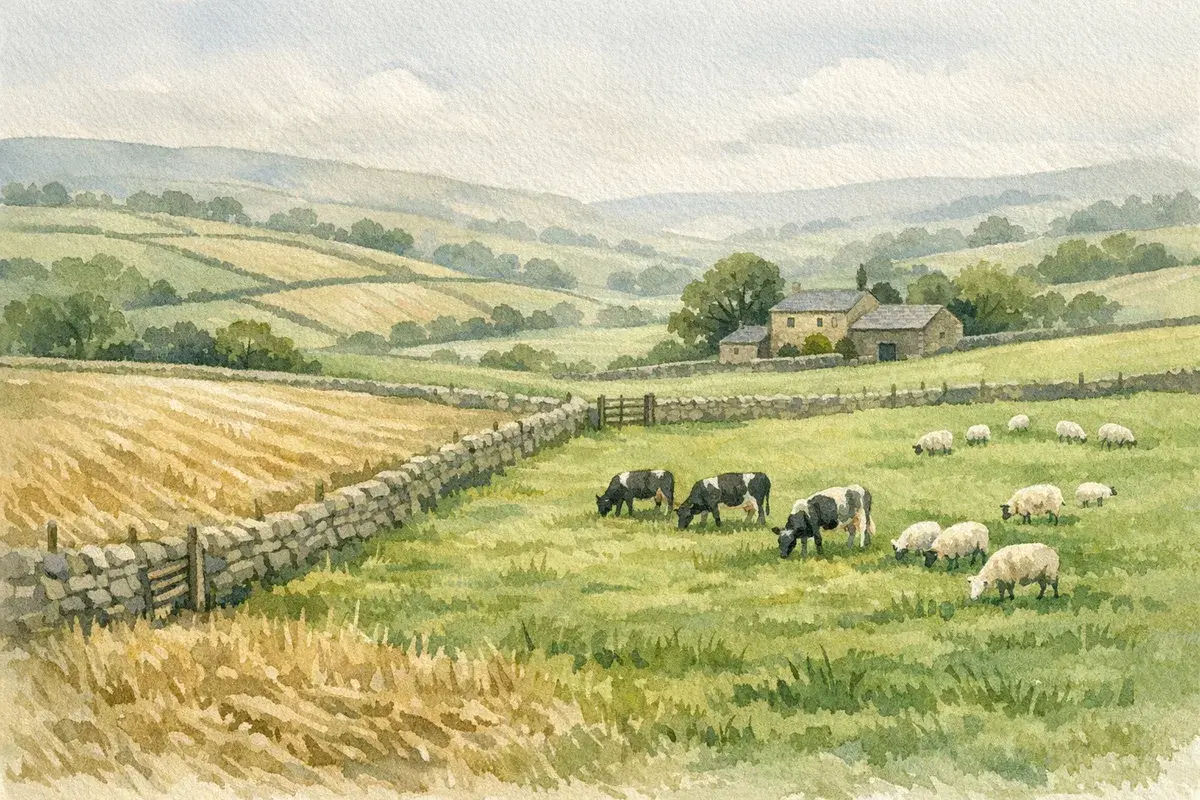
A lot of people talk about converting arable to pasture as if it's simply "drill some grass and crack on." In reality, it's one of those decisions that looks straightforward until you price the fencing, realise your drainage is borderline, or discover the field's got stewardship obligations you'd forgotten about.
Done well, converting arable to pasture can stabilise cashflow, cut exposure to volatile fertiliser and grain prices, and quietly rebuild soil function. Done badly, you can end up with thin swards, weed problems, poaching, and a land use that doesn't fit your tenancy, your market, or your long‑term plans.
This guide is UK‑specific and practical: why the switch makes sense (and when it doesn't), what to check before you start, how establishment actually works on the ground, and the costs and returns you should model before you turn a wheel.
Why Convert Arable To Pasture (And When It Usually Makes Sense)
Converting arable to pasture isn't a moral choice or a fashionable one, it's a business and land capability decision. In the UK we're seeing three big drivers: margin volatility, soil resilience, and changing demand for forage and grazing.
Reducing Input Costs And Risk In Volatile Markets
If your arable margin is propped up by high output prices, you'll know how quickly the mood changes when fertiliser spikes, diesel climbs, or a wet autumn trashes establishment. Grass isn't "free farming", but it can be a lower‑input system with fewer time‑critical operations.
Pasture can make sense when:
- you're on heavier land where autumn drilling windows are unreliable:
- blackgrass (or other resistance‑ridden grassweeds) is dictating your rotation:
- fixed costs (machinery, labour) are being carried by too few profitable hectares:
- you'd benefit from smoothing risk across enterprises (e.g., adding grazing income alongside arable).
That said, pasture isn't automatically lower risk. If you don't have stock, don't have a secure route to grazers, or you can't fence and water the fields, you can end up with "green desert" acres that don't pay.
Improving Soil Structure, Organic Matter, And Water Management
Good pasture is a soil‑building tool. It protects the surface, feeds biology through roots and exudates, and (when managed well) improves aggregate stability. In plain English: it can make land carry machinery and livestock better, reduce run‑off, and help you cope with both dry spells and sudden downpours.
The catch is that those gains come from management, not just the presence of grass. Set‑stocking on wet ground can compact and cap soils just as effectively as a badly timed cultivator pass.
If you're weighing short‑term leys versus longer‑term grass, it helps to understand the legal and practical difference between grass that's "temporary" and grass that's treated as "permanent" in land management terms. Our explainer on how temporary grass differs from permanent pasture is useful here, because the implications can affect future flexibility.
Livestock, Hay, Silage, And Grazing Licences: Matching Land To Demand
Pasture has to match local demand and your ability to capture value. In many areas, the strongest options are:
- Your own livestock (beef, sheep, dairying, or youngstock keep)
- Let grazing (short licences that keep control with you)
- Hay/silage (if you can secure reliable mowing and bale removal)
- Equestrian (often higher rents, but typically higher wear, higher expectations, and a different set of issues around access and ground conditions)
We've seen landowners do brilliantly by converting awkward arable corners into well‑fenced grazing blocks that local graziers will pay for year after year. We've also seen the opposite: a field converted because "grass is easy," then left under‑utilised because no one nearby actually needs more keep.
A simple gut‑check: before you seed anything, ask yourself who the end user is, what they will pay, and what they'll expect you to provide (fencing, water, handling, access, and timing).
Key Checks Before You Start: Tenure, Constraints, And Evidence
Before you talk seed mixes, get the basics nailed. Converting arable to pasture can be reversible in agronomic terms, but it can be messy in legal, stewardship, and landlord‑tenant terms if you don't check first.
Ownership, Farm Business Tenancy Terms, And Landlord Consent
If you own the land and farm it in hand, you have the most flexibility, but even then, you may have scheme obligations or contract commitments.
If you're a tenant, read your agreement like it matters (because it does). Common trip‑wires include:
- clauses restricting change of rotation or requiring consent for conversion:
- requirements to return land in a certain condition at end of term:
- limits on ploughing out grass or establishing long leys:
- landlord controls over reseeding, drainage, and fencing.
Where consent is needed, get it in writing. If the conversion could increase value (or change the character of the holding), landlords often want involvement.
Designations And Constraints: SSSI, AONB, NVZ, Stewardship, And Rights Of Way
In the UK, "it's just a field" can still mean layers of constraint. You should check:
- SSSI (Sites of Special Scientific Interest): operations may require consent and timing restrictions.
- AONB / National Landscape, National Parks: not always a blocker, but fencing, tracks, or new infrastructure can be more sensitive.
- NVZs (Nitrate Vulnerable Zones): nutrient applications and closed periods matter.
- Countryside Stewardship / ELM agreements: options can restrict cultivation, reseeding, fertiliser, or cutting dates.
- Public rights of way: grazing livestock changes practical management and risk (gates, water trough placement, fencing lines).
Also consider water: if your arable field drains to a ditch that feeds a sensitive catchment, pasture conversion can reduce erosion risk, but mismanaged gateways and run‑off can still cause trouble.
Keep The Paper Trail: Cropping History, Soil Data, And Photographic Records
This isn't busywork. A paper trail protects you when:
- a scheme inspection queries land use history:
- a landlord/tenant dispute arises over "improvement" or "deterioration":
- you need to evidence why you chose a certain approach.
At minimum, keep:
- last 5–7 years of cropping and inputs (sprays, fertiliser, manure/slurry):
- soil tests (pH, P, K, Mg: organic matter if you track it):
- drainage notes (wet spots, springs, outfalls):
- dated photos before cultivation, after establishment, and after first utilisation.
It's also worth doing a simple field walk map: compaction zones, rabbit pressure, shade lines, and where machinery turns. You'll use it more than you think.
Planning, Environmental, And Cross-Compliance Considerations
Converting arable to pasture is usually an agricultural operation, but the moment you add infrastructure or disturb protected features, you can trigger other rules.
Is It A Change Of Use? When Planning Permission Might Be Triggered
Establishing grass for grazing or conservation typically sits within agriculture. Planning tends to come into play when you:
- build new access tracks, hardstandings, or significant earthworks:
- install field shelters (especially if they look permanent or are in sensitive areas):
- move into equestrian use (often treated differently to agriculture, particularly if there's manège construction, lighting, or regular events):
- create new yard infrastructure (handling pens, barns, or feed storage).
If your end market is equestrian, be careful: the line between grazing horses as part of agriculture and "keeping horses" as leisure can be contentious. A short call with a planning consultant or your agent can save you months.
Hedgerows, Watercourses, And Habitats: Avoiding Unintended Offences
Pasture conversion is a good moment to tidy boundaries, but don't assume you can flail, grub out, or re‑align hedges because you're "improving the field." Hedgerows can be protected, and there are seasonal and habitat considerations.
Similarly, avoid casual work in:
- ditches and ordinary watercourses:
- riparian margins:
- areas with obvious nesting, wetland plants, or veteran trees.
If you're putting in fencing, plan where it crosses watercourses and how you'll keep stock out of sensitive banks. This is one of those places where small, thoughtful design prevents big headaches.
Manure, Nutrients, And Run-Off: Getting Nutrient Planning Right
A common mistake when converting arable to pasture is assuming grass "doesn't need much." If your soil indices are low, the sward will tell you, slowly, expensively.
But the opposite mistake is just as risky: over‑applying nutrients (especially N and slurry) on newly established grass, or applying when soils are saturated. That's how you end up with run‑off, pollution risk, and poor utilisation.
A practical approach:
- soil test first, and correct pH early (lime works slowly):
- match N to realistic yield and utilisation (grazed vs cut):
- use buffer strips and protect gateways from concentrating run‑off:
- if in an NVZ, ensure storage, closed periods, and application limits are built into your plan.
If you're moving from arable straw removal to grazing/cutting, your P and K balance will change. Model it, don't guess.
Pasture Options: From Quick Grass To Long-Term Leys And Permanent Pasture
Not all "grass" is the same. The right choice depends on what you're trying to achieve, cash this year, soil improvement, stocking flexibility, or a long‑term shift in land use.
Short-Term Grazing Leys Vs Herbal Leys Vs Permanent Pasture
Broadly, your options look like this:
- Short‑term grazing ley (1–3 years): quick to establish, flexible for rotation, usually ryegrass‑based. Great if you want a reliable bite fast.
- Medium/long‑term ley (3–7 years): better root structure, more resilience, can include clovers for N fixation.
- Herbal ley: deeper rooting species (e.g., chicory/plantain) with clovers: often better drought tolerance and soil benefits, but management is less forgiving.
- Permanent pasture: long‑term grassland, often with higher environmental value and different management implications.
If you're uncertain which direction fits your goals, it's worth reading up on practical pasture improvement techniques because the "best" pasture is often the one you can keep improving without re‑starting every few years.
Species And Seed Mix Selection By Soil Type, Drainage, And Stock Class
Seed mix selection is where budgets get wasted. The mix should match:
- soil texture and moisture: heavy clay vs brashy limestone behave like different farms:
- drainage: persistent wet patches punish ryegrass‑heavy mixes:
- stock class: dairy and finishing cattle want high energy leafy swards: sheep tolerate tighter grazing: horses can be hard on ground and selective.
A few UK‑relevant pointers we see repeatedly:
- White clover is brilliant for quality and reducing bagged N, but needs correct pH and sensible grazing management.
- Timothy and meadow fescue can be useful where moisture management is tricky.
- Herbs can add resilience, but don't expect them to survive set‑stocked sheep at high pressure.
And don't ignore establishment risk: if you're on light land with spring drought risk, a late spring sowing can be a false economy.
Managing Weeds And Volunteers During The Transition
Your weed spectrum often shifts when you stop cultivating annually. Watch for:
- docks and thistles where fertility is high and ground is open:
- chickweed and volunteer cereals after a quick undersow:
- blackgrass control opportunities (grass leys can help, but only if managed properly).
The cleanest conversions we see are planned backwards: you deal with perennial weeds in the preceding crop, then establish grass into a clean seedbed. If you're trying to fix problems after the ley is in, you're usually paying more for a worse result.
Step-By-Step Establishment Plan: From Field Walk To First Grazing
A good establishment plan is less about doing everything, and more about doing the right things in the right order. Here's a field‑tested sequence that works across much of the UK.
Soil Testing, Compaction Relief, And Seedbed Preparation
Start with a spade and a notebook. You're looking for:
- compaction layers (often at cultivation depth or headlands):
- poor structure (smearing, plates, lack of roots):
- wetness patterns and where water sits.
Then test your soils. For pasture establishment, pH is often the limiter. If pH is low, clover underperforms and ryegrass doesn't express its potential.
If you've got persistent wet areas, don't ignore them, grass will not "fix" a drainage fault. It'll just mask it until winter, then you'll be staring at poached mud. Our guide to pasture land drainage is a good starting point for deciding whether you need repairs, new outfalls, or just better surface management.
Establishment Methods: Plough And Reseed, Min-Till, Or Direct Drill
Your method should match your starting point:
- Plough and reseed: best reset option if compaction is deep, surface is rough, or weed burden is high. Higher cost and more soil disturbance.
- Min‑till: can work well after arable, especially where you're preserving moisture and structure.
- Direct drill: lower disturbance and can be very effective, but it's not magic. It demands correct timing, residue management, and decent soil conditions.
If you're converting land that's already in grass and you're renovating rather than starting from scratch, the approach changes again. For that scenario, you'll want a more specific method, see our breakdown on reseeding older grassland successfully and how to avoid the common pitfalls.
Timing, Rolling, Post-Emergence Care, And First Utilisation Rules
Timing is where most "cheap" grass becomes expensive.
- Spring sowing can work well on heavier land if you can retain moisture and keep weeds in check.
- Late summer/early autumn sowing often gives the best establishment conditions, but only if you've got moisture and you're not racing a wet breakdown.
Rolling matters more than people like to admit. A firm seedbed improves seed‑soil contact, helps moisture retention, and reduces slug habitat.
First utilisation rules (the unglamorous but important bit):
- don't graze too early, pulling plants out is a classic mistake:
- don't leave it too late either, rank grass shades itself and you lose tillering:
- aim for a "nip off the top" first graze when the sward is well rooted, ideally with lighter stock.
If you're cutting for silage in year one, keep expectations realistic. Establishment year is about building a dense base, not chasing a record yield.
Costs, Budgets, And Real-World Returns
The costs of converting arable to pasture vary wildly because the expensive bit often isn't the seed, it's what you need to make the field usable (fencing, water, access).
Typical Cost Lines: Sprays, Cultivations, Seed, Fertiliser, And Fencing
A sensible budget usually includes:
- pre‑conversion weed control (especially perennials):
- cultivations/drilling (or contractor direct drilling):
- seed (cheap mixes can cost you in thin swards and reseeds):
- lime (often the best ROI input on grassland):
- P and K to correct indices:
- starter N if you're not relying on clover early:
- fencing (perimeter repairs, internal divisions, gateways).
Don't ignore ongoing nutrient costs. Grass can be productive without heavy nitrogen, but it still has nutritional needs, especially if you're removing offtake in bales. For a practical UK lens on this, see our guide to pasture fertiliser requirements and how to align inputs with grazing/cutting outcomes.
Infrastructure Add-Ons: Water, Tracks, Handling, And Shelter
This is where many conversions succeed or fail.
Ask yourself:
- How will stock drink? (Mains? Bowser? Troughs? What's the winter risk?)
- Can you move stock without wrecking gateways? (Tracks and surfaced gateways can be worth every penny.)
- Do you need handling facilities on or near the block?
- What's the shelter situation? (Hedges and banks help: open fields can be hard on animals.)
If you're letting grazing, remember: professional graziers will pay more for fields that are easy to run. If it's a daily chore to check water and patch fences, the rent reflects that.
Gross Margin Comparisons And Payback: Arable Vs Grazing/Hay/Silage
There isn't a universal gross margin answer because it depends on your land, your system, and your local market.
A useful way to compare is by building two scenarios:
- Keep arable: realistic yield (not best‑ever), realistic price, and full variable costs plus a sensible allowance for machinery and labour.
- Convert to pasture: establishment costs spread over the ley life (amortised), annual maintenance (nutrients, topping, fence repairs), and a realistic income line (grazing lets, livestock margin, or forage sales).
Payback is often quicker where:
- fencing is already decent:
- water is easy:
- the field is awkward for arable efficiency:
- you can integrate livestock and capture value internally.
We've also seen a "strategic payback" that doesn't show up neatly in year one: better soil structure and grass breaks can reduce blackgrass pressure and improve subsequent arable performance on the rest of the farm.
Looking for land like this? Tell AgLand what you're after - type, acreage, budget and area - and we'll alert you the moment a matching property is advertised. Registering is free, and there's no commission on either side. Tell us what you're looking for.
Managing The Pasture After Establishment: Productivity Without Damage
This is where the real money is made, or lost. Establishment gets you a sward: management determines whether it pays for five years or disappoints by year two.
Grazing Systems: Set-Stocking, Rotational, And Mob Grazing In UK Conditions
Set‑stocking is simple and sometimes appropriate (e.g., certain sheep systems), but it often leaves grass under‑utilised in flushes and over‑grazed in pinch points.
Rotational grazing is usually the sweet spot for UK conditions: it helps you control covers, protect regrowth, and improve utilisation. If you want a practical starting framework, see our guide to pasture rotation grazing and how to set paddocks up without overcomplicating it.
Mob grazing can work too, but it's not a badge of honour. The limiting factor is often labour and infrastructure. If you can't shift fences and manage residuals, you'll get the drawbacks without the benefits.
P, K, Lime, And Nitrogen Strategy: Feeding The Sward Responsibly
Grassland fertility is about balance and timing.
- Lime: correct pH first, everything else works better.
- P and K: maintain indices, especially where you cut silage/hay.
- N: use strategically. If clover is thriving, you can reduce bagged N substantially: if not, don't starve the sward and expect miracles.
Also remember animal health. Magnesium and trace elements matter, and grass can be deceptively "lush" while lacking what stock need. Work with your adviser and vet where appropriate.
Poaching, Drought, And Winter Use: Protecting Soil And Sward Longevity
UK winters make or break grassland.
If you're on heavier or wetter land, plan for:
- sacrifice areas or outwintering strategies that don't destroy your best fields:
- moving water points and protecting gateways:
- reducing stocking pressure when soils are saturated.
If wetness is a known issue, you'll want a more specific playbook for avoiding long‑term damage, our guide on managing wet pasture land goes into practical tactics that keep ground cover intact.
On the flip side, drought resilience matters more than it used to. Deep rooting species, maintaining ground cover, and avoiding over‑grazing ahead of dry spells all help. But again: it's management first, seed mix second.
For a broader management framework, covers, rotation discipline, and soil basics, our pasture land management guide is a solid reference to keep you on track after establishment.
Tax, Grants, And Land Value Implications To Understand
Converting arable to pasture can change how the land is perceived by tenants, buyers, valuers, and sometimes HMRC. You don't need to be a tax technician, but you do need to know where the edges are.
ELM And Countryside Stewardship: Where Pasture Can Fit (And Where It Can't)
In England, the Environmental Land Management (ELM) approach (including SFI options) and Countryside Stewardship, both run by Defra, can make grassland attractive, especially where you can stack compatible actions around soil health, hedgerows, and water.
But don't assume you can simply convert and then "claim something." Schemes come with:
- eligibility rules:
- evidence requirements:
- management prescriptions (cutting dates, fertiliser restrictions, stocking limits):
- inspection risk.
If you're already in an agreement, check whether cultivation or reseeding is allowed. If you're planning to enter one, design the pasture system so it doesn't trap you into an unworkable grazing plan.
APR, IHT, And CGT Considerations When Changing Farming Activity
Tax is fact‑specific, but here's the practical point: changing activity can change how reliefs apply.
- Agricultural Property Relief (APR) and Business Property Relief (BPR) often hinge on occupation, use, and the nature of the business.
- Letting land on a grazing licence may be treated differently from actively farming it, depending on circumstances.
- Big changes in land use and value can bring Capital Gains Tax (CGT) planning into focus, particularly if you're considering sale, development potential, or restructuring.
This is an area where you should get tailored advice from a rural accountant or tax adviser who deals with farms day in, day out. Small details (length of lets, who carries risk, who supplies inputs) can matter.
Rent, Letting, And Saleability: How Grazing Land Is Valued In Practice
Valuation and rent are local and practical. In many places, well‑set‑up grazing blocks command strong demand, if they're genuinely easy to operate.
What tends to lift appeal:
- reliable water and secure fencing:
- sensible access for vehicles and stock trailers:
- usable field shapes and gateways:
- clean swards and good drainage.
What tends to drag it down:
- poached gateways, rushy wet corners, and persistent weed issues:
- awkward rights of way through the middle of a grazing block:
- unclear responsibilities (who repairs fences, who controls weeds, who provides troughs?).
If you're converting with a future sale or let in mind, think like a buyer: would you pay a premium for this field as it will be in 12 months? If not, what's missing, water, access, drainage, or simply a clearer plan?
Conclusion
Converting arable to pasture is one of those moves that rewards the people who plan it like a proper project. The agronomy matters, yes, but the real difference is usually made by the unsexy bits: tenure checks, scheme constraints, drainage reality, and whether you've lined up the right end user.
If you want the switch to pay, design the pasture around how it will be used (grazed, cut, let, or integrated into your own livestock), budget honestly for fencing and water, and manage the first 12 months like you're building an asset, because you are.
Disclaimer: AgLand.co.uk is a UK agricultural land and rural property matching service, where buyers register what they are looking for and owners advertise directly to the buyers who match, and a rural resource hub. Nothing in this text is intended as legal, financial, tax, or investment advice. You should do your own due diligence and take advice from appropriately qualified professionals (for example, your rural surveyor, land agent, solicitor, accountant/tax adviser, agronomist, and planning consultant) before acting on any information.