
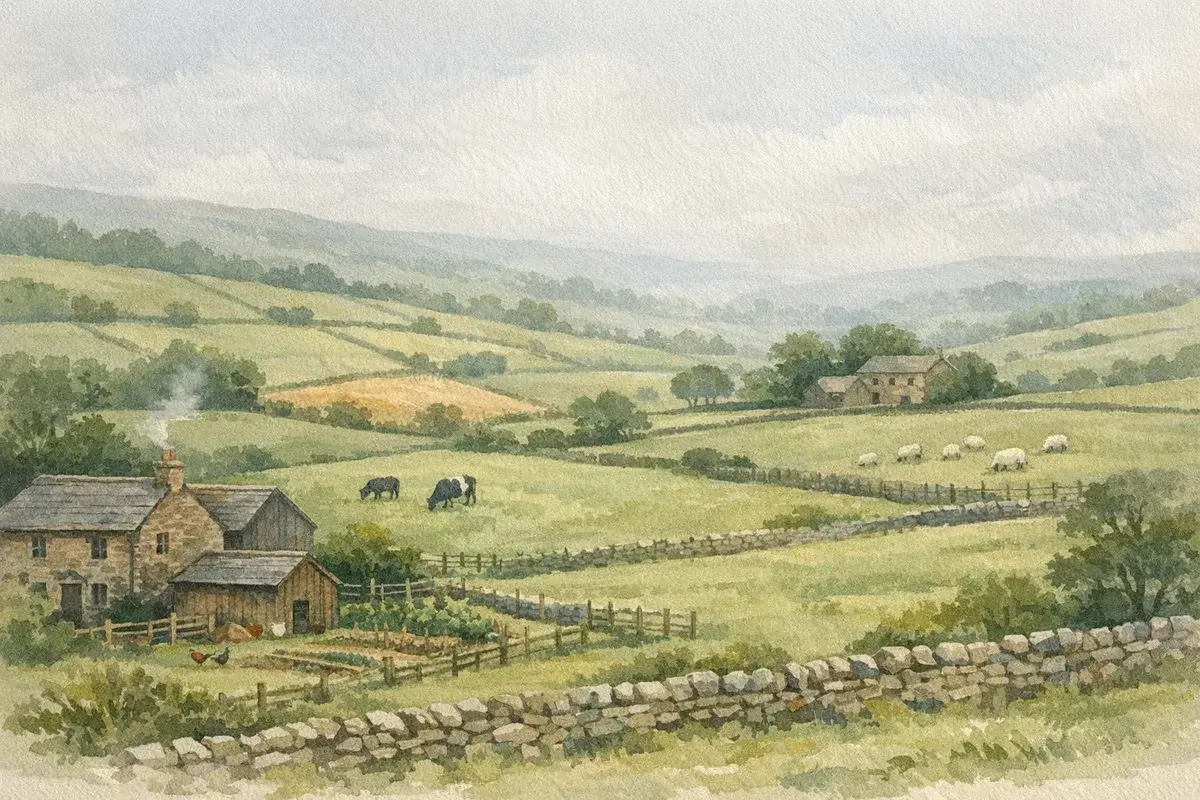
You don't buy a smallholding just to "own a bit of land". You buy a lifestyle with moving parts: water, access, boundaries, buildings, neighbours, planning rules, animals, contractors, and a monthly bill stack that keeps turning up whether you're having a good year or not.
If you're a beginner, the best protection you can give yourself isn't bravado or a romantic vision of hens in the morning mist, it's a clear plan and a methodical approach to checking the boring stuff early. Because in the UK, the difference between a brilliant first smallholding and an expensive headache is often one overlooked right of way, one awkward planning condition, or one "temporary" track that turns into a winter swamp.
This guide walks you through buying a smallholding for beginners in the UK, practically, with the checks that matter, the questions you should ask, and the points where you'll want specialist advice before you commit.
Start With A Clear Plan: Budget, Lifestyle, And Time Commitment
Buying a smallholding for beginners starts long before you view a property. The early wins come from being honest about three things: money, time, and what you actually want the land to do.
A useful way to frame it is this: are you buying a smallholding primarily as a home with space (lifestyle), a serious food-producing setup (enterprise), or a hybrid (common, but needs clarity)? Your answer affects everything, location, buildings, permissions, and finance.
What Counts As A Smallholding In The UK (And What It Doesn't)
There's no single legal definition of a "smallholding" across all contexts. In everyday UK property talk, it usually means a rural property with a modest acreage of land, enough for grazing, small-scale cropping, market gardening, or a mix of livestock and horticulture.
Two beginner traps to avoid:
- Assuming "smallholding" automatically means you can build, convert, or run a business. Land use, planning designations, and restrictive conditions matter more than the label.
- Overestimating what you can manage. A few acres can be very productive, but it can also swallow evenings and weekends if you're fencing, topping, mucking out, maintaining tracks, and fixing water systems.
If you're still calibrating size, it's worth reading a clear breakdown of what acreage typically counts as a smallholding in the UK, because "a couple of acres" feels very different once you're maintaining it in February.
Running Costs Beginners Often Miss: Maintenance, Insurance, Utilities, And Vet Bills
The purchase price is only the entry ticket. The running costs are where beginners get surprised, usually because the property looked "fine" on a sunny viewing.
Common costs you'll want to model early:
- Fencing and gates: Even "good" fencing has a lifespan, and livestock-proofing is rarely cheap. Budget for repairs in year one.
- Drainage and track maintenance: A soft access track can become a major problem after a wet winter.
- Utilities: Rural properties can mean oil/LPG, private drainage, older electrics, and higher costs for repairs.
- Insurance: You may need more than standard home insurance, think outbuildings, public liability (especially if you have visitors), and cover for equipment.
- Vet and animal health: If you're keeping livestock, you're signing up to ongoing animal welfare responsibilities and costs, not just feed.
A practical tip: write a "bad month budget", a month where the quad needs work, the water pipe freezes, and the vet visits twice. If your plan only works in perfect conditions, it's not a plan yet.
And if you're building skills from scratch, you'll likely find it helpful to map out what your first year looks like, this guide on starting a smallholding is useful for turning enthusiasm into a workable routine.
Choosing The Right Location: Access, Services, And Neighbouring Land Uses
A smallholding isn't just a pin on a map, it's a supply chain. Feed deliveries, vets, farriers, builders, post, school runs, and the ability to get a vehicle in and out when the weather turns.
The cheapest smallholding in the wrong place can cost you more than the "expensive" one that functions smoothly day-to-day.
Local Constraints That Can Make Or Break A Purchase
Before you get emotionally attached to a place, look at the local constraints that can quietly limit what you can do.
Key examples in the UK:
- Planning policy and local plan priorities: Some councils are more resistant to new dwellings in the countryside: others have clearer policies for rural enterprises.
- Conservation areas and listed buildings: These can add time, cost, and restrictions to renovations, even for things that feel minor.
- Public rights of way across the holding: Not necessarily a deal-breaker, but it changes fencing, privacy, biosecurity, and liability considerations.
- Nearby intensive uses: Poultry units, waste sites, shooting syndicates, or industrial/agri uses can affect noise, traffic, odour, and your own plans.
You don't need to become a planning expert overnight, but you do need to recognise when you're stepping into complexity.
Connectivity And Practicalities: Mobile Signal, Broadband, And Year-Round Access
This is the unglamorous reality check that saves a lot of regret.
- Mobile signal: Walk the house, yard, and land. If you'll be running a business or working remotely, this matters.
- Broadband: Availability can be patchy in rural areas. Confirm what's actually installed and what speeds you can expect.
- Year-round access: Visit after rain if possible. If the access is steep, narrow, or shared, picture a fuel delivery, a livestock trailer, or an emergency vehicle.
- Parking and turning: You'll want safe turning space for trailers and deliveries, reversing onto a fast road gets old quickly.
If you're buying as a beginner, prioritise "boring functionality" over a perfect view. Views don't keep water flowing or gates closing properly.
Land, Soil, And Water: The Non-Negotiables To Check Early
You can improve a building. You can even improve some infrastructure. But land quality and water reality are harder (and sometimes impossible) to fix cheaply.
When buying a smallholding for beginners, the sensible move is to check these early, before you spend money on surveys, solicitors, and repeated viewings.
Soil Type, Drainage, And Field Condition (And How To Sense-Check Quickly)
You don't need a lab coat to spot red flags.
Quick sense-checks on a viewing:
- Walk the field edges and gateways. If gateways are churned deep or permanently wet, you'll fight mud and poaching.
- Look for rushes and standing water. Rushes can indicate wet ground or poor drainage.
- Check sward quality and weeds. Docks, thistles, nettles, and bare patches suggest under-management (or the wrong stock for the soil).
- Slope and aspect: South-facing land dries faster: north-facing can stay cold and wet.
If you plan to keep horses, sheep, or cattle, drainage and ground condition become even more important. Beginners often underestimate how quickly animals can wreck ground in winter.
Water Supply And Rights: Mains, Boreholes, Streams, And Troughs
Water is the one thing you'll need every single day, sometimes several times a day.
Check:
- Is there mains water? If yes, where are the stop taps and meters? What's the pipe condition?
- Private supply (borehole/spring): Ask for maintenance records, test results (potability), and what happens in drought.
- Streams and ponds: Useful, but not automatically "yours" in a practical sense. There may be abstraction considerations, seasonal issues, and responsibilities.
- Field troughs: Do they work? Are they gravity fed, pumped, or reliant on a pipe that freezes?
Also ask: who maintains what? Shared supplies can be fine, until a pipe breaks and nobody agrees who's paying.
Flood Risk And Environmental Designations: What To Look Up Before Viewing
In the UK, flood risk isn't just a river issue. Surface water flooding can be just as disruptive.
Before you view (or at least before you offer), you should check:
- Flood risk mapping and local history: If locals mention "it gets wet here", take it seriously.
- Environmental designations: SSSI, SAC/SPA, and other designations don't automatically stop all activity, but they can restrict what you can change, drain, build, or intensify.
- Stewardship and management constraints: Sometimes land is under an agreement that affects management.
If you're planning any development, you'll want to understand these constraints early, otherwise you risk paying for "potential" that was never realistic.
Buildings, Planning, And Permitted Development: Avoiding Expensive Surprises
Buildings are where smallholdings swing from "good value" to "money pit" fast.
The UK's planning system is rule-heavy, and rural property has extra layers: agricultural restrictions, occupancy conditions, and the difference between what's there and what's lawful.
If your plans include stables, a farm shop, glamping, a second dwelling, or converting barns, treat planning as a first-order issue, not something to "sort later". A solid primer on smallholding planning permission can save you hours of confusion and, frankly, costly assumptions.
Agricultural Restrictions And Occupancy Conditions (Including Agricultural Ties)
An agricultural tie (also called an agricultural occupancy condition) can restrict who is allowed to live in a dwelling, typically someone employed, last employed, or primarily working in agriculture (sometimes forestry or a rural enterprise, depending on wording).
Beginner implications:
- It can reduce the pool of buyers (affecting resale).
- It can limit how you use the property if your plan is lifestyle-first.
- Breaching a condition can lead to enforcement and serious complications.
Don't rely on verbal assurances like "nobody checks that". Your solicitor should review the exact wording and history, and you should understand how your circumstances fit.
Change Of Use, Equestrian Use, And Business Use: Where Beginners Get Caught Out
A classic beginner mistake is assuming land is just… land.
In planning terms, agricultural use, equestrian use, and mixed/commercial uses can be treated differently.
Common scenarios where people get caught:
- Keeping horses: Private leisure equestrian use can trigger change-of-use issues, especially if you're building arenas, hardstanding, or significant stabling.
- Holiday lets/glamping: Even if you think it's "temporary", it can require permission and brings licensing, access, and amenity considerations.
- Farm shops or workshops: Traffic, parking, signage, noise, and hours can become planning matters.
The point isn't that you can't do these things. It's that you should price and plan on the basis of what's permitted now, not what you hope will be permitted later.
Renovation Reality Check: Costs, Compliance, And Timescales
Smallholding buildings often look robust, until you cost up making them safe, compliant, and insurable.
Reality-check items:
- Roof condition: Corrugated sheets, loose fixings, and asbestos risks are common in older farm buildings.
- Electrics and fire safety: Particularly if you'll use buildings for storage, workshops, or public-facing uses.
- Drainage around yards: Poor falls mean standing water, ice, and ongoing mess.
- Listed/heritage constraints: Repairs might need specific materials and methods.
Renovations also take time, especially if you need approvals or specialist contractors. If you're buying a smallholding for beginners, build in more contingency than you think you'll need. You probably will.
Rights, Boundaries, And Access: The Legal Checks That Protect You
This is the bit that doesn't photograph well on a listing, but it's often the bit that determines whether you can operate day-to-day without friction.
Rights Of Way, Easements, Ransom Strips, And Shared Tracks
You need to know, in plain terms:
- How you access the property and every field. If you're crossing someone else's land, what legal right allows that?
- Whether access is shared. Shared tracks can work well, but maintenance responsibilities should be clear.
- Whether there are any "ransom strips". A small strip of land retained by a third party can complicate access or services.
- Wayleaves and utility easements: Overhead lines, underground cables, water pipes, these can restrict building and tree planting.
Ask for a plan. Then match it to what you see on the ground. If the seller says "we've always gone that way", that's not the same as a documented legal right.
Boundaries, Fencing Responsibility, And Title Plan Red Flags
Boundaries in rural property can be messy: old hedgelines, fallen fences, and historic arrangements that nobody has properly recorded.
What to look for:
- Mismatch between the title plan and physical features. Title plans are often general boundaries, but glaring discrepancies are a warning.
- Who maintains fences and hedges. Responsibility can be ambiguous unless clearly set out.
- Encroachments: A neighbour's garden fence, a track moved over time, or a building that strays across a boundary can become a dispute.
This is one of those areas where paying for good legal work is cheaper than paying for a legal argument later.
Mineral, Timber, And Sporting Rights: What You May Not Be Buying
You might assume "buy the land, own everything under and over it". In the UK, that's not always true.
Rights that can be retained, reserved, or leased include:
- Mineral rights
- Timber rights
- Sporting rights (shooting/fishing)
Even if you're not planning to exploit them, they can affect what others can do on or near your land, and what you can prevent. Your solicitor should confirm what is included in the title and what isn't.
How To Search, View, And Value A Smallholding Like A Pro
Most beginner mistakes happen because the search is too broad ("anything rural") or too narrow ("must have a barn, must be cheap, must be near a town"). The pro approach is structured: shortlist, verify, view, then value.
If you want a deeper walkthrough on sourcing, checks, and pitfalls, this guide to finding a smallholding for sale and buying with confidence is a good companion to what follows.
What To Look For At Viewings: A Beginner's Checklist For Land And Buildings
A viewing isn't a wander with a coffee. It's inspection time.
Take notes and check:
- Access and parking: Can you get a trailer in? Is the entrance safe?
- Water: Where is it from, where are the taps, and does it reach the fields?
- Shelter and aspect: Do animals have natural shelter? Are fields exposed?
- Field layout: Awkward shapes and narrow strips waste time and fencing money.
- Outbuildings: What are they used for now? Any visible structural issues?
- Storage and handling: Space for feed, bedding, machinery, and secure storage.
Also ask the seller (or agent) very directly: What doesn't work perfectly? You'll sometimes get the most useful answer after a pause.
Pricing Signals: Hope Value, Overage, And The Premium For Houses With Land
Smallholdings can be priced on more than current use value.
- Hope value: The price reflects the possibility of future development or change of use, even if permission isn't in place.
- Overage (clawback): A seller may retain rights to a share of future uplift if planning is granted later.
- House-with-land premium: A decent dwelling with a few acres often commands a premium because it appeals to lifestyle buyers as well as small-scale producers.
If you're tempted by "bargains", slow down. Many listings look cheap because they carry constraints (access issues, condition, planning restrictions, unusual titles). That doesn't mean avoid them: it means price in the reality.
If your budget is tight, you'll likely find it helpful to read a grounded guide to cheap smallholdings for sale in the UK, so you know what tends to sit behind the lower ticket price.
Telling AgLand What You Want And Letting The Matches Come To You
General property search can miss rural nuance. You want to be precise about the things that actually define a rural holding: land area, outbuildings, tenure, access, and usage potential.
On AgLand, you register what you're after - type, acreage, budget and area - and you're alerted the moment a matching property is advertised, so you're not doing the "refresh and hope" routine every night. Also, keep a short list of must-haves (water, access, workable buildings) and nice-to-haves (views, aesthetics, a "project barn"). It keeps your decision-making sane when the right listing appears.
Financing And Tax Basics For First-Time Smallholding Buyers
Financing rural property isn't always like financing a typical suburban home. Lenders look at land, outbuildings, occupancy restrictions, and condition differently, and valuations can be more conservative if the market is thin.
Mortgages For Rural Property: Deposit Expectations, Lender Criteria, And Valuations
If you're buying a property with land, expect the mortgage process to be more bespoke.
Common considerations:
- Deposit expectations: Often higher than standard residential purchases, depending on acreage, type of property, and income profile.
- Valuation approach: The valuer may separate residential value from land value, and some lenders limit the amount of land they're comfortable with under a standard product.
- Non-standard construction and condition: Older rural homes can trigger extra checks.
- Income and affordability: If you're relying on smallholding income to support the borrowing, lenders may want evidence and may treat projections cautiously.
For a focused UK overview, including what lenders typically look for, read this guide on getting a smallholding mortgage in the UK.
Stamp Duty Land Tax And VAT: Common Scenarios And Pitfalls
Stamp Duty Land Tax (SDLT) can get complicated when you're buying a mix of residential and non-residential elements.
Things that often affect the position:
- Is there a dwelling? A house with land can fall into different treatment than bare land.
- Multiple dwellings or annexes: Can change calculations.
- Mixed use: Sometimes relevant where there's a genuine non-residential element (but it's not something to guess at, get advice).
VAT is another area beginners can trip over, especially if there's a business element, new buildings, or commercial arrangements.
Because these rules are fact-specific and can change, treat online calculators and hearsay with caution. A short call with a rural-focused adviser can save you a painful surprise.
Reliefs And Long-Term Tax Planning: When To Speak To A Specialist Advisor
If you're thinking long-term, succession, gifting land, running a trading business, or developing a diversified income, bring in specialist tax advice early.
In the UK, reliefs and planning can be relevant in the right circumstances (and very costly if handled badly). What matters is how the land is used, what's being bought, and how the ownership is structured.
A sensible rule: if you're buying with family involved, expecting development potential, or treating the holding as part of a wider business plan, don't leave tax structuring until after completion.
From Offer To Completion: Surveys, Due Diligence, And A Safer Timeline
Once your offer is accepted, the aim is simple: turn what you think you're buying into what you're legally buying, and make sure the physical reality matches.
A beginner-friendly timeline is slower than you'd like, but it's safer.
Which Surveys You Need (House, Buildings, Land Drainage, And Environmental)
A standard homebuyer survey often isn't enough for a smallholding.
Consider:
- A building survey for the house (especially older rural homes)
- Outbuilding condition assessment if you'll rely on barns/stables/workshops
- Drainage checks (private drainage compliance and functionality)
- Environmental considerations where relevant (contamination risk, historic uses, flood exposure)
If you're planning significant works, you may also want costed schedules from builders, because "we'll do it up over time" is how budgets drift.
What Your Solicitor Should Investigate: Searches, Enquiries, And Documentation
This is where rural-savvy legal work earns its keep.
Your solicitor should be investigating, among other things:
- Title, boundaries, and rights (including access)
- Public rights of way and any restrictions
- Planning permissions and conditions (including agricultural ties)
- Wayleaves/easements for utilities
- Disputes and notices (anything historic that could flare up again)
If anything is unclear, push for clarification in writing. "It'll be fine" is not a legal answer.
The Handover: Wayleaves, Warranties, Services, And Contractor Records
Completion day shouldn't be the first time you learn where the stop tap is.
Ask for:
- Service information: water supply details, septic tank treatment plant manuals, oil tank details, meter locations
- Keys and access: gates, padlocks, security systems
- Contractor records: recent roofing work, electrics certificates, drainage service history
- Wayleave documentation: who to contact if there's a problem with lines/poles
If the seller has managed the holding well, there'll be a folder (digital or physical). If there isn't, it's not necessarily a deal-breaker, but you may be inheriting unknowns, so factor that into your risk tolerance and budget.
Conclusion
Buying a smallholding for beginners is absolutely doable in the UK, plenty of people start with modest acreage and build capability year by year. But the best first purchase is rarely the one that looks the most idyllic online. It's the one that works: reliable water, practical access, manageable buildings, clean title, and a planning position that matches your real intentions.
If you take one mindset into your search, let it be this: verify early, and verify in writing. The romance can come later: your due diligence has a deadline.
Looking for land like this? Tell AgLand what you're after - type, acreage, budget and area - and we'll alert you the moment a matching property is advertised. Registering is free, and there's no commission on either side. Tell us what you're looking for.
Disclaimer: AgLand.co.uk is a UK agricultural land and rural property matching service, where buyers register what they are looking for and owners advertise directly to the buyers who match, and a rural resource hub. Nothing in this text is intended as legal, financial, tax, or investment advice. You should carry out your own due diligence and seek independent advice from appropriately qualified professionals (for example, a solicitor, chartered surveyor, planning consultant, mortgage broker, and accountant) before making decisions or entering into any transaction.