
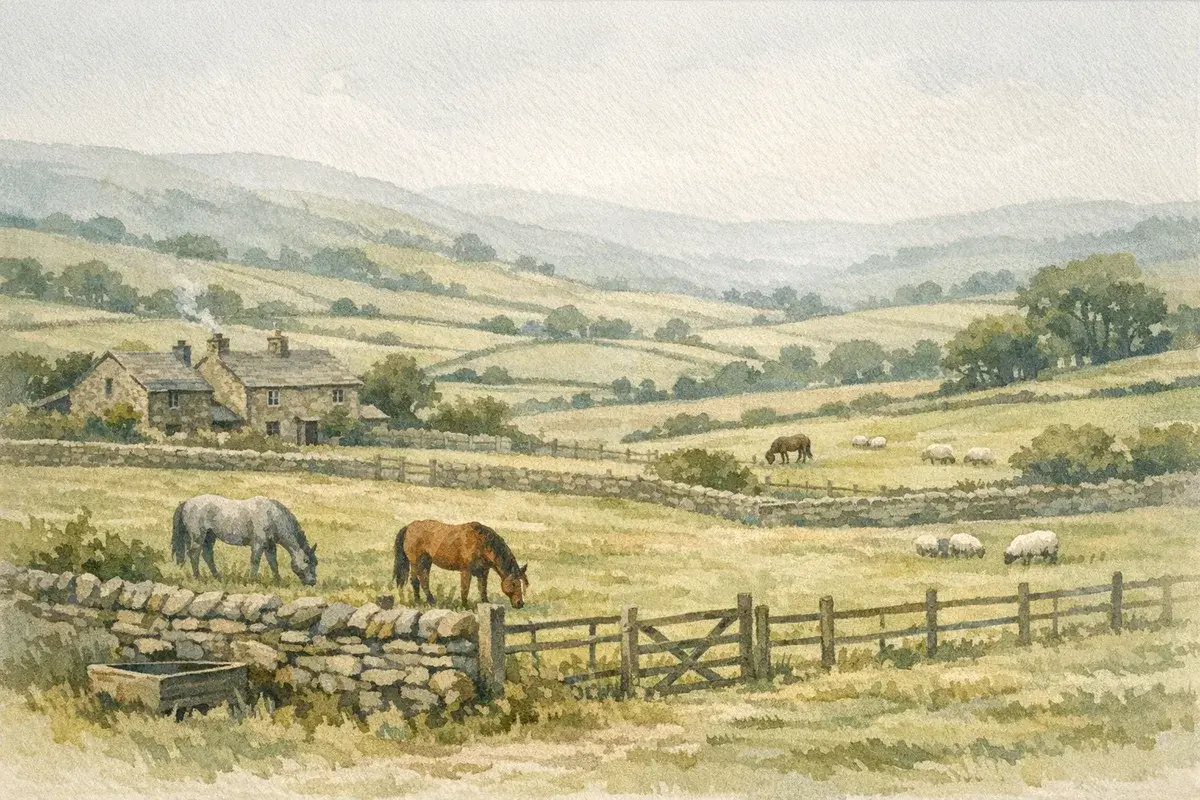
Buying land for horses in the UK is one of those decisions that feels simple on paper, "a few acres, decent fencing, maybe a stable", until you meet the real-world tripwires: planning rules that treat equestrian use differently to agriculture, access tracks that aren't legally yours, winter-wet soils that turn to knee‑deep poaching, and neighbours who suddenly care a lot about where your muck heap sits.
If you're aiming for a purchase that works day-to-day (and still stacks up when you come to refinance, expand, or sell), you need a brief, a compliance plan, and a due diligence process that's as rigorous as any agricultural acquisition. This checklist is written for UK buyers who want to get it right first time, without nasty surprises after completion.
Start With The Right Land Brief: Use, Budget, And Long-Term Plan
Most problems with buying land for horses UK buyers face don't start with the soil or the solicitor, they start with a fuzzy brief. If you're clear on use, budget, and the five-to-ten-year plan, you'll filter out 70% of the "looks perfect online" plots before you've wasted a viewing.
Personal Horses Vs Commercial Livery: Why The Difference Matters
Be honest with yourself about what you're building.
- Private use (your own horses) usually means fewer moving parts: lower traffic, less noise, fewer staff/clients, and often less planning complexity.
- Commercial use (DIY livery, full livery, training, riding lessons, breaking, events) brings a different risk profile: higher vehicle movements, more hardstanding/parking, lighting expectations, staff welfare needs, and a greater chance that planners (and neighbours) treat it as a business premises rather than "a bit of grazing".
Even if you start private, ask: will you be tempted to offset costs by taking liveries? If yes, plan for it now, because retrofitting compliance is always pricier.
Hidden Running Costs Beyond The Purchase Price
Land can be "cheap" and still be expensive to own.
Common ongoing costs buyers underestimate:
- Fencing and repairs (especially if boundaries are hedges plus tired stock netting).
- Water (new connection, metered supply, leak risk, winter resilience).
- Access maintenance (stone, grading, drainage on tracks, particularly if shared).
- Weed control (ragwort is the obvious one, but not the only one).
- Insurance (public liability is non-negotiable if anyone else rides/handles horses on site).
- Waste management (muck storage, removal, and controlling runoff).
A useful discipline: cost the holding like a small rural business even if it's "just for you". If you're also looking at mixed-use rural opportunities, it's worth reading AgLand's guide to buying a small rural plot with the right checks in place so you're thinking beyond the headline acreage.
Location And Access: What Matters More Than Postcode
Postcode prestige is nice. But for horse land, function beats romance.
Prioritise:
- Safe, legal access for horseboxes and deliveries (hay, bedding). Tight village corners and weight-restricted bridges become daily stress.
- Proximity to year-round riding (bridleways, quiet lanes, off-road links).
- Services and support (farrier, vet, feed merchant).
- Neighbour context: are you bordered by gardens, poultry units, arable sprayers, or a busy road?
And think about time. A "cheap" plot 55 minutes away has a habit of becoming a neglected plot once winter arrives and life gets busy.
Planning, Change Of Use, And What You Can Actually Build
Planning is where buyers get caught out, particularly when a listing says "ideal for equestrian" but the lawful use, existing consents, and local policy don't line up with your plans.
Equestrian Use Vs Agriculture: When You Need Planning Permission
In UK planning terms, grazing horses isn't automatically "agriculture".
- Land used for grazing can sometimes sit close to agricultural use.
- Land used for keeping horses with associated activity (schools, jumps, exercising, riders coming and going, storage of horse-related kit) is typically treated as equestrian/recreation.
The practical takeaway: don't assume you can buy agricultural land and operate a yard as-of-right. Many projects need either:
- Change of use (full planning application), or
- A careful approach where grazing remains the primary use and built development is justified properly.
If your goal includes buildings or an established equestrian use, it's sensible to study what "clean" looks like in practice, AgLand's piece on equestrian land where permission is already in place helps you spot the difference between genuine consent and vague marketing.
Stables, Menage, And Hardstanding: Typical Permission Triggers
Most buyers think in terms of stables. Planners often think in terms of engineering works and intensification.
Typical triggers for needing permission include:
- Stables/tack rooms/feed stores (new buildings, change of use, design and siting issues).
- Menage/arena (excavation, drainage, surfacing, lighting, often the biggest "planning footprint").
- Hardstanding and access alterations (visibility splays, new entrances, gates set back from the highway).
- Car/lorry parking areas and turning circles.
Also watch for "temporary" structures that become permanent by habit. Even if a field shelter looks lightweight, the planning position can change based on permanence, location, and impact.
Permitted Development Limits And Why Prior Approval Still Applies
Permitted development (PD) is often misunderstood in rural property.
Two grounded points to keep you safe:
- PD rights are not universal. They can be restricted by prior consents, Article 4 Directions, protected landscapes, or conditions.
- Even where PD exists, prior notification/prior approval can still be required, and siting matters.
If you're buying a holding that's still firmly "agricultural", it's worth understanding the proper pathway for rural build-outs before you bank on it, AgLand's step-by-step agricultural land buying guide is a solid baseline for how professionals approach planning risk and due diligence.
Legal Checks Before You Offer: Title, Rights, And Restrictions
With horse land, legal issues aren't abstract. They show up as: "Can I get the horsebox in?", "Can I put a gate here?", "Why is someone walking through my turnout paddock?", and "Why is the seller's cousin claiming the track isn't included?"
Access Rights, Ransoms Strips, And Shared Tracks
Access is everything, especially if you're moving horses.
Your solicitor (ideally with rural experience) should confirm:
- The title includes the access track (not just a right over it).
- If it's a right of way, that it's correctly granted, wide enough for your needs, and not time-limited or personal.
- Whether there's a ransom strip (a sliver of land retained by a third party that controls access improvements or even access itself).
- Who pays for maintenance if the track is shared, and what happens when someone refuses.
If you've ever tried to reverse a trailer down a narrow shared lane while a neighbour insists you're "not allowed", you'll know why this matters.
Restrictive Covenants, Overage, And Equestrian Clauses
Rural titles often come with historic strings.
Look for:
- Restrictive covenants limiting buildings, business use, or even the number/type of animals.
- Overage/clawback: if you secure planning permission later, part of the uplift may be payable to a previous owner.
- Equestrian restrictions: sometimes imposed to stop "commercialisation" or protect neighbouring amenity.
Don't assume these are deal-breakers, but do price the risk. Negotiating with a beneficiary of covenant is a different world to negotiating with a seller.
Easements, Wayleaves, And Utilities Crossing The Land
Horses and utilities don't always mix well.
Check for:
- Overhead power lines (safety, maintenance access, limitations on building beneath).
- Pipes and private water supplies crossing the land.
- Telecoms equipment or rights for providers to enter.
From a management point of view, you want to know: where can you safely fence, dig, plant, and site shelters, without someone having a legal right to turn up with a digger in the middle of your paddock.
Land Quality For Horses: Drainage, Soils, And Safe Grazing
A pretty field in July can be a wrecking ball in January. For horse land, soil and water are not "nice-to-haves", they dictate welfare, vet bills, and whether you'll spend winter moving hay across mud.
Soil Type, Poaching Risk, And All-Weather Turnout Options
Start with what you can observe and what you can verify.
- Clay-heavy soils tend to hold water and poach under hooves. Manageable, but you'll need a turnout strategy.
- Light, free-draining soils can be kinder in winter but may need careful pasture management in dry spells.
- Slope matters: a gentle fall can help drainage: steep land can increase runoff and erosion.
In practical terms, ask yourself: where will your horses go when the main grazing needs resting? That might mean:
- a sacrifice paddock
- all-weather turnout
- or a surfaced area that's designed properly (not just tipped hardcore that becomes a hazard)
If you're trying to size land sensibly, use a proven rule-of-thumb but sanity-check it against your management and soil. AgLand's guide on working out how many acres you realistically need is a helpful starting point, just remember the real limiter is often winter ground conditions, not summer grass.
Toxic Plants, Ragwort Control, And Biosecurity Basics
Before you buy, walk the land like you're responsible for it tomorrow.
Look for:
- Ragwort (especially near boundaries and gateways). It's a welfare risk and a reputational headache.
- Poisonous plants in hedges and margins (yew is the classic danger near gardens: also watch clippings thrown over fences).
- Contamination and fly tipping in corners.
Biosecurity is part of this too: neighbouring livestock, shared watercourses, and public access all change your disease and parasite management plan.
Water Supply: Troughs, Boreholes, Metering, And Winter Reliability
Water is the unglamorous deal-breaker.
Confirm:
- Is there a mains connection on site? If not, what's the realistic cost and route to bring one in?
- If there's a private supply (borehole/spring), is it reliable year-round and what are the maintenance responsibilities?
- Where do troughs sit and will pipes freeze?
- If you're expanding, does the supply scale with more stables/uses?
Also consider water quality and how you'll manage overflow so you're not creating mud pits or runoff issues.
Welfare, Infrastructure, And Neighbours: Make The Site Work Day-To-Day
A horse property that "works" is one where your daily routine is safe, efficient, and unlikely to trigger conflict. You're not just buying grass, you're buying a system.
Fencing, Boundaries, And Who Actually Maintains Them
Never assume boundaries are clear just because there's a hedge.
Check:
- What fencing is present (post-and-rail, stock netting, electric) and what needs replacing.
- Whether boundaries match the title plan, rural boundaries can drift over decades.
- Who is responsible for maintaining each boundary (sometimes shown by "T" marks on title documents, but not always).
If there's public access (footpaths/bridleways), boundary quality becomes even more important, both for safety and for keeping relationships calm.
Shelter, Lighting, And Yard Layout For Safe Handling
Horse land is often bought with dreams of "we'll sort the yard later". But layout drives risk.
A practical layout prioritises:
- Clear lines of sight and safe handling areas.
- Vehicle separation from horses (deliveries, parking, turning).
- Dry standing areas near gates and feeding points.
- Lighting that's safe and neighbour-aware.
And then there's storage: hay, bedding, feed, medicines, tack. If you don't have planned, vermin-resistant space, you'll create it in a hurry, usually in the worst possible place.
Bridleways, Road Safety, And Local Riding Access
You can own perfect land and still have miserable riding if access is poor.
At viewing stage:
- Check the bridleway network and how you reach it. Are you forced onto fast A-roads?
- Look for safe crossings and visibility.
- Consider seasonality: some routes become impassable in winter.
If hacking is central to your horse-keeping, treat local riding access like you'd treat school catchment for a family house. It affects daily quality of life, and resale appeal.
Environmental And Statutory Constraints That Catch Buyers Out
Some constraints are visible (floodplain maps, woodland). Others are buried in designations, policy, or enforcement history. Either way, they can limit what you can build, and how you can manage the land.
Flood Risk, Surface Water, And Drainage Consents
Flood risk isn't just "river on the map". For horse land, surface water flooding and winter saturation can be just as disruptive.
Do your checks:
- Look for water lines on fences, debris, silt deposits, signs the land holds water.
- Ask about field drains: where they run, whether they outfall to a ditch, and who maintains that ditch.
- If you're altering drainage, culverting, or working near watercourses, you may need consents and specialist advice.
Surface water problems also come back to neighbour relations fast: runoff from arenas, tracks, and yards can trigger complaints if it ends up in someone else's garden or on the highway.
Protected Sites And Species: SSSI, SAC, BNG, And Tree Controls
Designations can be manageable, but you need to know what you're buying.
Potential constraints include:
- SSSI/SAC/SPA proximity (higher scrutiny and possible restrictions).
- Tree Preservation Orders (TPOs) and conservation areas affecting works.
- Planning policy expectations around biodiversity net gain (BNG) for applicable development.
The key is to identify early whether your "phase two" plan (arena, extra stables, improved access) is realistic, or will turn into a long, expensive application process.
Manure Storage, Runoff, And Nuisance Complaints
Muck management is where "country living" myths go to die.
Think through:
- Where a muck heap can sit without contaminating drains/watercourses.
- How often it'll be removed (and whether access suits a lorry year-round).
- Flies, odour, and neighbour proximity.
You don't need to be paranoid, but you do need a plan. Many disputes start with something small that becomes daily, like a heap placed one metre too close to a boundary.
How To Buy Well: Valuation, Due Diligence, And Deal Structure
Buying land for horses UK buyers often focus on "Can I afford it?" The sharper question is: Can I afford it once it's usable and compliant? That's where valuation and deal structure matter.
Survey And Professional Team: Land Agent, Solicitor, And Planning Advice
This is not the moment for the cheapest conveyancer who mostly does flats.
A sensible team might include:
- A rural land agent (values, negotiation, local comparables, practical red flags).
- A solicitor experienced in rural/equestrian transactions (title complexity, rights, covenants, overage).
- A planning consultant if change of use or development is central to the deal.
- Sometimes an equine-focused surveyor/contractor to assess drainage, arena feasibility, and access works.
If you're new to rural acquisitions, AgLand's first-time buyer guide to agricultural land is a good primer on the process mindset, searches, title review, and how professionals sequence due diligence.
Finance, Insurance, And What Lenders Look For On Small Acreage
Small acreage can be financeable, but lenders tend to scrutinise:
- Access (legal and physical)
- Planning status (especially if there are buildings or business use)
- Construction type of any buildings
- Income profile if it's commercial
Insurance is equally practical. Public liability and property cover can hinge on the exact use (private vs commercial), site security, and whether there's public access.
Heads Of Terms, Conditions, And Timing Your Searches
If you're making an offer, treat heads of terms as your safety rails.
Consider:
- Making the offer subject to satisfactory planning position (where relevant), access verification, and key searches.
- Being clear about what's included: field shelters, jumps, stabling equipment, water systems.
- Aligning your timeline so that planning enquiries and title work happen early, before you've emotionally committed.
When the seller wants speed, you can still move quickly without cutting corners: you just prioritise the checks that prevent irreversible mistakes.
Finding Suitable Horse Land In The UK: Search Strategy And Negotiation
The right land rarely appears when you casually browse. It appears when your search is structured, and you're ready to act when the right fundamentals line up.
Using Specialist Rural Portals And Setting Practical Filters
Looking for land like this? Tell AgLand what you're after - type, acreage, budget and area - and we'll alert you the moment a matching property is advertised. Registering is free, and there's no commission on either side. Tell us what you're looking for.
Use filters that reflect horse reality:
- Access type (direct road access, shared track, width for horsebox)
- Water (mains vs private)
- Existing buildings and their lawful use
- Parcel shape (long thin plots can be awkward for rotation)
- Proximity to bridleways
On AgLand, many buyers register broad requirements first - see the wider picture on UK agricultural land - then tighten them to equestrian-specific criteria once they've learned what their budget really buys locally.
Viewing Checklist: What To Test On The Day
A viewing should feel more like an inspection than a stroll.
Take a notebook (and boots) and check:
- Gateways and tracks: standing water, pinch points, turning space.
- Boundaries: gaps, weak fencing, hazards.
- Shelter and aspect: wind exposure, natural shade.
- Water: locate stop taps, trough points, and ask to see supply evidence.
- Ground underfoot: test wet patches, compacted areas, signs of poaching.
- Neighbour context: dogs, footpaths, proximity to gardens, noise sensitivity.
If you want a deeper equestrian-specific framework, AgLand's guide to finding and assessing equestrian property is useful for building a consistent "scorecard" across viewings.
Off-Market Options And Working With Local Land Agents
Some of the best paddocks and small blocks never hit the open market in a big way.
If you're serious:
- Build relationships with local rural agents and be crystal clear on your non-negotiables.
- Be ready with proof of funds/mortgage in principle.
- Consider flexibility on timing (a seller might need months to relocate stock or split titles).
Negotiation-wise, your leverage is strongest when you can explain your offer with evidence:
- comparable values per acre for similar land
- realistic costs for fencing, access upgrades, drainage, or planning work
- a clear, credible timeline to exchange
Sellers respond well to buyers who sound prepared, because prepared buyers are less likely to collapse late in the process.
Conclusion
If you take one thing from this: buying land for horses in the UK isn't just a lifestyle purchase, it's a compliance-heavy rural acquisition with welfare consequences. Get the fundamentals right (lawful use, access, water, drainage, boundaries), and the rest becomes a manageable project. Get them wrong, and even "cheap acres" can become an expensive, stressful lesson.
Move forward with a written brief, a professional team that understands rural property, and a viewing process that tests reality, not just presentation. When the right plot comes up, you'll recognise it quickly, negotiate calmly, and complete with confidence.
Disclaimer: AgLand.co.uk is a UK agricultural land and rural property matching service, where buyers register what they are looking for and owners advertise directly to the buyers who match, and a rural resource hub. Nothing in this text is intended as legal, financial, or investment advice. You should carry out your own due diligence and seek independent guidance from appropriately qualified professionals (for example, solicitors, chartered surveyors, tax advisers, planning consultants, and insurers) before making any decisions.