
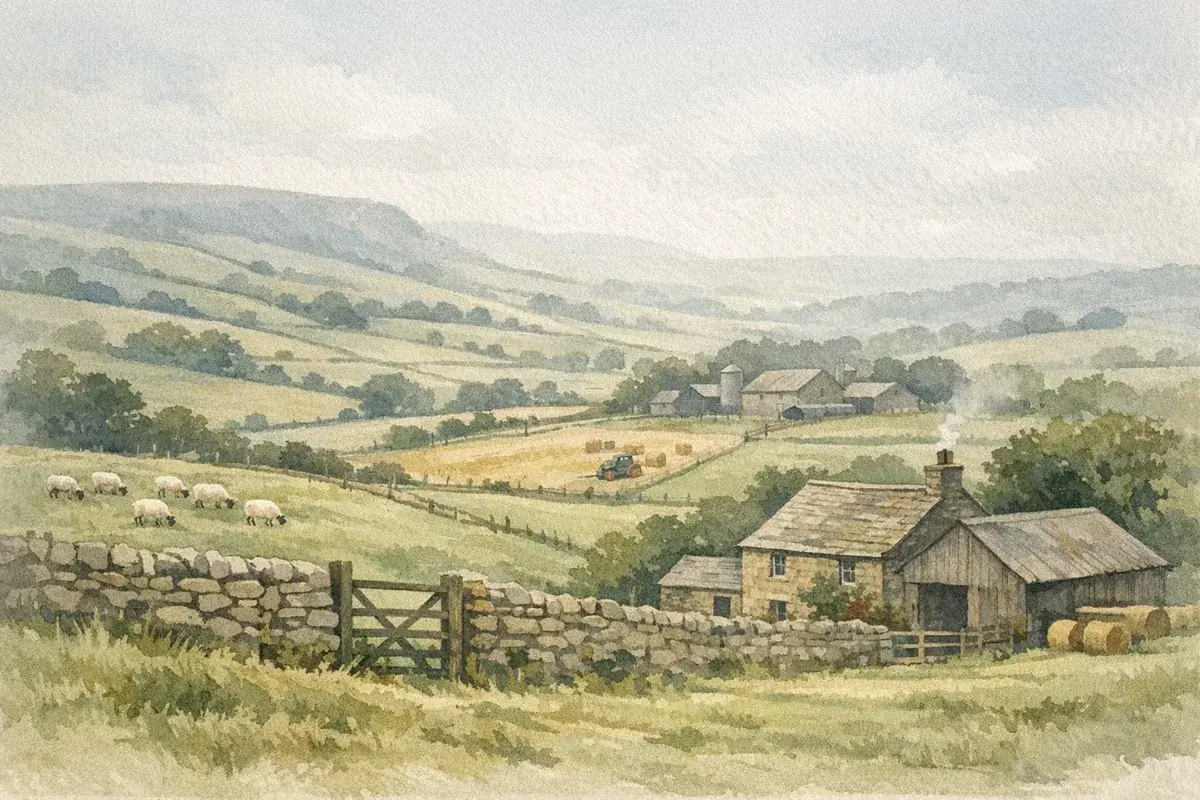
You can buy your first field in the UK and still end up feeling like you've bought a bundle of questions instead: "Can I fence it?" "Who owns that track?" "Why is the neighbour talking about a wayleave?" Agricultural land looks simple from the road, green, flat-ish, a gate, and then the detail hits.
If you're a first time buyer of agricultural land, the trick isn't just finding a parcel you like. It's matching land to your purpose, understanding what drives price, and doing the kind of due diligence that stops nasty surprises (rights of way, overage, drainage, designations, tenancy issues) from turning your "good deal" into an expensive lesson.
This guide is written for UK buyers, farmers expanding, new entrants, rural investors, equestrian buyers, and anyone stepping into the sector for the first time. We'll walk through the decisions in the order they tend to matter in real life, not just on paper.
Start With Your Goal And Buying Criteria
Before you look at a single listing, get brutally clear on what the land is for. Most first-time buyer mistakes happen here: you view something pretty, then spend months trying to force it to fit your plan.
Farming Versus Amenity Land Versus Investment
Different goals create different "must-haves":
- Working farming use (grazing, arable, horticulture): You'll care about soil, access for kit, water, biosecurity, and whether the parcel actually stacks up operationally. A bargain field 25 minutes from the yard can become a daily drain.
- Amenity / lifestyle (horses, conservation, a bit of space): You may prioritise shelter, privacy, and boundaries. But you still need to think like a land manager, weed control, public access, and whether you're buying a headache in the form of ragwort, fly-tipping, or a riverbank that erodes.
- Investment / strategic buy: You'll look hard at tenure, long-term demand, local competition, and "uplift" angles (not in a speculative way, just understanding what the market tends to pay for). Investment buyers often underestimate how much value can be lost through restrictions you can't change.
If you want a structured overview of the buying process end-to-end, it's worth reading our step-by-step breakdown on buying agricultural land in the UK once you've pinned down your objective.
Access, Water, Soil, And Shelter: What Matters Most
For first time buyers of agricultural land, four practical criteria tend to decide whether a plot is usable, or merely ownable.
- Access: Is there a legal right of access, and is it suitable in practice? A narrow lane with weak verges and tight turns can limit machinery and livestock trailers. Also check whether access depends on a third-party track that can be obstructed.
- Water: Mains supply is a luxury in some rural areas. If there's a trough and a pipe, don't assume it works. Ask where it's fed from, who pays, and whether it crosses anyone else's land. Natural watercourses can help, but come with responsibility.
- Soil and drainage: Heavy clay can be productive, but it punishes poor drainage and wet winters. Light land can burn up in summer without moisture retention. If you're not confident, take advice, soil is the asset.
- Shelter and aspect: For livestock, shelter belts and hedges can be worth real money. For horticulture, aspect and frost pockets matter. And for amenity buyers, exposure can turn your "peaceful paddock" into a wind tunnel.
A quick reality check: if the land doesn't work on a wet February day, it won't suddenly work because it looked good in June.
How Much Agricultural Land Costs (And What Really Drives Price)
You'll hear people talk about "£X per acre" as if that's the whole story. In practice, price is a bundle of factors, location, competition, what you can do with it, and what problems you're inheriting.
If you want current context before you start offering, use our tracker on UK agricultural land prices and what's shaping them into 2026. It's not about predicting the market: it's about knowing what you're comparing.
Location, Parcel Size, And Competition
Location isn't just county prestige. It's:
- Proximity to farming hubs (more trade buyers)
- Local lifestyle demand (amenity competition)
- Road access to markets and yards
- Planning context (some areas are more constrained than others)
Parcel size matters too. Smaller blocks often achieve a higher £/acre because more buyers can fund them and they fit "add-on" demand. Larger blocks may price more keenly per acre but require deeper pockets and sharper due diligence.
Tenure, Vacant Possession, And Uplift Potential
Two plots can look identical and trade at very different prices because of tenure and control.
- Vacant possession typically commands a premium. You're buying immediate use and flexibility.
- Land subject to a tenancy or licence can still be a good buy, but you're buying an income stream and a set of legal constraints. Understand exactly what agreement is in place and how it ends.
- Uplift potential isn't code for "I'll get planning." It can be as simple as: is there hope value because of location, access, services, or adjacency to settlement boundaries? Or is it heavily constrained by designations or covenants?
As a first-time buyer, you don't need to "game" the market. But you do need to understand what you're paying for: soil and access, yes, but also rights, restrictions, and control.
Finding The Right Land: Where To Look And How To Compare Options
Most buyers lose time by searching too broadly ("any land, anywhere") or too narrowly ("only within 2 miles, under £X, with a stream"). You want a pipeline, not a lottery ticket.
If you're still building your search routine, start with our guide on where to find agricultural land for sale in the UK and then systemise it: alerts, agent calls, and regular review of what's actually selling.
Using Specialist Portals, Agent Networks, And Off-Market Leads
For agricultural land, the best results usually come from combining three channels:
- Specialist portal search: Filters that make sense for rural property, acreage bands, tenure notes, and genuinely agricultural listings, save you from trawling irrelevant stock. On AgLand, you register your requirements once - type, acreage, budget and area - and get alerted when a matching property is advertised, which puts you in front of owners and agents early.
- Agent networks: Tell local land agents exactly what you want (and what you'll compromise on). Be specific: "10–30 acres grazing with water within X miles, budget Y, must have hard access." Vague briefs get vague results.
- Off-market leads: These often come from relationships, neighbours, contractors, auctioneers, farming advisers. Off-market isn't automatically cheaper: it's often just quieter and faster.
Viewing Checklist: What To Inspect On The Ground
A viewing isn't a stroll: it's an inspection. Take photos, notes, and don't be shy about walking boundaries.
- Boundaries: Are fences stock-proof? Are hedges maintained? Any gaps that suggest disputed lines?
- Wet spots and drains: Look for rushes, standing water, outfalls, and collapsed ditches.
- Access points: Can you get a tractor and trailer in without taking out a gatepost? Is the gate yours?
- Neighbouring uses: Poultry units, dog kennels, shooting, public footpaths, none are deal-breakers, but they change how you'll use and enjoy the land.
- Signs of third-party use: Tracks, tyre marks, fly-tipping, informal parking. If the public treats it like common land, you'll need to know why.
Tip: visit once after heavy rain. It tells you more than any sunny-day tour.
Due Diligence: Legal, Practical, And Environmental Checks
This is where you protect yourself. The land can be perfect and still come with a legal "booby trap" that affects value, financeability, or how you operate.
Title, Boundaries, Rights Of Way, Easements, And Wayleaves
Your solicitor will check title, but you should still understand what you're looking at, and HM Land Registry's land registration practice guides explain how rural titles are recorded.
- Title plan vs reality: Old plans can be imprecise. A fence line that's moved "a bit" over 30 years can become a real issue when you buy.
- Public rights of way: A footpath across the middle affects privacy, fencing, livestock management, and liability considerations.
- Private rights and easements: Neighbours may have rights to pass, take water, or maintain drains.
- Wayleaves: Utilities (electric lines, water pipes, telecoms) can restrict building and tree planting, and may come with ongoing access rights for maintenance.
Because rural conveyancing has its own quirks, it's worth reading what to expect from an agricultural land solicitor, and why "any conveyancer" isn't always the right fit for land with rights, tenants, and constraints.
Covenants, Overages, Mineral Rights, And Sporting Rights
These are the clauses that surprise first-time buyers most.
- Restrictive covenants: Might limit buildings, business use, or even livestock types in extreme cases.
- Overage / clawback: If you trigger certain events (often planning consent or change of use), you may owe the seller a percentage for years after completion. Make sure you understand what triggers it and how it's calculated.
- Mineral rights: Not always included. In some areas, stone, sand and gravel, or other minerals can be valuable, or can attract interest you don't want.
- Sporting rights: Shooting/fishing rights may be retained or leased separately, affecting how you use the land and who can enter.
Designations, Stewardship, And Environmental Constraints
Environmental context cuts both ways: it can enhance long-term value, or it can narrow your options.
- Designations and constraints: Land in or near protected landscapes and habitats may face tighter controls (for example, affecting tracks, buildings, hedge removal, or drainage works).
- Stewardship agreements: If land is in an existing scheme, know what obligations transfer, what payments exist, and what happens at change of ownership - the Rural Payments Agency administers scheme transfers in England.
- Practical compliance: Think about invasive species, watercourse responsibilities, and protected features like ancient hedgerows.
If you're buying in England specifically, our guide to agricultural land in England goes deeper on the common ownership and management issues buyers run into region-by-region.
A good rule: if something seems "too good for the price", assume there's a constraint you haven't uncovered yet, and go looking for it.
Planning And Permitted Development: What You Can (And Can’t) Do
Many first time buyers of agricultural land quietly assume they'll be able to add a building, put down hardcore, or create a track because "it's agricultural." The UK planning system doesn't work like that.
Change Of Use, Buildings, Tracks, And Hardstanding
Agricultural permitted development rights can be useful, but they're conditional and not universal. Your ability to erect buildings or make engineering works often depends on factors such as:
- the size of the agricultural unit
- the type and scale of development
- whether the land is in a more constrained planning context
- whether you must go through prior notification / prior approval
Even when something is technically permitted, access, visibility splays, flood risk, and ecology can still stop it (or delay it) in practice.
Tracks and hardstanding are classic examples: you may think of them as basic infrastructure, but planners can view them as development with visual and environmental impacts.
Agricultural Ties, Enforcement Risk, And Evidence Of Need
If there's an existing dwelling with an agricultural occupancy condition (tie) nearby, or you're buying with the idea of linking land to a dwelling, treat it as specialist territory.
Also, enforcement is real. Councils can (and do) investigate complaints about unauthorised works, imported materials, new accesses, and changes of use. The safest mindset is:
- document your agricultural rationale
- keep correspondence and plans organised
- get professional input early when something is borderline
Permitted development is a privilege, not an automatic right. If your business plan depends on "I'll just build X," pause and validate it properly before you exchange contracts.
Money And Taxes: Budgeting Beyond The Purchase Price
A clean budget for agricultural land includes the obvious (price) and the annoyingly non-obvious (fees, infrastructure, compliance, and holding costs). If you're financing, lenders will look at the whole picture too.
Funding Routes: Cash, Bank Lending, And Specialist Rural Finance
Funding agricultural land is not the same as getting a residential mortgage.
- Cash: Fast and flexible, but you still need to price in improvement costs (fencing, water, access).
- Bank lending: Mainstream banks do lend on land, but appetite varies. Expect detailed questions about income, farming experience, and the land's suitability.
- Specialist rural finance: Can be helpful for complex cases, mixed use, titles with quirks, or where the business rationale needs clearer presentation.
For a grounded view of what lenders typically want, see our guide to how agricultural mortgages work in the UK.
Deposits are a frequent sticking point for first-time buyers. The range can be wider than people expect depending on tenure, location, and lender appetite, our explainer on how much deposit you might need for agricultural land will help you sanity-check your numbers before you start negotiating.
SDLT And Ongoing Costs (Fencing, Drainage, Insurance, Compliance)
Stamp Duty Land Tax (SDLT) treatment can be nuanced because it depends on what you're buying (bare land, mixed use, buildings, rights). Don't guess, budget for advice.
Then factor in the costs that hit quickly after completion:
- Fencing and gates (materials and labour aren't getting cheaper)
- Water provision (mains connection, troughs, pumps, maintenance)
- Drainage and ditching (especially if the land has been neglected)
- Insurance (public liability is often sensible if there are rights of way)
- Compliance and maintenance (hedges, weeds, boundaries, signage where appropriate)
Tax Reliefs And Pitfalls To Discuss Early With An Advisor
Land can come with tax advantages in the right circumstances, but it's not a box-ticking exercise.
Topics to raise early with a qualified adviser include:
- whether any reliefs may apply based on use, ownership structure, and timescales
- the impact of letting arrangements and whether they change how HMRC views the activity
- inheritance planning considerations for land held long-term
The pitfall to avoid is building your purchase case around a relief you haven't verified. Tax outcomes depend heavily on individual circumstances, documentation, and how the land is actually used.
Making An Offer, Agreeing Heads Of Terms, And Completing Safely
Once you've found the right parcel, the goal is simple: secure it on the right terms, without sleepwalking into risk.
What To Put In Writing: Conditions, Timescales, And What's Included
Agricultural transactions often come with "extras" that aren't obvious unless you pin them down.
In your offer (and later Heads of Terms), be clear on:
- what's included: gates, fencing materials, water troughs, handling pens, stored items, manure heaps (yes, really)
- vacant possession and the position on any occupiers
- overage (if proposed): triggers, duration, percentage, deductions, and security
- timescales: realistic dates for searches, enquiries, and funding
- conditions: for example, subject to finance, subject to satisfactory survey, or subject to clarifying access rights
A clean paper trail reduces misunderstandings, and gives your professional team something solid to enforce.
Who You Need On Your Team (Land Agent, Solicitor, Surveyor)
As a first time buyer of agricultural land, you don't need an army, but you do need the right specialists.
- Land agent: Helps you assess value, strategy, and local market behaviour (including whether a guide price is realistic).
- Solicitor: A rural-savvy solicitor will interrogate title, rights, covenants, overage, and completion mechanics properly.
- Surveyor / technical support: Depending on the site, you may need drainage advice, access assessment, or a more formal land survey.
If you're unsure what level of inspection is sensible, our resource on agricultural land survey requirements sets out what's commonly checked and why it matters.
The most expensive mistake isn't paying for good advice. It's skipping it, and paying later in disputes, enforcement, or unusable land.
Conclusion
Buying agricultural land for the first time in the UK is one of those moves that rewards calm, structured thinking. Get clear on your purpose, treat access and rights as seriously as soil and shelter, and assume the paperwork hides at least one detail you'll need to negotiate.
If you do it properly, you're not just buying acres, you're buying control, resilience, and options for the next decade. And that's exactly why it's worth taking the process seriously.
Disclaimer: AgLand.co.uk is a UK agricultural land and rural property matching service, where buyers register what they are looking for and owners advertise directly to the buyers who match, and a rural resource hub. Nothing in this text is intended as legal, financial, or investment advice. You should do your own due diligence and seek guidance from appropriately qualified professionals (for example, solicitors, surveyors, tax advisers, planning consultants, and regulated finance providers) before making decisions.