
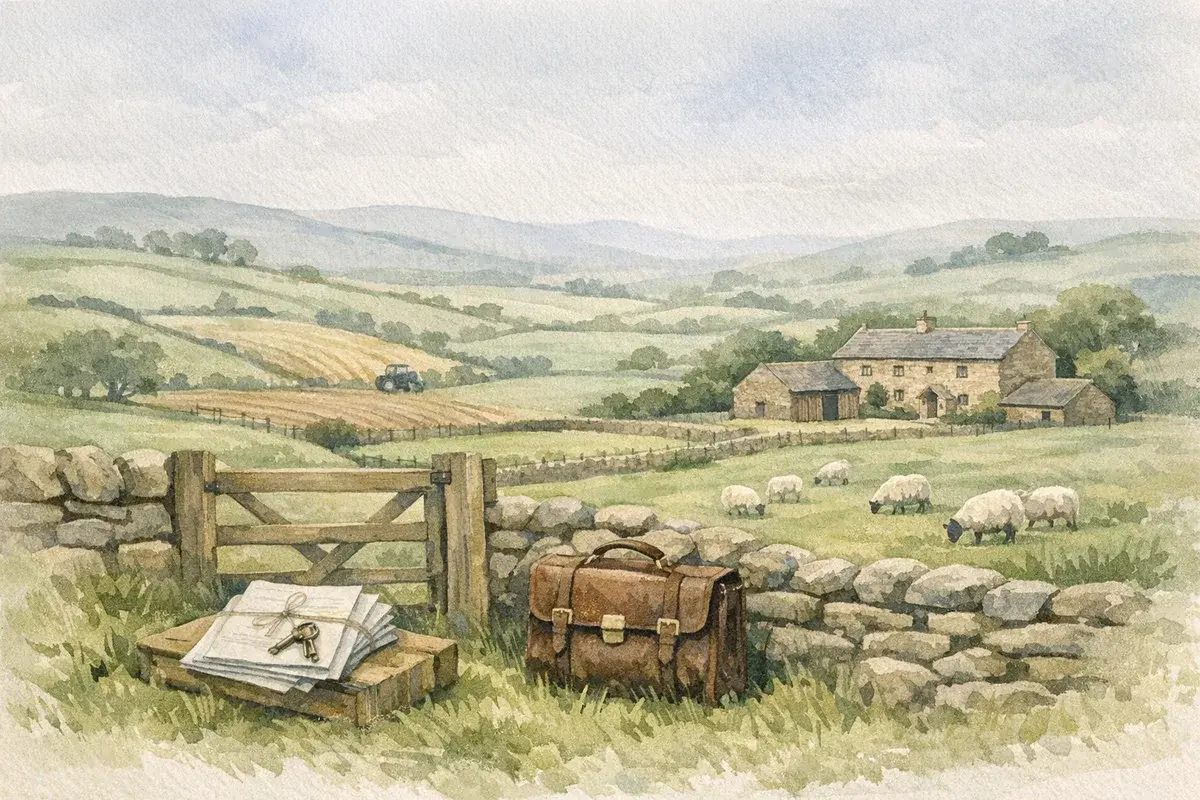
You can buy a flat in town and (mostly) know what you're getting. Rural land doesn't work like that. A gate you assumed was "yours" might sit half a metre over the title line. A track you've driven for years might be a recorded right of way. The seller might be farming under a tenancy you didn't spot, or there might be a wayleave running straight through the best corner of the field.
That's why an agricultural land solicitor isn't just "a conveyancer who does countryside stuff". They're the person who translates a messy mix of title, access, tenancies, planning constraints, environmental obligations and tax into a transaction you can actually live with after completion.
Below, you'll get a practical UK-only guide to when you need a specialist, what they'll look for, and how to choose one who won't miss the things that cost real money later.
When You Need An Agricultural Land Solicitor (And When You Might Not)
Not every rural purchase needs the legal equivalent of a full farm team. But plenty do, and the stakes rise quickly when you add acreage, buildings, access routes, tenants, or development potential.
Buying Or Selling Farmland, Smallholdings, And Rural Property
If you're buying or selling agricultural land, a specialist solicitor earns their fee by spotting the issues that aren't obvious from a viewing.
You'll usually want an agricultural land solicitor when:
- Access isn't straightforward (shared drives, private tracks, "we've always used it" arrangements).
- The land is unregistered, part-registered, or stitched together from multiple titles.
- There are buildings involved (barns with "agricultural use only" restrictions, former farmhouses, or yards with mixed use).
- The plan matters (odd-shaped parcels, ransom strips, or boundaries that don't match what's on the ground).
If you're at the early stage of looking, it's worth understanding the buying process end-to-end, especially the points where legal due diligence and practical due diligence overlap. Our step-by-step guide on buying farmland in the UK walks you through what tends to trip people up.
When you might not need a specialist? If you're buying a very standard rural dwelling on an estate, with clean access and no land, a competent residential conveyancer can be fine. But the moment you add even "a few acres", you're back into rural complexity.
Farm Business Tenancies, Grazing Licences, And Lettings
Tenancies and licences are where otherwise "simple" land deals get complicated.
A specialist agricultural land solicitor helps you:
- Identify what agreement is actually in place (Farm Business Tenancy, Agricultural Holdings Act tenancy, grazing licence, informal arrangement).
- Understand vacant possession, what it means in practice, and what evidence you'll need.
- Spot security of tenure risk (particularly where paperwork is missing or the arrangement has drifted over time).
If you're buying with a tenant in situ, you're not just buying land, you're buying a relationship, a set of statutory rights, and sometimes a timetable you can't easily change.
Options, Overage, Promotion Agreements, And Development Value
If there's even a hint of development value, now or later, this is firmly specialist territory.
An agricultural land solicitor will typically support you with:
- Option agreements (developer can buy later at an agreed price/mechanism).
- Promotion agreements (promoter seeks planning, sells on open market, takes a fee).
- Overage/clawback (seller gets a share of uplift if you secure planning or sell at a higher value).
These documents are long, technical, and full of definitions that change outcomes by six figures. The practical reality? What matters is the trigger events, the valuation mechanism, and whether the obligations follow the land if you sell on.
If you're selling, it can help to understand where legal prep and marketing prep meet, title, access proofs, tenancy paperwork, and pack readiness. Our guide to selling agricultural land in the UK sets out a sensible order of operations so you don't end up firefighting at the worst moment.
Common Legal Issues In Agricultural Land Transactions
Rural transactions can go quiet for weeks, then suddenly become intense, usually when a search result, a title document, or a plan mismatch pops up. Knowing the usual suspects helps you and your solicitor focus on what actually matters.
Title, Boundaries, Rights Of Way, And Easements
This is the core of agricultural conveyancing: what you're buying, where it is, and how you can use it.
A specialist agricultural land solicitor will look closely at:
- Title plan accuracy (red line, edging, and whether features on the ground match).
- Boundary responsibility (who maintains which fence/ditch/hedge, often unclear, sometimes critical).
- Rights of way (public footpaths, bridleways, BOATs, and private rights benefiting neighbours).
- Easements and reserved rights (rights to lay pipes/cables, rights to enter for maintenance, rights to take water).
If you've never had to deal with first registration, title plans, or historic deeds, it's easy to underestimate how long this can take. Our practical guide to agricultural land registration explains where delays usually come from and what "good" paperwork looks like.
Mines, Minerals, Sporting Rights, And Wayleaves
In the countryside, ownership can be layered.
Common examples your solicitor will check:
- Mines and minerals: you may not own what's beneath the surface, and sometimes third parties have reserved rights.
- Sporting rights: shooting/fishing rights can be retained, leased, or tied into long-standing arrangements.
- Wayleaves and easements for utilities: electricity lines, telecoms masts, water pipes, often with rights to enter and maintain.
These aren't always deal-breakers. But you do want to understand practical impact (access for maintenance vehicles, restrictions on planting, insurance implications) and whether payments are due, or could be renegotiated.
Agricultural Ties, Restrictive Covenants, And Occupation Issues
Occupation restrictions can affect value, lending, and your ability to use property as you intended.
A solicitor experienced in rural matters will flag:
- Agricultural occupancy conditions (ag ties) on dwellings: who can live there, and what evidence is needed to show compliance.
- Restrictive covenants limiting use (no business use, no caravan/storage, no building, no subdivision).
- Unclear occupation: informal staff accommodation, unauthorised residential use of outbuildings, or "someone's been in that cottage for years".
The point isn't to panic, it's to avoid buying an argument with the local authority, a neighbour, or your lender.
Planning, Environmental Designations, And Statutory Constraints
Planning in rural areas is rarely a simple yes/no. You've got a patchwork of permitted development rights, local plan policies, and designations that change what's possible, and how long it takes.
Permitted Development And Prior Notifications In A Rural Context
Permitted development rights (PDRs) can be genuinely useful for working farms and rural businesses, but they're conditional.
A good agricultural land solicitor will help you:
- Check what planning history exists (previous consents, enforcement notices, conditions you've inherited).
- Understand whether a proposed building/change of use needs prior approval/prior notification.
- Avoid accidental breaches that can bite later, especially when you're buying land with existing sheds, tracks, hardstandings, or conversions.
You'll also want to align legal due diligence with what your planning consultant or agent is saying. In our experience, the gaps happen when "it should be fine" isn't backed up by documents.
AONB, SSSI, Flood Risk, And Biodiversity Net Gain Touchpoints
Designations don't automatically stop rural development or change of use, but they add constraints and scrutiny.
Your solicitor may get involved (alongside planning/environmental advisers) where land is affected by:
- National Landscapes (formerly AONB): higher bar for visual impact and siting.
- SSSI/SPA/SAC: potential Natural England engagement and restrictions on operations.
- Flood zones and drainage constraints: impact on insurability and buildability.
- Biodiversity Net Gain (BNG): primarily a planning matter, but it can influence heads of terms, land take, and long-term obligations if habitat units are involved.
This is also where buyers sometimes underestimate "paper risk": even if you're not planning to build, constraints can affect future value and exit options.
Environmental Schemes And Land Management Commitments
Schemes and land management commitments can be positive (income stability, improved land condition) but they create obligations.
A specialist solicitor can help you clarify:
- Whether land is entered into Countryside Stewardship agreements or other commitments.
- How obligations transfer (or don't) on sale, and what consents are needed.
- The practical meaning of restrictions (mowing dates, stocking density limits, capital item requirements).
If you're buying as an investor or as a farm business expanding, this is where legal and operational realities meet. You don't want to complete and then realise the most productive block is committed to a management option you can't unwind quickly.
Tax And Structuring: Where A Specialist Solicitor Adds Real Value
Tax is where "close enough" becomes expensive. A specialist agricultural land solicitor won't replace your accountant or tax adviser, but they should be fluent enough to spot issues early, structure documents correctly, and pull the right professionals in before you're committed.
VAT, SDLT, And Mixed-Use Pitfalls
Rural property often sits in the grey area between residential, commercial and agricultural.
Watch-outs include:
- VAT: opted-to-tax land, VAT on buildings, and whether the transaction could qualify as a transfer of a going concern (TOGC) in the right circumstances.
- SDLT: mixed-use treatment can apply where there's more than just a house, think grazing land, barns with commercial use, or multiple dwellings. But it's fact-specific and HMRC scrutiny is real.
- Apportionments: how price is allocated between house, land, buildings and entitlements can affect tax and lending.
A practical solicitor will ask early: What are you actually buying, how will you use it, and what's the intended structure? Those answers shape the paperwork.
IHT And Succession Considerations (Including APR And BPR)
Even if you're not "doing succession planning" today, land transactions can accidentally undermine future reliefs.
In broad terms (and very dependent on circumstances), your solicitor may help you coordinate with advisers on:
- Agricultural Property Relief (APR) and Business Property Relief (BPR): whether the use/occupation and ownership structure supports relief.
- Clawback risk: actions after purchase/sale that change the character of the asset.
- Succession mechanics: how the land sits within the family's wider plan.
If you're buying land as a long-term hold, it's worth reading our guide to agricultural land investment in the UK alongside your legal advice, because "investment" here is rarely just about yield, it's about risk, liquidity, and future optionality.
Buying Through A Company, Partnership, Or Trust
How you buy can matter as much as what you buy.
An agricultural land solicitor can support (with tax input) on:
- Company purchases: governance, funding, personal guarantees, and exit planning.
- Partnership ownership: documenting contributions, drawings, death/retirement provisions, and who owns what.
- Trusts: when they're appropriate, and how they interact with lending and future transfers.
Also, the UK isn't one single "rural law" environment. Scotland, for example, has different conveyancing processes and land law concepts. If your search crosses borders, our overview of buying land in Scotland is a helpful starting point for understanding the practical differences before you instruct anyone.
How To Choose The Right Agricultural Land Solicitor
The best agricultural land solicitor is rarely the cheapest, and they're almost never the one who says "yes, no problem" to everything. You're looking for someone who's calm, sceptical in the right places, and well-connected.
Proven Rural Track Record And The Right Professional Network
You want evidence that they regularly handle:
- Farmland and bare land acquisitions/disposals
- Farmhouses with land, yards, and mixed-use quirks
- Tenancies and licence arrangements
- Overage/options/promotion documentation
But here's the quieter test: who can they pick up the phone to?
In good rural transactions, your solicitor works in step with agents, surveyors, lenders, planning consultants and (often) tax specialists. We've seen deals saved simply because the solicitor knew the right local surveyor to sanity-check a boundary, or the right adviser to sense-check a restrictive covenant's real-world impact.
Fee Structures, Timescales, And What "Good Communication" Looks Like
Ask upfront:
- Is it fixed fee or hourly?
- What's included (and what triggers extra fees)?
- Who will do the work day-to-day, partner, associate, paralegal?
- How quickly do they usually acknowledge emails/calls?
"Good communication" isn't daily updates for the sake of it. It's:
- Early identification of the critical path (what must be resolved before exchange).
- Clear explanations of risk (what's a deal-breaker vs what's manageable).
- Practical options (indemnity insurance, title rectification, retention clauses, contractual protections).
And if you're buying at speed, particularly where multiple bidders are involved, tell them. Rural conveyancing can be quick, but only if everyone is geared for it.
Local Knowledge Vs National Coverage: What Matters Most
Local knowledge helps when it's specific: a solicitor who understands the local authority's planning habits, common estate covenants in the area, or typical access arrangements.
National coverage helps when:
- The land is in one county, the buyer is elsewhere, and you need responsiveness.
- The deal is complex (options, promotion, portfolio acquisitions) and needs depth.
A good rule: choose the solicitor who can prove they've handled your type of transaction, not just "rural property generally".
What To Prepare Before Instructing (To Save Time And Reduce Risk)
You can shave weeks off a transaction by showing up organised. It's not about having every answer, it's about having enough information to stop avoidable delays.
Documents, Plans, And Practical Information To Gather Early
Before you instruct your agricultural land solicitor (or as soon as you do), aim to gather:
- Title documents (if you have them) and any old conveyances/deeds
- A clear plan showing what you believe you're buying/selling (and what's excluded)
- Details of access: who owns the track, who maintains it, and any written agreements
- Copies of tenancy/licence agreements, if anyone else occupies the land
- Wayleave agreements and details of utilities crossing the land
- Any planning permissions, prior approvals, or enforcement correspondence
Whichever side you're on. Buyers tell AgLand what they're looking for and hear the moment something fits. Owners advertise straight to the buyers who already match, for one flat fee and no commission. Register as a buyer or check your matches.
Questions To Ask Your Agent, Surveyor, And Lender
Your solicitor can only work with what they're told, so ask the people around the deal the questions that surface hidden issues.
Ask your agent:
- Are there any rights of way across the land (public or private)?
- Is there vacant possession on completion? If not, what stays and under what agreement?
- Are there any known disputes with neighbours over boundaries/access?
Ask your surveyor (or land agent):
- Do the fences/hedges/ditches match the title plan on the ground?
- Are there signs of encroachment or "informal" use by others?
- Any physical constraints that don't show in paperwork (culverts, drainage, contamination, unstable banks)?
Ask your lender/broker:
- Are there any conditions around ag ties, tenancies, or non-standard construction?
- How will they treat mixed-use elements for valuation and security?
Red Flags That Delay Exchange Or Trigger Renegotiation
Certain issues consistently slow rural transactions or change pricing late on:
- Access not legally documented (or access depending on a neighbour's goodwill)
- Title plan mismatch with what's fenced on the ground
- Occupiers with unclear status (especially where paperwork is missing)
- Overage clauses that are vague, over-long, or too easy to trigger
- Utility apparatus with unclear rights or obligations
One more reality check: buying via auction changes the rhythm. The legal pack is what it is, and your solicitor needs to review it fast. If that's your route, read up on how agricultural land auctions work in the UK and plan your legal review well before the gavel.
Conclusion
An agricultural land solicitor is there to stop you buying problems disguised as "just countryside quirks". The right one will challenge assumptions, pull in the right experts, and document the deal so it still makes sense years later, when you're refinancing, changing use, bringing family into the business, or selling.
If you're approaching a purchase or sale, treat the legal work as part of your wider due diligence, not a box-ticking exercise. Get your paperwork together early, ask blunt questions, and choose a solicitor who's comfortable saying, "We need to dig into that." It's usually the cheapest sentence in the whole transaction.
Disclaimer: AgLand.co.uk is a UK agricultural land and rural property matching service, where buyers register what they are looking for and owners advertise directly to the buyers who match, and a rural resource hub. Nothing in this text is intended as legal, financial, or investment advice. You should carry out your own due diligence and seek independent advice from appropriately qualified professionals (such as solicitors, surveyors, accountants, tax advisers, and planning consultants) before making any decisions.