
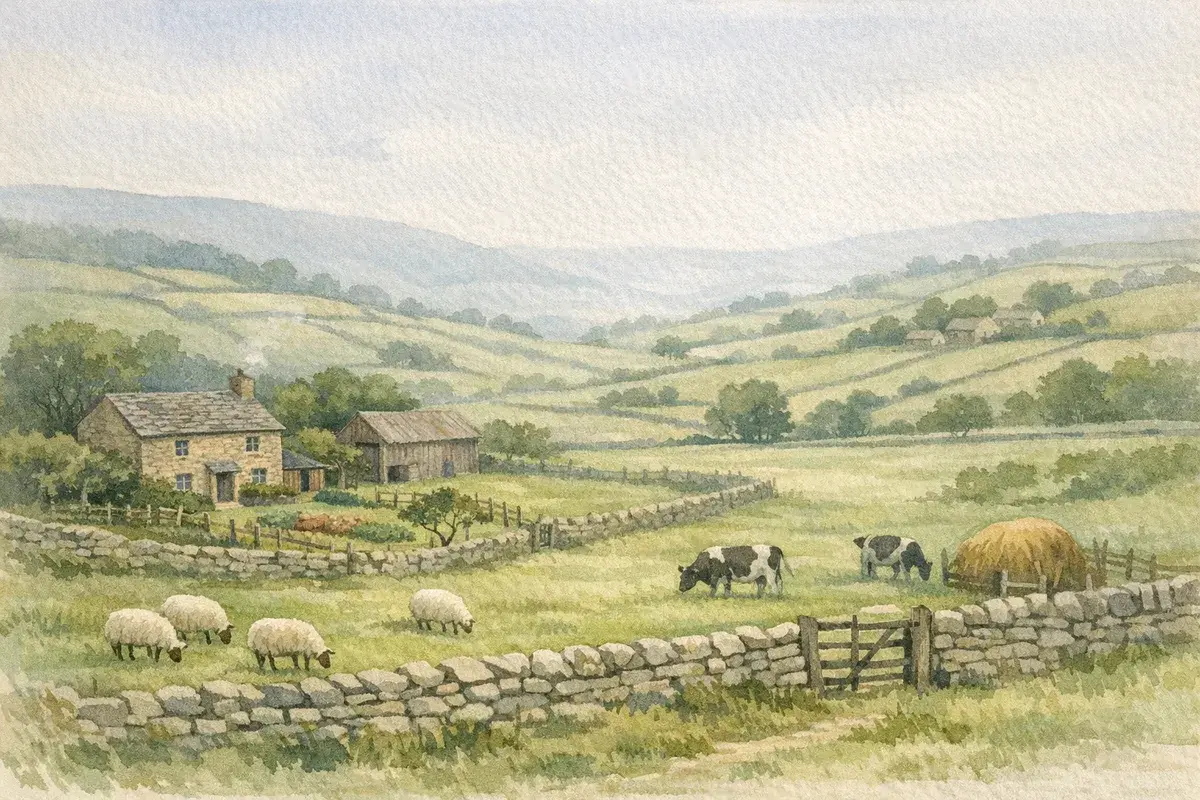
"Cheap smallholdings for sale UK" is one of those searches that's half dream, half reality check.
Because yes, genuinely good-value smallholdings still come to market in 2026. But "cheap" in rural property nearly always means you're paying in some other currency: time, uncertainty, restricted use, a longer commute, or the need to get very sharp on planning, rights, and services.
This guide is written for buyers who want the countryside lifestyle (or a serious rural business foothold) without overpaying, and without stumbling into the classic smallholding traps that turn a bargain into a budget leak. You'll learn what "cheap" really means this year, where value still hides, how to search like an insider, and how to buy with the sort of due diligence that keeps you out of trouble later.
What Counts As A “Cheap” Smallholding In 2026 (And What You Usually Give Up)
"Cheap" is relative in the UK countryside. A smallholding that feels like a steal in one county is completely normal in another.
In 2026, most of the genuinely cheap smallholdings fall into one (or more) of these buckets:
- It needs work (house, outbuildings, land drainage, fencing)
- It has a constraint (access issues, rights of way, services, designations)
- It has restricted occupation or use (agricultural ties, planning limits)
- It's not where most people want to be (distance from jobs, schools, transport)
If you're happy trading one of those things for price, you can still do well.
Typical Price Drivers: Acres, House Condition, Location, And Permissions
A smallholding price is usually a bundle of several values layered together:
- Location and local demand. Within England, the South West, South East and commuter belts tend to carry a premium, even when the acreage is modest. Areas with strong equestrian demand can push up values too, because usable grazing and good access are scarce.
- The house (or lack of one). A habitable farmhouse can dominate the price, sometimes more than the land itself. A holding with land and a tired house may look "cheap" until you price the renovation.
- Acreage and land type. Five acres of level, well-drained pasture with decent access can be more valuable (and more usable) than ten acres split across awkward parcels.
- Permissions and potential. Consent for conversions, additional dwellings, or established commercial uses can move a holding into a different price bracket. But beware paying for "potential" that isn't actually deliverable.
If your goal is to get onto the ladder, it's worth reading a broader smallholding buying strategy, especially if you're comparing house-and-land packages with land-only options. The deeper guide on finding a smallholding that fits your plan is useful here because it forces you to define the non-negotiables before you chase "cheap".
Hidden Costs That Can Make A Bargain Expensive
A low asking price doesn't always mean low total cost. In rural deals, the hidden spend is often where budgets get broken.
Common culprits:
- Services and upgrades. Septic tanks that don't meet current rules, private water supplies needing treatment, or an oil tank at end-of-life can land as immediate costs.
- Boundary and access fixes. Fencing, gates, track repairs, and legal work around access can be surprisingly expensive.
- Outbuildings and compliance. Older barns may have asbestos, unsafe electrics, or structural issues. "It's only a shed" becomes "it needs a new roof, concrete, and drainage".
- Insurance and risk. Flood exposure, subsidence history, or trees too close to structures can change your annual running costs, and your lender's appetite.
- Time cost. If you're buying cheap to renovate, your time becomes a line item. DIY is great until it delays moving in, livestock housing, or income.
Cheap smallholdings work best when you're realistic about what you're giving up, and you've priced the fix properly, not optimistically.
Where Cheap Smallholdings Still Exist: Regions, Rural Pockets, And Property Types
You can still find cheap smallholdings for sale in the UK, but they're unevenly distributed, and the "best" area depends on what you're willing to compromise on.
Think in terms of rural pockets rather than sweeping stereotypes. Even in pricier regions, you'll find value where access is awkward, the house is dated, or local demand is thinner.
Regional Patterns: North Vs South, Wales, Scotland, And Border Areas
Broadly (and with plenty of exceptions):
- North of England: More opportunities where wages and demand are lower, especially in more remote areas. You often get more acreage for your money, but you may trade that for longer travel times and fewer local services.
- Wales: Value can be strong, particularly for land-based opportunities, but you'll want to be extra careful on access, services, and environmental constraints, some of the most "attractive" cheap listings are attractive because they're not straightforward.
- Scotland: Different legal process and local market dynamics. You can see good value in more rural areas, but always budget for specialist local advice (and be clear on your intended use and any rural restrictions).
- Border areas: The edges between counties and nations can throw up interesting pricing, often because buyer demand is less concentrated than in the big lifestyle hotspots.
One practical tip: don't search only by county name. Search by travel-time to your must-haves (school, livestock markets, key clients, rail station, reliable veterinary cover) and then expand outward.
Low-Cost Property Types: Bare Land, Derelict Holdings, Tied Homes, And Auctions
If you're chasing "cheap", the property type matters as much as the postcode.
1) Bare land (no dwelling).
Often the lowest entry price. But land-only rarely gives you the lifestyle picture you're imagining unless you already have somewhere to live nearby. You'll also need to be realistic about what you can do on the land without a house on site. If you're comparing land options, the guide to assessing agricultural land purchases properly is a solid grounding, especially on access, water, and constraints.
2) Derelict or "project" holdings.
These are classic "cheap smallholdings" on paper. The risk is that the renovation isn't cosmetic, it's structural, damp-related, or tied to outdated services. Always cost it like a professional would, not like a weekend enthusiast.
3) Tied homes (agricultural occupancy conditions).
A home with an agricultural tie can be discounted because it restricts who can live there. Sometimes that's a deal-maker if you genuinely qualify and want to run an agricultural business. Sometimes it's a deal-breaker if your plan is more lifestyle than agriculture. Either way, it's legal territory, get proper advice.
4) Auctions and "guide price" listings.
Auctions can offer value, but they punish hesitation. You need your solicitor lined up, finance understood, and your viewing and due diligence done early. Cheap at auction can become expensive if you can't complete, discover title problems, or underestimate works.
The theme is simple: the cheapest smallholdings tend to be cheap because they're not plug-and-play. If you're fine with that, and you do the checks, you can still buy well.
How To Search Smarter: Building A Pipeline Of Genuine Low-Price Opportunities
Most buyers don't fail because cheap smallholdings don't exist. They fail because their search is casual: a few saved tabs, the occasional weekend scroll, and then they're surprised when the good ones go quickly.
The buyers who consistently pick up value do two things:
- They build a pipeline (so they're not emotionally attached to one listing)
- They create speed (so they can act when the right thing appears)
Using Specialist Rural Searches, Alerts, And Agent Networks
In 2026, your edge comes from how you set up your search.
- Use rural-specific filters. You're not just searching "house with land": you're searching access type, outbuildings, acreage bands, land quality clues, equestrian potential, and planning context.
- Set alerts that match reality. Many buyers set a single alert with a low price ceiling and miss the listings that are "nearly cheap" but negotiable.
- Build relationships with local specialists. The most useful conversations are specific: "I can move fast, I'm flexible on house condition, but I need good access and water." Good agents remember that.
If you're new to this, it helps to work through the common early-stage mistakes (overbuying land, underestimating chores, ignoring planning realities). The piece on buying your first smallholding sensibly lays out the practical mindset that saves money long before you make an offer.
And don't ignore specialist categories. If your use-case includes stabling, arena potential, or yard infrastructure, it's often cheaper to buy something already set up than to build from scratch. Our guide to assessing equestrian properties properly is worth a skim before you pay a premium for "looks nice" but drains badly.
Spotting Mispriced Listings And Understanding "Guide Price" Language
"Cheap" listings are sometimes just misunderstood listings.
A few tells:
- Poor photos, vague wording. Some genuine sellers (and some tired agents) undersell a property online. If the fundamentals are there, access, water, land block shape, it can be worth a call.
- Overly optimistic descriptions. Conversely, "huge potential" can be code for "it's complicated". Translate marketing into reality.
- Guide prices and ‘offers over'. In auction contexts, a guide price is not the price. In private sales, "offers in excess of" can be a signal the vendor wants a clean, proceedable buyer rather than absolute top pound.
- Days-on-market. A holding that's lingered may be overpriced, or it may have one fixable issue that spooked early viewers. Find out which.
The point isn't to become cynical. It's to become calm and systematic. When you're chasing cheap smallholdings for sale in the UK, you need to be the buyer who can separate a pricing quirk from a genuine problem.
Due Diligence Checklist: Rights, Restrictions, And Dealbreakers On Smallholdings
This is the section that saves you from the "cheap smallholding that wasn't cheap." Rural property is full of invisible lines on maps and invisible obligations in deeds.
If you only do one thing: get the title documents early and read them properly with your solicitor, then verify on the ground.
Access, Rights Of Way, Easements, Wayleaves, And Ransom Strips
Access is the first dealbreaker because it affects value, mortgageability, and day-to-day life.
Check:
- Legal access vs practical access. A track you can drive today isn't automatically yours to use. Confirm rights in the title.
- Public rights of way. Footpaths and bridleways across grazing land aren't always a disaster, but they change how you manage livestock, fencing, and privacy.
- Easements and shared drives. Who maintains the track? Who pays? What happens if a neighbour refuses?
- Wayleaves for utilities. Poles, overhead lines, buried pipes, these can restrict building locations and carry ongoing obligations.
- Ransom strips. Small slivers of land that block access can create big leverage for a third party.
Cheap smallholdings often have "quirky" access. Quirky is fine. Unclear is not.
Planning Status, Permitted Development, And Enforcement Risk
Planning is where dreams either become formal, or fall apart.
Make sure you understand:
- What's actually permitted (and in which UK nation you're buying, rules and processes differ).
- Whether existing buildings are lawful. Older structures, caravans, storage uses, or informal commercial activity can attract enforcement risk if they weren't consented.
- Permitted development is not a free-for-all. Agricultural buildings and certain changes can be possible under permitted development rights, but they're conditional and can require prior notification.
If you're buying because you want a house on the land "later", treat that as a high-risk assumption unless you have a credible planning route. Cheap land is often cheap because the planning route is weak.
Water, Drainage, Energy, And Broadband: Rural Services That Catch Buyers Out
Services are where lifestyle buyers get caught, and where business buyers lose productivity.
- Water: Is it mains, private supply, spring, borehole? If private, who maintains it and is it reliable year-round?
- Drainage: If there's a septic tank or package treatment plant, ask age, maintenance history, discharge arrangements, and whether there's any upgrade requirement.
- Electricity: Single-phase vs three-phase matters if you're running machinery, workshops, or intensive enterprises. Upgrades can be costly and slow.
- Broadband and mobile signal: Don't assume. Test on site. If you work remotely or run a rural business, this is not optional.
Land Quality And Constraints: Soil, Flooding, Contamination, And Designations
Not all acres are equal. Before you price in livestock, horticulture, or "self-sufficiency", get clear on what the land can actually do.
Look for:
- Soil type and drainage. Heavy clay behaves very differently to free-draining loam. Winter access and poaching risk matter.
- Flood risk and waterlogging. A cheap field can be cheap because it's unusable for months.
- Contamination and historic uses. Old farm dumps, fuel storage areas, or former industrial uses can create problems.
- Designations and restrictions. Conservation designations don't automatically stop you doing anything, but they can add friction and cost.
If your vision is genuinely low-input living, land quality and services matter even more. A listing marketed as "almost off-grid" can be brilliant, or it can mean "you'll be hauling water and fixing tracks for years". It's worth comparing your reality against the specific considerations in self-sufficient smallholding purchases before you commit.
Due diligence isn't about paranoia. It's about buying with your eyes open, especially when the price tag looks suspiciously friendly.
Making The Numbers Work: Finance, Tax, And Ownership Structures
A cheap purchase price is only one line of your financial plan. Your real target is: a deal that still works after fees, finance, repairs, and the first year of running costs.
Mortgages On Rural Property, Bridging, And Auction Finance
Financing rural property can be straightforward, or surprisingly specialist, depending on what you're buying.
What tends to affect lender appetite:
- Non-standard construction, listed status, or significant disrepair
- Agricultural ties or unusual occupancy restrictions
- Multiple outbuildings, land-to-house value ratios, or business use
- Private services (water/drainage) and access complexities
If you're weighing up different routes (standard mortgage, specialist rural lending, bridging for time-sensitive purchases, or auction finance), go in informed. The guide on how smallholding mortgages work in the UK is helpful for understanding what lenders typically want from you, and what they may push back on.
For auctions, remember: speed is the point. Your solicitor should review the legal pack early, and you should have a realistic completion plan. "I'll sort finance after" is how cheap becomes painful.
Budgeting For Renovation, Agricultural Buildings, And Compliance
Renovation budgets don't fail because people can't price kitchens. They fail because rural properties come with rural extras.
Build a budget that includes:
- Professional reports (structure, damp/timber, drainage, electrics)
- Access and track works (stone, drainage, gates)
- Fencing and water systems for livestock (troughs, pipework, pumps)
- Outbuilding safety (asbestos surveys, roof condition, electrics)
- Compliance spend you can't dodge (waste handling, storage safety, animal welfare basics if you're keeping livestock)
A useful discipline: split works into (1) must-do to live safely, (2) must-do to operate, and (3) nice-to-have. Cheap smallholdings reward people who sequence properly.
Tax And Reliefs To Discuss Early: SDLT/LBTT, CGT, APR/BPR, And VAT
Tax is too complex (and too dependent on your circumstances) to wing it.
But you should flag these early with your accountant and solicitor:
- Purchase taxes: SDLT in England and Northern Ireland, LBTT in Scotland, and LTT in Wales, rates and rules differ.
- Future sale implications: CGT considerations if the property becomes part of a business, or if you later sell land separately.
- Reliefs: APR/BPR may be relevant for farming businesses and longer-term ownership planning, but eligibility is fact-specific.
- VAT: Can apply in specific scenarios (e.g., opted land/buildings, certain commercial arrangements). Again, it's technical.
The "cheap" play here is not a loophole. It's getting good advice early enough that you don't accidentally structure the purchase in a way that costs you more later.
How To Buy And Secure The Deal: Offers, Surveys, And Negotiation In Rural Markets
Rural markets can be oddly emotional. Sellers often have history with the land, buyers arrive with dreams, and both sides can dig in.
Your advantage comes from being the buyer who's pleasant, prepared, and hard to beat on proceedability.
Structuring Offers, Overages, And What To Put In Writing
Price matters, but terms can matter more.
Consider:
- A clean timeline. If you can be flexible on completion dates, say so.
- What's included. Fencing, machinery, stored materials, logs, feed bins, spell it out.
- Overage/clawback. If there's development potential, sellers may seek overage. Don't treat it as boilerplate: it can materially affect what you can do later.
- Conditionality. If your offer depends on planning, surveys, or finance, be explicit. Hidden conditions create distrust and renegotiations.
If the smallholding includes a house, be realistic about how that changes negotiations. You're no longer just buying land: you're buying a home with all the usual house-sale sensitivities layered onto rural complexity. The detail in smallholdings that come with a house is particularly relevant when you're deciding whether to pay more for "ready to live" versus paying less for a project.
Surveys And Specialists: RICS Rural Surveyors, Drainage, And Timber And Damp
A standard survey can miss rural-specific issues. A good rural surveyor won't.
Depending on the holding, you may want:
- A RICS surveyor with rural experience (outbuildings, land boundaries, access)
- Drainage inspection for septic tanks/treatment plants and soakaways
- Timber and damp checks, older rural houses can hide long-term moisture problems
- Electrical inspection (especially with barns/workshops)
The goal is not to "survey it to death". It's to catch the expensive surprises before exchange.
Common Red Flags Sellers Downplay (And How To Verify)
A few red flags we see repeatedly, often presented as minor:
- "The neighbour's always been fine about access." Fine isn't legal. Verify rights.
- "It's never flooded." Check flood maps and the physical signs (silt marks, raised thresholds, local knowledge).
- "The septic tank works." "Works" doesn't mean compliant or maintainable.
- "The land's about X acres." Verify boundaries, title plans, and what's actually included.
- "You can always build a bigger barn." Maybe. Maybe not. Get planning advice.
Negotiation on rural property is rarely about being aggressive. It's about being accurate. When you present evidence, quotes, survey findings, legal points, you can reduce the price (or secure repairs) without poisoning the relationship.
Running A Smallholding Cheaply After Completion: Practical Set-Up Choices
Buying cheap is one thing. Keeping it affordable is where the lifestyle either becomes satisfying, or quietly stressful.
The first year is usually messier than people expect. That's normal. What matters is you prioritise the decisions that prevent expensive chaos.
Priorities For Year One: Boundaries, Biosecurity, Storage, And Utilities
If you want to run a smallholding cheaply, focus on foundations:
- Boundaries first. Walk the perimeter early. Fix gaps, check hedge lines, confirm gates, and map weak points. Escaped livestock is never cheap.
- Biosecurity basics. Simple habits (cleaning areas, quarantining new animals, controlling visitors near livestock) prevent the sort of problems that cost far more than they should.
- Dry storage. Feed, bedding, tools, and fencing kit need secure, dry space. If you don't have it, you'll waste money through spoilage and repurchasing.
- Water management. Leaks and ad-hoc trough setups become ongoing spend. A sensible water plan saves time every day.
- Utilities planning. If you need better broadband, improved power, or backup water, start those conversations early, lead times can be long.
And if you're transitioning from "buying" to "doing", it helps to follow a practical start-up approach rather than improvising. The guide to starting a smallholding in a sensible order is a good checklist for that first-year triage.
Low-Cost Income Streams And Compliance Basics
Not every smallholding needs to be a business, but some income can take the pressure off.
Low-cost options (depending on your land, permissions, and local demand):
- Grazing licences (seasonal grazing arrangements)
- Small-scale livestock or poultry with realistic margins and proper housing
- Hay or haylage if your ground and access suit it (and you can store/shift it)
- Equestrian livery or DIY grazing (only if access, fencing, and neighbour impact are manageable)
- Polytunnel crops or market garden-scale produce where soils, water and local markets align
A quick caution: compliance isn't optional, even for "small" operations. If you're keeping livestock, you'll need to be on top of identification, movement rules, welfare standards, and record-keeping. If you're inviting the public onto land (even informally), liability and safety management become part of the job.
Running cheaply is mostly about avoiding repeated small mistakes. Spend once on the right infrastructure, and you stop paying every week for workarounds.
Conclusion
Cheap smallholdings for sale in the UK aren't a myth, they're just rarely "cheap and easy" at the same time.
If you want real value in 2026, you'll do better by thinking like a rural operator: build a pipeline of options, move quickly when the fundamentals stack up, and be ruthless on due diligence around access, services, and planning reality. Then, once you've completed, spend your first year stabilising the holding, boundaries, water, storage, and compliance, before you chase bigger ambitions.
When you buy with that mindset, "cheap" stops being a gamble and starts being a strategy.
Disclaimer: AgLand.co.uk is a UK agricultural land and rural property matching service, where buyers register what they are looking for and owners advertise directly to the buyers who match, and a rural resource hub. Nothing in this text is intended as legal, financial, tax, or investment advice. You should carry out your own due diligence and seek advice from appropriately qualified professionals (for example, solicitors, surveyors, accountants, and planning consultants) before making any decisions or commitments.