
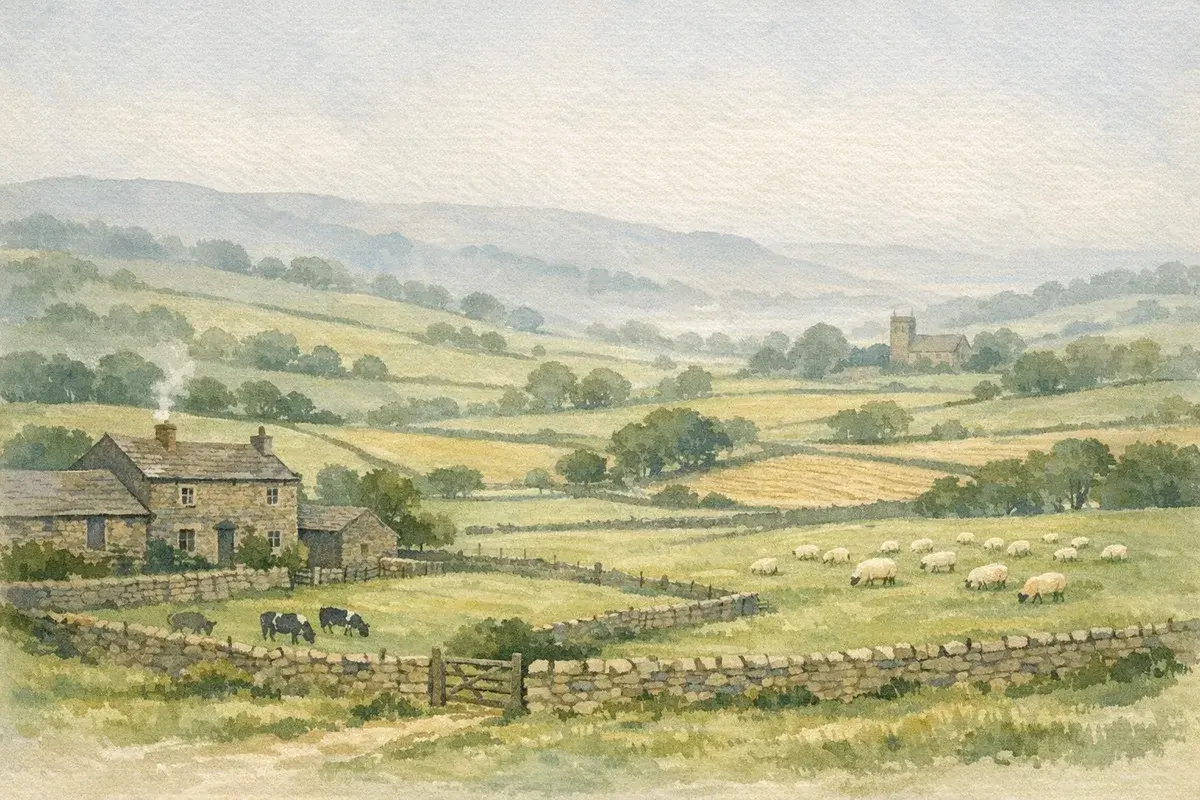
If you're searching for agricultural land for sale in the UK, you'll quickly realise it's not like buying a house, or even a commercial unit. Two fields that look identical from the gate can come with completely different rights, restrictions, designations, and long-term running costs.
The upside is that agricultural land can be a resilient, practical asset: it can expand a farming business, secure grazing, improve access, support diversification (carefully), or simply put control back in your hands rather than relying on short-term arrangements. But you only get the benefits if you buy the right parcel, in the right way, with your eyes open.
This guide walks you through what agricultural land actually is in UK terms, where to find it, what to check before you offer, and how to structure a deal so it doesn't bite later.
What Counts As Agricultural Land In The UK (And Why It Matters)
"Agricultural land" sounds straightforward, until you're comparing a block of Grade 3 arable with a pony paddock that's been mown like a lawn for ten years.
In UK transactions, what the land is treated as (in planning, in contracts, and in day-to-day use) affects value, lending appetite, tax treatment, and what you can do with it without triggering enforcement or a messy neighbour dispute.
Agricultural Vs Equestrian, Amenity, And Smallholdings
In plain terms, agricultural use is farming: cropping, grazing, horticulture, and related activities. The complications start when land has drifted into "lifestyle" use.
- Equestrian use (keeping horses for leisure) is typically not classed as agriculture in planning terms. Grazing horses can sometimes look agricultural on paper, but stables, ménages, hardstanding, lighting, and regular equine traffic can quickly push it into equestrian use.
- Amenity land is land bought mainly for enjoyment, privacy buffers, woodland walks, "just to keep it nice." That can be perfectly legitimate, but it may not stack up for agricultural valuations or certain reliefs you're assuming.
- Smallholdings can be agricultural, equestrian, mixed, or primarily residential-led. What matters is the actual use and the planning history, not what the brochure calls it.
If you're buying agricultural land for sale in the UK with even a hint of future diversification in mind, you need clarity early, because "we'll sort it later" is usually where cost and delay begin.
Tenure, Rights, And Restrictions To Watch For
Before you get excited about the soil and the view, get your head around the legal wrapper:
- Vacant possession vs tenanted land: If there's a Farm Business Tenancy (FBT), grazing licence, or longer-term arrangement in place, it affects timeline, flexibility, and sometimes price.
- Access and rights: A field can be "landlocked" in practice even if it has a theoretical right of way. You want to understand who can use which tracks, when, and for what.
- Restrictive covenants and obligations: These can limit buildings, control tree planting, prevent non-agricultural use, or require certain maintenance.
A good land agent and solicitor will translate the title and contract documents into plain English, what you can actually do on day one, and what will need permissions, consents, or negotiations.
Where To Find Agricultural Land For Sale In The UK
If you want a wider overview of routes and what tends to work in different parts of the country, this explainer on where people actually find farmland to buy is a useful companion.
On-Market Routes: Specialist Portals, Land Agents, And Auctions
On-market is still where plenty of good land changes hands, especially when vendors want competitive tension and a clean process.
- Specialist agricultural portals: These are built for farmland, not retrofitted from residential search. On AgLand, you can start with specialist agricultural listings and then narrow fast by location, land type, and rural property features that matter in practice.
- Land agents (local and regional): The best agents aren't just "advertisers": they know who's quietly looking, what neighbouring units might pay, and how to position your offer so it lands.
- Auctions and formal tenders: Can be efficient, but you need your ducks in a row, funding, solicitor instructed, and due diligence moving early. Auction packs can be revealing (and occasionally alarming).
Off-Market Options: Local Networks, Neighbours, And Professional Introductions
Off-market doesn't mean secret: it usually means the vendor wants discretion, speed, or a known buyer.
Practical routes:
- Neighbouring landowners and local farming circles: A polite conversation at the right moment can beat any marketing campaign.
- Professional introductions: Surveyors, agricultural accountants, solicitors, and agents often know about retirement plans, partnership changes, or holdings being rationalised.
- Quiet buyer demand signals: If you're serious, be clear on your criteria (size, access, quality, budget, timescale). Vagueness is easy to ignore.
One caution: off-market can reduce competition, but it can also reduce your leverage if you haven't benchmarked value. Make sure you still test assumptions against comparable evidence.
How To Assess A Parcel Of Land Before You Offer
A viewing is not a countryside walk. You're trying to answer one question: will this land do what you need, at a cost you can live with, without unpleasant surprises?
Soils, Drainage, Access, Water, And Services
Start with the fundamentals, because they're expensive to change.
- Soils and structure: Is it light land that burns off in a dry spell, or heavy clay that needs careful timing? Look for compaction, poor rooting, standing water, and signs of historic abuse.
- Drainage: Ask what's been done (mole draining, tile drains) and when. Walk after rain if you can. A "cheap" field with failed drainage can become a very expensive purchase.
- Access: Width, turning circles, gradients, and gates matter. If you're moving livestock, muck, machinery, or timber, a tight access can limit operations and increase risk.
- Water: Mains connection, private supply, troughs, boreholes, and abstraction rights, don't assume. For grazing blocks, reliable water is often the difference between workable and a constant headache.
- Services and wayleaves: Power lines, fibre routes, pipelines, these can restrict building and cultivation and bring ongoing obligations.
Boundaries, Rights Of Way, Easements, And Sporting Or Mineral Rights
Boundary problems are rarely "small problems". They become time sinks, cost sinks, and relationship sinks.
Check:
- What the title plan shows vs what's on the ground: Are fences on the line? Who maintains hedges, ditches, banks?
- Public rights of way: Footpaths and bridleways can be manageable, but you must factor in biosecurity, livestock handling, and privacy.
- Private easements: Shared drives, access over tracks, rights to run services, these can be perfectly normal, but you need clarity.
- Sporting rights and minerals: In some sales, you won't acquire everything you assume. If someone else holds sporting rights, it can affect shoot management and access at key times.
Designations And Constraints: Green Belt, AONB, SSSI, Flood Risk, And Stewardship
Designations don't automatically kill a deal, but they do shape what's realistic.
- Green Belt and AONB: Expect tighter planning scrutiny. The land can still be productive, but "future development potential" may be limited.
- SSSI and protected habitats: Management may be constrained, and you may need consents for certain operations.
- Flood risk: Beyond insurance, think about access during wet periods, soil damage, and whether you can actually work the ground.
- Stewardship agreements: If the land is in an agri-environment scheme, you need to understand obligations, payment flows, and transfer rules before you commit.
We've seen buyers fall in love with a block of land, only to discover later that the operational restrictions, not the beauty, are what they've bought. Get the facts early.
Planning And Use: What You Can (And Cannot) Do With Agricultural Land
Planning is where optimism goes to be tested. Agricultural land can offer useful flexibility, but permitted development is a privilege, not an automatic right, and enforcement is very real.
Permitted Development Rights And Prior Approval Basics
In England, agricultural permitted development rights (often under Part 6 of the GPDO) can allow certain agricultural buildings and operational development, typically subject to thresholds, siting rules, and prior approval/prior notification to the local planning authority.
Key practical points:
- Size and holding thresholds matter (and differ depending on the class/holding size).
- Use must be agricultural and "reasonably necessary" for the purposes of agriculture.
- Location constraints (near dwellings, roads, and in designated areas) can tighten what's allowed.
Because the rules and local interpretations can be nuanced, it's worth using a specialist planner or rural surveyor before you design something ambitious. It can save months.
Change Of Use Risks: Equestrian, Storage, Glamping, And Non-Farming Activities
This is where many buyers of agricultural land for sale in the UK get caught out.
- Equestrian: A field used for horses may require planning permission, and adding structures can make the change of use clearer.
- Commercial storage and yards: "Just storing a few items" can become a material change of use quickly if it introduces traffic, hardstanding, or non-agricultural business activity.
- Glamping and tourism: Even where it's potentially viable, it's rarely a simple "put a pod in a field" situation, access, drainage, licensing, ecology, and landscape impacts all get scrutinised.
If diversification is part of your long-term plan, treat it as a separate feasibility project. Buy the land primarily for what it can do now, then upgrade the plan with proper advice.
Understanding Price, Value, And Deal Structure
Land prices are emotional, because land is emotional. But you still need to bring it back to fundamentals: what income, utility, strategic value, and optionality you're actually buying.
What Drives Land Values: Location, Scale, Quality, And Competition
In practice, pricing tends to move with:
- Location and local demand: Dairy areas, veg land, and regions with strong neighbouring demand can see intense competition.
- Block size and shape: A neat, accessible block often commands a premium over fragmented parcels.
- Soil quality and versatility: Productive, workable land with reliable access and water usually holds value better.
- "Strategic value" to a neighbour: If the land unlocks access, completes a block, or secures slurry spreading, it can be worth more to one buyer than anyone else.
Also be honest about your own motivation. If you need the land to make your system work, you may pay a premium. That's not wrong, it just needs to be conscious.
Overage, Options, Clawback, And Uplift Clauses
Deal structure can matter as much as the price.
- Overage/clawback/uplift: The seller retains a right to a future payment if planning permission or a higher-value use is achieved later. These clauses can last years and can affect future sales or refinancing.
- Options and conditional contracts: Often used where planning potential is being pursued. They can be sensible, but the terms need careful drafting.
A good solicitor will push for clarity on triggers, valuations, time limits, and what counts as "development". If you're buying for long-term farming, you may want to limit overage scope so normal agricultural improvements don't accidentally trigger payments.
Costs Beyond The Headline Price
The purchase price is only the start. Buyers get stung when they budget like it's a simple land-and-title transaction, then discover tax, maintenance, and compliance add up quickly.
SDLT, VAT, And Other Transaction Costs
Costs to plan for include:
- Stamp Duty Land Tax (SDLT): SDLT treatment depends on the property type and the specific circumstances (and differs in Scotland and Wales under their own regimes). Mixed-use land, residential elements, and leases can change the position.
- VAT: Some land is opted to tax: some sales include buildings or commercial elements. VAT can affect cashflow even if you can reclaim.
- Professional fees: Solicitor, surveyor, and (often) an agent's input on negotiation and comparables.
If you're unsure how a particular parcel is likely to be treated, get advice early. The "tax bit" is not a last-week problem.
Ongoing Costs: Fencing, Drainage, Insurance, And Compliance
Think in terms of a five-year ownership plan:
- Fencing and gates: Livestock-proofing a boundary properly can be a meaningful capital cost.
- Drainage and tracks: If you need stone, culverts, or reinstatement, price it before you offer.
- Insurance and liability: Public liability becomes more important where there are rights of way or public access.
- Compliance: Cross-compliance may have shifted with policy changes, but environmental obligations, hedge rules, habitat constraints, and waste regulations still bite.
A field that's "cheap" but needs immediate infrastructure can cost more than a higher-priced parcel that's ready to use on day one.
A Practical Buying Process From Viewing To Completion
A smooth purchase usually looks "easy" from the outside, because the work happened early, in the right order.
Due Diligence Checklist And The Right Professionals To Use
Treat this as your baseline:
- Land agent: For local comparables, offer strategy, and negotiation.
- Solicitor (rural property experienced): For title, rights, covenants, and drafting.
- Surveyor/valuer: Especially if you're financing or need an independent sanity-check.
- Planning consultant (where relevant): If you're relying on buildings, diversification, or future change.
Due diligence checks to insist on:
- Title plan accuracy and boundaries
- Rights of way and easements (public and private)
- Tenancies, licences, and vacant possession position
- Wayleaves and service routes
- Environmental constraints/designations and stewardship obligations
- Water supply and drainage evidence
If you're building a search pipeline, it helps to keep your shortlists and notes organised. AgLand's rural property hub is useful for keeping your research alongside what you're seeing in the market.
Negotiation, Heads Of Terms, Exchange, And Completion Timelines
Timelines depend on complexity, but a typical sequence is:
- Offer (often "subject to contract"): Be clear on what's included, fences, gates, water troughs, timber, track rights.
- Heads of Terms: Not legally binding, but it sets expectations on price, deposit, exclusions, overage, and target dates.
- Solicitors instructed and searches ordered: The earlier you start, the less you compress the risky bits.
- Exchange: Where you're legally committed.
- Completion: Funds transfer and you take ownership.
Negotiation isn't just price. You can negotiate access provisions, overage scope, timescales, and what the seller will remedy (for example, boundary clarity). And if a seller won't move on anything, that tells you something too.
Looking for land like this? Tell AgLand what you're after - type, acreage, budget and area - and we'll alert you the moment a matching property is advertised. Registering is free, and there's no commission on either side. Tell us what you're looking for.
Conclusion
Buying agricultural land for sale in the UK is one of those decisions that rewards patience and punishes assumptions. If you get the fundamentals right, use class, access, water, boundaries, constraints, and deal structure, you'll feel the difference for years, not weeks.
Approach it like a system: define your non-negotiables, build a steady search pipeline, view with a checklist (not just your eyes), and bring in the right professionals early. The best purchases are rarely the most glamorous: they're the ones that quietly work, season after season.
Disclaimer: AgLand.co.uk is a UK agricultural land and rural property matching service, where buyers register what they are looking for and owners advertise directly to the buyers who match, and a rural resource hub. Nothing in this text is intended as legal, financial, or investment advice. You should carry out your own due diligence and take advice from appropriately qualified professionals (for example, solicitors, surveyors, tax advisers, and planning consultants) before making any decisions.