
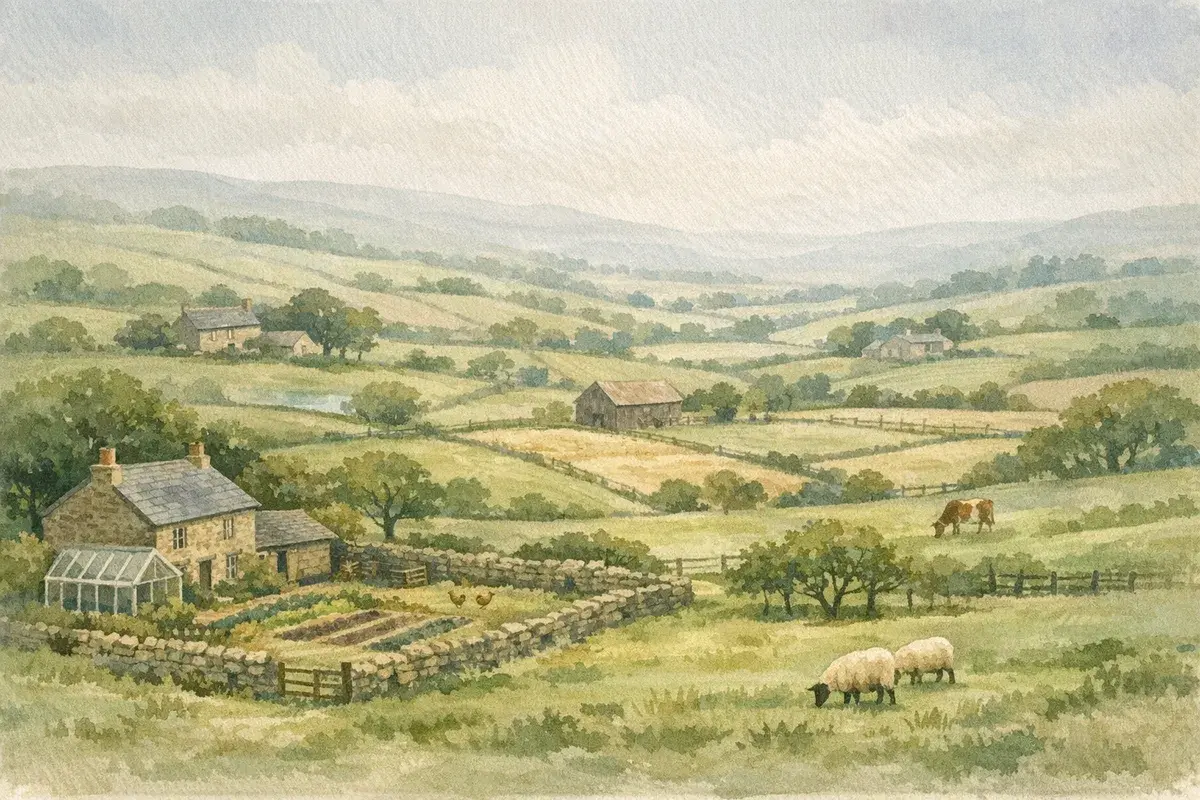
A "smallholding for sale" can look deceptively simple online: a few acres, a house, maybe a couple of sheds and a field gate with a romantic name on it. Then you turn up and realise the track floods, the "stable block" is technically a storage building, the boundary hedge doesn't match the Land Registry plan, and your mobile signal disappears the moment you pull in.
That's the reality of rural property: it's brilliant, but it's rarely straightforward. If you want a smallholding that actually works, practically, legally, and financially, you need to search in the right places, ask the right questions, and do your due diligence like you mean it. This guide is written for UK buyers who want to move with confidence (and avoid expensive surprises).
What Counts As A Smallholding In The UK (And What Buyers Usually Mean)
There isn't one universal legal definition of a "smallholding" in the UK in the way people assume. In everyday use, it's shorthand for a small-scale rural property with a bit of land, where you can keep livestock, grow produce, run a rural micro-business, or simply live with space.
What matters in practice is less the label and more the facts on the ground: acreage, access, services, buildings, planning constraints, and what the title lets you do.
Typical Size, Set-Up, And Uses
Most buyers mean something like 1 to 20 acres, often with a farmhouse or cottage, some form of outbuilding, and land that's either pasture, paddocks, orchard, woodland, or a mix. But you'll see "smallholding" used for everything from a large garden with a couple of stables to 50+ acres with serious commercial potential.
Common UK smallholding set-ups include:
- Lifestyle / hobby smallholding (1–5 acres): veg beds, polytunnel, chickens, a couple of sheep, maybe a pony. Your limiting factor is usually storage, access, and where manure and muck actually go.
- Part-time smallholding (5–15 acres): enough grazing rotation for small livestock numbers, room for a decent barn, potential for hay/silage (depending on ground and access), and maybe a small holiday let or workshop if planning allows.
- Small-scale commercial (10–30 acres+): more realistic for a structured enterprise, rare breeds, market gardening, small dairy/egg enterprise, livery, still usually needing additional rented land or clever high-value production to stack up.
A useful way to sanity-check any "smallholding for sale" is to ask yourself: what can you do on day one without spending a fortune? If the answer is "not much until we put in fencing, a hardstanding, water, and a building," then treat the purchase price as only the first line in a longer budget.
Smallholding Vs Farm Vs Equestrian Property
These terms get blurred in listings, so it helps to separate how the market often uses them:
- Smallholding: land plus a dwelling/buildings suitable for small-scale agricultural or rural living uses. It's about versatility.
- Farm: typically larger acreage and/or an established business unit, more likely to include modern sheds, yards, grain stores, and sometimes multiple dwellings. With a farm, you're often buying operational infrastructure (and the liabilities that come with it).
- Equestrian property: may have relatively little land but strong horse infrastructure (ménage, stables, all-weather turnout). The planning and neighbour context can be very different to livestock or mixed agriculture.
The trick is not getting caught by the headline. A place marketed as a smallholding might actually behave like an equestrian set-up (tight paddocks, heavy wear, high neighbour sensitivity). And a "farm" might be a farmhouse with tired buildings and fragmented parcels.
If your goal is small-scale livestock, a veg enterprise, or a mixed set-up, you want the kind of land and layout that support that, not just a rural postcode and a pretty gate.
Where Smallholdings Come Up For Sale (And How To Search Properly)
You'll find smallholdings through the usual routes, but the best results come from treating the search like a project. That means understanding how stock comes to market, spotting signals early, and filtering hard so you don't burn weekends on viewings that were never going to work.
On-Market, Off-Market, And Private Sales
In the UK, smallholdings appear via a few main channels:
- On-market listings: the most visible route. You'll see asking prices, photos, EPCs for dwellings, and the basic particulars.
- Off-market opportunities: quieter deals where a land agent has a buyer list and tests interest before going fully public. These can move fast.
- Private sales: sometimes via word-of-mouth in rural communities, notices at agricultural merchants, or introductions through accountants and solicitors.
Your best move is to position yourself so you can respond quickly without rushing. That means lining up finance early, understanding what you can compromise on, and being ready to instruct a solicitor as soon as you're serious.
How To Use Specialist Search Filters To Avoid Wasted Viewings
Wasted viewings usually happen because the listing didn't tell you the one detail that changes everything. Your goal is to surface those details before you drive two hours.
Practical filters and checks that save time:
- Acreage bands that match your enterprise: be realistic about what 2 acres or 12 acres means for grazing and rotation.
- Dwelling vs no dwelling: a "smallholding" without a house can be perfect, unless you need to live on-site.
- Outbuildings: look for clear photos and descriptions. If it's vague ("range of useful buildings"), assume nothing until you've seen dimensions and construction.
- Access and rights: does the property have its own direct access, or do you cross someone else's land?
- Services: mains water? private supply? septic tank? fibre? If you're planning a business, these aren't optional details.
A small but high-impact habit: make a viewing checklist and use it every time. Rural purchases are emotional. A checklist keeps you honest when the kitchen is charming and the view is doing a lot of heavy lifting.
Choosing Your Area: Practical Geography Beyond The Postcode
In rural property, "location" is not just county prestige and a nice village pub (though both are welcome). It's also the stuff that decides whether your smallholding is enjoyable or a constant slog: ground conditions, water, access in winter, and the local patchwork of rural activity.
Soil, Water, Access, And Shelter
If you only do one "boring" thing before offering, let it be this: understand the land.
- Soil type and drainage: heavy clay can be productive but punishing for horses and winter grazing. Light land can drain well but may need careful management in dry spells. Ask what the land has been used for and look for poaching, rushes, standing water, or bare gateways.
- Water: mains is straightforward: private supplies (springs, boreholes) can be excellent but you'll want to understand reliability, maintenance, and any treatment requirements. For livestock, water isn't a nice-to-have.
- Access: check the track surface, gradients, and passing places. Can a feed lorry or livestock trailer get in safely? What happens after a week of rain?
- Shelter and aspect: hedges, woodland edges, and field shape matter. A bleak, exposed block can make winter husbandry harder and increase infrastructure spend.
Also, consider where you'll put the "unsexy" elements: muck heap, fuel storage, feed storage, turning space, and a sensible loading area. If the only flat spot is right outside the kitchen, you're going to resent it.
Neighbours, Noise, Biosecurity, And Local Attitudes
Rural doesn't mean isolated. You might be next to:
- an active livestock unit,
- a working quarry route,
- a shoot,
- a dairy with early starts,
- or equestrian yards with constant vehicle movement.
None of that is automatically bad. The key is compatibility.
Biosecurity and neighbour relations become very real when you keep animals. Think about:
- Shared boundaries with other livestock: double fencing needs, nose-to-nose contact, and how you'd isolate new arrivals.
- Public access: footpaths across fields can be manageable, but you'll want to understand gates, signage, and how stock will be protected.
- Local attitudes: some areas are used to smallholders: others are more sensitive to "newcomer" rural enterprises, especially if there are planning ambitions.
If you're planning anything beyond quiet domestic use, have a frank conversation early with your agent and (when appropriate) your planning consultant about the local authority's track record. In the UK, policy and enforcement culture can vary noticeably by area.
Planning And Legal Checks That Catch Smallholding Buyers Out
This is where smallholding purchases most often go sideways, not because anyone is dishonest, but because rural property has layers: historic rights, informal arrangements, old consents, and planning conditions that still bite.
If you want to buy with confidence, treat planning and legal checks as part of the property itself. Not paperwork. Not admin. The property.
Agricultural Occupancy Conditions, Ties, And Restrictions
An agricultural occupancy condition (often called an "agricultural tie") restricts who can live in a dwelling, typically someone employed in agriculture (or sometimes forestry) and their dependants. The wording matters, and so does how the local authority interprets it.
If a smallholding for sale includes a tied dwelling, you need to understand:
- Who qualifies under the specific condition.
- Whether it's been breached historically (which can create risk, not comfort).
- The impact on mortgage availability and resale value.
Don't assume you can "just get it removed later." Sometimes it's possible, but it's evidence-led and can be a long road.
Rights Of Way, Easements, Covenants, And Boundaries
These are the classic rural tripwires.
- Public rights of way: a footpath across a field affects grazing, fencing design, dogs, and privacy. It's not necessarily a deal-breaker, but you should price the hassle in.
- Private easements: rights to use a track, rights to run services, rights to drain. If you rely on a third-party track, confirm who maintains it and what vehicles are allowed.
- Restrictive covenants: these can limit business use, additional buildings, or even certain animals. Older covenants still have teeth.
- Boundaries: hedges, ditches, and fences can drift from title plans over decades, and HM Land Registry title plans show general boundaries only. If you're buying for precise acreage or intend to fence intensively, it's worth getting clarity early.
A practical move that's saved plenty of buyers we've spoken to: walk the boundaries with the plan in hand and note anything that doesn't match. You're not trying to be difficult, you're trying to avoid buying a future dispute.
Services And Infrastructure: Drainage, Septic, Power, And Broadband
Rural services can be brilliant or fragile. You need specifics.
- Drainage: if there's a septic tank or package treatment plant, understand age, location, maintenance history, and compliance status. Replacement can be a chunky expense.
- Power supply: check capacity if you'll run workshops, cold storage, or even a couple of electric gates and a pump. Upgrades can involve time and cost.
- Broadband and mobile: don't rely on a coverage map. Test on site. If you're running a rural business (or just want reliable calls), this matters more than most people admit.
Looking for land like this? Tell AgLand what you're after - type, acreage, budget and area - and we'll alert you the moment a matching property is advertised. Registering is free, and there's no commission on either side. Tell us what you're looking for.
Buildings And Land Use: What You Can Do On Day One
A smallholding isn't just land, it's how the land functions. Buildings and hardstanding are usually where value sits, but they're also where planning risk and unexpected spend turn up.
Outbuildings, Stabling, And Change Of Use Risks
Many buyers see a row of barns and assume flexibility. In practice, you need to know:
- What the buildings are authorised for: agricultural storage, livestock housing, equestrian use, or something else.
- Whether any conversions were done with proper consent.
- Whether the site has a planning history that makes the council particularly attentive.
A common pitfall is assuming you can run a livery or equestrian business just because there are stables. Business use and intensity can trigger change of use issues (parking, traffic, lighting, noise, welfare facilities). Even if you're not "commercial", regular clients coming and going changes the planning picture.
If you want to keep it simple early on, focus on what you can do immediately without pushing boundaries: secure storage, sensible livestock shelter, and safe handling areas.
Fencing, Tracks, Yard Areas, And Manure Management
These aren't glamorous upgrades, but they decide whether your smallholding is manageable.
- Fencing: budget for doing it properly. Temporary fencing is useful, but perimeter stock fencing, gates, and a handling pen add up quickly.
- Tracks and gateways: if you're moving animals, feed, and bedding in winter, you'll want hardstanding where traffic concentrates. Otherwise you'll churn it up and spend the next two years "making good".
- Yard layout: turning circles for trailers, a place to wash down, a safe loading spot, these are daily quality-of-life issues.
- Manure: where will it be stored, how will it be removed or managed, and what's the run-off risk? A tidy, compliant set-up protects neighbour relations and reduces environmental headaches.
A smallholding that looks slightly less pretty but has good hardstanding, drainage, and a sensible yard can be a far better buy than the "Instagram" option that turns into a quagmire every December.
Budgeting For The True Cost Of A Smallholding
The purchase price is the entry ticket. The true cost is what it takes to make the place safe, workable, and resilient, especially through the first winter.
Beyond The Purchase Price: Repairs, Kit, And Working Capital
Even a well-kept smallholding typically needs immediate spend. Common early costs include:
- Fencing and gates (often the big one)
- Water troughs and pipework
- Field shelters or livestock housing
- Machinery and kit: mower/tractor arrangements, strimmer, chainsaw (plus training and PPE), tools, feed storage bins
- Drive/track repairs
- Security: locks, lighting, sometimes CCTV, rural theft is a reality
If you're starting an enterprise (eggs, veg boxes, small-scale lamb), keep working capital aside. The first year is usually heavier on spend than income, and you don't want to make welfare decisions based on cashflow stress.
Ongoing Costs: Insurance, Rates, Compliance, And Contractors
Ongoing costs vary wildly depending on your set-up, but you should assume:
- Insurance: buildings, public liability, and specialist cover if you have livestock, machinery, or any visitor activity.
- Maintenance: hedges, ditches, track topping, guttering, roofing fixes.
- Professional fees: occasional accountant time, legal advice, and specialist reports when you alter anything.
- Contractors: even if you're hands-on, you'll likely bring in help for hedge cutting, muck removal, tree work, or groundwork.
- Compliance and records: if you keep livestock, record-keeping and movement rules apply. It's manageable, but it's not optional.
A sensible rule: if the numbers only work when everything goes perfectly, they don't work. Build a buffer. Rural projects always find a way to test it.
Due Diligence And The Buying Process (Step By Step)
If you want to buy a smallholding in the UK without unpleasant surprises, you need a repeatable process. Not because you don't trust people, but because rural property is complex and your future plans depend on details.
What To Ask At Viewing And What To Measure
Go to viewings with intent. You're not just "having a look": you're collecting facts.
Ask:
- What's included in the sale (field shelters, containers, machinery, water troughs)?
- How is water supplied to the house and land?
- What's the drainage system and when was it last serviced?
- Any known boundary disputes, access issues, or informal arrangements?
- What are the neighbouring land uses (livestock, arable, shoot, commercial yards)?
- Any planning history or refused applications?
Measure/confirm:
- Building footprints and door heights (will your kit actually fit?)
- Track width and turning space
- Locations of taps, troughs, meters, inspection covers
- Field gradients and wet spots
And take photos like you're building a file for your future self. You are.
Surveys, Searches, Titles, And Specialist Reports
Once you're serious, your professional team matters. For many smallholding buyers, the "standard" approach misses rural-specific risks.
Consider:
- A proper building survey for the dwelling (especially older rural houses).
- Title review that focuses on rights, covenants, access, ransom strips, and anything unusual in rural titles.
- Water and drainage checks (and compliance where relevant).
- Specialist inspections if there are barns, roofs, or older structures you'll rely on.
If you intend to change or intensify use, more buildings, equestrian use, diversification, speak to a planning consultant early. Spending a bit up front can save you from buying the wrong site for your goals.
How To Agree Heads Of Terms And Avoid Last-Minute Surprises
When you've found the right smallholding for sale, it's tempting to "get it tied up" quickly. You can move fast and stay protected.
Practical steps:
- Put your offer in writing with clear assumptions (what's included, timelines, any conditions).
- Agree heads of terms that reflect reality: access rights, what happens if enquiries reveal an issue, and any agreed remedies.
- Instruct the right solicitor, ideally someone used to rural property, not just standard residential conveyancing.
- Don't skip the awkward questions because you like the place. If the septic system is unknown, make it known. If the boundary is unclear, clarify it.
The aim isn't to be difficult. It's to land in your new place with fewer surprises and more certainty, so you can focus on building a good smallholding life, not firefighting paperwork problems.
Conclusion
A smallholding can be one of the most rewarding purchases you'll ever make, space, independence, a project you can shape over years. But the best outcomes come from treating it like the serious asset it is.
Look past the "smallholding" label and judge what's really there: land quality, access, water, neighbours, rights, restrictions, and whether the buildings and layout support what you want to do. Search with discipline, view with a checklist, and spend your time (and professional fees) where they reduce risk the most.
If you do that, you're far more likely to end up with the right UK plot, one that works in February as well as it looks in June.
Disclaimer
AgLand.co.uk is a UK agricultural land and rural property matching service, where buyers register what they are looking for and owners advertise directly to the buyers who match, and a rural resource hub. Nothing in this text is intended as legal, financial, tax, or investment advice. You should carry out your own due diligence and seek advice from appropriately qualified professionals (such as solicitors, surveyors, planning consultants, land agents, and accountants) before making decisions or entering into any transaction.