
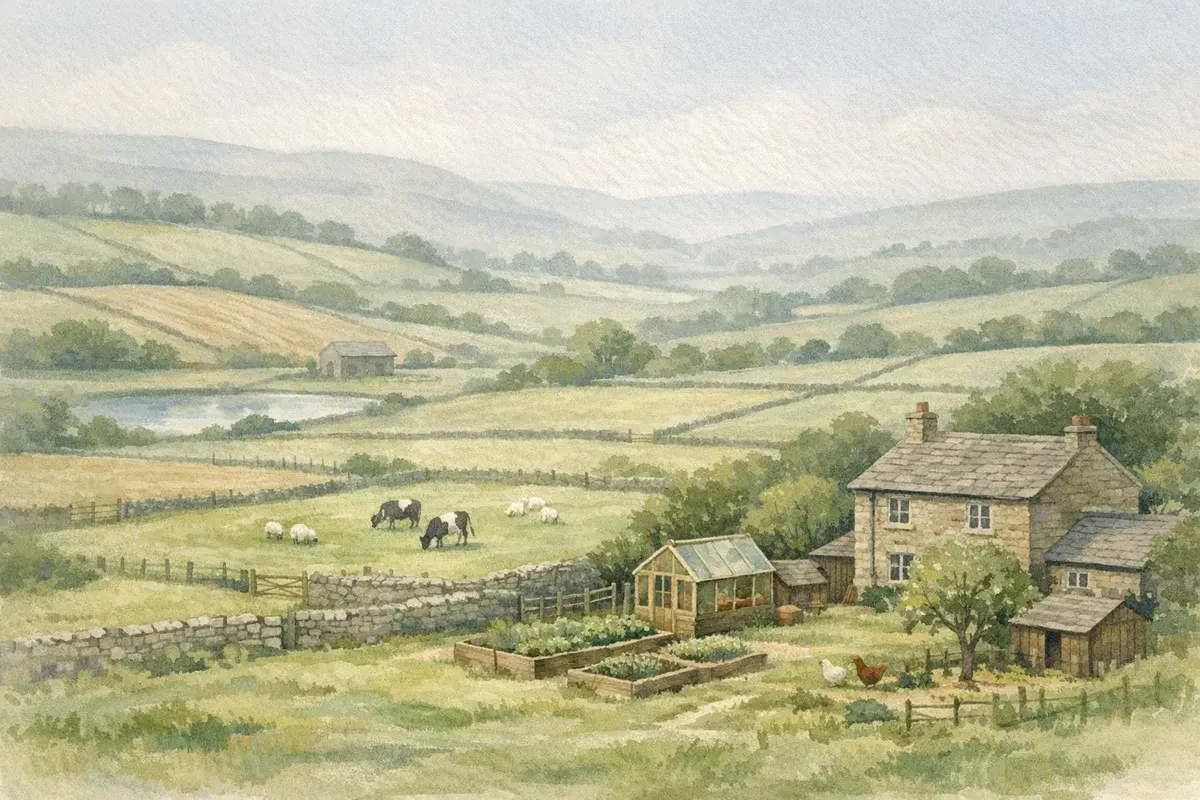
A "self sufficient smallholding for sale" can look like the dream on paper: a few acres, a house, a couple of barns, maybe a stream, and the promise of eggs, veg, and a quieter life.
But self-sufficiency in the UK isn't a Pinterest board, it's a system. It's water, access, soils, planning constraints, winter feed bills, and whether you can actually get a vehicle to the far paddock in February without turning it into a bog. Get the fundamentals right and a smallholding can be deeply rewarding (and financially sensible). Get them wrong and you'll spend year one firefighting instead of growing food.
This guide cuts through the "lifestyle" fluff and walks you through how to find the right setup, what to check before you view, and how to buy with your eyes open, UK-only, practical, and grounded in what tends to catch buyers out.
What “Self Sufficient” Really Means For A UK Smallholding
If you're searching for a self sufficient smallholding for sale, the first step is being brutally honest about what "self sufficient" means for you, and what it can realistically mean in the UK.
Self Sufficiency Spectrum: From Food Growing To Full Off-Grid Living
Most smallholdings sit somewhere on a spectrum:
- Food-first self sufficiency: a productive kitchen garden, polytunnel, orchard, laying hens, maybe some meat animals: you still rely on mains utilities and the supermarket for staples.
- Household resilience: food plus wood fuel, serious storage, rainwater harvesting for non-potable uses, backup power, and reduced reliance on bought-in inputs.
- Off-grid ambition: independent energy, wastewater solutions, and minimal external inputs, possible in pockets, but it's rarely simple, and it's not always legal or economical.
A lot of listings use "self sufficient" when they really mean "rural and roomy". Your job is to translate the marketing into infrastructure: water source, growing space, shelter, storage, and the planning position.
Land Size, Stocking, And Realistic Outputs In A UK Climate
In UK conditions, outputs are less about romantic acreage and more about soil, aspect, drainage, and management.
A few practical realities:
- Veg and fruit can be extremely productive on a surprisingly small footprint if you've got decent soil and you're willing to commit time. A well-run kitchen garden plus polytunnel can carry a household a long way.
- Grazing livestock is where acreage starts to bite. Your carrying capacity depends on grass quality, rainfall, drainage, and how you manage rotations.
- Winter is the truth-teller. UK self sufficiency is won (or lost) in November–March: hay/haylage, bedding, housing, and access become the limiting factors.
If you want the "house plus land" version of self sufficiency, pay attention to how the dwelling and land integrate, layout matters as much as size. If that's your direction, it's worth reading AgLand's guide to a smallholding for sale with a house because the house element often drives both value and practicality.
Running Costs And Time Commitment: The Bits Listings Don't Spell Out
The hidden costs are rarely a single big shock. They're the steady drip:
- Fencing repairs (and the fact that animals will find the weak point at 9pm)
- Feed, minerals, vet bills, shearing/foot trimming, and biosecurity supplies
- Polytunnel plastic, irrigation bits, compost, netting, fruit cages
- Machinery maintenance, whether that's a compact tractor or just a strimmer that never gets a day off
- Insurance, waste disposal arrangements, and compliance costs if you scale up
Time is the other currency. A truly productive smallholding is more like a part-time job (sometimes a full-time one) wrapped around your actual life. That's not a warning, it's just the reality you want priced into your decision.
If you're early in the journey and trying to work out whether your expectations match the workload, AgLand's piece on buying a smallholding for beginners is a solid reality check before you start booking viewings.
Where To Find Self Sufficient Smallholdings For Sale In The UK
Finding a self sufficient smallholding for sale is partly about supply, and partly about how you search. The best opportunities often go to buyers who are organised, decisive, and clear on non-negotiables.
Search Strategy: Location, Access, And Services Without Killing The Dream
Start with a map and a list of your practical constraints:
- Work and school travel: be honest about how far you'll drive in winter weather.
- Access to services: vets, feed merchants, machinery repairs, agricultural merchants, and even a decent builder who'll turn up.
- Microclimate: upland frost pockets, coastal exposure, heavy rainfall zones, your growing season can shift noticeably with location.
A self-sufficient setup can work almost anywhere in the UK, but your system changes. Wet western ground might suit grass and livestock but challenge veg unless you invest in drainage and protected growing. Drier eastern areas can be brilliant for cropping but may make water storage more central.
For a wider view of how to structure your hunt (and avoid common traps), AgLand has a detailed primer on how to find the right smallholding in the UK that pairs nicely with this self-sufficiency angle.
Filtering Listings Properly: Acreage, Outbuildings, Water, And Rights
Before you fall in love with the photos, filter like a land agent would:
- Acreage and layout: one ring-fenced block is usually easier than scattered parcels.
- Outbuildings: don't just count them, ask what they're for (livestock housing, hay storage, workshop, secure feed store).
- Water: is it mains? Private supply? What's the storage like? (We'll dig into this later.)
- Rights and restrictions: public footpaths, shared drives, third-party rights.
If you're aiming to keep animals and you see stables mentioned, double-check what's actually there and what's lawful. Some "stables" are properly consented: others are temporary buildings that have become permanent by habit. If horses (or mixed equestrian + smallholding use) are part of your plan, you'll want to understand what a smallholding with stables tends to involve in practice.
Spotting Overpriced "Lifestyle" Listings Versus Working Setups
There's nothing wrong with paying for a beautiful setting. But don't pay working-farm money for marketing copy.
A few tells that a listing may be "lifestyle priced":
- Glossy interiors, vague land descriptions ("ideal for a hobby farmer"), light on practical detail
- No clear mention of water source, drainage, or access for vehicles
- Buildings photographed artistically, but no dimensions or uses
- Land shown in summer only (no hint of winter wetness)
A working setup, by contrast, usually comes with boring-but-gold details: field areas, building sizes, access notes, services, and sometimes a clear history of how it's been run.
And yes, budget matters. If cost is a key driver, it's worth grounding your expectations with what "value" really means in rural property. AgLand's guide to cheap smallholdings for sale in the UK explains where lower prices come from (and what compromises they often hide).
Non-Negotiables To Check Before You View
A viewing is expensive in time and emotion. Before you get in the car, try to answer the questions that determine whether a smallholding can actually support a self-sufficient life.
Water First: Mains, Boreholes, Springs, Abstraction, And Storage
Water is the cornerstone. Without reliable water, self sufficiency becomes "self-imposed hardship".
Ask:
- Is the property on mains water? If yes, where are the stop taps and what's the supply like to outbuildings and fields?
- If it's a private supply (spring, borehole, well): who maintains it, where is the source, what treatment is in place, and is there recent water quality testing?
- Storage: is there meaningful storage for livestock and irrigation, tanks, IBCs, header tanks, trough supply?
- Abstraction: if you're told you can draw from a stream or river, don't assume that's automatically lawful. In England, abstraction rules can bite depending on volumes and use, and the position can be different across the UK nations. You'll want to verify what's permitted for that specific site.
In short: water isn't a nice-to-have feature, it's a due diligence item.
Soils, Drainage, And Shelter: What Will Actually Grow And Thrive
Soil is easy to underestimate because it doesn't photograph well.
During the initial check (even before a viewing), look for:
- Any mention of heavy clay, land drains, ditches, or "seasonal wetness"
- Field shape and slope: slopes can drain well but create erosion risk and awkward machinery work
- Shelter: hedges, tree belts, buildings, and landform that cut wind exposure
At viewing, do simple observations:
- Are gateways churned up? That can signal persistent wet ground.
- Do paddocks have a lush sward or patchy rushes? Rushes often indicate wet/acid ground.
- Are there dry standing areas for livestock in winter?
A self-sufficient smallholding isn't only about what you can grow, it's about how easily you can keep land productive without turning it into mud.
Access, Wayleaves, And Rights Of Way That Affect Daily Life
Access is a daily issue, not a one-off conveyancing detail.
Check:
- Road access: can deliveries (feed, logs, building materials) reach you? What happens in snow or flooding?
- Internal access: tracks to fields, turning space for trailers, safe stock movement.
- Wayleaves and easements: overhead power lines, buried services, telecoms, these can restrict building and tree planting.
- Public rights of way: footpaths and bridleways through yards and fields change how you manage stock, fencing, and privacy.
None of this is necessarily a deal-breaker. But you want to know before you start picturing where the polytunnel goes.
Buildings, Planning, And Legal Constraints That Catch Buyers Out
This is the section where a lot of "self sufficient smallholding for sale" dreams come unstuck, because rural property is governed as much by planning and legal constraints as it is by land and buildings.
Agricultural Ties, Occupancy Conditions, And Permitted Development Limits
If there's an agricultural tie (or other rural occupancy condition), it can affect who can live in the property and under what circumstances. Sometimes it's manageable: sometimes it materially changes value and mortgage options.
Also remember: permitted development rights for agricultural buildings and changes of use have rules, thresholds, and prior notification processes. They're not a free pass.
If you're going to rely on development potential, whether it's a new shed, a farm track, or a conversion, you'll want to understand the detail early. AgLand's guide to smallholding planning permission lays out the typical tripwires and why "the neighbour did it" is not a planning strategy.
Outbuildings And Conversion Potential: What's Likely To Be Acceptable
Outbuildings are often the difference between a pleasant plot and a genuinely self-sufficient setup.
What to assess:
- Construction type: steel portal frame, timber, blockwork, traditional stone, this influences repair costs and conversion prospects.
- Condition: roof integrity, asbestos presence, floor load-bearing, damp.
- Use class and history: has it been used for agriculture, storage, commercial use, or residential ancillary use?
- Siting: buildings close to the house are convenient, but conversions in open countryside can attract tighter scrutiny.
Be cautious of "conversion potential" language unless there's a clear planning track record. If it's genuinely important to you, you'll likely need a planning consultant to review local policy and precedent.
Energy And Utilities: Off-Grid Systems, Connections, And Compliance
Off-grid or semi-off-grid systems can be brilliant in the right place. They can also become a long, expensive project if the existing setup is dated or non-compliant.
Check:
- Electricity supply: single-phase vs three-phase (important for workshops, pumps, and certain equipment).
- Renewables: solar PV, battery storage, wind, ask for install certificates, warranties, and export/payment arrangements.
- Heating: oil, LPG, biomass, heat pump, each has cost and maintenance implications.
- Wastewater: septic tank or package treatment plant, ask about age, maintenance records, and whether it meets current standards (rules differ across the UK nations).
The goal isn't perfection on day one. It's knowing what's already there, what's compliant, and what you'll need to budget for over the first 12–24 months.
Designing A Practical Self Sufficient System On Day One
The quickest way to feel "at home" on a smallholding is to get a basic system running early, something you can expand without ripping it up later.
Kitchen Garden, Polytunnels, Orchards, And Crop Rotation Basics
In the UK, protected growing is the cheat code. A polytunnel (or even a decent greenhouse) stretches seasons, improves reliability, and makes your output less weather-dependent.
A pragmatic day-one layout:
- Kitchen garden near the back door (you'll visit it daily: distance kills momentum)
- Compost bays and water point beside it
- Polytunnel in a sunny, sheltered spot with good access
- Orchard slightly further out, ideally not in a frost pocket
For rotation, keep it simple. Don't over-plan your first year. Aim for a handful of high-value, high-reliability crops (salads, brassicas, potatoes, alliums, legumes) plus soft fruit, and build from there.
Livestock Fit: Hens, Sheep, Goats, Pigs, Bees, And Grazing Plans
Livestock can push you closer to self sufficiency, but they also lock you into routine.
A realistic approach:
- Hens: often the best first step, eggs, manure, pest control, and manageable learning curve.
- Sheep: great for grass management and meat, but fencing, foot health, and winter planning matter.
- Goats: charismatic but hard on fencing and often more demanding than people expect.
- Pigs: fantastic for meat and ground turning, but they can destroy pasture structure if you don't manage them carefully.
- Bees: rewarding, but not "hands-off", and your honey crop can vary wildly year to year.
Before you buy animals, plan grazing like you mean it: field divisions, water points, handling area, isolation pen, and a winter strategy for sacrifice areas.
Storage, Processing, And Biosecurity: Freezers, Feed, And Waste
Self sufficiency lives or dies in the unglamorous places: the freezer, the feed bin, the tool rack.
Prioritise:
- Rodent-proof feed storage (metal bins, sealed rooms)
- Cold storage (freezers, plus backup power plan if outages are common)
- Processing space (even a clean utility area changes what you can preserve)
- Waste management: manure heaps sited sensibly, fallen stock arrangements understood, and composting done safely
Biosecurity isn't just for big farms. It's basic hygiene, quarantine when needed, and not inviting avoidable disease problems onto your holding.
If you're mapping out your first year from scratch, AgLand's guide to starting a smallholding is useful for turning "we'll figure it out" into an actual timeline and shopping list.
Money, Tax, And Transaction Realities For Smallholding Buyers
Buying a self sufficient smallholding for sale is rarely just a property purchase. It's often a mixed asset transaction: house, land, buildings, potential development value, and sometimes equipment or stock.
How Value Is Assessed: Land, House, Buildings, And Hope Value
Rural value typically breaks down into:
- Residential value: the house (often the biggest component)
- Bare land value: influenced by location, soil, access, and local demand
- Building value: condition and usefulness of barns, stores, workshops
- "Hope value": a premium based on perceived planning potential
Be careful with hope value. Paying extra because you think you can convert a barn or add a dwelling is a gamble unless you've done serious planning due diligence.
Grants, Environmental Schemes, And Income Streams Buyers Commonly Use
Self sufficiency doesn't have to mean "no income". Many smallholders blend household production with modest rural income streams.
Common UK-aligned options include:
- Environmental land management and countryside schemes (availability and detail depends on where you are in the UK)
- Woodfuel and timber management (if you've got woodland, and access to manage it)
- Letting storage/workshop space (where planning and access allow)
- Seasonal produce sales (eggs, veg boxes, plants) at a small scale, subject to compliance and local rules
Treat grants and schemes as a bonus, not a purchase justification. Schemes change. Budgets change. Your smallholding still needs to stand up without them.
Tax Touchpoints: SDLT, VAT, And When You Need Specialist Advice
Tax on rural purchases can get complicated quickly, especially with mixed-use property, multiple dwellings, or land/buildings with commercial elements.
At a minimum, you'll want professional advice on:
- Stamp Duty Land Tax (SDLT): rates and reliefs can differ depending on whether the property is purely residential or mixed-use.
- VAT: sometimes relevant with new builds, certain renovations, or business activity.
- Ongoing tax: if you generate income, or if the property includes land/buildings used commercially.
If you're borrowing, factor in lender criteria too, rural properties don't always fit standard boxes. AgLand's overview of the smallholding mortgage landscape in the UK is a good starting point before you assume a mainstream residential mortgage will cover everything you're buying.
Due Diligence Checklist Before You Exchange
Once you've found a self sufficient smallholding for sale that still looks right after a couple of viewings, your focus should shift from excitement to verification.
Title, Boundaries, Easements, And Mineral/Timber Rights
You're buying a bundle of rights as much as land.
Your solicitor (ideally with rural experience) should help confirm:
- Exact boundaries: match title plans to what's on the ground: don't assume the hedge line is the legal boundary.
- Easements and rights: shared access, rights to run services, water rights (if any), drainage rights.
- Mineral and timber rights: sometimes excluded or reserved: it matters if you're banking on woodland management or if there's a history of extraction.
If anything is unclear, ask for it to be clarified before exchange, because after exchange, you own the problem.
Environmental And Designation Checks: Flood Risk, SSSI, AONB, TPOs
Environmental constraints aren't inherently bad, but they affect what you can do.
Checks to run (with the right professionals):
- Flood risk: for the house, outbuildings, access roads, and low-lying fields.
- Designations: SSSI, AONB, National Park, conservation area, each can influence management and development.
- Tree protections: Tree Preservation Orders (TPOs) can restrict works.
Also consider neighbouring land use: intensive livestock units, shoot operations, public access land, or planned infrastructure can all affect your day-to-day life.
Local Authority History: Enforcement, Conditions, And Nuisance Risks
Ask what the local authority file says about the property:
- Previous applications and whether conditions were discharged
- Any enforcement history
- Complaints history (odour, noise, access disputes)
This is also where you should get comfortable with "nuisance risk" in a rural setting: rights of way through your yard, neighbours' farming operations, and your own plans (like keeping pigs) can all create friction if expectations aren't managed early.
Making An Offer And Getting To Completion Without Surprises
Offers on rural property are rarely just about price. You're negotiating over risk, timing, fixtures, and sometimes the transfer of knowledge.
What To Ask The Seller And Agent At Viewing
Go in with a written list. You don't want to remember the important questions on the drive home.
Ask:
- What's the water source, and can you see treatment/storage?
- What's included: field shelters, troughs, gates, feeders, polytunnel frame, batteries/inverters, logs?
- What's the wastewater system, and when was it last serviced?
- Any boundary disputes, shared access issues, or wayleave payments?
- What's been grown/kept on the land recently (sprays, fertiliser, stocking levels)?
If the holding has been run well, the seller often has maps, rotations, invoices, and maintenance records. That paperwork is boring, and incredibly reassuring.
Surveys And Specialists: Land Agent, Rural Surveyor, Planning Consultant
A standard homebuyer survey might not be enough for a complex smallholding.
Depending on what you're buying, consider:
- RICS rural surveyor: building condition plus rural-specific issues
- Land agent: field, drainage, access, and practical operation
- Planning consultant: if you're relying on any development/change of use
- Specialist inspections: electrics for off-grid systems, private water supplies, wastewater systems, asbestos surveys
We've seen buyers save real money by spending early on the right expertise, because it stops you overpaying for problems you could have priced in.
Negotiation Levers: Repairs, Services, Stock, And Fixtures
In rural deals, negotiation isn't always "take £10k off". Often it's:
- Asking the seller to service/repair key systems before completion (septic, water treatment, heating)
- Agreeing what stays (gates, troughs, handling kit, electric fencing units)
- Adjusting price based on survey findings (roof, damp, structural issues)
- Clarifying access responsibilities on shared tracks and drives
One tip: don't underestimate the value of a clean, explicit fixtures-and-fittings list. It prevents the classic rural headache of moving in and discovering the seller took the gate hinges.
If you keep your process disciplined, questions asked, documents checked, specialists used where needed, you massively reduce the odds of "surprises" after completion.
Conclusion
A self sufficient smallholding for sale is worth chasing, but only if you treat it like the serious, practical purchase it is. In the UK, the winners are rarely the most starry-eyed buyers. They're the ones who understand water, soil, access, buildings, and planning: who budget for winter: and who design a system that matches their time, skills, and appetite for routine.
Be picky. Ask awkward questions early. And when a place genuinely stacks up, move decisively, with the right professionals around you.
Disclaimer: AgLand.co.uk is a UK agricultural land and rural property matching service, where buyers register what they are looking for and owners advertise directly to the buyers who match, and a rural resource hub. Nothing in this text is intended as legal, financial, or investment advice. You should carry out your own due diligence and seek guidance from appropriately qualified professionals (such as solicitors, surveyors, land agents, tax advisers, and planning consultants) before making decisions or entering into any transaction.