
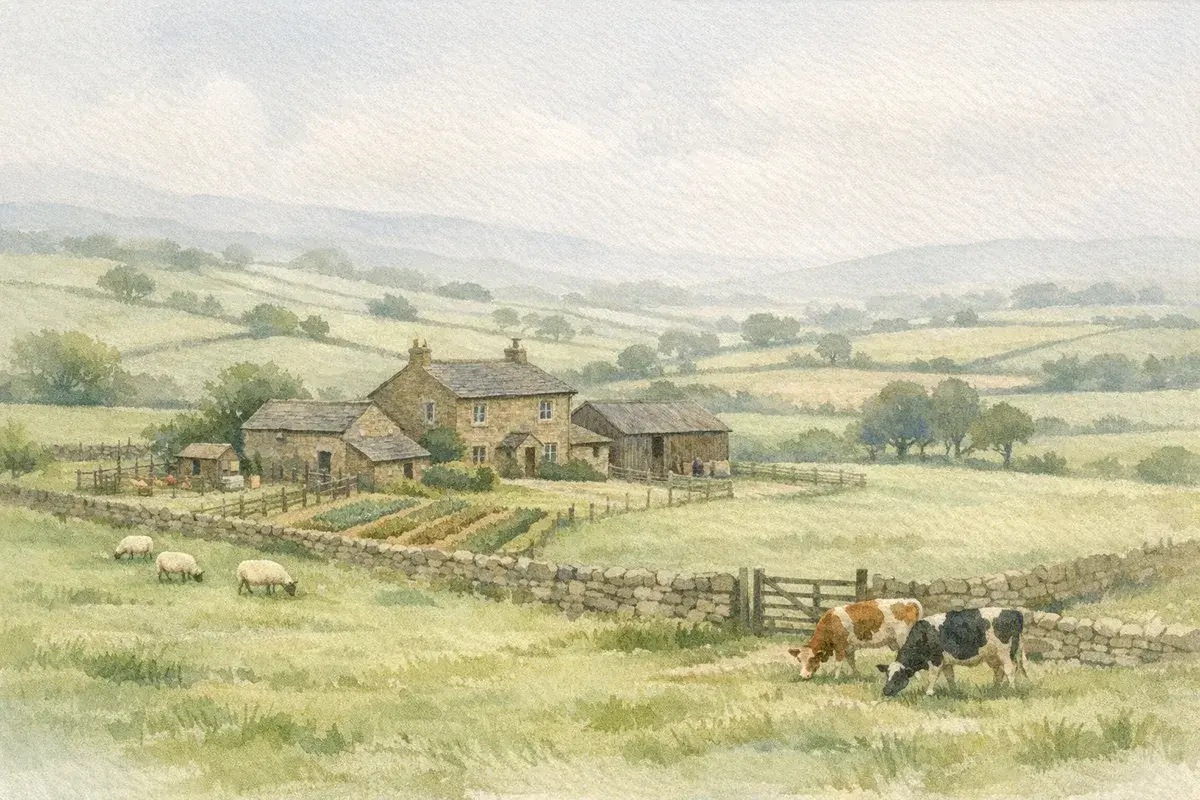
A "smallholding for sale with house" looks straightforward on paper: a bit of land, a home, maybe a barn, and the dream starts tomorrow. In practice, the house, the land, and the planning status can all pull in different directions, and it only takes one awkward detail (a shared track, a tired septic tank, a hidden covenant, an occupancy condition) to turn a good-looking listing into an expensive lesson.
This guide is written for UK buyers who want the lifestyle and the long-term resilience: a setup that works for your enterprise, your family, and your finances. You'll learn how to define what "right" looks like, where to find genuine rural opportunities, and what to check, properly, before you offer.
Define The Right Smallholding Setup For Your Goals
Buying a smallholding with a house isn't like buying a standard home with a big garden. You're effectively buying a mini rural business unit, plus the liabilities that come with land, buildings, access, and compliance. Before you even start viewing, get brutally clear on your non‑negotiables.
Land Size, Enterprise Type, And Realistic Workload
The biggest mistake we see is choosing acreage first and deciding the enterprise later. Flip that.
- Grazing animals (sheep, cattle, alpacas, goats): you'll need land that actually holds stock in your area, soil type, rainfall, and shelter matter as much as acres. Poor grass on wet ground can mean fewer livestock units than you imagined.
- Horses / equestrian: you'll want sensible field shapes, safe boundaries, hardstanding, and year-round access. (Not just "a stable block in the photos".)
- Horticulture / veg / polytunnels: flat-ish, workable soil, water availability, and access for deliveries become the real drivers.
- Woodland / amenity: access and legal rights (and what you can and can't do with the woodland) matter more than field quality.
Then be honest about workload. A couple of acres can keep you busy every evening: 10–20 acres with stock is a lifestyle shift. If you're new to the whole thing, it's worth reading a more foundational walkthrough on buying your first smallholding so you don't overcommit in year one.
House Spec, Outbuildings, And Space For Future Plans
With a "smallholding for sale with house", the house can quietly dictate what's possible.
Ask yourself:
- Do you need a house you can live in immediately, or can you tolerate a renovation while also establishing land management?
- Is the house positioned sensibly (privacy, noise from yards, smell from livestock, vehicle movements)? A beautiful cottage right beside a working yard can get old fast.
- Outbuildings: you're not just looking for square footage, you're looking for utility. A leaky, low eaves barn might not take a tractor, a trailer, or even decent ventilation for hay.
- Future plans: if you think you'll add a workshop, a farm office, a holiday let, stabling, or a replacement building, check early whether you're likely to be steered into planning hurdles.
If equestrian is part of the plan, it's worth comparing layouts and pitfalls in a dedicated guide to a smallholding with horse facilities, especially around access, arena drainage, and mixed-use issues.
Budgeting Beyond The Headline Price
The purchase price is just the opening number. Build a realistic "all-in" budget that includes:
- Surveys (house + specialist reports where needed)
- Immediate safety and compliance work (electrics, oil tank, boiler, chimney, asbestos)
- Land setup (fencing, gateways, water troughs, field shelters)
- Machinery and kit (you may not need a tractor: you probably will need something)
- Ongoing costs (insurance, maintenance of private drainage, tree safety, track repairs)
Also, don't underestimate how often buyers get caught by "cheap but complicated" listings, especially those with tired buildings or tricky access. If your search is price-led, keep your expectations grounded and use this piece on cheap smallholdings in the UK to understand what tends to sit behind a bargain.
Where To Find Smallholdings With Houses In The UK
Good smallholdings don't always sit around waiting for you. The best ones are often well-presented, priced with confidence, and sold quickly, because they work.
Specialist Rural Portals Vs Mainstream Property Sites
Mainstream property sites can be fine for a first sweep, but they're not built around land nuances. A listing might be tagged as "rural" when it's simply a house with a big lawn.
Specialist rural portals are different: they're geared to acreage, land types, outbuildings, and genuine agricultural/equestrian setups. On AgLand, for example, you can start with the broader "smallholding" market view and buying pitfalls in our guide to finding the right UK smallholding, then register exactly what you need - acreage, buildings, budget, area - and be alerted when it's advertised (rather than waiting for an estate agent's idea of "country living" to appear).
Working With Agricultural Agents And Off-Market Leads
If you're serious, speak to agricultural agents (the ones who handle farms, not just village homes) and be specific:
- your minimum/maximum acreage
- whether you need a house that's immediately habitable
- your must-haves (water, buildings, access for a trailer, privacy)
- your "deal-breakers" (public footpaths through a yard, short leases, restrictive occupancy)
Off-market opportunities exist, but they usually come through relationships and credibility. If you can demonstrate you're finance-ready and know what you want, you'll get calls earlier.
Shortlisting Faster With Filters, Maps, And Alerts
Speed matters, but so does discipline.
When you're shortlisting a "smallholding for sale with house", build a repeatable system:
- Map-first search: rule out areas with poor access to your work, schools, or livestock markets.
- Filter by essentials: acreage band, house type, outbuildings, and (where stated) services like mains water.
- Set alerts: new listings that fit your criteria should land in your inbox, not your "maybe later" pile.
- Create a viewing scorecard: you're comparing like-for-like, not vibes.
If your goal is more than a hobby plot, say you're aiming for meaningful food production, use a framework like our guide to a self-sufficient smallholding setup to define the infrastructure you'll need before you fall in love with the kitchen.
Due Diligence On The Land: What To Check Before You Offer
Land is where buyers either protect themselves, or get surprised. The tricky bit is that land issues can be invisible on a sunny viewing day.
Tenure, Boundaries, Access, And Rights Of Way
Start with the basics, then go deeper.
- Freehold vs leasehold: most smallholdings are freehold, but not all. A lease might work for some buyers, but you need to understand term length, rent reviews, repairing obligations, and what you can/can't do.
- Boundaries: don't assume the fence line is the legal boundary. Ask for the title plan, confirm who maintains each boundary, and look for gaps that invite future disputes.
- Access: is it adopted highway all the way? If there's a private track, who owns it, who maintains it, and do you have a clear right of access for vehicles, livestock trailers, and deliveries?
- Rights of way: a public footpath across a quiet field is one thing: a bridleway through your yard is another. Walk the route and picture daily life.
If you plan to run stock or build up the holding, tidy boundaries and reliable access aren't "nice to haves", they're what makes the place workable.
Soil, Drainage, Water Supply, And Flood Risk
Land quality is local. Two plots with the same acreage can perform very differently.
- Soil: heavy clay can be productive, but it can also poach badly in winter and turn horse paddocks into a churned mess. Sandy soils drain well but can need more inputs and water management.
- Drainage: look for standing water, rushes, and poached gateways. Ask what drainage is in place and whether any outfalls cross third-party land.
- Water supply: is there a mains supply to the house only, or also to the yard/fields? If it's private water (spring/borehole), ask about maintenance, treatment, and recent test results.
- Flood risk: check the obvious (nearby rivers, low-lying ground) and the less obvious (surface-water pooling, overwhelmed ditches). You can't insure your way out of every flood problem if it impacts access.
Environmental Designations And Stewardship Commitments
Some land comes with strings, and they aren't automatically bad. But you must understand them.
- Designations: land within National Parks, AONBs, SSSIs, or areas with protected habitats can mean tighter controls on development and land works.
- Stewardship schemes: if the land is in a stewardship agreement, clarify whether it's transferable, what the obligations are (mowing dates, stocking limits, hedgerow rules), and whether there are penalties for breach.
- Trees and hedges: felling licences, Tree Preservation Orders, and hedgerow regulations can all affect management.
A good agricultural agent or land advisor can help you interpret what's practical. But as the buyer, you want everything written down and verified, not "we think it's fine".
Due Diligence On The House And Buildings
The house is usually your biggest financial exposure, and the buildings can make or break how you use the land. The goal isn't to find "perfect", it's to understand what you're taking on.
Construction Type, Condition, And Survey Strategy
Older rural houses can be glorious… and complicated.
- Construction type: stone, solid brick, cob, timber frame, each behaves differently. What looks like "a few cracks" might simply be seasonal movement, or it might be structural.
- Damp: traditional buildings often need breathable materials: modern waterproofing can trap moisture and create bigger issues.
- Roofs and chimneys: rural exposure (wind, driving rain) accelerates wear. Budget for roof work if it's nearing end of life.
Survey strategy matters. A basic mortgage valuation is not a survey. Consider a RICS Home Survey (Level 2/3 depending on complexity) and specialist inspections where relevant (roof, timber, damp, drainage, electrics).
Services: Septic Tanks, Private Water, And Utilities Capacity
Rural services are where "it worked for the last owner" can hide a mess.
- Private drainage: if the property has a septic tank or package treatment plant, confirm what it is, where it discharges, whether it meets current rules, and who maintains it. Replacement can be expensive and sometimes triggers planning/environmental scrutiny.
- Private water: if you're on a spring or borehole, ask for water quality tests and check the system (storage tanks, filtration, UV treatment). Also check flow rate, especially if you plan livestock, irrigation, or holiday accommodation.
- Electricity capacity: a holding with workshops, freezers, pumps, and maybe EV charging might need an upgraded supply. Don't assume you can "just add" a big consumer unit or new outbuilding supply without cost.
Outbuildings, Yards, And Lawful Use
A barn is not automatically a barn you can use.
- Structural condition: look at frame integrity, roof sheets, walling, gutters, and floors. A building that's cheap to buy can be expensive to make safe.
- Practical layout: can you get a vehicle in and out without reversing for 200 metres? Is there hardstanding for winter? Are there safe handling areas if you keep livestock?
- Lawful use: how buildings have been used historically matters, especially if you're thinking of conversion, commercial storage, livery, or holiday lets. Don't rely on verbal assurances: you want the planning position checked.
And if you're planning to extend, replace, or add buildings as part of your long game, get familiar with the practical limits and pitfalls around smallholding planning considerations before you commit.
Planning, Permitted Development, And Rural Occupancy Restrictions
Planning is where many "smallholding for sale with house" deals either become straightforward, or quietly risky. The UK planning system is local-authority led, and rural properties often carry historic conditions.
Agricultural Ties, Section 106, And Occupancy Conditions
An agricultural occupancy condition (often called an "agricultural tie") can restrict who is allowed to live in the property. The exact wording matters.
Common features include:
- requiring the occupier to be employed (or last employed) in agriculture/forestry, sometimes also in the locality
- restricting occupation to a person mainly working in rural enterprise and their dependants
- linking the dwelling to a specific holding
These conditions can affect value, mortgage options, and resale demand. They're not automatically a deal-breaker, especially if you genuinely need them for a working setup, but they must be understood early, in writing, with proper advice.
Section 106 agreements can also impose ongoing obligations. Don't treat them as "admin". Read them.
Change Of Use, Equine Use, And Mixed-Use Traps
Equestrian is a classic trap for new buyers.
- Grazing horses can sometimes look like agriculture, but keeping horses for leisure is generally treated as equestrian use, not agriculture.
- Schools, arenas, stables, and livery can trigger planning requirements (and neighbour scrutiny) even if the land is already "rural".
- Mixed use, say, a smallholding with a yard used partly for storage, partly for agricultural kit, needs careful handling.
The safe approach is to assume that if you're intensifying use, adding buildings, or running a business element, you'll need clarity from the local planning authority. Sorting it after you've exchanged is the stressful way round.
What You Can Build Or Convert Under Permitted Development
Permitted development rights can allow certain agricultural buildings and works without full planning permission, but it's not a free-for-all.
Key points (and yes, the detail matters):
- rights depend on factors like holding size, location, and what the building is for
- you may need prior notification/approval for siting, design, and highways impact
- land in sensitive areas can face tighter restrictions
- converting buildings to residential or other uses has its own classes and conditions
Treat permitted development as a planning tool, not a guarantee. If your purchase depends on a future build, get professional planning input before you rely on a best-case interpretation.
Finance, Tax, And Legal Steps To Get The Purchase Right
Most buyers focus on "Can I afford it?" A better question is: "Can I finance it on sensible terms, with the right protections, and without nasty tax surprises?"
Mortgages For Rural Property And Smallholdings
Financing a smallholding with a house can be more nuanced than a standard residential purchase.
Lenders may look closely at:
- acreage and how the land is used
- income-generating activity (positive or negative depending on lender appetite)
- non-standard construction
- occupancy conditions
- condition of services (especially private drainage)
Some buyers end up needing a specialist lender or a broker who understands rural property. If you want the lender-side reality check, start with our practical guide to a smallholding mortgage in the UK so you can line up decisions before you fall in love with a place that's hard to fund.
Stamp Duty, VAT On Buildings, And Transaction Costs
Property tax in the UK is fact-specific and changes over time, so treat this as a prompt list, not a quote.
- Stamp Duty Land Tax (SDLT): the rate and reliefs can vary depending on whether the purchase is purely residential, mixed-use, or includes additional dwellings/annexes. Get advice early if the land and buildings don't fit the "standard home" box.
- VAT: can arise on certain new builds, conversions, or commercial elements. If part of the holding has a business use, VAT can get complicated quickly.
- Transaction costs: surveys, searches, legal fees, lender fees, insurance, and immediate works can add up fast.
If you're buying as an investor or through a structure (partnership/company), or you're planning diversification, it's sensible to speak to a tax advisor familiar with rural assets before you exchange.
Solicitor, Search Pack, And Contract Clauses That Matter
Use a solicitor who is comfortable with rural transactions, because the contract pack can include things a standard conveyance rarely sees.
Ask your solicitor to pay close attention to:
- rights of way, easements, and ransom strips
- boundary responsibilities and disputes
- private water and drainage documentation
- restrictive covenants (limits on business use, buildings, or animals)
- overage/clawback provisions (common where land has development potential)
- what's included in the sale (fencing materials, gates, equipment, livestock handling systems)
And don't be shy about contract clauses. If access depends on a shared track, for example, you'll want clear wording on maintenance contributions and rights, ideally before you spend more money on surveys.
Viewing Like A Pro: A Practical Checklist For Site Visits
A viewing is not just a wander around the kitchen and a stroll in the paddock. You're checking whether the place works on a wet Tuesday in February.
Questions To Ask The Seller Or Agent
Bring a notebook. Ask directly, and write down the answers.
Land & access
- Who maintains the access track, and how is cost shared?
- Are there any rights of way across the land or near the house?
- What's been grown or grazed, and how has the land been managed?
Services & compliance
- What drainage system is in place and when was it last serviced?
- Is the water mains or private, and do you have recent test results if private?
- Any known issues with flooding, damp, or utilities outages?
Planning & restrictions
- Any agricultural ties, occupancy conditions, or S106 agreements?
- Any recent planning applications nearby (housing, roads, solar, wind, quarries)?
Red Flags: Access, Water, Neighbours, And Enforcement Risk
Some red flags are obvious. Others are quiet.
- Access that's technically legal but practically awful: steep, narrow, flood-prone, or reliant on a neighbour's goodwill.
- Water uncertainty: no clear supply to fields, weak private supply, or vague answers about treatment.
- Neighbour dynamics: barking kennels, informal parking rights, shared yards, or long-running boundary tensions.
- Enforcement risk: evidence of unauthorised development or use changes, storage businesses, long-term caravans, built structures with no paperwork. Even if you didn't create the issue, you can inherit the headache.
If the seller's story is "It's been like that for years," your next question is "What paperwork supports it?"
Turnkey Vs Project: Costing Renovation And Infrastructure
Project smallholdings are tempting because they feel like potential. But costs can stack up fast when you're dealing with rural realities.
A practical way to sanity-check:
- Prioritise livability first: heating, electrics, roof integrity, water, drainage.
- Price the essentials for land use: perimeter fencing, secure gates, hardstanding, water troughs, a safe handling pen if needed.
- Add contingency: rural projects regularly uncover surprises, underground leaks, rotten lintels, inadequate wiring, collapsed drains.
If you're planning to build a more robust smallholding life after completion, it helps to map out your first 6–12 months using a grounded roadmap like this guide on starting your smallholding, it'll stop you spending your entire first season chasing urgent fixes.
Conclusion
The right "smallholding for sale with house" isn't the one with the prettiest photos, it's the one where the land is usable, the house is fundable, the services are understood, and the planning position matches what you intend to do.
If you take one mindset into your search, make it this: treat every viewing like a due diligence exercise, not a daydream. Ask the awkward questions early. Verify the answers. And when something matters (access, drainage, occupancy, lawful use), get it checked properly before you commit.
Disclaimer: AgLand.co.uk is a UK agricultural land and rural property matching service, where buyers register what they are looking for and owners advertise directly to the buyers who match, and a rural resource hub. Nothing in this text is intended as legal, financial, tax, or investment advice. You should carry out your own due diligence and take independent professional advice (for example from qualified solicitors, surveyors, accountants/tax advisers, and planning consultants) before making decisions or acting on any information.