
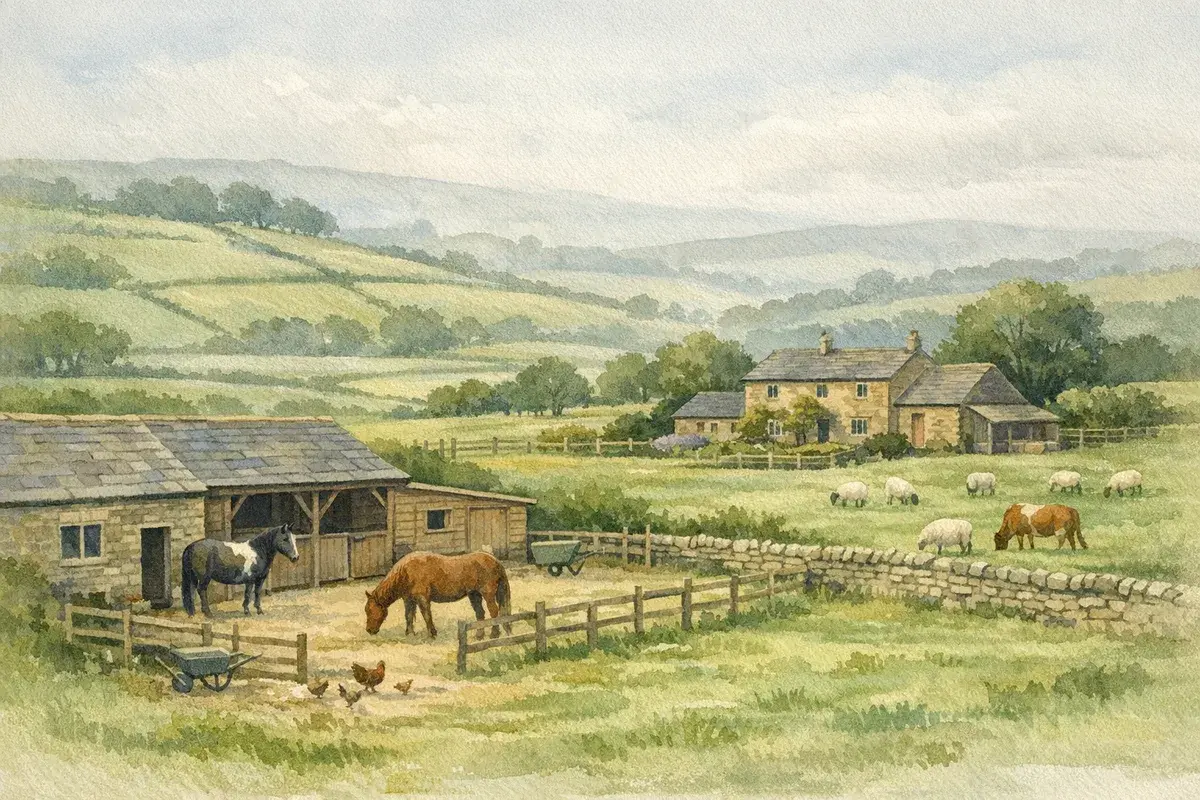
You don't buy a smallholding with stables the way you buy a normal house. The photos might show neat timber boxes, a tidy yard and a couple of green paddocks… but the real test is whether the place works in February, in the dark, when the ground's waterlogged and you've got a vet trying to get in while a feed lorry wants out.
If you're looking in the UK, the biggest wins usually come from getting three things right early: (1) your use case (horses only, mixed smallholding, or lifestyle), (2) the land and layout (access, drainage, water), and (3) the planning position (agricultural vs equestrian can change what you can do and what it's worth). This guide walks you through the practical checks, cost realities, and buying steps so you can move quickly, without stepping on the classic rural property landmines.
Define Your Use Case: Horses, Mixed Agriculture, Or Lifestyle Holding
A "smallholding with stables" can mean anything from two ponies behind the house to a multi-income setup with DIY livery, schooling, and a bit of grazing let out. Before you fall for a pretty yard, get brutally clear on the job you need the property to do.
How Many Horses, What Level Of Riding, And Year-Round Turnout Needs
Start with the non-negotiables:
- How many horses now, and in three years? People often buy for two and end up with three (or two plus a youngster, or a retiree you can't rehome). Space, storage, and muck management scale quickly.
- Your riding level matters. Happy hackers need safe hacking routes and decent storage. Competitive riders need consistent surfaces, lighting, parking and a realistic plan for winter work.
- Year-round turnout is the stress test. If you expect turnout 12 months of the year, you need either unusually free-draining land or a deliberate system: multiple paddocks, rested ground, and a sacrifice area to protect your grazing.
A useful mindset: you're not just buying stables, you're buying a system (grazing, handling, storage, access, waste, and workflow).
Grazing Versus Hay: Land Requirement Rules Of Thumb And Stocking Rates
UK land varies wildly. "Two acres" can be lush and productive on one holding, and a mud-bath with poor grass on another.
Rules of thumb (not gospel):
- Many owners aim around 1–2 acres per horse for grazing, but that swings with soil type, rainfall, grass management, and whether you're supplementing with hay/haylage.
- If you're on heavier clay, expect a bigger emphasis on rotation, rested paddocks, and hardstanding, because grass recovery is slower and poaching risk is higher.
- If you're relying heavily on bought-in forage, the land can be smaller, but your storage, access, and costs climb.
If you're unsure what's realistic, it's worth reading up on the basics of scale, because even the definition of a "smallholding" is fuzzier than most people expect. Our explainer on how small a smallholding can be (and still function) helps you sanity-check acreage against your ambitions.
Business Intent: Livery, Schooling, Holiday Lets, Or Diversification
The moment money changes hands, your decisions get sharper, and so do your obligations.
Ask yourself:
- Are you planning any livery at all? Even "just one horse for a friend" can change traffic levels, insurance, yard design, and sometimes planning considerations.
- Will you teach, coach, or run clinics? That can bring parking, lighting, amenity impact, and neighbour sensitivities into play.
- Diversification plans? Holiday lets, glamping, farm shop, storage units, these can be brilliant, but they drag in planning, access standards, drainage, utilities capacity, and business rates.
If your longer-term goal is a broader smallholding lifestyle (veg, poultry, small livestock, maybe a bit of off-grid capability), it's worth comparing your shortlist against what you'd expect from a more self-reliant setup. This guide to finding a self-sufficient style smallholding is a good cross-check for water, storage, and land quality.
Land, Access, And Layout: The Practicalities That Make Or Break A Holding
A smallholding with stables lives or dies on layout. The best setups feel almost boring: the gate is where it should be, the track holds up, water is where you need it, and winter doesn't turn everything into a trench.
Acreage, Paddock Design, And Field Shelters
Look for land that's usable, not just pretty:
- Paddock shape and division: Long, thin strips are awkward. One big field is hard to manage. Ideally you want a sensible number of paddocks for rotation, with gates that don't funnel everything into one mud patch.
- Shelter and aspect: Natural hedges and tree lines can be gold. Exposed sites may need field shelters, but shelter placement matters for poaching (you don't want every horse standing in one wet corner all winter).
- Safe boundaries: Post-and-rail looks lovely but isn't automatically "horse safe" if it's rotten, poorly nailed, or combined with dangerous mesh. Check what's actually there, and budget to replace what you can't trust.
Also: where is the muck going? If you can't site a heap sensibly with access for removal, you'll feel it every week.
Access For Horseboxes, Feed Deliveries, And Emergency Vehicles
Access is one of those things you only notice when it's wrong.
Check:
- Approach roads and pinch points: Tight bends, low branches, narrow lanes, and weak verges can make horsebox access miserable.
- Gate widths and turning circles: Can a 7.5t lorry turn? Can a box get in without reversing half a mile? Where would an ambulance or fire appliance stop?
- Yard flow: If you have to lead horses across the driveway every time a delivery arrives, it gets old fast.
If the holding relies on a shared drive or third-party access, treat that as a major due diligence item, starting with the registered title and plan (more on that below).
Water, Drainage, And Winter Ground: Poaching, Mud, And Sacrifice Areas
In the UK, winter ground conditions are where the dream either settles into routine, or turns into daily slog.
You're looking for evidence of how the land behaves:
- Standing water and rushes: Not always fatal, but they tell a story.
- Gateways: Are they firm, tracked, and drained, or churned to soup?
- Hardstanding: A properly thought-out yard, track, or turnout pen can save your grazing.
Most successful horse smallholdings have some version of a sacrifice area (a surfaced turnout or restricted paddock used when conditions are worst). It protects the rest of your grass, reduces injuries, and makes spring recovery realistic.
If you're learning the ropes, don't underestimate how many decisions are "smallholding decisions" as much as they're "horse decisions". Our guide to starting out on a smallholding in the UK is useful for thinking about systems: water, storage, access, and day-to-day workflow.
Stables And Yard Spec: What “Good” Looks Like In UK Smallholdings
There's a certain type of stable block that photographs brilliantly and performs terribly. Dark boxes, low airflow, awkward doors, no storage… and no plan for fire safety. A good yard feels practical first, pretty second.
Stable Dimensions, Ventilation, Lighting, And Fire Safety
In broad terms, you want stables that are:
- Big enough for the horses you'll actually keep. Many UK yards work around 12ft x 12ft for average horses, with larger boxes preferable for big types, foaling, or rehab situations (your vet will thank you).
- Ventilated without being draughty. Condensation, mould, and ammonia smell are red flags.
- Well lit and safe to work in. Consider both day-to-day lighting and whether you'll need exterior lights for winter.
Fire safety isn't glamorous, but it's non-negotiable. Practically, you're thinking about:
- Clear, wide exits (and doors that open freely)
- Where electrics run and how tidy/modern they are
- Separation between hay/straw storage and stabling, where possible
- Access for emergency services (yes, again)
Essential Extras: Tack Room, Feed Store, Wash Bay, And Secure Storage
Most people underestimate the "stuff" problem. A working yard needs:
- Secure tack room: Not just for theft, also for keeping leather dry and rodents out.
- Feed store that stays dry: And is realistically accessible when you're carrying sacks in the rain.
- Wash bay / hose point: Even a simple safe tie-up point with drainage is a quality-of-life upgrade.
- Tool and machinery storage: You'll end up with a mower, wheelbarrows, forks, fencing kit, maybe a compact tractor, plan for it.
Also ask: where do rugs dry? Where does the farrier work? Where do you park without blocking everything?
Manège, Lunge Pen, And All-Weather Surfaces: Costs And Maintenance
A manège can transform a smallholding with stables, especially in the UK climate, but it's not a one-and-done purchase.
Key realities:
- Groundworks and drainage are the real cost drivers. The surface you see is only part of the build.
- Maintenance is ongoing. You'll need to harrow/level, manage weeds, keep edges tidy, and occasionally top up or replace the surface.
- Lighting and neighbours: Floodlights and regular use can create amenity concerns. Consider line of sight, hours of use, and whether you're likely to host others.
If the property already has a manège, ask for details: when it was built, by whom, what the base is, what the drainage design is, and whether any remedial work has been needed. A "tired" arena can be a five-figure surprise.
Planning, Permitted Development, And Change Of Use: Staying On The Right Side Of The Rules
Planning is where smallholdings with stables get complicated quickly, because horses sit awkwardly between agriculture and leisure in the UK planning system.
Agricultural Versus Equestrian Use: Why It Matters For Planning And Value
Here's the crux: grazing horses isn't automatically treated the same as agriculture.
- Land used for agriculture (crops, livestock farming) benefits from certain planning frameworks and, in some cases, permitted development rights.
- Land used for keeping horses for leisure is commonly treated as equestrian rather than agricultural.
That distinction can affect:
- What you can build under permitted development
- Whether existing buildings are lawful for their current use
- Future resale value (buyers and lenders pay attention to planning clarity)
If you plan to do a mix, say, sheep grazing plus personal horses, get advice early on how the local authority is likely to view the primary use.
Permitted Development Limits, Prior Notification, And Common Tripwires
Permitted development can help in the right circumstances, but it's not a free-for-all. Common tripwires we see include:
- Assuming any stable is "agricultural" when the use is clearly equestrian
- Building tracks, menèges, or field shelters without understanding local sensitivities (landscape designations, highways issues, neighbour impact)
- Relying on "it's been there ages" without evidence
If you're considering any new stables, a barn conversion, or diversification use, read this alongside our more detailed guide on smallholding planning permission in practice. It's written for real-world decision-making, what tends to trigger scrutiny, what documents matter, and why getting it wrong can cost you.
Existing Consents, Enforcement Risk, And What To Check Before You Offer
Before you put in an offer, get very specific about what's authorised:
- Ask for copies of planning permissions, conditions, and any lawful development certificates
- Check whether there are restrictions such as agricultural occupancy ties (or other occupancy conditions)
- Confirm whether the current stable yard, lighting, arena, or access works match what was approved
If anything feels vague, "the previous owner did it years ago", slow down and verify. Planning enforcement risk isn't theoretical: it can affect your ability to insure, finance, and use the holding the way you intend.
Legal Due Diligence: The Checks That Protect You After Completion
Rural property legal work is rarely about paperwork for paperwork's sake. The right checks protect your day-to-day use: getting feed in, getting horses out, keeping neighbours onside, and avoiding nasty surprises after completion.
Rights Of Way, Easements, And Access Over Third-Party Land
Start with access, every time.
- Public rights of way: A footpath through a paddock isn't necessarily a deal-breaker, but it changes fencing, signage, safety, and privacy. It can also affect where you put gateways or shelters.
- Private rights and easements: If you rely on a track over someone else's land, you need clarity on who maintains it, what vehicles are allowed, and whether you can improve it.
- Ransom strips and ambiguous verges: These can cause real headaches for widening entrances or improving access.
Ask your solicitor to explain the access rights in plain English, and if anything's uncertain, push for answers before exchange.
Boundaries, Title Plans, And Overage Clauses On Rural Property
With smallholdings, "the boundary is the hedge" can turn out to be optimistic.
Do the unglamorous checks:
- Compare the title plan to what's on the ground (fences, ditches, hedges)
- Look for unregistered land quirks (more common than you might expect in rural areas)
- Watch for overage/clawback clauses, especially where there's development potential (even minor) or where land has been split from a larger estate
Overage isn't always bad, but you need to understand what triggers it, for how long, and how it's calculated.
Utilities, Septic Tanks, Private Water, And Compliance Paperwork
Many smallholdings with stables come with private systems. You're checking:
- Septic tanks / package treatment plants: What type is installed, whether it meets current rules, and what maintenance records exist
- Private water supplies: Testing history, treatment equipment, and responsibilities
- Electrics: Capacity for lights, clippers, horsebox charging, workshop use, and the general condition of wiring in outbuildings
Also think about practical resilience: if the water freezes, what's your plan? If the power trips, do you lose the whole yard?
Costs, Finance, And Tax: Budgeting Beyond The Headline Price
The purchase price is only the start. The running costs of a smallholding with stables can be predictable if the setup is good, or relentlessly surprising if it's not.
Typical Running Costs: Fencing, Bedding, Feed, Insurance, And Waste
Your main recurring costs typically include:
- Fencing and gates: Repairs are constant, and horse fencing is not where you cut corners.
- Bedding: Costs vary by type (shavings, straw, pellets) and by horse management choices.
- Feed and forage: Even with good grazing, most owners buy in forage at points in the year, especially for winter, poor-doers, or youngsters.
- Insurance: Property, public liability, and potentially care/custody/control if others' horses are on site.
- Muck management: Whether you compost, arrange regular removal, or spread (where permitted and sensible), it has both cost and practical implications.
If you're planning a "value buy" to make work, be careful. Cheap can be legitimate, equally, it can mean expensive fixes. This primer on finding cheaper UK smallholdings without getting caught out is a useful lens for separating bargain from burden.
Mortgages For Smallholdings: Lenders, Valuation Issues, And Deposit Expectations
Financing rural property is rarely as straightforward as a standard suburban purchase.
Potential issues include:
- Non-standard construction (farmhouses, older cottages, timber outbuildings)
- Acreage and outbuildings: Some lenders become cautious as land size increases or where there are multiple buildings and mixed uses
- Income elements: If there's livery income, holiday let income, or commercial yard use, lenders may scrutinise affordability and valuation differently
Expect more questions, a more involved valuation, and potentially a larger deposit than you'd see on a typical residential purchase, especially where the property is clearly a mixed rural enterprise.
Tax Touchpoints: Council Tax, Business Rates, VAT, And Reliefs To Ask About
Tax on rural property depends heavily on facts: how it's used, what income it generates, and how it's set up.
Typical touchpoints to raise with your accountant/tax adviser:
- Council Tax vs business rates: A primarily residential smallholding will generally sit in Council Tax, but commercial elements can change the picture.
- VAT: Some costs and income streams may be VAT-relevant if you're operating as a business and registered.
- Reliefs: Depending on structure and use, there may be reliefs to consider (or pitfalls to avoid).
Don't DIY this bit from forum threads. The "right" answer is often different for two buyers looking at the same property.
How To Find The Right Smallholding With Stables And Buy Well
A strong purchase usually looks boring from the outside: clear criteria, disciplined searching, and methodical checks. But it's exactly that approach that keeps you from paying for someone else's shortcuts.
Search Strategy: Registered Requirements, Match Alerts, And Off-Market Leads Through Specialist Agents
If you're serious about buying a smallholding with stables, build a search process that matches how rural stock actually comes to market.
- Be specific about the features that matter: not just "stables", but access, arena potential, outbuildings, and enough land to rotate.
- Register your requirements and act fast: good yards don't hang around, particularly in accessible commuter-friendly areas.
- Use specialist agents: they'll often know what's coming before it's widely advertised, and they understand how to describe land, buildings, and planning status accurately.
Looking for land like this? Tell AgLand what you're after - type, acreage, budget and area - and we'll alert you the moment a matching property is advertised. Registering is free, and there's no commission on either side. Tell us what you're looking for.
For a broader approach to building your shortlist, where to look, what to prioritise, and how to avoid the classic traps, our main guide on finding the right smallholding in the UK is designed to slot into your search planning.
Viewing Checklist: Questions To Ask, Red Flags, And Evidence To Request
Treat viewings like fact-finding missions. You can be polite and still be thorough.
Bring questions that surface the real story:
- What's the water supply to paddocks and yard, mains or private? Any history of freezing or shortages?
- How does the land hold up in winter, where are the wet spots, and what's the current turnout routine?
- What's included in the sale (field shelters, jumps, machinery, stable fittings)?
- What are the neighbour relationships like, any disputes about access, noise, or lights?
- Can you see copies of planning consents for stables/arena/lighting and any building invoices or drainage plans?
Red flags worth taking seriously:
- Strong ammonia smell or damp in stables (ventilation issues)
- A smart front yard but chaotic storage and no muck solution
- A "perfect" arena with no details about base/drainage
- Access that feels marginal in a normal car, because it'll be worse in a lorry
Offer To Completion: Surveys, Negotiation Levers, And When To Bring In Specialists
Once you're serious, bring in the right professionals early. On the best purchases we've seen, buyers build a small team:
- A rural solicitor who deals with land, rights, and rural covenants routinely
- A surveyor with rural property experience (not just a generic house survey)
- If relevant, an equine/farm buildings specialist to sanity-check stables, drainage, and surfaces
- For business use, an accountant/tax adviser who understands rural trading and property structures
Negotiation levers are usually factual, not emotional:
- Evidence of drainage failures, fencing replacement needs, or arena refurbishment costs
- Unclear planning position (which you can't ignore, and the seller can't easily magic away)
- Access or title issues that require legal work or indemnities
And don't underestimate timing: rural conveyancing can be slower because there's simply more to check.
If you're new to the process, reading a step-by-step guide aimed at first-time rural buyers can save you from avoidable mistakes. Our piece on buying a smallholding as a beginner covers the practical order of operations, what to do first, what to verify, and when to spend money on reports.
Conclusion
A smallholding with stables is one of the most rewarding rural property buys you can make, when it's set up to work in the real UK climate and the planning/legal position is clean. The best approach is to decide your use case early, judge land by winter performance (not summer colour), and treat access, water, drainage, and permissions as first-class buying criteria.
If you do that, you'll view differently, negotiate more confidently, and end up with a holding that supports your horses and your lifestyle, rather than dictating it.
Disclaimer: AgLand.co.uk is a UK agricultural land and rural property matching service, where buyers register what they are looking for and owners advertise directly to the buyers who match, and a rural resource hub. Nothing in this text is intended as legal, financial, tax, or investment advice. You should carry out your own due diligence and seek advice from suitably qualified professionals (for example, solicitors, surveyors, planning consultants, accountants, and independent financial advisers) before making decisions or committing to any transaction.