
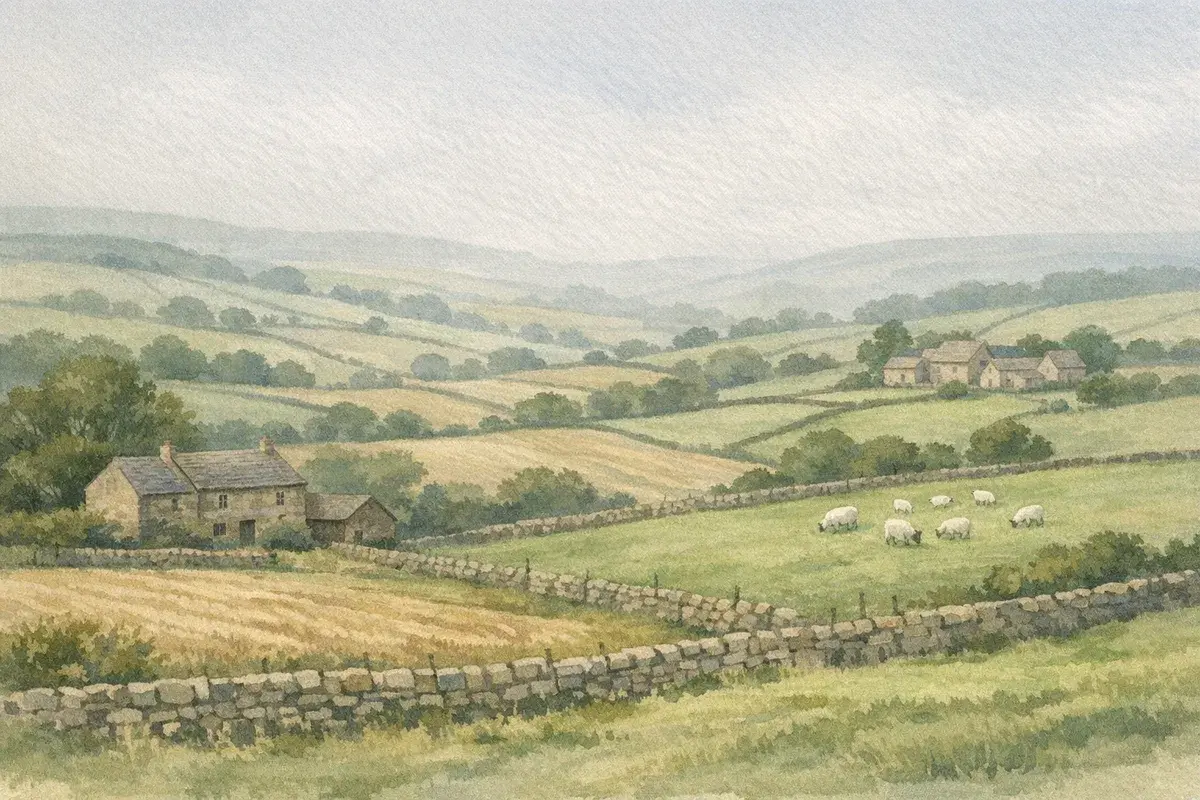
Arable land can look deceptively simple from a gate: a tidy hedge, a flat-looking field, maybe a bit of wheat stubble and a "For Sale" board. But the value (and the risk) sits in the details you can't see at 20 yards, drainage history, cropping records, rights of way, stewardship obligations, and whether you'll actually be able to work it efficiently with your kit.
If you're searching for arable land for sale in the UK, whether to expand a farming business, place capital into productive rural assets, or secure land for the long term, this guide is designed to help you buy with your eyes open. We'll cut through the common time-wasters, explain what really moves value, and give you a due diligence checklist that stands up in the real world (not just in theory).
What Counts As Arable Land In The UK (And Why It Matters)
Arable land, in plain terms, is land that's been cultivated (or can be cultivated) to grow crops, cereals, oilseeds, pulses, roots, and other combinable or field-scale crops. In practice, though, what's described as "arable" can cover everything from Grade 2 loams you can drill in a wet autumn, to lighter land that burns off in June, to heavier clay that looks perfect until you meet it after a fortnight of rain.
Why it matters: you're not just buying acres, you're buying working capacity, a specific risk profile, and constraints that affect cropping, compliance, and resale.
Arable Vs Pasture Vs Mixed Use: Practical Differences For Buyers
When agents say "arable", they usually mean one (or a blend) of these situations:
- Established arable: a field with a recent track record of cropping, typically with workable access, headlands that aren't a battle, and machinery-friendly layouts.
- Temporary grass in rotation: common on mixed farms or where a soil has benefited from a grass break. It may still be "arable capable", but the practical reality depends on compaction, weeds, and how long it's been down.
- Mixed use blocks: arable fields plus pasture paddocks, woodland belts, tracks, yards, or buildings. Often a good thing, but only if you're clear what's genuinely productive and what's amenity.
The differences show up in cost and operations:
- Power and timeliness: arable needs you to hit drilling and spraying windows: pasture is generally less timing-critical.
- Soil condition and weed burden: land coming out of grass can be structurally brilliant, or riddled with docks and compaction from livestock.
- Infrastructure priorities: arable values good access, turning space, and efficient field shapes. You'll feel every awkward corner in diesel, time, and operator fatigue.
If your plan is to run an arable rotation, don't let a sales line do the thinking for you. Your question is: can I farm this the way I farm, with the kit I use, without constant compromise?
Cropping History, Rotations, And Stewardship Commitments
Cropping history is more than curiosity, it's an early warning system. Before you get too attached to a block, ask for:
- Recent cropping records (ideally 5+ years): rotations, break crops, and any long runs of cereals.
- Weed pressure indicators: black-grass, brome, sterile oat, ryegrass. If a seller is vague, assume you need to investigate harder.
- Nutrient and lime history: when it was last limed, typical P/K indices, organic matter inputs.
Also, look for stewardship commitments. In England, land may be in (or recently exited) a Countryside Stewardship agreement, and many businesses are transitioning into newer schemes as the policy landscape evolves. In Scotland and Wales, there are different frameworks and requirements, but the practical point is the same: if there are obligations attached to the land, buffer strips, no-spray zones, winter cover rules, capital works, those can affect what you can crop and when.
One tip we've seen save buyers time: ask for a simple map showing any options or prescriptions overlaid on the field plan. It's hard to price a field properly if 10–15% is effectively "managed out" of production.
Where To Find Arable Land For Sale (And How To Avoid Wasted Viewings)
Finding arable land for sale isn't usually the hard part. Finding the right land, at the right scale, with workable access, clean title, and a sensible risk profile, is what separates a confident purchase from a slow-motion headache.
On-Market Listings, Off-Market Opportunities, And Farm Disposals
Most buyers see the on-market opportunities: advertised blocks, farm dispersals, and land sold in lots. But a meaningful proportion of good arable ground changes hands more quietly.
Here's how the channels differ:
- On-market: best for transparency and comparables. You'll also see more competition, tighter timelines, and the occasional "hope value" pricing.
- Off-market: can be efficient if you're a proceedable buyer and you're clear on what you want. But it's relationship-driven: you need the right agents, advisers, and local network.
- Farm disposals and restructuring: sometimes the best arable land comes as part of a wider sale. Lotting can create opportunity if you understand how the vendor has split the holding.
If you're early in your search, it's worth reading a more detailed breakdown of routes and pitfalls, this guide on where buyers actually source agricultural land reflects what we see across the UK market, including the practical reasons viewings get wasted.
Using Specialist Search Filters: Acreage, Soil, Access, And Location
A serious search isn't just "within 10 miles of X". It's more like building a shortlist that fits your system.
Filters and criteria that genuinely reduce wasted viewings:
- Acreage and block shape: a compact 80-acre block can outperform a fragmented 120-acre package on labour and machinery efficiency.
- Access and road frontage: check for width, turning, banks, visibility splays, and whether you're sharing a track. A perfect field you can't reach with a drill isn't perfect.
- Soil and drainage: don't rely on a single descriptor like "loam". You're looking for consistency, workable windows, and known limitations.
- Local fit: distance to your yard matters: so does local contractor availability, storage options, and whether you'll be travelling through villages at awkward times.
A practical habit: before booking a viewing, open up your mapping and make a quick "workability check", how many gateways, how awkward the headlands are, where the wet spots sit, and how you'd run a tramline pattern. It's amazing how many ‘nice' fields fail that five-minute test.
Understanding What Drives Arable Land Values)
Arable land values in the UK are shaped by a mix of productive capacity, local demand, scarcity, and, sometimes, non-farming motivations (long-term capital, lifestyle, tax planning, or strategic control).
You'll often hear a simple headline like "£X per acre", but that's the end of the story, not the beginning. Two fields of the same size can trade at very different levels once you account for how they perform, how they fit, and what risks sit underneath.
Location, Block Size, And Lotting Strategy
Location is not just postcode prestige. It's the combination of:
- Proximity to your base (or to strong local farming businesses if you're investing)
- Road network quality (time, diesel, and stress add up)
- Local competition (neighbouring farmers, investors, estates)
- Regional cropping suitability (and typical yield stability)
Block size matters because it influences how many "non-productive" metres you pay for: awkward boundaries, margins, headlands, tracks, and time lost moving kit. Larger, squarer blocks tend to command a premium because they're cheaper to farm per acre.
Then there's lotting strategy. Vendors may split a holding into lots to attract different buyer types. That can create opportunity if a "less pretty" lot is actually the most practical arable unit (good access, clean boundaries, easy to farm), while the more marketable lot carries complexity (shared tracks, ransom strips, retained rights, or tricky neighbours).
Soil Type, Drainage, Topography, And Field Layout
Soil is where the real value lives, and it's also where assumptions cost money.
Look beyond soil "type" and focus on farming outcomes:
- Drainage performance: does it travel early, or are you always waiting? Old tile drains may exist, condition and outfalls matter.
- Topography: slope affects erosion risk, machinery safety, and soil movement. A gentle slope is manageable: broken ground with hollows can be a time sink.
- Compaction risk: heavy land can be highly productive when managed well, but you'll need a plan for traffic and remediation.
- Field layout: long straight runs, sensible gateways, and headlands that aren't pinched by trees or ditches.
If you're buying for long-term performance, pay attention to small clues on a viewing: rusty patches (waterlogging), couch grass margins, wet gateways, standing water in ruts, or a "nice" hedge that's actually shading half a headland.
Entitlements, Income Potential, And Contract Farming Context
Direct payment structures have changed significantly in recent years, and the detail differs across the UK. That means you should be careful about anyone implying a simple, guaranteed subsidy income stream.
Instead, focus on income potential you can control:
- The underlying yield stability and cost base
- The realistic rotation for that soil and location
- The local rental/contracting market (if you plan to let it or farm it under agreement)
If land is currently farmed under a contract farming agreement, a licence, or a tenancy, the headline "vacant possession" question becomes critical (and it affects value). Likewise, if there are environmental scheme revenues or obligations tied to the land, you need clarity on what transfers, what terminates, and what requires consent.
And if you're comparing multiple opportunities, it's worth using a consistent framework. We often suggest buyers build a one-page "field scorecard" (access, soil, drainage, shape, constraints, legal complexity, and your confidence level). It keeps emotion in check when the bidding gets lively.
Due Diligence Checklist Before You Offer
Due diligence is where good deals are made, or saved. And it's not about being awkward: it's about knowing what you're buying.
If you're serious about a field, you want to identify anything that:
- prevents you farming it the way you intend,
- increases cost and hassle, or
- creates legal exposure.
Looking for land like this? Tell AgLand what you're after - type, acreage, budget and area - and we'll alert you the moment a matching property is advertised. Registering is free, and there's no commission on either side. Tell us what you're looking for.
Title, Boundaries, Easements, And Rights Of Way
Start with the legal fundamentals:
- Title and plan: does the Land Registry plan match what's on the ground? Pay attention to odd "kinks", strips, and access points.
- Boundaries: who owns and maintains fences, hedges, ditches? Are there boundary agreements?
- Easements and wayleaves: overhead lines, poles, underground pipes, fibre routes. They can restrict cultivation and future use.
- Rights of way: footpaths and bridleways aren't automatically dealbreakers, but they influence privacy, biosecurity, and day-to-day operations.
Practical field check: walk the boundary line. It's amazing how often a gateway is used "by custom" but isn't actually included.
Occupations, Tenancies, Grazing Licences, And Cropping Agreements
This is the section buyers rush, then regret.
You need clarity on who occupies the land and on what terms. Key questions:
- Is it being sold with vacant possession, or is there a sitting tenant/licensee?
- Are there grazing licences in place that might affect entry dates?
- Is there a cropping agreement (e.g., someone else has drilled the crop)?
- Are there retained rights for the seller (sporting, shooting, access tracks)?
If there are crops in the ground, you must understand the options: transfer with compensation, delayed entry, or a contract to harvest. Every one of those affects cashflow and risk.
Environmental Constraints: SSSI, AONB, NVZ, And Cross-Compliance Successors
Environmental designations and rules aren't just planning issues, they influence what you can do with the land day-to-day.
Common UK constraints to check:
- SSSI (Site of Special Scientific Interest): additional consents are typically needed for certain operations.
- AONB / National Landscape: not a farming ban, but it can influence permitted development, new tracks, and visual impact considerations.
- NVZ (Nitrate Vulnerable Zone) areas: affects nutrient management rules.
- Watercourse buffers, hedgerow protections, and scheme prescriptions: these can shape cultivation and chemical use.
Also, be cautious about "we've always done it this way" assurances. Regulatory frameworks change, and enforcement can be inconsistent until it isn't.
Water, Drainage Boards, Abstraction, And Flood Risk
Water is a value driver and a risk driver.
Look at:
- Field drainage: known outfalls, condition of ditches, any history of backing-up.
- Internal Drainage Board (IDB) considerations in relevant lowland areas: maintenance rates and byelaws can matter.
- Abstraction: if irrigation is part of your plan, understand licensing and the realistic availability.
- Flood risk: even "minor" flooding can change workable days dramatically. Look for silt lines, debris in hedges, and flattened grass.
If you're not confident here, get a local drainage contractor or land agent to walk it with you. One hour can save a decade of frustration.
How Planning And Development Potential Can Change The Deal
Even if you're buying purely for farming, planning and development potential can still affect price, negotiation leverage, and long-term strategy.
Sometimes it's upside (hope value). Sometimes it's risk (constraints, sterilisation by infrastructure). Your job is to separate the two and price them realistically.
Permitted Development Rights And What They Do (And Don't) Apply To
In England, many agricultural buildings and certain operations fall under permitted development rights (PDR) within the General Permitted Development Order (GPDO), subject to criteria and (often) prior notification. But PDR isn't a blank cheque.
Key realities:
- You still need to meet use and size thresholds, siting requirements, and (in many cases) obtain prior approval.
- Designations (like SSSI) and sensitive locations can add constraints.
- Existing buildings and their lawful use matter, particularly if you're thinking about future conversion angles.
In Scotland and Wales, the regimes and permitted development details differ, so don't assume an "England rule" travels. If development potential is part of your valuation, your best money is usually spent early: a planning consultant can sanity-check what's realistic before you overpay.
Overage, Promotion Agreements, Options, And Ransom Strips
This is where arable purchases quietly become complicated.
- Overage/clawback: the seller may retain a right to a share of future uplift if planning is achieved. It can be fair, but it needs careful drafting, clear triggers, and a time limit.
- Promotion agreements and options: if there's already an agreement in place, it may affect your control and future value.
- Ransom strips: small retained pieces of land that control access or services. They can be intentional or accidental, and they can materially change the deal.
If you see odd-shaped exclusions on plans, or retained verges, don't shrug. Ask why.
Access, Services, And Future Infrastructure Risks
A field can be prime arable today and compromised tomorrow if you miss strategic risks:
- Road schemes, rail upgrades, energy infrastructure (pylons, substations, battery storage)
- Water and drainage projects
- Minerals and extraction potential in some areas
Also check services and practicalities:
- If you need power or water for future use, is there a realistic route to connect?
- Are there third-party rights that allow future works across your land?
If you're weighing two similar blocks, the one with fewer unknowns often wins, even if the "dream scenario" upside looks smaller.
Funding The Purchase And Structuring The Ownership
Funding an arable purchase is partly about the cheapest rate, and mostly about matching the finance to the reality of rural transactions: variable timeframes, seasonal cashflow, and land that doesn't always fit standard lender templates.
If you're actively looking, it helps to keep your search and your finance conversations aligned. Many buyers use a portal like AgLand to keep a consistent shortlist while speaking to brokers and agents, starting with the main AgLand discovery pages so you're comparing like with like when you talk numbers.
Cash, Bridging, And Agricultural Mortgages: What Lenders Look For
Your main routes are:
- Cash: fastest and simplest, and it can make you attractive in best-and-final situations.
- Bridging: can work for time-sensitive purchases, but cost and exit strategy matter. It's not "free flexibility".
- Agricultural mortgages: typically the backbone for most business purchases, with terms tailored to farmland security.
What lenders tend to care about:
- The quality of title and whether access is secure
- The valuer's view of marketability and long-term value
- Any tenancies/occupations reducing control
- Your repayment capacity (farm accounts, rental income, contracting margins)
If your plan relies on future uplift or non-farming income, be ready: lenders usually want conservative assumptions.
Buying Personally Vs Through A Company Or Partnership
Ownership structure is never one-size-fits-all. Common approaches include:
- Personal ownership: simpler in some respects, but can create succession and tax planning considerations.
- Partnerships: can reflect how the farm actually operates, and may help with continuity.
- Company ownership: can offer flexibility for some investors and businesses, but can also bring different tax treatment, reporting, and lender requirements.
Your choice affects more than tax, it influences borrowing, succession, and how you bring family members or investors in over time.
Tax Reliefs And Pitfalls To Discuss Early With Advisers
This is where you want professional advice early, not late.
Topics that often matter on arable acquisitions:
- Stamp Duty Land Tax (SDLT) in England and Northern Ireland (and the equivalents in Scotland and Wales), depending on what's being bought (bare land vs land with residential elements, mixed-use considerations).
- Capital Gains Tax planning on disposals (if you're restructuring).
- Inheritance Tax considerations, including reliefs that may apply to agricultural property, but with conditions and nuance.
- VAT treatment on certain elements (commercial property, options to tax, or assets included).
The pitfall we see: buyers focusing on a single relief without considering the overall structure, timings, and the operational plan for the land. A tax outcome that looks great on paper can unravel if the land isn't actually farmed as intended.
Making An Offer, Exchanging, And Completing: What The Process Looks Like
Once you've found a block you genuinely want, the process becomes part strategy, part admin, and part patience.
A well-judged offer isn't just a number, it's also your credibility: funding clarity, timescales, and how cleanly you can proceed.
Best And Final Offers, Informal Tenders, And Auctions
Arable land for sale is often marketed in ways that encourage competition:
- Best and final offers: common for attractive blocks. You'll need to decide your walk-away price and stick to it.
- Informal tenders: similar in spirit, sometimes with more flexibility. Read the instructions carefully: mistakes can make your bid non-compliant.
- Auctions: can be decisive and transparent, but you must complete your due diligence before the day, there may be no second chance.
In all cases, the winning bidder isn't always the highest bidder. A seller may prefer certainty: fewer conditions, clearer entry arrangements, and a buyer who won't unravel at enquiries.
Surveys, Soil Tests, And Professional Reports That Pay For Themselves
Some checks feel like extra cost, until you price the alternative.
Reports worth considering (proportionate to price and complexity):
- Soil analysis: pH, P/K/Mg, organic matter indicators. It helps you budget lime and fertility correction properly.
- Drainage assessment: especially on heavier land or anything with visible wetness.
- Boundary and access review by a land agent or surveyor: small title issues can become big disputes.
- Environmental and constraints screening: designations, scheme obligations, and management restrictions.
If you're buying a "simple field", you might not need everything. But if there's any hint of complexity, shared access, multiple lots, watercourses, spending early is almost always cheaper than negotiating after exchange.
Completion Logistics: Crops In The Ground, Entry Dates, And Insurance
Completion in farmland isn't like buying a house. You have moving parts:
- Crops in the ground: who owns them, who insures them, who has the right to harvest, and how compensation is handled.
- Entry date vs completion date: sometimes you'll agree an early/late entry to suit cropping schedules.
- Insurance: you'll need clarity on when risk passes, especially for fire, public liability, and, if relevant, storm or flood exposure.
- Possession and practical handover: keys to gates, details of water supplies, any agreements with neighbours, and (ideally) a documented boundary walk.
A practical final step: before you complete, write down your first-season plan. If the purchase only "works" if you can drill on a certain date or access a certain gateway, make sure the legal and practical arrangements match reality.
Conclusion
Buying arable land is one of those decisions where a calm, methodical approach beats a rushed "it'll probably be fine" every time. The best purchases tend to be the ones where you've stress-tested access, title, drainage, occupation, and scheme obligations, then priced the land on what it can realistically do for you, not on what you hope it might become.
If you treat each viewing like an investigation (not a day out), keep your advisers close, and stay disciplined on your walk-away number, you'll put yourself in the strongest position to buy the right field, and enjoy owning it.
Disclaimer: AgLand.co.uk is a UK agricultural land and rural property matching service, where buyers register what they are looking for and owners advertise directly to the buyers who match, and a rural resource hub. Nothing in this text is intended as legal, financial, tax, or investment advice. You should carry out your own due diligence and seek independent advice from appropriately qualified professionals (such as a solicitor, chartered surveyor, accountant, tax adviser, and planning consultant) before making any property or investment decisions.