
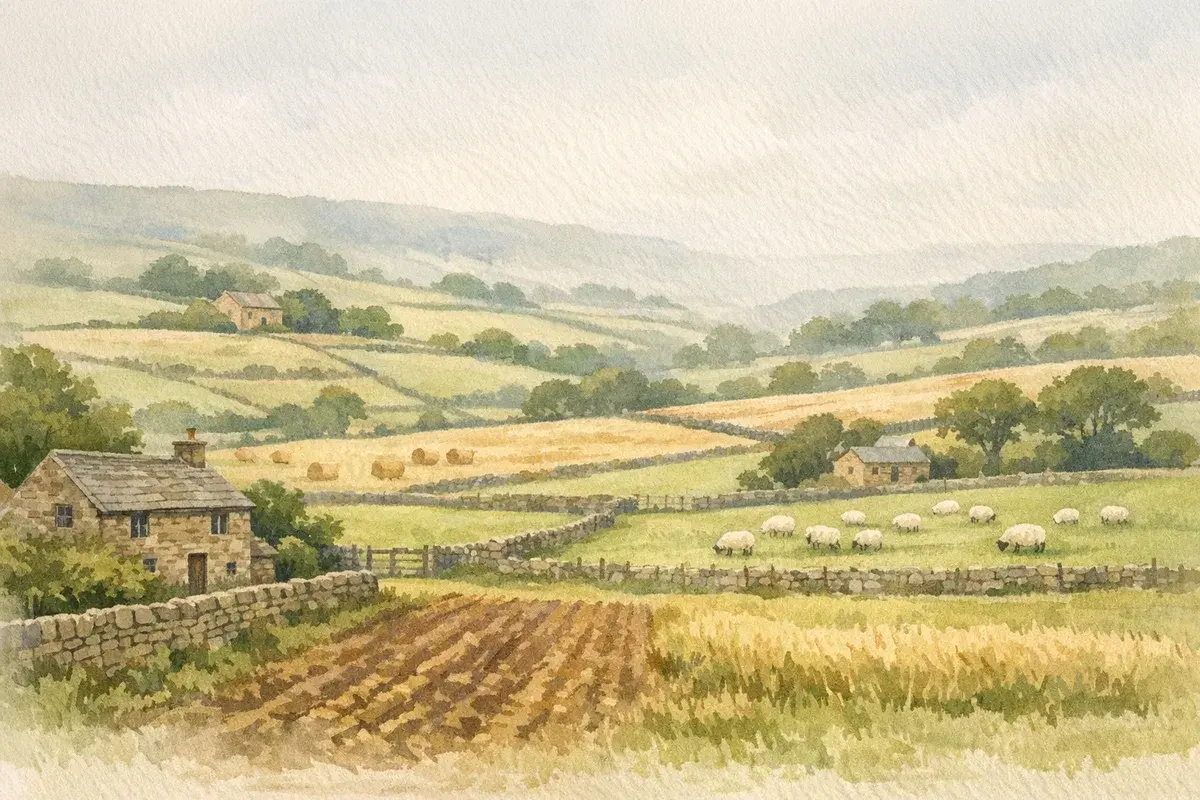
You can look at the same 80-acre block of arable land and hear three completely different stories: "best land in the parish", "a drainage nightmare", "future development angle". And in UK farmland, each of those stories can be true at the same time, depending on what you're buying it for, what you're paying, and what you've missed in the paperwork.
What Counts As Arable Farmland In The UK (And Why It Matters When Buying)
Arable is one of those words that feels obvious, until you're sat with a plan, a soil map, and an agent saying "it's mainly arable… apart from the wet bits." In practice, what counts as arable influences everything from how you value it, to what you can crop, to what a lender (or a future buyer) will make of it.
Arable Vs Pasture Vs Mixed Units
In UK terms, arable farmland is land that's primarily managed for cropping (combinable crops, roots, veg, etc.), usually with regular cultivations. But many "arable" sales particulars actually include a mix:
- Pure arable blocks: predominantly cropped, often ring-fenced, sometimes sold as "bare land" (no buildings). These can be very clean purchases, if access, drainage, and services stack up.
- Mixed units: arable plus grass, woodland, tracks, yards, sometimes with residential property attached. Mixed can be brilliant (diversification, stewardship options, resilience), but it complicates valuation and tax planning.
- Pasture/grassland: may be capable of being ploughed, but if it's long-term grass, steep, wet, constrained, or in sensitive designations, the practical "arable potential" may be limited.
Why it matters: buyers often pay "arable money" for land that's only arable on paper. If you need reliable spring access, high work rates, and consistent yields, you're buying capability, not a label.
Soil Types, Indices, And What They Mean In Practice
You'll hear a lot about "soil type" and "index" because it's where the agronomy meets the balance sheet.
A few UK realities worth keeping in mind:
- Workability beats headline classification. A medium loam that carries machinery in March can outperform a heavier "good" soil you can't travel until April.
- Soil texture affects risk. Heavy clays can be high-output when managed well, but the cost of timeliness (and compaction risk) is real. Light land can be flexible and early, but drought and nutrient leaching can bite.
- Field variability matters. A block can look like one lot on a plan, yet hide multiple soil zones. That changes input strategy, kit choice, and your yield stability.
If you're serious, you'll want more than general descriptions. Ask what evidence exists, historic yield maps, soil analyses, and what the local operator would say about "how it carries".
Cropping History, Rotation Options, And Restrictions
Cropping history isn't just a curiosity: it's a clue to what you'll be able to do next.
When you're assessing arable farmland for sale in the UK, consider:
- Rotation constraints: long runs of cereals can mean grassweed pressure, soil structure issues, or constrained break-crop options.
- Root cropping legacy: can indicate good access and infrastructure (or leave compaction, drainage wear, and field entrance damage).
- Contracted arrangements: sometimes land is farmed under informal agreements or with contractors, fine, but you need clarity on who has what rights for the current season.
- Environmental commitments: the land may be in agreements (or have management obligations) that shape what you can crop and when you can cultivate.
If you're new to this end of the market, it's worth reading a more field-specific buying guide alongside your search, AgLand's piece on choosing the right arable field and buying with confidence covers the practical red flags buyers often miss early on.
Where Arable Farmland Comes To Market (On-Market, Private, And Tenders)
Good arable land doesn't always "sit online until someone fancies it". In plenty of counties, the best ground changes hands through relationships, timing, and structured sale processes that reward prepared buyers.
Public Marketing: Agents, Portals, And Auctions
Most buyers start with public marketing, and that's sensible, especially if you're building a view of local pricing and availability.
Typically you'll see arable farmland come up through:
- Specialist rural agents marketing via their networks and online.
- Agricultural property portals where you can filter by location, acreage, land type, and features.
- Auctions, often used for smaller blocks, parcels with complexity, or where speed is the priority.
Auctions deserve a special note: you can buy well, but the timeline is unforgiving. You'll need your solicitor moving quickly, your funding lined up, and your "go/no-go" due diligence list ruthlessly prioritised.
Private Treaty, Informal Deals, And Off-Market Opportunities
Private treaty is common, especially for larger blocks, because it gives the seller more control and can be smoother for neighbouring farmers.
And yes, some arable land is effectively "off-market":
- sold quietly to neighbours
- circulated to a short list of known buyers
- discussed in the pub long before any brochure exists
If you want access to those opportunities, you'll need to behave like a serious buyer: clear brief, proof of funds (or lending capacity), and a reputation for not wasting people's time.
One more thing: informal doesn't mean "less paperwork". In fact, private deals can be more risky if you don't force the process into a proper professional structure.
Tenders, Best-And-Final Offers, And Timelines To Expect
Tender and best-and-final offer processes are common for quality arable blocks because they protect the seller from endless negotiation.
What to expect:
- Short marketing window (often a few weeks)
- Viewing days sometimes grouped
- Data room / legal pack provided, but not always complete
- A fixed deadline to submit an offer with conditions (funding, entry, clawback limits, etc.)
If you're bidding, your leverage is in certainty and clarity. A clean offer with minimal conditions can beat a higher number that looks wobbly.
Your time advantage comes from preparation: have your solicitor ready, know your deposit position, and have your "must check" items (title, access, schemes, utilities, drainage, overage) written down before you view anything.
How To Search Smarter For Arable Land (Filters, Maps, And Shortlisting)
Most buyers don't struggle because there's "no arable farmland for sale UK". They struggle because they're wading through mismatched listings, vague particulars, and parcels that don't fit the way they actually farm.
Searching smarter is mostly about turning your needs into filters, and then being disciplined.
Defining Your Brief: Acres, Block Size, Access, And Yard Proximity
Before you even start shortlisting, write a one-page brief you can share with agents and use for your own scoring.
Include:
- Total acreage you want and your acceptable range
- Block size preference (one ring-fenced unit vs multiple lots)
- Distance from your yard (or where you plan to base operations)
- Road access and visibility (important for movement, security, and future development constraints)
- Your cropping intentions (combinable crops, roots, veg, specialist)
- Infrastructure needs (water, irrigation, three-phase power, tracks)
Looking for land like this? Tell AgLand what you're after - type, acreage, budget and area - and we'll alert you the moment a matching property is advertised. Registering is free, and there's no commission on either side. Tell us what you're looking for.
Reading Listing Details Properly: Plans, Boundaries, And Lotting
A lot of expensive mistakes start with a quick glance at the headline acreage and a pin on a map.
When you read particulars, train yourself to check:
- Lotting: is the land being sold as one block or multiple lots? Can you actually buy the piece you want?
- Boundaries: hedges and ditches rarely match legal title perfectly: you need to understand what's included.
- Access points: is there a proper right of access, or are you relying on "used historically"?
- Ransom strips and verges: small slivers of land can be the difference between easy access and an ongoing dispute.
- Services: water supply, electricity wayleaves, drainage outfalls, often mentioned briefly, but hugely important.
If you're specifically looking for land without buildings (common for add-on blocks), be precise: "bare land" can mean different things. You may find it helpful to compare listings against this primer on what buyers should look for in bare arable land while you shortlist.
Comparable Evidence: Prices Per Acre And Local Market Signals
Everyone asks "what's the going rate per acre?" but the more useful question is "what's the going rate per acre for land like this?"
Comparable evidence should consider:
- soil and workability
- field size and shape
- access and distance from main roads
- whether it's ring-fenced
- vacant possession vs tenancy
- presence of development hope value or overage
If you want realistic price bands and what actually moves them in 2026, see AgLand's breakdown of average farmland prices per acre across the UK. Use it as a calibration tool, then lean on local comparables and your agent's recent evidence to avoid anchoring to a national average that doesn't fit your patch.
A final tip: keep a simple spreadsheet of shortlisted parcels with your own "£/acre adjusted" notes. After 10–15 viewings, you'll spot patterns (and overpricing) much faster.
Due Diligence Checklist For Arable Land (Before You Commit)
Due diligence is where arable land purchases are won or lost. Not because you'll uncover something dramatic every time, but because the small, boring details can cost you years of hassle or tens of thousands in avoidable expense.
Below is the checklist we see good buyers work through, usually with a rural solicitor, surveyor/agent, and (where needed) specialist advisers.
Title, Boundaries, Easements, And Rights Of Way
Start with the legal basics and don't apologise for being thorough.
Key checks:
- Title plan vs what's on the ground: do fences/hedges align? If not, what's the history?
- Easements: rights benefiting others (or you) across the land, tracks, drains, access routes.
- Public rights of way: footpaths and bridleways can be manageable, but they affect privacy, biosecurity planning, and sometimes future development.
- Restrictive covenants: may limit buildings, land use, or even what you can do with boundaries.
If anything looks unclear, insist on clarity before you exchange, not after.
Basic Payment Legacy, ELM Options, And Scheme Obligations
Although direct payments have changed, historic scheme positions still matter because land can carry obligations or expectations.
You'll want to understand:
- whether any stewardship agreements exist (and whether they transfer)
- what management prescriptions apply to specific parcels
- whether there are pending claims, breaches, or capital items with conditions
- what the land's potential is for ELM-style options (and whether that aligns with your cropping plans)
This isn't a reason to avoid scheme land, far from it. But you need to buy with your eyes open, because some "income streams" come with operational constraints.
Drainage, Water, Irrigation Rights, And Flood Risk
On arable land, water is either your limiting factor or your hidden advantage.
Consider:
- Field drainage: age, layout, evidence of maintenance, outfalls, and whether any drains cross third-party land.
- Ditches and watercourses: responsibilities for maintenance can be shared or unclear.
- Flood risk: not just river flooding: surface water and groundwater can be just as disruptive for spring work.
- Irrigation: if your system depends on irrigation, you need to understand abstraction rights and licences, infrastructure, and reliability.
If irrigation is central to your business model (veg, potatoes, high-value crops), treat it as a due diligence workstream in its own right, rights, kit condition, and ongoing compliance. Many buyers start by learning the typical pitfalls of irrigated arable land purchases before they bid, because "there's a reel on the farm" isn't the same as "you have secure, lawful water".
Wayleaves, Pipelines, Masts, And Utility Agreements
Utilities can be benign, helpful (income), or a nuisance depending on where they run and what rights the operator has.
Check:
- wayleave agreements (annual payments, access rights, reinstatement obligations)
- pipelines (restrictions on deep cultivation, drainage work, or tree planting)
- overhead lines (workability and safety)
- telecoms masts (income and access, plus buyer perception on resale)
Your solicitor should confirm documentation, but you'll also want a practical assessment: can you still farm efficiently, and can you insure and manage risk?
Environmental Constraints: SSSIs, Stewardship, And Nutrient Rules
Environmental constraints aren't automatically bad news: sometimes they're a value opportunity. The issue is uncertainty, or buying constraints you didn't price.
Look for:
- designations such as SSSIs or other sensitive areas that affect operations
- historic stewardship options on boundaries, headlands, or in-field areas
- local nutrient-related controls and catchment expectations that may influence cropping or timings
If the land has environmental features, ask for maps and citations, then cost the impact. A 6-metre margin that looks small on paper can be meaningful across multiple fields.
One more practical move: talk to the neighbouring farmer (politely). You can learn more in ten minutes about flooding, access, and seasonal trafficability than you'll get from a brochure.
Planning And Future Potential (Without Overpaying For Hope Value)
Planning potential is where otherwise rational buyers start making emotional decisions. You hear rumours: "they'll get a barn conversion", "the council wants housing", "it's near the bypass line". Sometimes there's substance. Often it's just noise.
The trick is to separate operational value from hope value, and pay for each appropriately.
Permitted Development And Prior Notification Realities
In England, certain agricultural buildings can fall under permitted development routes, but it's not a free-for-all. Permitted development is a privilege, not an automatic right, and it's shaped by thresholds, siting rules, and prior approval/prior notification processes.
Even where a permitted development route exists, you still need to consider:
- siting constraints (proximity to roads, neighbours, or designated areas)
- access and highways visibility
- flooding and drainage
- whether the use is genuinely agricultural
In Wales and Scotland, the framework differs and local authority interpretation can vary. If planning is part of your rationale, speak to a planning consultant early, before you mentally bake future buildings into today's price.
Residential Potential, Agricultural Ties, And Replacement Dwellings
Residential angles are the classic "hope value" driver.
A few UK-specific realities:
- Agricultural dwellings usually require a demonstrable functional and financial need, not just a desire to live on-site.
- Agricultural occupancy conditions (ties) can reduce value and restrict who can live there, yet they can also be workable if your business genuinely needs it.
- Replacement dwellings can be possible in some circumstances, but the details (existing lawful use, scale, siting, design) matter intensely.
Treat anything residential as: (1) a planning risk, (2) a time cost, and (3) a professional-fees cost. If you still want it after that, fine, just don't pay as if it's guaranteed. Where the house already exists and comes with the land, the sums run the other way: the farmhouse can be a large share of the total price and any occupancy condition narrows both the buyer pool and lender appetite, as we explain in what to check when buying an arable farm with a house.
Uplift, Overage, Options, And Promotion Agreements
If a seller thinks there's future development potential, they may protect it through:
- overage/uplift clauses (you pay more later if planning is achieved)
- options (developer has a right to buy later)
- promotion agreements (promoter seeks planning then sells on the open market)
These mechanisms can be fair, but they need careful drafting. What triggers payment? Over what period? What counts as development value? Who controls the process?
Don't rely on "standard wording". Overage can affect your financing, your future sale, and even how you manage the land. This is one of those areas where specialist rural legal advice pays for itself quickly.
How Arable Farmland Is Valued (And What Moves The Price)
When you're trying to buy arable farmland for sale in the UK, valuation isn't just a number, it's a story made up of soils, efficiency, risk, and competition.
Some parcels look expensive on a £/acre basis but are actually the best value once you factor in work rates and reliability. Others look "cheap" until you price in access upgrades, drainage, and the time you'll lose every wet spring.
Soils, Field Scale, And Farming Efficiency
Efficiency is the quiet driver of arable value.
What tends to command a premium:
- larger, squarer fields (less time turning, better use of modern kit)
- good gateways and internal tracks
- consistent soil type across the block (simpler management)
- timely access (land that carries well)
If you're expanding an existing operation, ring-fencing and field scale can be worth more than the theoretical "soil grade". Your margin is made in the number of hectares you can cover on the right day.
Location Factors: Ring-Fencing, Road Access, And Labour
Location isn't only about postcode prestige.
For arable buyers, the practical location drivers include:
- proximity to your base (diesel, labour, machinery wear, time)
- road network quality for moving kit and grain
- distance to markets (grain stores, feed mills, processors)
- availability of skilled labour and contractors
Ring-fenced blocks near your yard often trade at a premium because they reduce friction every single season.
Vacant Possession Vs Tenanted Land: Pros, Cons, And Pricing
This is a big one, and it catches newer investors out.
- Vacant possession generally attracts more competition because you can farm immediately or set your preferred agreement.
- Tenanted land can offer stable income and less operational involvement, but it introduces complexity: tenancy terms, rent review provisions, repairs, and your ability to regain possession.
Pricing reflects those trade-offs, plus the specific tenancy structure (and its security). You'll want a rural surveyor to interpret what you're actually buying.
If you're trying to make sense of how valuers and agents think, beyond headline averages, AgLand's guide to how farmland is valued when it's sold is a solid explainer of what typically pushes price up (or knocks it back) in real UK transactions.
How To Finance The Purchase And Structure Ownership
Buying arable land is rarely just a purchase: it's a long-term balance sheet decision. Finance and ownership structure affect your risk, your flexibility, and what you keep after tax.
Agri Lending Basics, Deposits, And Evidence Lenders Want
Specialist agricultural lenders usually look beyond the simple "income multiple" approach you might see in residential lending.
Expect to discuss:
- deposit size and your overall gearing across the business
- cashflow evidence (accounts, forecasts, cropping plans)
- security (what's charged, what remains unencumbered)
- the asset itself (quality, marketability, tenancy status)
Be ready to explain why the land strengthens your operation, ring-fencing, economies of scale, better rotations, or strategic location.
Buying Personally Vs Through A Company Or Partnership
There isn't a universal best answer here, because it depends on how you farm, who's involved, and your long-term plans.
Common routes include:
- personal ownership (simpler in some cases)
- family partnership (common in farming, but needs well-documented agreements)
- limited company ownership (may suit some structures, but comes with its own tax and admin considerations)
Think ahead: succession, future sales, borrowing flexibility, and how you'll handle profit extraction.
Tax And Reliefs To Discuss Early (SDLT, CGT, IHT)
Tax is one of the few areas where being "a bit late" can be very expensive.
Topics to raise early with your accountant/tax adviser:
- Stamp Duty Land Tax (SDLT) position for the specific transaction (rates and reliefs depend on facts)
- Capital Gains Tax (CGT) planning if you're selling other assets to fund the purchase
- Inheritance Tax (IHT) implications and reliefs in an agricultural context
Even if you're buying as an investor rather than an operator, don't treat tax as an afterthought. Structure decisions are hard to unwind once contracts are exchanged.
Making An Offer, Exchanging Contracts, And Completing Smoothly
Once you've found the right arable parcel, the buying process becomes a project-management exercise. The best buyers don't just "make an offer", they control the timeline, the information flow, and the conditions.
Heads Of Terms, Solicitors, And Surveys To Commission
Your offer should set out clear heads of terms, typically covering:
- price and deposit
- what's included (sporting rights, mineral rights, timber, fixtures)
- entry date and whether it's subject to vacant possession
- what enquiries must be satisfied (title clarity, access rights, overage limits)
- any finance condition (where appropriate)
Get your rural solicitor instructed early, before you're emotionally committed.
Surveys and professional input to consider:
- rural surveyor for valuation and negotiation support
- drainage contractor/consultant where wetness is a known issue
- agronomist for a practical read on rotation and soil condition
- planning consultant if there's any development angle
Practical Completion Issues: Crops In The Ground, Access, And Entry Dates
Arable land rarely changes hands in a tidy, empty-state.
Common completion issues include:
- crops in the ground: who owns what, who harvests, and what compensation applies
- stubbles and cultivations: what work is permitted pre-completion
- access for harvest kit: especially if the land's behind other parcels
- holdover for storage: sometimes sellers want time to clear kit or materials
These details aren't "small print". They determine whether your first season starts smoothly or with an argument.
Post-Completion Priorities: Records, Mapping, And Compliance
The first month after completion is when you lock in control.
Priorities:
- map everything: boundaries, access points, gates, culverts, drainage outfalls
- keep a document vault: title, wayleaves, scheme documents, plans, any historic permissions
- baseline condition: photos and notes (tracks, gateways, hedges, watercourses)
- introduce yourself locally: neighbours, contractors, any utility contacts
Do this well and you'll thank yourself later, especially if you ever need to evidence boundary positions, maintenance responsibility, or historic use.
Conclusion
The best way to buy arable farmland in the UK isn't to chase the perfect brochure, it's to run a disciplined process. Get your brief tight, shortlist using evidence (not vibes), and treat due diligence as part of the price, not an optional extra.
If you do that, you'll notice something: you stop feeling "lucky" when you secure a block, and start feeling calm. Calm is underrated in farmland purchases.
Disclaimer: AgLand.co.uk is a UK agricultural land and rural property matching service, where buyers register what they are looking for and owners advertise directly to the buyers who match, and a rural resource hub. Nothing in this text is intended as legal, financial, tax, or investment advice. You should carry out your own due diligence and seek independent advice from suitably qualified professionals (for example, rural solicitors, chartered surveyors/valuers, accountants, and planning consultants) before making offers or decisions.