
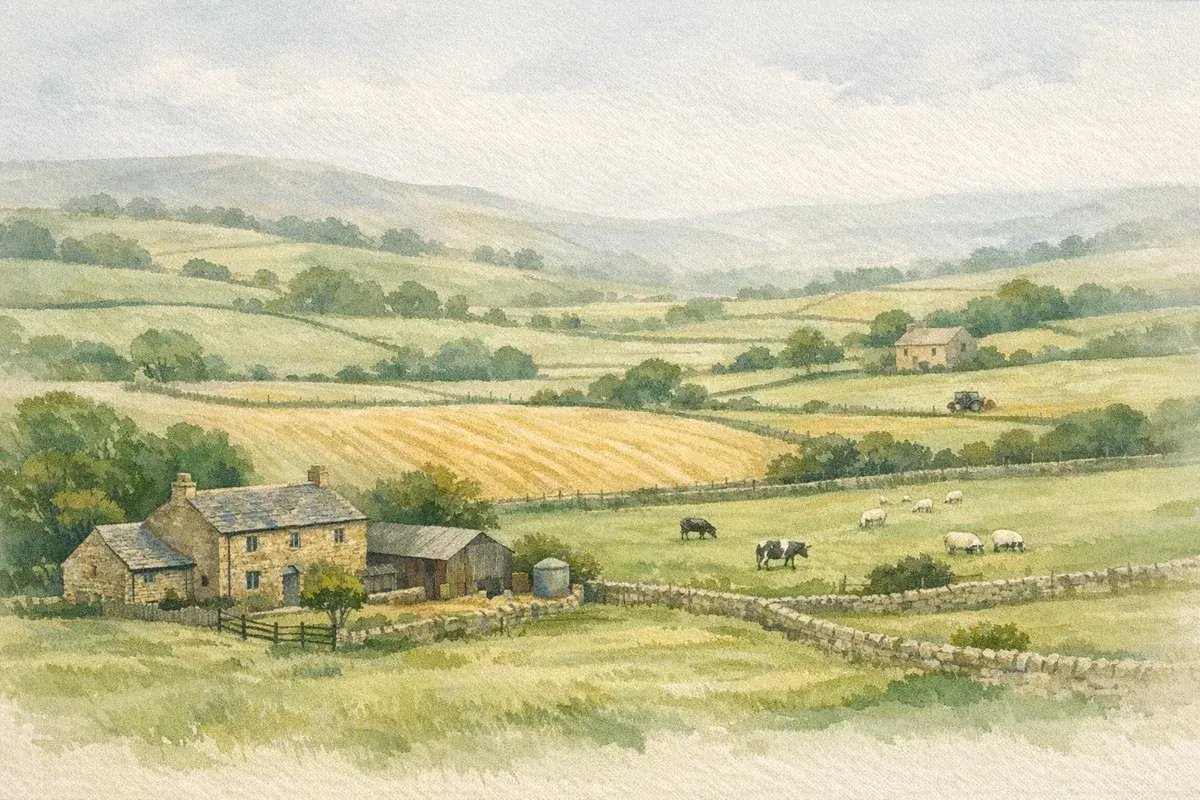
An arable farm for sale with house looks straightforward on a listing: X acres, a farmhouse, a yard, maybe a grain store and a smart set of sheds. But once you get into the detail, you quickly realise you're not buying "a farm" so much as a bundle of assets, rights, obligations, and future options, some valuable, some restrictive, and a few that can bite if you miss them.
If you're buying in the UK, whether you're expanding a family unit, stepping up from a contract-farming arrangement, or investing with an operator in mind, this guide is designed to keep you out of the common potholes. We'll walk through what to interrogate (land, house, buildings, entitlements and scheme commitments), what numbers actually drive value, the physical due diligence that matters, and how to run a clean process from offer to completion without losing a cropping season.
Clarify What You’re Buying: Land, House, Buildings, And Entitlements
A farm purchase goes smoother when everyone is precise about the "what". In arable deals, misunderstandings tend to cluster around three areas: (1) what land is included and how it's been farmed, (2) the farmhouse status and constraints, and (3) the yard/buildings package, especially where there's development hope value in the background.
How Much Land And What Type Of Arable Operation?
Start with the basics, then get specific:
- Total area vs farmed area. The headline acreage might include woodland belts, tracks, ponds, awkward triangles, stewardship margins, solar compounds, or telecom sites. Ask for a schedule showing croppable hectares.
- Block vs ring-fenced vs multiple parcels. A neat ring-fence is operational gold: fewer road moves, easier staff management, tighter biosecurity. Multiple blocks can still work, but you'll price in time, diesel, and hassle.
- Rotation and recent cropping. You're not just buying soil, you're buying the consequences of the last five years' decisions. Request cropping histories and note any heavy run of roots/veg, maize, or continuous cereals.
- Occupational setup. Is it vacant possession, farm business tenancy (FBT), licence, contract farming agreement, or share farming? The answer changes your timeline, cash flow and even your tax position.
If you're comparing options, it helps to benchmark against the wider market for arable farmland for sale across the UK so you can sanity-check size, location, and the "extras" that push pricing.
House Basics: Tenure, Services, EPC, And Rural Constraints
The farmhouse is often the emotional centre of the purchase, but it can also be the messiest part of the file.
- Tenure and boundaries. Confirm whether the house is freehold, whether there are any shared drives, and where the red line sits. "Farmhouse included" sometimes means "house included, but with a sliver of garden and a complicated access arrangement".
- Services in rural areas. Don't assume mains gas or even good mains water. Check:
- Water source (mains, private supply, borehole) and any treatment requirements
- Drainage (mains, septic tank, package plant) and current compliance expectations
- Broadband reality (and whether you'll need a backup solution)
- EPC and heat. Older rural houses can be EPC-challenging. If you're planning upgrades, you'll want a realistic view of insulation, glazing, heating type, and the cost/permissions for improvements.
- Constraints and designations. Listed status, conservation areas, or curtilage issues can limit what you can do, especially if you're dreaming of "we'll just extend the kitchen".
Farmyard And Buildings: Grain Storage, Drying, Workshops, And Compliance
A tidy yard can save you years of capital spend: a tired one can quietly become your biggest project.
Focus on what actually supports a modern arable operation:
- Grain storage capacity and condition. What's the tonnage, what's the ventilation like, are floors sound, and can you segregate crops? If there's a dryer, confirm age, fuel type, parts availability, and emissions/maintenance expectations.
- Weighing, loading, and traffic flow. Ask yourself: can an artic safely get in and out? Are there pinch points at the yard entrance? Is there space to queue, load and sheet without blocking the road?
- Sprayer/fuel/chemical setups. Storage and handling needs to be compliant and practical. If the yard has legacy arrangements, you may inherit upgrade obligations.
- Power supply. Three-phase electricity is a big deal for workshops, dryers, and future diversification. If it's not there, the upgrade cost and lead time can be sobering.
One more thing: be clear on what's included in the sale, dryer, augers, bins, workshop kit. "Farm for sale with house" doesn't automatically mean "ready-to-run kit included".
The Numbers That Matter: Valuation, Finance, And Running Costs
UK farm purchases are rarely priced by one neat formula. Value is a blend of productive capacity, residential appeal, building utility, location, and (sometimes) development or strategic angle. Your job is to understand which lever is driving this particular deal, so you don't overpay for the wrong reason.
How Arable Farms With Houses Are Priced In Practice
In the real world, arable farms with houses tend to be priced as a package with several components:
- Bare land value (shaped by soil, blockiness, access, local demand)
- Residential value (farmhouse condition, size, setting, planning constraints)
- Building utility (grain storage, workshops, livestock sheds repurposed for machinery)
- Hope/strategic value (near settlements, grid connections, development narratives, sometimes speculative)
A common mistake is treating the farmhouse like a "nice-to-have" add-on. In some areas it can be a significant proportion of the total, especially where residential demand is strong.
If you're looking at bigger units, the pricing dynamics can shift again, scale attracts different buyers, and buildings/infrastructure can carry more weight. It's worth scanning the market context for larger arable farm opportunities to understand how scale changes comparables.
Finance Options: Farm Mortgages, Bridging, And Cash Purchases
How you finance affects not only affordability but also your negotiating position and speed.
- Agricultural mortgages. Lenders will look at land type, income resilience, and sometimes your farming track record. A clean, well-presented business plan can matter, particularly if you're not simply refinancing an existing holding.
- Bridging finance. Occasionally used to move quickly, e.g., if you must complete before selling other property or before a tenancy ends elsewhere. Bridging can be useful, but cost and timing risk need active management.
- Cash purchase. Not always "simpler", you still need proper due diligence, but cash can reduce the risk of a deal collapsing late due to finance conditions.
Whatever route you choose, align it with the cropping calendar. A technically "good" loan offer that arrives six weeks late can be operationally expensive.
Budget Beyond The Headline Price: Stamp Duty, Surveys, And Capex
Your total cost is never just the purchase price. Build a proper budget early:
- Stamp Duty Land Tax (SDLT). SDLT treatment can vary depending on how the property is comprised (residential vs non-residential/mixed). This is one area where getting tax advice early can save you serious money, or prevent a nasty surprise.
- Professional fees. You'll likely need a solicitor with rural experience, plus surveys/valuations. Don't skimp on expertise when the asset is high value and complex.
- Immediate capex. Common early spend items include drainage repairs, track upgrades, grain store improvements, electrical upgrades, and security.
- Working capital. If you're taking over mid-year, you may need cash tied up in inputs before the first crop income lands.
A pragmatic rule: if the yard/buildings look "fine" on viewing, still assume there's a list of jobs once you own it. Farms have a way of revealing their to-do list the day after completion.
Land Quality And Physical Due Diligence
The most expensive land mistake is buying problems you could've spotted with disciplined inspection and the right questions. You don't need to be a soil scientist, but you do need to be systematic.
Soils, Drainage, Compaction, And What Yield Maps Really Tell You
Soil is value. But don't reduce it to "heavy" or "light" and move on.
- Soil type and consistency. Ask for soil data if available (farm records, agronomist notes, historic mapping). A farm that's 80% one workable soil type can be operationally simpler than a patchwork.
- Drainage condition. Old clay tile systems, silted outfalls, or crushed laterals can quietly cap yield and create late drilling headaches. Walk fields after rain if you can.
- Compaction and structure. Look for signs: tramline rutting, water sitting, poor worm activity, shallow rooting in dug pits. Compaction can be fixed, but it takes time, fuel, and careful rotations.
- Yield maps: useful, not gospel. Yield maps tell you where variation exists, not always why. A low-yield area might be headland compaction, shade, drainage, pH, or an old feature under the soil. Use maps as a prompt for targeted inspection and soil testing.
Water: Abstraction, Irrigation Potential, And Drainage Consents
Water questions are increasingly deal-shaping in parts of the UK.
- Water sources. If there's irrigation infrastructure, confirm what's actually included (pumps, mains, reels) and the condition.
- Abstraction. Abstraction licensing and compliance is a specialist topic, and it matters. If water is critical to your cropping plan (veg, potatoes, high-value seed), treat it as a core due diligence stream, not an afterthought.
- Land drainage works. Any works affecting watercourses can involve consents and responsibilities. Also check who maintains ditches, outfalls and culverts.
Access, Field Layout, And Neighbours: Practical Day-To-Day Farming Reality
On paper, two farms can look identical. In practice, access and layout can make one feel twice the size.
- Entrances and road network. Are gateways wide enough for modern kit? Are there tight villages, low bridges, weight limits, or school-run pinch points?
- Field shape and work rates. Long, uninterrupted runs suit big kit and controlled traffic: small fields with awkward corners punish efficiency.
- Neighbours and sensitivities. You're not looking for "perfect" neighbours, just an honest read on potential friction: spray drift concerns, footpaths used heavily, dog walkers, shoot days, or equestrian operations.
Spend time on the public highway near the yard at busy times. If you're constantly reversing out onto a fast A-road, you'll feel it every day.
Legal, Planning, And Rights That Can Make Or Break A Deal
This is where arable farm purchases often wobble. The land can be beautiful and the house can be right, but one overlooked right or restriction can devalue the asset, or limit what you can do with it.
Title Checks: Boundaries, Easements, Covenants, And Ransom Strips
Your solicitor and land agent will lead, but you should understand the common traps:
- Boundaries that don't match occupation. Fences, hedges and ditches don't always align with the title plan. If you assume "it's always been like that", you can end up with a dispute later.
- Easements and rights. Rights of way for neighbours, rights to lay or maintain pipes, or shared access agreements can all be fine, if they're clear.
- Restrictive covenants. These can affect what you can build, how you can use buildings, and sometimes even whether you can run certain enterprises.
- Ransom strips. A tiny retained strip can control access to a valuable piece of land. If access depends on it, deal with it early.
A practical tip: ask for a plan pack early and walk the boundary with it. You'll often spot inconsistencies faster with boots on the ground than in a PDF.
Public Rights Of Way, Wayleaves, And Utility Infrastructure
Public rights of way aren't inherently a problem, many farms live with them, but they do affect operations.
- Footpaths and bridleways. Consider crop choices near paths, dog disturbance, gates/stiles, and the cost of keeping routes clear.
- Wayleaves and easements for utilities. Overhead lines, underground cables, water mains, gas pipelines, these can restrict building, tree planting, and sometimes cultivation depth. They may also bring payments, but don't treat that as "free money": read the terms.
- Telecom masts and renewables. If there's equipment on the land, confirm lease terms, access rights, rent review provisions, and who maintains what.
Planning History, Agricultural Occupancy Conditions, And Permitted Development Limits
Planning is local and fact-specific, but a few themes crop up repeatedly.
- House planning history. If the farmhouse has had extensions or conversions, check they were authorised and signed off.
- Agricultural occupancy conditions (AOCs). Sometimes called ag ties. These restrict who can occupy the dwelling. If there's an AOC, you must understand how it works in practice and whether it fits your situation.
- Permitted development (PD). PD can be extremely useful for agricultural buildings and, in some cases, conversion, yet it's not an automatic right. Site constraints, prior notifications, and local sensitivities matter.
If you're viewing a listing and already thinking "we'll convert that barn" or "we'll put up a new shed straight away", treat that as a planning workstream from day one, not a hope for later.
When you're reviewing individual listings, it can help to see how sellers and agents present planning context and site specifics. When a match comes through AgLand, the details arrive in a consistent shape, house, buildings, access, and constraints, which makes it easier to compare what's actually being offered without the usual guesswork.
Tax, Structuring, And Future-Proofing The Purchase
Tax can feel like the boring bit, until it changes your net outcome by six figures. You don't need to become a tax specialist, but you do need to flag the big structuring decisions early enough that you still have choices.
Buying Personally Vs Company/Partnership: What To Consider Early
How you buy should reflect your long-term plan:
- Who's operating the farm? You personally, a partnership, a company, or a tenant/contractor?
- Income vs capital aims. Are you buying primarily to farm, to let, or as a long-term store of value with potential development/diversification?
- Succession and control. Many UK farm purchases are really about succession planning in five or ten years' time. The wrong structure can complicate handing the asset on.
There's no universal best answer. But there is a universal truth: deciding structure late, after offers are accepted, reduces your options.
APR, IHT, And CGT: Reliefs, Risks, And Evidence You'll Need
Reliefs are powerful, but they are not "set and forget". You may hear people talk about Agricultural Property Relief (APR) as if it's automatic. It isn't.
What matters is evidence and reality on the ground:
- Is the land genuinely in agricultural use?
- Who occupies it and on what terms?
- What's the farmhouse's relationship to the farming operation?
Similarly, Capital Gains Tax (CGT) outcomes depend on circumstances and use. If you're restructuring, selling parcels, or thinking about development angles, get bespoke advice early so you don't accidentally create tax friction later.
VAT On Land And Buildings, Option To Tax, And Hidden Liabilities
VAT in rural property can be surprisingly knotty.
- Is any part opted to tax? That can affect whether VAT is chargeable on the sale and may influence your cash flow.
- New buildings and conversions. VAT treatment varies: don't assume.
- Hidden liabilities. Things like repair obligations under leases, or compliance upgrades that become "yours" after completion, can behave like a tax on day one.
You don't need to fear these issues, but you do need them surfaced. A good rural solicitor and tax adviser will ask the right questions, and you should make sure they're in the loop before you're emotionally committed.
Environmental Schemes And Land Use Constraints
Environmental schemes and constraints aren't side quests anymore, they're often central to value, flexibility, and how easy the farm is to run.
How SFI And Countryside Stewardship Can Affect Value And Flexibility
If land is in a scheme (or has been recently), you need to understand the commitments:
- What options are in place, and where? Some options reduce cropping area but support margins and soil health.
- End dates and transferability. Scheme agreements can have rules around transfer on sale. You need clarity on what happens at completion.
- Impact on rotation and operations. Buffer strips, no-spray areas, and overwintered stubbles may fit your approach, or conflict with it.
Schemes can be positive for resilience and income diversification, but only if they align with how you want to farm.
Protected Designations And Consents: SSSI, AONB, Scheduled Monuments, And Hedgerows
Designations can affect what you can do, how quickly you can do it, and how much paperwork you'll need.
- SSSI and Scheduled Monuments can bring stricter controls.
- AONB settings can influence planning outcomes, even when you're not "in" the most sensitive area.
- Hedgerows and boundary features often have protections. If your long-term plan includes boundary removal or major reconfiguration, you need advice before you assume it's doable.
Contamination, Invasive Species, And Legacy Issues From Historic Uses
Not every farm is pristine. Common issues include:
- Historic landfill areas, old fuel tanks, or redundant chemical stores around the yard.
- Asbestos cement roofs (very common) that may be serviceable but require proper management.
- Invasive species such as Japanese knotweed in odd corners, especially near watercourses.
None of these are necessarily deal-breakers. But they do affect negotiation, remediation costs, and your timeline. If something looks odd, an area that never grows well, a "mysterious" bund, an old tip, treat it as a question, not a curiosity.
Where To Find The Right Arable Farm With House (And How To Search Smarter)
Finding an arable farm for sale with house in the UK isn't just about volume of listings, it's about reducing noise and spotting the few opportunities that genuinely match your brief.
On-Market Vs Off-Market: What We Commonly See In The UK Farm Sector
In the UK farm market, you'll see a mix:
- On-market listings that are widely advertised with set viewing days and formal offers.
- Private/off-market approaches where vendors test interest quietly, often because they want discretion, or because the farm is operationally sensitive.
We've seen deals happen both ways. The key is to be ready: clear proof of funds or finance position, a defined brief, and advisers who can move at pace.
Looking for land like this? Tell AgLand what you're after - type, acreage, budget and area - and we'll alert you the moment a matching property is advertised. Registering is free, and there's no commission on either side. Tell us what you're looking for.
How To Use Specialist Filters: Acreage, Soil, House Type, And Buildings
Searching smarter is mostly about being honest with yourself about non-negotiables.
Try setting criteria in tiers:
- Tier 1 (deal-breakers): minimum croppable area, ring-fenced vs blocks, house requirement (must-have vs optional), grain storage requirement.
- Tier 2 (strong preferences): soil type, irrigation potential, distance from your existing base, proximity to buyers.
- Tier 3 (nice-to-haves): additional cottages, development potential, sporting.
And don't forget practical filters people skip:
- Road access for artics
- Three-phase power
- Yard security and layout
If you're building a shortlist, it's worth registering those criteria with AgLand so matching farms are put in front of you as they're advertised, rather than relying on luck and word-of-mouth.
Working With The Right Team: Land Agent, Solicitor, Surveyor, And Tax Adviser
The best outcomes tend to come when your team is assembled early, not mid-crisis.
- Land agent: helps you price, negotiate, and sense-check operational realities.
- Solicitor (rural specialist): manages title, rights, overage, access, and planning-related legal risk.
- Surveyor: can advise on buildings, condition, reinstatement costs, and sometimes strategic value.
- Tax adviser/accountant: keeps structure and reliefs aligned with your plan.
A good team also makes you a stronger buyer. Vendors and agents notice when you're organised, clear questions, quick turnaround, no drama.
Offer To Completion: A Step-By-Step Purchase Timeline
Arable farm purchases have a rhythm. If you respect the rhythm, especially around cropping and possession, you reduce the chance of expensive delays.
Making An Offer: Heads Of Terms, Fixtures And Fittings, And What To Exclude
When you make an offer, clarity beats cleverness.
Include in your heads of terms:
- What's included: land parcels, buildings, house, yards, tracks, any dwellings.
- Vacant possession vs occupation: and dates.
- What's excluded: machinery, stored grain, inputs, personal items, and anything the seller plans to remove.
- Cropping and holdover arrangements: if the seller has crops in the ground, you need a fair, written agreement on ownership, costs, and harvesting rights.
- Ongoing agreements: wayleaves, telecom leases, stewardship options, confirm what transfers.
Small detail that saves arguments: ask for a fixtures and fittings list early. "We assumed the fuel tank stayed" is not a sentence you want to say after exchange.
Surveys And Reports: RICS Valuation, Structural, Drainage, And Environmental
Even if you "know farms", formal reports often pay for themselves.
Common workstreams:
- RICS valuation (especially for finance)
- House survey (older farmhouses hide issues, roof timbers, damp, old services)
- Buildings condition (frames, cladding, concrete, asbestos management)
- Drainage and private water checks (where relevant)
- Environmental screening around the yard and any historic tipped areas
Keep the process moving by booking surveyors as soon as your offer is accepted, good people get booked up.
Exchange, Completion, And Early Handover Planning For Cropping Seasons
Your objective is a clean handover with no grey areas.
- Set realistic dates. If you need possession for drilling, say so early.
- Plan the handover operationally. Keys, alarm codes, fuel storage access, grain store access, and any staff housing arrangements.
- Document condition and contents. Photos and signed schedules reduce "it was like that when we bought it" disputes.
If possible, agree a practical early access arrangement (with proper legal wording) so you can plan cropping, arrange inputs, and line up contractors without stepping into trespass territory.
This is also where having the listing information well-organised helps you keep track of moving parts. Many buyers find it easier to keep every matched property and its details in one place through AgLand rather than juggling scattered PDFs and email chains.
Conclusion
Buying an arable farm for sale with house is one of those decisions that feels exciting and heavy at the same time, because it is. The best purchases usually aren't the ones with the glossiest brochure: they're the ones where the land suits your system, the house doesn't come with nasty constraints, the yard works with modern kit, and the paperwork stands up to scrutiny.
If you take one practical mindset into your search, make it this: treat every viewing as both a farming visit and a risk review. Ask the slightly awkward questions early (rights, drainage, scheme commitments, access, services). Get your professional team lined up before you're emotionally attached. And time everything around the cropping reality, not a neat calendar date.
Disclaimer: AgLand.co.uk is a UK agricultural land and rural property matching service, where buyers register what they are looking for and owners advertise directly to the buyers who match, and a rural resource hub. Nothing in this text is intended as legal, financial, tax, or investment advice. You should carry out your own due diligence and seek guidance from appropriately qualified professionals (for example, a rural solicitor, chartered surveyor, accountant/tax adviser, and land agent) before making decisions or entering into any transaction.