
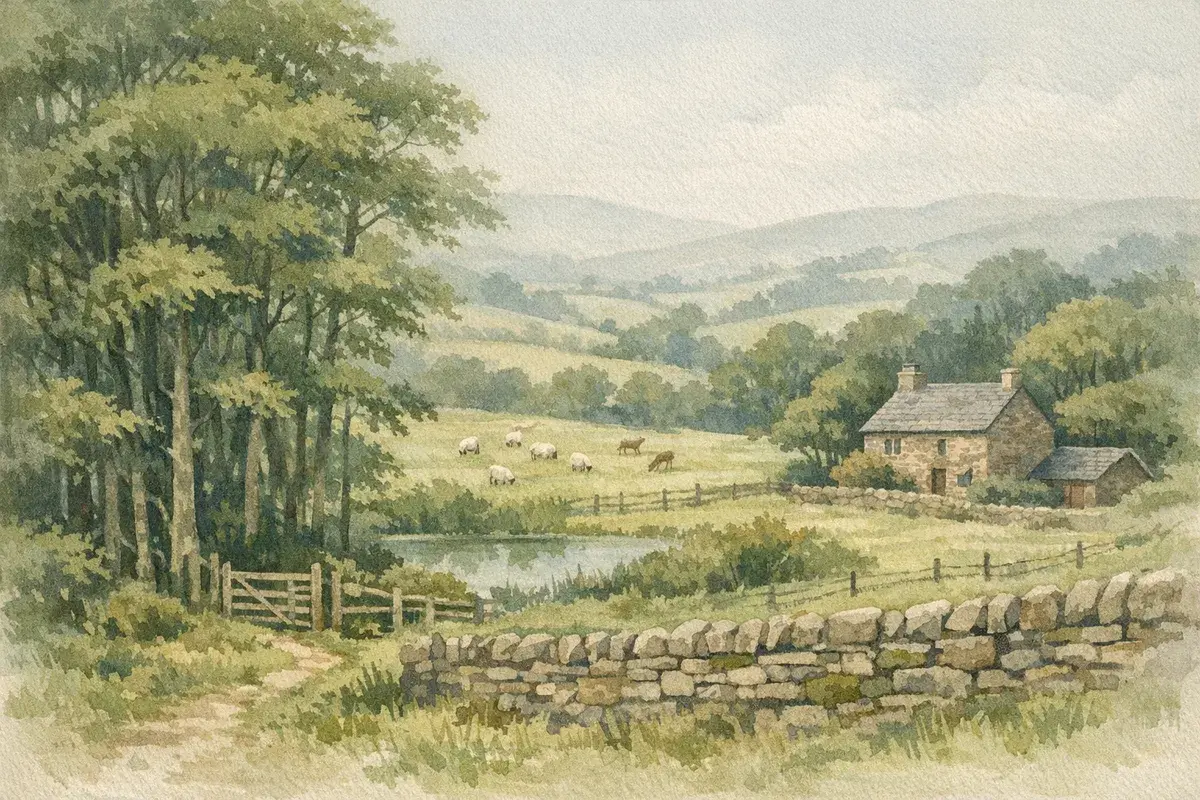
You don't buy recreational woodland the way you buy a house.
A woodland looks simple on a listing: a few acres of trees, a track, maybe a stream, and the promise of quiet weekends. But once you start asking the grown‑up questions, "Can I get a vehicle in legally?", "Who owns the shooting rights?", "Am I allowed to camp?", "What's that line on the title plan?", it becomes obvious why good buyers move methodically.
This guide is written for UK buyers who want recreational woodland for sale for the right reasons: amenity, privacy, wildlife, family use, small‑scale firewood, and the long game of owning a practical rural asset. You'll learn how to search efficiently, what drives price, how planning and forestry rules actually work on the ground, and what to get your solicitor (and surveyors/agents) to confirm before you commit.
What Counts As Recreational Woodland (And What It Usually Includes)
Recreational woodland is a catch‑all term rather than a legal category. In practice, it usually means woodland sold primarily for amenity use (enjoyment, access, conservation, family activities), not for intensive timber production.
That doesn't make it "lawless" or "do what you like" land. You're still dealing with title rights, occupiers' liability, forestry controls, and, depending on what you plan, planning law.
Typical Woodland Types And Sizes
Most recreational lots in the UK fall into one of these buckets:
- Small broadleaf copses (1–10 acres): often on the edge of farms or estates: great for privacy and wildlife, but sometimes awkward access.
- Mixed woodland blocks (5–30 acres): the common "amenity woodland" sweet spot, big enough to feel like yours, small enough to manage sensibly.
- Former plantation woodland being repositioned as amenity: conifer blocks that may have future timber value, but are marketed for leisure.
- Newer planting/woodland creation schemes: younger trees, more open ground, and often clearer planting design, sometimes with ongoing obligations.
If you're not sure how your target plot fits into the wider market, it's worth reading a broader primer on UK woodland listings and what they typically include before you start viewing.
Common Uses: Camping, Wildlife, Firewood, Dog Walking, And Small-Scale Shooting
Buyers typically tell us they want woodland for one (or several) of these reasons:
- Quiet recreation: walking, picnics, a place for the kids to roam without worrying about roads.
- Wildlife watching and conservation: installing nest boxes, creating glades, managing rides, small pond restoration.
- Dog walking: a secure, private area, though fencing and public rights of way can complicate "exclusive" use.
- Firewood for personal use: very achievable, but it's still chainsaw work, stacking, seasoning, access for extraction, and safe storage.
- Small-scale shooting or pest control: possible, but only if the sporting rights are included and you can run it safely and lawfully.
The key is matching your intended use to what the land can legally support, access, rights, neighbour relationships, and any designations.
Rights You May Or May Not Get: Access, Sporting, Timber, And Mineral Rights
Woodland ownership isn't always a single bundle of rights.
- Access rights: you may own the land but rely on a third‑party track. That needs a properly drafted easement (and ideally a plan that matches reality on the ground).
- Sporting rights: shooting and fishing rights can be retained by a previous owner or let to a third party. Don't assume you "get the lot."
- Timber rights and obligations: you typically own the timber, but felling is regulated and restocking duties can apply.
- Mineral rights: often excluded in UK sales. That doesn't mean someone's about to start mining your wood, but it matters for certainty and future value.
In recreational woodland purchases, the most expensive misunderstandings usually come from access and sporting rights, not the trees.
Where Recreational Woodland Comes Up For Sale (And How To Search Efficiently)
The biggest mistake buyers make is searching "woodland near me" and then reacting to whatever pops up. You'll do better by treating it like any other rural acquisition: define your brief, watch the market, and move fast when the right plot appears.
Specialist Rural Portals Versus General Property Sites
If you want to widen your net while staying woodland‑specific, keep an eye on guidance about buying woodland in the UK, including legal checks and early management priorities so you can judge what comes up with confidence.
On-Market, Off-Market, And Private Sales: What Changes For Buyers
You'll see woodland sold:
- On-market through an agent (usually best documentation, clearer boundary plans, and a defined bid process).
- Off-market via agent networks (often good opportunities, but you must be organised, proof of funds, fast solicitor instruction, decisive viewing).
- Private sales (can be perfectly legitimate, but you must be extra disciplined about title, access, and who pays for which searches/surveys).
Pragmatically: private sales are where buyers can get caught by "it's always been fine" assurances. Woodland transactions are full of historic arrangements that were never properly documented.
Setting A Search Brief: Location, Access, Size, Budget, And Non-Negotiables
Write your brief as if you're instructing a land agent:
- Location: maximum drive time, preferred counties, and whether you need proximity to home (for regular checks) versus a "getaway" wood.
- Access: vehicle access in all seasons: ability to park off-road: whether the route crosses third-party land.
- Size: the minimum that feels worthwhile and the maximum you can realistically manage.
- Budget: include purchase costs plus the first 12 months of works (gates, signs, basic ride clearance, insurance).
- Non-negotiables: no public right of way: must allow occasional camping: must be suitable for small-scale firewood: etc.
If you don't define your non‑negotiables early, you'll end up trying to rationalise a plot that doesn't actually work.
Key Value Drivers That Move The Price Up Or Down
Woodland pricing is rarely about a single "£ per acre" figure. Two similar‑sized woods can be priced very differently because the buyer experience is different: access, privacy, constraints, and what you can practically do.
For a grounded sense of pricing benchmarks (and why they vary), see this breakdown of the cost of woodland per acre, it's one of the fastest ways to avoid chasing unrealistic "bargains."
Access And Parking: Legal Road Frontage, Tracks, And Easements
Access is the value driver that behaves like a switch: either it works, or it's a constant headache.
What tends to push value up:
- Direct adopted road frontage or a clearly defined private entrance
- All‑weather track suitable for a 4×4 (and ideally a small trailer)
- Proper legal rights in the title, not "the farmer's always let us through"
What pushes value down:
- Access over multiple ownerships without well‑drafted easements
- No turning space or parking (you'll feel it every time you visit)
- Seasonal access only (fine for summer picnics, less fine for winter storm damage)
Timber Quality, Species Mix, And Management History
Even "recreational" woodland has a timber story.
- Broadleaf and mixed woods often carry amenity appeal (bluebells, wildlife, seasonal colour).
- Conifer plantations can be very practical (dry underfoot, straightforward extraction), but may feel less "romantic."
- Management history matters: rides, thinning, and boundary maintenance suggest a wood that's been cared for.
If the wood has been ignored for 20–30 years, don't panic, but price in the first wave of work: windblown clearance, ride reinstatement, and dealing with unsafe trees.
Amenity Factors: Water, Views, Privacy, And Neighbours
Amenity is the reason you're buying. It's also where buyers tend to overpay if they don't stay clear‑headed.
Value boosters:
- A stream or pond (beautiful, but check flood risk and maintenance responsibilities)
- Natural glades and internal rides (usable space inside the canopy)
- Low neighbour pressure (no overlooking, no nearby intensive uses)
Value dampeners:
- Adjacent public recreation hotspots (more trespass and litter)
- Close proximity to busy roads (noise travels differently through trees than you'd expect)
- Neighbours with competing expectations (e.g., someone assumes they can keep using "your" track)
Designations And Constraints: AONB, SSSI, TPOs, And Conservation Covenants
Designations aren't automatically "bad." Many buyers actively want high‑quality landscapes. But you should understand what you're taking on.
- AONB / National Landscape: additional planning sensitivity: doesn't ban works, but raises the bar for justification.
- SSSI: potentially strict consents for operations that might damage features: expect more consultation and constraints.
- Tree Preservation Orders (TPOs): more common near settlements: can affect works to individual trees.
- Conservation covenants / obligations: increasingly common: can be positive, but they can also limit future options.
If you want "hands‑off freedom," avoid taking on constraints you don't fully understand.
Planning, Permitted Development, And What You Can Realistically Do On Site
This is where recreational woodland buyers get caught out, usually not through bad intent, but because the rules are more nuanced than the pub-version of "it's my land."
Planning rules differ across the UK (England, Scotland, Wales, Northern Ireland), and local policy matters. Treat anything structural, regular, or income‑generating as something that may need formal consent.
Recreational Use Versus Material Change Of Use
Simply owning and walking your woodland is not the same as operating a commercial leisure site.
- Low‑key recreation (walking, occasional picnics, basic conservation work) typically sits comfortably within woodland ownership.
- Regular events, paid access, or organised activities can tip into a "material change of use," depending on frequency, intensity, traffic, and amenity impacts.
If your plan involves visitors, signage, toilets, or car parking, assume you'll need advice from a planning consultant before you spend money.
Fencing, Gates, Tracks, And Small Structures: When Consent Is Needed
There's no single rule that covers every fence, gate, or track. The question is usually: is it "development," and if so, is it permitted or does it need permission?
Common tripwires:
- New tracks/hardstanding: can be sensitive, especially in designated landscapes or where it affects drainage.
- Gates and entrance works: visibility splays and highway safety can bring the local highways team into play.
- Fencing: may require consent in some contexts (and it can create conflict if there are public rights of way).
- Sheds, cabins, and "temporary" structures: "temporary" often becomes "permanent" in planning terms if it stays put.
If you're asking yourself whether you can put up a cabin, shed, or even something that looks "light touch," read this guide on whether you can build on woodland, it'll help you sanity‑check what's realistic before you fall in love with a plot.
Camping, Glamping, And Events: The Rules That Commonly Catch Buyers Out
A lot of recreational woodland buyers quietly hope for occasional camping, either for family or as a small side income.
The catch is that camping/glamping is rarely just about pitching a tent:
- Frequency and scale matter (a handful of family weekends is very different from regular paid stays).
- Facilities change the planning picture (toilets, showers, waste disposal).
- Access and traffic are often what triggers complaints and enforcement.
- Environmental health and licensing can become relevant if you're running a business.
If your goal is "a few quiet nights under canvas," keep it genuinely occasional, leave no trace, and avoid creating infrastructure that makes it look like a site.
Woodland Creation, Replanting, And Felling: Forestry Commission Controls
In the UK, tree felling is regulated. The general principle is:
- You often need a felling licence for felling above certain volumes (with exemptions for small volumes, garden trees, or safety, details depend on circumstances).
- Where felling is permitted, restocking (replanting/regeneration) is commonly required.
If you buy a wood with conifers that are "ready," don't assume you can simply clear it for a meadow. Forestry policy is designed to protect woodland cover, and the regulator will expect a restocking plan unless there's a strong, consented reason otherwise.
Due Diligence Checklist Before You Make An Offer
With recreational woodland, due diligence is less about fancy reports and more about confirming the basics with zero ambiguity.
A good rule: anything that's crucial to your enjoyment, access, parking, boundaries, and rights, should be evidenced in writing and supported by plans.
Title, Boundaries, And Access Rights: What Your Solicitor Should Confirm
Ask your solicitor to confirm:
- Title absolute (or explain any title issues)
- Covenants (especially anything restricting camping, fires, vehicles, timber extraction)
- Easements: rights of way for vehicles and pedestrians: rights to maintain the track: whether the route is correctly shown on the title plan
- Boundary responsibility (fences/ditches/hedges) and any boundary disputes
On the ground, take screenshots of mapping and compare them to physical features. If the fence line and title plan don't match, don't ignore it.
Public Rights Of Way, Permissive Paths, And Occupiers' Liability
Public access can be fine, some owners like being part of the landscape. But it must align with what you want.
- Check definitive map rights of way: footpaths, bridleways, byways.
- Understand permissive paths: these can be withdrawn, but there may be expectations.
- Consider occupiers' liability: you owe duties to lawful visitors and, to a lesser extent, trespassers. Practical steps include signage, managing obvious hazards, and sensible insurance.
If a well-used path runs through the middle of your "private retreat," your experience will never match the listing photos.
Ransom Strips, Restrictive Covenants, And Overage/Clawback
Woodland titles sometimes contain:
- Ransom strips: tiny slivers that control access (rare, but real). If you can't legally reach the land, the price should reflect it, or you walk away.
- Restrictive covenants: "no camping," "no buildings," "no commercial use," "no fires," "no vehicles beyond the track."
- Overage/clawback: future uplift payable to the seller if you obtain planning permission or change use.
None of these automatically kill a purchase, but they absolutely affect value and your plans.
Services, Watercourses, And Wayleaves For Utilities
Recreational woodland often has no mains services, fine. But you still need clarity on:
- Watercourses: responsibilities for banks, culverts, and pollution control.
- Wayleaves/easements for overhead lines or underground cables: access rights for utility companies can affect privacy.
- Drainage: if you're improving tracks or creating hardstanding, runoff can become a neighbour issue fast.
If a stream is your dream feature, check it in winter as well as summer. Woodland water is seasonal and sometimes dramatic.
Environmental Risks: Flooding, Tree Disease, And Invasive Species
Plan for real‑world risks:
- Flood risk in valley woods and along rivers, affects access, safety, and tree stability.
- Tree health: ash dieback is widespread: larch disease has affected some areas: storm damage is more frequent.
- Invasive species: rhododendron ponticum, Japanese knotweed (occasionally), Himalayan balsam along watercourses.
These aren't reasons to avoid woodland ownership. They're reasons to budget and manage properly.
Budgeting Beyond The Purchase Price
A recreational woodland that's "cheap" can become expensive if you need to build access, remediate storm damage, or keep the public safe.
Treat your first-year budget as part of the deal, not an afterthought.
Legal Fees, Surveys, SDLT, And Registration Costs
Costs vary with complexity, but typically include:
- Solicitor fees (higher if access rights, overage, or multiple titles are involved)
- Searches (local authority searches are less common for bare land but may be relevant depending on plans)
- Land Registry fees
- Surveying: sometimes you'll want a boundary check, arboricultural input, or a rural surveyor's view on access and constraints
- SDLT: depends on how the land is classified and your circumstances (including whether it's mixed use, additional property, etc.)
If funding is part of your plan, read up on what lenders look for in a woodland mortgage in the UK, many recreational purchases are cash, but not all, and criteria can be specific.
Ongoing Costs: Insurance, Tree Safety, Fencing, And Track Maintenance
Your annual spend might include:
- Public liability insurance (especially if there are rights of way)
- Tree safety: dealing with hazardous trees near paths, boundaries, or neighbouring property
- Boundary maintenance: fences, gates, signage
- Track maintenance: stone, drainage grips, culverts, woodland tracks fail because of water, not traffic
If you're close to housing or a public footpath, tree safety can become a regular cost, not a one-off.
Management Options: DIY Versus Using A Woodland Agent Or Contractor
You've got three common routes:
- DIY: great if you're practical and local. You'll still want insured contractors for specialist works (felling, extraction, spraying).
- Woodland agent/manager: helpful where grants, felling licences, or longer-term plans are in play.
- Hybrid: you do the light work (paths, signage, litter picks), and outsource the risky bits.
We've seen the best outcomes when owners treat management like basic farm maintenance: small, regular interventions beat heroic, expensive rescues.
Income And Grants: Firewood, Timber, Biodiversity, And Woodland Schemes
Many buyers want their woodland to "wash its face." That's possible, but woodland income is usually lumpy and admin-heavy for small parcels.
Think of income as a bonus that helps fund management, not as the reason the purchase stacks up.
Small-Scale Timber And Firewood Sales: Practical Realities And Compliance
Small-scale firewood is the most common recreational-wood income idea because it feels controllable.
Reality check:
- You need access for extraction and storage.
- You need time and equipment (or you pay a contractor).
- You must follow health and safety and any relevant rules around selling firewood (including moisture expectations for "Ready to Burn" where applicable, depending on how and what you sell).
- You still need to comply with felling controls.
For many recreational owners, the best "return" is simply replacing bought-in logs with your own, and enjoying the work.
Biodiversity Net Gain, Carbon, And Conservation Payments: When They Fit
These are real parts of the UK land market now, but they're not plug‑and‑play for small recreational woods.
- Biodiversity Net Gain (BNG) units can be valuable in some contexts, but delivery is governed by legal agreements, monitoring, and long time horizons.
- Carbon markets can be complex and are typically more relevant to new planting and larger schemes than to small existing woodland blocks.
- Conservation payments may fit if your woodland has particular habitats or if you're willing to enter longer-term management commitments.
Before you bank on any scheme, get specialist advice. You don't want to buy a "simple leisure wood" and accidentally inherit a compliance project.
Countryside Stewardship And Successors: Eligibility Basics And Evidence
Grant schemes evolve, and details depend on which nation of the UK you're in and what the land is.
In general, eligibility comes down to:
- Having the right control of the land (ownership/tenancy length)
- Meeting management prescriptions and evidence requirements
- Keeping proper records (operations, maps, photos, invoices)
If you're grant‑minded, plan your first year around documentation. It's the unglamorous bit that makes everything else possible.
How To Buy: Offers, Negotiation, And Avoiding Common Pitfalls
Buying recreational woodland is straightforward when you keep it practical: view well, offer with clear conditions, and don't skip the unsexy checks.
Viewing Strategy: What To Check On The Ground And What To Photograph
Bring boots, a tape measure, and enough time to walk the boundaries.
On every viewing, check and photograph:
- The access point from the public road (and any locked gates)
- Track condition: puddling, ruts, drainage, turning areas
- Boundary features: fences, ditches, banks, do they match the plan?
- Signs of use: tipping, trespass, shooting infrastructure, tree stands
- Tree health: dead ash, hung-up limbs, windblow
- Neighbour interfaces: gardens backing on, livestock boundaries, adjacent uses
And if the agent says, "The boundary is roughly along that line of old posts," treat that as a prompt for caution, not reassurance.
Making An Offer: Conditions, Timescales, And What To Put In Writing
A good woodland offer is clear and conditional:
- Offer price and proof of funds position
- Timescale: when you can instruct solicitors, target exchange/completion
- Conditions: subject to satisfactory title, access rights, rights of way confirmation, and (if relevant) planning/grant due diligence
- Confirm what's included: gates, timber stacks, equipment, signage
If there's competition, you can strengthen your offer without being reckless: reduce timescales, be flexible on completion date, and show you understand rural transactions.
Completion And Aftercare: Boundaries, Signage, And First-Year Priorities
The first year sets the tone.
Your practical priorities are usually:
- Mark boundaries discreetly and accurately (don't create disputes by guessing)
- Signage where needed (especially near rights of way and entrances)
- Insurance in place from completion
- Basic access improvements: drainage grips, small culvert repairs, gate maintenance
- A simple management plan: what you'll do this winter, what can wait
If you want to explore longer-term ownership structure and potential reliefs, this guide to woodland tax considerations and potential benefits is a useful starting point, just remember that tax outcomes depend heavily on your circumstances.
Conclusion
Recreational woodland for sale can be one of the most satisfying rural purchases you'll ever make, provided you buy with your eyes open.
Get ruthless about access. Treat rights (sporting, timber, minerals) as things to confirm, not assume. Respect planning and forestry controls early, before you spend money or create expectations. And don't underestimate the ongoing reality: paths, gates, storm damage, and the occasional awkward conversation with a neighbour.
If you approach the search like a professional, clear brief, disciplined due diligence, realistic budgeting, you'll end up with a woodland that feels like a genuine escape rather than an expensive puzzle.
Disclaimer: AgLand.co.uk is a UK agricultural land and rural property matching service, where buyers register what they are looking for and owners advertise directly to the buyers who match, and a rural resource hub. Nothing in this text is intended as legal, financial, tax, or investment advice. You should carry out your own due diligence and seek independent guidance from appropriately qualified professionals (for example, a solicitor, chartered surveyor, land agent, planning consultant, forestry adviser, or tax specialist) before making decisions or entering into any transaction.
What Counts As Recreational Woodland (And What It Usually Includes)
Recreational woodland is a catch‑all term rather than a legal category. In practice, it usually means woodland sold primarily for amenity use (enjoyment, access, conservation, family activities), not for intensive timber production.
That doesn't make it "lawless" or "do what you like" land. You're still dealing with title rights, occupiers' liability, forestry controls, and, depending on what you plan, planning law.
Typical Woodland Types And Sizes
Most recreational lots in the UK fall into one of these buckets:
- Small broadleaf copses (1–10 acres): often on the edge of farms or estates: great for privacy and wildlife, but sometimes awkward access.
- Mixed woodland blocks (5–30 acres): the common "amenity woodland" sweet spot, big enough to feel like yours, small enough to manage sensibly.
- Former plantation woodland being repositioned as amenity: conifer blocks that may have future timber value, but are marketed for leisure.
- Newer planting/woodland creation schemes: younger trees, more open ground, and often clearer planting design, sometimes with ongoing obligations.
If you're not sure how your target plot fits into the wider market, it's worth reading a broader primer on UK woodland listings and what they typically include before you start viewing.
Common Uses: Camping, Wildlife, Firewood, Dog Walking, And Small-Scale Shooting
Buyers typically tell us they want woodland for one (or several) of these reasons:
- Quiet recreation: walking, picnics, a place for the kids to roam without worrying about roads.
- Wildlife watching and conservation: installing nest boxes, creating glades, managing rides, small pond restoration.
- Dog walking: a secure, private area, though fencing and public rights of way can complicate "exclusive" use.
- Firewood for personal use: very achievable, but it's still chainsaw work, stacking, seasoning, access for extraction, and safe storage.
- Small-scale shooting or pest control: possible, but only if the sporting rights are included and you can run it safely and lawfully.
The key is matching your intended use to what the land can legally support, access, rights, neighbour relationships, and any designations.
Rights You May Or May Not Get: Access, Sporting, Timber, And Mineral Rights
Woodland ownership isn't always a single bundle of rights.
- Access rights: you may own the land but rely on a third‑party track. That needs a properly drafted easement (and ideally a plan that matches reality on the ground).
- Sporting rights: shooting and fishing rights can be retained by a previous owner or let to a third party. Don't assume you "get the lot."
- Timber rights and obligations: you typically own the timber, but felling is regulated and restocking duties can apply.
- Mineral rights: often excluded in UK sales. That doesn't mean someone's about to start mining your wood, but it matters for certainty and future value.
In recreational woodland purchases, the most expensive misunderstandings usually come from access and sporting rights, not the trees.
Where Recreational Woodland Comes Up For Sale (And How To Search Efficiently)
The biggest mistake buyers make is searching "woodland near me" and then reacting to whatever pops up. You'll do better by treating it like any other rural acquisition: define your brief, watch the market, and move fast when the right plot appears.
Specialist Rural Portals Versus General Property Sites
Looking for land like this? Tell AgLand what you're after - type, acreage, budget and area - and we'll alert you the moment a matching property is advertised. Registering is free, and there's no commission on either side. Tell us what you're looking for.
If you want to widen your net while staying woodland‑specific, keep an eye on guidance about buying woodland in the UK, including legal checks and early management priorities so you can filter listings with confidence.
On-Market, Off-Market, And Private Sales: What Changes For Buyers
You'll see woodland sold:
- On-market through an agent (usually best documentation, clearer boundary plans, and a defined bid process).
- Off-market via agent networks (often good opportunities, but you must be organised, proof of funds, fast solicitor instruction, decisive viewing).
- Private sales (can be perfectly legitimate, but you must be extra disciplined about title, access, and who pays for which searches/surveys).
Pragmatically: private sales are where buyers can get caught by "it's always been fine" assurances. Woodland transactions are full of historic arrangements that were never properly documented.
Setting A Search Brief: Location, Access, Size, Budget, And Non-Negotiables
Write your brief as if you're instructing a land agent:
- Location: maximum drive time, preferred counties, and whether you need proximity to home (for regular checks) versus a "getaway" wood.
- Access: vehicle access in all seasons: ability to park off-road: whether the route crosses third-party land.
- Size: the minimum that feels worthwhile and the maximum you can realistically manage.
- Budget: include purchase costs plus the first 12 months of works (gates, signs, basic ride clearance, insurance).
- Non-negotiables: no public right of way: must allow occasional camping: must be suitable for small-scale firewood: etc.
If you don't define your non‑negotiables early, you'll end up trying to rationalise a plot that doesn't actually work.
Key Value Drivers That Move The Price Up Or Down
Woodland pricing is rarely about a single "£ per acre" figure. Two similar‑sized woods can be priced very differently because the buyer experience is different: access, privacy, constraints, and what you can practically do.
For a grounded sense of pricing benchmarks (and why they vary), see this breakdown of the cost of woodland per acre, it's one of the fastest ways to avoid chasing unrealistic "bargains."
Access And Parking: Legal Road Frontage, Tracks, And Easements
Access is the value driver that behaves like a switch: either it works, or it's a constant headache.
What tends to push value up:
- Direct adopted road frontage or a clearly defined private entrance
- All‑weather track suitable for a 4×4 (and ideally a small trailer)
- Proper legal rights in the title, not "the farmer's always let us through"
What pushes value down:
- Access over multiple ownerships without well‑drafted easements
- No turning space or parking (you'll feel it every time you visit)
- Seasonal access only (fine for summer picnics, less fine for winter storm damage)
Timber Quality, Species Mix, And Management History
Even "recreational" woodland has a timber story.
- Broadleaf and mixed woods often carry amenity appeal (bluebells, wildlife, seasonal colour).
- Conifer plantations can be very practical (dry underfoot, straightforward extraction), but may feel less "romantic."
- Management history matters: rides, thinning, and boundary maintenance suggest a wood that's been cared for.
If the wood has been ignored for 20–30 years, don't panic, but price in the first wave of work: windblown clearance, ride reinstatement, and dealing with unsafe trees.
Amenity Factors: Water, Views, Privacy, And Neighbours
Amenity is the reason you're buying. It's also where buyers tend to overpay if they don't stay clear‑headed.
Value boosters:
- A stream or pond (beautiful, but check flood risk and maintenance responsibilities)
- Natural glades and internal rides (usable space inside the canopy)
- Low neighbour pressure (no overlooking, no nearby intensive uses)
Value dampeners:
- Adjacent public recreation hotspots (more trespass and litter)
- Close proximity to busy roads (noise travels differently through trees than you'd expect)
- Neighbours with competing expectations (e.g., someone assumes they can keep using "your" track)
Designations And Constraints: AONB, SSSI, TPOs, And Conservation Covenants
Designations aren't automatically "bad." Many buyers actively want high‑quality landscapes. But you should understand what you're taking on.
- AONB / National Landscape: additional planning sensitivity: doesn't ban works, but raises the bar for justification.
- SSSI: potentially strict consents for operations that might damage features: expect more consultation and constraints.
- Tree Preservation Orders (TPOs): more common near settlements: can affect works to individual trees.
- Conservation covenants / obligations: increasingly common: can be positive, but they can also limit future options.
If you want "hands‑off freedom," avoid taking on constraints you don't fully understand.
Planning, Permitted Development, And What You Can Realistically Do On Site
This is where recreational woodland buyers get caught out, usually not through bad intent, but because the rules are more nuanced than the pub-version of "it's my land."
Planning rules differ across the UK (England, Scotland, Wales, Northern Ireland), and local policy matters. Treat anything structural, regular, or income‑generating as something that may need formal consent.
Recreational Use Versus Material Change Of Use
Simply owning and walking your woodland is not the same as operating a commercial leisure site.
- Low‑key recreation (walking, occasional picnics, basic conservation work) typically sits comfortably within woodland ownership.
- Regular events, paid access, or organised activities can tip into a "material change of use," depending on frequency, intensity, traffic, and amenity impacts.
If your plan involves visitors, signage, toilets, or car parking, assume you'll need advice from a planning consultant before you spend money.
Fencing, Gates, Tracks, And Small Structures: When Consent Is Needed
There's no single rule that covers every fence, gate, or track. The question is usually: is it "development," and if so, is it permitted or does it need permission?
Common tripwires:
- New tracks/hardstanding: can be sensitive, especially in designated landscapes or where it affects drainage.
- Gates and entrance works: visibility splays and highway safety can bring the local highways team into play.
- Fencing: may require consent in some contexts (and it can create conflict if there are public rights of way).
- Sheds, cabins, and "temporary" structures: "temporary" often becomes "permanent" in planning terms if it stays put.
If you're asking yourself whether you can put up a cabin, shed, or even something that looks "light touch," read this guide on whether you can build on woodland, it'll help you sanity‑check what's realistic before you fall in love with a plot.
Camping, Glamping, And Events: The Rules That Commonly Catch Buyers Out
A lot of recreational woodland buyers quietly hope for occasional camping, either for family or as a small side income.
The catch is that camping/glamping is rarely just about pitching a tent:
- Frequency and scale matter (a handful of family weekends is very different from regular paid stays).
- Facilities change the planning picture (toilets, showers, waste disposal).
- Access and traffic are often what triggers complaints and enforcement.
- Environmental health and licensing can become relevant if you're running a business.
If your goal is "a few quiet nights under canvas," keep it genuinely occasional, leave no trace, and avoid creating infrastructure that makes it look like a site.
Woodland Creation, Replanting, And Felling: Forestry Commission Controls
In the UK, tree felling is regulated. The general principle is:
- You often need a felling licence for felling above certain volumes (with exemptions for small volumes, garden trees, or safety, details depend on circumstances).
- Where felling is permitted, restocking (replanting/regeneration) is commonly required.
If you buy a wood with conifers that are "ready," don't assume you can simply clear it for a meadow. Forestry policy is designed to protect woodland cover, and the regulator will expect a restocking plan unless there's a strong, consented reason otherwise.
Due Diligence Checklist Before You Make An Offer
With recreational woodland, due diligence is less about fancy reports and more about confirming the basics with zero ambiguity.
A good rule: anything that's crucial to your enjoyment, access, parking, boundaries, and rights, should be evidenced in writing and supported by plans.
Title, Boundaries, And Access Rights: What Your Solicitor Should Confirm
Ask your solicitor to confirm:
- Title absolute (or explain any title issues)
- Covenants (especially anything restricting camping, fires, vehicles, timber extraction)
- Easements: rights of way for vehicles and pedestrians: rights to maintain the track: whether the route is correctly shown on the title plan
- Boundary responsibility (fences/ditches/hedges) and any boundary disputes
On the ground, take screenshots of mapping and compare them to physical features. If the fence line and title plan don't match, don't ignore it.
Public Rights Of Way, Permissive Paths, And Occupiers' Liability
Public access can be fine, some owners like being part of the landscape. But it must align with what you want.
- Check definitive map rights of way: footpaths, bridleways, byways.
- Understand permissive paths: these can be withdrawn, but there may be expectations.
- Consider occupiers' liability: you owe duties to lawful visitors and, to a lesser extent, trespassers. Practical steps include signage, managing obvious hazards, and sensible insurance.
If a well-used path runs through the middle of your "private retreat," your experience will never match the listing photos.
Ransom Strips, Restrictive Covenants, And Overage/Clawback
Woodland titles sometimes contain:
- Ransom strips: tiny slivers that control access (rare, but real). If you can't legally reach the land, the price should reflect it, or you walk away.
- Restrictive covenants: "no camping," "no buildings," "no commercial use," "no fires," "no vehicles beyond the track."
- Overage/clawback: future uplift payable to the seller if you obtain planning permission or change use.
None of these automatically kill a purchase, but they absolutely affect value and your plans.
Services, Watercourses, And Wayleaves For Utilities
Recreational woodland often has no mains services, fine. But you still need clarity on:
- Watercourses: responsibilities for banks, culverts, and pollution control.
- Wayleaves/easements for overhead lines or underground cables: access rights for utility companies can affect privacy.
- Drainage: if you're improving tracks or creating hardstanding, runoff can become a neighbour issue fast.
If a stream is your dream feature, check it in winter as well as summer. Woodland water is seasonal and sometimes dramatic.
Environmental Risks: Flooding, Tree Disease, And Invasive Species
Plan for real‑world risks:
- Flood risk in valley woods and along rivers, affects access, safety, and tree stability.
- Tree health: ash dieback is widespread: larch disease has affected some areas: storm damage is more frequent.
- Invasive species: rhododendron ponticum, Japanese knotweed (occasionally), Himalayan balsam along watercourses.
These aren't reasons to avoid woodland ownership. They're reasons to budget and manage properly.
Budgeting Beyond The Purchase Price
A recreational woodland that's "cheap" can become expensive if you need to build access, remediate storm damage, or keep the public safe.
Treat your first-year budget as part of the deal, not an afterthought.
Legal Fees, Surveys, SDLT, And Registration Costs
Costs vary with complexity, but typically include:
- Solicitor fees (higher if access rights, overage, or multiple titles are involved)
- Searches (local authority searches are less common for bare land but may be relevant depending on plans)
- Land Registry fees
- Surveying: sometimes you'll want a boundary check, arboricultural input, or a rural surveyor's view on access and constraints
- SDLT: depends on how the land is classified and your circumstances (including whether it's mixed use, additional property, etc.)
If funding is part of your plan, read up on what lenders look for in a woodland mortgage in the UK, many recreational purchases are cash, but not all, and criteria can be specific.
Ongoing Costs: Insurance, Tree Safety, Fencing, And Track Maintenance
Your annual spend might include:
- Public liability insurance (especially if there are rights of way)
- Tree safety: dealing with hazardous trees near paths, boundaries, or neighbouring property
- Boundary maintenance: fences, gates, signage
- Track maintenance: stone, drainage grips, culverts, woodland tracks fail because of water, not traffic
If you're close to housing or a public footpath, tree safety can become a regular cost, not a one-off.
Management Options: DIY Versus Using A Woodland Agent Or Contractor
You've got three common routes:
- DIY: great if you're practical and local. You'll still want insured contractors for specialist works (felling, extraction, spraying).
- Woodland agent/manager: helpful where grants, felling licences, or longer-term plans are in play.
- Hybrid: you do the light work (paths, signage, litter picks), and outsource the risky bits.
We've seen the best outcomes when owners treat management like basic farm maintenance: small, regular interventions beat heroic, expensive rescues.
Income And Grants: Firewood, Timber, Biodiversity, And Woodland Schemes
Many buyers want their woodland to "wash its face." That's possible, but woodland income is usually lumpy and admin-heavy for small parcels.
Think of income as a bonus that helps fund management, not as the reason the purchase stacks up.
Small-Scale Timber And Firewood Sales: Practical Realities And Compliance
Small-scale firewood is the most common recreational-wood income idea because it feels controllable.
Reality check:
- You need access for extraction and storage.
- You need time and equipment (or you pay a contractor).
- You must follow health and safety and any relevant rules around selling firewood (including moisture expectations for "Ready to Burn" where applicable, depending on how and what you sell).
- You still need to comply with felling controls.
For many recreational owners, the best "return" is simply replacing bought-in logs with your own, and enjoying the work.
Biodiversity Net Gain, Carbon, And Conservation Payments: When They Fit
These are real parts of the UK land market now, but they're not plug‑and‑play for small recreational woods.
- Biodiversity Net Gain (BNG) units can be valuable in some contexts, but delivery is governed by legal agreements, monitoring, and long time horizons.
- Carbon markets can be complex and are typically more relevant to new planting and larger schemes than to small existing woodland blocks.
- Conservation payments may fit if your woodland has particular habitats or if you're willing to enter longer-term management commitments.
Before you bank on any scheme, get specialist advice. You don't want to buy a "simple leisure wood" and accidentally inherit a compliance project.
Countryside Stewardship And Successors: Eligibility Basics And Evidence
Grant schemes evolve, and details depend on which nation of the UK you're in and what the land is.
In general, eligibility comes down to:
- Having the right control of the land (ownership/tenancy length)
- Meeting management prescriptions and evidence requirements
- Keeping proper records (operations, maps, photos, invoices)
If you're grant‑minded, plan your first year around documentation. It's the unglamorous bit that makes everything else possible.
How To Buy: Offers, Negotiation, And Avoiding Common Pitfalls
Buying recreational woodland is straightforward when you keep it practical: view well, offer with clear conditions, and don't skip the unsexy checks.
Viewing Strategy: What To Check On The Ground And What To Photograph
Bring boots, a tape measure, and enough time to walk the boundaries.
On every viewing, check and photograph:
- The access point from the public road (and any locked gates)
- Track condition: puddling, ruts, drainage, turning areas
- Boundary features: fences, ditches, banks, do they match the plan?
- Signs of use: tipping, trespass, shooting infrastructure, tree stands
- Tree health: dead ash, hung-up limbs, windblow
- Neighbour interfaces: gardens backing on, livestock boundaries, adjacent uses
And if the agent says, "The boundary is roughly along that line of old posts," treat that as a prompt for caution, not reassurance.
Making An Offer: Conditions, Timescales, And What To Put In Writing
A good woodland offer is clear and conditional:
- Offer price and proof of funds position
- Timescale: when you can instruct solicitors, target exchange/completion
- Conditions: subject to satisfactory title, access rights, rights of way confirmation, and (if relevant) planning/grant due diligence
- Confirm what's included: gates, timber stacks, equipment, signage
If there's competition, you can strengthen your offer without being reckless: reduce timescales, be flexible on completion date, and show you understand rural transactions.
Completion And Aftercare: Boundaries, Signage, And First-Year Priorities
The first year sets the tone.
Your practical priorities are usually:
- Mark boundaries discreetly and accurately (don't create disputes by guessing)
- Signage where needed (especially near rights of way and entrances)
- Insurance in place from completion
- Basic access improvements: drainage grips, small culvert repairs, gate maintenance
- A simple management plan: what you'll do this winter, what can wait
If you want to explore longer-term ownership structure and potential reliefs, this guide to woodland tax considerations and potential benefits is a useful starting point, just remember that tax outcomes depend heavily on your circumstances.
Conclusion
Recreational woodland for sale can be one of the most satisfying rural purchases you'll ever make, provided you buy with your eyes open.
Get ruthless about access. Treat rights (sporting, timber, minerals) as things to confirm, not assume. Respect planning and forestry controls early, before you spend money or create expectations. And don't underestimate the ongoing reality: paths, gates, storm damage, and the occasional awkward conversation with a neighbour.
If you approach the search like a professional, clear brief, disciplined due diligence, realistic budgeting, you'll end up with a woodland that feels like a genuine escape rather than an expensive puzzle.
Disclaimer: AgLand.co.uk is a UK agricultural land and rural property matching service, where buyers register what they are looking for and owners advertise directly to the buyers who match, and a rural resource hub. Nothing in this text is intended as legal, financial, tax, or investment advice. You should carry out your own due diligence and seek independent guidance from appropriately qualified professionals (for example, a solicitor, chartered surveyor, land agent, planning consultant, forestry adviser, or tax specialist) before making decisions or entering into any transaction.