
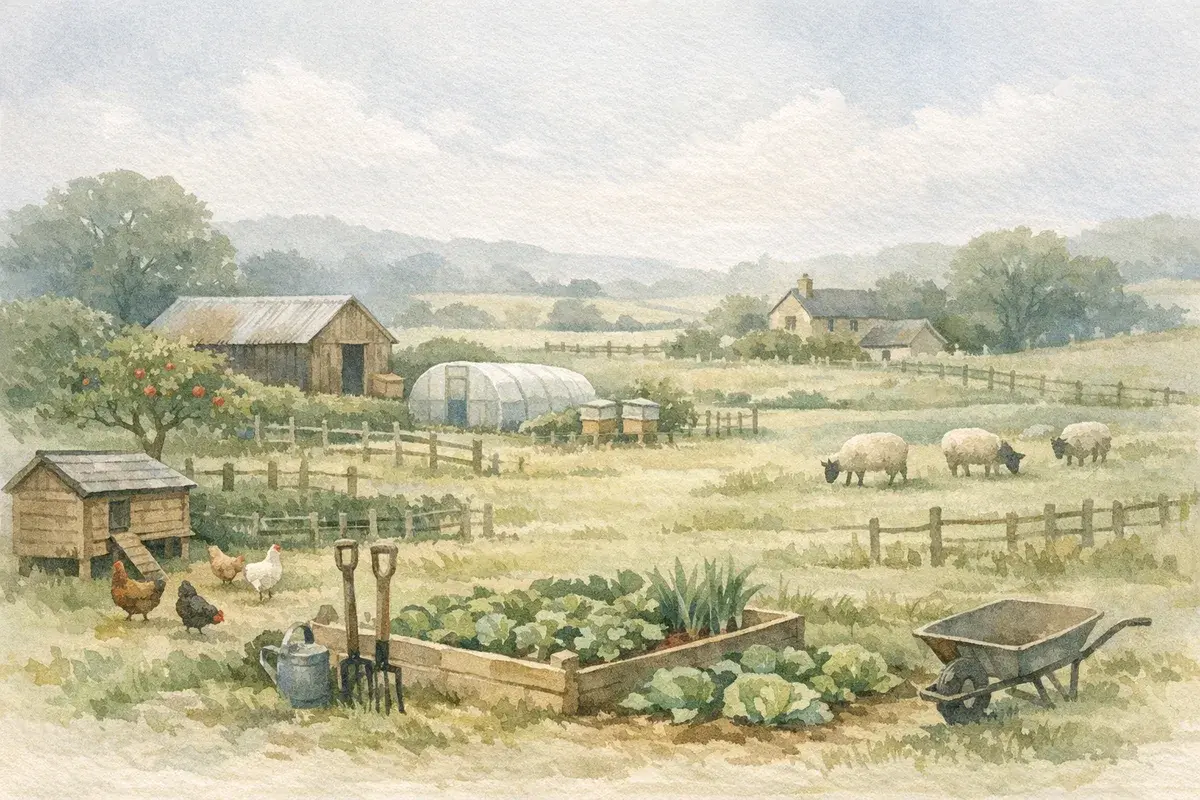
If you're wondering how to set up a smallholding, the short answer is this: start with the land, check planning and use restrictions, then build a realistic business and husbandry plan before buying stock or kit.
Get those basics wrong and the whole venture becomes expensive very quickly. Get them right and even a modest plot can support vegetables, poultry, sheep, goats, fruit, or a tidy mix of all four.
The best approach is practical, not romantic. A smallholding can be a lifestyle choice, a food-producing enterprise, or a side business, but it still needs water, access, shelter, fencing, waste handling, and a clear idea of what the land can actually carry.
Start With The Land And The Limits Of The Holding
Before you buy anything, measure the land against what you want to do with it. A few acres in Herefordshire can be perfect for poultry and market gardening, while a similar-sized parcel on heavy clay in Lincolnshire may need drainage investment before it becomes productive.
Think in terms of carrying capacity, which means how much stock or cropping the land can support without damage. That figure changes with soil type, rainfall, slope, existing buildings, and how much of the holding is usable all year round.
Check Access, Water, And Boundaries First
Access sounds dull until a feed lorry cannot turn in, or a vet cannot reach the yard in winter. You want legal access, hard standings if possible, and enough turning space for trailers, muck spreaders, and deliveries.
Water is just as critical. A spring, mains connection, borehole, or reliable storage can make the difference between an easy setup and a constant chore, especially in Kent, Norfolk, or parts of the South East where dry spells can bite hard.
- Access: Can tractors, trailers, and deliveries reach every key area?
- Water: Is there mains supply, borehole access, or storage already in place?
- Boundaries: Are fences, hedges, and gates stock-proof and secure?
- Ground conditions: Does the land drain well, or will it poach under livestock?
We'd argue that boundary work is one of the most underestimated early costs. A few hundred metres of fencing can swallow a budget faster than expected, especially if you need deer netting, post-and-wire, or electric fencing for goats and pigs.
Understand Planning, Use Class, And Local Constraints
Planning rules vary by site and council, so assume nothing. In many counties, especially around Surrey, Devon, Cheshire, and the outskirts of villages in Oxfordshire, the planning position can shape what you can build, store, or change.
If you're converting existing buildings, adding field shelters, or installing a poultry unit, check whether permission is needed and whether the land has agricultural, equestrian, or mixed-use characteristics. A smallholding is not automatically a permitted free-for-all (sadly).
Key point: if the holding sits near a settlement, conservation area, floodplain, or public right of way, the practical limits may be tighter than the map suggests.
Build A Smallholding Plan That Matches Your Time And Budget
The biggest mistake new owners make is starting with animals before deciding what the place is for. A smallholding can be self-sufficient, income-generating, or a hobby with a few sales, but each model demands a different layout and spend profile.
Be honest about time. A flock of laying hens is manageable for a working household, but pigs, lambing sheep, and market veg all at once can turn into a seven-day-a-week proposition, especially in the first year.
Choose Your Enterprise Mix Carefully
Pick enterprises that suit each other, not just your enthusiasm. Poultry pair well with orchard space and veg waste, while sheep suit rough pasture, hedgerows, and larger acreages where grass can be managed rather than intensively cropped.
If your plot is small, vegetables, cut flowers, eggs, and fruit may be more realistic than cattle or horses. In lowland Dorset or Somerset, a mixed approach can work well, but only if you have enough labour, storage, and markets within practical reach.
- Low labour: laying hens, soft fruit, orchard maintenance.
- Medium labour: market gardens, pigs, small sheep flocks.
- Higher labour: intensive veg, dairy goats, mixed livestock systems.
Don't ignore waste streams either. Manure, bedding, wash water, and plant waste all need somewhere to go. A smallholding that looks tidy on day one can become clumsy and costly if muck storage and composting were an afterthought.
Create A Realistic Start-Up Budget
Costs vary wildly depending on whether you are buying a blank field or a ready-made yard. As of January 2026, many new entrants should budget well beyond the headline land price because fencing, water, sheds, and access works often equal a large share of the initial spend.
As a rough planning guide, smallholding start-up costs can be front-loaded in the first eighteen months, with livestock, tools, and infrastructure arriving before sales become reliable. That gap matters, because cashflow is what trips people up, not just the purchase price.
| Setup Item | Typical Role | Indicative Range As Of January 2026 | Notes |
|---|---|---|---|
| Stock fencing | Boundary and paddock control | £3 0 to £9 0 per 100m | Depends on mesh, posts, and ground conditions |
| Field shelter | Livestock shelter and storage | £4%0 to £12 0 | Planning and siting can affect cost |
| Borehole or water system | Reliable supply | £2%0 to £14 00 | Varies by depth, filtration, and pumping |
Those numbers are broad working ranges rather than fixed quotes, but they show the point. A smallholding is rarely cheap to establish, even when the land itself appears affordable.
Set Up The Infrastructure Before Buying Stock
Animals are the last thing you should buy if the site is still half-finished. They need secure fencing, dry resting areas, water, handling points, and a plan for emergencies, not just good intentions and a weekend build.
Even a very small holding benefits from separation zones. Keep livestock out of veg beds, keep feed dry, and keep vehicles away from muddy gateways where possible, because compaction and standing water create problems that snowball.
Fencing, Shelter, And Handling Space
Poultry need fox-proof protection, sheep need sensible perimeter control, and goats need stronger fences than many first-time owners expect. Pigs, meanwhile, can test almost anything, especially if there's food on the other side.
Build handling space that reflects your workload. A basic race or pen system for sheep in Yorkshire or the West Midlands can save hours, reduce stress for stock, and make vet treatment far less chaotic.
- Fencing: Choose species-specific barriers, not one-size-fits-all patchwork.
- Shelter: Provide dry, ventilated cover with easy bedding access.
- Handling: Include gates, pens, and safe working space from day one.
If you're using containers, old barns, or converted sheds, check ventilation and fire safety. Dry feed and bedding are useful, but they can also become a real risk if stored badly.
Storage, Machinery, And Power
You do not need a full tractor fleet to get started, but you do need dependable kit. A compact tractor, quad bike, trailer, or even a robust pedestrian machine can be enough on smaller acreage if the layout is sensible.
Power matters too. Mains electricity is ideal, yet solar and battery systems can be useful for remote paddocks, electric fencing, and lighting. On farms and smallholdings in Cumbria, Shropshire, and parts of Wales, grid connections can be costly or awkward, so plan the utility side early.
Practical rule: if you cannot feed, water, move, or isolate stock quickly, the infrastructure is not finished.
Choose Livestock And Crops That Fit The Ground
Matching enterprise to place is where a good smallholding becomes a viable one. Wet ground suits certain grazing patterns but can damage hooves, while lighter soils can grow excellent vegetables but dry out fast in summer.
Soil testing is worth doing early. Knowing pH, drainage, and nutrient status helps you decide whether to focus on pasture improvement, orchard planting, or market gardens, rather than guessing and correcting mistakes later.
What Works Best On Different Types Of Land
On poorer grassland, hardy sheep breeds or conservation grazing may make more sense than trying to force intensive horticulture. On fertile ground close to towns in Sussex or Essex, salad crops, beans, strawberries, and eggs may give better returns per acre.
If you have woodland edges or mixed boundaries, consider fruit, coppice products, or free-range poultry, but only where biosecurity is manageable. Good land use is about fit, not fashion.
- Clay soils: good for grass in the right year, harder for early veg work.
- Sandy soils: easier to work, but need moisture management.
- Mixed loams: often the most flexible for diversified holdings.
For livestock, start modestly. A small flock or flocklet, a handful of poultry lines, or a single enterprise gives you time to learn routine before scaling up. That matters because animal health issues, lambing, or hatching problems arrive fast and seldom on schedule.
Think About Selling, Not Just Producing
Production is only half the job. You need buyers, storage, and possibly processing arrangements if you plan to sell eggs, vegetables, meat, or breeding stock.
Local markets in Cornwall, the Cotswolds, and affluent commuter belts can support small-scale premium produce, but rural expectations differ. Demand near Manchester may favour convenience and dependable supply, while tourist areas can reward provenance and story.
Worth remembering: the best product in the county is still a problem if it has nowhere to go.
Sort Out Compliance, Records, And Day-To-Day Management
Smallholdings are busy places, and admin matters more than many newcomers expect. Animal movement records, medication logs, feed invoices, soil results, and sales paperwork all help you stay on the right side of regulation and your own margins.
There may also be livestock identification requirements, waste controls, watercourse protections, and local rules around construction or business activity. If you're operating in flood-sensitive parts of Gloucestershire or Lincolnshire, factor in seasonal access and contamination risk as well.
Biosecurity And Animal Health
Biosecurity means simple actions that stop disease entering or spreading across the holding. It includes isolation areas for new stock, clean boots and tools, controlled visitors, and sensible feed storage away from vermin.
It also means planning for the unpleasant stuff. Sick pens, deadstock arrangements, and veterinary contact details should be settled before you need them, because emergencies rarely wait for a convenient afternoon.
- Quarantine: isolate bought-in stock before mixing.
- Clean-down: disinfect boots, tools, and trailers.
- Record keeping: track treatments, movements, and mortalities.
- Standing instructions: keep emergency contacts in one place.
Labour, Routine, And Seasonal Pressure
The daily rhythm of a smallholding is what keeps it afloat. Feeding, checking water, moving electric fencing, collecting eggs, and keeping on top of weeds are manageable only if the routine is clear and the seasonality is understood.
Spring and autumn are usually the pressure points. Lambing, planting, muck spreading, pruning, and wet weather repairs can collide, which is why many successful owners keep the system simpler than they first planned.
We'd argue that a smaller, well-run holding beats an over-ambitious one almost every time. You can always expand later, but you cannot easily reclaim lost time, tiredness, or poorly chosen stock.
Conclusion
When people ask how to set up a smallholding, the real answer is to start with a clear land assessment, firm budgeting, and a layout that supports the work you want to do. From planning and access to fencing, water, livestock choice, and day-to-day records, every decision affects the next one.
Keep it realistic, match the enterprise to the ground, and build infrastructure before stock arrives. Do that, and your smallholding stands a far better chance of being productive, manageable, and worth the effort, whether you're in Devon, North Yorkshire, Aberdeenshire, or anywhere in between.
Disclaimer: AgLand.co.uk is a UK agricultural land and rural property matching service, where buyers register what they are looking for and owners advertise directly to the buyers who match, and a rural resource hub. Nothing in this text is intended as legal, financial, or investment advice. You should carry out your own due diligence and seek guidance from appropriately qualified professionals (for example, solicitors, land agents, surveyors, and financial advisors) for your specific circumstances.