
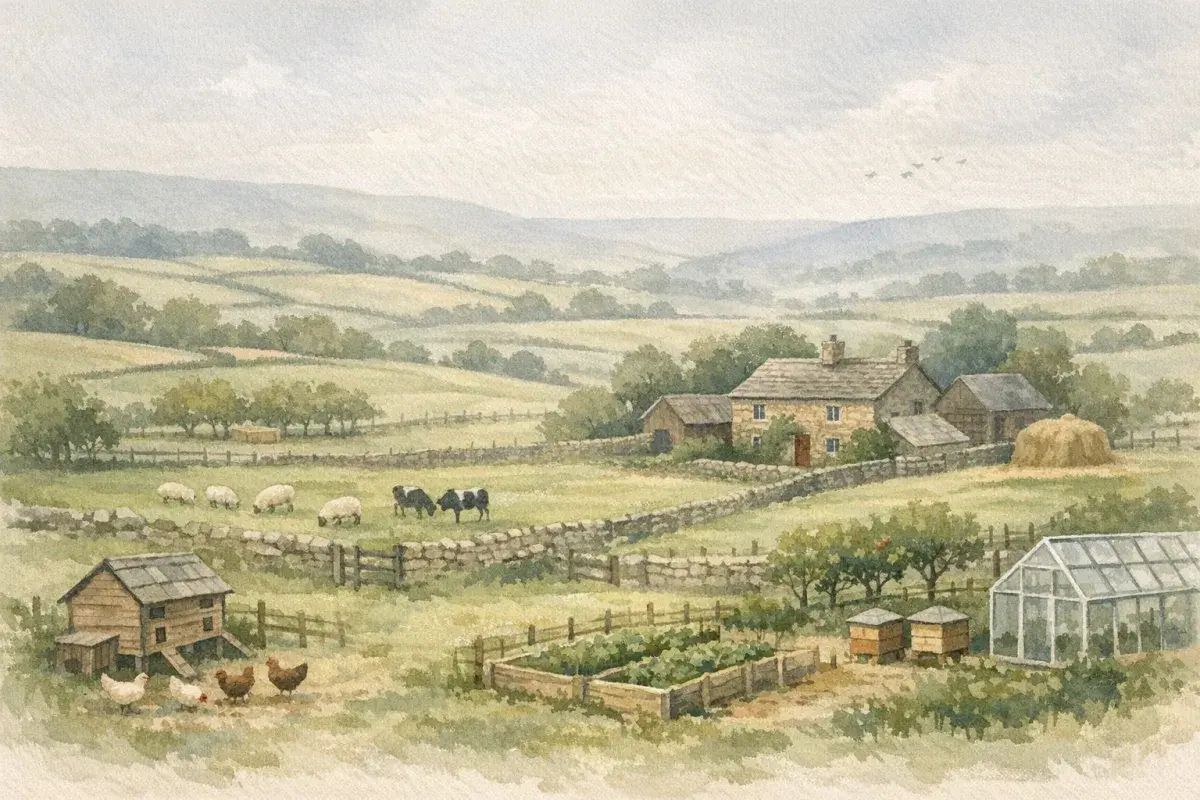
A smallholding can be a dream… right up until you realise the land still wants feeding, fencing, maintenance and cash, whether you're making money from it or not. The good news is there are plenty of realistic smallholding income ideas that work in the UK. The catch is that the "best" idea depends less on what looks good on Instagram, and more on your constraints: what your land can actually grow, what your neighbours will tolerate, what planning will allow, and how many hours you can truly spare.
Below, you'll find practical, UK‑relevant routes to income, some higher effort and higher return, others steadier and lower intensity. Think of this as a menu. You won't do all of it. But you can pick a couple of complementary streams that fit your acreage, your buildings, your appetite for paperwork, and your local market.
Start With Your Constraints: Planning, Access, Capital, And Time
Most smallholdings don't fail because the owner "didn't work hard enough". They fail because the business plan quietly ignores a constraint that later becomes expensive.
Before you buy livestock, build a polytunnel, or book your first guests, get brutally clear on four things:
- Planning and use class (what you're allowed to do)
- Access and logistics (how customers and vehicles actually reach you)
- Capital (what you can spend upfront without starving the cashflow)
- Time (what you can do every day, not just on a sunny Saturday)
If you're still at the "where do I even start?" stage, it's worth reading AgLand's guide to starting out with a smallholding, not for motivation, but for the practical realities people only learn after year one.
What You Can Run From Your Land: Acreage, Soil, Water, And Shelter
A 2–5 acre smallholding can earn well, but it's usually about intensity and fit rather than scale.
Here's how to sanity-check what your land is suited to:
- Acreage and field shape: Long thin paddocks are a pain for rotational grazing and fencing. Small, square-ish fields are easier to divide. Tiny awkward corners can still be useful for bees, soft fruit, or a small orchard.
- Soil type and drainage: Heavy clay can be brilliant grassland but miserable for early veg without serious structure improvements. Free-draining soils help with access and grazing in wet spells but can need irrigation for crops.
- Water: Veg and cut flowers are often limited by water more than land. Check mains supply, boreholes, storage, and whether you'll be moving water around the site.
- Shelter and aspect: Wind exposure matters. A sheltered south-facing strip can turn "average" land into a productive microclimate for polytunnels, herbs, or early salads.
- Neighbouring land use: Horses next door might mean demand for hay and services: arable neighbours might mean spray drift considerations if you're growing veg.
If you're buying (or upgrading) to support income streams, prioritise fundamentals: decent access, a reliable water supply, and at least one building with power. A smallholding with a house on site can also change what's realistic day-to-day, because being there for deliveries, livestock checks and guest issues isn't optional.
Permissions And Compliance To Check Early: Change Of Use, Licensing, And Insurance
UK smallholders often get caught out by thinking "it's my land, so I can do what I want." Not quite.
Common compliance pinch-points:
- Change of use and planning permission: Using a barn as a workshop, a field as a campsite, or a paddock as a car park can all trigger planning issues. Don't guess, get clarity early. AgLand's explainer on planning for smallholdings is a useful starting point before you speak to your planning consultant or local authority.
- Licensing and registrations: Depending on what you do, you may need things like an egg stamp code (for certain sales routes), a food business registration with your local council, a waste carrier licence, an animal movement licence/holding number, or a premises licence for events. Requirements vary, check before you advertise.
- Insurance: Public liability is table stakes if members of the public come on site. Product liability matters if you sell food. Employers' liability applies if you employ staff, even casually.
- Biosecurity and animal regs: Even "a few hens" becomes serious if you scale. Registering flocks, keeping movement records, and managing disease risk isn't optional.
One more constraint people underplay: capital structure. If you're buying, understand how lenders view rural property and mixed use. The detail in this UK smallholding mortgage guide helps you ask better questions before you commit.
High-Margin Food And Crops That Fit Small Acreages
If you want income without needing dozens of acres, crops are often the cleanest route, especially where you can sell direct and keep the margin.
But crops reward planning and punish wishful thinking. The profitable small-scale growers we see tend to do three things well:
- They pick crops that turn quickly (cashflow matters).
- They sell to a defined route (not "anyone who wants it").
- They standardise (repeatable beds, repeatable harvest, repeatable packing).
Market Gardening And Salad Leaves For Local Sales
Market gardening can work on surprisingly small areas, but it's operationally intense. Salad leaves, microgreens, radishes and herbs can be profitable because they're high value per square metre and have frequent repeat purchases.
Routes to market in the UK that suit smallholdings:
- Weekly veg boxes (local subscriptions): stable demand if you're consistent.
- Farm-gate collection: lower delivery time, but you need reliable parking/access.
- Local cafés and independents: great if you can deliver the same day and keep quality high.
- Farmers' markets: useful for customer acquisition, but factor in stall fees and your time.
Practical numbers to keep in mind:
- You'll need cold storage far earlier than you think.
- Labour peaks are real. Salad harvests and washing/packing can swallow your day.
- Pests and weather are the hidden tax, budget for covers, netting, and contingencies.
If you're starting from scratch, don't build a 40‑crop dream list. Start with 6–10 products you can grow well, harvest quickly, and package neatly. Then expand once you've got your timings and demand nailed.
Speciality Crops: Cut Flowers, Soft Fruit, Herbs, And Garlic
Speciality crops can be a strong smallholding income idea because they're often less commoditised than mainstream veg, meaning you can set prices based on quality and story, not the wholesale market.
Options that regularly perform well (location and soil permitting):
- Cut flowers: Wedding work is lucrative but demanding (and weather-dependent). Local bouquets and subscriptions can be steadier. You'll need a clean working area, buckets, and a cool place to condition stems.
- Soft fruit: Strawberries, raspberries and currants can work brilliantly if you've got pick-your-own potential or a local retail outlet. Netting, bird pressure, and labour (picking) are the big challenges.
- Herbs: Great for small polytunnel areas. If you can supply consistently, restaurants love them.
- Garlic: Often attractive because it's relatively compact and stores well, but you need good drying space and attention to seed quality.
The profitability trick is to sell as a finished product, not a raw commodity. Think mixed herb bunches, garlic braids, jam (with the right food hygiene setup), or flower subscriptions.
Small Livestock Enterprises With Repeatable Demand
Livestock can be a great fit if you want diversified income and you're on the land daily. But it's not "set and forget". The profitable models tend to be the ones with:
- predictable, repeatable demand
- manageable health/biosecurity risk
- simple systems for feeding, handling and sales
Free-Range Eggs And Poultry Meat: Margins, Volume, And Biosecurity
Eggs are the classic smallholding enterprise for a reason: high local demand, regular cashflow, and you can start small.
What actually makes it work in the UK:
- A sales route before you scale. Honesty boxes and regular local customers can absorb steady numbers: wholesale will squeeze margin.
- Feed costs and price discipline. Your biggest cost is usually feed (plus pullets). Set your retail price based on your costs, not what the village Facebook group thinks eggs "should" cost.
- Handling routine. Collecting, grading, cleaning (if needed), packing, record-keeping, and customer comms is the real job, not just keeping hens.
- Biosecurity. Avian influenza restrictions can change what you're allowed to do and how birds are managed. Plan for containment and hygiene practices.
Poultry meat (table birds) can be profitable, but the compliance and processing side is where people stumble. If you're considering it, speak to your local authority early about food hygiene expectations and how you'll handle slaughter/processing within the rules.
Sheep, Goats, And Pigs: Where They Work Well And Common Pitfalls
For grazing-based income, sheep are often the "entry point", but don't confuse familiarity with simplicity.
- Sheep: Best where you've got secure fencing, handling facilities, and a plan for worming and foot care. Without handling pens, routine jobs become a wrestling match.
- Goats: Great at turning rough ground into chaos. If you want dairy or value-added products, be realistic about the daily commitment and hygiene. They also test fencing like it's a hobby.
- Pigs: Excellent for converting food waste (within strict rules) and improving ground, yet they can destroy pasture quickly in wet weather. Your limiting factor is often where you can keep them without creating mud, smell, and neighbour issues.
The common pitfalls we see:
- Underestimating winter: shelter, feed, access, and mud management.
- Buying animals before infrastructure: fencing and water first, always.
- Treating veterinary costs as "rare": budget for problems: hope you don't use it.
And if your plan involves horses or equestrian income, your property features matter. A yard with stables can open up multiple revenue lines (DIY livery, schooling, holiday turnout), but it also brings planning, traffic and insurance considerations. If that's your direction, explore what makes a good stables-based smallholding setup before you commit.
Diversification That Leverages Your Location And Buildings
If you've got buildings, hardstanding, decent access, or you're near a population centre, diversification can outperform "pure farming" on a small acreage.
But diversification is also where planning and neighbour relationships can make or break you. Aim for options that:
- don't depend on perfect weather
- can be shut down quickly if needed
- make use of what you already have (barns, yards, a good entrance)
Farm Gate Retail, Honesty Boxes, And Local Delivery
Direct sales are the margin-maker for smallholdings.
Good, practical models:
- Honesty boxes for eggs, seasonal veg, preserves, plants.
- Click-and-collect once a week (less disruption than daily farm shop hours).
- Local delivery on a defined route (e.g., Friday afternoon only).
- Partnerships with other small producers to create a fuller offering.
A few pragmatic tips:
- Keep the product range tight and reliable.
- Make signage clear and parking safe.
- Don't overlook payment friction, card readers and clear pricing reduce "cash only" drop-off.
Storage, Workshops, And Yard Lets: Structuring Agreements And Avoiding Planning Traps
Letting space can be a quiet winner, especially if you're time-poor. Think:
- caravan/boat storage
- container storage
- small workshops for rural trades
- yard lets for plant hire firms (only where suitable)
But here's the catch: uses can drift. A "storage tenant" quietly becomes a repair business with extra vehicles and customers. That's where complaints and planning enforcement risk appear.
To protect yourself:
- Use written agreements with permitted use clearly stated.
- Set rules on hours, noise, subletting, signage, and waste.
- Keep the site tidy. Perception drives complaints.
- Check whether the intended use needs planning consent or business rates implications.
Experiences And Events: Income Without Scaling Stock Numbers
Experience-led income is popular because it can generate meaningful revenue without buying more land or running more animals. It can also be a headache if you ignore seasonality, neighbours, and the rules.
The sweet spot is usually small, well-managed, repeatable experiences that fit your site.
Glamping, Camping, And Short Lets: Seasonality, Neighbours, And Site Rules
In the UK, demand for rural stays remains strong, but you're not alone, quality and compliance matter.
What to think about before you buy pods or bell tents:
- Access and visibility: Can guests find you without driving past your house at midnight? Is the entrance safe for low cars?
- Utilities and waste: Toilets, showers, grey water, rubbish, recycling, fire safety. These details decide reviews.
- Neighbours and noise: A quiet site sells. But you'll still need a plan for parties, dogs, and late arrivals.
- Planning and site rules: Don't assume "temporary" means "no permission needed". Rules vary and enforcement is real.
Many successful sites keep it simple: a few pitches, great views, clean facilities, and clear expectations.
Workshops, Small Events, And Educational Visits: Risk Assessments And Safeguarding
Workshops can be surprisingly good earners on a smallholding: willow weaving, lambing experience days (where appropriate), hedge-laying demos, bread making, beekeeping introductions, pasture walks.
To run them responsibly:
- Risk assess properly: livestock, machinery, uneven ground, ponds, electric fencing.
- Insurance: public liability that covers events and activities.
- Parking and traffic management: keep it safe and neighbour-friendly.
- Safeguarding: if children attend, you need appropriate policies and supervision practices.
If you're not keen on hosting the public, consider "semi-public" income: pre-booked sessions with small groups, or private workshops for corporate wellbeing days, higher spend, fewer people, more control.
Land-Based Services And Contract Work For Nearby Farms And Estates
Some of the most dependable smallholding income ideas aren't glamorous. They're service-based, local, and built on trust.
If you're in a farming area, there's often demand for:
- grazing keep and winter keep
- mowing and topping
- small-scale livery and turnout
- labour at peak times
Grazing, Mowing, Livery, And Winter Keep: Writing Clear Terms
Letting grazing can be a sensible baseline income, especially if you don't want to own stock.
Make it work by getting specific:
- Define the period (start/end dates).
- Define responsibilities (fencing, water, weeds, poaching damage, vet emergencies).
- Set stocking limits and what happens in extreme weather.
- Payment terms and what happens if animals aren't removed on time.
For livery/turnout, be even clearer. Horses amplify risk: public access, owner expectations, and liability. Good clients exist, but you need rules, not handshake arrangements.
Machinery, Labour, And Specialist Services: What Sells Locally
On smaller acreages, you might not justify a full machinery fleet. But if you do have kit (or specialist skills), contract work can be a steady earner:
- hedge cutting (within legal/seasonal constraints)
- fencing and gate hanging
- small paddock maintenance for horse owners
- muck and waste removal (with the right permissions)
- chainsaw/woodland work (training and insurance essential)
The best approach is to look at what's already undersupplied in your area. Rural Facebook groups can be a rough indicator, but word-of-mouth through neighbouring farms and local merchants is usually where the better clients come from.
A practical note: contract work can be cashflow-positive, but it can also pull you away from your own enterprise at exactly the wrong time (harvest week, lambing, event prep). Price accordingly, and don't be afraid to say no.
Environmental And Woodland Income Streams
Environmental income is growing in importance across the UK, but it's not "free money". The paperwork is real, the timelines can be long, and you need decent records.
That said, if you've got marginal land, awkward corners, or existing woodland, environmental streams can complement food production and reduce risk.
Woodfuel, Timber, And Woodland Products With Realistic Timelines
Woodland income is often slower-burn than people expect.
Potential products:
- Firewood and kindling: can generate steady winter demand if you're near housing. But drying, storage and delivery logistics matter.
- Timber: longer-term and management-heavy. You'll likely need a woodland management plan and professional advice.
- Woodland "by-products": coppice materials, wreath-making supplies, mushrooms (only where appropriate and safe), charcoal.
Reality check: if you're planting new woodland, you're planning in decades, not months. If you're managing existing woodland, your first wins are often operational, tidying, thinning, stacking, and selling locally, rather than big timber cheques.
Countryside Stewardship And Nature-Based Projects: Evidence, Mapping, And Inspections
In England, schemes like Countryside Stewardship (and evolving environmental funding) can support habitat creation, boundaries, and land management actions. The key word is evidence.
To avoid pain later:
- Keep dated photos of works before/during/after.
- Maintain maps and records of inputs and actions.
- Understand inspection risk: you need to be able to show what you did, when, and where.
Nature-based projects can also include permissive access (where suitable), pollinator margins, or wetland creation, again, subject to your land and constraints.
Looking for land like this? Tell AgLand what you're after - type, acreage, budget and area - and we'll alert you the moment a matching property is advertised. Registering is free, and there's no commission on either side. Tell us what you're looking for.
Conclusion
The most sustainable smallholding income ideas in the UK usually share one trait: they're designed around your constraints, not your fantasies. Start with what your land and buildings can support, pick one or two income streams you can run consistently, and only then add complexity.
If you want a simple rule of thumb: build a baseline income (grazing lets, eggs, storage), then add a margin booster (direct sales, speciality crops, workshops) once your systems are calm.
And don't underestimate how much easier this gets when you choose the right property in the first place. Access, water, buildings, and neighbour context will decide whether your plan feels like progress, or a constant uphill slog.
Disclaimer: AgLand.co.uk is a UK agricultural land and rural property matching service, where buyers register what they are looking for and owners advertise directly to the buyers who match, and a rural resource hub. Nothing in this text is intended as legal, financial, tax, or investment advice. You should carry out your own due diligence and seek guidance from relevant qualified professionals (for example, a solicitor, chartered surveyor, planning consultant, accountant/tax adviser, insurer, and/or veterinary professional) before making decisions.