
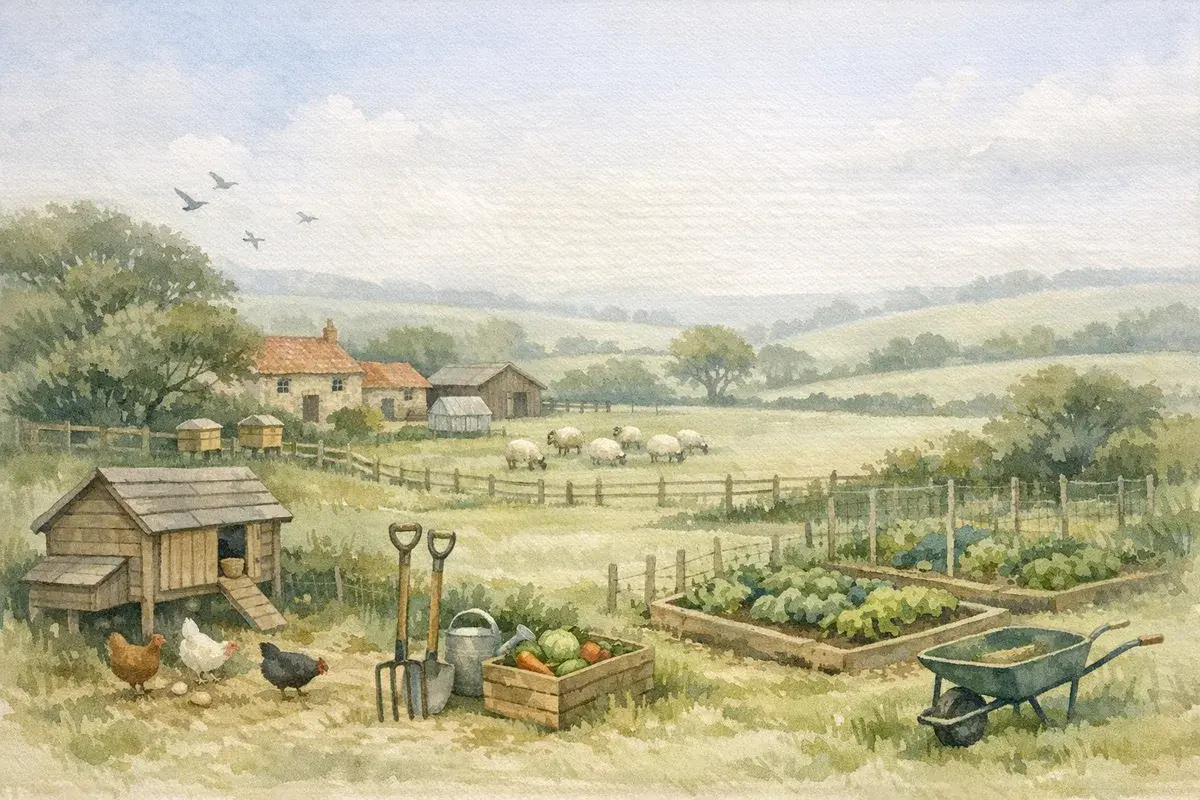
If you're wondering how to start a smallholding uk, the short answer is this: begin with land, water, access, and a brutally honest budget. Get those four right, and the rest becomes much easier.
A smallholding can mean anything from a few acres with poultry and veg beds to a more serious mixed unit with sheep, fruit, and outbuildings. The trick is matching your ambitions to the land you can afford and manage, not the other way round.
We'd argue that many first-time buyers fall in love with the idea before the numbers. That's understandable, but a smallholding is a working business, even if it's part lifestyle choice. So yes, you can do it. But plan it like a farm, not a fantasy.
What A Smallholding Really Means In The UK
There's no single legal definition of a smallholding in England, Scotland, Wales, or Northern Ireland. In practice, it usually means a modest plot of rural land, often from a couple of acres up to 20 or more, used for producing food, keeping animals, or both.
The exact mix depends on your goals. A Somerset smallholding might focus on rare-breed pigs and market gardening, while a Perthshire holding could be geared towards sheep, ponies, and woodfuel. In Cornwall, tourism links and higher land values may push owners towards diversification, while in North Yorkshire or Shropshire, grassland units can suit grazing-led systems better.
Types Of Smallholding Setup
Think about the business model before you think about chickens. A productive holding can be designed around self-sufficiency, hobby production, direct sales, or a proper rural enterprise with steady turnover.
- Livestock-led: sheep, poultry, goats, pigs, or cattle on grassland.
- Market gardening: vegetables, salads, herbs, soft fruit, and cut flowers.
- Mixed holding: a blend of crops, animals, and small-scale diversification.
- Lifestyle holding: lower output, more personal use, but still with real upkeep.
Each route brings different demands. Livestock need fencing, handling pens, water, and pasture management. Cropping needs soil health, drainage, access, and labour at the right times. Mixed holdings can be resilient, but they're also harder to organise.
How To Budget For Land Buildings And Setup Costs
Money matters first, second, and third. Land price is only one slice of the pie, because barns, fencing, drainage, machinery, and basic welfare kit can easily cost as much as the ground itself over time.
As of June/2026, bare agricultural land in England and Wales is commonly priced in broad bands rather than neat averages. Good cereal ground in eastern counties such as Lincolnshire, Cambridgeshire, and Norfolk can sit well above £8,000 per acre, while poorer upland pasture in parts of Cumbria, Devon, or mid-Wales may trade much lower, often below £4,000 per acre. Small parcels usually command a premium because they're harder to assemble and often suit amenity buyers as much as farmers.
| Cost Area | Typical Range As Of June/2026 | Notes |
|---|---|---|
| Bare Grassland | £3,000 to £10,000 per acre | Quality, access, and region drive pricing |
| Basic Fencing | £1,500 to £5,000 per acre | Depends on stock type and boundary length |
| Simple Outbuilding Repairs | £5,000 to £30,000 | Roofing, electrics, doors, and water supply |
| Starter Livestock Kit | £1,000 to £10,000 | Handling, feeders, water troughs, and small tools |
Remember running costs too. Feed, vet bills, fuel, insurance, muck removal, and maintenance stack up fast. If a holding looks cheap because the buildings are tired, there's usually a reason.
Hidden Costs Buyers Often Miss
Some costs only emerge after completion, which is why due diligence is so important. Access tracks may need upgrading. Boreholes or mains water connections can be expensive. Even a modest yard can need septic improvements, telecoms, or power reinforcement.
- Drainage: wet ground can limit grazing and machinery use.
- Council Tax Or Business Rates: the occupancy and use pattern matters.
- Insurance: public liability, buildings cover, livestock, and machinery.
- Labour: even part-time holdings need holiday cover and backup.
A sensible rule is to keep a reserve fund equal to at least 10% to 15% of your acquisition and setup budget. That buffer can save a dream when the gate latch fails, the lambing shed leaks, or the first winter bites harder than expected.
Choosing The Right Land And Buildings
Good land is more than scenic views and a fresh breeze. You need access for a trailer or livestock lorry, a reliable water source, workable soil, and buildings that fit your intended use.
If you want poultry, look for dry ground, secure boundaries, and space for egg handling and storage. If you want sheep or goats, focus on grazing quality, fencing, handling facilities, and enough land to avoid overstocking. For veg production, south-facing ground, shelter, and drainage become far more important than a picturesque pond.
Key Site Checks Before You Buy
Always inspect the holding in wet weather if you can. What feels firm in May can become a mud trap in November. Ask yourself whether a feed lorry, vet, or hay delivery vehicle can actually reach the yard without causing damage.
- Access: year-round entry, turning space, and practical road frontage.
- Water: mains, spring, borehole, or stored supply.
- Soil: heavy clay, free-draining loam, or poorer upland ground.
- Buildings: roof condition, ventilation, floor strength, and animal suitability.
- Boundaries: hedges, post-and-wire, stock netting, and gate quality.
Country location matters too. In Herefordshire or Kent, you may see more orchard and horticulture opportunities. In the Scottish Borders or parts of Devon, grass-based mixed use is often more realistic. In Cheshire or Oxfordshire, proximity to markets may help with direct sales, but land values can be high.
Planning status and permitted use can change what's possible. Converting a barn, adding a timber cabin, or creating a field shelter may need consent. If the building is listed or the land has environmental designations, the rules get stricter, and fast.
Planning, Rules, And Livestock Welfare Basics
This is where enthusiasm meets compliance. Keeping animals and using rural land for production side by side sounds simple, but the practical and regulatory requirements still need attention.
In England and Wales, livestock housing, manure storage, slurry management, and animal welfare all need proper thought. Even smaller holders can fall within animal welfare, waste, or environmental rules depending on what they keep and how they operate. In Scotland and Northern Ireland, the principles are similar, though the detail and agencies differ.
Permissions And Legal Checks
The key is to check before you commit to a particular enterprise. A field shelter might be treated differently from a permanent building. Regular market sales can trigger food hygiene requirements. Ponds, septic tanks, and alterations to access can also bring in extra consent.
- Planning permission: needed for many new buildings and material changes of use.
- Cropping and livestock records: essential for traceability and management.
- Waste rules: muck, carcasses, and packaging need lawful handling.
- Animal housing standards: shelter, ventilation, space, and biosecurity all matter.
Biosecurity deserves a proper mention. That means reducing the risk of disease coming onto the holding or spreading between animals. Simple steps like quarantine pens, clean footwear, and controlled vehicle access can save serious losses.
If you're buying a holding with tenanted land, check the tenancy terms carefully. Agricultural tenancies, grazing agreements, and informal arrangements can all affect when and how you take control.
From Hobby To Viable Rural Business
Not every smallholding needs to be a profit machine. Still, if you want it to wash its face, you need a plan for output, sales, and labour. The most resilient holdings usually do several things well rather than chasing one glamorous idea.
Direct sales can work brilliantly, but only if you have product consistency and local demand. Farm gate eggs, boxes of seasonal vegetables, lamb boxes, or primitive breed pork all make sense in the right location. Areas near Bath, Oxford, York, or the Edinburgh commuter belt may support premium buyers. Remote areas can work too, but you may need stronger online ordering, market attendance, or wholesale routes.
Choosing Enterprises That Fit The Land
Match the enterprise to the site, not to social media ideals. A wet Devon valley suits grazing and orchards better than delicate salads. A sheltered Kent plot with fertile soil could be ideal for vegetables and soft fruit. A hill fringe in Cumbria might be better for hardy cattle or sheep than intensive cropping.
- High labour, high return: market gardening, flowers, and eggs.
- Moderate labour, steady return: sheep, goats, and soft fruit.
- Lower labour, lower margin: pasture lets, hay, or rough grazing.
And then there's labour itself. A smallholding can absorb weekends, evenings, and every spare hour if you let it. Ask whether you want a part-time project or a full-time family business. That answer changes everything, from land size to machinery choices.
We'd also suggest starting smaller than your ambitions if you're new to the game. A manageable flock, a modest veg patch, and basic infrastructure often teach more than a spread of half-finished ideas ever will.
Conclusion
If you're serious about how to start a smallholding uk, focus on the fundamentals first: land quality, access, water, buildings, compliance, and a realistic budget. The best smallholdings aren't always the prettiest ones on day one, but they are the ones that can be worked safely, affordably, and sustainably over time.
In the right county, with the right layout and a disciplined plan, a smallholding can become a productive rural base as well as a rewarding way of life. Get the foundations right, and you'll give yourself a proper chance of making it work.
Disclaimer: AgLand.co.uk is a UK agricultural land and rural property matching service, where buyers register what they are looking for and owners advertise directly to the buyers who match, and a rural resource hub. Nothing in this text is intended as legal, financial, or investment advice. You should carry out your own due diligence and seek guidance from appropriately qualified professionals (for example, solicitors, land agents, surveyors, and financial advisors) for your specific circumstances.