
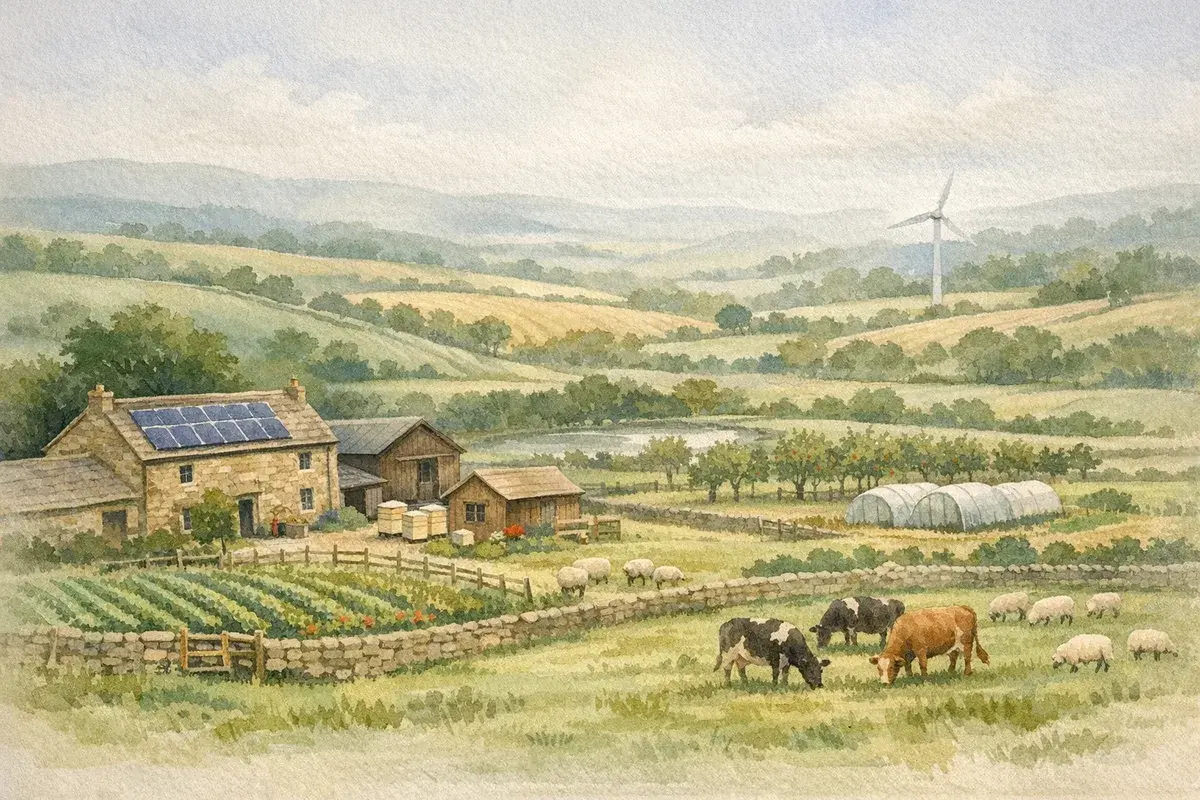
You don't diversify because it's fashionable, you do it because the numbers, the weather, the labour market and policy shifts keep moving under your feet. In 2026, "good farming" alone doesn't always translate into predictable cashflow, and lenders (and successors) increasingly want to see resilience baked into the business.
The trick is choosing agricultural diversification examples that actually fit your holding: ideas that work with your access, your neighbours, your tenancy position, your appetite for risk, and, crucially, what your local planning authority will stomach. Some options are quick to trial and easy to unwind. Others can add serious value, but only if you get the rulebook and the sequencing right.
Below is a UK-only, practical run-through of what tends to stack up in the real world, plus the filters we've seen save people from expensive "almost worked" projects.
What Agricultural Diversification Means In The UK (And Why It Matters In 2026)
In UK terms, agricultural diversification is simply using your land, buildings, skills or assets to create additional income streams beyond (or alongside) conventional agricultural production. That can mean letting space, creating a consumer-facing enterprise, generating energy income, or trading services using kit you already own.
What it isn't: a vague "let's do something on the side" idea. Done properly, diversification is a commercial decision with planning, tax and operational consequences. It can strengthen the core farm business, or accidentally undermine it if the new activity changes your tax relief position, triggers a tenancy breach, or creates a neighbour dispute you can't put back in the box.
Diversification Vs Development: The Core Distinction
A lot of confusion comes from mixing up diversification (new income activity) with development (change of use, building works, residential creation, etc.). In practice, you often have both.
- Diversification might be letting a shed for storage, running a seasonal farm-gate enterprise, or offering contracting services.
- Development is usually where planning, highways, ecology, drainage and design standards start to dominate the timeline and the cost.
The important point: plenty of diversification ideas look simple until you hit planning. Conversely, some of the best "low drama" options sit in existing buildings and yards where consents are either already in place or relatively straightforward.
Common Drivers: Income Resilience, Succession, Labour, And Policy Change
Across the UK, the same motivations keep cropping up:
- Income resilience: Smoothing volatility from commodity prices and input costs.
- Succession and family roles: A diversification project can create a defined role (and wage) for the next generation without forcing them into the traditional farm job description.
- Labour reality: Some enterprises are labour-hungry (events, hospitality). Others are set-and-manage (certain lets, roof solar) and suit lean teams.
- Policy change and environmental markets: The direction of travel, public money for public goods, plus private money for biodiversity, means "land use" is now a portfolio question, not a single-track decision.
If you want inspiration grounded in real outcomes (not just wishlists), our round-up of real-world diversification examples is a good companion read, especially for seeing how farms phased projects rather than betting the yard on one big leap.
The Rulebook You Must Check First: Planning, Tenancies, Tax, And Funding
Before you fall in love with an idea, check what you're allowed to do, what you can do under your agreements, and what you should do for tax and funding. This is where time is either saved or burned.
Planning And Permitted Development Rights: Where The Fast Wins Usually Sit
In England (and with different rules in Wales, Scotland and Northern Ireland), permitted development rights (PDR) can sometimes help you move quickly, but they're not a free pass. Many "fast wins" are in and around:
- Existing agricultural buildings (change of use routes, prior notifications, and limits, where applicable)
- Minor operational development tied to agriculture
- Low-impact uses that don't intensify traffic, noise or lighting
But, your reality is shaped by local constraints: AONBs, National Parks, listed buildings, SSSIs, flood zones, highway visibility, and proximity to dwellings. The same idea can be "yes, subject to conditions" in one parish and dead-on-arrival in the next.
Tenancies And Control: AHA, FBT, And Consent Risks
If you're a tenant, or if any part of the holding is tenanted, control is everything.
- AHA tenancies can be particularly sensitive. Consent may be required, and the definition of "agriculture" matters.
- FBTs often provide more flexibility, but still commonly restrict non-agricultural use, alterations, signage, subletting, and assignments.
If you diversify without written consent where it's needed, you can create a breach that's far more costly than the profit you hoped to make. In our experience, the best approach is early, formal clarification, ideally with a rural surveyor who's used to negotiating these issues.
Tax And Structuring: VAT, IHT Reliefs, CGT, And Trading Tests
Tax is where "profitable" can quietly become "problematic". A few UK watch-outs that come up repeatedly:
- VAT: A new enterprise might force VAT registration, change partial exemption position, or create unexpected VAT on rents or services.
- Inheritance Tax reliefs: Agricultural Property Relief (APR) and Business Property Relief (BPR) are powerful, but diversification can complicate the story, particularly if activity looks more like investment than trading.
- Capital Gains Tax and reliefs: Asset disposal, lettings and changes of use can all affect relief availability and timing.
- Trading vs investment: Some lets are treated very differently from trading businesses.
None of this is a reason to avoid diversification, it's a reason to structure it deliberately. If you're moving from "idea" to "project", it's worth reading our step-by-step guide to building a proper diversification business plan so the commercial case, the tax approach and the permission pathway line up.
Funding and grants can help too, but don't assume they'll be quick or guaranteed. You'll often need planning clarity, match funding, and a robust business case to get anywhere.
Low-Capex Diversification Examples (Quick To Trial, Easier To Exit)
If you're aiming for momentum (and a safety net), low-capex options are often the smartest first move. They can generate cash, prove demand, and build confidence, without pouring concrete everywhere.
Letting Buildings For Storage, Workshops, Or Micro-Industrial Use
This is one of the most common UK diversification routes because it monetises what you already have: space.
Typical examples that work well:
- Secure storage for trades (plumbers, electricians, small builders)
- Light workshops (non-noisy, non-polluting)
- Small rural units for joinery, fabrication, vehicle detailing (with constraints)
What makes it stack up:
- You can often phase units (one building first, then expand)
- Tenants may fit your local network
- A well-managed yard can become a stable "rent roll" that underpins the wider farm business
What catches people out:
- Change of use requirements (or conditions on existing consents)
- Business rates and services (power capacity is a frequent bottleneck)
- Fire safety, access, and insurance responsibilities
Yard, Hardstanding, And Container Storage (With Access And Screening)
Hardstanding and yard storage can be deceptively lucrative, especially where there's strong local demand and a shortage of secure compounds.
Strong use cases:
- Caravan and boat storage (with clear rules and good security)
- Pallet storage for local businesses
- Container storage, where visual impact is managed
Critical practicalities:
- HGV access, turning circles and visibility splays
- Surface water drainage and mud management (neighbours notice quickly)
- Screening, lighting design and operating hours
And yes, this can become a planning issue if it intensifies or changes the character of use, so treat it as a real project, not a casual sideline.
Seasonal Enterprises: Pumpkins, PYO, Pop-Ups, And Farm Gate Trading
Seasonal trading is a brilliant "test bed" because it's time-limited and often scalable.
Agricultural diversification examples that UK farms keep returning to:
- Pumpkin patches with timed entry
- PYO soft fruit (when labour and customer flow are manageable)
- Pop-up food vendors on set days
- Farm-gate egg, meat or veg sales with honest signage and parking
The goal here isn't to create the biggest event in the county on year one. It's to learn: Where do customers come from? How much staff time does it eat? Which complaints arrive first, traffic, parking, noise, litter, dogs?
If you're thinking about consumer-facing retail longer term, it's worth looking at practical considerations around turning farm-gate trade into a proper retail offer, especially layout, compliance, and how to avoid underpricing your own effort.
Property-Led Diversification Examples (Making More Of Buildings And Land)
Property-led diversification tends to be where value really moves, but it's also where mistakes are expensive. The win is long-term income (and sometimes capital uplift). The cost is time, professional fees, and a higher exposure to planning risk.
Barn Conversions And Residential Lets: When The Numbers Beat The Headaches
Converting redundant buildings into residential lets can produce strong returns in the right locations, particularly where there's persistent rental demand.
But the maths must include:
- Build cost inflation and contingency (it's rarely "just a tidy-up")
- Ecology surveys (bats are a common reality in older buildings)
- Utilities: power upgrades, water connections, drainage solutions
- Access and visibility: highways can make or break a scheme
Also, residential can change the character of your holding and add long-term neighbour sensitivity. Sometimes the better option is a non-residential consent that keeps flexibility.
Holiday Lets, Glamping, And Farm Stays: Occupancy, Utilities, And Neighbours
Rural stays still perform in many parts of the UK, but the best operators treat it like hospitality, not property.
Holiday lets can work well where you have:
- A strong local visitor economy (coast, national landscapes, heritage hubs)
- A property that photographs well and has privacy
- Reliable water, power and broadband (guests won't forgive "rural charm" when Wi-Fi dies)
Glamping often looks simpler on paper, until you deal with:
- Waste and water (sewage solutions are not an afterthought)
- Vehicle movements, lighting and noise
- Seasonality and staffing
If glamping is on your shortlist, get specific early on permissions, infrastructure and neighbour management. Our dedicated guide to glamping as a farm diversification route goes deeper on what tends to get approved, what gets refused, and the practicalities that affect profit.
Equestrian: DIY Livery, Arenas, And Grazing Lets (And The Planning Traps)
Equestrian demand is consistent in many areas, and DIY livery can feel like a natural fit: regular income, local clients, and use of grazing.
Common UK models include:
- Grazing lets (with clear boundaries on use)
- DIY livery with basic facilities
- Manege/arena plus parking and storage
The traps are usually:
- Change of use: equestrian is not automatically "agriculture" for planning purposes
- Intensity: traffic, lighting, and muck management bring scrutiny
- Liability: public access, insurance, and risk management need to be watertight
Equestrian can be excellent, just don't sleepwalk into planning assumptions that later restrict what you can do on the rest of the farm.
Energy And Environmental Diversification Examples (Income With Compliance)
Energy and environmental income can be among the most durable diversification routes, often with longer contracts and less day-to-day involvement. But it's compliance-heavy, and grid reality is the gatekeeper.
Solar PV: Rooftop Vs Ground-Mount, Grid, And Lease Structures
Rooftop solar can be a straightforward win where roofs are suitable and power use is meaningful (cold stores, dairies, workshops). It can reduce bills and improve resilience.
Ground-mount solar can work, but you need to think like a developer:
- Grid connection feasibility and timescales (often the biggest constraint)
- Land classification, landscape impact, ecology and glint/glare
- Lease structures, indexation, access rights, and reinstatement clauses
A key judgement call is whether you want a lease income (simpler, but often less upside) or ownership/partnership (more upside, more risk and management).
Battery Storage, Anaerobic Digestion, And Heat Networks: Scale And Consents
These are not "toe in the water" projects.
- Battery storage can be attractive where grid and planning allow, but it brings fire safety considerations, consultation, and often strong local opinions.
- Anaerobic digestion (AD) can suit farms with the right feedstock and a realistic operations plan. The UK has mature examples, but success depends on management, contract discipline and digestate handling.
- Heat networks are niche but can work where you have clustered demand (holiday lets, workshops, multiple dwellings).
In all cases, you're into specialist legal agreements, technical due diligence and, usually, financing complexity.
Natural Capital And Nature-Based Schemes: BNG, Carbon, And Biodiversity Income
"Natural capital" is no longer just a buzz phrase. Private funding mechanisms, alongside environmental schemes, are increasingly shaping land decisions.
UK-relevant routes include:
- Biodiversity Net Gain (BNG) habitat creation and management (subject to local demand and legal structure)
- Woodland creation and peatland restoration where appropriate
- Carbon-related projects (with careful attention to additionality, permanence and who owns the rights)
The big caution: these are long-term commitments. Get advice on heads of terms, management obligations, stacking rules, and how the agreements interact with existing farming activity and future saleability.
Service And Enterprise Diversification Examples (Leveraging Skills And Kit)
Not every diversification needs planning permission or a building conversion. Some of the most reliable wins come from selling what you already have: capability.
Contracting, Groundworks, And Rural Services Using Existing Machinery
If you've got kit and you run it well, contracting can be a clean expansion, particularly where neighbours are reducing machinery ownership.
Examples we see work in the UK:
- Cultivations, drilling, spraying (with strong compliance and record-keeping)
- Hedge cutting, ditching, verge management (with clear scopes and insurance)
- Snow clearance or estate maintenance (where demand exists)
The difference between "good side income" and "stressful trap" is usually:
- pricing discipline (you must charge for depreciation and downtime)
- operator availability
- written contracts and clear liabilities
Food And Drink: Processing, Butchery Units, And On-Farm Brands
Food and drink can be high margin, but it's also high compliance.
Common routes include:
- Small processing units (chilled prep, bakery, preserves)
- On-farm butchery partnerships (often with specialist operators)
- A branded product line sold locally and online
You'll need to think about food hygiene, trading standards, labelling, cold chain, allergen management and staffing. Many farms succeed by starting with one hero product, then expanding once demand is proven.
Education, Events, And Experiences: Visits, Weddings, And Countryside Skills
Experiences are where farms can turn location and authenticity into revenue.
- Educational visits (aligned with curriculum or countryside skills)
- Corporate away-days (practical activities, farm tours)
- Ticketed events (seasonal, controlled)
- Weddings (high revenue, high expectation)
Weddings are a category of their own: licensing, parking, noise, toilets, neighbour consultation, staffing, and a marketing engine you'll be feeding constantly.
If you're considering that path, read our straight-talking guide to turning a farm into a wedding venue, because the "pretty barn" is the easy part.
At this stage, many people ask, "Okay, but which of these makes the most money?" The honest answer is: the one that fits your site and you can execute consistently. Still, it helps to benchmark. Our analysis of the highest-earning diversification routes is useful for narrowing the field before you spend on drawings and surveys.
How To Choose The Right Diversification: A Practical Filter That Avoids Expensive Mistakes
A good idea on the wrong holding is a bad idea. When we're talking to farmers and rural investors, the projects that succeed tend to pass three filters: site fit, commercial fit and risk fit.
Site Fit: Access, Visibility, Services, Flood Risk, And Proximity To Homes
Ask yourself, brutally, what your site can support:
- Access: Can a van, horsebox or HGV get in and out safely without reversing onto a fast road?
- Visibility and location: Do you need passing trade, or is it appointment-only?
- Services: Power capacity, water pressure, drainage, broadband.
- Flood risk: Even if planning is achievable, insurers and lenders may price the risk.
- Neighbour proximity: If someone can hear your enterprise through their bedroom window, your operating hours just shrank.
If the basics don't stack up, you'll spend your profit on mitigation.
Commercial Fit: Local Demand, Competition, Pricing Power, And Seasonality
Diversification is local. A glamping site can print money in one area and struggle three miles away.
Pressure-test:
- Who is your customer, exactly?
- What are they paying now, and to whom?
- What's your differentiator (quality, location, convenience, niche)?
- Is the income seasonal? If so, what pays the bills in February?
A quick sanity check is to write a one-page "offer": product, price, customer, and why you win. If you can't make it clear, the market won't either.
Risk Fit: Biosecurity, Traffic, Complaints, Insurance, And Enforcement Exposure
Risk isn't just financial. It's operational and reputational.
- Biosecurity: Public access, livestock interaction, vehicle movements.
- Traffic and parking: One bad weekend can generate years of objections.
- Insurance: Public liability, employer's liability, professional indemnity (if relevant), and specific cover for events or accommodation.
- Enforcement exposure: If you "try it and see" with uses that require permission, you may create a planning problem that complicates future applications.
The best projects look boring on day one: permissions understood, complaints anticipated, paperwork tidy. That's what makes them profitable on day 1,000.
Delivering A Diversification Project: From Idea To Letting Or Trading
Execution is where most diversification projects either become a stable income stream, or a lingering, half-finished drain.
Build A Bankable Business Case And Sensitivity Test The Cashflow
A solid business case isn't a spreadsheet exercise for the bank: it's your defence against optimism.
Include:
- upfront capex (with realistic contingency)
- ongoing opex (utilities, maintenance, staffing)
- planning/professional fees
- financing costs
- a conservative revenue case (and a "bad year" scenario)
Sensitivity testing is simple but powerful: what happens if occupancy drops 20%? If build costs rise 15%? If you need an extra staff member? If the grid quote is delayed a year?
Line Up The Right Professionals: Agents, Planners, Surveyors, And Tax Advisors
The right team saves money by preventing rework.
You'll often need:
- a planning consultant who knows rural policy and local authority expectations
- a rural surveyor/valuer (particularly where leases, overage or lender consent are involved)
- tax advice early (not once you've already traded for two years)
- specialist legal input for leases, options, and long-term environmental agreements
And if you're letting buildings or marketing a rural enterprise, work with professionals who understand agricultural holdings, not generic commercial space.
Marketing And Letting Strategy For Rural Property And Space
Even a great unit can sit empty if it's marketed badly.
A practical approach:
- define your target tenant/customer (and the uses you won't accept)
- present the basics clearly: access, services, yard rules, hours, security
- price confidently, but build in review points
- create a pipeline: enquiries, viewings, references, deposits, licence/lease documentation
Whichever side you're on. Buyers tell AgLand what they're looking for and hear the moment something fits. Owners advertise straight to the buyers who already match, for one flat fee and no commission. Register as a buyer or check your matches.
If you're still in the idea phase and want to widen your options, our guide to practical diversification routes for UK farms is designed to help you shortlist sensibly before you spend on drawings or kit.
Conclusion
The best agricultural diversification examples don't start with "what's trendy?" They start with an honest look at your holding and your constraints, access, services, neighbours, tenancy terms, and the planning path. Then you choose an idea that your team can actually run, week in, week out, without draining the core farm business.
If you want a pragmatic next step, pick three options from this guide and run them through a simple filter: (1) can you get permission and consent, (2) can you sell it locally at a price that respects your time, and (3) can you manage the risk without turning the place into a constant argument.
Done like that, diversification stops being a gamble and becomes a portfolio, one that keeps you in control, even when the wider market doesn't cooperate.
Disclaimer: AgLand.co.uk is a UK agricultural land and rural property matching service, where buyers register what they are looking for and owners advertise directly to the buyers who match, and a rural resource hub. Nothing in this text is intended as legal, financial, tax, or investment advice. You should carry out your own due diligence and seek guidance from appropriately qualified professionals (for example, a rural surveyor, planning consultant, solicitor, accountant, and tax adviser) before taking action.