
You don't need to be told why farm margins feel tighter than they did a decade ago. Input costs move fast, support schemes have shifted, and weather volatility has a constant vote in your cashflow.
A wedding venue farm diversification project can look, on paper, like the antidote: high-value bookings, strong demand for "authentic" rural settings, and the chance to monetise underused buildings without losing the heart of the farm. But the gap between a lovely idea and a bankable, compliant venue is where most of the risk sits, planning, access, neighbours, licensing, insurance, staffing, and (often forgotten) the tax knock-ons.
This guide cuts through the UK-specific realities so you can decide, before you spend heavily, whether weddings suit your holding, which model fits your farm, and how to structure the business so it supports, rather than endangers, your core agricultural operation.
Why Weddings Work As A Farm Diversification Strategy
Weddings are one of the few rural leisure markets where customers willingly spend significant money on a feeling: privacy, landscape, photographs, and a sense of "this is ours for the day". If you can deliver that reliably, you're not competing with the local hotel so much as offering a different category.
Market Demand, Seasonality, And Typical Customer Expectations
In the UK, wedding demand is fairly resilient, even when budgets tighten, many couples reallocate spend rather than abandon the day. What does change is how they buy:
- More mid-week and shoulder-season bookings (think Thursday weddings, March/October dates) when pricing is sharper.
- Smaller guest counts in some segments (micro-weddings), but higher expectations per head.
- A preference for "one-stop" logistics: on-site ceremony, reception, accommodation, and clear wet-weather plans.
Seasonality is your first commercial reality check. Most countryside venues do the heavy lifting from late spring to early autumn. That means your cost base (loan repayments, insurance, staffing) needs to survive the winter, even if you only host a handful of festive events.
The second reality check is operational: couples expect a professional experience. Not necessarily silver service, but fast replies, transparent contracts, tidy facilities, and suppliers who can deliver without drama. If your admin systems are improvised, you'll feel it.
What Makes A Farm Setting Competitive Versus Traditional Venues
A farm competes well when it leans into what hotels and town venues can't easily replicate:
- Space and privacy for exclusive use.
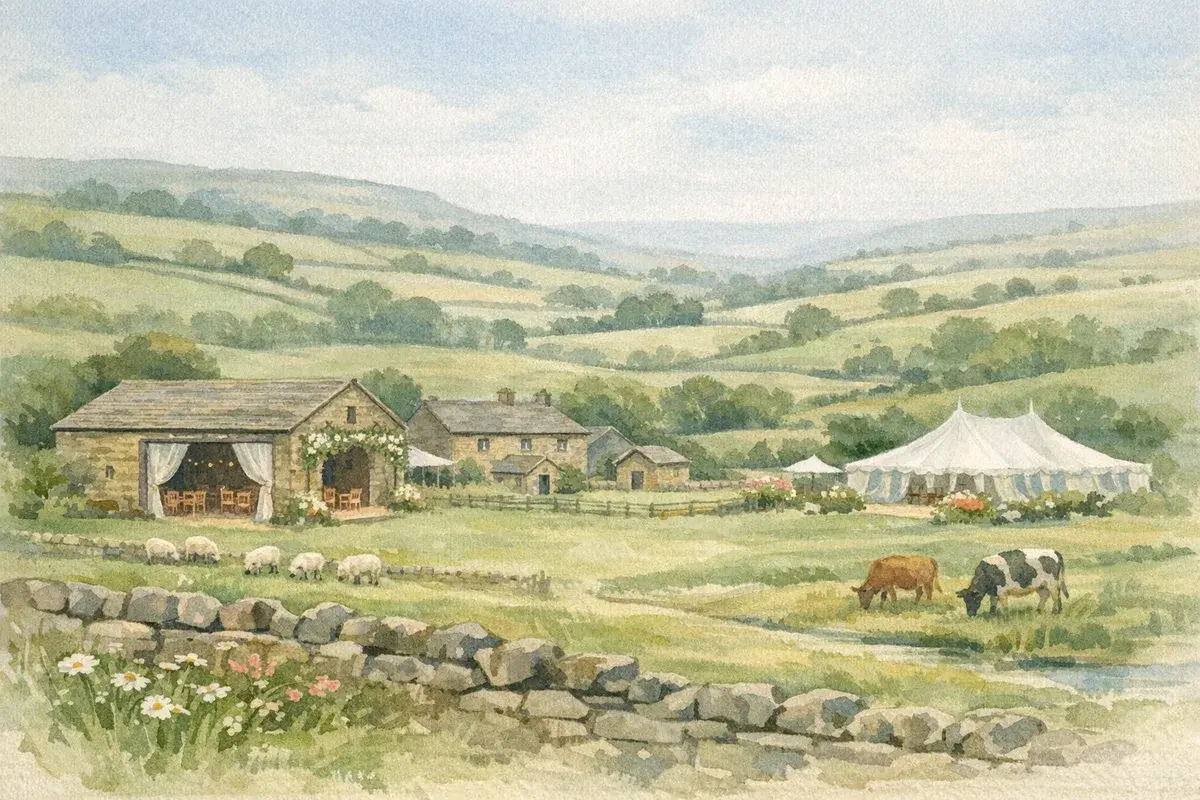
- Character buildings (stone barns, cart sheds, old dairies) that photograph beautifully.
- A genuine backdrop, views, trees, courtyards, wildlife, seasonal colour.
- Flexible layouts (ceremony field, drinks on the lawn, dining in a barn, late-night in a separate space).
But a farm only stays competitive if it removes the friction that makes guests grumble: muddy parking, confusing arrival routes, cold loos, poor lighting, and weak contingency plans. The winners are usually the landowners who treat this like a serious rural hospitality business, not "a few weddings to help the farm".
If you're still weighing options, it's worth scanning broader practical diversification routes to sense-check whether weddings are the best fit for your assets and appetite for customer-facing work.
Choosing The Right Wedding Venue Model For Your Holding
The model you choose determines everything: planning complexity, capex, staffing, noise profile, and even whether you can keep farming alongside it without resentment building on both sides.
Barn Conversions, Tipis And Marquees, Micro-Weddings, And Elopements
Most UK farm wedding venues sit somewhere on this spectrum:
- Barn conversion (fixed venue):
- Pros: premium pricing, longer season (with heating), better guest comfort, easier brand positioning.
- Cons: high capex, higher planning scrutiny, ongoing compliance burden.
- Marquee/tipi site (seasonal venue):
- Pros: lower upfront build cost, flexible use of land, easier to pause or pivot.
- Cons: weather risk, ground damage, more temporary infrastructure (power, toilets), storage needs.
- Micro-weddings and elopements:
- Pros: lower traffic/noise impact, can run mid-week, can fit smaller heritage buildings, often easier to staff.
- Cons: lower revenue per date unless you run higher frequency: still needs high finish and strong coordination.
A useful test: if you're heavily reliant on a handful of peak Saturdays to pay the bills, you're building a high-stakes business. A mix of event sizes, shoulder-season pricing, and add-ons can smooth that risk.
Exclusive Use Versus Multi-Use Sites (And How That Changes Operations)
Exclusive use is what many couples think they want: one wedding at a time, no strangers, no competing noise. It also gives you the strongest pricing story.
But exclusive use changes your operations:
- You need clear site zoning (where guests can/can't go) to protect livestock, machinery, private dwellings, and biosecurity.
- You'll likely need more accommodation or a robust local partner network (taxis, hotels, shuttle buses).
- You need tighter handover and turnaround systems: cleaning, waste, linen, checks.
Multi-use (e.g., you host weddings but also farm shop events, shoots, workshops) can improve utilisation, but it complicates customer experience and staffing. If you go multi-use, be honest in your marketing and contracts so couples aren't surprised by "farm normal" happening nearby.
Before you settle on a model, map your fixed assets and constraints. If you're starting from scratch, building a proper farm diversification business plan forces the uncomfortable, but essential, questions: what's your true capacity, what's the weakest link, and what happens in a bad year?
Planning Permission And Change Of Use: Getting The Legal Route Right
Planning is where good ideas go to die, or get refined into something that actually works.
You're dealing with two overlapping issues:
- Use of buildings/land for events (and associated development like toilets, kitchens, access).
- Operational impacts (traffic, noise, lighting, ecology).
Because local planning policies and site constraints vary hugely, treat this as strategic risk management, not paperwork.
When You Need Full Planning, Prior Approval, Or A Lawful Development Certificate
In England, some agricultural buildings can benefit from permitted development rights for certain changes, but weddings are rarely a clean fit because they're an events/hospitality use, not agriculture. Often, you're looking at change of use and potentially operational development.
Typical routes you may hear discussed include:
- Full planning permission for change of use (and any building works).
- Prior approval / prior notification processes (more common for agricultural-to-residential or certain agricultural operations, but sometimes relevant to elements of works depending on what you're doing).
- Lawful Development Certificate (LDC) if you believe an existing use is lawful (for example, a long-established events use), or to confirm legality of a proposal in some circumstances.
The practical advice: speak to a rural planning consultant early, and build a planning strategy around evidence, traffic management, noise, lighting design, ecology checks, and a clear operating schedule.
If you want a deeper dive on the mechanics and typical pitfalls, AgLand's guide to planning permission for farm diversification is a useful starting point before you spend money on drawings that don't match policy reality.
Key Constraints: Access, Highways, Noise, Lighting, Ecology, AONB/Green Belt
Planning outcomes often hinge less on "is this a nice idea?" and more on "can this be managed without harming neighbours, highways safety, or protected landscapes?" In UK rural venues, the repeat constraints are:
- Access and highways: sight lines, junction capacity, passing places on single-track lanes, and the realism of your parking plan. A professional transport statement can be the difference between a refusal and a workable consent.
- Noise: amplified music, outdoor speeches, late-night guest dispersal, car doors at 12:30am. Expect to look at noise management plans, speaker positioning, curfews, and sometimes acoustic upgrades.
- Lighting: festoon lighting and car park illumination can trigger objections fast in dark rural areas. Downlighting, timers, low-glare fittings, and careful positioning matter.
- Ecology: bats in barns, nesting birds, great crested newts, hedgerow protections, ecology surveys can affect your timeline and costs.
- Designations (AONB, National Park, SSSI, Green Belt): these don't automatically mean "no", but they raise the bar for justification and design quality.
One more constraint that's easy to overlook: your farmhouse and farmyard. If the venue places continuous traffic past your own front door, you may regret it by year two, no matter how good the revenue looks.
Licensing, Compliance, And Risk Management
This is the unglamorous side of weddings. It's also what separates a professional venue from a stressful, exposure-heavy sideline.
Premises Licence, Temporary Event Notices, And Late-Night Activity
If you're supplying alcohol, providing entertainment (live music/DJ), or serving hot food/drink late at night, you'll likely be within the scope of the Licensing Act 2003 (in England and Wales). Many venues aim for a premises licence because it provides a stable framework for repeated events.
For occasional events, Temporary Event Notices (TENs) can sometimes cover licensable activities, but they have limits and are not a long-term operating strategy if you're building a venue calendar.
Pay close attention to:
- Hours (especially late-night music)
- Outdoor areas (where guests congregate)
- Conditions you may be asked to accept (door staff, noise monitoring, signage, limits on outdoor amplification)
In Scotland and Northern Ireland, licensing frameworks differ, so take local authority advice and use a specialist solicitor where needed.
Fire Safety, Food Hygiene, Water And Waste, And Event Insurance
Compliance isn't one tick-box: it's a set of overlapping duties. In practice, you should plan for:
- Fire safety: risk assessment, emergency lighting/signage, evacuation routes, occupancy calculations, staff training. Barns are characterful, also often full of timber, voids, and complicated egress.
- Food hygiene: even if you use external caterers, you'll want clear contracts, handwashing facilities, and robust controls on waste, grease, and storage. If you run your own catering, engage early with your local authority environmental health team.
- Water and waste: if you're on private water supplies or septic systems, stress-test capacity for peak guest numbers. Weddings can overwhelm systems designed for a farmhouse.
- Insurance: public liability is non-negotiable. Many venues also carry employers' liability, event cancellation cover, and property cover tailored to events use. Insurers will expect documented risk management.
And here's the candid bit: the more "DIY" you try to keep costs down, the more you personally hold operational risk. That might be fine, if you build the systems and training to match.
If you want to see how other rural businesses have approached compliance and operational set-up, it can help to browse real farm diversification case studies and note the common themes: good advisers, clear paperwork, and a refusal to wing it.
Designing The Guest Experience And Site Infrastructure
Couples buy the romance, but guests judge you on basics: can they find the place, stay warm, go to the loo without queuing, and get home safely.
Parking, Traffic Flow, Toilets, Power, Heating, And Weather Contingencies
Start with arrival. If a guest's first ten minutes involves reversing down a lane and walking through puddles in formalwear, your reviews will show it.
Infrastructure that usually pays for itself:
- Proper parking design: hardstanding where possible, marshals on peak arrivals, clear signage, and a layout that doesn't require three-point turns. Plan overflow parking for wet ground.
- Traffic flow: separate guest routes from farm traffic. Put physical barriers and clear "private / staff only" lines in place.
- Toilets: the venue world is littered with regrets about under-specced loos. Whether permanent or high-end mobile units, plan for peak demand and include accessible facilities.
- Power: a reliable supply (and backup) is essential. Caterers, bands, lighting, refrigeration, everything piles on. If you rely on generators, make them quiet, well-sited, and properly maintained.
- Heating and ventilation: barns can be freezing at 6pm and stifling by 10pm. Heating choices also affect condensation (and, by extension, building fabric).
- Wet-weather plans: not just "we can move inside", but a rehearsed set-up plan, protected walkways, and staff who know the drill.
A simple exercise: walk the route as a guest would, parking to ceremony to bar to toilets to accommodation, in heavy rain and in darkness. You'll spot issues you'd never notice on a sunny afternoon.
Accommodation Options: Glamping, Holiday Lets, And Transport Links
On-site accommodation can transform your venue economics: higher package value, less late-night dispersal risk, and a more compelling "destination" pitch.
Options include:
- Glamping (bell tents, pods, shepherd's huts): flexible, popular, and often scalable. Just be realistic about utilities, shower blocks, housekeeping, and seasonal closure. If you're exploring this route alongside weddings, AgLand's guide to glamping as farm diversification helps you think through permissions, guest expectations, and practical set-up.
- Holiday lets / cottages: stronger year-round income potential, but higher build/fit-out costs and ongoing compliance.
- Local partnerships: if you can't or don't want to provide beds, build relationships with nearby accommodation providers and consider coach/shuttle options from a local hub.
Transport links matter more than you think. Couples will accept "rural", but they won't accept "logistically impossible". A well-managed shuttle plan can also reduce pressure on parking and nearby lanes, helpful both operationally and in planning discussions.
Building A Commercial Offer That Actually Sells
A wedding venue isn't sold on square metres: it's sold on clarity. Couples (and parents paying) want to understand what they get, what it costs, and what could go wrong.
Pricing Structure, Minimum Numbers, Peak Dates, And Deposits
Most successful farm venues price around a few anchors:
- Venue hire fee (often higher for Saturdays and peak months)
- Minimum spend (a floor that protects you on small guest counts)
- Add-ons (accommodation, ceremony spaces, fire pits, extra staffing, decor packages)
Decide early if you're aiming for:
- Fewer, higher-margin weddings (exclusive use, premium finish), or
- More frequent events (micro-weddings, mid-week, faster turnarounds).
Your deposit and payment schedule should protect cashflow. In practice, many venues set:
- a booking deposit to secure the date,
- staged payments as milestones, and
- clear cancellation terms.
Also plan for the reality that your busiest admin period often coincides with your busiest farming weeks. If you don't have a system, you'll either drop service quality or burn out.
Supplier Policy, Catering Options, And Managing Exclusivity
Supplier strategy is a quiet profit lever.
- In-house or preferred suppliers can improve reliability and allow you to capture margin (or at least reduce chaos). But be careful: overly restrictive policies can put couples off.
- Open supplier lists feel flexible, but you'll spend more time policing standards and logistics (power draw, waste, delivery times, insurance certificates).
A pragmatic middle ground many farm venues use:
- Maintain a curated recommended list (photographers, florists, bands, planners),
- Allow outside suppliers who meet your site rules and provide evidence of insurance,
- Lock down non-negotiables: noise policy, fire safety, set-up times, waste removal.
Exclusivity needs careful wording. "Exclusive use" should specify what's included, buildings, grounds, accommodation, and time windows. If the farm shop is open on a Saturday, or you've got a working yard within sight, you can still sell the venue, just don't oversell the privacy.
If you're unsure how weddings stack up against other income streams on your holding, it's worth reading about the most profitable diversification approaches and pressure-testing your assumptions. Weddings can be excellent, but they're not automatically the top earner once staffing and capex are counted.
Financials, Tax, And Ownership Structure: Protecting The Core Farm Business
The best wedding venue businesses are financially boring in the right ways: predictable cashflow, disciplined cost control, and a structure that stops one bad incident from damaging the whole farm.
Capex And Operating Costs, Cashflow, And Funding Routes
Capex tends to be under-estimated because it arrives in layers:
- Building works (conversion, insulation, acoustic treatment)
- Kitchens, bars, cold storage
- Toilets and drainage
- Car parks and surfacing
- Landscaping, fencing, signage, lighting
- Furniture, equipment, AV
- Professional fees (planning, building control, ecology, highways)
Then there are operating costs that creep:
- staffing (event managers, cleaners, maintenance)
- utilities (especially with electric heating, hot water, laundry)
- insurance and compliance checks
- marketing and photography
- repairs from wear-and-tear (it's surprising what stilettos and prosecco can do to historic floors)
Cashflow is lumpy. Deposits help, but you'll have periods where you're spending heavily (winter improvements, marketing for the next season) with little event income.
Funding routes are case-specific: retained profits, bank lending, asset finance for equipment, and sometimes partnership structures with an operator. Some farms also explore farm diversification grants for eligible elements, though availability and criteria vary by nation and programme, and grants rarely fund the whole vision.
A sensible approach is to build three models:
- Base case (expected occupancy)
- Downside case (fewer bookings, higher costs)
- Stress case (a season disrupted by weather, a key supplier failing, or a planning condition limiting operations)
If the downside case breaks the farm, your plan needs adjusting.
VAT, Business Rates, IHT Reliefs (APR/BPR), And Capital Gains Considerations
Tax is where you need bespoke advice, because the details matter. But the headlines for UK farm wedding venue diversification are:
- VAT: depending on your structure and turnover, VAT registration and the VAT treatment of packages (venue hire, catering, accommodation) can materially affect pricing and margin. Mixed supplies can be complex.
- Business rates: converting buildings or creating a venue use may bring non-domestic rating into play. Reliefs can exist in some circumstances, but don't assume.
- Inheritance Tax (APR/BPR): introducing non-agricultural trading activities can affect the availability of Agricultural Property Relief and potentially Business Property Relief depending on how the business is run, how assets are used, and the balance between trading and investment activities. This is an area where early planning is far cheaper than late fixes.
- Capital Gains Tax: if you later sell land/buildings associated with a venue, CGT position can differ from purely agricultural assets. Past reliefs and future intentions matter.
Ownership structure is part of risk control. Some landowners ring-fence the venue activity in a separate entity, use formal leases/licences between the farm and the venue business, and document everything properly. The aim isn't complexity for its own sake, it's protecting the core farm from operational liabilities.
If you'd like examples of how other holdings structure diversification in practice, AgLand's roundup of agricultural diversification examples can help you spot patterns worth discussing with your accountant and solicitor.
Conclusion
A wedding venue can be a genuinely strong farm diversification strategy in the UK, but only when you treat it like a regulated rural hospitality business with real operational load, not a romantic add-on.
If you do three things early, you'll save yourself the most pain later: (1) choose a venue model that suits your holding and your tolerance for customer-facing work, (2) get planning, access, and neighbour impacts designed in rather than argued about afterwards, and (3) ring-fence risk through proper compliance, contracts, and tax-aware structure.
And if you're still at the "is this even right for us?" stage, take a step back and compare weddings against other diversification routes your buildings and land could support. The best projects are the ones that fit the farm, not just the ones that look good on Instagram.
Disclaimer: AgLand.co.uk is a UK agricultural land and rural property matching service, where buyers register what they are looking for and owners advertise directly to the buyers who match, and a rural resource hub. Nothing in this text is intended as legal, financial, or investment advice. You should carry out your own due diligence and seek advice from appropriately qualified professionals (for example, rural planning consultants, solicitors, accountants/tax advisers, insurers, and surveyors) before taking action.