
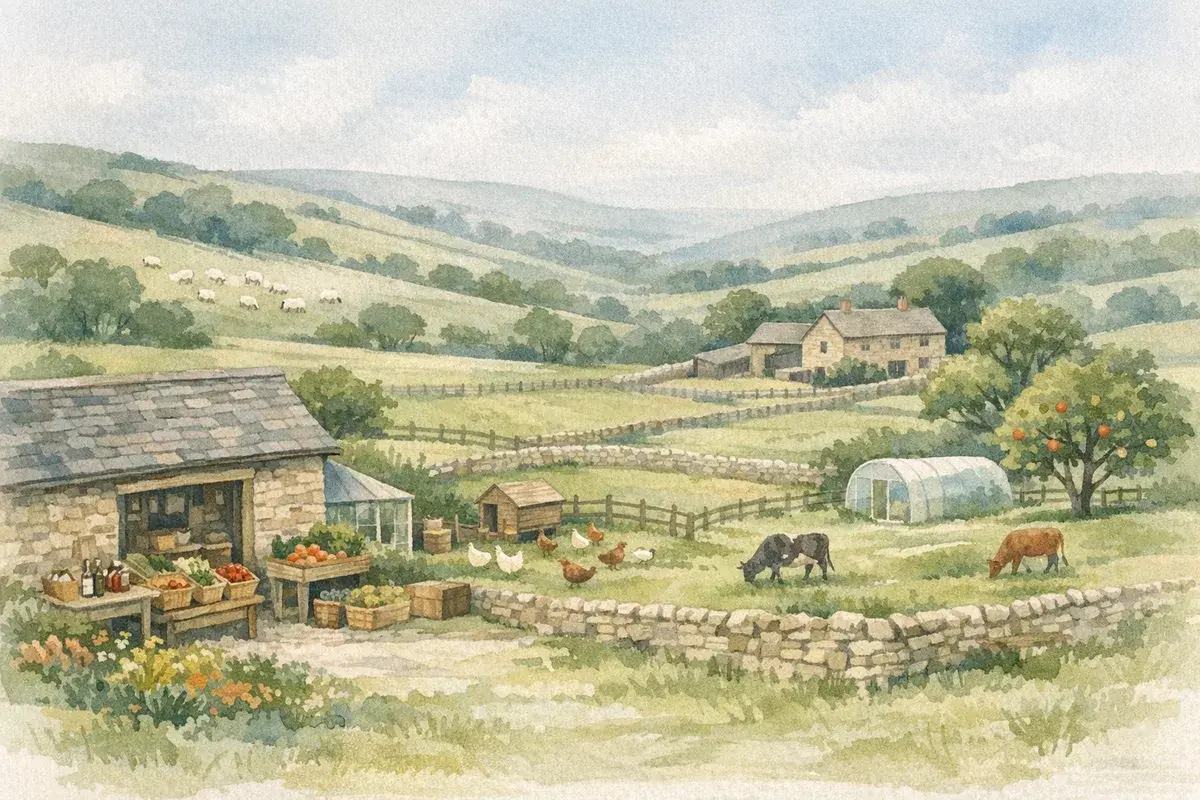
You can feel it in the numbers before you see it in the yard. Input costs rise, support schemes change, commodity prices wobble, and suddenly the question isn't "Should you diversify?" but "What can you run well, on your land, without losing the plot?"
Farm shop diversification is one of the few routes that can stack income streams on top of what you already do, by selling the story, freshness and convenience of your farm directly to customers. But a farm shop isn't just "put up a sign and open a till". It's planning, compliance, cold chain, traffic, staffing, cashflow, and a very real test of whether your holding is suited to retail.
This guide cuts through the practicalities, so you can choose the right model, avoid expensive missteps, and build something that still makes sense in five, ten, fifteen years' time.
Why Farm Shops Work As A Diversification Strategy
Farm shops have a simple advantage: you're moving up the value chain. Instead of being paid the farm-gate price, you're capturing retail margin, while controlling how your produce is presented, priced and trusted.
That said, a farm shop only works when it's treated like a serious business unit. The farms we see doing it well have three things in common: a clear proposition, tight operational standards, and a realistic view of their location.
Changing Consumer Demand For Local Food And Provenance
UK shoppers aren't just buying carrots: they're buying confidence, where it came from, how it was produced, and whether it feels "real". Provenance sells when you can evidence it, not merely claim it.
A farm shop gives you built-in proof points:
- Place: the field is literally behind the counter.
- People: the farmer's family, staff, and suppliers are local faces.
- Practice: you can explain welfare, rotations, hedgerows, soils, and seasonality without a marketing agency in the middle.
And it's not only about premium pricing. For many customers, the draw is reliability (freshness, taste) and simplicity (one stop for meat, veg, eggs, bread, and a decent coffee).
Margin Control Versus Commodity Sales
Direct-to-consumer doesn't magically create profit, but it can create margin control.
With commodity sales, you're exposed to global pricing and timing you can't influence. With a farm shop, you can:
- set price architecture (entry lines vs premium lines)
- manage promotions (use them sparingly, with intent)
- bundle (veg boxes, BBQ packs, Sunday roast kits)
- reduce waste via secondary products (soups, pies, ready meals)
If you want a bigger-picture view of what tends to outperform across holdings, it's worth scanning AgLand's breakdown of the most profitable diversification routes and comparing the operational burden, not just the headline margins.
Building A Year-Round Income Stream
A well-designed farm shop can smooth the spikes and troughs of farming cashflow, but only if you plan for seasonality rather than being surprised by it.
Think in three "income modes":
- Core weekly trade: locals who come back (this is your base layer)
- Seasonal surges: Easter, summer holidays, Halloween, Christmas
- Destination visits: events, pick-your-own, farm trails, café draw
The trick is designing a shop that can scale up during peaks without becoming unmanageable the rest of the year. If you build a retail operation that only works at Christmas, you'll resent it by February.
Choosing The Right Farm Shop Model For Your Holding
There isn't one farm shop model, there's a spectrum, from a self-serve shed to a proper retail-and-café destination. The "right" answer depends on your roads, your buildings, your labour, and how comfortable you are being a retailer.
A useful mindset: start with the smallest version that proves demand, then expand in deliberate steps.
Honesty Check: Location, Catchment, And Passing Trade
Before you fall in love with fit-outs and brand names, do a cold assessment.
Ask yourself:
- Who's within 10–15 minutes' drive? (villages, commuter belts, market towns)
- Is there safe access off the highway? (visibility, turning, speed limit)
- Do you have "reasons to return"? Weekly needs beat one-off novelty.
- Are you competing with supermarkets, farm shops, delis, or garden centres nearby? You don't need zero competition, but you do need differentiation.
If the holding is remote, that doesn't kill the idea, but it usually pushes you towards destination trade: café, experiences, seasonal events, or a high-value niche.
For broader inspiration beyond retail, AgLand has a solid round-up of farm diversification ideas that helps you stress-test what best suits your land, buildings, and local demand.
From Honesty Shed To Full Retail And Café
Here's the practical ladder many UK farms climb:
- Honesty box / unstaffed shed: low overhead, great for eggs/veg, but limited control and security.
- Staffed micro-shop: a converted room or small unit, tighter range, proper card payments and basic chill.
- Full farm shop: wider retail mix, back-of-house, storage, deliveries, compliance burden increases.
- Farm shop + café: more dwell time and higher basket spend, but also planning triggers, staffing complexity, and higher expectations.
A café can transform your numbers, but it also changes your risk profile. You're no longer "selling produce": you're running hospitality. That's a different discipline.
Retail Mix Options: Own Produce, Local Suppliers, And Butchery
Your retail mix should do two things at once:
- Lead with what you can truthfully own (your meat, your veg, your eggs, your dairy story).
- Fill the basket with what customers actually want (bread, milk, store cupboard staples, treats).
A common early mistake is stocking only "worthy" items and then wondering why the average basket spend is low. Customers still need dinner.
Many successful shops use a three-tier range:
- Hero lines: your own produce (high story value)
- Local makers: cheese, chutneys, bakery, craft drinks (differentiation)
- Convenience lines: repeat purchases (footfall stability)
A butchery counter can be a standout profit centre if you can staff it properly and keep standards consistently high. If you can't, pre-packed meat done well, with clear labelling and tidy presentation, often wins on practicality.
Planning, Permitted Development, And Change Of Use
Planning is where farm shop dreams either become reality, or become an expensive lesson.
In UK terms, the key issue is usually whether the retail use is ancillary to agriculture or whether you're creating a retail destination in its own right. The details matter: size, siting, traffic generation, signage, hours, and whether you're materially changing how the site functions.
For a deeper run-through of the common tripwires and how councils interpret them, see AgLand's guide to planning rules for diversification.
When A Farm Shop Is Likely To Be Considered Ancillary To Agriculture
Councils are generally more comfortable when the retail element is clearly tied to the farm's agricultural activity.
You're in a stronger position where:
- the shop is modest in scale
- the primary offer is produce from the holding (plus genuinely local complementary goods)
- the building conversion doesn't create an urban-style retail unit in open countryside
- traffic and parking demands are proportionate
What you say in your planning statement (or pre-app discussion) matters. Frame it as supporting the agricultural business and rural economy, not as "we're opening a rural deli".
Key Triggers For Full Planning: Scale, Traffic, Signage, And Café Seating
Even if you start small, certain features tend to push you towards full planning permission and a more rigorous assessment:
- Large floor area or multiple buildings in retail use
- Café seating (especially indoor seating, extended hours, hot food)
- Material increase in traffic including weekend peaks
- Prominent signage and lighting that changes the character of the road frontage
- Changes to access onto a classified road
A good rule: if your plan relies on pulling in lots of new visitors from further afield, planning scrutiny will rise with it.
Car Parking, Access Visibility, Lighting, And Highway Authority Requirements
Highways can make or break a farm shop application.
Expect focus on:
- safe entrance/exit geometry and visibility splays
- queuing space so cars don't back onto the highway
- parking numbers (including overflow for seasonal peaks)
- HGV/service access for deliveries
- lighting that respects neighbours and rural character (and doesn't create glare)
Tip from experience: treat parking as part of your customer experience, not an afterthought. Muddy, confusing parking that feels unsafe will cap repeat trade faster than a weak product range.
Also consider neighbour impacts, noise, litter, headlights, early deliveries. If you can show you've designed these out, your application tends to read as "managed" rather than "hopeful".
Licensing, Food Safety, And Compliance You Cannot Skip
Retail is regulated for a reason: you're serving the public, and you're responsible for safety, labelling, and fair trading. The compliance basics aren't optional, and getting them wrong can be reputationally fatal.
Food Hygiene Registration, HACCP, And Trading Standards Labelling
In the UK, you generally need to register your food business with your local authority before you start trading (usually at least 28 days before opening). You'll also need documented food safety procedures based on HACCP principles.
Practical focus areas that catch new operators:
- allergen management (especially for bakery, deli, and café items)
- labelling: weights, ingredients, allergen emphasis, use-by dates, origin claims
- temperature controls and records for chilled/frozen goods
- traceability: knowing exactly which supplier batch went where
Trading Standards can (and do) check weights and measures, pricing displays, and origin claims. If you're selling "farm-reared" or "local", make sure it's accurate and evidenced.
Alcohol, Sampling, And Hot Food: When Licences Apply
If you plan to sell alcohol, you'll likely need a premises licence and a designated premises supervisor (DPS) with a personal licence (details depend on your setup and local authority process).
Sampling is another area people underestimate. Offering tasters may require tighter controls than you expect, think hygiene, allergen information, and safe handling.
Hot food and café service adds additional scrutiny: equipment standards, extraction/ventilation, grease management, and more robust cleaning regimes.
Employment, H&S, And Insurance For Customer-Facing Premises
Once customers are on site, your risk profile shifts.
At a minimum, you should be thinking about:
- employer's liability insurance (if you employ anyone)
- public liability insurance suitable for retail and (if relevant) café operations
- H&S risk assessments: slips/trips, manual handling, knives, hot surfaces
- fire safety, first aid, lone working considerations
Staff training is where good shops quietly win. A short, consistent training routine, opening checks, temperature checks, cleaning schedules, allergen script, prevents "little" mistakes becoming big ones.
Designing The Site For Flow, Basket Spend, And Rural Practicality
A farm shop lives or dies on the unglamorous stuff: where people walk, where they queue, how you store stock, and how quickly you can restock at 10:30 on a Saturday.
Design isn't only aesthetics, it's labour efficiency and throughput.
Layout That Drives Sales Without Creating Congestion
You want customers to browse, but you don't want bottlenecks.
A layout that tends to work:
- Clear decompression zone at the entrance (don't hit customers with clutter)
- Fresh produce first (signals quality and value)
- High-margin categories placed on the natural path (bakery, deli, farm meats)
- A simple, visible till area with impulse lines that feel tasteful, not desperate
If you're adding a café, separate flows matter. People waiting for coffee shouldn't block the main retail aisle.
Also consider prams, mobility scooters, and muddy wellies. Rural customers don't arrive in pristine conditions, and your floor, matting, and aisle widths should assume that.
Cold Chain, Storage, Waste, And Back-Of-House Efficiency
Back-of-house is where profit is either protected or leaked.
Key realities:
- chilled space always feels adequate on day one, then isn't
- deliveries need a controlled receiving area (especially in warm months)
- waste handling must be hygienic and discreet
- you need staff-only handwashing facilities and proper cleaning storage
If your shop will do meaningful volumes of meat and dairy, invest early in reliable refrigeration and monitoring. Nothing destroys margins like a failed fridge and a bin full of stock.
Accessibility, Toilets, And Inclusive Customer Experience
Accessibility isn't just compliance, it's commercial. If it's difficult for an older customer to park, walk in, and use the facilities, you've lost a loyal repeat shopper.
Think through:
- step-free access where possible
- door widths and aisle space
- clearly signed accessible parking
- toilets if you expect dwell time (especially with café/events)
And don't ignore the basics: clear signage to the entrance, somewhere to wipe boots, and a checkout that doesn't feel cramped. Small frictions reduce spend and repeat visits.
The Numbers: Costs, Pricing, And Profitability Benchmarks
Farm shop diversification can be profitable, but it's rarely "cheap" once you do it properly. The best operators know their numbers by category, by week, and by waste.
If you haven't built a proper model yet, start with AgLand's guide to creating a credible farm diversification business plan, it'll help you pressure-test assumptions before you commit capital.
Capital Costs: Fit-Out, Refrigeration, Parking, And Utilities
Your big cost headings usually look like this:
- building works (conversion, insulation, drainage)
- retail fit-out (shelving, counters, flooring)
- refrigeration/freezers and temperature monitoring
- EPOS, card terminals, scales, labelling systems
- parking surfacing, line marking, signage
- utilities upgrades (three-phase power, water, wastewater)
Where budgets often blow out: "small" enabling works, access improvements, lighting, additional drainage, grease traps for café use, and extra cold storage you suddenly realise you need.
Gross Margin By Category And How To Protect It
Margins vary massively by category, and you'll protect them differently.
Typical dynamics:
- fresh produce: can be strong if waste is controlled and provenance is clear
- meat: good margin potential, but labour, compliance, and shrinkage matter
- bakery and deli: often high margin, but short shelf life
- ambient goods: lower margin, but stabilises basket spend and footfall
To protect margin:
- price with intent (don't "match the supermarket" if your proposition is different)
- track shrinkage (waste, damage, theft, mis-picks)
- design displays to rotate stock properly (FIFO)
- renegotiate supplier terms as volume grows
Cashflow Seasonality, Stock Turn, And Shrinkage Control
Seasonality is predictable, so plan for it.
Practical controls that make a material difference:
- weekly category reporting (sales, margin, waste)
- tight ordering rhythm (especially for chill)
- split deliveries in peak season to reduce storage pressure
- stock counts that are frequent enough to catch problems early
Shrinkage isn't always theft. It's often "death by a thousand cuts": over-ordering for a busy weekend that doesn't come, poor date rotation, staff unsure about markdown rules, or fridges set incorrectly.
Your aim isn't perfection, it's visibility. Once you can see the leak, you can plug it.
Sourcing, Supply Chains, And Building A Strong Local Offer
A farm shop is only as good as its supply chain. Customers forgive a seasonal gap if you explain it. They don't forgive "we ran out again" every Saturday.
Supplier Terms, Traceability, And Consistent Availability
For local suppliers, clarity beats handshakes.
Agree basics early:
- lead times and delivery days
- minimum order quantities
- returns policy for damaged goods
- shelf life expectations
- invoicing terms (you can't fund everyone else's cashflow)
Also, build traceability into your routine, batch records, delivery notes, and a system for identifying which products came from which supplier.
If you're looking for real-world patterns, what farms stocked first, what they dropped, what actually sold, AgLand's round-up of farm diversification case studies is useful for sense-checking your plan against on-the-ground outcomes.
Differentiation: Exclusive Lines, Seasonal Specials, And Farm-Story Proof Points
"Local" isn't a differentiator if every shop says it. Proof is.
Simple ways to make your story real:
- signage that names fields, varieties, breeds, harvest weeks
- photos that show the process (not just pretty sunsets)
- seasonal specials tied to the farm calendar (lamb boxes, asparagus weekends, apple pressing)
- exclusive lines you can only get from you (a farm-made pie, a collaboration with a nearby cheesemaker)
If you sell other people's products, be selective. A tight range with confidence beats a sprawling range that looks like a cash-and-carry.
Managing Risk: Recalls, Substitutions, And Quality Standards
Retail risk is operational risk.
Have a plan for:
- product recalls (how you identify affected stock, who you contact, signage procedures)
- substitutions when a supplier can't deliver (and how you communicate it)
- quality standards (what you reject, what you discount, what you never sell)
Done well, this becomes part of your reputation. Customers trust the shop that says, "We didn't get that delivery because it wasn't up to standard," rather than quietly putting mediocre goods on the shelf.
Marketing That Actually Moves Footfall In Rural Areas
Most rural marketing fails for one of two reasons: it's too vague ("local produce available"), or it's too complicated (big campaigns without basics like opening hours and parking info nailed down).
Signage, Google Business Profile, And Local SEO Basics
Start with the unsexy fundamentals:
- clear, lawful roadside signage (and keep it maintained)
- consistent opening hours across every channel
- accurate directions, parking notes, and accessibility info
- seasonal updates so customers know what's in
A well-optimised Google Business Profile is often the single best "free" marketing asset for a farm shop. Post updates, respond to reviews, add fresh photos, and keep categories correct.
Events, Pick-Your-Own, And Partnerships With Nearby Attractions
If your location isn't blessed with heavy passing traffic, give people a reason to make the trip.
Ideas that work when executed properly:
- seasonal events (pumpkin weekends, lambing open days, Christmas food fairs)
- pick-your-own that feeds into the shop (and increases dwell time)
- partnerships with local attractions (but keep it aligned, quality matters)
The win isn't the event day itself: it's converting visitors into repeat customers.
Loyalty, Click-And-Collect, And Delivery: Digital Without Overreach
Digital can help, but don't overbuild.
A sensible progression:
- simple loyalty: stamp cards or app-based points
- click-and-collect for busy locals (pre-ordered meat packs, veg boxes)
- limited delivery if it's operationally realistic (and priced properly)
If you want a reality check on how other diversified businesses combine physical and digital without losing money on logistics, it helps to look at wider agricultural diversification examples and note what they kept deliberately simple.
Tax, Rates, And Long-Term Land And Estate Implications
A farm shop can strengthen the resilience of your whole business, but it can also create knock-on effects for tax, rates, tenancy structure, and future saleability. This is where "do it properly" really matters.
Business Rates, VAT Traps, And Record-Keeping That Stands Up To HMRC
Once you're operating a retail premises, business rates may apply depending on the property and how it's assessed.
VAT is a common pain point. Different product categories can sit in different VAT treatments, and cafés add complexity. You'll want systems that clearly record:
- sales by category
- VAT treatment by product
- wastage, staff food, and discounts
- cash vs card reconciliation
Good record-keeping isn't just for HMRC, it's how you find profit leaks.
If you're weighing capital spend, training, or upgrading compliance systems, explore whether any UK schemes could support you via AgLand's overview of farm diversification grants. Always check local eligibility and deadlines, funding rules change.
Property Structure, Tenancies, And Protecting Agricultural Relief Where Relevant
How you structure the shop, who operates it, and under what agreement, can have long-term implications.
Examples:
- operating in-hand vs leasing the unit to a third party
- carving out a separate enterprise within the farming business
- the knock-on effect on reliefs where relevant to your circumstances
If your land is tenanted, you'll need to consider the tenancy terms carefully before changing use or granting rights to third parties. This is very much "get advice early" territory.
Exit And Value: Leaseability, Overage, And Selling A Diversified Asset
A well-run farm shop can make a holding more attractive, especially if the income is provable and transferable. But buyers and lenders will look for durability.
To strengthen exit value:
- document trading performance (clean accounts, clear KPIs)
- avoid over-personalising the brand around one individual
- make the premises maintainable and compliant
- keep permissions and licences clear and transferable where possible
Also consider overage and future development angles. If you're improving access, parking, and utilities, you're changing the "option value" of the site. That can be a benefit, but it needs to be managed deliberately, not stumbled into.
Conclusion
Farm shop diversification can be one of the most grounded, defensible ways to build resilience on a UK farm, because it's tied to real demand: food, trust, convenience, and experience. But the farms that make it pay don't treat it like a side project. They treat it like retail.
If you're serious about it, start with a hard look at your location and access, choose a model you can staff and operate brilliantly, then build up in stages. Get planning and compliance right early. And obsess, politely, over the boring bits: temperature control, stock turn, layout flow, and category margin.
If you do that, a farm shop stops being "a diversification idea" and becomes something better: a long-term asset that makes the whole holding more resilient.
Disclaimer: AgLand.co.uk is a UK agricultural land and rural property matching service, where buyers register what they are looking for and owners advertise directly to the buyers who match, and a rural resource hub. Nothing in this text is intended as legal, financial, tax, or investment advice. You should carry out your own due diligence and seek guidance from appropriately qualified professionals (e.g., planning consultants, solicitors, accountants/tax advisers, surveyors, and environmental health officers) before acting on any information here.