
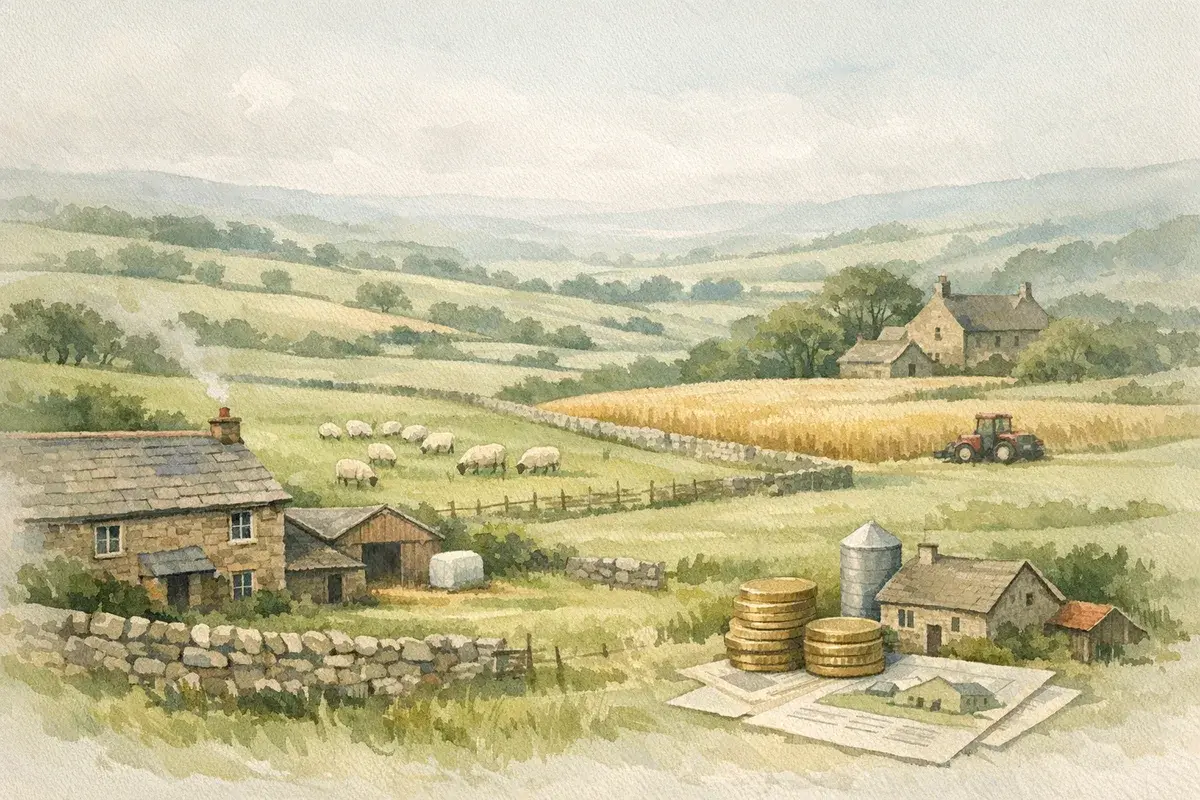
You don't buy farmland in the UK just to "beat inflation". You buy it because it can do several jobs at once: produce an income (sometimes), hold value (often), offer optionality for future use (occasionally), and, crucially for many buyers, fit into long-term tax and estate planning.
But here's the part too many investors discover late: the tax outcomes you're aiming for aren't a reward for simply owning land. They're the by-product of how the land is used, who owns it, what agreements are in place, and what evidence you can produce when HMRC asks the obvious questions.
This guide is written for UK buyers who want a tax efficient farmland investment without stepping on the usual rakes, APR/BPR assumptions, poorly drafted arrangements, accidental residential use, and deal structures that quietly create avoidable tax bills. Let's get into the decisions that matter before you make an offer.
Why Farmland Still Attracts Tax-Aware Investors
Farmland sits in a strange sweet spot: it's a real asset with a working purpose, it can be operationally improved, and it tends to be less correlated with mainstream residential property cycles. Add in the UK's long-standing reliefs around agricultural and business property, and you can see why it stays on the radar of tax-aware investors.
Return Drivers: Income, Capital Growth, And Natural Capital Upside
In the real world, farmland returns typically come from a blend of:
- Rental or operating income (FBTs, contract farming margins, grazing income, storage yards, where permitted and properly structured).
- Capital growth (influenced by local demand, farm size, block shape, access, and, often, scarcity of supply).
- "Natural capital" and environmental income (woodland creation, biodiversity uplift, peatland/wetland projects, nutrient neutrality mitigation in some areas, and private environmental markets).
The catch is that different return drivers can point you toward different operating models. If you want steady, low-effort income you may lean toward letting, but that can change how HMRC views what you're doing. If you want stronger relief alignment, you may need to show more participation, risk, and day-to-day decision-making.
The Trade-Off: Tax Advantages Versus Liquidity, Management, And Policy Risk
Tax efficiency isn't free. In farmland, the "cost" often shows up as:
- Liquidity constraints: farmland can take time to sell, and values can be sensitive to local buyer pools.
- Management demands: even "passive" land needs boundaries checked, access managed, tenants managed, and compliance kept tidy.
- Policy and scheme risk: the post-BPS landscape is still bedding in. ELM options, private markets, and local planning policies can materially affect your numbers.
If you're serious about a tax efficient farmland investment, you should treat tax as a design constraint, not a bolt-on after the viewing.
Define Your Strategy Before You Buy
Buying first and figuring out the strategy later is how investors end up with the wrong tenancy terms, the wrong ownership structure, and reliefs that don't land the way they expected.
A useful mindset is to decide what you're actually buying:
- A productive unit you'll operate.
- A lettable asset you'll manage.
- A longer-term land bank with constrained current use.
- A mixed portfolio of land, buildings, and future options.
If you want a deeper view of the commercial realities, returns, risks, and why some blocks are "investable" and others are headaches, read our guide to buying agricultural land as a long-term investment alongside this tax-focused piece.
Letting, Farming In Hand, Contract Farming, Or Share Farming
Your operating model influences both cashflow and tax treatment. In broad terms:
- Letting (often via an FBT): commonly simpler day-to-day, but can drift toward being seen as a passive investment depending on facts and level of activity.
- Farming in hand: you take trading risk and workload: clearer "trading" profile but higher operational intensity.
- Contract farming: you retain control and entrepreneurial risk: contractor supplies labour/machinery for a fee.
- Share farming: you and another party share inputs/outputs under an agreement (not a tenancy): can demonstrate participation when done properly.
This is one of the biggest "tax levers" available to you, but it only works if the paperwork and actual behaviour match.
Investment Horizon, Borrowing, And Exit Routes
Time horizon drives everything:
- Shorter horizon (0–5 years): higher sensitivity to transaction costs (SDLT/LBTT/LTT, professional fees) and market timing. You'll need a clear route to liquidity.
- Medium horizon (5–15 years): more scope to optimise management, improve the holding, and plan reliefs.
- Long horizon (15+ years / intergenerational): typically where estate planning and IHT relief conversations become central.
Borrowing adds another layer: interest deductibility, covenant restrictions, and how you'll fund improvements. Also consider the exit options you're realistically preserving: sale as a whole, sale in lots, long lease, or retaining a core while selling strategic parcels.
Clarify Who Will Own It: Individual, Couple, Family, Or Multi-Investor
Before you negotiate heads of terms, decide who the buyer is:
- You personally (straightforward, but can constrain later planning).
- Joint ownership with a spouse/partner (income split, succession intentions, and control need thinking through).
- A family partnership (often practical for working farms).
- A company, LLP, or trust (more admin, but sometimes better alignment with objectives).
If you're considering pooling capital or stepping back from day-to-day involvement, it's worth understanding the spectrum between active and passive farmland investment, because the line between "investment" and "business" is where relief outcomes often change.
The Core Tax Reliefs Investors Aim For
There's no single "farmland tax break" that makes everything work. UK tax efficiency tends to come from aligning several moving parts: how the asset qualifies, how long it's held, and whether your activities look like a business or simply ownership.
Inheritance Tax And Agricultural Property Relief: What Qualifies And When
Agricultural Property Relief (APR) can reduce the value of qualifying agricultural property for IHT purposes, often cited as 50% or 100% depending on circumstances.
Key points that matter in practice:
- The property must be agricultural property and used for agriculture.
- Occupation and use requirements apply, and the relevant period can differ depending on whether it's occupied by you or let.
- APR is about the agricultural value, which may be lower than the market value if there's hope value or development value in play.
Where buyers get caught out is assuming "it's farmland, hence APR". Land use, agreements, and how the land is actually occupied can all affect outcomes.
Business Property Relief: When A "Business" Beats A "Passive Investment"
Business Property Relief (BPR) can apply to certain business interests for IHT. The practical debate is often whether the activity is mainly:
- Trading/business activity, or
- Making/holding investments.
A letting-only model can drift toward "investment" in HMRC's eyes, whereas active operation, genuine decision-making, and risk can support a stronger "business" profile. The difference matters when families are planning succession.
If you want to explore how HMRC looks at farming as a commercial activity (and what supports a robust position), see our resource on commercial farming tax relief.
Capital Gains Tax: Rollover Relief, Hold-Over Relief, And Timing The Disposal
CGT tends to be where farmland investors feel pain on exit, unless you plan early.
Reliefs and planning areas that commonly arise include:
- Rollover relief (in certain circumstances) where gains may be deferred by reinvesting in qualifying assets.
- Hold-over relief in some gift/transfer contexts.
- Timing (tax year planning, aligning disposals with other gains/losses, and thinking ahead before you sign options/overage).
The mechanics and traps are technical, and farmhouse/amenity elements can complicate matters. We've pulled the UK-specific detail together here: capital gains tax considerations on agricultural land.
Income Tax And National Insurance: Trading Versus Property Income Treatment
How income is taxed depends on what it is:
- Trading income (farming profits) is generally treated differently to
- Property income (rent from letting land/buildings).
Why does that matter? Because it can affect your wider profile, loss relief treatment, NI position, and (indirectly) how "active" the holding looks over time.
This is exactly where "paper farming" fails. If your agreements say one thing but you behave like a hands-off landlord (or, conversely, you act like an operator but the documents read like a tenancy), you're manufacturing a future argument with HMRC.
Choosing The Right Ownership Structure
Ownership structure isn't just about tax rates, it's about control, succession, financing, and what happens when family circumstances change. The most "tax efficient" setup on paper can be the least workable in real life.
Personal Ownership And Joint Ownership: Simplicity Versus Planning Limits
Owning personally is simple: fewer filings, easier borrowing (often), and clear control. Joint ownership can help with income allocation and succession intentions, but it also introduces questions you should settle upfront:
- Who makes operational decisions?
- What happens if one party wants out?
- How will you fund capital expenditure?
A surprisingly common issue is informal arrangements that work fine, until refinancing, a dispute, or a death forces clarity at the worst possible moment.
Limited Companies: Corporation Tax, Extraction Planning, And Succession
A company can make sense where you're building a broader rural business, reinvesting profits, or bringing in investors. But you need to think beyond the headline corporation tax rate:
- How do you extract value? Salary, dividends, loan account, each has its own tax implications.
- What's the long-term plan? Share sales, asset sales, family succession.
- What sits inside the company? Land, buildings, trading operations, environmental projects, mixing them without a structure can create complications.
Companies can be powerful, but they're rarely "set and forget". The planning is in the details.
Partnerships And LLPs: Flexibility For Families And Active Operators
For farming families and active operators, partnerships can reflect reality well: shared responsibilities, flexible profit shares, and clearer evidence of participation.
An LLP can add structure and limited liability features, but it's still not a magic wand, documentation and behaviour still matter. If your goal is to demonstrate genuine business activity, a partnership agreement that matches day-to-day working patterns can be more persuasive than a pile of invoices.
Trusts And Estate Planning: Control, Protection, And Tax Consequences
Trusts are sometimes used to control succession, protect assets, or manage family complexity. But trusts come with their own tax regime and administrative load.
If you're considering a trust, get bespoke advice early, before the purchase if possible, because the funding, ownership route, and intended beneficiaries can all affect the best structure.
One practical note: if you're also considering buying land through a pension wrapper, understand the constraints and the trade-offs first. Our overview on using pensions to buy farmland is a helpful starting point for the UK rules and realities.
Leases, Licences, And Operating Agreements That Move The Tax Needle
In farmland, documents aren't just paperwork, they're evidence. The agreement you choose affects control, security of tenure, and how convincingly you can demonstrate active involvement.
Farm Business Tenancy Versus Grazing Licence: Control, Security, And Evidence
The FBT is the workhorse for agricultural lettings in England and Wales. A grazing licence can be appropriate in limited circumstances, but it's also one of the most misused documents in rural property.
If a "licence" looks like a tenancy in practice, exclusive possession, meaningful term, tenant-like control, you're taking legal and tax risk. HMRC won't be impressed by a label if the facts don't match.
From a tax-efficiency perspective, the key question is often: what level of control and activity do you retain, and does the agreement support that?
Contract Farming And Share Farming: Demonstrating Participation And Risk
Contract farming and share farming are often used where you want to:
- retain strategic control,
- show active participation,
- and remain exposed to trading risk (to a degree).
But they have to be real. That means genuine decision-making, real financial risk, and records that show you weren't simply collecting a rent substitute.
Done well, these arrangements can support the "working holding" narrative. Done badly, they can become a messy hybrid that satisfies nobody, least of all HMRC.
Development Value, Overage, And Option Agreements: Avoiding Accidental Tax Costs
Even if your primary goal is agriculture, many holdings have some element of development hope value, telecoms masts, renewable energy, residential conversions, or a strategic edge-of-settlement field.
Option agreements and overage can be commercially sensible, but they can also:
- change the character of receipts,
- create unexpected CGT timing,
- complicate APR calculations by separating agricultural value from market value.
Before you sign anything that "shares upside", model the tax outcomes with a rural tax adviser and ensure your solicitor drafts with the end in mind, not just the deal in front of you.
VAT, SDLT, And Other Transaction Taxes Buyers Underestimate
Most farmland tax conversations fixate on IHT and CGT. But plenty of deals become inefficient because buyers underestimate transaction taxes and VAT issues, especially when buildings, yards, or non-agricultural elements are included.
SDLT On Bare Land Versus Mixed-Use: What Changes The Rate
In England and Northern Ireland, Stamp Duty Land Tax (SDLT) depends on what you're actually buying and how it's classified.
Practical triggers that change the SDLT analysis include:
- Residential elements (a farmhouse, cottage, or any dwelling).
- Mixed-use characteristics (for example, a dwelling plus farmland).
- Non-residential components (commercial yards, storage, equestrian facilities, classification depends on facts).
This is not an area for guesswork. If the deal includes a house, even a modest one, you can move from "land purchase" thinking into residential/mixed-use SDLT complexity very quickly.
VAT On Land, Buildings, And The Option To Tax
VAT can be quietly expensive when you buy buildings, create serviced plots, or purchase land where the seller has opted to tax.
Issues to watch:
- Whether the transaction is a Transfer of a Going Concern (TOGC).
- Whether buildings are standard-rated (common with opted-to-tax commercial property).
- Whether you can recover VAT (which depends on your VAT registration and taxable activities).
If you're buying a farm with diversified income streams, storage, livery, commercial lets, ask early whether VAT is in play. You don't want that surprise landing after you've agreed a price.
Stamp Duty In Scotland And Wales: LBTT And LTT Differences To Watch
In Scotland, you're dealing with LBTT. In Wales, LTT. The principles feel similar, but the rates, bands, and some details differ.
If you're buying across borders, or your portfolio spans multiple UK nations, don't assume your "English SDLT" instincts will translate. Your solicitor and tax adviser should confirm the correct regime and model scenarios before exchange.
Practical Due Diligence For A Tax-Efficient Purchase
Tax efficiency isn't something you sprinkle on afterwards. It's baked in during due diligence, because the facts you uncover (and the documents you sign) determine what you can credibly claim later.
If you want a broader buying checklist, beyond tax, our UK agricultural land investment due diligence guide goes deeper on the commercial and practical checks that protect you.
Title, Rights, And Constraints: Easements, Wayleaves, Covenants, And Sporting Rights
Start with the unglamorous bits that can materially affect value and use:
- Rights of way and access points (including whether access is adopted or private).
- Wayleaves and easements (power lines, pipelines, telecoms).
- Restrictive covenants (use restrictions, building restrictions).
- Sporting and mineral rights (what's included, what's reserved, and what income/constraints follow).
These aren't just legal footnotes. They can limit your ability to change use, affect scheme eligibility, and influence future value.
Planning Status And Permitted Development: What You Can And Cannot Assume
Permitted development rights can be incredibly useful, but they're not automatic and they're not universal. Your ability to erect agricultural buildings, change use, or create a dwelling can depend on:
- location (National Park, AONB, SSSI proximity),
- unit size thresholds,
- prior notification requirements,
- and planning history.
You should also treat "the agent said it'll be fine" as background noise until a planner confirms the position.
Environmental Designations And Subsidy/ELM Compatibility
Environmental factors now sit at the heart of farmland value. Check:
- designations (SSSI, SAC/SPA, scheduled monuments),
- soil and water constraints,
- existing stewardship obligations,
- eligibility and compatibility with ELM options or private environmental markets.
This can be upside or downside. The same constraints that limit development can also make a holding attractive for nature-based projects, if you buy with your eyes open.
Records And Evidence HMRC Will Expect If Reliefs Are Claimed
If you're planning around APR/BPR and "active" status, build an evidence habit from day one:
- written agreements that match reality,
- records of management decisions (cropping, input choices, contractor instructions),
- invoices and bank trails that demonstrate trading risk,
- time logs or diaries for involvement (especially where you're not on the farm daily),
- meeting notes with agents/contractors.
It sounds boring because it is. But when reliefs are challenged, it's the boring paperwork that wins arguments.
And a small, practical point: if you expect to claim something in the future, set up your record-keeping now, not in the week your accountant asks for it.
Common Mistakes That Erode Tax Efficiency
Most tax inefficiency in farmland isn't caused by obscure rules. It comes from perfectly avoidable assumptions and muddled objectives.
Assuming APR/BPR Applies Automatically
You'll hear it at kitchen tables and on viewings: "Land gets APR." Sometimes it does. Sometimes only part of the value does. Sometimes the way you've let it, used it, or mixed it with non-agricultural activity undermines the position.
Treat reliefs as something you demonstrate, not something you deserve.
Letting Structures That Turn A "Business" Into A "Passive Investment"
A classic error is chasing low-effort rent and later trying to argue you were running a trading business all along.
If your model is primarily letting, be honest about that, and plan accordingly. If your model is an active farming business, make sure agreements and day-to-day behaviour support that.
(And if you're weighing land against other asset classes in your portfolio, it's worth reading our UK-focused comparison of farmland vs property investment to sanity-check risk, liquidity, and management assumptions.)
Mixing Residential Use, Diversification, And Personal Enjoyment Without A Plan
A farmhouse, a converted barn, a few holiday lets, a bit of equestrian use, these are common and can be profitable. But mixing uses without a plan is where you can create:
- unexpected SDLT/LBTT/LTT positions,
- blurred boundaries between personal and business use,
- awkward CGT outcomes on disposal,
- and future disputes in family succession.
Enjoying your land isn't a problem. Confusing enjoyment with evidence of business use can be.
Buying Without A Succession And Exit Strategy
If you don't define your endgame, you drift into structures that are hard to unwind.
Ask yourself early:
- Is this for your retirement, your children, or a future sale?
- Who needs control, and who needs economic benefit?
- Do you want flexibility to sell parcels, grant options, or bring in partners?
Tax efficiency is often just "planning consistency" over time. The mess usually starts when the story changes every two years.
How To Build Your Professional Team And Find The Right Land
A tax efficient farmland investment is a team sport. You don't need a room full of advisers on day one, but you do need the right specialists at the right moments, before you commit to irreversible terms.
Who To Involve: Land Agent, Rural Surveyor, Accountant, Tax Adviser, Solicitor, And Planner
For most buyers, the core team looks like this:
- Land agent: sourcing, negotiation, local comparables, and reality-checking the holding.
- Rural surveyor (often RICS): boundaries, access, valuations, and practical constraints.
- Accountant / tax adviser: modelling operating structures and relief positions based on your circumstances.
- Solicitor (rural property experience): title, contracts, options/overage, tenancy drafting.
- Planning consultant: where PD, change of use, diversification, or development hope value is material.
If one adviser feels "too expensive", price the alternative: one avoidable tax mistake can be far more costly than a careful planning meeting.
What We See Work: A Simple Checklist Before You Offer
Before you offer on a holding, run a quick-but-serious checklist:
- Define the operating model (let / contract farm / farm in hand) and confirm it aligns with your tax goal.
- Map the property components (bare land, buildings, residential, diversified bits). If there's a house, assume complexity.
- Ask what agreements exist now (tenancies, licences, rights, environmental schemes) and whether you can live with them.
- Model transaction taxes and VAT early, not after you've "won" the bidding.
- Write down your exit plan in one paragraph. If you can't, you're not ready.
Using Specialist Search Tools And Agent Networks To Source Suitable Opportunities
Farmland is local, nuanced, and often imperfect. The trick is to filter quickly for what matters to your strategy: acreage blocks, soil type, access, buildings, tenancy status, and the kind of upside you're actually equipped to deliver.
Thinking of selling? AgLand shows you how many registered buyers already match your land before you pay anything - no board at the gate, no commission, and your details stay private until a buyer asks to connect. Check your matches.
If you're considering pooled exposure rather than direct ownership, you'll want to understand the UK landscape for farmland investment funds as part of your wider strategy, because tax, fees, liquidity, and control look very different when you're not the owner-operator.
Conclusion
Tax efficiency in UK farmland isn't about clever tricks. It's about alignment: the right land, the right structure, the right agreements, and a paper trail that reflects what you really do. Get those fundamentals right and the reliefs you're aiming for are far easier to defend. Get them wrong and you can end up with an expensive asset that still doesn't do the job you bought it for.
If you're in the "seriously looking" phase, treat your next step as a design exercise: decide your operating model, map the ownership structure, and pressure-test the exit plan before you bid. Then bring your land agent, solicitor, and tax adviser into the same conversation, early. It's the joined-up thinking that makes farmland investment genuinely tax-efficient over the long term.
Disclaimer: AgLand.co.uk is a UK agricultural land and rural property matching service, where buyers register what they are looking for and owners advertise directly to the buyers who match, and a rural resource hub. Nothing in this text is intended as legal, financial, tax, or investment advice. You should carry out your own due diligence and seek guidance from appropriately qualified professionals (such as a rural solicitor, chartered surveyor, and tax adviser) before making decisions or transactions.