
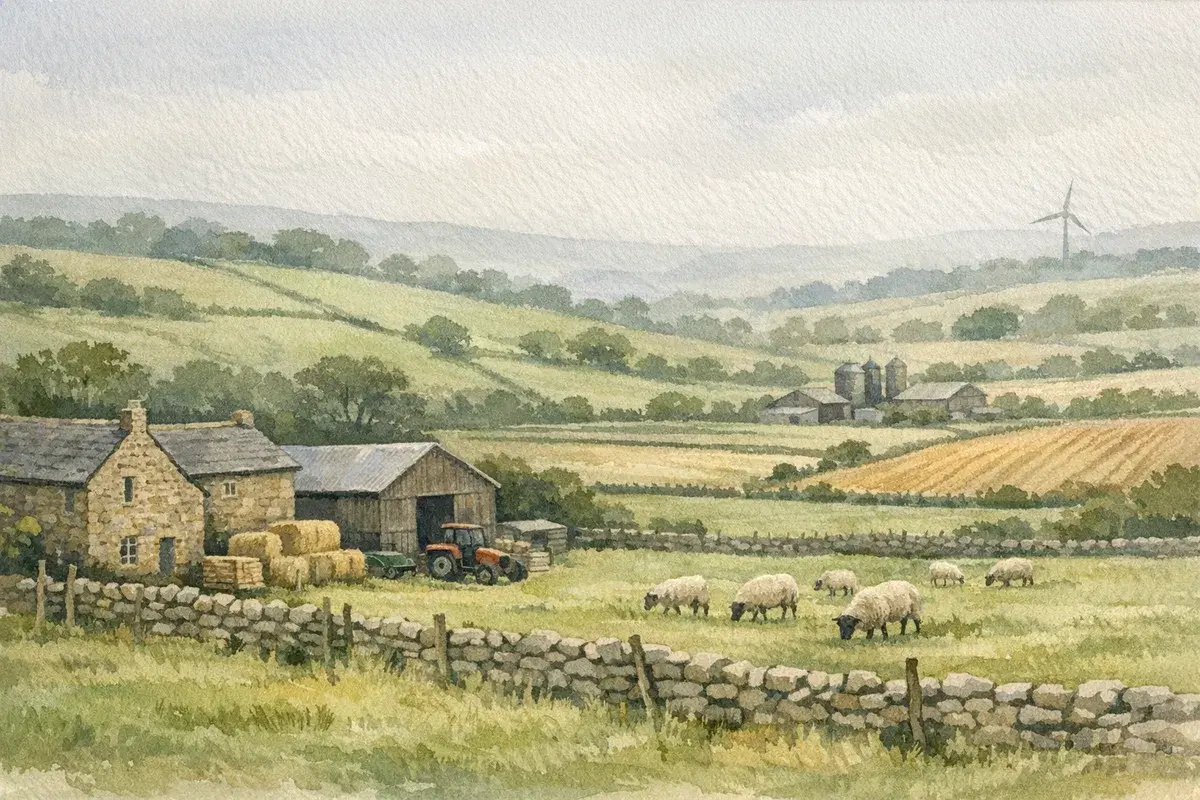
If you're running (or buying into) a working farm, tax relief isn't a "nice bonus". It's often the difference between a business that can reinvest and one that's constantly firefighting cashflow.
The catch is that commercial farming tax relief in the UK is rarely automatic. Most reliefs hinge on what your activity really is in HMRC's eyes: a genuine trade with a profit motive, or something that drifts into letting, hobby farming, or "land held for development". The detail matters, contracts, invoices, how you're paid, who carries risk, and even how you record decisions.
This guide cuts through the practical rules: what counts as commercial farming for tax purposes, which income tax, VAT, CGT and inheritance tax reliefs you may be able to use, and the common traps that can quietly wipe them out.
What Counts As Commercial Farming For Tax Purposes
Before you plan any relief, you need a clear answer to a deceptively simple question: are you trading as a commercial farm business, or are you mainly holding land and collecting income from it? HMRC's treatment of farming swings dramatically based on that line.
Commercial farming usually means you're carrying on an agricultural trade on a commercial basis with a view to the realisation of profits. In plain English: you're taking business risk, making operational decisions, and you've got a credible plan to make money over time.
If you're still pressure-testing models, contract farming, share farming, partnerships, tenancies, it's worth grounding yourself in the bigger picture of how UK farm businesses are structured and measured. Our guide to different commercial farm models and profit drivers is a useful companion when you're working out whether your setup looks and behaves like a trade.
Badges Of Trade And HMRC's View Of Profit Motive
HMRC doesn't have one magic test for "commercial". Instead, it uses a bundle of indicators often called the badges of trade, set out in HMRC's Business Income Manual and developed through case law across many industries.
On farms, the ones that tend to matter most are:
- Profit motive and commerciality: Are you genuinely trying to make a profit, or is the farming activity a lifestyle wrapper for land ownership? Consistent losses don't automatically kill reliefs, but they do invite questions.
- Frequency and organisation: Regular sales, repeat transactions, marketing routes, and business-like processes point towards a trade.
- Degree of activity and decision-making: Do you choose cropping and stocking policy, control husbandry, manage inputs, and carry price/production risk?
- Records and professionalism: Budgets, field records, livestock movement logs, agronomy advice, and minutes of decisions sound boring, but they're often what saves a relief in the real world.
A quick reality check: if your "farm accounts" are basically a file of annual invoices and a vague narrative of what happened, you're leaving yourself exposed. Commerciality is something you should be able to show, not just assert.
Side Activities: Lets, Diversification, Contract Farming, And Renewables
Most modern farms are mixed businesses. That's normal, and in many cases it's smart. But side income can pull you away from "trading" in HMRC terms, which then ripples into what reliefs you can claim.
Common examples:
- Lettings (residential or commercial): Often treated as investment activity rather than trading. That doesn't mean it's "bad", but it can dilute certain reliefs.
- Farm diversification: Farm shops, glamping, storage, livery, processing, and events can be trading or property business depending on facts.
- Contract farming and share farming: These can be strongly commercial, but the contract needs to reflect who bears risk, who controls decisions, and how each party is rewarded.
- Renewables: Solar or wind income may be trading-like or investment-like depending on structure, leases, and your level of involvement.
If you're actively considering new income streams, start with the business logic first, then pressure-test the tax outcomes. A good list of routes (and the planning/tax pinch points that come with them) is in our piece on practical farm diversification options. The key is to avoid accidentally turning a robust trading profile into a property-heavy one without realising what that does to future reliefs.
One more nuance: tenure matters. If you're operating under a tenancy or granting one, the nature of the arrangement (and the rights you retain) can affect how activities are characterised. If you're negotiating terms or taking land in, see our guide to how Farm Business Tenancies work in practice so you don't drift into a structure that undermines your wider tax position.
Income Tax And National Insurance Reliefs You May Be Able To Use
Once your farming activity is clearly trading, the next question is: are you actually using the reliefs the UK tax system gives trading businesses? Many farms leave money on the table simply by being too informal in how they plan profit, losses, and investment cycles.
Trading Loss Relief: Carry Back, Carry Forward, And Sideways Relief
Farming is cyclical. Weather, commodity prices, disease outbreaks, and input spikes can hammer one year and ease the next. The tax system recognises that, up to a point.
Depending on your circumstances (and whether you're a sole trader or in partnership), trading losses may be relieved in several ways:
- Carry forward: set losses against future profits of the same trade.
- Carry back: in some cases, set losses against profits of earlier years (useful if you had a strong year then a shock year).
- Sideways relief: set losses against other income (subject to restrictions). This is often where farms hit complexity, especially where HMRC questions commerciality or where "hobby" signals creep in.
Two practical watch-outs:
- Commerciality drives everything. If HMRC believes you're not trading on a commercial basis with a view to profit, it can restrict loss relief.
- One-off "big losses" need a story. If you've made a large capital spend, changed enterprise, or had an exceptional event, document it. Your accountant can't defend what you can't evidence.
Capital Allowances On Plant, Machinery, And Farm Buildings
Capital allowances are one of the most valuable (and most misunderstood) parts of commercial farming tax relief.
In broad terms, they let you deduct qualifying capital expenditure against taxable profits over time (and sometimes faster, depending on the allowance and the asset type).
Typical farm examples include:
- Tractors, combines, loaders, telehandlers
- Robotic kit and agri-tech equipment
- Certain fixed equipment in buildings (milking parlours, grain drying/handling, cold stores)
- Yard and farm infrastructure that qualifies as plant in tax terms
The hard part isn't "do capital allowances exist?" It's:
- what counts as plant vs building,
- how you allocate costs on mixed projects, and
- whether you've captured allowances during a property purchase (often missed where purchase paperwork doesn't properly apportion fixtures).
If you're investing heavily, tie your allowance planning to your funding and cashflow, not just the year-end tax computation. We see better outcomes when allowances are considered alongside borrowing terms, reinvestment cycles, and your overall commercial strategy.
VAT In Practice: Registration, Flat Rate Traps, And Partial Exemption
VAT is where a lot of "it'll probably be fine" thinking becomes expensive.
On many farms you'll deal with a mix of:
- Zero-rated outputs (common in food production)
- Standard-rated supplies (some diversified services)
- Exempt income (certain lets)
That mix can push you into partial exemption territory, where VAT recovery becomes restricted and calculation-heavy.
A few pragmatic points:
- Registration decisions affect cashflow. Being registered can help recover VAT on inputs and capital projects, but it adds admin and risk.
- Flat rate schemes aren't a default win. Some businesses end up worse off, especially if they have high input VAT or capital spends.
- Property and diversification can trip you up. A new barn conversion, storage let, or holiday accommodation can change your VAT footprint quickly.
VAT planning is one of those areas where you don't want to "Google it and wing it". The right answer depends on your exact supplies, contracts, and future plans, so it's a strong candidate for specialist advice before you sign leases or start building.
Capital Gains Tax Reliefs When You Sell, Restructure, Or Reinvest
Farms evolve. You might sell a block of land, swap parcels to improve shape, restructure a partnership, bring in a new generation, or reinvest into different assets. That's where Capital Gains Tax (CGT) becomes a major decision-driver.
The important mindset shift is this: CGT planning is rarely about "avoiding tax". It's about timing, evidence, and choosing the right relief for the transaction you're actually doing.
If you want the deeper rules and the common farmhouse/curtilage and development-angle traps, our guide to CGT on agricultural land and planning pitfalls is worth reading alongside this section.
Business Asset Disposal Relief And Associated Disposals
Business Asset Disposal Relief (BADR) can reduce the CGT rate on qualifying disposals, subject to conditions and lifetime limits.
Where it becomes relevant in farming:
- Selling all or part of a trading business
- Disposing of assets used in the business
- Associated disposals, where (for example) you dispose of personally owned land used by a partnership/company in which you're involved
The trap is that BADR is condition-heavy. Small changes in ownership, timing, or how land is held and used can nudge an asset out of qualifying territory. If you're contemplating a restructure or a sale, get the story straight early: what's being sold, by whom, and what has it been used for, commercially and consistently.
Rollover Relief, Hold-Over Relief, And Replacement Of Business Assets
These reliefs are often the most practical tools for working farms because they match what farmers naturally do: sell something and buy something else to keep the business moving.
- Rollover relief may allow you to defer gains when you reinvest proceeds into qualifying replacement business assets within the required time window.
- Hold-over relief (often in the context of gifts or certain transfers) can defer gains so the recipient takes over the base cost, useful in succession and reorganisation.
- Replacement of business assets rules can apply in certain compulsory purchase or insurance scenarios.
Where people get caught out:
- Reinvesting into something that doesn't qualify (because it's more "investment property" than trading asset)
- Missing the time limits
- Mixing personal and business use
If you're trying to build long-term wealth through land and still keep flexibility, it's worth thinking in terms of a joined-up plan: CGT reliefs, inheritance tax reliefs, and the commercial strategy for the holding. Our article on tax-efficient farmland investment explores that bigger picture, particularly relevant if you're buying land with an eye on intergenerational outcomes.
The Reliefs Rural Businesses Often Miss: EIS/SEIS And Share Structures
Not every farm is "just" land and stock anymore. Some are developing:
- On-farm processing brands
- Agri-tech products
- Energy or engineering spin-outs
- Data-led farm management services
Where you've got a genuine trading company (or you're investing into one), schemes like Enterprise Investment Scheme (EIS) and Seed Enterprise Investment Scheme (SEIS) can be relevant. They're not "farming reliefs" as such, and they're not a fit for landholding/investment vehicles, but for the right kind of rural trading company, they can materially change the risk/reward profile.
Share structures matter too. If you're bringing in outside capital, setting up growth shares, or separating landholding from an operating company, you need to understand how:
- control is defined,
- value is allocated, and
- future exits are taxed.
This is specialist territory, but it's also where we've seen some of the most expensive DIY mistakes, usually because people copy a structure they've heard "works well" without checking whether it matches their actual activity and objectives.
Inheritance Tax Reliefs That Often Matter Most On Farms
For many families, inheritance tax (IHT) is the biggest long-term threat to the continuity of the farm business. It's also the area where myths thrive.
If you only remember one thing: APR and BPR are powerful, but they're conditional. They depend on ownership, use, occupation, and the precise boundary between trading and investment.
For a deeper jump into qualifying rules, the 100% vs 50% rates, and the practical "two-year vs seven-year" ownership tests, see our detailed guide to how Agricultural Property Relief works for UK landowners.
Agricultural Property Relief Vs Business Property Relief: The Practical Differences
In simple terms:
- Agricultural Property Relief (APR) applies to the agricultural value of qualifying agricultural property (land, pasture, certain buildings, and in some cases the farmhouse element, subject to strict tests).
- Business Property Relief (BPR) can apply to relevant business property, often linked to trading businesses.
On real farms, the interaction matters because:
- APR may protect agricultural value, but not necessarily development value.
- BPR may be more helpful where the business is clearly trading and assets form part of that business.
- Let property, diversification, and investment activity can weaken BPR eligibility.
Common APR/BPR Pitfalls: Lets, Grazing Licences, Farmhouses, And Development Value
This is where commercial farming tax relief becomes less about clever planning and more about avoiding unforced errors.
Common problem areas we see (and which advisers repeatedly flag):
- Short-term grazing arrangements: A grazing licence can look "active" but still be treated as letting/investment if you're not genuinely farming.
- Residential lets and cottages: They're often valuable, but they can tilt the business profile away from trading, especially if they become a big share of income.
- Farmhouse qualification: HMRC expects a real, working connection between the farmhouse and the farming operation. A "nice house in the countryside" with minimal farming activity nearby is a classic dispute.
- Hope value and development value: If land has development potential, APR may not cover that uplift. Planning trajectory and how land is held can become critical.
The underlying theme: HMRC will look at reality over labels. Calling something a "licence" doesn't automatically make it trading. And calling your home a "farmhouse" doesn't make it qualify.
Trusts, Partnerships, And Succession Planning Without Breaking Reliefs
Succession planning on farms is often emotional, messy, and delayed (because there's always a harvest, always a calving, always a better time). But the longer you wait, the fewer options you usually have.
Structures commonly used include:
- Partnerships (often with partnership agreements updated as roles change)
- Trust planning in certain family situations (especially where control and protection are priorities)
- Company structures for operating businesses, sometimes separated from landholding
The risk isn't that these structures are "wrong". It's that they're implemented without:
- aligning ownership with actual working roles,
- documenting contributions and decision-making, and
- checking the impact on APR/BPR and CGT position.
If you're heading towards a generational change, treat it like a project. Set a timeline, gather documents, agree the commercial plan, and then design the tax and legal structure around that, not the other way round.
Structuring A Commercial Farm Business To Protect Reliefs
Your legal structure doesn't just affect how you pay tax this year. It affects how credible your trading status looks, how you share profit, how you bring family in (or out), and what happens when you sell assets or pass wealth on.
Sole Trader, Partnership, LLP, Or Limited Company: The Tax Trade-Offs
There's no universal best structure for a farm, but there are predictable trade-offs:
- Sole trader: Simple, flexible, but profits are taxed on you personally. Can be efficient for smaller operations: can become limiting as complexity grows.
- Partnership: Common in family farms because it reflects shared labour and shared decision-making. A strong partnership agreement is not optional if you want clarity.
- LLP: Can offer flexibility similar to a partnership, but with limited liability characteristics. Not a default solution, worth exploring where risk and governance matter.
- Limited company: Can be helpful for retaining profits, ring-fencing risk, and certain investment plans, but it can complicate extracting value, succession, and property ownership.
In practice, we've seen farms do best when they separate two questions:
- How do you want to run the business day-to-day (risk, control, reinvestment)?
- How do you want to own the land long-term (succession, IHT exposure, flexibility)?
You can then build a structure that respects both, sometimes with land held personally/partnership and operations in a company, sometimes not. The "right" answer is very fact-specific.
Profit Sharing, Family Working Arrangements, And Evidence Of Genuine Trade
HMRC doesn't need your family story, but it does care whether your arrangements reflect reality.
A few practical steps that strengthen your position:
- Pay people in a way that matches what they do. If a family member works full-time, a token share of profit with no record of responsibilities can look contrived.
- Document roles and decision rights. Who decides cropping? Who signs contracts? Who hires staff? This matters if your trade is challenged.
- Keep contracts current. Old handshake deals can unravel reliefs when there's a dispute, a divorce, or a death.
And don't ignore finance structure. Debt levels, repayment profiles, and who borrows (you personally vs the business) all feed into the overall plan. If you're reviewing funding or gearing up to buy, our guide to funding routes for commercial farm businesses is a useful starting point, particularly when you're balancing reinvestment with tax efficiency and risk management.
Land Transactions And Property Taxes For Working Farms
Buying, selling, and reorganising land is part of commercial farming, but property taxes can come as an unpleasant surprise if you assume everything is "just farmland".
Stamp Duty Land Tax And Reliefs: Mixed-Use, Multiple Dwellings, And Farm Cottages
In England and Northern Ireland, Stamp Duty Land Tax (SDLT) can apply in different ways depending on what you're buying.
Where farms get complicated is when a purchase includes:
- Agricultural land
- Farmhouses or cottages
- Commercial units, yards, or storage buildings
- Let property
The classification between residential, non-residential, and mixed-use can affect rates significantly. Add multiple dwellings and you introduce further rules and potential relief claims, each with conditions.
The "what to watch" list:
- Don't assume a cottage is "just part of the farm" for SDLT.
- Don't assume mixed-use treatment will automatically apply: you need to analyse what's actually in the transaction.
- Be careful with annexes, staff accommodation, and properties with dual use.
SDLT is also document-driven: the contract, the title, and the practical use all feed into the result. If you're negotiating a deal, it's worth getting SDLT advice before exchange, not after.
Income Splits Between Trading, Letting, And Development: Getting The Boundaries Right
One of the biggest silent killers of reliefs is sloppy categorisation.
On a typical farm, you might have:
- Trading income from crops/livestock
- Contracting income
- Letting income from buildings or cottages
- Renewable income
- One-off capital receipts (option agreements, easements, wayleaves)
- Development-related receipts
If those streams aren't split correctly, both in your accounts and in your internal decision-making, you can end up:
- claiming the wrong relief,
- triggering partial exemption problems for VAT,
- undermining BPR eligibility, or
- creating avoidable CGT exposure.
A practical habit that helps: when a new income stream appears, ask "is this trading, investment, or capital?" and get it labelled correctly from day one. It's much harder to unpick three years later when you're selling land or dealing with an estate.
If you're unsure where the CGT boundary falls on a future disposal, the nuances are covered in our article on whether agricultural land is exempt from CGT in the UK, and, importantly, why the common assumption that it's "exempt" is often wrong in practice.
Record-Keeping And Compliance: How To Defend Your Position
Most tax planning doesn't fail because the relief doesn't exist. It fails because you can't prove you qualified.
HMRC enquiries can be triggered by lots of normal events: persistent losses, big capital claims, unusual VAT repayments, land sales, or a sharp change in income mix. If your file is thin, everything becomes a debate.
What To Document: Cropping, Stock Records, Labour, Contracts, And Decision Logs
You don't need to turn your farm office into a legal archive. But you do need a defensible "paper trail" (digital is fine) that shows your farming is organised and commercial.
A practical checklist:
- Cropping and field records: rotations, inputs, spray records, agronomist recommendations.
- Livestock records: movements, medicine book, breeding records, mortality and performance data.
- Labour and management: timesheets where relevant, payroll, contractor invoices, who does what.
- Contracts: contract farming agreements, grazing licences, storage lets, renewable leases, supply agreements.
- Decision logs: short notes on major decisions, enterprise changes, capex, why you sold or bought livestock, what drove a loss year.
- Budgets and forecasts: even rough ones. They show intention and commercial planning.
This is also where tech helps. A simple habit, saving key emails and writing a two-line note after major decisions, can be the difference between a smooth enquiry and a months-long headache.
When To Get Specialist Help: Accountants, Tax Advisers, And RICS/CAAV Professionals
Generalist advice is rarely enough once you're dealing with:
- multiple income streams (trade + lets + renewables),
- land with development potential,
- succession planning,
- incorporation or restructuring, or
- significant CGT/IHT exposure.
The professionals who tend to add real value in commercial farming tax relief planning include:
- Specialist rural accountants and tax advisers (who understand how HMRC applies rules to farms, not just the legislation)
- RICS rural surveyors and CAAV advisers for valuation, tenancy, and land use evidence (often crucial for APR/BPR and transaction support)
- Planning consultants where development value or change of use is in play
A good rule: if a decision could cost you six figures later (IHT, CGT, SDLT, or an APR/BPR failure), it's worth paying for targeted advice now, before you sign, build, or transfer.
And if you're actively buying, selling, or reconfiguring a holding, use specialist platforms and specialist agents. On AgLand you register what you are looking for and hear from owners and agents whose property matches it - people who deal daily in tenure, ties, access and services, the details that make or break a farm transaction.
Conclusion
Commercial farming tax relief in the UK is less about finding loopholes and more about getting the fundamentals right: genuine trade, clear boundaries between trading and letting, well-chosen structures, and records that match reality.
If you're planning a big move, new tenancy terms, a diversification pivot, a land sale and reinvestment, or family succession, treat tax relief as part of the design brief, not an afterthought. It's usually easier (and cheaper) to protect reliefs upfront than to argue for them later.
Disclaimer: AgLand.co.uk is a UK agricultural land and rural property matching service, where buyers register what they are looking for and owners advertise directly to the buyers who match, and a rural resource hub. Nothing in this text is intended as legal, financial, or investment advice. You should do your own due diligence and seek guidance from appropriately qualified professionals (for example, specialist rural accountants/tax advisers, solicitors, and RICS/CAAV advisers) before acting on any information above.