
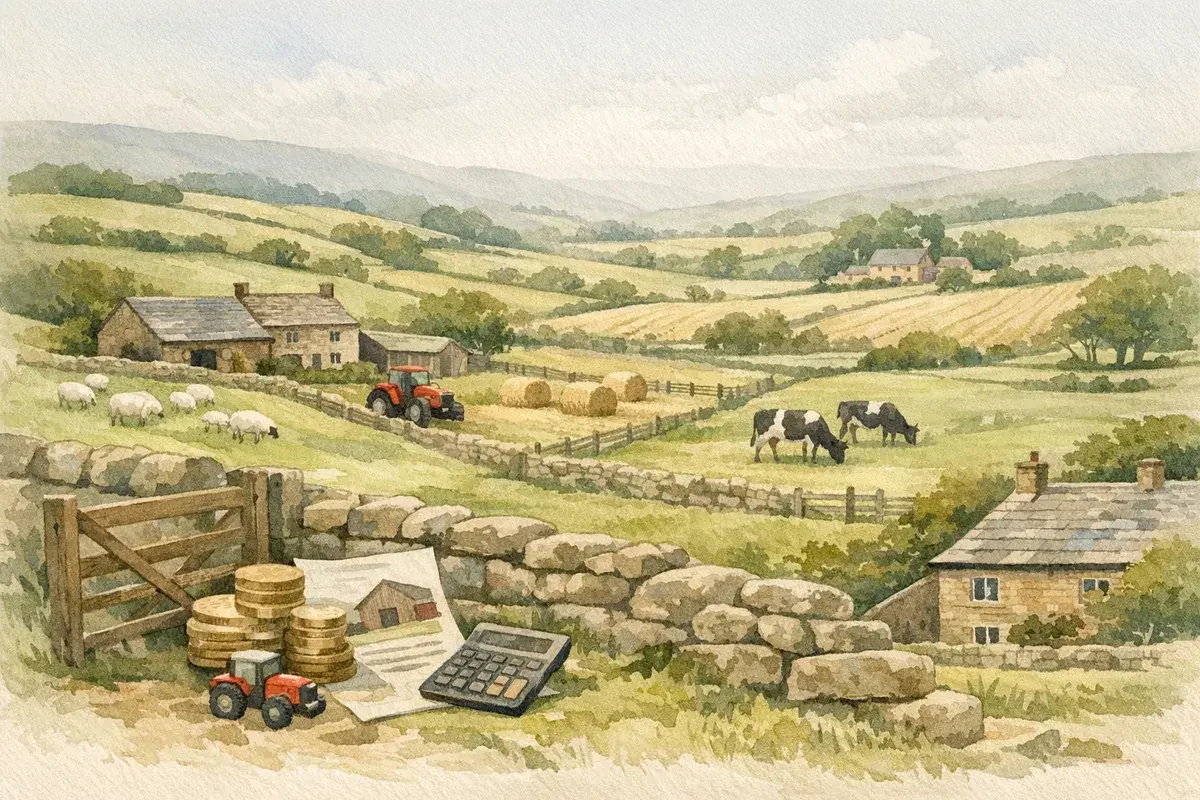
If you run a farm like a business (and in 2026, you pretty much have to), finance stops being a once‑a‑decade "big decision" and becomes part of the operating system. You might need an overdraft to bridge a late grain cheque, asset finance for a telehandler that won't wait, or longer-term funding to buy a block of land when it finally comes up.
Commercial farming finance is also one of the few areas where the same idea can be judged wildly differently depending on how you present it. Lenders aren't just backing your crop or your cows, they're backing your management, your record‑keeping, your risk controls, and the quality of your security.
This guide cuts through what actually happens in UK farm lending: the funding routes that fit different jobs, what banks and specialist rural lenders want to see, how to reduce friction in the process, and the legal/tax "gotchas" that can derail a deal late on.
How Commercial Farming Finance Works In Practice
Commercial farming finance in the UK is rarely a single product. Most established businesses run a stack: a working capital facility for day‑to‑day swings, term debt for longer-life assets, and sometimes a separate facility for diversification or property.
The lender's basic question stays the same: What's the money for, how does it get repaid, and what happens if the year goes against you? Your job is to make the answers obvious.
Secured Vs Unsecured Borrowing
Secured borrowing is backed by assets, typically land, buildings, sometimes residential property, and occasionally machinery. Because the lender has a charge over something tangible, secured debt usually offers:
- Longer terms (often 5–25+ years depending on asset and lender)
- Higher borrowing limits
- Sharper pricing than unsecured alternatives
Unsecured borrowing relies on cashflow strength and, in practice, may still involve personal guarantees or debentures over business assets. It can be quick and flexible, but tends to be:
- More sensitive to profitability and volatility
- Shorter term
- Priced higher to reflect risk
In farming, "unsecured" often isn't truly no‑strings‑attached, it's simply less tied to a specific asset.
Term Loans, Overdrafts, Asset Finance, And Revolving Facilities
You'll see a handful of core building blocks:
- Overdrafts: designed for short-term working capital swings (inputs paid now, income received later). Great when controlled: expensive if it becomes a permanent crutch.
- Term loans: a lump sum repaid over a set period. Used for land purchases, building works, buyouts, or major capex.
- Asset finance (hire purchase/leasing): secured primarily against the equipment itself. Useful where you want to preserve property security for bigger moves.
- Revolving credit facilities (RCFs): like an overdraft with a more formal limit/structure: common in larger or more complex businesses.
A practical rule: match the term to the asset life. Funding a 10‑year machine with a 12‑month facility is asking for stress later.
Who Lends To UK Farms And Rural Businesses
In the UK, farm borrowing typically comes from:
- High-street banks with agricultural teams (relationship-led, often competitive on secured lending)
- Specialist rural lenders (may be more flexible on structure or unusual income mixes)
- Asset finance providers (for machinery/vehicles, often through dealers)
- Alternative lenders (niche cases, higher cost, sometimes faster)
Who you choose matters less than whether they understand your enterprise and can lend through volatility. We've seen good outcomes when you align lender appetite with your model, whether that's owner‑occupied arable, mixed livestock, a tenancy with a contracting focus, or a farm that's genuinely become a portfolio business.
If you're building out a bigger commercial setup (or buying additional acreage), it helps to understand the operational models lenders expect to see in the first place, our guide to how commercial farming typically works in the UK is a useful baseline before you start shaping the finance conversation.
Common Funding Routes And When Each Fits
The "right" funding route is usually the one that keeps you operationally nimble and makes repayment feel boring. If repayment relies on everything going perfectly, you'll pay for that risk, either in price, covenants, or sleep.
Working Capital And Seasonal Cashflow Funding
Seasonality is normal: surprises are what hurt. Typical working-capital tools include:
- Overdrafts sized to your peak cash requirement (fertiliser, feed, rent, wages)
- Seasonal/short-term loans to bridge a known gap (for example, a 6–12 month facility aligned to harvest receipts)
- Invoice finance where applicable (more common in diversified agri-businesses than straightforward commodity operations)
Lenders will pressure-test whether working capital is genuinely seasonal or whether it's masking structural margin issues. If you're running arable, being able to explain your margin drivers, input strategy, yield variance, storage, marketing plan, goes a long way. If you want a sharper sense of what lenders tend to believe is "normal" performance, it's worth grounding yourself in the realities behind commercial arable farming profits before you pitch big expansions.
Machinery, Vehicles, And Kit: Hire Purchase And Leasing
For tractors, combines, telehandlers, sprayers, ATVs and vehicles, hire purchase (HP) and leasing are common because:
- The asset is the primary security
- The paperwork can be quicker than property-backed lending
- Terms can be aligned to the machine's working life
But watch the details:
- Seasonal repayment options can match farm cashflow, but may come with higher overall cost.
- Balloon structures can look attractive and then sting when the refinance point arrives.
- Insurance, maintenance obligations and usage limits can differ by agreement.
Land, Buildings, And Development: Long-Term Mortgage-Style Finance
Land and buildings are still the backbone of secured farm finance. Lenders like them because they're tangible, valued by a recognised surveyor, and generally liquid relative to specialised assets.
Use this route for:
- Buying land or a whole farm
- Refinancing existing debt to improve term or pricing
- Major building projects where the end asset is good security
Two practical realities:
- Valuation isn't sentimental. A "perfect" block operationally might still be valued conservatively if access is awkward, the holding is fragmented, or there are restrictions on use.
- Development needs a plan that survives scrutiny. If you're funding a new dairy unit, for example, lenders will want clear capex schedules, planning status, and a believable herd/build-up timeline, especially if you're moving from concept to implementation. If that's your route, it can help to sanity-check the operational assumptions against a proper commercial dairy farm setup framework.
Diversification And Rural Commercial Property Finance
Diversification finance sits in a slightly different bucket because the risks change: planning, construction, tenant demand, fit-out costs, and sometimes a very different customer base.
Lenders typically want:
- Evidence of demand (pre-lets, enquiries, comparables)
- A realistic build and cost plan (including contingencies)
- Proof you can run two businesses at once, or that you've hired the capability
It's not enough to say "we'll convert the barns and it'll pay for itself". The best applications look more like small commercial property deals, with a farming story behind them.
If you're weighing options, we've laid out practical routes in our farm diversification ideas guide (and, crucially, the planning and delivery questions that lenders tend to ask).
Environmental, Renewables, And Infrastructure Funding
This is where finance conversations have become more nuanced post‑BPS, because projects can be profitable but complicated.
Common examples:
- Solar or battery storage leases/projects (often funded by developers, but with landowner legal/valuation implications)
- Anaerobic digestion (capex heavy: lenders focus on feedstock security, offtake contracts, and operational expertise)
- Irrigation, drainage, reservoirs, grain storage, slurry systems (infrastructure that protects performance and compliance)
Lenders generally respond well when environmental or infrastructure spend is clearly linked to:
- Reduced downside risk (yield stability, compliance)
- Measurable cost savings
- Contracted income
Where it's speculative or policy-dependent, expect tighter terms or more conditions.
What Lenders Look For (And How To Improve Your Terms)
You can't control wheat prices or milk price swings. You can control the quality of your application and the predictability of your numbers. That's where better terms are won.
Accounts, Management Figures, And Cashflow Forecasting
Most farm businesses have annual accounts that lag reality. Lenders know that. What helps you stand out is current, decision-grade management information:
- Last 12 months trading (even if provisional)
- Enterprise gross margins (by crop / livestock enterprise)
- A forward cashflow forecast that shows peaks and troughs
- Sensitivity analysis (what happens if price drops 10% or yield falls 15%?)
The best forecasts don't pretend risk doesn't exist. They show you've thought about it and built sensible buffers.
If you're still shaping the logic of the business (or you're asking for finance that changes the shape of it), you'll be taken more seriously with a structured commercial farming business plan behind the numbers, one that explains assumptions, not just outcomes.
Security, Loan-To-Value, And Valuation Realities
In UK rural lending, the loan-to-value (LTV) conversation is rarely just a percentage, it's about what can actually be relied on as security.
Expect lenders to ask:
- What's the asset, and how marketable is it?
- Is it subject to restrictions (agricultural tie, occupancy issues, access rights)?
- Are there title complications (overage, ransom strips, unclear boundaries)?
A clean title and a straightforward security package can reduce legal time, lower costs, and sometimes improve pricing.
Farming Performance, Resilience, And Market Risk
Lenders don't require perfect performance. They want repeatable performance and evidence you can manage volatility.
You'll improve your position if you can explain:
- Your marketing strategy (forward selling, storage, pooling, risk limits)
- Input purchasing discipline and how you decide spend
- Labour strategy (in-house vs contractors, capacity constraints)
- Biosecurity and herd health plans (for livestock)
They'll also look at income mix. A business with several independent income lines can be more resilient, if it's managed well.
Covenants, Personal Guarantees, And Director Support
Covenants aren't there to punish you: they're early-warning triggers. Common ones include:
- Minimum debt service cover
- Maximum leverage
- Minimum net worth
Personal guarantees (PGs) can appear even where there's solid security, especially for limited companies, newer ventures, or where the lender wants "alignment". If PGs are on the table, don't treat them as a box-tick. Understand:
- What triggers enforcement
- Whether they're capped or unlimited
- How they interact with other borrowing and family assets
This is one area where independent legal advice is money well spent.
The True Cost Of Borrowing: Rates, Fees, And Repayment Profiles
The interest rate gets all the attention. But in farm finance, total cost is often driven by structure: fees, break costs, amortisation, and what happens when you need flexibility mid-term.
Interest Structures: Fixed, Variable, And Base-Rate Exposure
Most UK farm lending is priced either:
- Variable (often linked to the Bank of England base rate plus a margin), or
- Fixed for a period (common on longer-term property-backed debt)
Fixed rates can buy certainty, but they reduce flexibility. Variable rates can be cheaper initially, but you're exposed to base-rate moves.
A practical approach we often see work well is matching rate structure to risk:
- Fixed on core, long-term land/building debt where stability matters
- Variable on shorter facilities where you expect to repay or refinance sooner
Fees, Break Costs, And Hidden Friction In Facility Letters
Facility letters can hide "friction" costs that only show up later:
- Arrangement fees
- Legal fees (yours and sometimes the lender's)
- Valuation fees
- Commitment/utilisation fees on undrawn facilities
- Break costs on fixed-rate loans if you repay early
Two tips that save grief:
- Ask for a plain-English explanation of fees and scenarios ("What if I sell a parcel next year?").
- Don't assume you can move lenders cheaply mid-fix, break costs can be material.
Repayment Shapes: Interest-Only, Capital And Interest, And Balloon Payments
There are three common repayment profiles:
- Capital and interest (amortising): steady paydown: often the healthiest long-run.
- Interest-only: lower monthly cost: relies on a clear repayment event (sale, refinance, or strong future cashflow).
- Balloon payments: smaller regular payments with a lump at the end: can suit machinery or transitional periods but adds refinance risk.
Lenders will ask what repayment depends on. If the answer is "a good year", expect pushback. If it's "contracted rent", "known sale of surplus property", or "proven cash generation", you'll get a smoother ride.
Tax, Tenure, And Legal Factors That Can Make Or Break A Deal
This is the part people underestimate, until a solicitor, valuer, or lender raises an issue and suddenly your timeline doubles.
Owner-Occupied Vs Tenanted Land And Lender Constraints
Owner-occupied land is generally the cleanest form of security. Tenanted land can still be financeable, but lenders will look closely at:
- Tenure type (FBT, AHA, licences)
- Remaining term and break clauses
- Rent review mechanisms
- Repairing obligations and who carries what risk
If you're a tenant, your borrowing options can narrow because you may have fewer assets to charge. That doesn't mean "no": it often means being more deliberate about structure (asset finance, guarantors, or security from elsewhere).
If you operate under shared arrangements, lenders may also want to understand how profits and responsibilities are split. For example, a properly drafted contract farming agreement can make a big difference to how bankable the income looks on paper.
Subsidies And Schemes: How Lenders Treat Transitioning Support
With the UK continuing its shift away from direct payments and towards environmental and productivity-focused support, lenders tend to treat scheme income cautiously:
- If income is contracted and evidenced, it may be recognised more readily.
- If it's application-dependent or short-term, it may be discounted or haircut in forecasts.
The key is to show you can service debt from trading profit, with support payments acting as a buffer, not the whole plan.
Planning Permission, Permitted Development, And Financeability
Planning status can be the difference between a straightforward approval and a long, expensive limbo.
Lenders commonly ask:
- Do you have full permission, prior approval, or are you pre-application?
- Are there planning conditions that add cost or restrict use?
- Are you in a sensitive designation area (which can affect timelines and deliverability)?
Permitted development rights can help, but lenders still need comfort that what you're building is lawful, insurable, and will be valued as intended. In plain terms: permitted development is a privilege, not an automatic right.
Security Title Checks: Rights Of Way, Overage, And Restrictions
Title issues don't just slow things down, they can reduce value and limit resale.
Typical red flags include:
- Unrecorded rights of way or access issues
- Overage/clawback provisions on land value uplift
- Restrictive covenants that block intended use
- Boundary anomalies or ransom strips
Good lenders (and good solicitors) will dig. If you address these early, before valuation and legal work, you save money and keep momentum.
A Step-By-Step Process To Secure Finance Without Losing Momentum
Speed in farm finance is usually earned, not granted. When things drag, it's often because the lender is still trying to understand the real story, or because third-party reports (valuation, legal) surface something late.
Pre-Application: Define The Ask And Prepare Your Evidence Pack
Before you speak to a lender, write down the "ask" in one paragraph:
- Amount, term, and purpose
- Preferred repayment profile
- Security offered
- What success looks like (yield uplift, reduced costs, extra units, rental income)
Then build an evidence pack:
- 2–3 years accounts + current management figures
- Cashflow forecast with sensitivities
- Schedule of assets and liabilities
- Details of existing facilities (limits, expiry, covenants)
- Quotes, capex schedule, and contractor details (if building)
Looking for land like this? Tell AgLand what you're after - type, acreage, budget and area - and we'll alert you the moment a matching property is advertised. Registering is free, and there's no commission on either side. Tell us what you're looking for.
Heads Of Terms To Completion: Timeline, Valuations, And Due Diligence
A typical secured lending timeline often includes:
- Indicative terms / heads of terms
- Formal application and credit approval
- Valuation instruction (RICS surveyor or lender's panel)
- Legal due diligence and title checks
- Facility letter issuance
- Completion and drawdown
Where delays happen:
- Valuation backlogs or additional valuation queries
- Title complications (access, covenants, overage)
- Planning evidence missing or unclear
- Forecasts that don't reconcile with accounts
Pitfalls That Trigger Delays Or Declines
The most common avoidable issues we see:
- Mismatched purpose and product (using short money for long assets)
- Over-optimistic forecasts with no sensitivity or buffer
- Unexplained drawings or personal expenditure
- Last-minute surprises (undisclosed borrowing, disputes, tenancy complexity)
- Tax assumptions that don't stack up
And tax does matter, because net cashflow is what repays debt. If you're banking on reliefs or structuring, take time to understand the rules and evidence requirements around commercial farming tax relief so you don't build a repayment plan on a misunderstanding.
Handled well, the process becomes fairly mechanical. Handled loosely, it becomes a string of "just one more thing" emails until your opportunity disappears.
Conclusion
Commercial farming finance is at its best when it's almost boring: the facility matches the job, repayment is realistic in a bad year as well as a good one, and the paperwork doesn't collapse under scrutiny.
If you want better terms, focus on the fundamentals lenders actually price: current management figures, clear cashflow logic, credible downside planning, and security that's easy to understand and value. Then run the process like any other high-stakes project, define the ask, assemble evidence early, and remove legal/planning uncertainty before it lands on a lender's desk.
Disclaimer: AgLand.co.uk is a UK agricultural land and rural property matching service, where buyers register what they are looking for and owners advertise directly to the buyers who match, and a rural resource hub. Nothing in this text is intended as legal, financial, tax, or investment advice. You should carry out your own due diligence and seek guidance from appropriately qualified professionals (such as your accountant, solicitor, independent financial adviser, and specialist rural surveyor) before making decisions.