
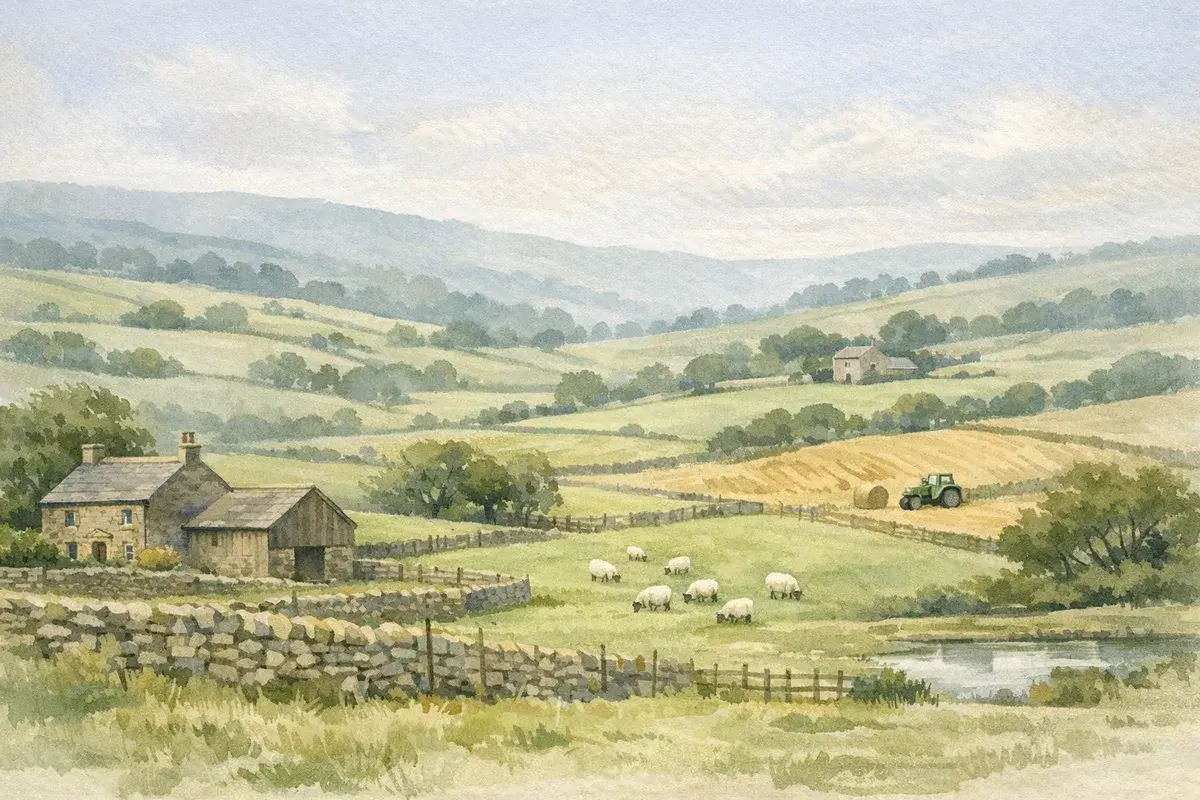
If you've ever tried to finance a farm, a block of bare land, or a "mostly residential but not quite" rural holding, you'll already know the uncomfortable truth: mainstream mortgage logic doesn't always travel well into the countryside.
Agricultural mortgage lenders in the UK tend to think in a different language, one that includes seasonal cashflow, Farm Business Tenancies, overage, planning risk, diversified income streams, and the very real problem of valuing assets that don't behave like typical houses.
This guide cuts through the confusion. You'll learn what counts as an agricultural mortgage, who actually lends in this space, what evidence lenders want to see, how pricing and loan-to-value (LTV) typically works, and how to put a lender shortlist together without wasting months (or missing a completion deadline).
What Counts As An Agricultural Mortgage (And Why Lenders Treat It Differently)
An "agricultural mortgage" isn't a single product with a neat label. It's a catch‑all for lending secured against rural assets where the property, the income, or the legal set‑up doesn't fit a standard residential box.
In practice, the moment the security includes significant land, agricultural buildings, an occupancy restriction, or a trading farm business, lenders start applying specialist underwriting.
Farmland, Farmhouses, And Mixed-Use Holdings
Agricultural mortgage lending commonly covers:
- Bare land purchases (arable, pasture, woodland, amenity ground with restrictions)
- Working farms (with yards, sheds, stores, slurry systems, grain kit, etc.)
- Farmhouses (especially where tied to the holding, or where the "residential value" is inseparable from the farm)
- Mixed-use holdings with diversified income: holiday lets, storage, renewables, equestrian, farm shops
- Rural commercial property connected to the holding (units, workshops, rural business parks)
A key thing lenders care about is whether the property is primarily residential, primarily commercial/agricultural, or genuinely mixed. That categorisation influences which underwriting team is involved, what valuation method is used, and what deposit/LTV you'll be offered.
Security, Income Profile, And Valuation Realities
Lenders treat agricultural security differently because:
- Liquidity can be slower: selling a niche rural holding often takes longer than selling a three‑bed in town.
- Income can be uneven: agricultural cashflow is seasonal, and commodity prices can swing.
- Value can be complex: hope value, development angle, tenancy status, and access rights can move the dial.
Even when a property looks "straightforward" on the brochure, a lender will interrogate it like a business asset, because it usually is.
If you want a deeper primer on what lenders check and why, AgLand's guide on how agricultural mortgages work in the UK is a useful companion when you're lining up your evidence.
Typical Borrower Profiles Lenders Support
In UK rural lending, lenders commonly support:
- Owner-occupier farmers (established or expanding)
- New entrants with a credible plan and strong backing (often with family support or additional security)
- Landowners refinancing to release capital, restructure debt, or fund diversification
- Rural investors buying land, farmhouses, or mixed-use assets
- Agricultural businesses purchasing premises, yards, or income-producing rural commercial assets
One important nuance: the lender isn't only assessing you, they're assessing how resilient the holding is as an income generator, and how saleable the asset is if things go wrong.
Who Lends On Agricultural Property In The UK
In the UK, agricultural finance sits on a spectrum, from high-street lenders with rural teams, through to specialist agricultural lenders, private banks, and bespoke capital.
You don't just choose a lender based on headline rate. You choose based on: how they view the asset, how they underwrite farm income, how fast they move, and how comfortable they are with "rural reality".
High-Street Banks Vs Specialist Agricultural Lenders
High-street banks can be a fit when:
- the security is clear (good access, clean title, obvious value)
- the income story is strong and well-documented
- your timescales are normal (not a 4‑week auction completion)
Specialist agricultural lenders often shine when:
- the asset is mixed-use, tenanted, or includes restricted dwellings
- the business is complex (diversification, multiple entities, grant income)
- you need a lender who understands the sector and won't panic at farm accounts
Neither route is "better" universally. We've seen high-street lenders offer excellent terms on the right property, and we've seen specialists make deals happen that a generalist credit team wouldn't touch.
Private Banks, Challengers, And Family Offices
If you're dealing with larger values, complex assets, or you want relationship-led lending, private banks and challenger lenders can be relevant. Their appeal is often:
- bespoke structuring (tailored amortisation, interest-only periods, multiple securities)
- speed and pragmatism when the deal is well-presented
- portfolio thinking (they look at overall net worth and asset coverage, not just one property)
Family office money can enter the picture for particularly bespoke situations, but it's not "easy money", expect serious scrutiny, strong security, and clear exit logic.
Broker-Led Lending And When It Adds Real Value
If your case is anything other than vanilla, a broker can be worth their weight in saved time.
A good agricultural broker doesn't just "shop the rate". They:
- place your deal with a lender that actually understands the asset type
- package the case so underwriting doesn't keep bouncing it back
- anticipate valuation and legal friction points before they become delays
That's particularly true for self-employed applicants, portfolio structures, mixed-use holdings, and anything with a planning angle. If you're weighing up whether to go direct or not, start with AgLand's explainer on using an agricultural mortgage broker and what value they should genuinely add.
What Lenders Look For: Eligibility, Evidence, And Deal Drivers
Agricultural mortgage lenders in the UK generally underwrite three things at once:
- The asset (can we value it, and can we sell it if needed?)
- The income (can you service it reliably, even with volatility?)
- The structure (is the legal, planning, and occupation position clean enough?)
Land Tenure, Occupation, And Vacant Possession
Tenure and occupation can change the whole lending appetite.
Lenders typically want clarity on:
- Freehold vs leasehold (and remaining term if leasehold)
- Tenancies: Farm Business Tenancy (FBT), Agricultural Holdings Act (AHA) tenancies, residential ASTs
- Vacant possession on completion (if required), and evidence it's actually achievable
- Grazing licences and short-term arrangements (often acceptable, but must be documented)
If any part of the holding is occupied, expect questions about your rights to recover possession, the rent roll, repair obligations, and whether the tenancy affects value.
Trading Accounts, Diversification Income, And Projections
Most lenders will look for a credible serviceability story supported by evidence, such as:
- 2–3 years' accounts (or SA302s/tax year overviews if you're self-employed)
- management accounts if the latest year is atypical
- breakdown of diversified income (holiday lets, storage, equestrian, contracting)
- realistic projections with assumptions (not just "turnover will double")
Seasonality matters. A lender may stress-test cashflow and ask how you handle low-revenue months.
If your income is largely self-employed, it's worth reading AgLand's guide to a self employed agricultural mortgage, because the evidence requirements are often where good applications get needlessly stuck.
Planning Status, Use Class, And Development Angle
Planning can be value-enhancing, or deal-breaking.
Expect lenders to probe:
- current lawful use (agricultural, residential, mixed)
- any planning permissions, conditions, or Section 106 obligations
- whether buildings are permitted development candidates (and whether prior approval is needed)
- whether value is dependent on a future consent (hope value)
If your repayment plan relies on development uplift, you'll need to show a credible route to consent and a sensible exit.
Environmental Designations, Rights Of Way, And Title Risks
Rural title is rarely as clean as you'd like. Lenders will often ask about:
- SSSIs, AONBs, National Parks, and local wildlife designations
- public rights of way and access arrangements
- water abstraction licences, drainage easements, wayleaves, and third-party rights
- boundary issues and ransom strips
None of these automatically kills a mortgage. But surprises, missing documents, or unclear access can slow you down dramatically, especially once solicitors get involved.
Common Agricultural Mortgage Products And Structures
Agricultural mortgage products in the UK are best understood as a toolkit. The "right" structure depends on your asset type, income pattern, and how you plan to use (or change) the holding.
Term Loans, Interest-Only, And Amortising Options
Most rural lending sits within three broad repayment structures:
- Capital repayment (amortising): steady reduction of principal: often preferred for long-term stability.
- Interest-only: common where cashflow is tight or where you're planning refinance/sale later: lenders will want a clear repayment strategy.
- Part-and-part: a blend, useful where you want breathing room but still want to de-risk over time.
Your structure should match reality. If your income spikes after harvest, for example, some lenders will consider tailored payment profiles, provided it's properly evidenced.
Variable, Fixed, And Hedging Considerations
Rates can be fixed or variable, but rural borrowers often care about flexibility as much as headline cost.
You'll want to weigh:
- how long you need certainty for (e.g., tight margins)
- whether you might sell a parcel, refinance, or restructure (ERC risk)
- whether a fixed rate is worth the trade-off in flexibility
For a practical overview of pricing mechanics and how rural lenders set them, AgLand's page on agricultural mortgage interest rates explains the drivers in plain English.
Bridging, Refinance, And Land Purchase Facilities
Bridging can be relevant when:
- you're buying at auction
- you need to complete quickly while planning is secured
- you're refinancing out of a short-term arrangement
Refinance is common too, often to release capital for diversification or to consolidate borrowing.
Bare land purchase facilities can be trickier than farmhouse finance. Lenders worry about saleability and income cover, so deposits tend to be higher and underwriting more conservative.
Development Finance For Rural Conversions And New Builds
If your deal is a conversion or a new build, you may be looking at staged drawdowns tied to works and valuations.
Development finance can work well for:
- barn conversions (where lawful use and conditions are clear)
- replacement dwellings
- rural business units
But if the project is speculative, planning is uncertain, or access/services are problematic, lenders will price that risk in, or step away.
If your "rural property" is primarily an income-producing business asset rather than a home, it may fall under commercial-style underwriting. In that case, AgLand's guide to a commercial agricultural mortgage helps you understand the typical structures and evidence expectations.
How Much Can You Borrow: LTV, Affordability, And Pricing
This is the bit everyone asks first, understandably. But on agricultural mortgages, "how much can I borrow?" is really three questions:
- what LTV will a lender offer on this asset?
- what do your accounts and cashflow support?
- what assumptions sit behind the rate, fees, and exit?
Deposit Expectations And LTV Bands For Land Vs Dwellings
As a rule of thumb (and it really is a rule of thumb), lenders tend to be:
- more generous on standard residential elements (a straightforward rural house with normal services)
- more cautious on bare land, mixed-use, and anything with tenancy/occupation complexity
Deposit expectations can vary widely by lender, asset quality, and borrower strength. If you want a more specific breakdown of how lenders think about this, AgLand has a dedicated guide on the deposit required for an agricultural mortgage.
Servicing Tests For Seasonal And Volatile Farm Cashflow
Affordability in farming isn't just "salary x multiplier". Lenders may look at:
- net profit trends over 2–3 years
- drawings/dividends
- debt servicing coverage ratios
- sensitivity to price changes (feed, fertiliser, fuel)
- reliance on a single income stream
If you've got diversified income, present it properly. A holiday-let business with solid occupancy data and clean accounts can strengthen an application, if it's evidenced and not treated like a vague side hustle.
Fees, Early Repayment Charges, And Exit Assumptions
Pricing isn't only the interest rate.
Common cost and risk areas include:
- arrangement/product fees
- valuation fees (often higher for complex holdings)
- legal fees (yours and sometimes the lender's)
- early repayment charges (ERCs) on fixed deals
- covenants and review clauses for larger or commercial-style facilities
Rates move, of course, but it's still useful to track what lenders are doing in the rural market. If you're benchmarking options, AgLand's overview of farm mortgage rates in the UK is a sensible place to sanity-check what you're being quoted against the broader landscape.
Valuations: RICS Red Book, Farm Appraisals, And What Moves The Number
If you want one "quiet truth" about agricultural mortgages, it's this: the valuation often decides the deal.
Most lenders will require a valuation in line with RICS standards (often referenced as "Red Book" requirements), but rural valuation is as much art as science, because comparable evidence is thinner and the assets are more diverse.
How Farms And Land Are Valued (And What Evidence Helps)
Valuers typically break a holding down into components:
- residential value (farmhouse, cottages)
- agricultural value (land quality, blocks, drainage, access)
- buildings value (utility, condition, adaptability)
- income angle (rents, diversified enterprises)
You can help the process by having:
- clear plans and acreage schedules
- cropping/rotation history, stewardship agreements, and drainage records
- rent schedules and tenancy documents
- details of services (water, electric, private drainage) and any compliance certificates
Small detail, big impact: access. A holding with strong road access and good internal tracks reads very differently to one with awkward rights and pinch points.
Development Value, Hope Value, And Overage Triggers
If any part of the value is tied to development potential, lenders will be cautious.
- Hope value might be acknowledged, but it's rarely treated as guaranteed security.
- Overage/clawback provisions can complicate title and affect valuation.
If you're buying with an eye on planning uplift, assume the lender will ask: "What if it doesn't happen?" Your plan needs to work even without best-case outcomes.
Occupational Issues: Tenancies, Grazing Licences, And Wayleaves
Occupation can materially change value. Valuers and lenders will look closely at:
- type of tenancy (FBT vs AHA is a major difference)
- length of term, break clauses, and repair obligations
- whether the property can be sold with vacant possession (and how easily)
- wayleaves/easements for utilities, pipelines, telecoms, and access
If there's a wayleave for a pylon line, for example, that may not stop lending, but it can affect value, marketability, and a lender's comfort level.
The Application Process Step By Step (And How To Avoid Delays)
Agricultural mortgage applications don't usually fail because you "didn't qualify" in principle. They fail (or drag on) because the case presentation is thin, the title is messy, or everyone discovers a problem two weeks before completion.
Here's the practical sequence you can plan around.
Document Checklist: Title, Accounts, Maps, And Compliance
A strong application pack typically includes:
- proof of identity and address
- last 2–3 years' accounts / tax returns (plus management accounts if needed)
- bank statements (business and personal where relevant)
- details of existing borrowing and liabilities
- HM Land Registry title(s), plans, and any deeds for access rights
- tenancy documents, licences, and rent schedules
- diversification income evidence (bookings, leases, contracts)
- maps showing boundaries, access points, and what's included in the sale
If there's an occupancy restriction, agricultural tie, or unusual planning history, disclose it early with the paperwork. Surprises are what trigger underwriter nerves.
Timescales From Agreement In Principle To Completion
Timescales vary, but rural deals can take longer because valuations and legal investigations are more involved.
A practical way to avoid pain:
- get your broker/relationship manager to pre-brief the valuer on the asset
- make sure the vendor can supply tenancy/wayleave paperwork quickly
- align solicitor capacity early (rural title work is not a last-minute job)
If you're buying at speed, auction, private treaty with a hard deadline, or bridging into longer-term finance, build a timeline backwards from completion and stress-test it.
Due Diligence: Surveys, Environmental, And Legal Enquiries
Expect due diligence to include:
- valuation inspection (and sometimes specialist reports)
- legal due diligence on title, rights, restrictions, and boundaries
- environmental and contamination considerations (especially near historic uses)
- checks on services and compliance where relevant
The "avoid delays" move is simple: act like the lender's solicitor for a day. Ask yourself what you'd query if you were lending six or seven figures against this property, and then assemble those answers in advance.
Risks, Pitfalls, And When To Take Bespoke Advice
Rural property can be forgiving in the long term, but it can be brutal in the short term if you get one assumption wrong. The stakes are high: enforcement, tax treatment, cashflow squeeze, or security structures that box you in.
Permitted Development, Change Of Use, And Enforcement Risk
Permitted development rights can be useful, but they're not a free-for-all. Lenders will be wary if your plan relies on:
- conversion rights you think apply but haven't validated
- prior approval routes you haven't mapped out
- a change of use that's politically sensitive locally
If you're buying based on "it'll be fine, everyone does it", treat that as a red flag. Planning risk is real, and it can directly affect valuation, exit options, and lender confidence.
Tax And Reliefs: IHT, APR/BPR, CGT, And Trading Status Sensitivities
Tax is where people can accidentally create expensive problems.
Depending on your circumstances, rural property decisions can interact with:
- Inheritance Tax reliefs (APR/BPR)
- Capital Gains Tax on disposals or development uplift
- the delicate question of whether activity is trading or investment
Lenders won't give you tax advice, but they may ask questions that expose structural issues, like whether a diversification income stream is actually documented and ring-fenced.
If your deal involves restructuring ownership, gifting, or development, you'll want bespoke advice from a rural accountant/tax adviser who lives and breathes land.
Refinancing Traps: Covenants, Cross-Security, And Personal Guarantees
Refinancing can be smart, until it isn't.
Watch for:
- cross-security across multiple titles that limits future sales or transfers
- covenants that trigger reviews if income dips
- personal guarantees that don't match the risk you're taking
- reliance on a short-term facility with an optimistic refinance assumption
A common pattern we see: someone takes quick money to secure a purchase, then struggles to refinance because the asset is tenanted, planning is unresolved, or the accounts don't support the higher debt level. The fix is usually earlier structuring, better evidence, or a different product, not panic.
Practical Next Steps For Finding An Agricultural Mortgage Lender
At this point you don't need more theory, you need a shortlist and a plan. Here's how to move from "research mode" to a lender conversation that actually goes somewhere.
Match The Lender To The Asset, The Income, And Your Timeframe
Start by writing down three things on one page:
- Asset reality: bare land, mixed-use, farmhouse with land, tenanted, development angle
- Income reality: trading farm, diversified, self-employed, rent roll, seasonal volatility
- Timeframe reality: relaxed purchase, tight completion, auction, refinance deadline
Then match accordingly:
- If the asset is complex (tenancies, mixed-use), prioritise lenders with rural underwriting depth.
- If timing is tight, prioritise decision speed and clarity on valuation/solicitor processes.
- If income is uneven, prioritise lenders who will understand seasonality rather than flatten it into a monthly salary model.
Build A Shortlist With Agents We Work With And Trusted Advisers
Your fastest route to a sensible lender fit is often through the professionals already active in the deal.
- Agents can tell you what funding routes tend to work for that asset type locally.
- Rural surveyors can sanity-check value sensitivity, tenancy impacts, and development assumptions.
- Specialist brokers can position your case to the right lender first time.
And if you're buying land or a holding, it's worth speaking to advisers early about how security could be structured so you don't accidentally lock up parcels you may want to sell later.
Use A Specialist Rural Property Search To Support Your Finance Plan
Finance and property search should feed each other.
Looking for land like this? Tell AgLand what you're after - type, acreage, budget and area - and we'll alert you the moment a matching property is advertised. Registering is free, and there's no commission on either side. Tell us what you're looking for.
A practical trick: build a shortlist of "acceptable" properties, then sense-check them against lender hot buttons, access, tenancy status, services, planning history. It's much easier than falling in love with a holding and then discovering the lender views it as three different asset classes taped together.
If you're considering letting income as part of the plan (a cottage, a farmhouse, or a diversified residential element), make sure you understand how lenders treat it. AgLand's guide to a buy to let agricultural mortgage is a good starting point for what tends to be accepted and what raises eyebrows.
Conclusion
Choosing between agricultural mortgage lenders in the UK isn't about finding one "best" name, it's about finding the lender whose underwriting matches your land, your cashflow, and your real-world timeline.
Get the fundamentals right early: clarify tenure and occupation, assemble accounts and income evidence that tell an honest story, anticipate valuation pinch points, and treat planning and title as core finance issues (not paperwork you'll deal with later). Do that, and you'll find lenders become far more straightforward to work with.
Disclaimer: AgLand.co.uk is a UK agricultural land and rural property matching service, where buyers register what they are looking for and owners advertise directly to the buyers who match, and a rural resource hub. Nothing in this text is intended as legal, financial, or investment advice. You should carry out your own due diligence and seek independent guidance from appropriately qualified professionals (for example, a regulated mortgage adviser/broker, solicitor, accountant, surveyor, or planning consultant) before making decisions.