
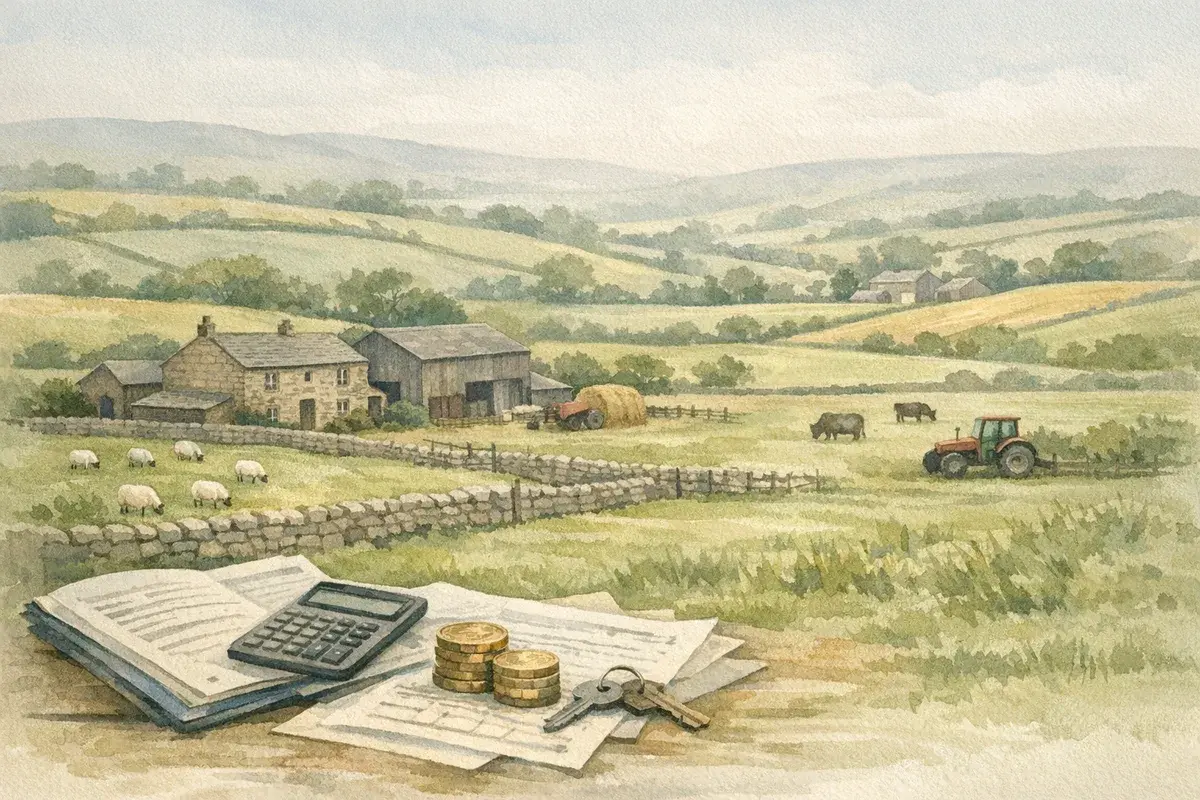
Buying a farm, smallholding, or mixed-use rural property isn't like buying a standard house, and when you're self employed, the paperwork and the lender scrutiny ramps up again.
The challenge isn't that agricultural lenders "don't like" self-employed borrowers. It's that farming income can be seasonal, diversified, and sometimes deliberately tax-efficient, while the property itself might involve land, buildings, access rights, tenancies, planning history, and an agricultural tie. Put bluntly: there's more to explain.
This guide cuts through the confusion so you know what UK lenders typically assess, what evidence actually moves the dial, and how to position your application so it gets a fair hearing (and a workable deal).
What Makes An Agricultural Mortgage Different (And Why Self Employment Changes The Assessment)
Agricultural mortgages sit in that awkward-but-important space between residential and commercial lending. The lender isn't just judging you: they're judging the property's marketability, its legal quirks, and whether the income supporting the loan is durable.
If you want a broader foundation first, our longer guide on how agricultural mortgages work in the UK breaks down the key moving parts lenders focus on.
Agricultural Versus Residential Lending Criteria
With a standard residential mortgage, the underwriter tends to focus on affordability, credit history, property value, and whether the property is a "normal" home that can be sold easily if things go wrong.
With an agricultural mortgage, you'll often see extra emphasis on:
- Security and resale risk: Is there a deep market for the property? A 3-bed house in a village is one thing: a farmhouse with an agri tie and 40 acres is another.
- Income quality: Is your income stable, provable, and likely to continue? Self-employed accounts are acceptable, but they're analysed differently from PAYE.
- Property complexity: Land parcels, rights of way, tenancies, historic planning permissions, outbuildings, and water supplies can all create questions.
- Use class and business reliance: If the property's value is closely tied to how you operate the farm business, the lender may treat it more like a commercial case.
A practical point: even if you're buying "a home in the countryside", lenders may still categorise it as agricultural or semi-commercial if there's significant land, equestrian use, holiday lets, or multiple units.
Mixed-Use Rural Property: Where Lenders Draw The Line
Mixed-use is where many self employed buyers live in the real world: farmhouse + yard + a couple of cottages, maybe a barn conversion, maybe a workshop.
Lenders commonly draw lines around:
- How much of the value is residential vs. non-residential (and whether it's easily separable)
- Whether the non-residential parts are income-producing (lets, storage, livery, renewables)
- Whether there are multiple dwellings (which can pull you away from vanilla residential lending)
- Whether the property includes commercial leases or agricultural tenancies
If your place looks straightforward on Rightmove-style criteria but has three outbuildings, a yard with concrete, and a track across a neighbour's land, expect the underwriting to reflect that. Not a deal-breaker, just a different lens.
And yes: being self employed matters because your ability to explain the story behind the income becomes central to the case.
How Lenders Define “Self Employed” For Farming And Rural Businesses
"Self employed" sounds simple until you look at how farms are actually structured. Lenders generally don't mind the structure, you just need to present the right evidence for it.
Sole Trader, Partnership, Limited Company, And LLP: What Changes In Underwriting
Here's how the structure tends to affect what lenders ask for:
- Sole trader: Usually assessed on your taxable profits (often using SA302s and Tax Year Overviews). Lenders may average the last two or three years.
- Partnership: Similar approach, but they'll look at your share of profits and may want partnership accounts plus evidence of drawings.
- Limited company: Often assessed on a mix of salary + dividends, and sometimes retained profits depending on lender policy and whether you control the company.
- LLP: Treated a bit like a partnership for income purposes, but documentation can be more "company-like".
Two realities in UK farming that you should anticipate explaining:
- Tax efficiency isn't the same as low affordability. Many farms legitimately keep profits low in certain years due to reinvestment, capital allowances, or timing of sales.
- A ‘bad' year doesn't always mean a ‘bad' business. Disease outbreaks, weather, input spikes, or delayed stewardship payments can distort one set of accounts.
If you're talking to agricultural mortgage lenders in the UK, you'll often find they're more comfortable with farm structures than high-street generalists, provided the case is packaged clearly.
Diversified Income Streams: Contract Farming, Lets, Renewables, And Side Businesses
Diversification is normal now. The way you present it is what matters.
Common rural income streams lenders may consider include:
- Contract farming / contracting income: Often viewed positively if it's evidenced by invoices and a track record.
- Farm business tenancies or grazing licences: The legal nature matters. A formal tenancy can change the valuation and the lender's view of control.
- Holiday lets / glamping / shepherd huts: Can be strong income, but lenders may discount it if it's new, highly seasonal, or lacks accounts.
- Renewables (solar, wind, AD): Solid when backed by contracts, but the lender may ask who owns the kit, what the lease terms are, and how long the income lasts.
- Off-farm PAYE or a spouse's income: Often helpful as a stabiliser, even if the main story is the farm.
A tip we see work: don't just list income lines. Explain what's recurring, what's contracted, what's opportunistic, and what you'd still earn in a "boring" year.
If your purchase is investment-led (for example, a cottage let or several units), lenders may treat it differently again, our guide to a buy to let agricultural mortgage covers how that underwriting lens shifts.
How Much Deposit You’ll Need And What Impacts Loan-To-Value
Deposit is where agricultural deals often feel harsher than buyers expect. That's because LTV isn't just about your profile, it's about how quickly and reliably the property could be sold if needed.
For a deeper look at typical expectations, see our breakdown of the deposit required for an agricultural mortgage.
Farmland, Smallholdings, And Farmhouses: Typical LTV Expectations
In the UK, LTV norms vary by lender and property type, but these broad patterns crop up:
- Farmhouse with modest acreage (and no major complications) can sometimes sit closer to residential-style LTVs.
- Smallholdings often land in the middle: more specialised than a house, less complex than a full trading unit.
- Bare land / farmland only can be more conservative, especially where there's limited alternative use.
- Mixed-use with multiple income streams may be underwritten with more emphasis on business affordability than personal affordability.
The key is that the lender's valuation isn't just "what you'll pay". It's "what it would sell for, to whom, and how quickly", with all its restrictions.
Risk Factors That Reduce LTV: Tenancies, Outbuildings, Planning, And Title Complexity
These are the repeat offenders that can pull LTV down (or trigger extra conditions):
- Agricultural tenancies / occupiers: Even a seemingly informal arrangement can raise possession and control questions.
- Multiple buildings with mixed condition: Derelict outbuildings can look like development potential to you, but risk to a valuer.
- Planning uncertainties: Barns, conversions, "existing use" assumptions, or incomplete conditions.
- Title complexity: Ransom strips, unregistered land, missing easements, unclear boundaries, overage/clawback provisions.
- Access and services: Private water, private drainage, long tracks, shared drives, or rights granted "by custom".
If you're self employed, remember the double effect: where the property is complex, lenders often want more deposit and stronger evidence that your income comfortably supports the loan.
One more thing that surprises people: the valuation can lag behind the agreed price if the seller is pricing in "hope value" (future development, diversification, or lifestyle premium). That gap becomes an extra deposit you didn't plan for, so build contingency into your numbers early.
Proving Income When You’re Self Employed: Documents Lenders Actually Want
If you're self employed, the fastest way to derail an agricultural mortgage isn't low income, it's unclear income.
Underwriters don't want a 40-page essay. They want a clean, consistent evidence pack that matches what you've said, what HMRC has on record, and what your bank statements show.
SA302s, Tax Year Overviews, And Accounts: The Core Evidence
Most UK lenders will ask for some combination of:
- SA302s (HMRC tax calculations) for the last 2–3 years
- Tax Year Overviews to confirm the SA302 figures match HMRC records
- Full accounts (preferably prepared by a qualified accountant) for the last 2–3 years
- Business bank statements (often 3–6 months)
- Personal bank statements (often 3–6 months)
- Proof of deposit (savings, sale proceeds, gift letters where allowed)
If you're limited company, expect requests such as:
- Company accounts and sometimes management accounts
- Confirmation of salary/dividends
- Potentially an accountant's reference
One practical suggestion: align your narrative with the evidence. If you say "I've got reliable contracting income," show invoices and bank credits that make that obvious.
If Your Profits Fluctuate: Averaging, Add-Backs, And How To Explain One-Offs
Farming profits fluctuate, it's normal. The trick is making it legible.
Common lender approaches include:
- Averaging the last 2–3 years' profits (sometimes with more weight on the most recent year)
- Using the latest year only if income is rising and evidenced
- Adjusting for ‘add-backs' where the lender accepts certain non-cash or one-off costs (policy-dependent)
What you can do to help your case:
- Provide a short note (or accountant's commentary) explaining why a year dipped: fertiliser price spike, machinery replacement, livestock disease impact, one-off legal costs.
- Show what changed afterwards: new contract, changed cropping plan, reduced borrowing, insurance settlement.
- Avoid hand-waving. Underwriters don't mind bad news: they mind fuzzy numbers.
Be careful with the "tax-efficient" situation. If your taxable profit is low because you've invested heavily or used allowances, that may be entirely sensible, but it can still reduce what the lender can lend based on standard affordability models.
This is where working with an agricultural mortgage broker can be useful: they'll know which lenders are more pragmatic about farming accounts, and how to present the story without overcooking it.
Grants, Subsidies, And Environmental Schemes: What Can Be Counted
UK farm income can include support payments and scheme income, but lenders vary on how they treat it.
In broad terms:
- Longer-term, contracted, or clearly evidenced scheme income tends to be viewed more favourably.
- New or uncertain payments may be discounted until there's a track record.
- One-off grants are rarely treated as recurring income, but they can support capital investment plans.
Expect the underwriter to ask:
- Is the payment recurring, and for how long?
- What are the obligations/costs attached?
- Is it paid to you personally, the partnership, or the company?
Bring paperwork that makes it straightforward: scheme agreements, remittance advice, and bank credits that tie out.
A quiet warning: if your business is leaning heavily on a single scheme payment to make affordability work, it's worth pressure-testing the plan yourself before the lender does.
Affordability For Farms: Stress Testing, Existing Borrowing, And Business Costs
Affordability in agricultural lending isn't just "income minus mortgage payment". Lenders typically stress test interest rates and look at the resilience of your cashflow, especially if the loan is tied to a trading business.
How Lenders Treat Seasonal Cashflow And Input Price Volatility
Seasonality is almost a defining feature of farming. Many lenders understand that, but they still need comfort that:
- You can service the mortgage during low-cash months
- Your working capital isn't permanently stretched
- Your business can cope with shocks (feed, fertiliser, energy, labour)
You'll often help yourself by showing:
- A cashflow forecast (even a simple one) that maps big inflows/outflows
- Evidence of working capital facilities (and responsible use)
- Insurance arrangements where relevant
- A track record of navigating tough years
If you're pricing a deal, pay attention to how rates affect the stress test. Our explainer on farm mortgage rates in the UK is useful background, particularly if you're comparing fixed vs variable options.
Other Commitments: Asset Finance, HP, Merchant Cash Advances, And Overdrafts
This is where good farm businesses sometimes get caught out: you can be "asset rich" and still look stretched on monthly commitments.
Lenders will commonly account for:
- Asset finance / hire purchase on tractors, telehandlers, livestock trailers
- Equipment leases (including renewables equipment depending on structure)
- Overdrafts (often treated as a committed facility even if you don't max it)
- Merchant cash advances (less common in farming, but if present, they can spook underwriters due to cost)
- Existing mortgages and secured lending
A good discipline before applying: list every commitment with the monthly cost, term, and lender. Don't assume "it's business borrowing so it doesn't count." In agricultural underwriting, it usually counts, and the lender will find it in statements anyway.
If you're refinancing to simplify things, moving from short-term facilities to longer-term secured borrowing, make that logic explicit. Underwriters like a coherent plan more than they like a pile of disconnected loans.
Choosing The Right Mortgage Structure For Agricultural Borrowers
A self employed agricultural mortgage isn't just about getting a yes, it's about choosing a structure that still works when your year doesn't go to plan.
Repayment Versus Interest-Only, Part-And-Part, And Term Length
The right structure depends on what you're buying and how your cashflow behaves.
- Capital repayment is straightforward and steadily de-risks the loan, but it can feel tight during poor trading years.
- Interest-only can improve monthly affordability and preserve cash for the business, but you'll need a credible repayment strategy (sale of an asset, planned refinance, investment strategy, lender dependent).
- Part-and-part often fits real farm life: you chip away at capital while keeping flexibility.
Term length matters too. A longer term can lower monthly payments, but it may increase total interest and can collide with retirement planning or succession intentions.
If the borrowing is primarily for business purposes, land purchase, yards, buildings, diversification infrastructure, you may find a commercial agricultural mortgage offers structures that align better with trading realities.
Fixed, Variable, And Tracker Rates: Matching To Your Income Profile
Rate choice isn't a prediction game: it's a risk-management choice.
- Fixed rates can suit you if your cashflow has narrow margins and you want payment certainty.
- Variable rates can be useful if you want flexibility, but you're accepting rate risk.
- Trackers are transparent but can swing quickly if base rate changes.
Ask yourself:
- If rates rise by 1–2%, is the business still comfortable?
- Would certainty help you sleep, or do you value flexibility to overpay in strong years?
- Are early repayment charges a problem if you might sell land, refinance, or restructure?
There's no single best answer. We've seen excellent operators choose variable because they keep strong liquidity and want to overpay: we've seen others fix because they've got big input exposure and don't want two moving targets.
Bridging, Development, And Refinance: When Specialist Products Make Sense
Some rural purchases don't fit neat timelines:
- You need to buy before planning is final
- The property isn't mortgageable "as is" (condition, services, legal title issues)
- You're splitting titles or reorganising tenancies
In those cases, short-term finance or specialist products can bridge the gap, but they come with higher costs and tighter timelines. The exit strategy has to be realistic, documented, and timed properly.
Refinance can also be strategic. If you've improved the property, stabilised income, or reduced complexity, you might be able to renegotiate onto better terms later. If that's your plan, keep evidence: planning sign-offs, tenancy documents, accounts, and valuations.
And if you're already holding agricultural property and want to release capital or improve terms, you may be considering a remortgage of agricultural property, often a sensible moment to tidy lending structures around the wider business.
Property Due Diligence That Commonly Delays Agricultural Mortgages
Agricultural mortgage timelines are often slowed not by your income, but by property due diligence. Rural property has more "moving parts", and lenders need solicitors and surveyors to confirm those parts won't bite later.
Planning Status, Agricultural Occupancy Conditions, And Permitted Development History
Expect extra questions around:
- Agricultural occupancy conditions (agri ties): Who is currently in occupation? Does the buyer qualify? Has it been complied with historically?
- Permitted development history: If buildings have been erected or converted under GPDO rights, lenders may ask for evidence of proper prior approvals and compliance.
- Lawful use: Any business use on the site (workshops, storage, farm shop) may need the correct permissions.
If you're relying on "we'll sort planning after completion", flag that early. Some lenders are comfortable with future plans: others need the current position to be squeaky clean.
Rights Of Way, Access, Drainage, Water, And Easements
These issues sound boring until a mortgage offer is on the line.
Typical sticking points:
- Access: Is there a legally documented right of access to the highway for all parts of the title?
- Private tracks: Who maintains them? Are there shared liabilities?
- Water supply: Mains vs private supply: responsibilities and testing.
- Drainage: Private drainage compliance and maintenance arrangements.
- Easements and wayleaves: Overhead lines, pipelines, telecoms, fine in principle, but lenders want clarity.
Valuers and solicitors are trained to be cautious here, because unclear rights can affect value and saleability.
Environmental And Land Designations: Flood Risk, SSSI, Stewardship, And Contamination
Environmental issues are increasingly front-and-centre.
Common lender concerns include:
- Flood risk: Not just for buildings, but also access routes.
- SSSI and other designations: They don't make lending impossible, but they can constrain use and affect value.
- Stewardship obligations: These can be positive, but lenders want to see what they restrict (and what they require you to spend).
- Contamination risk: Historic farm uses, fuel tanks, chemical storage, old asbestos in sheds.
None of this is meant to scare you off. It's a reminder to start legal and technical due diligence early, ideally as soon as you're serious about a property, so your mortgage process isn't waiting on avoidable paperwork.
A Step-By-Step Route To Approval (From Search To Completion)
A self employed agricultural mortgage can feel like a black box if you've only ever done residential borrowing. But the process is predictable when you treat it like a project.
Pre-Application: Clean Up Accounts, Credit, And Your Borrowing Narrative
Before you apply, tighten the basics:
- Get your accounts in order. If your latest year is strong, make sure it's finalised and ready to share.
- Check your credit file for errors and tidy what you can (missed payments, outdated addresses).
- Map your deposit clearly. Lenders like clean sources: savings, sale proceeds, inheritance. Gifts can be acceptable with proper paperwork, depending on lender.
- Write your story in plain English. What are you buying, what's the income plan, what's stable, what's variable, and why does the mortgage work?
- Be honest about complications. Agri tie, tenancy, access, private drainage, raise it early so you don't waste weeks.
This is also the moment to be disciplined about your search. If you're open across counties or property types, be precise about what you'd actually buy so you're not relying on luck. AgLand is built for exactly that: you register the land, buildings, and use case you need, and hear when an owner or agent advertises something that matches.
Offer Stage: Valuation, Business Commentary, And Handling Underwriter Queries
Once you're in the application, expect three things to drive the timeline:
- Valuation availability and detail: Rural valuations can take longer, and the report may ask for extra info.
- Underwriter questions: Often about income stability, debts, property use, or legal rights.
- Solicitors' enquiries: Title, access, restrictions, and planning evidence.
How to keep it moving:
- Reply quickly and with documents, not opinions. If they ask about a right of way, provide the relevant plan or deed reference.
- If your income fluctuates, provide a short accountant-supported note instead of a long explanation thread.
- Keep your broker/agent in the loop so everyone is working off the same facts.
Completion: Timescales, Fees, And What To Expect From Solicitors And Surveyors
Agricultural purchases can complete quickly when the title is simple and the lender is comfortable, but it's common for rural deals to take longer than a standard house purchase.
Budget (and plan) for:
- Lender arrangement fees and product fees
- Valuation fees (can be higher for complex properties)
- Legal fees reflecting title complexity and land registry work
- Broker fees if applicable
On the professional side, your solicitor and surveyor are doing more than box-ticking. They're pressure-testing whether the asset you're buying can be owned, used, and resold without nasty surprises. That's not friction: it's protection.
If you're self employed, you'll also want to avoid major new borrowing or unusual account activity during this stage. Underwriters can request updated statements, and it's amazing how often a "temporary" facility becomes a last-minute query.
Conclusion
A self employed agricultural mortgage is absolutely achievable in the UK, but you'll get the best outcome when you treat it as a business case and a property case.
Your aim is simple: make the lender's decision easy. Present clean income evidence, explain fluctuations without drama, choose a mortgage structure that matches seasonal reality, and get ahead of rural due diligence (access, ties, planning, title). Do that, and you're no longer "a complicated borrower", you're a well-prepared one.
If you're at the early stage, be selective about the properties you pursue and the professionals you involve. The right agricultural solicitor, surveyor, and broker can save months, and, in some cases, save you from buying the wrong asset in the first place.
Disclaimer: AgLand.co.uk is a UK agricultural land and rural property matching service, where buyers register what they are looking for and owners advertise directly to the buyers who match, and a rural resource hub. Nothing in this text is intended as legal, financial, tax, or investment advice. You should carry out your own due diligence and seek guidance from suitably qualified professionals (for example, FCA-authorised mortgage advisers/brokers, solicitors, accountants, and RICS surveyors) before making decisions.