
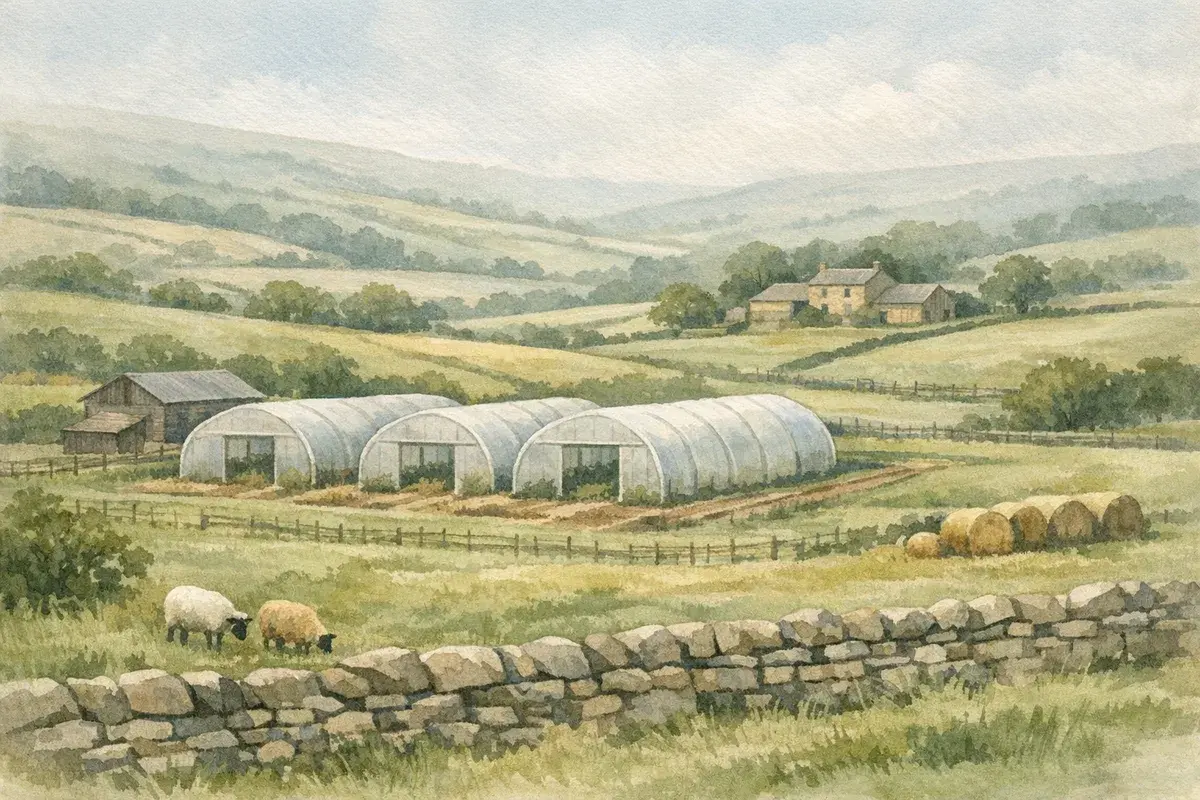
You can buy a perfectly decent tunnel, have it delivered in a week, and still end up stuck for months, because in planning terms a polytunnel isn't "just plastic and hoops". Depending on where it sits, how it's fixed down, how long it's there, and what you're using it for, it can be treated anywhere on the spectrum from a genuinely temporary agricultural structure to a development that needs full planning permission.
If you're trying to grow soft fruit, salads, cut flowers, tree stock, or even protect livestock handling areas from the weather, the stakes are real: delays can miss a season, and a poorly-handled install can invite objections, conditions, or enforcement. This guide cuts through the grey areas around planning permission for agricultural polytunnels in the UK, so you can decide your route, properly, before you spend money and momentum.
What A Polytunnel Is (In Planning Terms) And Why It Matters
In everyday farming conversation, "polytunnel" is a simple label. In planning, it's more slippery: local planning authorities (LPAs) will focus on whether the tunnel amounts to operational development (building/engineering works) and whether it has a material effect on the character of the land.
Two polytunnels that look similar can be treated very differently on paper. The decision usually turns on practical details, fixings, duration, intensity of use, and visual impact, plus the planning history and sensitivity of the site.
Temporary Vs Permanent: Duration, Fixings, And Intended Use
A polytunnel is often argued to be "temporary" because it's demountable. But "temporary" in planning isn't just about whether it can be moved, it's about whether it's intended to remain in situ and how it's physically and functionally tied to the land.
What tends to push a polytunnel towards being viewed as more permanent:
- Long duration in one location (especially if it's there year-round, year after year)
- Substantial groundworks (level platforms, hardstanding, retaining edges)
- Robust anchoring (deeply-driven ground anchors, concrete footings, base rails)
- Associated infrastructure (track upgrades, water tanks, bunds, lighting, packing areas)
- Multiple tunnels as a "unit" (a cluster that reads like a commercial horticultural site)
What supports a "temporary" position:
- Seasonal erection/removal with a credible rotation plan
- Minimal ground disturbance
- No permanent surfacing beyond what's reasonably necessary
- A clear, agricultural cropping purpose (not storage, retail, events, etc.)
If you're weighing up whether tunnels fall under "temporary structures", it's worth reading AgLand's wider guide to what counts as a temporary structure on farmland, because the same planning logic (duration, fixings, impact) crops up again and again.
Polytunnels, Greenhouses, And Agricultural Buildings: Key Differences
LPAs often distinguish between:
- Traditional glasshouses/greenhouses (more visually solid: can appear more "building-like")
- Polytunnels (lighter, but can create major visual impact at scale)
- Agricultural buildings (steel portal frames, barns, stores, often assessed under different PD rules and design expectations)
Even if your tunnel is used purely for agricultural production, planners may still assess:
- Scale and massing (a run of tunnels can be perceived as industrialising open countryside)
- Reflectivity and colour (white plastic can be highly conspicuous)
- Ancillary development (tracks, hardstanding, containers, refrigeration units)
If your tunnel proposal starts to look like a wider yard/building package, you'll often need to consider how it sits alongside other agricultural development routes. AgLand's overview of planning for farm buildings is useful context when tunnels are part of a bigger operational change on the holding.
When You Do (And Don’t) Need Planning Permission
This is the heart of it: you might not need full planning permission, but you shouldn't assume you're automatically covered. The correct route depends on the planning status of the land, the size and permanence of what you're proposing, and whether permitted development (PD) rights apply, or have been removed.
A solid starting point is to understand what generally can be done on agricultural land without permission, then work back to your specific polytunnel. AgLand's guide on what you can build without planning permission on agricultural land is a good orientation piece before you get into site-specific checks.
Permitted Development Rights Under Part 6: When They Can Apply
In England, certain agricultural development can fall under Part 6 of the General Permitted Development Order (GPDO), subject to thresholds, limitations, and (often) prior notification / prior approval.
In practice, polytunnels sit in a more nuanced area than, say, a straightforward livestock building, because their "building-like" status is frequently debated, and LPAs focus heavily on landscape impact and the intensity of horticulture.
Permitted development may be more arguable where:
- The land is in genuine agricultural use as part of an established unit
- The proposal is reasonably necessary for agriculture
- The scale is proportionate to the holding
- The siting avoids sensitive landscapes and prominent skylines
But here's the catch: PD is not a free pass. Even where you believe Part 6 can apply, you may still need to go through prior approval (and you can still be refused on siting/design grounds, or face conditions).
If you want the deeper rules and how they're applied in real life, AgLand's explainer on permitted development rights for agricultural buildings helps you understand how LPAs interpret "reasonably necessary", thresholds, and the prior approval process.
Devolved nations note (UK-only): planning is devolved. Scotland, Wales, and Northern Ireland have their own permitted development frameworks and guidance. The concepts are similar, but the detail and process can differ, so treat any "Part 6" references as England-focused and confirm your local regime.
When A Full Planning Application Is Likely To Be Required
A full planning application becomes more likely when one or more of these apply:
- Sensitive location (AONB, National Park, conservation area setting, listed building setting, heritage assets)
- Prominent or exposed siting (visible from public viewpoints, roads, PROWs)
- Large scale or cumulative development (multiple bays, multiple sites on the same holding)
- Significant engineering works (platforming, cut/fill, permanent surfacing)
- Intensification signals (new access, increased HGV movements, lighting, packing/processing)
- Unclear agricultural justification (hobby/amenity use dressed up as "agriculture")
Also watch for administrative traps:
- PD rights may be removed by condition on earlier consents.
- Some land is tied up in tenancy restrictions or has Article 4 directions affecting development rights.
- A site may have a planning history where similar proposals have been refused.
If you're stepping back and thinking, "Do I need planning permission on agricultural land at all for this?", AgLand's broader guide to planning permission on agricultural land in the UK is a useful reference point for the bigger picture beyond polytunnels.
Why Prior Approval, Conditions, And Enforcement Still Matter
Even when you're not doing a full planning application, you're still operating in a compliance world.
- Prior approval can be where an LPA tests siting, design, external appearance, and sometimes transport impacts.
- Conditions can control colour, layout, seasonal removal, landscaping, drainage, and lighting.
- Enforcement can follow if the LPA considers the development unauthorised or materially different from what was described.
A detail that catches people out: the "polytunnel itself" is rarely the only planning issue. It's the knock-on effects, tracks, water storage, packaging space, staff facilities, deliveries, that make a site feel permanent and commercial. If you plan those elements early (and document them honestly), you reduce the risk of an objection turning into a stop-start saga.
Location And Design Factors That Typically Trigger Objections
If you want to predict objections before they land, stop thinking like an installer and start thinking like a case officer with a map open.
Most pushback isn't about whether growing food is "good" (it usually is). It's about whether the proposal protects landscape character, neighbour amenity, and highway safety, especially where the countryside is valued for reasons beyond farming.
Landscape And Visual Impact: Siting, Scale, And Cumulative Effects
Polytunnels can be visually loud. Even "clear" or "diffuse" covers can read as bright blocks in certain light.
You'll reduce risk significantly if you:
- Tuck tunnels into existing farm groupings rather than isolated field corners
- Use landform (behind a rise, within a fold, below ridge lines)
- Avoid skyline positions and open valley sides
- Keep scale proportionate to the holding and avoid a scattered layout
- Think cumulatively: ten small tunnels across three fields can look worse than one well-sited block
A practical tip: do your own "public viewpoint audit". Walk the nearest public footpaths and roadside verges at different times of day. If the tunnels dominate key views, planners will see it too.
Protected Areas And Constraints: AONB, National Parks, SSSI, Listed Settings
In protected landscapes (AONBs and National Parks), the planning balance shifts. You're not necessarily barred from development, but you'll usually need a higher standard of justification and design.
Common constraint triggers:
- AONB / National Park: greater scrutiny on landscape character and tranquillity
- SSSI / priority habitats: ecological constraints, potential need for surveys/mitigation
- Listed building settings: impact on heritage significance and key sight lines
- Conservation areas: even if the tunnel isn't inside, the setting can matter
If any of these apply, treat the application like a small project: bring in a professional early, build a visual pack, and don't wing the wording. LPAs often refuse vague proposals in sensitive areas simply because they don't have enough information to say "yes" safely.
Highways, Access, And Neighbours: Traffic, Noise, Light, And Glare
A tunnel can be quiet. A tunnel enterprise can be busy.
Expect questions like:
- How many vehicle movements at peak season?
- Are there HGV deliveries/collections?
- Is the access safe, with good visibility?
- Will you need staff parking, welfare, or security?
- Are you proposing lighting (security, work lights, head torches across the site)?
Neighbour concerns often focus on:
- Early morning activity during harvest
- Generators/pumps
- Refrigerated containers
- Light spill in winter months
- Runoff or muddy roads
Design choices can soften these issues: set working areas away from boundaries, keep lighting minimal and downlit, and think about a clean, durable access strategy that avoids dragging soil onto highways.
Evidence You’ll Need To Show A Genuine Agricultural Need
A lot of polytunnel planning battles come down to one phrase: genuine agricultural need.
Planners aren't asking you to prove you're a "real farmer" in some cultural sense. They're asking whether the development is reasonably necessary for an agricultural use, proportionate, and not a back door to something else.
Functional And Financial Case: What Planners Expect To See
For larger schemes or sensitive sites, you'll often need a short, clear justification that answers:
- What are you producing, and why does it require protected cropping?
- Why this site (soil, aspect, water, proximity to yard/packhouse, biosecurity)?
- Why this scale (area under cover vs farm size, rotation, enterprise output)?
- What happens if you don't build it (loss of viability, inability to meet contracts, crop risk)?
You don't need a glossy investor deck. You do need believable numbers:
- Expected yields (range, not fantasy)
- Season extension benefits
- Market route (wholesale, farm gate, contracts, local veg box, plant nursery)
- Labour and logistics assumptions
If you're seeking consent on a new holding or a land purchase with a plan to add infrastructure, it helps to understand the wider planning landscape for agricultural land. AgLand's guide to the rules and realities of planning on farmland gives you the broader frame you can reference when building your case.
Farm Business Context: Cropping Plan, Seasonality, And Market Route
You'll strengthen your position if you can show the tunnel proposal is part of an operational plan, not an isolated wish.
Useful supporting evidence can include:
- A basic cropping plan showing seasonal use (including rotations and fallow periods)
- Polytunnel layout plan with working areas, access routes, and water points
- Evidence of demand: emails from buyers, historic sales, or a summary of orders/forecast
- Photos of existing farm infrastructure and where this fits
A subtle but important point: planners often get uneasy when they see "a tunnel for smallholding use" without a defined enterprise. If your proposal is genuinely small-scale, that's fine, just be honest and show it's still agricultural production, not an amenity garden project masquerading as farming.
Drainage, Water, And Environmental Management Information
Water and runoff are increasingly central, especially with heavier rainfall patterns and tighter environmental expectations.
Depending on site sensitivity, you may need to address:
- Where rainfall from the tunnel surface will go
- Whether you're creating concentrated discharge points
- How you'll prevent soil erosion and sediment reaching ditches
- Whether you need attenuation, swales, or storage
- Water supply: mains, borehole abstraction licensing considerations, storage tanks
If you're on heavier ground or near watercourses, a simple drainage statement and a sensible plan can stop technical objections from derailing the decision.
A Practical Route To Consent: Step-By-Step
If you want the least drama, treat planning permission for agricultural polytunnels like a process, not a punt. Here's a route we've seen work well with LPAs across the UK (with local differences, obviously).
Early Checks: Title, Tenancy Terms, Rights Of Way, And Services
Before you even sketch a layout:
- Check what you actually control: boundaries, access strips, ransom land issues.
- Review tenancy terms (if applicable): does your agreement allow erecting structures, even demountable ones?
- Map public rights of way: a tunnel close to a footpath can become a lightning rod for objections.
- Identify constraints: designations (AONB/SSSI), flood zones, heritage settings, ecological buffers.
- Confirm services: water supply, electricity (if any), and realistic access for deliveries.
If this polytunnel scheme is part of a broader "build-out" of the holding, tracks, barns, stores, make sure you understand what you might do under PD and what will need consent. AgLand's article on agricultural PD rights for buildings is helpful for building a sensible, phased strategy.
Pre-Application Advice And How To De-Risk The Proposal
Pre-app isn't always glamorous, and it can cost a fee, but it's often cheaper than a refusal and redesign.
Use pre-app to test:
- Whether the LPA agrees with your interpretation of the tunnel as temporary/permitted/etc.
- The best siting options (and which ones they'll resist)
- Any survey requirements (ecology, heritage, landscape)
- What visual material they'll expect
De-risking moves that work in practice:
- Provide a simple alternatives assessment (why not closer to the yard / in another field?)
- Offer mitigation upfront (hedgerow reinforcement, woodland edge planting, colour choices)
- Be clear on operational need and on peak traffic periods
Application Pack Essentials: Plans, Visuals, Statements, And Surveys
Whether you're going full application or a prior approval route, your pack should make it easy for the case officer to say yes.
Common essentials:
- Site location plan and block plan
- Layout showing tunnel dimensions, spacing, doors, and working areas
- Elevations (yes, even for tunnels, show height and profile)
- Design and access statement (where required) or a short supporting statement
- Landscape and visual notes, with photos and viewpoint markers
- Drainage strategy / surface water management notes
- Ecology input where relevant (especially near designated sites)
One thing that helps: include "operational reality" in a calm, factual way. If you'll use pumps, small generators, or occasional lighting, say so, and say how you'll limit impacts.
Common Pitfalls And How To Avoid Costly Problems
Most expensive planning problems don't start with bad intentions. They start with assumptions, "It's temporary", "No one will mind", "It's agricultural so it's fine", and then reality turns up with a letterhead.
Using Polytunnels For Non-Agricultural Purposes And Change Of Use Risks
A polytunnel used for agricultural production is one thing. A tunnel used for non-agricultural purposes can trigger a different planning assessment, or a change of use.
Common risk uses include:
- Storage of non-agricultural items
- Commercial workshops
- Events, farm shops, or hospitality overflow
- Equestrian/amenity uses not tied to agriculture
If you're also thinking about residential or quasi-residential use on the holding (even temporarily), be cautious: those are separate planning questions with their own tests. For example, siting a caravan or mobile unit "to oversee crops" can be contentious unless it meets strict policy tests. AgLand's guide to planning rules for a mobile home on agricultural land is worth reading if your polytunnel enterprise and on-site presence are being considered together.
Retrospective Applications, Time Limits, And Enforcement Notices
Putting the tunnel up first and "sorting planning later" is a gamble. Sometimes it slides: sometimes it becomes a headache that dominates a season.
Key realities:
- Retrospective applications are possible, but LPAs can still refuse them.
- If the LPA believes there's been a breach, you may face an enforcement investigation.
- Even where time limits exist for enforcement in planning law, relying on them is risky and fact-specific.
If you're in doubt, get written advice (pre-app or professional) before installation, especially in protected landscapes or near neighbours.
Planning Conditions You Can Expect (And How To Negotiate Them)
If consent is granted, conditions are normal. For polytunnels, typical conditions might cover:
- Tunnel colour/material (to reduce reflectivity)
- Layout limits and maximum height
- Seasonal removal or review periods
- Landscaping/hedgerow planting and maintenance
- Drainage details and discharge controls
- Lighting restrictions
- Limits on ancillary development (containers, hardstanding)
Negotiation isn't about arguing every line. It's about making sure conditions are:
- Precise (so you can comply)
- Reasonable (so they don't cripple operations)
- Relevant to the planning impacts
If a condition effectively changes the scheme into something unworkable (e.g., removal periods that clash with your cropping cycle), push back politely with operational evidence.
Working With The Right Professionals And Making Smarter Land Decisions
If you're putting serious money into horticulture, planning shouldn't be an afterthought. The right advice early can save you redesign fees, refusal risk, and delays that cost far more than professional input.
When To Involve A Planning Consultant, Land Agent, Or Rural Surveyor
Consider bringing in help when:
- You're in an AONB/National Park or near designated sites
- The scheme is large or likely to be visually prominent
- There's likely neighbour sensitivity
- Access/highways issues are non-trivial
- You're bundling tunnels with tracks, yards, packing sheds, welfare units, or diversification
The best consultants won't just "write words", they'll shape the scheme: siting, layout, visuals, and the evidence you need to make it straightforward for the LPA.
What To Ask The Local Planning Authority Early On
When you speak to the LPA (pre-app or informal), focus on targeted questions:
- How does the authority typically classify polytunnels in this area?
- Are there local plan policies or supplementary guidance affecting horticultural development?
- What are the critical viewpoints you'll need to assess?
- Will highways require visibility splays or passing bays?
- Are there ecology or heritage constraints that trigger surveys?
You're aiming to surface "deal-breakers" early, before you've sunk cost.
Buying Or Leasing Land With Polytunnel Potential: Due Diligence Checks
If you're acquiring land specifically to develop a polytunnel enterprise, do your diligence like an operator, not a dreamer.
Checks that matter:
- Planning constraints: designations, local plan allocations, policy stance on horticulture
- Access: safe, legal, and suitable for peak movements
- Water: availability, storage options, and any abstraction constraints
- Neighbours: proximity, sight lines, and likely amenity concerns
- Past planning history: refusals can signal friction points
- Tenure/rights: covenants, easements, wayleaves
And because polytunnels are often part of a wider trajectory, packhouse today, building tomorrow, make sure you understand what else might be possible on the holding. AgLand's guide to what development may be possible without full permission can help you think strategically about phasing and feasibility.
If you're registered with AgLand, our aim is to make that early-stage work less "post-and-hope-for-the-best" and more informed: you tell us the operational needs that matter (type, acreage, budget and area), we alert you when an owner advertises land that matches, and you take the best candidates to the right professionals for planning and technical due diligence.
Conclusion
Planning permission for agricultural polytunnels in the UK isn't a single yes/no question, it's a judgement call built from facts: what you're growing, how the tunnel is fixed, how long it's intended to stay, what the site looks like from public viewpoints, and what knock-on infrastructure comes with the enterprise.
If you want the smoothest route, make it easy for the LPA to understand three things: (1) the proposal is genuinely agricultural and proportionate, (2) you've chosen a site and design that respect landscape and neighbours, and (3) you've thought through access, water, and drainage like a professional operator. Do that, and you're no longer "asking for permission for plastic". You're presenting a workable rural business case.
Disclaimer: AgLand.co.uk is a UK agricultural land and rural property matching service, where buyers register what they are looking for and owners advertise directly to the buyers who match, and a rural resource hub. Nothing in this text is intended as legal, financial, tax, planning, or investment advice. Planning rules and their interpretation can change and vary by location and circumstances. You should carry out your own due diligence and seek advice from appropriately qualified professionals (for example, a planning consultant, rural surveyor, solicitor, tax adviser, ecologist, or highways consultant) before taking action.