
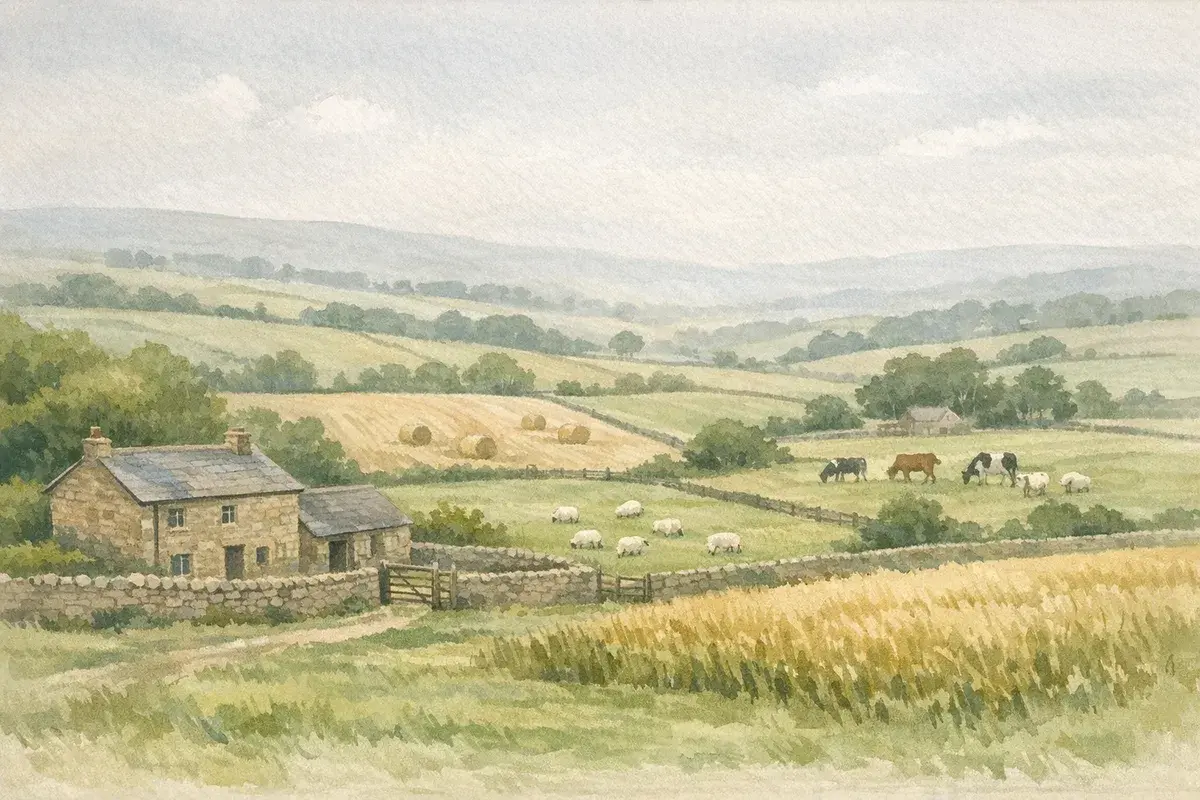
If you're hunting for the best and most versatile agricultural land, you're not just buying acres, you're buying options. Options to switch from cereals to grazing when margins swing. Options to add storage, polytunnels, or a yard that actually works. Options to stay productive through wetter winters, tighter input rules, and unpredictable markets.
In UK terms, "best" is often shorthand for high-performing soils and strong cropping potential. But "versatile" is the more interesting word. Versatile land earns its keep in more than one way, and it keeps doing so when the weather turns, when schemes change, or when your business plan evolves. This guide shows you how to spot that kind of land, how to pressure-test it before you commit, and how to structure a deal so you don't pay a premium for problems you could've seen coming.
What “Best” And “Versatile” Mean In Practice
People talk about "the best land" as if it's one thing. In reality, the best and most versatile agricultural land is the land that fits your system now and still makes sense if you need to pivot.
In the UK, that usually means land with:
- Reliable output (not just in a good year)
- Operational flexibility (field layout, access, water, buildings)
- Resilience to wet winters, dry springs, and shifting compliance
- Few nasty surprises (title issues, designations, restrictive covenants)
If you only chase headline grades or a romantic postcode, you can end up with land that photographs well but boxes you in.
Balancing Productivity, Flexibility, And Resilience
Productivity is measurable: yields, stocking rates, gross margins, or forage output.
Flexibility is practical: can you run different enterprises without major rework? Can you bring machinery in, store crops, or graze rotationally without fighting the layout?
Resilience is the quiet winner. The best land doesn't just grow well, it copes:
- Soils that drain and carry (so you're not losing weeks to waterlogging)
- Enough moisture-holding capacity (so drought doesn't wipe out performance)
- Sensible exposure and altitude (so the growing season is usable, not theoretical)
Sometimes the "best" land for you is Grade 2 with good access, water, and a yard, rather than a small block of top-grade soil with awkward rights of way and no infrastructure.
Common Use-Cases: Arable, Grazing, Mixed, Horticulture, And Diversification
Versatility shows up differently depending on what you want the land to do.
- Arable: you want soil workability, field size, decent road access, and low risk of harvest delays.
- Grazing and livestock: you want fencing potential, water in the right places, wintering options, and ground that doesn't poach badly.
- Mixed farming: you want a combination, land that can carry grass but also take a rotation when it pays.
- Horticulture and specialist cropping: you'll care intensely about soil structure, irrigation, frost pockets, and local labour/logistics.
- Diversification: you're looking at a wider "asset stack", buildings, location, access, planning realities, and how restrictive designations might be.
The trick is to define what "versatile" means for your business, then test land against that definition, rather than buying a label and hoping it behaves.
What Makes Land Truly Versatile: The Core Criteria
If you want the best and most versatile agricultural land, you need to think like both a farmer and a risk manager. Productivity matters, but so do the features that let you change tack.
Soils And Land Capability (Texture, Depth, Drainage, Organic Matter)
Start with soils, because they dictate almost everything else.
- Texture: loams and clay loams often give that sweet spot, workable enough, but with decent water-holding.
- Depth: shallow soils over rock can cap yields and limit cropping choices.
- Drainage: naturally free-draining soils reduce establishment risk and keep grazing windows open.
- Organic matter and structure: they're not just "soil health" buzzwords: they affect trafficability, drought tolerance, and nutrient efficiency.
If you want to get your head around how capability is assessed in the UK (and why two fields in the same parish can behave completely differently), it's worth reading AgLand's guide to agricultural land capability and the deeper jump into soil quality on agricultural land. Both help you translate soil talk into real-world decisions.
Climate, Altitude, Aspect, And Growing Season
Two bits of land can share the same soil series and still perform differently because of climate.
- Altitude and exposure shorten the growing season and increase risk at drilling and harvest.
- Aspect can make a field earlier or later, south-facing slopes can be a gift: north-facing can stay cold and slow.
- Local rainfall patterns matter more than the county average.
Versatile land tends to be land that gives you more "workable days", days you can travel, spray, drill, graze, or harvest without making a mess.
Water: Availability, Abstraction, Irrigation Potential, And Flood Risk
Water is a deal-maker (or breaker), especially if you're thinking beyond standard combinable crops.
- Mains water to a yard is different from reliable stock water across parcels.
- Boreholes, springs, and surface water can be valuable, but rights and quality need checking.
- Abstraction is regulated and can be constrained by catchment pressures and licensing conditions.
- Flood risk isn't only about dramatic river flooding: surface water and "nuisance" flooding can quietly ruin cropping windows.
If irrigation is part of your plan, now or later, treat water like infrastructure. If it's uncertain, discount the land accordingly.
Access, Field Size, Shape, And Infrastructure (Tracks, Power, Buildings)
This is where "versatile" becomes very physical.
- Access: do you have proper gateways, visibility, and weight limits? A beautiful block with a tight village pinch point can be a daily headache.
- Field size and shape: big enough for efficient modern kit, but not so huge you can't manage variability.
- Tracks and yard setup: winter access matters: so does turning space.
- Power and connectivity: if you ever want cold stores, grain drying, workshops, or even agri-tech monitoring, capacity matters.
- Buildings: the presence of a decent shed isn't just a convenience, it can change what the land is capable of as a business.
Constraints And Designations: Rights Of Way, Easements, SSSI, AONB, NVZ
Constraints don't automatically make land "bad". They just narrow your options, and can add management cost.
Common UK constraints to look for:
- Public rights of way (and where they run through yards/fields)
- Easements and wayleaves (pipes, pylons, fibre routes)
- SSSI impacts on farming operations and consents
- AONB sensitivity for new buildings or track works
- NVZ compliance implications for livestock systems and storage
If your long-term plan includes development of any kind (even agricultural buildings), constraints deserve early attention. A good starting point is AgLand's explainer on agricultural land development potential, which sets out what "potential" realistically means in rural UK deals.
How To Assess Land Quality Before You Commit
The best and most versatile agricultural land is rarely the land with the fanciest brochure. It's the land that stands up to scrutiny, on paper and under your boots.
Reading Soil And Mapping Data (LandIS, DEFRA, BGS, Flood Maps)
Do your desktop work first. It's cheaper to reject a block at your desk than after you've paid for surveys.
Useful UK sources and what they're good for:
- LandIS: soil series, texture, drainage class indicators.
- DEFRA mapping and Rural Payments context: basic land parcel context, environmental layers, and scheme considerations.
- British Geological Survey (BGS): geology and drift, helpful for understanding drainage, stone content, and groundwater behaviour.
- Environment Agency flood maps (England) / equivalents in devolved nations: river and surface water risk.
To put agricultural grades into context (and avoid mixing up "good land" with "land that's easy to farm"), use a proper reference like AgLand's agricultural land classification map explainer.
On-Site Checks That Matter: Compaction, Wet Spots, Weeds, And Boundaries
A viewing should feel a bit like an investigation.
Things worth checking in person:
- Compaction: look for poor rooting, standing water after rain, and visible pan layers in a spade test.
- Wet spots: persistent rushes, sedges, or "always soft" headlands can signal drainage issues.
- Weed burden: black-grass pressure in arable areas, docks and thistles in grass, these are management costs you inherit.
- Boundaries: are fences/hedges stock-proof? Are ditches functional? Any signs of encroachment?
- Access in the real world: try it with your eyes open, tight turns, poor visibility, soft verges.
And don't ignore the neighbour factor. If boundary lines are "a bit vague" or access relies on goodwill, you want that nailed down before you exchange.
Cropping History, Inputs, And Performance Evidence (Yields, Grazing Days)
Versatile land usually has a track record of performing across years.
Ask for evidence, not just reassurance:
- Typical yields (and variability) by crop
- Rotation history and cultivations
- Lime and nutrient applications
- Drainage works and maintenance history
- For grass: grazing days, silage cuts, reseed intervals, and stocking policy
A block might be capable of great output, but if it's been mined for years (low organic matter, poor structure), you'll pay to rebuild it.
Getting The Right Professionals Involved (Agent, Surveyor, Agronomist)
This is one area where DIY confidence can get expensive.
A good team can include:
- A specialist land agent to sense-check pricing, local demand, and deal terms
- A rural surveyor for boundaries, access, rights, and practical constraints
- An agronomist or soil consultant to interpret what the land can do and what it will cost to get it there
- A solicitor experienced in rural property (not a generalist learning on the job)
Agents we work with will often say the same thing: the best buyers aren't the quickest, they're the most systematic.
Planning And Legal Factors That Make Or Break Versatility
Land can look endlessly flexible, right up until a title plan, a tenancy, or a planning constraint tells you otherwise.
Tenure And Title: Freehold, FBT, Grazing Licences, And Wayleaves
Start by getting clear on what you're actually buying control of.
- Freehold with vacant possession is the cleanest form of control, but check for occupational rights and any informal arrangements.
- Farm Business Tenancies (FBTs) can be a great route in, but read the repairing obligations, rent review terms, and any restrictions on cropping or environmental options.
- Grazing licences can be useful and flexible, but they must be properly documented: "handshake" arrangements can muddy the waters.
- Wayleaves and easements: pylons, water mains, private rights of way, these can affect development, cultivation, and value.
If you're buying in England, AgLand's practical overview of buying and managing agricultural land in England is a helpful reference point for the typical risks and due diligence steps you'll be expected to cover.
Permitted Development Rights And Prior Approvals (And Their Limits)
Permitted development rights can add genuine versatility, think new farm buildings, tracks, and certain changes of use. But they're not a free pass.
Key realities:
- Many agricultural PDR routes under the General Permitted Development Order 2015 require prior notification/prior approval.
- You still need to respect siting, design, highways, and environmental constraints.
- Designations (AONB, SSSI proximity, flood risk) can complicate or slow things down.
Treat PDR as an opportunity, not a guarantee. If your business plan relies on a new shed or a dwelling, you need proper planning advice early.
Overage, Clawback, Uplift Clauses, And What They Mean For You
Overage clauses are common where vendors suspect "hope value".
What to watch:
- Trigger events: planning permission, sale, change of use, even certain scheme entries.
- Duration: 10–30 years isn't unusual.
- Calculation method: is it on uplift in value, sale proceeds, or profit?
Overage doesn't always kill a deal, but it can absolutely reduce versatility, because it limits what you'll do with the land later.
Covenants, Agricultural Ties, And Development Constraints
Restrictive covenants can stop you doing things you assumed were normal:
- limits on buildings
- limits on non-agricultural uses
- controls on access points
Agricultural occupancy conditions ("ag ties") are more typical on dwellings than on bare land, but if a house is part of the deal they can affect lending, resale, and staffing arrangements.
Bottom line: if versatility is your goal, legal paperwork is part of the soil test. Ignore it and you might buy a set of constraints wearing a field boundary.
Environmental Schemes, Subsidies, And Natural Capital: Opportunity Or Restriction?
The UK market has moved beyond a simple production-versus-environment debate. Plenty of the most versatile agricultural land now supports blended income: cropping or livestock plus scheme payments, habitat creation, or natural capital agreements.
But you need to be clear-eyed about permanence, obligations, and knock-on effects for value and lending.
ELM Options And How They Interact With Production
In England, the Environmental Land Management (ELM) offer is designed to be integrated with farming, at least in theory.
In practice, suitability depends on:
- how fragmented the parcel is
- how strong your baseline production margins are
- whether options interfere with operations (access, headlands, spray patterns)
The most versatile blocks are often those where you can place options on awkward corners, wet patches, or low-yielding areas, without undermining the main enterprise.
Biodiversity Net Gain, Carbon, And Habitat Projects: Risk, Reward, And Permanence
Natural capital can add a new layer of value, but it can also hard-code land into a single direction.
Consider:
- Permanence: some carbon/habitat arrangements can lock you in for decades.
- Additionality and evidence: you may need baselining and monitoring.
- Impact on tax and reliefs: the interaction with APR/BPR and "character appropriate" use is fact-specific and worth specialist advice.
If you're buying "versatile" land, be cautious about taking on obligations that reduce your ability to farm, develop, or sell later without penalties.
Public Access And Stewardship: Managing Liability And Practicality
Public access can be manageable, but it changes the day-to-day reality:
- more gates and signage
- risk management around livestock
- litter and biosecurity issues
If rights of way already exist, you'll be managing access anyway. The question is whether additional permissive access is worth it for the payment and reputational benefit, and whether it conflicts with how you actually want to run the place.
Valuation And Deal Structure For High-Quality, Flexible Land
When you're targeting the best and most versatile agricultural land, you're usually operating in the most competitive slice of the market. That means your valuation needs to be calm, evidence-led, and tied to your plan.
What Drives Price: Location, Block Size, Soil, Water, And Competition
Price is rarely about one factor. It's a stack.
Typically, the strongest drivers are:
- Location (local demand, neighbour buyers, lifestyle interest)
- Block size and shape (efficient operations and "proper" scale)
- Soil and capability (workability and yield reliability)
- Water (especially where irrigation or specialist cropping is plausible)
- Competition (rollover buyers, expansionists, investors)
If you're benchmarking truly top-end arable ground, it helps to understand how the market treats prime grades and scarcity. AgLand's pieces on Grade 1 agricultural land in the UK and what Grade 1 land tends to cost give you context for why "best" commands a premium, and when that premium stops making sense.
Comparable Evidence And What "Hope Value" Looks Like In Rural Deals
Comparable evidence in rural deals can be messy:
- each parcel has different access, water, and constraints
- deal terms (vacant possession vs tenanted) change the number dramatically
- non-farming buyers sometimes push values beyond farming return logic
"Hope value" is the extra someone pays for a chance, maybe a future building plot, maybe diversification potential, maybe long-term strategic value next to their home farm.
You don't have to avoid hope value, but you should:
- define what you're hoping for (specifically)
- stress-test how likely it is
- cap your downside if it doesn't materialise
Tax And Reliefs To Discuss Early (IHT, APR, BPR, CGT, SDLT)
Tax isn't a footnote, it can change what you can afford and how you structure ownership.
Topics to raise early with your accountant/tax adviser:
- IHT planning and how Agricultural Property Relief (APR) and Business Property Relief (BPR) may (or may not) apply
- Capital Gains Tax (CGT) exposure and reliefs where relevant
- SDLT position based on the property mix (land, buildings, residential elements)
The right advice is highly situation-dependent. The wrong assumption can be expensive and hard to unwind.
Funding And Timescales: Bridging, Mortgageability, And Conditional Contracts
High-quality land moves quickly, yet the best deals are still the ones where you keep control of risk.
Consider:
- Mortgageability: access, tenure, services, and rights can affect lender appetite.
- Bridging: useful for time-critical purchases, but price the risk properly.
- Conditional contracts and options: sometimes sensible where planning potential is real but uncertain.
Also be realistic about timelines. Rural transactions often take longer than people expect because there's more to check, and more that can go wrong.
How To Find The Best And Most Versatile Agricultural Land In The UK
Finding the best and most versatile agricultural land isn't about refreshing listings every lunchtime (though we know it's tempting). It's about building a repeatable system, and having the local intelligence to act when the right block appears.
Building A Search Strategy: Radius, Lot Size, Soil Type, And Infrastructure Filters
Start with your non-negotiables, then add "nice-to-haves". For versatility, your filters usually include:
- Minimum block size (and whether you'll accept split parcels)
- Access standards (road type, gateways, track condition)
- Water presence (mains, trough supply, irrigation potential)
- Existing buildings (or realistic potential for them)
- Soil and capability indicators (and whether you'll tolerate constraints)
One practical move is to decide what you won't compromise on. For some buyers it's drainage and workable days. For others it's a shed and three-phase power. Write it down before you view anything.
If you want a structured starting point for sourcing opportunities, use AgLand's updated guide on finding agricultural land for sale and then narrow the shortlist using capability and constraint checks.
Off-Market And Local Intelligence: Neighbours, Agents, And Auction Catalogues
A lot of the best land is either sold quietly or is effectively "pre-sold" via local networks.
Ways you can improve your odds:
- tell neighbouring owners what you're looking for (and prove you can proceed)
- build relationships with specialist rural agents and be clear on your buying criteria
- watch auction catalogues for odd lots, amenity parcels, or boundary pieces that can improve an existing unit
The buyers who win consistently are the ones who are credible. They have finance lined up, professionals ready, and decision-making authority.
Due Diligence Checklist Before Exchange
Before you exchange, you want a clean, evidence-backed picture of what you're buying.
A practical checklist:
- Title, boundaries, access, and rights (including ransom strips and third-party rights)
- Tenancies/licences and vacant possession terms
- Wayleaves, easements, and service routes
- Designations and constraints (SSSI/AONB/rights of way/NVZ considerations)
- Flood risk and drainage condition
- Soil condition: compaction, structure, pH, organic matter indicators
- Water: sources, reliability, abstraction position where relevant
- Buildings: consents, condition, services, and compliance
- Environmental scheme obligations (existing agreements, management prescriptions)
- Valuation rationale: comparables, any hope value, and deal terms
If anything feels fuzzy, slow down. The best and most versatile agricultural land is rarely a bargain once you factor in hidden constraints.
Conclusion
The best and most versatile agricultural land in the UK isn't defined by a single grade, a single crop, or a single number per acre. It's land that gives you choices, productive soils, workable access, manageable constraints, and enough resilience to keep performing when conditions shift.
If you take one thing from this: treat versatility as something you can test. Use mapping data, on-the-ground inspection, and the right professional team to confirm what the land can do, what it can't, and what it will cost to unlock its potential. Then buy with a deal structure that protects you from optimism.
Disclaimer: AgLand.co.uk is a UK agricultural land and rural property matching service, where buyers register what they are looking for and owners advertise directly to the buyers who match, and a rural resource hub. Nothing in this text is intended as legal, financial, tax, or investment advice. You should carry out your own due diligence and seek independent advice from appropriately qualified professionals (for example, rural surveyors, agricultural valuers, solicitors, accountants/tax advisers, agronomists, and planning consultants) before making decisions or entering into any transaction.