
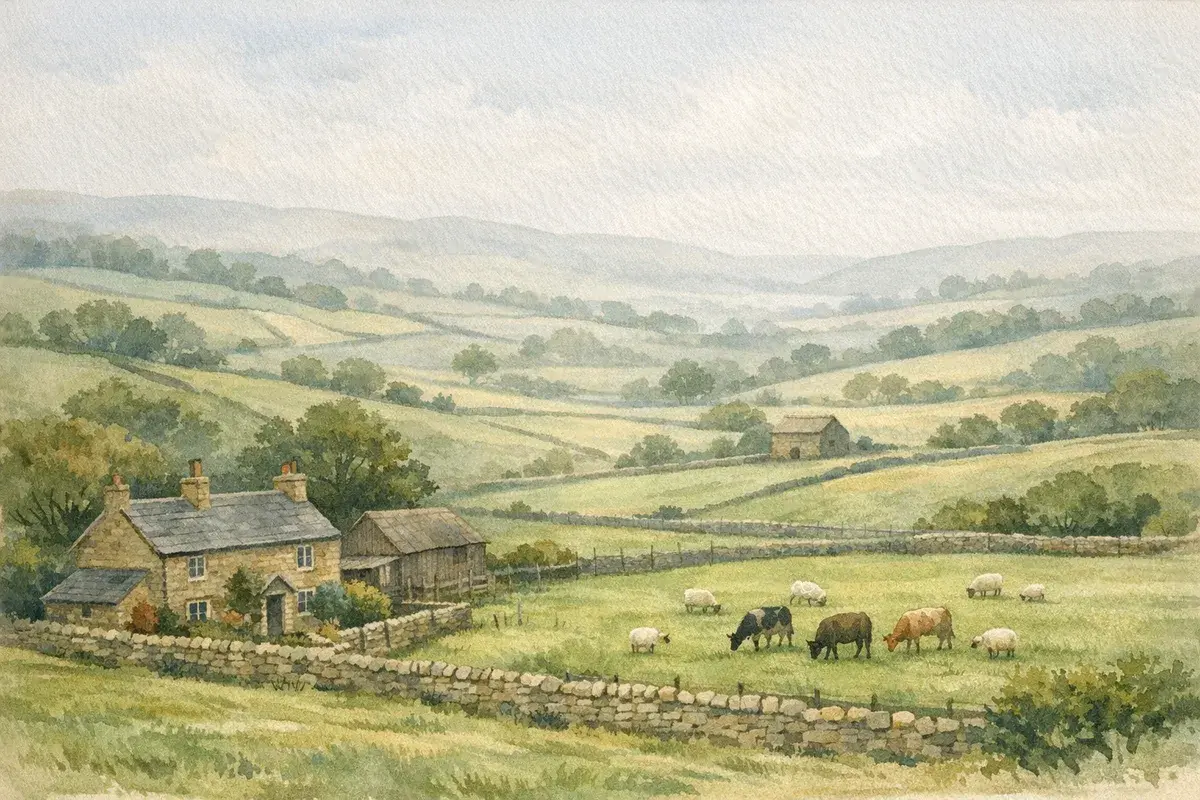
You find the perfect farmhouse. Big skies, decent sheds, a yard that actually works. Then your solicitor drops the line: "It's subject to an Agricultural Occupancy Condition." Suddenly the dream feels… conditional.
An agricultural occupancy condition removal can be worth real money and real flexibility. But it isn't a box-ticking exercise, and it can backfire if you underestimate what councils want to see, how valuers respond, or what it means for your wider farm and tax position.
This guide cuts through the UK-specific planning reality: what an AOC is, when removal makes sense, the routes available, the marketing evidence test, and the due diligence you need if you're buying or selling.
What An Agricultural Occupancy Condition Is (And Why It Exists)
An Agricultural Occupancy Condition (often shortened to AOC) is a planning condition attached to a dwelling in the countryside that restricts who can live there. In plain English: the local planning authority is trying to make sure the home stays available for someone who genuinely needs to live in the area for agricultural (or sometimes wider rural) work.
Why? Because unrestricted new housing in open countryside is normally resisted in UK planning policy. Where a new rural dwelling is allowed, it's usually justified on functional or operational grounds (for example, livestock needing 24/7 supervision). The AOC is the mechanism that stops that "exception" turning into a general-market house.
AOCs also protect local affordability for rural workers. Without the tie, a well-located farmhouse can be snapped up as a lifestyle purchase, pushing prices beyond the reach of the people the dwelling was originally permitted to serve.
Common Types: AOC, Agricultural Tie, Local Needs, And Section 106 Clauses
People use "agricultural tie" as a catch-all. In practice, restrictions come in a few common flavours:
- Standard AOC / agricultural tie condition (planning condition on the decision notice). Typically says occupation is limited to "a person solely or mainly employed, or last employed, in agriculture in the locality" (wording varies).
- Forestry or rural worker tie. Similar, but includes forestry, equestrian operations, or other land-based rural enterprises depending on the permission.
- Local needs / rural exception occupancy. More common with affordable housing schemes: often links to local connection criteria.
- Section 106 obligations (S106). A legal agreement rather than a condition. These can include occupancy restrictions, cascade arrangements, nomination rights, or mortgagee-in-possession clauses.
A practical point: how it's secured matters. A condition is usually dealt with via planning routes like Section 73, whereas a S106 is modified/discharged via legal and statutory processes.
How Councils Interpret "Employed In Agriculture" And "Last Resided" Tests
Most disputes aren't about whether farming exists: they're about definitions.
Councils commonly look at:
- What counts as "agriculture": broadly aligned with the statutory definition (agriculture includes horticulture, dairy farming, livestock breeding and keeping, and the use of land as grazing land). But edge cases, contracting, agri-tourism, livery, equestrian, diversification, can get murky.
- "Solely or mainly" employed: if you split time between a farm role and another job, the council may want evidence your principal employment is the agricultural one.
- "In the locality": this isn't always your parish. Some councils treat "locality" as a reasonable travel area: others tie it to specific settlements.
- "Last employed" / "last resided": wording sometimes allows someone who used to work in agriculture, or a surviving spouse/dependant, to qualify. Councils often ask for a clear timeline and supporting paperwork.
If you're dealing with a historic tie (1970s/80s conditions are common), assume the wording will be idiosyncratic, and that tiny differences can drive big outcomes. Get the exact condition copied from the decision notice early, not half-way through a sale.
When Removing An AOC Makes Sense (And When It Backfires)
An agricultural occupancy condition removal is usually driven by one of three motives: you want to sell to a wider market, you want to refinance, or you want to regularise a long-standing situation (for instance, occupation that doesn't meet the tie).
But "remove it and the value jumps" is only half the story. The smarter question is: what problem are you actually solving, and what new risks do you create?
Impact On Value, Mortgageability, Resale Market, And Insurance
In many areas, an AOC can reduce market value materially because it shrinks the buyer pool. How much depends on location, the dwelling, and local demand for tied homes.
What we see in practice:
- Value uplift can be significant, especially where the house is attractive to non-farming buyers (schools, commuter access, views). But uplift isn't guaranteed: some properties are functionally "farm dwellings" and remain niche even without the tie.
- Mortgageability often improves once a property is unrestricted. With an AOC, mainstream lenders may be cautious, and valuers may apply a discount and stress-test demand.
- Resale market changes. Remove the tie and you can appeal to lifestyle buyers, but you may also lose appeal to farm buyers who liked the "package" as a working unit.
- Insurance can get more straightforward, but don't assume it's automatic. If the dwelling sits within a working yard (machinery, fuel, public access), insurers may still rate it as a higher-risk rural property.
A key planning reality: if the dwelling was only ever justified because of agricultural need, the council will look hard at whether the holding still needs it. If the enterprise is still active, you're effectively arguing: "the home is no longer required for the purpose it was permitted." That can be a harder sell than people expect.
Tax And Business Implications To Flag Early (CGT, IHT, APR/BPR)
Planning is only one axis. Before you push the button on an agricultural occupancy condition removal, flag the tax and business angle with your accountant or tax adviser, early.
Areas that commonly matter in the UK:
- Capital Gains Tax (CGT): if removing the tie increases value, that can affect future CGT calculations on disposal. Timing and ownership structure matter.
- Inheritance Tax (IHT) reliefs: Agricultural Property Relief (APR) and Business Property Relief (BPR) depend on facts, use, occupation, business activity, and sometimes whether property is character-appropriate to the farming operation. Changing the status and use of a dwelling can have knock-on effects.
- Business strategy: if the tied house supports staff accommodation, succession planning, or a contract-farming arrangement, removing the tie might make operational life harder later.
And one more thing people miss: if you're quietly relying on the tied dwelling as evidence of an agricultural operation (for other planning, grants, or compliance contexts), changing its status can subtly alter how your holding is perceived.
If your longer-term plan includes diversification or development, it's worth understanding the wider planning context too, AgLand's guide to agricultural land development potential is a good primer on how planners and markets think about "future upside" in rural assets.
Routes To Remove Or Vary An Agricultural Occupancy Condition
There isn't one universal "AOC removal form". The correct route depends on whether the restriction is a planning condition or part of a legal agreement, and what outcome you want (full removal vs a wider rural worker tie vs a cascade clause).
Full Removal Via Planning Application (Section 73 Or Fresh Permission)
For conditions attached to a planning permission, the most common route is a Section 73 application (under the Town and Country Planning Act 1990) to vary or remove conditions.
- Use Section 73 when: you're changing the condition wording, removing it, or substituting a wider occupancy definition.
- Fresh permission (a new full application) might be used if the council argues the change goes beyond a condition tweak, or where the original permission is old/complex.
Important nuance: a successful Section 73 doesn't rewrite the past: it creates a new permission that sits alongside the original. That's why condition wording and the "list of conditions" need careful checking.
If your bigger picture is moving from agricultural to unrestricted residential occupation, you'll often find the tie conversation overlaps with broader questions about converting rural buildings or changing planning status, see AgLand's explainer on agricultural to residential planning permission for the wider context.
Discharge Or Variation Of A Section 106 Obligation
If the restriction is in a Section 106 agreement, you're in legal-agreement territory.
You may be looking at:
- A deed of variation (agreed with the council), or
- An application to modify or discharge the obligation (often following a statutory process where you must show it's no longer serving a useful purpose, or it can be modified without undermining its purpose).
S106 variations can take longer than people expect because they require legal drafting, internal sign-off, and sometimes committee authority. Budget both time and legal fees accordingly.
Lawful Development And Certificate Options: What They Can (And Can't) Do
Sometimes owners ask: "Can I just get a certificate to confirm the tie doesn't apply?"
A Lawful Development Certificate (LDC) can be powerful, but only in the right scenario.
What it can do:
- Confirm a use is lawful due to the passage of time (based on evidence) if there has been a breach and the relevant immunity period applies.
What it can't do:
- Magically remove a condition because it's inconvenient.
- Replace the need for a proper planning case where the tie is still actively enforceable.
LDC evidence standards are strict. You're typically into statutory declarations, bills, council tax records, electoral roll, tenancy agreements, and corroboration. If you're contemplating this route, treat it like preparing for a courtroom, because in a sense, you are.
Proving The Tie Is No Longer Needed: The Marketing And Evidence Test
If you hear one phrase in almost every AOC removal discussion, it's "the marketing test". Councils want to see that the property has been properly offered to eligible occupiers at a realistic price, and that there genuinely isn't demand.
It's not about ticking a 12-month box. It's about credibility.
The Typical "12-Month Marketing" Expectation And What "Properly Marketed" Means
Many local planning authorities expect around 12 months of active marketing. Sometimes it's 6 months: sometimes longer. The point is sustained exposure through appropriate channels.
"Properly marketed" usually means:
- Price reflects the restriction: you can't market at near-open-market value and then claim "no one wanted it."
- A specialist agent who understands tied properties and can evidence demand in your area.
- Clear wording in particulars that explains the occupancy restriction accurately.
- Reasonable viewing access and normal sale terms.
Marketing strategy sits alongside how the land and holding are presented. For example, if the tie is linked to a holding with poor land quality, buyers' appetite may be shaped by what the land can realistically do, AgLand's guide to agricultural land capability can help you articulate that honestly (and avoid overselling).
Evidence Pack Checklist: Price, Agent Strategy, Enquiries, Refusals, And Viewing Logs
If you want your application to move smoothly, build an evidence pack as you go. Don't try to recreate it after the fact.
A robust pack often includes:
- Agent's instruction letter and rationale for pricing (including comparable tied sales where possible)
- Full sales particulars (every version) and a record of where it was advertised
- Website and brochure screenshots over time (showing dates)
- Enquiry log: who enquired, when, what their circumstances were, and why they did/didn't qualify
- Viewing log: dates, feedback, follow-up actions
- Offers received (if any) and reasons for rejection
- Evidence of flexibility: willingness to sell, let, or consider different tenures (where relevant)
If the property is part of a bigger rural package, be careful about bundling it in a way that makes it unbuyable. Marketing a tied house with 150 acres might sound neat, but if eligible rural workers in your locality typically buy 5–20 acres, you've accidentally engineered "no demand".
Avoiding Pitfalls: Overpricing, Wrong Channels, Restrictive Terms, And Incomplete Records
Most failed AOC removals fail on the basics.
Common pitfalls include:
- Overpricing: the number one killer. If you're serious about an agricultural occupancy condition removal, you need pricing that reflects the restriction, not your end goal.
- Wrong channels: marketing through generic residential routes can miss the eligible pool. Councils notice.
- Restrictive sale terms: refusing mortgages, demanding quick completion, excluding normal enquiries, or limiting viewings can look like you're trying to "prove" failure.
- Thin evidence: a vague letter saying "we marketed it and no one wanted it" won't cut it.
One subtle pitfall: if you're also pursuing a planning change elsewhere on the holding, say a diversification use or a separate residential element, planners may view your AOC request through that lens. If you're contemplating any wider change of use of agricultural land, align your strategy so the council doesn't feel you're unpicking rural policy by stealth.
Planning Strategy: Building A Persuasive Case To The Local Authority
AOCs are policy tools. So you win by speaking the policy language, clearly, evidence-first, and without pretending the council's objective is silly.
The best applications we've seen have two things in common:
- they're honest about the site and its planning history, and
- they make it easy for the case officer to justify a recommendation.
Choosing Your Planning Argument: No Need, No Demand, Or Unreasonable Restriction
Most AOC variation/removal cases lean on one (or a blend) of these arguments:
- No functional need: the original justification no longer applies (for example, the associated enterprise has ceased, or the dwelling is no longer reasonably necessary).
- No demand: even if there's a theoretical policy desire to keep it tied, the market evidence shows it isn't working in practice.
- Unreasonable restriction: the condition is overly tight, outdated, or drafted so narrowly that it defeats reasonable occupation.
Be strategic. If the holding is still active and you're still farming, "no need" may be a tougher argument unless you can demonstrate a changed operational reality. In that scenario, councils are sometimes more open to variation (wider rural worker criteria, cascade clauses) than full removal.
Reports That Strengthen Applications: Rural Housing Need, Farm Viability, And Functional Need
You don't always need a stack of reports, but the right one can change the temperature of a decision.
Common supporting documents include:
- Rural housing need assessment: helps where the council claims there's strong demand for tied accommodation. Sometimes it reveals the opposite, or that need is better met through different stock.
- Farm viability appraisal: useful if you're arguing the tie undermines the ability to sustain the enterprise or to sell as a viable unit.
- Functional need statement: if you're proposing a variation rather than removal, you may still need to show what type of worker the dwelling is intended to serve.
Where land quality is central to the story (for example, a marginal holding that's struggled to attract an eligible buyer), supporting context can help. Being able to reference objective land constraints, like whether it's predominantly low-grade, can make your narrative more credible. If relevant, AgLand's overview of Grade 5 agricultural land uses is a useful way to frame what "productive potential" realistically looks like on poorer land.
Typical Conditions After Variation: Wider Rural Worker Criteria And Cascade Clauses
Even when councils won't remove an AOC entirely, they may accept a more workable tie.
Typical outcomes include:
- Widened eligibility: from "agriculture only" to "rural worker" (including forestry or other land-based employment).
- Cascade clauses: a staged approach, first offer to agricultural workers, then other rural workers, then perhaps people with a local connection.
- Time-limited marketing requirements written into the new condition.
This is where negotiation matters. A well-drafted variation can unlock mortgageability and make a sale possible, even if you don't get full removal.
If your property's context includes land classification or you're presenting a whole-farm narrative, being able to point to mapped evidence can help structure your case and your marketing. For your own understanding, AgLand's agricultural land classification map guide is a good starting point for the UK framework and how it's commonly referenced.
Process, Costs, Timescales, And Likely Outcomes
You'll hear plenty of "it depends" with planning, and it's true. But AOC cases are predictable enough that you can plan sensibly if you treat it as a project.
Step-By-Step Timeline From Pre-App Advice To Decision And Appeal
A realistic pathway often looks like this:
- Get the paperwork: decision notice, approved plans, any S106, and the exact wording of the occupancy restriction.
- Initial feasibility: a planning consultant and a specialist agent sanity-check your prospects and the likely marketing expectations.
- Marketing period: commonly around 12 months (or whatever your council expects) with evidence gathering from day one.
- Pre-application advice (optional but often wise): you test the authority's appetite and evidence requirements. Some councils are blunt: that's helpful.
- Submit the application: Section 73 (or relevant route), with the marketing report, planning statement, and any supporting appraisals.
- Consultation and assessment: the case officer reviews, may ask questions, sometimes seeks internal housing input.
- Decision: approval, approval with revised condition wording, or refusal.
- Appeal (if needed): if refused, you can consider appeal routes (typically via the Planning Inspectorate for England: Wales has its own arrangements, Scotland differs again). Appeals are evidence-heavy and take time.
If you're living in breach of the tie while you run this process, get advice. Councils can take enforcement action, and a live breach can complicate sales, mortgages, and your negotiating position.
Fees And Professional Team: Planning Consultant, Agent, Surveyor, And Legal Support
Budgeting is easier if you assume four core inputs:
- Planning consultant: to shape the argument, manage the application, and respond to case officer queries.
- Specialist rural agent: to run the marketing exercise credibly and produce the marketing report.
- Surveyor/valuer: to advise on restricted vs unrestricted value, and to sense-check pricing.
- Solicitor: essential if there's a S106, and helpful if you're selling during the process (conditional contracts, overage, title points).
Costs vary widely by region and complexity. The expensive mistakes aren't usually professional fees, they're the cost of running a weak marketing campaign for a year, then being told it doesn't count.
What Happens If You're Refused: Appeals, Risks, And Enforcement Considerations
A refusal isn't necessarily the end. But it should trigger a strategic review.
Ask:
- Did you fail on evidence (marketing, price realism, logs), or on policy (council insists need remains)?
- Is a variation (wider tie) more achievable than full removal?
- Would a second marketing period with corrected pricing/channel strategy materially change the story?
Appeals can succeed, but you need to be comfortable with timeframes and uncertainty. And remember: if the property has been occupied in breach, enforcement risk doesn't pause just because you've lodged an application.
If you're actively running a holding and the dwelling sits within a working yard, be mindful of any "temporary" solutions you've put in place to support staff or operations while you sort the tie. Some structures and siting decisions can themselves have planning implications: AgLand's guide to temporary structures on agricultural land is worth reading if you're using cabins, portacabins, or similar as part of your interim plan.
Buying Or Selling A Property With An AOC: Due Diligence That Protects You
If you're buying or selling with an AOC in place, the biggest risk is assuming it's a minor footnote. It isn't. The tie affects who can buy, who can lend, what you can claim later, and how robust your exit options are.
Conveyancing Checks: Condition Wording, Breaches, Evidence, And Indemnities
Your conveyancing due diligence should go beyond "there is an AOC". You want clarity on:
- Exact wording and which permission it attaches to.
- Extent of land the tie relates to (sometimes it's linked to a defined holding).
- Evidence of compliance: who has occupied the dwelling, and whether they meet the criteria.
- Any historic breaches and whether they were remedied, ignored, or arguably immune.
Be cautious with the idea that an indemnity policy is a magic fix. Insurers don't cure planning breaches: they manage financial risk under specific terms, and policies can be invalidated if you tip off the council or if facts differ.
If you're buying, don't rely on the seller's casual assurance that "the council never checks". It only takes one complaint (often neighbour-led) to change the tone.
Lender And Valuer Reality: Deposits, Specialist Lending, And Who Will Finance
For many buyers, the real-world constraint is finance.
Typical lender/valuer considerations include:
- Restricted market value: valuers will assess on the basis of eligible buyer demand, not your personal intentions.
- Higher deposits: some lenders want more equity because they view resale as slower.
- Evidence of compliance: lenders may ask who will occupy and whether they qualify.
If you're selling, be ready for buyer drop-outs when lenders get nervous. A clear pack, condition wording, marketing history (if relevant), and a straightforward occupancy plan, can save months.
Negotiating The Deal: Price, Overages, Uplift, And Conditional Contracts
AOCs often push transactions into "structured deal" territory.
You may see:
- Conditional contracts: completion only happens if the AOC is removed/varied (or if a certificate is obtained). These can protect a buyer but also lock you into a long process.
- Overage / uplift clauses: if the buyer succeeds in removing the tie later, the seller receives an agreed share of the uplift. These need careful drafting.
- Price chips based on risk: if evidence is weak or compliance is uncertain, buyers will price in worst-case outcomes.
If you're an investor or buyer looking at future change, remember that "planning potential" isn't just about housing, it's also about the character of the holding, the land quality, and what's plausible under policy. A disciplined approach to research (including mapping, constraints, and local plan reading) will generally outperform optimism.
Whichever side you're on. Buyers tell AgLand what they're looking for and hear the moment something fits. Owners advertise straight to the buyers who already match, for one flat fee and no commission. Register as a buyer or check your matches.
Conclusion
Agricultural occupancy condition removal is rarely "one form and done". It's usually a blend of planning policy, credible marketing evidence, and a negotiation about what's reasonable in your locality.
If you're an owner, the best move you can make is to treat the process like an audit: get the wording, build the evidence as you go, and assemble the right professional team before you start spending time and money on the wrong strategy. If you're a buyer, be politely sceptical, dig into compliance, and make sure your lender is comfortable before you mentally move in.
Handled properly, you can unlock flexibility and value. Handled casually, you can end up with a refused application, a spooked buyer, or a planning headache that drags on for years.
Disclaimer: AgLand.co.uk is a UK agricultural land and rural property matching service, where buyers register what they are looking for and owners advertise directly to the buyers who match, and a rural resource hub. Nothing in this text is intended as legal, financial, tax, or investment advice. You should carry out your own due diligence and take independent advice from appropriately qualified professionals (for example, a planning consultant, solicitor, surveyor/valuer, and tax adviser) before making decisions.