
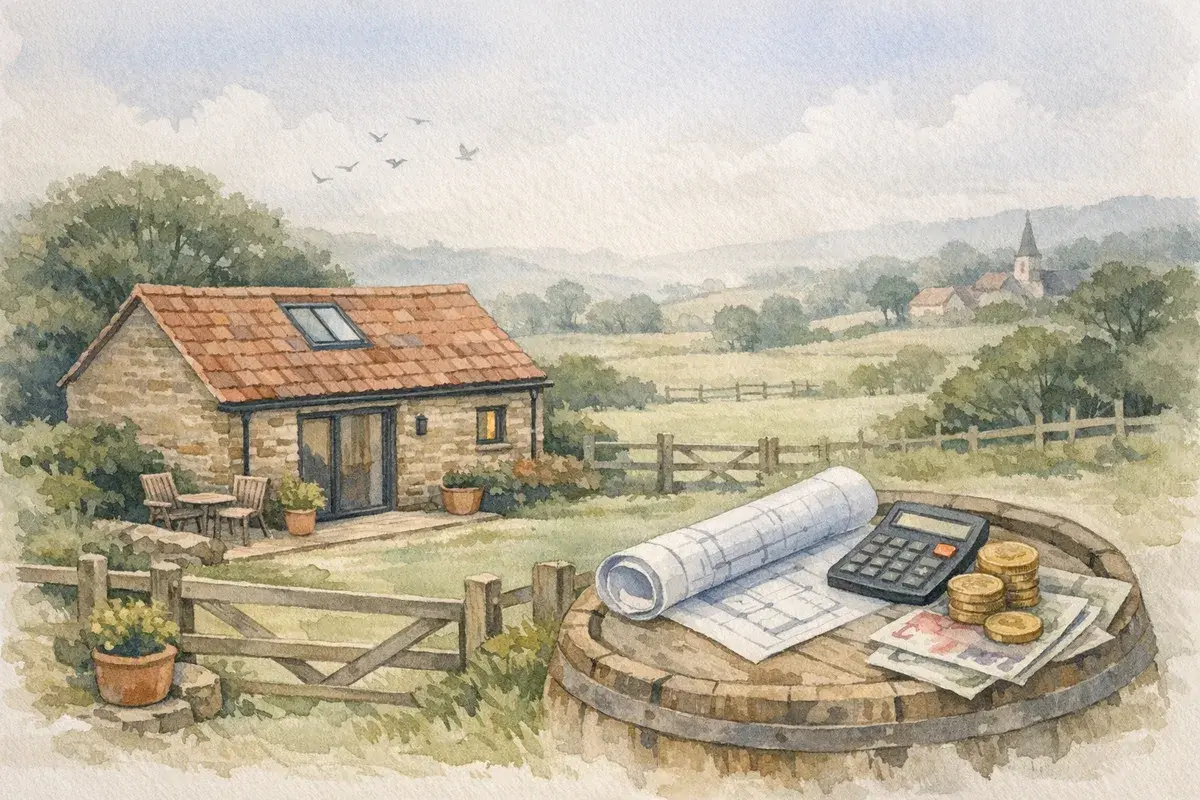
If you00000re asking about small barn conversion cost, the short answer is that budgets usually start around £150,000 and can climb well beyond £350,000 for a modest rural scheme, as of January/2026. The real figure depends on condition, access, planning status, services, and how much of the building you can genuinely keep.
That range sounds broad because it is. A small cowshed turned into a simple weekend bolthole in Lincolnshire will rarely cost the same as a stone threshing barn in the Cotswolds with listed-building sensitivities, tricky drainage, and a higher-end finish.
The best way to think about it is in layers: purchase or ownership costs, professional fees, consents, structural work, services, and fit-out. Miss one of those, and your budget can wobble fast. We'd argue that most expensive surprises come from the bits you can't see when standing in the doorway with a tape measure.
What Drives Small Barn Conversion Cost
The biggest cost driver is the barn itself. A sound agricultural shell with a decent roof, straight walls, and good access will always be cheaper to convert than a decaying structure with movement cracks, asbestos cement sheets, or no existing utility connections.
In practical terms, small barn conversion cost is shaped by five main factors. First is structural condition, because remedial steelwork, underpinning, or rebuilding can quickly eat into your budget. Second is planning status, since a conversion with existing consent is far less risky than one that still needs a positive planning outcome. Third is services, including water, electricity, foul drainage, and broadband. Fourth is specification, from basic rental-ready finishes to high-end oak joinery and large-format glazing. Fifth is location, because labour, material transport, and local contractor demand vary across the country.
How Barn Type Changes The Budget
Traditional stone or brick barns often cost more to make weather-tight if masonry repairs are extensive, but they can support strong resale values in desirable rural counties. Modern portal-frame sheds are often easier to open up, yet they may need more work to achieve a residential feel and comply with insulation targets.
As a rough guide, a straightforward small barn conversion in the East Midlands or parts of Wales can be noticeably cheaper than one in Surrey, Oxfordshire, or North Yorkshire, where labour demand and end values tend to push the numbers up.
- Sound shell: lower risk, faster build, fewer structural surprises.
- Weak roof or walls: higher remedial costs and programme delays.
- No services: bigger connection and infrastructure spend.
- Remote site: more transport, access, and contractor costs.
Typical Cost Breakdown For A Small Barn Conversion
Most owners want a usable budget before they speak to a contractor. Fair enough. The table below shows a sensible planning range for a small conversion of around 75 to 120 square metres, as of January/2026.
| Cost Area | Typical Range | What It Covers | Notes |
|---|---|---|---|
| Professional fees | £10,000 to £25,000 | Architect, structural engineer, surveys, planning support | Higher if the site is complex or listed |
| Structural works | £30,000 to £90,000 | Repairs, steelwork, foundations, roof stabilisation | Often the biggest unknown |
| Services and drainage | £15,000 to £50,000 | Water, electrics, heating, foul drainage, broadband | Septic tank or treatment plant may add more |
| Fit-out and finishes | £50,000 to £90,000 | Insulation, plastering, kitchens, bathrooms, joinery | Higher with premium specification |
That puts a realistic total at roughly £105,000 to £255,000 before land purchase, finance costs, and contingency. Add a sensible contingency of 10% to 15%, because rural projects nearly always throw up a few wrinkles.
If you are converting in a higher-value county, expect the upper end to move. A compact, well-finished barn in the South East may still cost similar to one in Derbyshire to build, but the land value, planning competition, and market expectation can all shift the financial picture.
Don00000t Forget The Andirect Costs
Some of the most important expenses never appear in the first contractor quote. You may need bat surveys, tree reports, ecological mitigation, access upgrades, temporary welfare, and legal work around rights of way or easements. Those items feel secondary until they stop the scheme progressing.
There is also VAT to think about. New-build elements and certain services can attract different treatment from repairs or conversions, so the tax position should be checked before work starts, not after the invoices land.
Planning Permission, Building Regs, And Hidden Rural Risks
Planning status can make or break the economics of a barn conversion. A structure with established consent, or one that already sits within a conversion-friendly policy area, is much easier to budget for than a barn on open farmland with uncertain residential prospects.
In England, the policy route often depends on whether the building qualifies under permitted development rights or needs full planning permission. In Wales and Scotland, the position can differ, and in protected landscapes like the Cotswolds, the Yorkshire Dales, or the South Downs, design standards and landscape impact assessments can be stricter. If the barn is listed, in a conservation area, or within the curtilage of heritage assets, costs can rise again.
Building regulations also matter. Even if planning is secured, the conversion still has to meet modern building regulations for insulation, fire safety, ventilation, drainage, structural loading, and energy performance. That can mean thicker wall build-ups, upgraded roofs, and careful detailing around old openings. We00000d argue this is where many first-time owners underestimate the true small barn conversion cost.
Common Rural Risks To Budget For
A good survey can identify some issues, but not all of them. Hidden ground conditions, wet rot, historic movement, and buried services are classic troublemakers on agricultural sites. Add in access problems for deliveries or cranes, and the site can become more expensive than the building suggests.
- Asbestos: common in older roof sheets and cladding.
- Flood risk: relevant on low-lying land in Norfolk, Somerset, and parts of Yorkshire.
- Ecology: bats, owls, and nesting birds can delay work seasonally.
- Access: narrow lanes and poor turning space increase logistics costs.
The smart move is to commission a detailed survey and ask contractors to price risk transparently. A cheap quote that ignores drainage or roof repairs is not cheap for long.
Regional Cost Variations Across The UK
Location changes both build cost and end value. A small barn conversion in Cornwall may face higher transport and labour costs, while one in Lancashire or parts of County Durham might benefit from more moderate contractor rates. In the South East, land values and finish expectations tend to be highest, which can make a solid conversion look expensive on paper but strong in resale terms.
County-level differences matter because the local market dictates what buyers will pay, and that affects your ceiling. In Oxfordshire, Gloucestershire, and parts of Somerset, a charming but compact barn can command a premium if it is well designed and close to commuter links. In more remote parts of Shropshire or Northumberland, the build may cost less, but final values may rely heavily on the quality of the rural setting and access to amenities.
Seasonal contractor availability also shifts quotes. Rural builders in spring and summer can be booked months ahead, especially where agricultural work competes for labour and machinery transport. That affects timing, and timing affects cash flow.
How To Judge Value Against Build Cost
The key question is not just what it costs to build, but what the finished property could be worth. If the completed barn is likely to sit comfortably above total development cost, the scheme may make sense. If the gap is narrow, the risk climbs quickly once contingencies, finance, and delays are factored in.
A tidy two-bedroom conversion in Herefordshire might look affordable to build, but if local demand is soft, your exit value could disappoint. By contrast, a similar-sized build in Gloucestershire or Kent may support a stronger end value if the design and setting are right.
How To Control Costs Without Cutting Corners
Good cost control starts before the first spade hits the ground. The most successful projects usually begin with a realistic appraisal of the barn, a proper structural survey, and an honest conversation about what the building can and cannot become.
Keep the layout simple. Open-plan living often suits barns because it uses the existing span efficiently and limits the amount of new structure. Reusing existing openings can also reduce masonry alterations, though you still need enough glazing for light and compliance. A modest specification, chosen carefully, can look elegant without drifting into budget creep.
It also helps to sequence decisions. Fix the envelope first, then the services, then the kitchen and bathroom levels. If you choose premium finishes too early, it becomes all too easy to overspend on things the market may not reward.
Practical Ways To Keep The Budget Tidy
- Start With A Survey: price the real condition, not the hopeful version.
- Protect A Contingency: keep at least 10% to 15% aside.
- Use Local Contractors: reduce transport and call-out costs where possible.
- Choose Simple Forms: fewer structural changes usually mean lower spend.
- Phase Non-Essentials: landscaping and extras can wait if cash is tight.
For agricultural owners, there is a broader strategic point too. A barn conversion is not just a building project, it is a land-use decision. The right scheme can improve an underused part of the holding, create family accommodation, or produce a saleable asset where the yard once had little economic use.
Conclusion
The true small barn conversion cost depends on the barn, the site, and the standard you want at the end. As of January/2026, a sensible working budget for many small UK conversions sits in the £150,000 to £350,000 bracket, with simpler schemes below that and more complex rural projects rising well above it.
Get the survey, planning, and services questions answered early, and you00000ll avoid the big surprises. In barn conversions, the cheapest quote is rarely the cheapest outcome, and that00000s the bit that matters most.
Disclaimer: AgLand.co.uk is a UK agricultural land and rural property matching service, where buyers register what they are looking for and owners advertise directly to the buyers who match, and a rural resource hub. Nothing in this text is intended as legal, financial, or investment advice. You should carry out your own due diligence and seek guidance from appropriately qualified professionals (for example, solicitors, land agents, surveyors, and financial advisors) for your specific circumstances.