
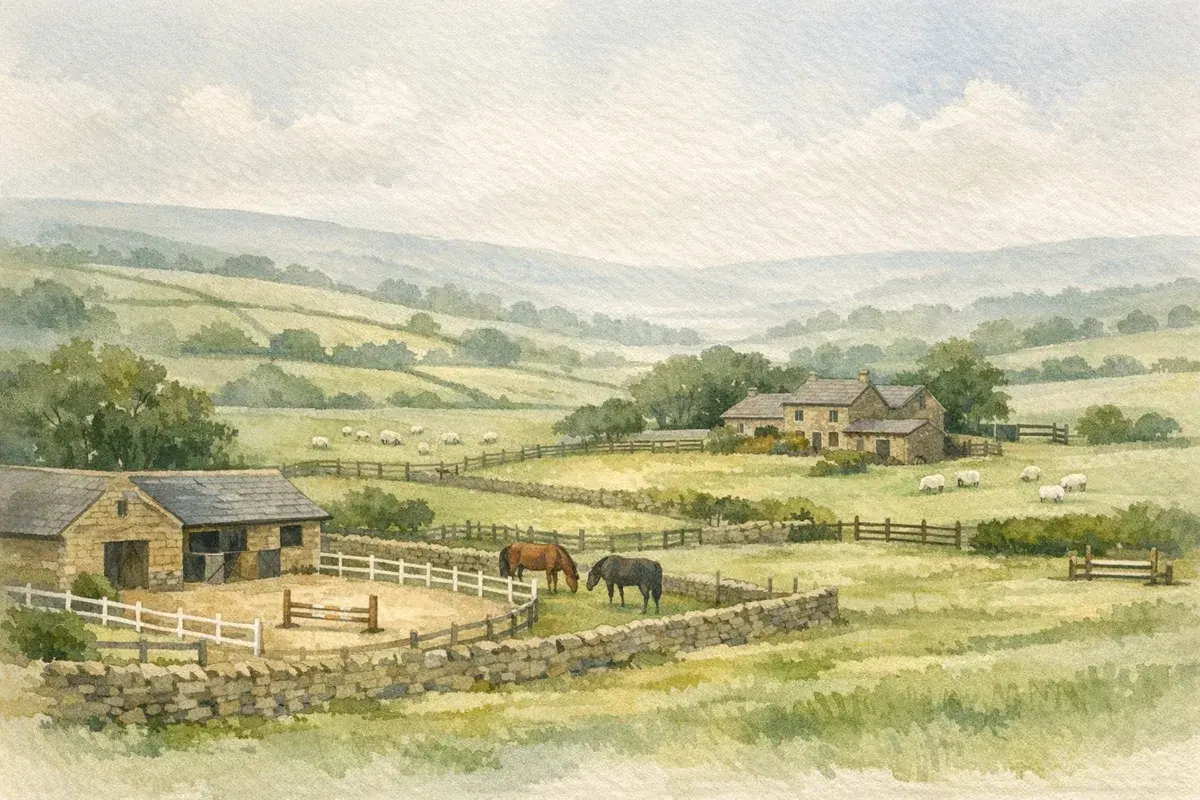
Equestrian property investment looks deceptively simple from the outside: buy a few acres, add stables, let a few boxes, and watch the rent roll in. In practice, you're buying into a niche where planning status can make or break value, neighbours can make or break operations, and winter drainage can make or break your reputation.
If you're approaching this as a UK landowner diversifying, a rural investor looking for resilient demand, or a buyer weighing "home with horses" against a commercial yard, the smartest move is to treat it like any other high-stakes asset: understand what drives income, where the hidden liabilities sit, and how you'll exit.
Below is a pragmatic, UK-only playbook: why demand persists, how the money is made, what to buy, and the due diligence that protects your return (and your sleep).
Why Equestrian Property Still Attracts UK Investors
Equestrian demand in the UK has a habit of staying put, even when other discretionary spending wobbles. Not because horses are "recession-proof" (they aren't), but because the market is driven by a mix of lifestyle necessity and semi-commercial need, and those two groups behave differently.
Lifestyle Demand Versus Commercial Demand
Lifestyle buyers are usually chasing control: your own stables, your own routine, your own grazing, no yard politics. They'll pay a premium for the right house-and-land package, especially within a sensible drive of employment centres, good schools, and established riding country.
Commercial demand is more numbers-led: local horse population, competition density, transport links for clients, and whether the site can run without constant firefighting. In many areas, small businesses (trainers, physios, saddle fitters, pony clubs) create an ecosystem that supports yards, if access and planning stack up.
For you as an investor, the key is this: lifestyle markets are often more liquid (more buyers), but yields can be thinner because you're paying for the house. Commercial yards can yield better on paper, but the operational risk and compliance burden ramps up quickly.
What Typically Drives Value: Land, Access, Planning, And Facilities
In UK equestrian property, the "value engine" is rarely the headline acreage alone. It's how usable, lawful, and marketable the whole setup is.
The usual value drivers:
- Land quality and usability: well-draining grazing, sensible paddock layout, and the ability to rest land. Heavy clay with poached gateways can turn "10 acres" into a winter liability.
- Access: safe entrances, visibility splays, lorry/trailer turning, and year-round surface. A perfect yard down a narrow lane with angry verges isn't perfect for long.
- Planning status and lawful use: what's genuinely permitted, what's been done informally, and what the council will tolerate.
- Facilities: stables that work (not just look nice), storage that stays dry, a reliable water supply, and, where the local market supports it, an arena.
If you're still at the "what should I be checking?" stage, it's worth reading AgLand's deeper guide on how to assess an equestrian purchase in the UK before you start booking viewings. It'll save you hours, and potentially a very expensive mistake.
How Equestrian Property Makes Money
Equestrian property investment is one of those niches where income can be surprisingly robust, if you align the offer with local demand. But it's also easy to overestimate revenue and underestimate the "grit costs" (maintenance, labour, compliance, voids).
Livery Models: DIY, Assisted, Part, And Full Livery
Most yard income in the UK boils down to livery, but the model you choose will dictate your workload and risk.
- DIY livery: typically lower rent per box, but simpler operations. Tenants do their own care. Your job becomes facilities, rules, and keeping the place safe and functional.
- Assisted DIY / Part livery: you provide some services (turnout, bring-in, feed, muck out). More income, but you're now managing staffing, rotas, and service quality.
- Full livery: highest potential income per horse, but it's effectively a service business. Reputation, staff retention, and client expectations matter as much as the property.
A practical investor question: do you want property income, or are you building an operating business that happens to sit on land? Both can be good investments. They're just not the same thing.
Letting And Ancillary Income: Arenas, Storage, Clinics, And Events
The best yards don't rely on one income line. Sensible add-ons can smooth cashflow and increase resilience:
- Arena hire (with rules, booking, and neighbour management)
- Storage lets (hay, trailers, tack) if access and insurance allow
- Clinics (dressage, jumping, pony club-type sessions) where parking and noise are manageable
- Schooling/tuition if you (or a partner operator) have the credentials and insurance
Arenas are often the "make it or break it" facility for attracting clients, but they're also capital-heavy and maintenance-heavy. If you're weighing that feature heavily, it's worth comparing what buyers and liveries expect from an equestrian property with an arena before you price in a premium.
Capital Growth: Location, Scarcity, And Upgrade Potential
Capital growth tends to come from three places:
- Location: riding country within reach of wealth, events, and good hacking/bridleways.
- Scarcity: genuinely well-set-up, compliant yards don't come up every day, especially with good access and minimal neighbour conflict.
- Upgrades: improving drainage, reconfiguring paddocks, formalising planning, refurbing stables, adding storage, or upgrading an arena surface.
The catch: "upgrade potential" only counts if planning and practicality agree. A brochure dream that can't get consent is just a frustration with a price tag.
Choosing The Right Type Of Equestrian Asset
You'll make better decisions (and negotiate better) if you're clear on what sort of equestrian asset you're actually buying. In the UK, three broad categories show up again and again, and each has its own risk profile.
Residential With Stables: Low-Complexity, High Competition
This is the classic "house plus stables plus a few acres" purchase. It's often the most straightforward to run because you're not reliant on a third-party operator, and many buyers accept lower yields because they're also buying a home.
But competition can be fierce, especially in commuter belts. If the property already has a sensible yard layout, safe access, and clean planning position, it tends to be snapped up.
If you're benchmarking what "good" looks like, AgLand's primer on an equestrian property with stables is a useful checklist-style reference, particularly on layout, storage, and day-to-day functionality.
Small Yard Versus Professional Yard: Operational Reality Check
A small yard (say a handful of boxes) can be a sweet spot: manageable maintenance, fewer staff headaches, and often a strong local market for DIY/assisted DIY.
A professional yard (more boxes, higher throughput, more movements) can generate serious income, but it behaves more like a regulated service business. You'll be dealing with:
- higher traffic and neighbour scrutiny
- more wear on surfaces, gateways, fencing
- staff recruitment/retention
- stronger expectations around safety, routines, and facilities
A quick litmus test: if you went away for two weeks, could the place run without you? If not, you're not buying a passive investment.
Bare Land With Change-Of-Use Potential: Upside With Planning Risk
Bare land can look like the "clever" play, lower entry cost, and you build what the market wants. But equestrian use and development can trigger planning issues fast.
You're betting on getting the right consents, managing access, and proving the use is acceptable in that location. If your strategy relies on permission being granted, treat it like a project with downside, not a certainty.
If you're actively hunting for sites where permissions already exist (or where the planning position is clearer), start by understanding what counts as equestrian land with planning permission in real-world terms, not just what's implied in an agent's details.
Due Diligence That Protects Your Return
This is the unglamorous bit, but it's where returns are protected, or destroyed. Equestrian property due diligence in the UK isn't just surveys and searches. It's operational reality: "Can this run legally, safely, and profitably with the people around it?"
Planning, Lawful Use, And Permitted Development In A Horse Context
Start by separating:
- What you see on site (arenas, stables, tracks, lighting, jumps)
- What is lawful (planning permissions, lawful development certificates, existing use rights)
- What is permitted (and under which rules)
Horses are a notorious grey zone because "keeping horses" can fall within the statutory definition of agriculture in limited situations (e.g., grazing) but is often treated as equestrian/leisure depending on the use. That difference matters for what you can build, how it's valued, and how lenders/insurers view it.
Practical steps:
- Ask for the planning history and decision notices.
- Cross-check the current use against permissions.
- If anything is "it's been there years," push for evidence (and get your solicitor and planning consultant involved).
Access, Rights Of Way, Easements, And Neighbour Sensitivities
Access is more than "there's a gate." You need to know:
- who owns and maintains the track/drive
- whether there are any restrictions on commercial traffic
- whether you have enough turning for boxes/horse lorries
- whether there are public rights of way (footpaths/bridleways) through yards or grazing
Neighbours matter more in equestrian than many rural uses because daily movements, lighting, arena use, barking dogs, muck heaps, and early/late routines can all generate complaints.
If the site relies on someone else's land for access, treat that as a value-critical issue. Get it nailed down in writing.
Water, Drainage, Manure Management, And Environmental Constraints
If you only do one "reality visit," do it after heavy rain.
- Water: Is supply reliable? Any private borehole arrangements? Troughs and wash bays eat water.
- Drainage: Look at gateways, low points, trackways, and around stables. Poor drainage becomes welfare risk, surface failure, and tenant churn.
- Manure management: Where does it go? Who takes it? Is there sufficient space away from watercourses and neighbours?
Also check constraints like flood risk and local environmental designations. Even where not an absolute barrier, they can add time and cost to permissions.
Condition And Compliance: Arenas, Buildings, Electrics, And Fire Safety
Equestrian buildings are often a patchwork of ages and standards. You're looking for safety and longevity, not just aesthetics.
Focus areas:
- Electrics: yard wiring, outdoor sockets, lighting, consumer units, poor electrics are both a safety risk and a negotiation point.
- Fire safety: separation of hay/straw, clear access for emergency services, sensible storage, and good housekeeping.
- Arenas: base construction, drainage, edging, surface depth, and what it costs to refurbish.
- Stables and barns: ventilation, roof condition, guttering, rot spots in timber, and whether the layout encourages safe movement.
If you're buying a higher-spec setup or a site marketed as "ready to operate," compare it against other equestrian facilities for sale so you know what's genuinely market standard versus just nicely photographed.
The UK Planning And Regulatory Trapdoors Investors Miss
Most expensive equestrian mistakes aren't "we paid too much." They're "we assumed we could do X, and it turns out we can't." Planning and regulation are where that assumption usually dies.
Agriculture Versus Equestrian Use: Why It Matters For Value And Permissions
In the UK system, agriculture and equestrian are treated differently in planning terms. Even if the land looks the same, the use drives what's acceptable.
Why you should care:
- It affects whether certain buildings are treated as agricultural or as equestrian/leisure.
- It can affect how a property is marketed, valued, and financed.
- It influences whether changes (arenas, lighting, hardstanding, parking) are seen as intensification.
If you're buying from a farming background, it's tempting to assume "it's land, we'll sort it." Councils don't always see it that way.
New Buildings, Floodlights, And Arenas: What Triggers Consents
Investors often underestimate what can trigger planning attention:
- Arenas and hardstanding: not just the surface, but the excavation, drainage, and change in character.
- Floodlights: visual impact, ecology, neighbour amenity, often contentious.
- New stables/barns: size, siting, access, and whether the use is deemed equestrian rather than agricultural.
Even where you think something is minor, the combination of works can look like a change of intensity. The safest approach is to assume you'll need professional planning advice if you're adding built form, lighting, or significant surfacing.
Residential Angles: Agricultural Ties, Occupancy Conditions, And Letting Limits
Some rural homes come with occupancy conditions (commonly called agricultural ties). If you're viewing a property where the house is part of the "deal," you must understand:
- what the condition actually says
- whether it has been complied with
- how it affects resale and lender appetite
Also be careful about assuming you can let the house separately, run holiday lets, or split titles. Those moves can be possible, but they're not automatic, and they can have knock-on tax and planning implications.
This is one of those areas where you don't want pub-law. You want a solicitor who does rural work daily, plus a planning consultant where the site is complex.
Running The Numbers: Yields, Costs, And Sensible Stress Tests
Equestrian property investment returns can look healthy in a spreadsheet, right up until you price in the boring realities: fencing that rots, arena surfaces that compact, gutters that overflow, and tenants who leave when winter turns the turnout into soup.
Your job is to model income conservatively and costs brutally.
Typical Cost Lines: Insurance, Repairs, Staffing, And Utilities
Common ongoing costs (often underestimated):
- Insurance: property, public liability, employer's liability (if you have staff), and any specialist cover for events/clinics.
- Repairs and renewals: gates, hinges, stable doors, gutters, roof sheets, water troughs.
- Utilities: lighting, heated tack rooms, water use (especially with wash bays), waste.
- Staffing (if applicable): wages, holiday cover, training, and the hidden cost of turnover.
If you're running livery, remember: you're not just maintaining a building, you're maintaining trust. Clients will tolerate a lot less "we'll fix it next month" than a typical farm tenant.
Maintenance Reality: Fencing, Surfaces, Drainage, And Biosecurity
The four maintenance buckets that chew cash:
- Fencing: safe, visible, and horse-appropriate. Timber looks great: it also needs attention.
- Surfaces: arenas, tracks, and gateways. A yard can live or die on whether people can move horses safely in January.
- Drainage: land drainage, arena drainage, roof water management, small failures become big bills.
- Biosecurity and welfare: isolation options, cleaning routines, and sensible yard rules. Even without getting into disease specifics, poor hygiene and overcrowding are reputation killers.
Vacancy, Bad Debt, And Seasonality: Assumptions To Challenge
Stress test for:
- void periods (especially if you're priced top-of-market)
- one problem tenant who pays late and causes conflict
- winter churn if the facilities don't cope
- local competition (a newer arena two miles away can change demand quickly)
A simple approach is to run three scenarios:
- Base case: realistic occupancy and market rents
- Downside: 15–25% income hit for voids/discounting + higher repairs
- Ugly case: a major repair (arena refurbishment, drainage failure) in year one
If the deal only works in the base case, it's not an investment, it's a hope.
Exit Strategy And Resale Liquidity: Who Buys Next And Why
Decide early who the next buyer is:
- lifestyle buyer wanting home + stables
- commercial operator wanting a turnkey yard
- investor looking for yield
The more specialist and operational the setup, the narrower your buyer pool can become. That doesn't mean "don't buy it." It means price for it, document compliance properly, and keep the property marketable.
One practical tip: keep a tidy "sale file" as you go, permissions, certificates, invoices for major works, maintenance logs. When you come to sell, that paperwork becomes leverage.
Financing, Tax, And Structuring Considerations
Financing and tax are where equestrian property investment becomes highly situation-dependent. Mixed-use assets don't always fit neatly into residential or commercial boxes, and small details (how the land is used, what income is generated, what's being let) can change outcomes.
Treat this section as a prompt list for your adviser team rather than a one-size-fits-all rulebook.
Funding Options: Residential Mortgages, Commercial Finance, And Mixed-Use Cases
Funding route tends to follow the primary use:
- Residential mortgage may work where it's clearly a home with ancillary stabling/land.
- Commercial finance often appears when the income is meaningful (livery, arena hire) or the site is clearly a business.
- Mixed-use cases can be the trickiest: you may need specialist lenders and more documentation (accounts, projections, tenancy/licence agreements).
Lenders will look for planning clarity, stable access, and evidence that the income is legitimate and sustainable.
Stamp Duty And Ongoing Taxes: Where Mixed Use Can Change Outcomes
Stamp duty in the UK is nuanced when a purchase includes a dwelling plus land/buildings that may be non-residential or mixed-use. The difference between "residential," "non-residential," and "mixed" treatment can be material, but it depends on the facts.
Ongoing, you'll also want to understand:
- how income is taxed (property income vs trading income)
- whether you're employing staff
- whether any parts are let on licences/tenancies
This is a "get advice early" area, not an afterthought once you've exchanged.
Reliefs And Planning Ahead: VAT, Capital Gains, And Inheritance Tax Touchpoints
Depending on how you structure and operate, topics to discuss with a rural accountant/tax adviser include:
- VAT on certain services or works (and whether you can recover input VAT)
- capital allowances on qualifying plant/machinery (where relevant)
- capital gains planning if you're selling other assets to buy
- inheritance tax and succession planning where the property forms part of a wider estate
The point isn't to chase reliefs blindly. It's to avoid stumbling into an avoidable tax bill because the "use" wasn't thought through.
How To Source Equestrian Opportunities And Avoid Timewasters
If you treat equestrian property like a general Rightmove-style hunt, you'll waste weeks. The best buys tend to be specialist, local, and detail-heavy, exactly where general listings and vague particulars slow you down.
Search Strategy: Radius, Bridleways, Catchment, And Local Competition
Search like an operator, not a tourist.
- Set a realistic radius: your customer base (liveries, arena users) won't drive endlessly.
- Map hacking and bridleways: access to safe riding routes can be worth more than another stable block.
- Check catchment: local affluence, competition venues, pony clubs, and riding schools.
- Study competition: how many yards exist, what they charge, what facilities they offer, and where they're weak.
For finding stock efficiently, tell AgLand what you're looking for - equestrian, acreage, budget and area - and you'll hear the moment a matching property is advertised, instead of trawling unrelated property types.
Also note the regional angle. Market behaviour, supply, and buyer expectations vary across the UK. If you're looking north of the border, it's worth narrowing your research to equestrian property in Scotland so you're comparing like with like.
What To Ask Agents Upfront To Verify A Deal Quickly
To avoid the "nice photos, messy reality" trap, ask these upfront:
- What is the planning status of the stables/arena/hardstanding? Any conditions?
- Is there evidence of lawful use for the current operation (if trading)?
- What are the water arrangements (mains/borehole), and are there any supply issues?
- What are the access details (ownership, maintenance, width, turning for lorries)?
- Any rights of way through the land or yard?
- Any known neighbour disputes/complaints?
- What's included in the sale (machinery, jumps, stable mats, arena kit)?
If answers are vague, assume there's work to do, and price that in.
Off-Market Versus Open Market: When Each Tends To Work
Open market works well when:
- the asset is straightforward and broadly appealing
- the planning position is clean
- the vendor wants maximum exposure
Off-market tends to work when:
- the yard is operational and privacy matters
- the buyer pool is specialist
- the vendor wants a discreet, low-disruption sale
If you're serious, build relationships with rural agents, surveyors, and local professionals. In equestrian, "who you know" still surfaces opportunities before they're polished for a brochure.
Conclusion
Equestrian property investment can be a strong UK strategy when you buy the right fundamentals: lawful use, robust access, workable land, and facilities that match local demand. The fastest way to get hurt is to treat it like generic rural property, because horses magnify every weak point, from drainage to neighbour relations to compliance.
If you want a simple rule to carry into your next viewing, make it this: you're not just buying acres and buildings: you're buying the ability to operate without constant friction. Get the planning position straight, stress-test the numbers, and be honest about whether you're investing in property, a business, or both.
Disclaimer: AgLand.co.uk is a UK agricultural land and rural property matching service, where buyers register what they are looking for and owners advertise directly to the buyers who match, and a rural resource hub. Nothing in this text is intended as legal, financial, tax, or investment advice. You should carry out your own due diligence and seek advice from relevant professionals (for example, a solicitor, qualified surveyor, planning consultant, and tax adviser) before making decisions.