
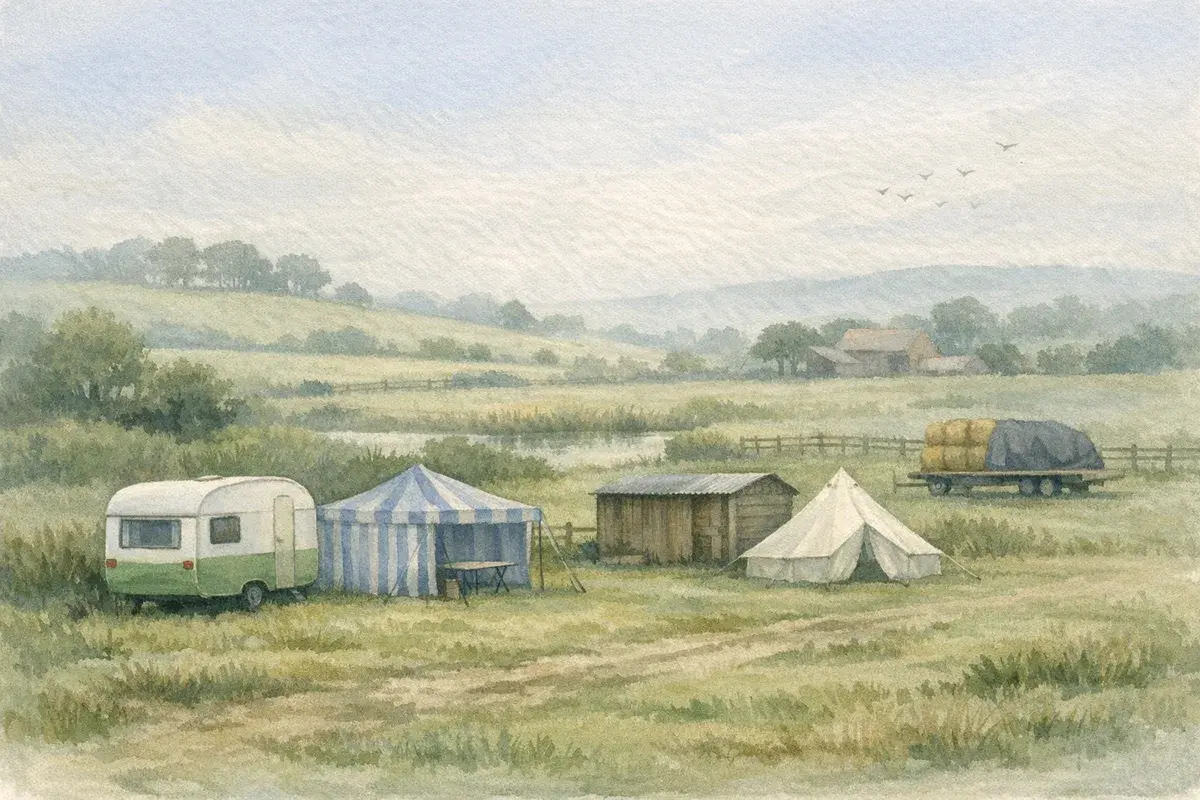
If youb9re asking can i build a temporary structure on my land, the short answer is: sometimes, but it depends on what it is, how long it will stay, and how your land is classified. Farm buildings, field shelters, polytunnels, welfare cabins, and mobile units can all fall under different rules.
The tricky bit is that 'temporary' is not a magic word. Planning officers, local authorities, and even neighbours will look at use, appearance, foundations, servicing, and whether the structure could really be removed without lasting change.
For farmers, landowners, and rural investors, getting this wrong can mean enforcement action, delay, or wasted spend. For agricultural estate agents, it can affect valuation, saleability, and whether a holding is genuinely ready for occupation or business use.
What Counts As A Temporary Structure On Land?
A temporary structure is usually something intended to be removable, short term, or seasonal, rather than a permanent building. That said, the planning system cares more about physical effect and use than the label on the tin, which is why a portable unit can still need permission if itb9s being used intensively or connected to services.
Common examples include livestock field shelters, grain and machinery storage tents, marquee-style event buildings, shepherdb9s huts, welfare cabins, and modular or demountable offices. In agricultural settings, you will also see yard stores, lambing sheds, and seasonal packhouses described as temporary, even where they sit on land for several years.
Why Temporary Does Not Always Mean Permitted
The key question is whether the structure amounts to a material change of use or operational development. A structure with no permanent foundations may still count as development if it alters the land in a planning sense.
Local planning authorities in counties such as Norfolk, Devon, Yorkshire, Somerset, and Shropshire often look closely at access tracks, hardstanding, drainage, lighting, and the intensity of activity around the structure (especially on open countryside sites). If it looks and acts like a building, it may be treated like one.
- Temporary use: seasonal storage, short-term livestock cover, or a time-limited construction compound.
- Permanent effect: concrete bases, drainage runs, fixed utilities, or long-term occupation.
- Planning risk: structures left in place longer than intended can trigger enforcement concerns.
- Site context: green belt, open countryside, AONB, and National Park land face tighter scrutiny.
Planning Permission, Permitted Development, And Agricultural Rights
In England, some temporary structures on agricultural land can fall within permitted development rights, which allow certain works without a full planning application. Agricultural buildings and some field shelters may qualify, but only where the land use, design, size, and siting meet the rules.
That said, agricultural permitted development is not a blanket pass. In many cases, the farmer must notify the local planning authority first through a prior approval process, and the authority can assess issues such as siting, design, highways, contamination, flood risk, and whether the proposal is genuinely needed for agriculture.
How Agricultural Use Changes The Position
If the land is actively used for farming, the position is usually more favourable than for leisure paddocks or speculative land carries. A field shelter for horses on a hobby holding in Kent is often treated very differently from a sheep shelter on an active upland unit in Cumbria.
Web9d argue this is where many owners trip up. They assume anything near livestock is agricultural, yet the planning test often asks whether the land is being used for a genuine agricultural purpose rather than a lifestyle one.
Common Meantime And Exemptions
Some temporary structures for construction, emergencies, or events may be allowed under separate rules, but those rights are narrow and usually time-limited. A lambing tent, for example, may be acceptable during the season, while an all-year welfare cabin with toilets, heating, and permanent parking may not be.
- Prior approval: a lighter process used for some agricultural buildings and changes.
- Permitted development: rights that remove the need for full consent, if conditions are met.
- Certificate of lawfulness: formal confirmation that a use or structure is lawful.
Across the South West, especially in Dorset and Cornwall, local policies can be sensitive to landscape impact. In practice, even a modest structure can be queried if it is visible from public rights of way or sits within a designated landscape.
How Long Can A Temporary Structure Stay Up?
There is no single nationwide time limit that answers every case. The real test is whether the structure remains genuinely temporary in planning terms, which depends on intention, actual duration, and whether it has become part of the landb9s ongoing use.
A structure put up for a harvest period, a construction programme, or a short welfare need may be fine if removed promptly. But if it stays for years, is connected to mains services, or becomes a long-term base, a local authority may conclude it has crossed the line into permanence.
| Structure Type | Typical Planning View | Risk Level As Of June/2026 |
|---|---|---|
| Field shelter for livestock | Often acceptable under agricultural rights if well sited | Medium if on sensitive land |
| Modular site cabin | May need permission if used long term or serviced | High if retained after project end |
| Seasonal storage tent | Sometimes allowed if clearly temporary and removable | Medium to high if intensively used |
| Marquee or event tent | Often time-limited and subject to event rules | High if repeated or extended use |
Actual risk also varies by county and by site history. A former farmyard in Leicestershire may be treated more flexibly than an isolated field in Northumberland, while rural sites near towns can attract extra concern because of amenity, traffic, and visual impact.
Foundations, Fixings, And Services Matter
The more a structure is fixed to the ground, the less temporary it looks. Concrete pads, trenching for drainage, buried cables, septic connections, and permanent access points all point towards a building rather than a movable item.
Even when there are no foundations, the authority may still question the use. A mobile unit with decking, skirting, steps, car parking, and security lighting can start to look very permanent indeed.
Practical Steps Before You Put Anything On Land
Before you buy, hire, or install a temporary structure, check the lawful use of the land and any planning conditions already attached to it. If the holding has old agricultural ties, tenancy restrictions, or previous approvals, those can shape what you can do next.
Local authority pre-application advice can be useful, especially where the site is in Oxfordshire, Herefordshire, or other counties with a strong rural planning culture. It may cost a bit upfront, but it can save much more than a refusal or enforcement headache later.
What To Check First
Start with the land itself. Is it agricultural, equestrian, mixed use, or something else? Is the proposal genuinely temporary in purpose, and can it be removed without leaving permanent works behind?
Then consider the practical realities. Will the structure need water, power, waste disposal, lighting, or hardstanding? Those details often decide whether a proposal is a low-risk seasonal solution or a planning problem waiting to happen.
- Existing permissions: check the planning history and any conditions.
- Land classification: agricultural land is treated differently from amenity or leisure land.
- Visibility: exposed sites in open countryside face stronger scrutiny.
- Access: new driveways or tracks can create separate planning issues.
- Duration: set a realistic removal date and stick to it.
Costs, Market Impact, And Common Mistakes
Temporary structures can be cheap in the short term, but the total cost often rises once you factor in transport, installation, groundworks, utilities, and potential planning advice. As of June/2026, a small modular unit can cost a few thousand pounds to buy second-hand, while larger insulated cabins, steel-frame shelters, or bespoke agricultural units can run into the tens of thousands.
For estate agents and landowners, the bigger issue is often not the structure itself but what it says about the land. A holding with clear, lawful temporary use can be marketable, while one with a muddled planning status can scare off buyers, lenders, and tenants.
Here is a simple market snapshot of typical cost drivers as of June/2026:
| Item | Typical Range | Market Impact | Notes |
|---|---|---|---|
| Basic field shelter | Low thousands | Useful for livestock or equine support | Often cheapest if freestanding |
| Modular welfare cabin | Mid to high thousands | Can improve workability on site | Rises quickly with services |
| Groundworks and access | Variable | Can double the project cost | Tracks and hardstanding matter |
| Planning and professional fees | Hundreds to several thousand | Improves certainty and resale confidence | Worth it on sensitive sites |
One of the most common mistakes is assuming a structure is exempt because it is on skids, wheels, or bolt-down plates. Another is leaving it in place for years and then trying to call it temporary after the fact. The planning authority will usually see straight through that.
There is also a valuation angle. In parts of Wiltshire, Glamorgan, and the Midlands, land with lawful agricultural structures may appeal to working farmers, but unloved semi-permanent cabins can reduce the sense of flexibility. Buyers often wonder what else is on the site that they have not been told about.
Conclusion
If youb9re still asking can i build a temporary structure on my land, the safest answer is that you may be able to, but only if the land use, structure type, duration, and siting all stack up. Temporary does not automatically mean exempt, and agricultural land still needs careful checking before anything goes on the ground.
For farming operations, the best results usually come from keeping the structure genuinely movable, avoiding unnecessary services, and making sure it fits the landb9s lawful use. In rural property, that sort of tidy planning position is worth a lot more than a hurried cheap fix.
Disclaimer: AgLand.co.uk is a UK agricultural land and rural property matching service, where buyers register what they are looking for and owners advertise directly to the buyers who match, and a rural resource hub. Nothing in this text is intended as legal, financial, or investment advice. You should carry out your own due diligence and seek guidance from appropriately qualified professionals (for example, solicitors, land agents, surveyors, and financial advisors) for your specific circumstances.