
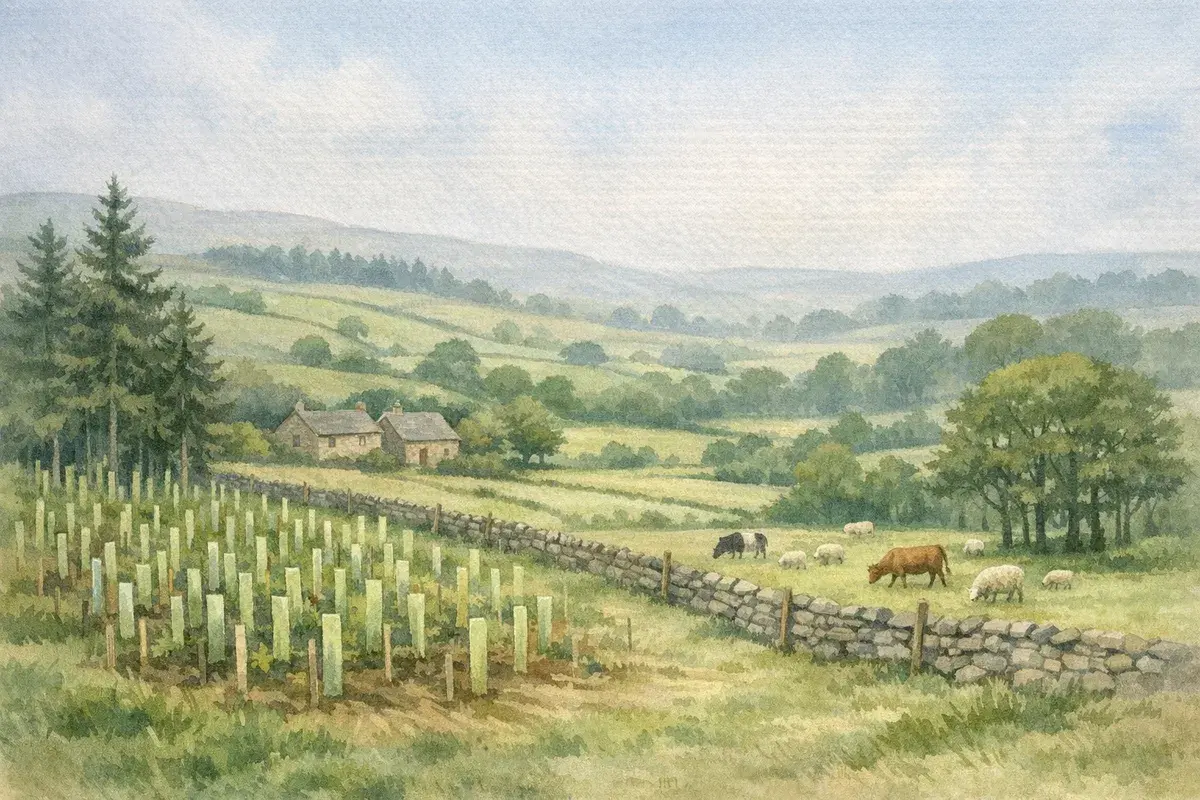
Woodland creation has gone from "nice-to-have" to a properly funded land-use option, if you can navigate the rules. Whether you're looking at underperforming corners of a field, a wet valley bottom that never really dries out, or a longer-term diversification play, the right grant can shift woodland from a cost centre into a bankable plan.
But here's the catch: woodland grants aren't just about planting trees. They're about outcomes (carbon, water, biodiversity, public access), standards (design, stocking, biosecurity), and commitments that can outlast a tenancy agreement, or even your ownership.
This guide cuts through the practical UK detail: what schemes exist in each nation, what "eligible land" really means, what you can claim for, how to build a fundable plan, and where applications tend to wobble. You'll come away knowing what to check first, what to document, and when it's worth bringing in a forestry agent, land agent, or rural tax adviser before you press submit.
Why Woodland Creation Is Being Funded Right Now
Woodland creation grants aren't charity. They're policy tools aimed at paying you to deliver outcomes the market doesn't reliably reward, especially where the benefits spill beyond your boundary fence.
Public Goods, Carbon, And Water Outcomes
The UK's direction of travel is clear: public money is increasingly tied to public goods. Woodland can deliver several at once:
- Carbon sequestration: new woodland stores carbon in biomass and, if managed well, can lock it up in long-lived timber products.
- Water management: woodland in the right place can slow flows, intercept rainfall, and reduce erosion, particularly helpful downstream.
- Biodiversity: native broadleaf, mixed woodland edges, and structurally diverse planting can support birds, pollinators, and woodland flora.
In practice, most grant schemes are trying to steer planting into the right locations and designs, not simply maximise hectares. That's why you'll see screening for deep peat, priority habitats, flood risk logic, and requirements around species mix.
Farm Resilience, Diversification, And Long-Term Land Value
From a farm business perspective, woodland can be about reducing exposure as much as generating income. You might be aiming for:
- Shelter for livestock and crops (and better welfare in extreme weather)
- Shade and microclimate benefits as summers become hotter and drier
- Risk management on awkward, droughty, steep, or wet ground that underperforms in a rotation
- Longer-term asset value if the woodland is well designed, accessible, and managed (and doesn't create future planning or access headaches)
There's also a market reality: buyers and tenants are increasingly asking what constraints, and opportunities, come with land. A well-planned woodland block can look like a thoughtful diversification. A poorly documented scheme obligation can look like a liability. The difference is usually paperwork and professional input rather than the trees themselves.
The Main Woodland Creation Grant Schemes To Know
Woodland policy is devolved, so the scheme names and mechanics vary across the UK. What doesn't vary is the need for a clear plan, compliant mapping, and evidence that you're not planting the wrong thing in the wrong place.
England: England Woodland Creation Offer (EWCO) And Related Support
In England, the England Woodland Creation Offer (EWCO) is the headline woodland creation grant. It's designed to support new woodland establishment, with additional payments available where your design delivers stronger public benefits (for example, biodiversity or water outcomes).
Pragmatically, England is also where you'll feel the "joined-up" land management picture most strongly. If you're already in environmental agreements or considering them, it's worth reading up on how woodland creation interacts with wider schemes. For context on the broader grant landscape (and how stacking and compatibility can get complicated), see our guide to Countryside Stewardship options, useful when you're comparing woodland to other land-use payments.
Scotland: Forestry Grant Scheme (FGS) Woodland Creation
In Scotland, woodland creation is typically supported through the Forestry Grant Scheme (FGS). The Scottish approach places strong emphasis on design fit: species choice, landscape impacts, peat and habitat protection, and the practicalities of establishment.
A recurring theme we see with Scottish applications is that early engagement, especially around peat depth and open habitat value, saves months later. If you suspect constraints, don't wait until you've paid for a full design to do basic screening.
Wales: Woodland Creation Grants And The Evolving Offer
Wales has been reshaping its land management support, and woodland creation funding sits within that evolving picture. The direction is consistent: more focus on outcomes and standards, and more scrutiny where planting could harm existing habitats.
If you're in Wales, build extra time into your programme for guidance updates and scheme windows. And keep your plan flexible, designs that clearly protect existing value (hedges, species-rich grassland, watercourses) tend to be easier to defend.
Northern Ireland: Current Woodland Creation Support And Where To Check
Northern Ireland's woodland creation support is administered through local departments and programmes that can change over time. The best practical approach is:
- confirm the current woodland creation offer and application window,
- check mapping requirements and eligible land rules, and
- validate whether additional support exists for specific outcomes (water, biodiversity, access).
If you're operating across borders (for example, holdings in England and Wales), treat them as separate projects with separate rules, even if you want one integrated forestry vision.
Are You Eligible? Land, Applicant, And Use Tests
Eligibility is where many woodland creation projects quietly fail. Not because the land is wrong, but because the applicant status, permissions, mapping, or constraints weren't nailed down early.
Ownership, Tenure, And Landlord-ന്Tenant Permissions
Whether you own the land outright, farm under a tenancy, or manage as an agent/trustee, the scheme will want clarity on control and commitment length.
- Owner-occupiers usually have the simplest route, provided there are no title issues, burdens, or third-party rights that conflict with woodland creation.
- Tenants can be eligible, but you typically need written landlord consent and enough security of tenure to meet the scheme's obligations.
- Common land and shared grazing arrangements can be possible, but expect additional documentation and stakeholder sign-off.
One real-world snag: woodland is a long game. If your agreement ends in five years, but the woodland obligations run far longer, you'll need a robust arrangement with the landlord (and ideally a solicitor who understands rural agreements).
Minimum Areas, Stocking, And Design Standards
Most schemes require a minimum area and a minimum planting density (stocking), along with design standards for:
- species mix (often favouring native broadleaf in certain contexts)
- open space and rides (important for biodiversity and management)
- buffering around watercourses and sensitive habitats
- deer/livestock protection measures
This is where "I'll just plant a few trees" turns into a proper land-use plan. If you want shelter belts or smaller features, you may find hedgerow and boundary planting support fits better than full woodland creation, our piece on hedgerow funding for farmers is a good comparator when you're weighing the simplest route to trees on a working farm.
Constraints: Deep Peat, Priority Habitats, And Protected Sites
Some land simply shouldn't be planted, and schemes are designed to stop you doing it.
Common constraints include:
- Deep peat: planting can damage carbon-rich soils: peat depth surveys may be required in certain areas.
- Priority habitats: species-rich grassland, heath, and wetlands can be more valuable unplanted.
- Protected sites/designations: SSSI, SAC/SPA, National Park/AONB considerations (and local landscape sensitivities).
- Historic environment: scheduled monuments, ridge-and-furrow, or other archaeology.
A good woodland plan doesn't argue with constraints, it works around them. Often the winning design has less woodland than you first imagined, but it's better located, more defensible, and easier to approve.
What You Can Claim For: Capital Items, Maintenance, And Supplements
Woodland creation grants generally pay in three broad ways: capital establishment, maintenance, and supplements for specific public benefits. The exact menu depends on the nation and scheme, but the structure is broadly similar.
Establishment And Protection Costs (Fencing, Guards, Ground Prep)
Your biggest upfront costs are usually the unglamorous ones:
- Ground preparation (where appropriate): ripping, mounding, cultivation methods suitable for the soil and slope
- Plants and planting: sourcing compliant stock, correct handling, and competent planting labour
- Protection: tree shelters/guards, spiral guards, and often fencing, especially where deer pressure is real
- Gates and access for management
A practical note: deer and livestock pressure is where budgets go to die. If you under-spec protection, you can end up replanting the same hectare twice, on your own dime, while still being held to stocking standards.
Maintenance, Beating-Up, And Ongoing Management Requirements
Most schemes include obligations (and sometimes payments) for:
- weeding and vegetation control in the first few seasons
- beating-up (replacing failures to maintain stocking)
- formative shaping and early management tasks
This is where you should be honest about labour and access. A tucked-away block is great on a map. In February, when it's a quagmire and you're trying to reach it with kit, it's another story.
Additional Payments For Public Benefits (Biodiversity, Water, Access)
Supplements can be available if your woodland delivers additional outcomes, typically:
- biodiversity-rich designs (native species, structural diversity, woodland edge habitat)
- water quality and flood mitigation measures (riparian planting, buffer logic)
- public access (where appropriate and safe)
These extras can be meaningful, but they come with strings: signage, path specification, ongoing maintenance, and sometimes public liability considerations. Don't accept an access-related supplement unless you're comfortable managing the interface with the public on a working holding.
How To Build A Fundable Woodland Plan
A fundable plan is less about beautiful drawings and more about proving you've thought through the land, the constraints, and the long-term management.
Choosing The Right Woodland Type For Your Holding
Start with the brutally practical questions:
- What's the objective, timber, shelter, biodiversity, carbon, water, landscape, a mix?
- What's the ground truth, soil, exposure, altitude, access, existing habitats?
- Who needs to live with it, neighbours, sporting tenants, farm staff, future buyers?
Common woodland types in grant designs include:
- Native broadleaf woodland (often strong on biodiversity and landscape fit)
- Mixed woodland (diversity and resilience, potentially improved long-term utility)
- Riparian woodland (watercourse buffers and shading)
- Farm shelter planting (when designed as part of a wider woodland scheme)
If you're deciding whether to create woodland or buy an existing block, it's worth understanding the checks that come with woodland ownership, access, rights, designations, and felling rules. Our guide to buying woodland in the UK is a useful reality check when you're comparing "plant from scratch" against purchasing something established.
Species Selection, Biosecurity, And Resilience To Pests And Climate
Species choice is where good intentions can go wrong. You're trying to balance:
- site suitability (soil moisture, pH, exposure)
- disease risk (biosecurity and diversification)
- climate resilience (futureproofing, not just historic fit)
A sensible principle: avoid monocultures unless there's a compelling, well-justified management reason. Diverse mixes reduce the chance that one pest, pathogen, or weather pattern wipes out your establishment.
Also consider supply chain reality. If you're aiming for certain species, you may need to pre-order well ahead, and ensure provenance and plant health standards are met.
Integration With Farming: Shelter, Grazing, And Agroforestry Options
Woodland doesn't have to mean "fenced off forever" in every design, but you should be clear what the scheme allows.
Integration options can include:
- Shelter belts positioned to reduce wind stress on livestock and crops
- Wood pasture and silvopasture concepts (where permitted and designed properly)
- Agroforestry approaches, depending on scheme rules and definitions
The key is avoiding a plan that looks good on paper but clashes with daily farming movements, gates in the wrong place, awkward corners that trap livestock, or access routes that become unworkable in wet months.
The Application Process Step By Step
Most woodland creation applications follow a similar rhythm: initial screening, design development, submission with supporting evidence, then claims and inspections.
Pre-Application Checks: Mapping, Screening, And Early Advice
Before you pay for a full design, get the basics right:
- Map the parcel accurately (boundaries, access points, watercourses, existing hedges/trees)
- Identify constraints early (designations, deep peat risk areas, priority habitats)
- Sound out stakeholders (landlord, sporting interests, neighbours where relevant)
- Get early advice from a forestry agent or adviser if the site is complex
This step is where you prevent the classic problem: you submit a neat plan, then spend months responding to issues that could have been spotted in a half-day site walk.
Evidence And Documents: Consents, Tenure Proof, And Design Maps
Expect to compile a pack that commonly includes:
- proof of control/tenure and any required consents
- maps showing species blocks, open space, buffers, access, and constraints
- environmental checks (habitat screening, peat depth evidence where required)
- management intent (how you'll maintain stocking and protect establishment)
If there are public rights of way, watercourse works, or changes to access, you may need additional consents or at least documented consideration.
Timescales, Claims, Inspections, And Record-Keeping
Woodland grants are not instant money. Build realistic timescales:
- lead time for design and approvals
- seasonality (planting windows are not infinitely flexible)
- claim stages (capital items often claimed after work is complete)
- inspections (spot checks do happen)
Keep records like you would for any audited scheme:
- invoices, delivery notes, and contractor details
- photos before/after key stages
- planting schedules and survival checks
If you ever need to justify a replanting decision, or defend a claim, paperwork is your best friend.
Common Reasons Applications Stall (And How To Avoid Them)
Plenty of woodland creation projects don't get rejected, they just get stuck in a slow, expensive limbo. These are the themes we see most often.
Archaeology, Rights Of Way, Neighbours, And Sporting Interests
Woodland can collide with other land uses fast:
- archaeology: planting can damage below-ground features: surveys or buffers may be required
- public rights of way: you may need to adjust design, provide buffers, or consider user safety
- neighbours: shading, leaf fall, boundary access during works, small issues become objections if ignored
- sporting interests: cover and access changes can affect shoots and vermin control
A short pre-application conversation can save a long post-submission dispute. You're not asking permission from everyone, but you are removing avoidable surprises.
Planting On Marginal Land: Access, Drainage, And Establishment Risk
A lot of woodland proposals land on "marginal" areas for good reason. But marginal land can be marginal for trees too.
Watch for:
- poor access for fencing and maintenance
- waterlogging that kills young trees (species choice and ground prep matter)
- exposure that drives failures unless protection is robust
If the site is genuinely difficult, your plan needs to show you understand the risk and have designed to manage it. Otherwise, inspectors and assessors tend to assume you're underestimating the establishment challenge.
Long-Term Commitments, Felling Licences, And Restocking Expectations
Woodland grants typically create a long-term expectation that the land remains woodland.
That has practical consequences:
- felling is regulated in the UK: you may need a licence for certain operations
- restocking is often expected after felling, depending on the woodland type and permissions
- future flexibility (development, alternative use) may be constrained
None of this should put you off. But it should change how you think about the land's "end game". If you plant, assume you're creating a land-use designation in everything but name.
Tax, Tenancy, And Saleability: Getting The Professional Advice Right
Woodland creation sits at the intersection of land use, subsidy rules, and long-term asset planning. That's why the smartest projects involve professional advice early, especially if you're thinking about succession, restructuring, or a sale.
Inheritance Tax And Reliefs: APR, BPR, And Woodland Relief Basics
Inheritance Tax (IHT) reliefs can be available in rural contexts, but they're detail-dependent and fact-sensitive.
Key concepts you'll hear from advisers include:
- Agricultural Property Relief (APR): typically linked to agricultural value and qualifying agricultural use.
- Business Property Relief (BPR): can apply to certain business interests, subject to conditions.
- Woodland Relief: a separate concept that can apply to the value of timber (with specific rules).
The critical point is that changing land use, from agriculture to woodland, can change which reliefs apply and how. If your estate plan relies on APR, don't guess. Get advice tailored to your holding structure, occupancy, and intended management.
Capital Gains, Income Treatment, And How Grant Funding Is Taxed
Grant payments can have tax implications, and the treatment can differ depending on:
- who is receiving the payment (individual, partnership, company, trust)
- whether the activity is part of a trade
- what the payment is "for" (capital vs revenue characteristics)
You don't want to win a grant and then get surprised by the tax position, or by how it interacts with other income and allowances. A rural accountant who understands land-based schemes is worth their fee here.
Buying Or Selling Land With A Grant Scheme Attached
If you sell land with a live woodland creation agreement, a buyer will want absolute clarity on:
- the obligations (maintenance, restocking, access, record-keeping)
- the duration of commitments
- any clawback or repayment triggers
- what happens if establishment fails
Equally, if you're buying, you need to price in the management burden and constraints alongside the grant upside.
From what we see across agent networks, the most saleable grant-backed woodlands are the ones with:
- clean access and sensible boundaries
- clear maps and compliance records
- a practical management plan (not just an aspirational one)
Whichever side you're on. Buyers tell AgLand what they're looking for and hear the moment something fits. Owners advertise straight to the buyers who already match, for one flat fee and no commission. Register as a buyer or check your matches.
Conclusion
Woodland creation grants can be a genuinely strategic tool: they can underwrite establishment costs, reward public benefits, and help you reshape a holding for the next 20–50 years. But they work best when you treat them like a long-term land-use decision, not a seasonal scheme.
If you do three things well, screen constraints early, design for your farm's reality (access, labour, livestock, neighbours), and document everything, you're already ahead of most applicants.
And if your plans touch tax, tenancies, or future saleability, don't leave it to luck. A short, paid conversation with the right forestry agent, land agent, and rural adviser can save a year of friction later.
Disclaimer: AgLand.co.uk is a UK agricultural land and rural property matching service, where buyers register what they are looking for and owners advertise directly to the buyers who match, and a rural resource hub. Nothing in this text is intended as legal, financial, or investment advice. You should carry out your own due diligence and seek advice from suitably qualified professionals (for example, solicitors, surveyors, accountants, tax advisers, and forestry agents) before acting on any information here.