
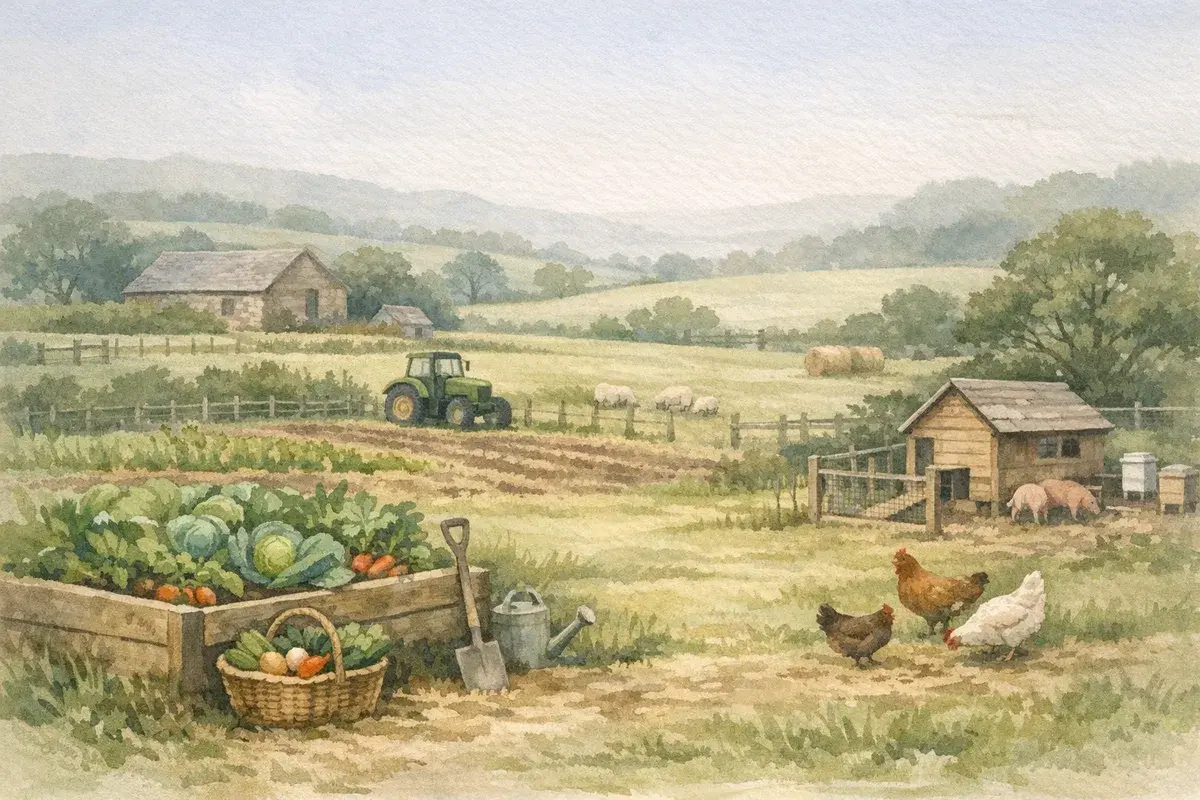
small scale farming uk can work surprisingly well when the land, enterprise and budget fit together properly. This guide looks at the practical realities, likely costs, and the kinds of setups that make sense for small acreages.
If youare trying to decide whether a few acres, a modest stock block, or a mixed holding could pay its way, the first question is simple: what are you actually trying to produce? In small scale farming uk, the answer might be veg, sheep, poultry, horticulture, hay, or a tidy blend of several enterprises, but the profitable route usually depends on labour, access, and local market demand.
Thereares also a regional angle. What works in Devon on light land wont look the same as a unit in North Yorkshire, Shropshire, or Aberdeenshire, where climate, soils, and infrastructure push the business in different directions. We'd argue that small farming succeeds when it is treated like a business first and a lifestyle second.
What Small Scale Farming Means In The UK
There is no fixed legal definition of small scale farming uk. In practice, it usually means a holding too small to support a conventional full-time arable or dairy business, but large enough to run one or more serious agricultural enterprises.
That could be 5 to 20 acres of intensive veg, a 20 to 50 acre sheep or beef setup, or a mixed holding with a few cattle, poultry, and some cropping. The key is intensity, not just acreage, because a well-run five-acre market garden can outperform a poorly planned forty-acre hobby holding.
For many people, the attraction is flexibility. You might buy a small farm in Gloucestershire with outbuildings, rent adjacent grass in Cornwall, or combine land ownership with a contract farming arrangement in Lincolnshire, where another farmer carries out cultivation or grazing for a fee.
Common Small Farm Models
The right model depends on labour, capital, and access to buyers. A livestock-led holding needs fencing, water, handling kit, and decent pasture, while horticulture is often more demanding on labour but can produce stronger returns per acre.
- Livestock grazing: Sheep, store cattle, or horses on permanent pasture.
- Mixed farming: Animals plus grass, hay, or small-scale arable.
- Horticulture: Fruit, salad crops, herbs, or vegetables.
- Pasture poultry: Eggs or meat, usually with strong direct sales.
- Agri-tourism: Paddocks, glamping, workshops, or farm stays.
Choosing The Right Land And Business Model
Land quality matters more than headline acreage. A small holding on fertile loam in East Anglia, close to buyers and suppliers, may be far more useful than a larger but awkward block of marginal ground in upland Cumbria.
Think about access, water, shelter, buildings, and planning potential. A field with a decent track, mains water, and a sound barn can save thousands in setup costs, while awkward boundaries and poor drainage can quickly eat into margins.
The business model should fit the land, not the other way round. For example, a sheltered site in Kent might suit soft fruit or market gardening, while a wetter block in Herefordshire may be better for grazing and fodder cropping.
Land Features That Really Matter
Farm buyers often focus on soil and price, but the quieter details can make or break a small enterprise. If the holding lacks a reliable water source or safe machinery access, everyday work becomes harder and more expensive.
- Soil type: Free draining land suits vegetables; heavier soils may suit grazing.
- Water supply: Essential for animals, wash-down, and irrigation.
- Buildings: Barns, stores, and covered workspace reduce start-up costs.
- Access: Lorries, feed deliveries, and customer visits all need room.
- Planning history: Important if diversification or change of use is likely.
As of March 2026, smaller parcels with buildings often command a premium where lifestyle buyers compete with working farmers. In parts of Somerset, Surrey, and Worcestershire, that competition can tighten supply and push prices above bare land values quite sharply.
| Indicative Small Farm Profiles | Typical Size | Likely Use | Notes As Of March 2026 |
|---|---|---|---|
| Market Garden | 2 to 10 acres | Vegetables, salads, herbs | High labour, strong direct sales potential |
| Grazing Unit | 10 to 40 acres | Sheep, cattle, horses | Lower labour, depends on stocking and grass quality |
| Mixed Holding | 5 to 25 acres | Animals, fodder, eggs | Flexible, but management can get complex |
| Diversified Small Farm | Variable | Farm shop, tourism, workshops | Planning and infrastructure are often decisive |
Costs, Income, And Profitability On A Small Holding
Profitability on a small farm is usually less about volume and more about margin. That means knowing your input costs, labour hours, sales channels, and seasonal risk before you commit to a crop or enterprise.
As of March 2026, many small farms are under pressure from feed, fuel, animal health, seed, and utility costs, so the business plan has to be realistic. A strong direct-to-customer model can help, but it usually needs branding, regular delivery, and a dependable local market in places such as Sussex, Somerset, or Cheshire.
Typical cost centres include fencing, drainage, soil improvement, kit, vet bills, packaging, and compliance. Labour is the hidden one, though, because a small farm can quickly become a 70-hour-a-week business if the enterprise mix is badly chosen.
Where Revenue Usually Comes From
Small scale farming uk often works best when income is layered. One enterprise may cover the basics, while another fills seasonal gaps or turns underused land into cash flow.
- Livestock sales: Lamb, beef, pork, eggs, or breeding stock.
- Crop sales: Vegetables, fruit, flowers, hay, or turf.
- Direct retail: Farm gate, box schemes, local shops, and markets.
- Diversification: Storage, holiday lets, workshops, or events.
- Environmental income: Stewardship or habitat-based schemes where suitable.
There is no guarantee of profit, of course. But a holding in Herefordshire with orchard fruit, laying hens, and farm gate sales may produce better cash flow than a larger, lower-intensity grass unit with little room for value-added income.
Planning, Grants, And Regulation For New Entrants
Regulation is not glamorous, but it shapes the business from day one. New entrants need to think about planning permission, animal movement rules, water abstraction, nutrient management, food safety, and employment or contractor compliance.
Grant support can help, although it changes over time and usually favours clear business outcomes. As of March 2026, many farmers are focusing on improving productivity, biodiversity, and income resilience through schemes that reward measured environmental and land management outcomes.
If you are buying or leasing land in counties such as Dorset, Lancashire, or Norfolk, check whether existing buildings have lawful use, whether tracks are maintainable, and whether any future diversification would trigger planning issues. A cheap holding is rarely cheap if the permissions are wrong.
Practical Compliance Basics
Most small farms need a simple but disciplined admin routine. Keep records tidy, track livestock movements, and make sure any sales claims are accurate if you are marketing food directly.
- Planning: Check what can be built or changed before buying.
- Livestock IDs: Tagging, movement records, and holding numbers.
- Food hygiene: Essential for meat, eggs, dairy, and processed goods.
- Environmental rules: Buffer strips, slurry, and water protection.
- Insurance: Public liability, property, crops, and livestock cover.
That paperwork can feel tedious, but it protects the business. We'd argue it also improves credibility with lenders, landlords, and future buyers, which matters more than many new entrants realise.
Regional Opportunities Across England, Scotland, And Wales
Location shapes both production and sales. Small scale farming uk looks very different in the south west than it does in the Borders, and county-level conditions often decide whether the farm should specialise or diversify.
In Devon and Cornwall, mild weather and strong visitor numbers can support direct sales, farm shops, and small livestock units. In Lincolnshire and Norfolk, flatter land and better arable infrastructure may suit veg, bulbs, or contract growing, while in Northumberland or Cumbria, grass-based systems and low-input livestock often make more sense.
Scotland brings another layer. In Aberdeenshire or East Lothian, there can be good opportunities around mixed enterprises, potatoes, or specialist livestock, but the season can be shorter and logistics more demanding. Wales, especially Pembrokeshire and Powys, often favours grazing, diversification, and small tourism-linked farms where landscape value helps attract customers.
What Buyers And Renters Should Watch For
Whether you are buying, leasing, or cashing in on a surplus parcel, local demand matters. A small farm near a town like York, Exeter, or Inverness may support premium direct sales, while more remote land may need a lower-cost, lower-touch model.
Estate agents often see the same pattern. The best-performing small holdings are usually the ones with a clear story: established infrastructure, a sensible route to market, and enough scale to avoid being just a large garden with livestock.
In market terms, scarcity keeps values firm where small farms offer both utility and lifestyle appeal. That is especially true where there are usable buildings, existing stock fencing, and scope for a second income stream.
Conclusion
small scale farming uk is entirely viable, but only when the land, labour, and sales plan are joined up properly. The strongest small farms are usually the ones that focus on a few well-chosen enterprises, control costs tightly, and make full use of local demand, buildings, and regional advantages.
If you treat the holding as a proper business from the outset, the chances of lasting success improve a great deal. That is the real takeaway, and it applies whether you are in Kent, Cumbria, Shropshire, or anywhere else with land worth putting to work.
Disclaimer: AgLand.co.uk is a UK agricultural land and rural property matching service, where buyers register what they are looking for and owners advertise directly to the buyers who match, and a rural resource hub. Nothing in this text is intended as legal, financial, or investment advice. You should carry out your own due diligence and seek guidance from appropriately qualified professionals (for example, solicitors, land agents, surveyors, and financial advisors) for your specific circumstances.